
Grainger Market: A Visitor's Guide to Newcastle's Covered Market

Grainger Market is a working covered market in the centre of Newcastle, opened in 1835 and still trading from stalls under a steel and glass roof. It is Grade I listed, free to walk into, and sits within Grainger Town, the grid of classical streets built by Richard Grainger between 1824 and 1841.
Treat it as a market rather than a museum: produce counters, butchers, food stalls and shoppers doing their weekly shop. An hour covers the main aisles comfortably, and longer if you stop to eat. The market's own website carries current opening days and any trader closures.
What Grainger Market is and where it sits in Newcastle city centre
The market sits in the heart of Newcastle upon Tyne, inside Grainger Town, the historic centre built by Richard Grainger between 1824 and 1841. Of Grainger Town's 450 buildings, 244 are listed, and the market itself is Grade I listed. It is the kind of building you pass through on the way between the shopping streets and Grey's Monument rather than a separate destination on the city's edge, and our Newcastle Neighborhoods shows how it slots into the wider city.
Its position makes it a natural stop in a city-break day: Monument Metro station sits at the top of Grey Street, and Central Station is a short walk south-west. For the wider picture of what to pair with it, see our Newcastle Attractions, which covers the castle, museums and galleries within walking distance.
A short history: John Dobson, Richard Grainger and the 1835 opening
The market opened to the public on 24 October 1835. John Dobson designed it and oversaw construction, while Richard Grainger was the developer behind the wider redevelopment of 19th-century Newcastle, including the district now called Grainger Town.
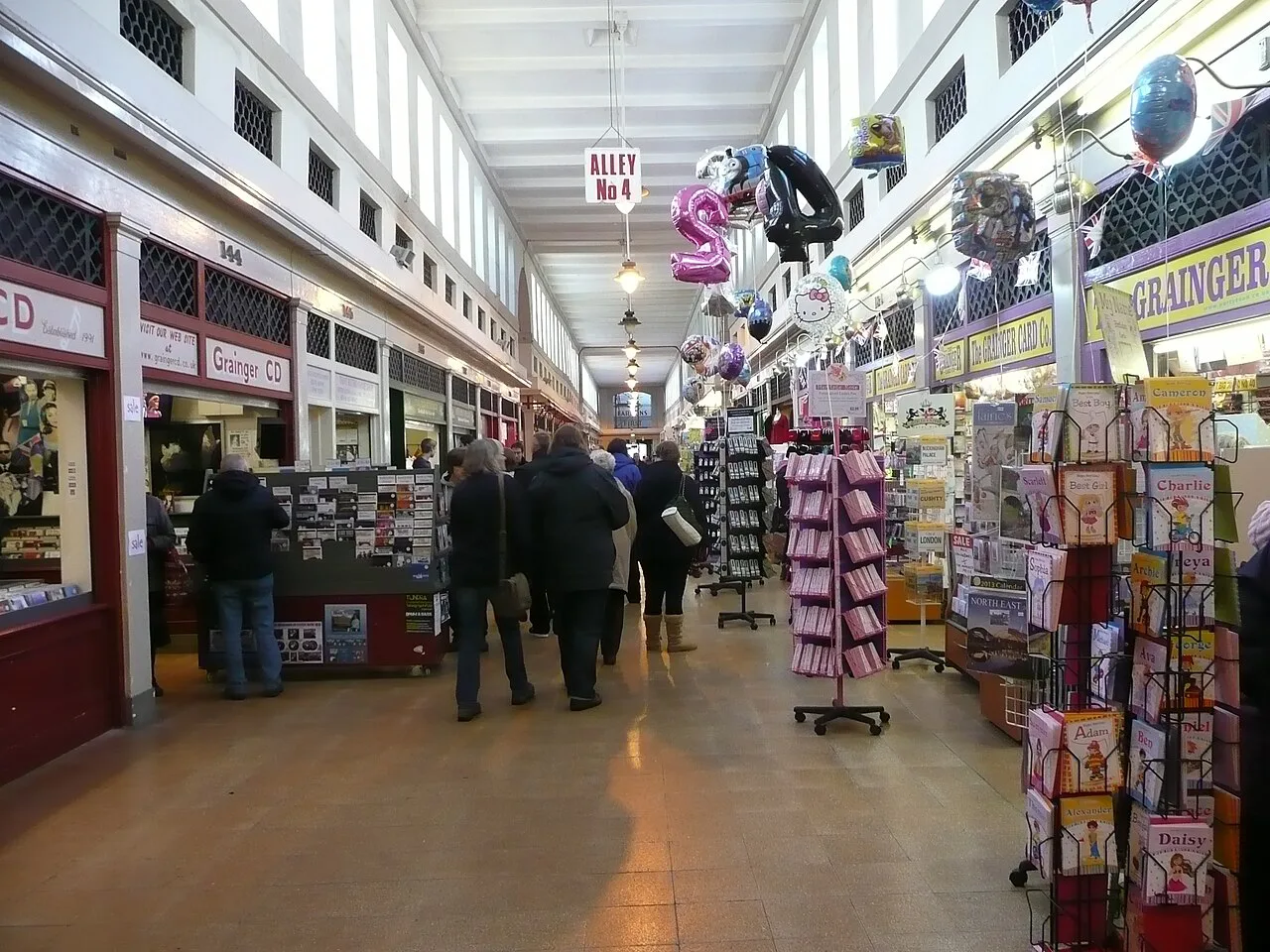
Knowing this history explains the shape of the building. The eastern section was a meat market laid out in aisles, and the western section was a vegetable market built as a large open hall. Those original uses have changed considerably, but a number of butchers' stalls still trade in the market.
The 1901 steel and glass roof and how the market was originally divided
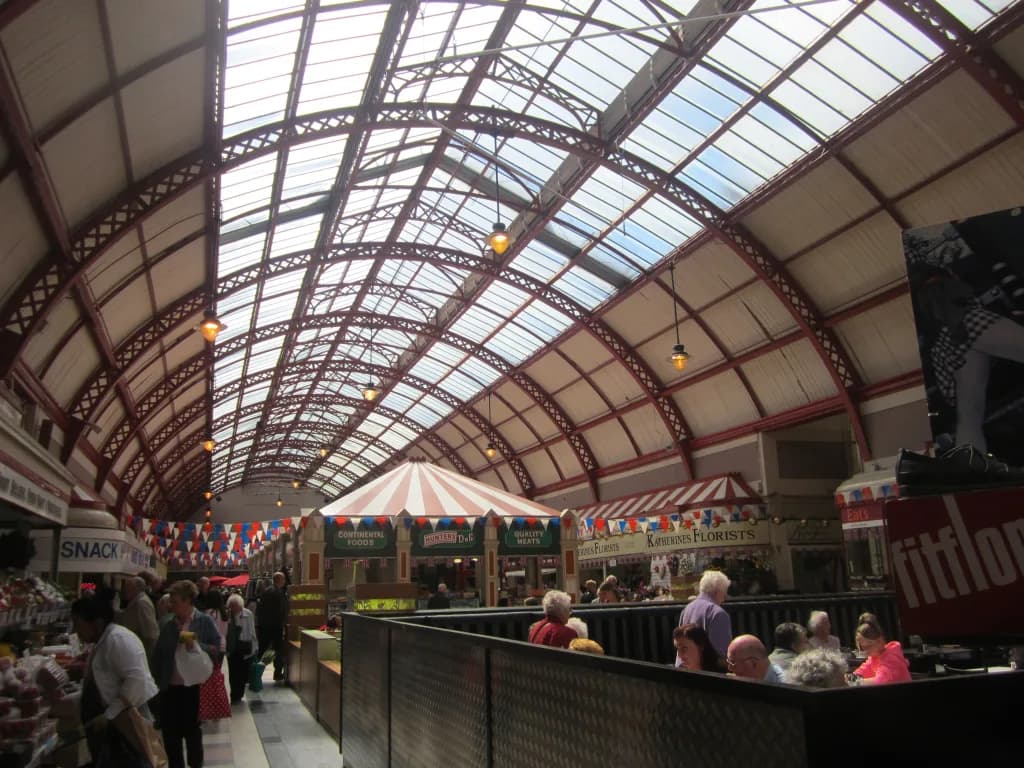
The vegetable market's roof was already defective by 1898, and the market's timber-framed roof burnt down in 1901. It was replaced with the steel and glass roof you see overhead today, which is one of the reasons the hall feels light rather than gloomy.
The two-part layout is worth knowing before you go in. If you arrive expecting a single Victorian butchers' hall, the open-plan western hall will surprise you, and the food and produce stalls are spread across both footprints rather than concentrated in one aisle.
Getting there: the four entrances on Grainger Street, Clayton Street, Nun Street and Nelson Street
There are entrances to the market on Grainger Street, Clayton Street, Nun Street and Nelson Street. From Grey's Monument, walk south down Grainger Street and use that entrance; from Central Station, the Clayton Street side is the more direct approach.
Each entrance drops you into a different part of the hall, so pick the one that matches what you want to see first. The Grainger Street side puts you closest to the main shopping run, while the Nelson Street entrance is a short step from the food stalls.
What to see inside: butchers' stalls, the Marks & Spencer Original Penny Bazaar and the Weigh House
Start with the architecture: the steel and glass roof, the aisles of the old meat market and the open hall of the vegetable market. The market is also home to what is described as perhaps the smallest branch of Marks & Spencer, a stall known as Marks and Spencer's Original Penny Bazaar.
The Weigh House, an old corporation weighing station, is another detail to look out for as you walk the aisles. Beyond that, the appeal is the everyday trading: butchers, produce, flowers and food counters. The market has been described as extremely good value for goods and food, though no stall prices are published in the sources here.

Recent refurbishment: new flooring, toilets, seats, signage and doors
The market has had new flooring, toilets, seats, signage and doors, with renovated entrances designed to improve visibility from the surrounding streets. The work was reported as a £9m refurbishment.
For visitors, this matters most in the small practical ways: somewhere to sit with a purchase, clearer signs between the two halls, and entrances that are easier to spot from the street. It does not turn the market into a heritage attraction, so expect the usual bustle of a working market.
How long to allow and the best time to go
Allow about an hour for the main aisles at a steady walk, or 90 minutes if you plan to eat at one of the food counters. The market is a working shopping space, so late morning and the lunch hour are the busiest stretches, and mid-afternoon tends to be calmer.
If you are combining the market with the rest of Grainger Town, go early and use the market as a warm-up before Grey Street and the monument. Wear shoes you can stand in, since much of the floor is hard and the aisles are narrow when busy.
Tickets, hours and booking: what to check before you travel
Grainger Market is a public market, not a ticketed attraction. Individual stalls set their own prices and products, so budget by the counter.
Opening days and times are published by the market itself and can change with trader holidays, so check the market's own website before a special trip. That single check covers both opening and any seasonal variation.

Practical trade-offs: a busy, working market rather than a heritage set piece
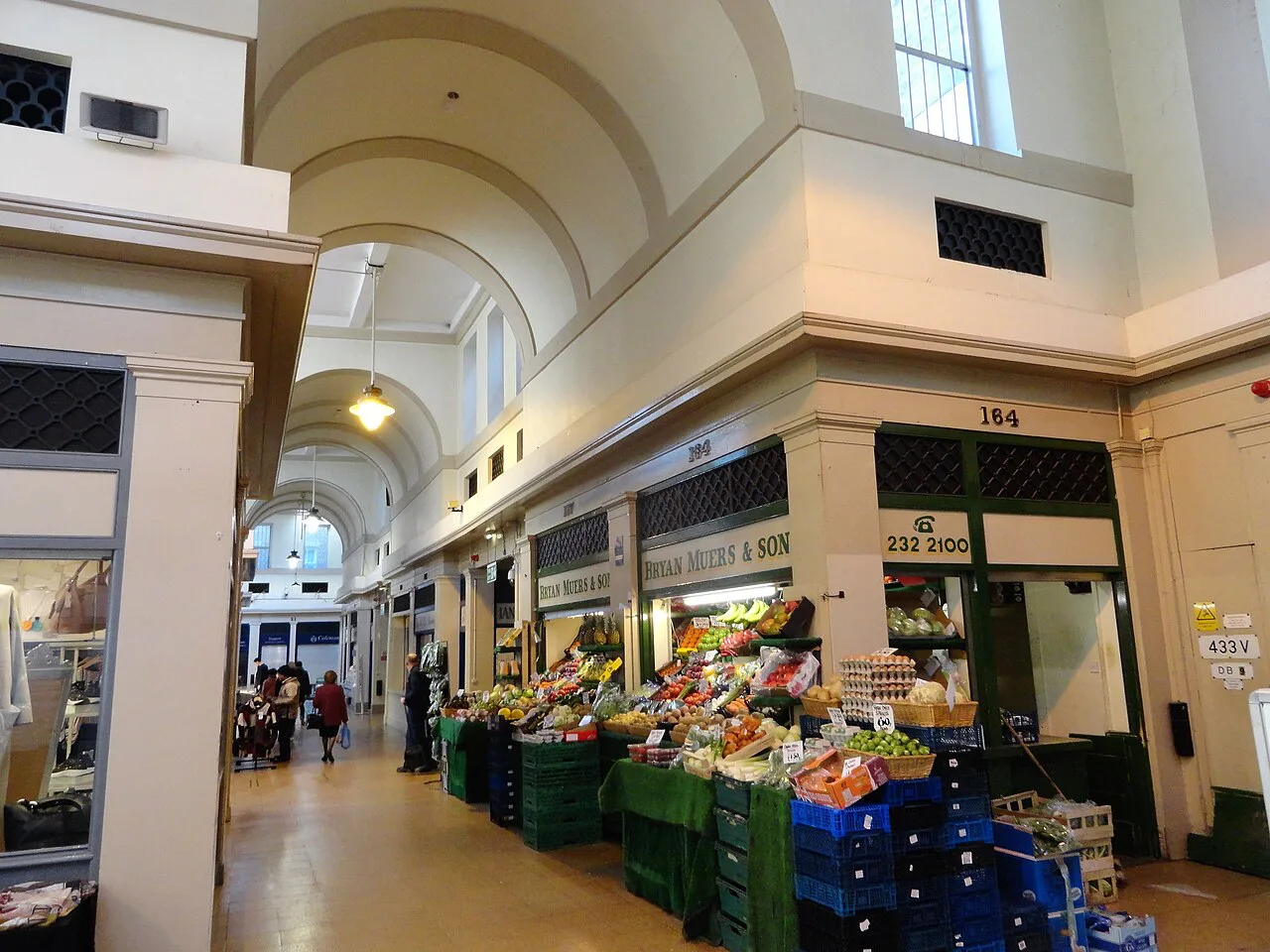
The trade-off is atmosphere against comfort. The market is Grade I listed and full of history, but it is also a place where people shop, so you will share the aisles with trolleys and delivery crates rather than looking at glass cases.
Photographers will find the glass roof and the aisles rewarding, but the lighting changes through the day and the halls are busier at lunch. If you want empty aisles for pictures, come early; if you want the food counters at their best, come around midday.
Nearby: Grey Street, Grey's Monument, the Central Arcade and the Theatre Royal
Grey Street runs south from Grey's Monument and was described by Nikolaus Pevsner as one of the finest streets in England. The Theatre Royal sits on the street, and the Central Arcade sits within the same block of Grainger Town, making a natural circuit from the market.
The market is also within walking distance of the castle and the city's museums. If you want a full day of historic sites, pair it with Newcastle Castle and the Castle Keep, a short walk down towards the river.
Where Grainger Market fits in a Newcastle city-break day
Use the market as a mid-morning stop: arrive from Grey's Monument, walk the aisles, sit down for a coffee and then head out to Grey Street and the Central Arcade. That keeps the market as a pause in the day rather than a destination you have to schedule around. If you are weighing up which part of the city to stay in, our Newcastle Neighborhoods compares the areas around the centre.
For a longer day, the Great North Museum Hancock sits further north near Barras Bridge and pairs well with a market morning, while the Quayside and the BALTIC Centre for Contemporary Art are a longer walk or a short Metro ride away. Afternoon tea in Newcastle can round off the day if you have booked ahead, and our guide to afternoon tea in Newcastle covers where to book and what it costs. If you would rather plan a slow morning than a full day out, our Newcastle Neighborhoods shows which areas keep the market within easy walking distance.
Plan Your Visit
Grainger Market rewards a straightforward approach: pick an entrance that suits your route, walk both the meat-market aisles and the open western hall, and leave time to eat. An hour is enough for the main sweep, and the refurbished seating makes it easy to linger.
Check the market's own website for opening days before a special trip, and use the market as one stop among several in Grainger Town rather than the whole day.
Explore more Newcastle guides
Frequently Asked Questions
How old is Grainger Market in Newcastle?
Grainger Market opened on 24 October 1835 and was designed by John Dobson for Richard Grainger's redevelopment of the city centre. The Grade I listed building still trades from stalls today, with a steel and glass roof that replaced the earlier roof after a fire in 1901.
Where are the entrances to Grainger Market?
There are entrances on Grainger Street, Clayton Street, Nun Street and Nelson Street. From Grey's Monument, the Grainger Street entrance is the most direct; from Central Station, approach from Clayton Street.
Is Grainger Market open today?
The market publishes its own opening days and times, and they can change with trader holidays. Check the market's website before a special trip rather than relying on a third-party listing.
How long does it take to walk around Grainger Market?
Allow around an hour to walk the main aisles at a steady pace, or about 90 minutes if you stop to eat. Mid-afternoon is calmer than the late-morning and lunchtime rush.
What is there to see inside Grainger Market?
Look for the steel and glass roof, the aisles of the former meat market, butchers' stalls, the Weigh House and the Marks and Spencer Original Penny Bazaar stall. The western hall, once the vegetable market, is the largest open space.
What is near Grainger Market?
Grey Street, Grey's Monument, the Central Arcade and the Theatre Royal are all within a short walk. Newcastle Castle and the Castle Keep are also close enough to pair with a market visit.