Things to Do in Chester: Walls, Rows, River and Roman Bits
Plan a Chester city break with the city walls, the Rows, the River Dee and Roman sights, plus notes on queues, steps and how long each stop takes.
On this page
Chester works as a city break because the headline sights sit within a short walk of each other: the city walls ring the centre, the Rows run through the main shopping streets, and the River Dee closes the southern edge. You can see the shape of the place in a day and still have reasons to come back.
The trade-off is that the famous bits are also the busiest, and some of the best-known attractions sit outside the walled centre entirely. Plan the walls, Rows and river as one walking loop, then treat the zoo and the Roman attractions as separate bookings with their own time slots. If you are weighing up another compact English city break, our guide to things to do in Birmingham makes a useful comparison for a centre built around canals rather than walls.
Chester in a nutshell: a compact walled city
Roman, medieval and Victorian layers sit close together here, and the walled centre is small enough to cross in about twenty minutes on foot. That compactness is the reason a short break works: you are not spending the day on buses between sights. Base yourself centrally and you can walk to the walls, the cathedral and the river without planning transport at all.
Chester sits in Cheshire, in the north-west of England, close to the Welsh border. Visitors arrive mostly by rail, and the station is a short walk from the walled centre rather than a taxi ride away.
The city rewards a loose plan rather than a strict schedule. Pick two anchor stops, such as the walls and the cathedral, and let the Rows and the riverside fill the gaps between them.
Start on the city walls: the circuit and its steps
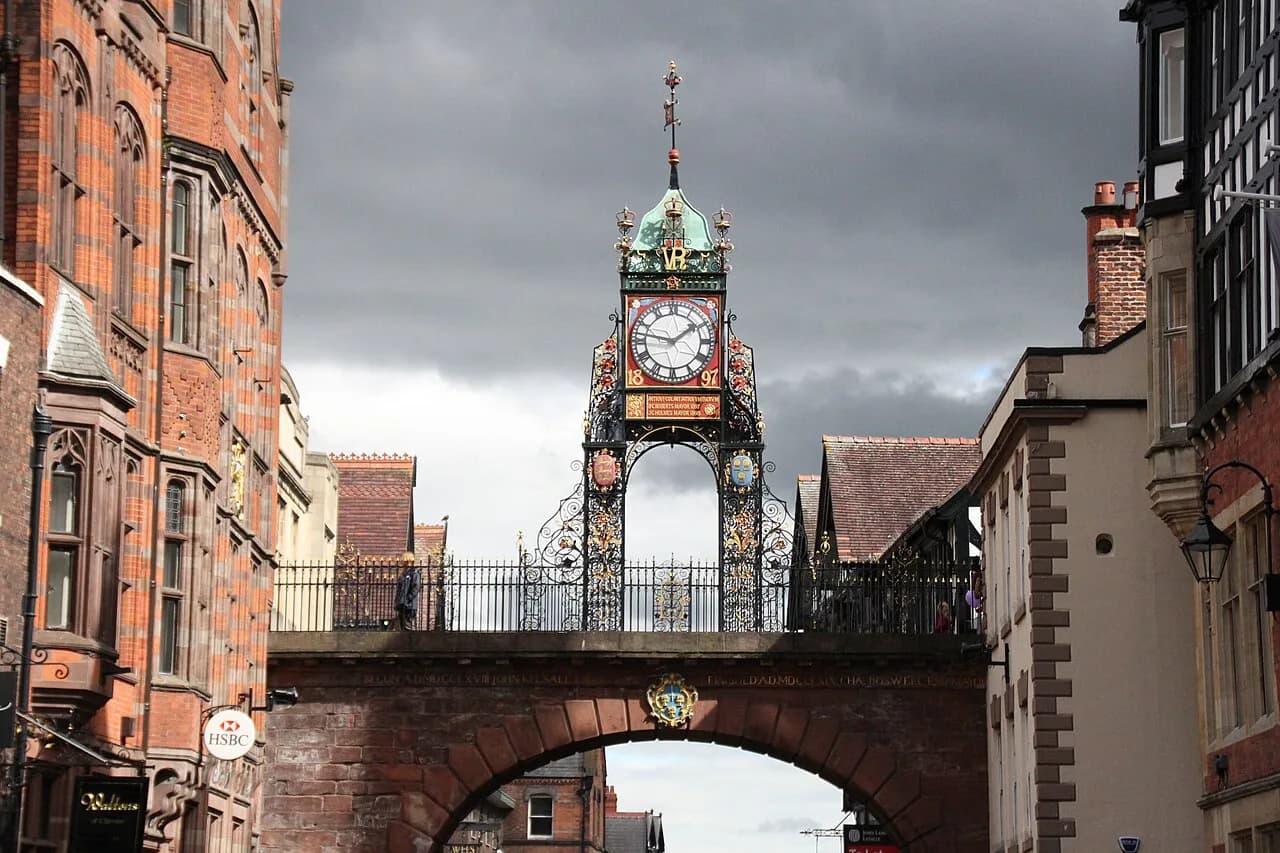
The walls form a continuous circuit round the historic centre, and walking them is the single best introduction to how Chester is put together. You get the racecourse, the cathedral tower and the river in one sweep, and you can drop off at almost any point when something below catches your eye.
The honest catch is that the walls are not step-free throughout. Flights of stone steps interrupt the circuit at several points, which matters if you have a pram, a wheelchair or a dodgy knee. Walk sections rather than committing to the full loop, and use the gaps between steps to rejoin the streets.
Allow a relaxed half-day if you want the whole circuit with stops, or an hour for a stretch of it. Early morning is calmer than midday, and the walls are exposed, so wind and rain are felt more here than in the sheltered Rows.
The Rows: what the two-tier galleries actually are
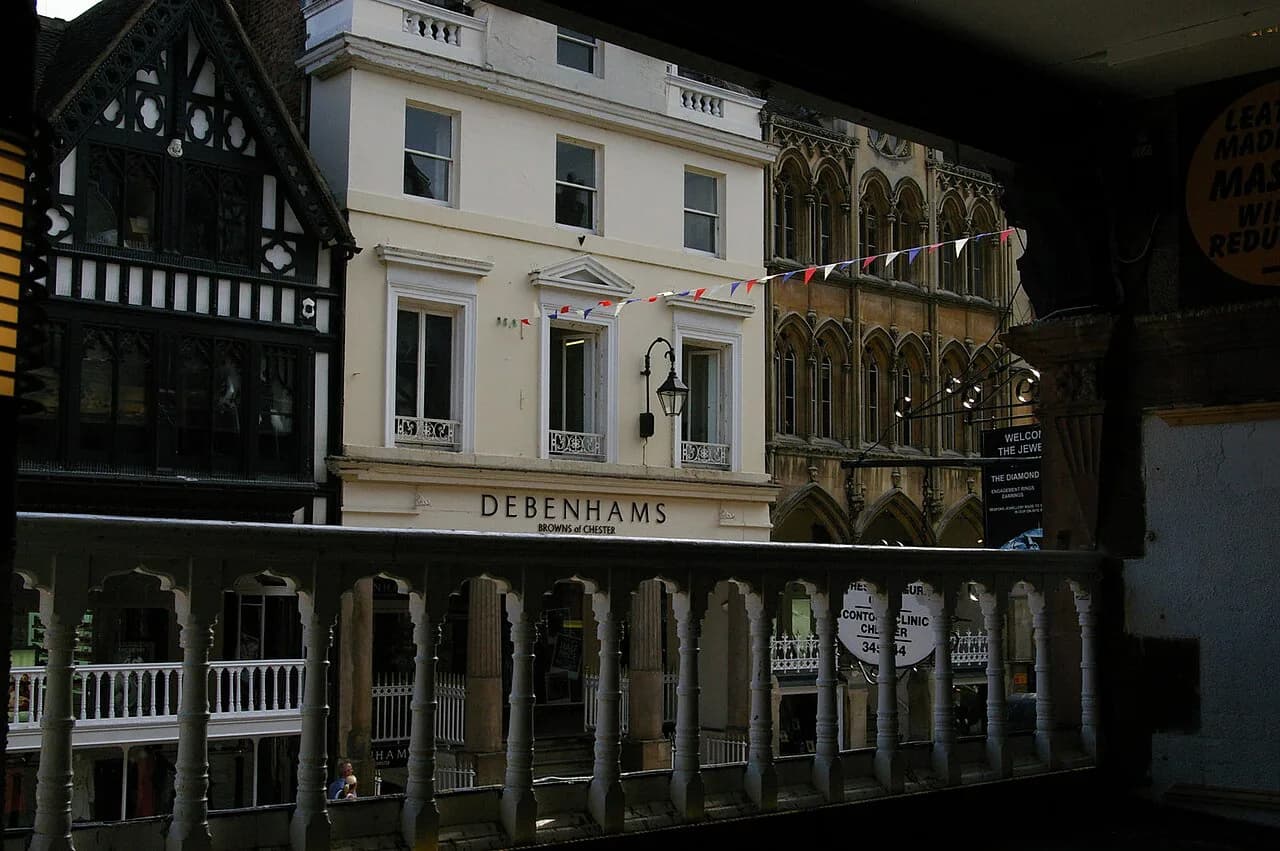
The Rows are Chester's signature piece of town planning: a first-floor level of shops and walkways running above street-level units, linked by staircases along the main streets. They are not a shopping centre bolted onto the old town but a medieval arrangement that grew with the city, and the black-and-white timber facades above them are largely Victorian.
For a visitor, the point is to walk both levels. The upper galleries give you a covered route through the centre and a raised view of the street, while the lower level keeps you close to the shopfronts. Look up at the carved timbers and down at the cellars, many of which are older than the buildings above them.
The Rows double as the city's main shopping district, mixing national chains with smaller independents and cafés tucked into the gallery units. If retail is a big part of your trip, our guide to shopping in Chester covers the streets in more detail.
Roman Chester: amphitheatre, walls and the Deva Roman Experience
Chester began as a Roman fortress, and the name Deva still turns up across the city. The walls follow Roman lines in places, and the amphitheatre remains visible in the open, giving you a sense of the scale of the original garrison without any dressing-up.
The Deva Roman Experience is the indoor, family-facing version of that story, using displays and hands-on material to explain the fortress. Treat it as a separate paid attraction with its own ticket desk rather than something folded into a walls walk, and check opening days before you build a day around it.
If Roman stones matter more to you than reconstructions, spend the time on the walls and amphitheatre instead. The two approaches suit different ages and different weather.
The River Dee and Old Dee Bridge
The River Dee marks the southern edge of the centre, with a promenade and riverside gardens that make a natural pause after the walls. The Old Dee Bridge is the photogenic crossing point, sitting on the site of the city's earliest river crossing, and it is a pleasant place to end a loop rather than a destination in itself.
Boat trips run from the riverside, and a sightseeing cruise is an easy way to see the banks without more walking. Pre-booked cruise packages for two are listed at £19 on the Virgin Experience Days Chester page, which describes a city river sightseeing cruise rather than a guided heritage tour.
The riverside is also where the city feels least like a shopping centre and most like a day out. Bring a picnic or use the cafés nearby, and expect the promenade to be busiest on sunny weekend afternoons.
Chester Cathedral: what to see inside
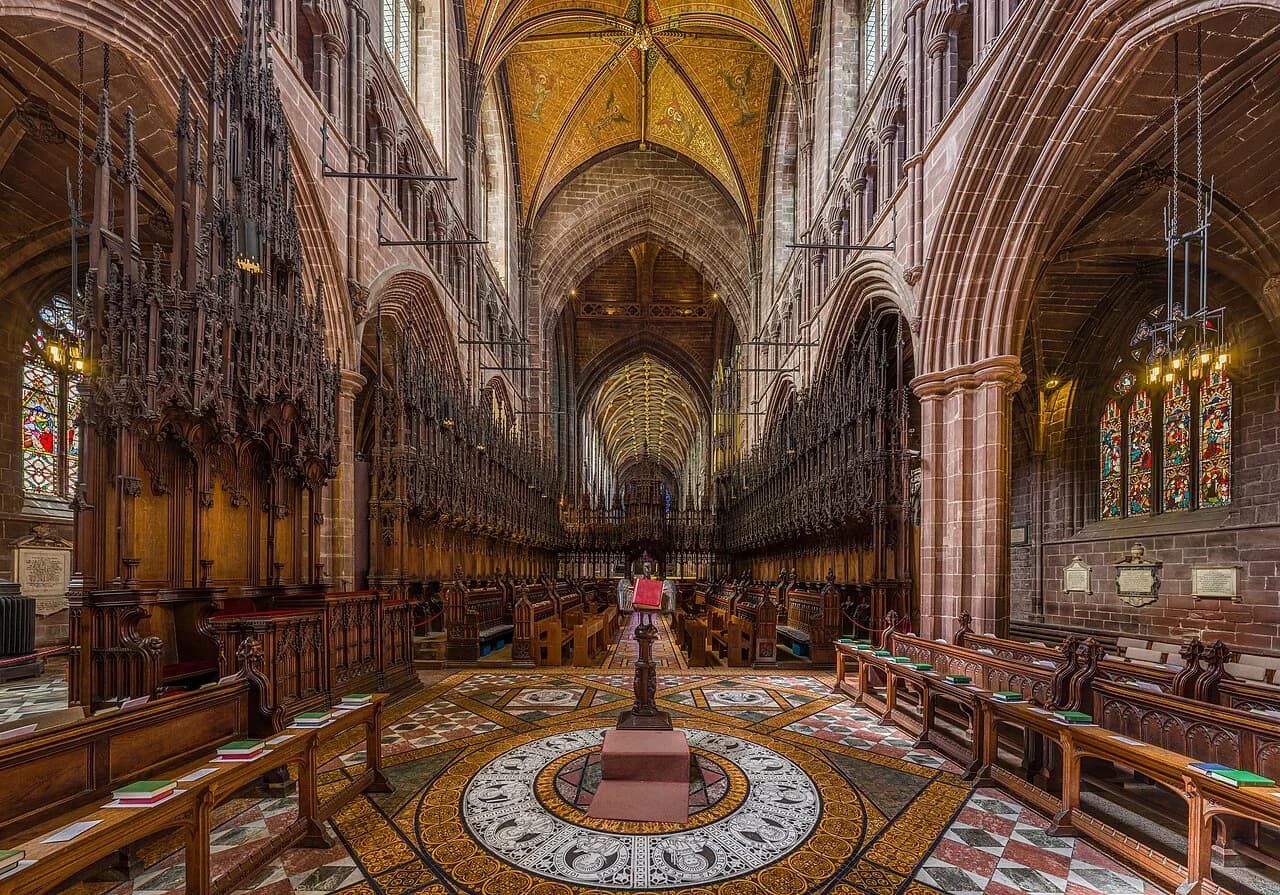
Chester Cathedral is a working church with a long building history, and its appeal for a visitor is the combination of the interior, the cloisters and the tower. Allow around an hour for the main body of the building, and more if you want to climb.
The cathedral sits inside the walled centre, so it slots naturally between a walls walk and the Rows. Services run alongside visitor opening, which means parts of the building can be closed for a while during your visit; plan the cathedral as a flexible stop rather than a fixed appointment.
Dress and behaviour expectations are those of any active cathedral, and photography is usually restricted in certain areas. Check the cathedral's own site for service times and any tower restrictions before you go.

Chester Zoo: a half-day or full-day trip in its own right
Chester Zoo is a major attraction in its own right rather than a city-centre stop, and it sits outside the walls, so it needs its own slot in the plan. Families routinely give it a full day, and first-time visitors underestimate how much walking is involved across the site.
Book tickets online in advance and check the day's opening hours directly with the zoo, since they vary through the year. Package listings include a family visit for two adults and two children at £120 and a visit for two adults and one child at £125, sold as gift experiences rather than gate admission.
If your break is short, choose between the zoo and the city centre rather than trying to do both properly in one day. The zoo is the stronger pick with small children; the walls and Rows suit adults and mixed groups.
City-centre shopping, cafés and covered walkways
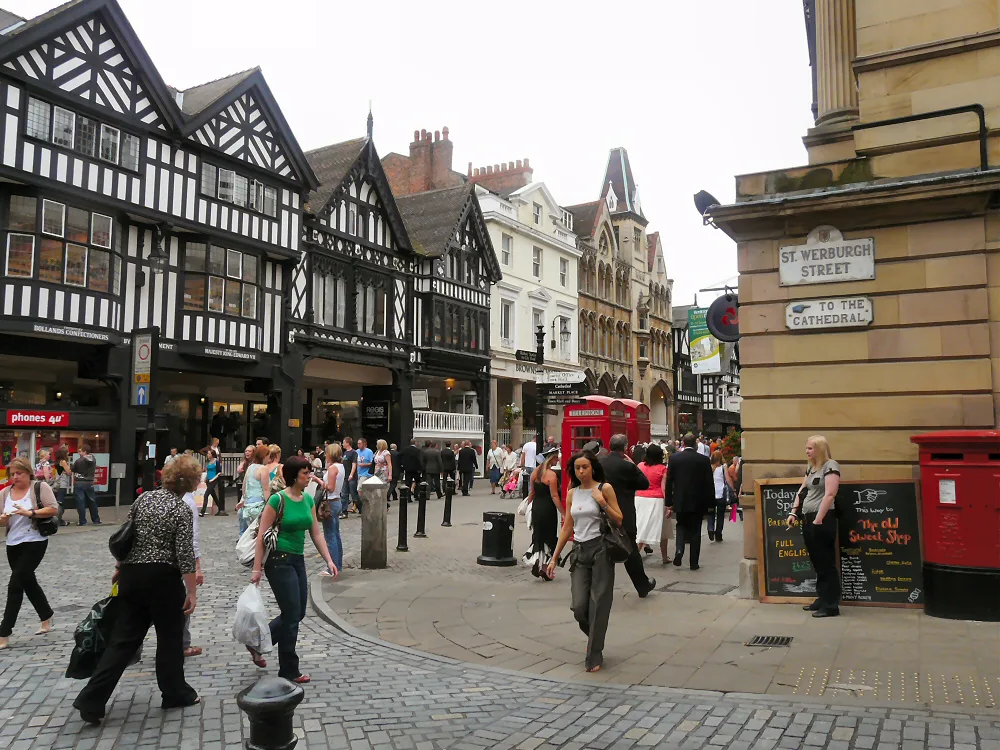
The centre's shopping streets and the Rows together make a rain-friendly circuit: you can move between covered galleries, arcades and cafés without getting soaked. That matters in Chester, where the weather can turn quickly and the walls offer no shelter at all.
Markets add another option for a wet hour, with food stalls and non-retail browsing in the middle of town. Our guide to markets in Chester covers what is there and when it trades.
Café stops are part of the day here rather than an afterthought. Use them to break up the walking, especially if you are doing the walls in the morning and the river in the afternoon.
Family picks: what works with small children
Chester is a good city for children because the distances are short and there is always something to climb, cross or look at. The walls are the obvious hit, but the steps make them a supervised activity rather than a buggy route.
Chester Zoo, the Deva Roman Experience and the riverside promenade cover most family needs across different weather and energy levels. Tripadvisor's family listings for Chester put the zoo, the walls, the Rows, the River Dee and the Deva Roman Experience at the top of the list, which matches the pattern of what actually works with children in the city.
Skip the full walls circuit with toddlers and pick a short stretch with a clear exit back to street level. A pram will handle the pavements and the Rows far better than the ramparts.
Free things to do in Chester
The best free experiences in Chester are the city's public spaces: the walls, the Rows, the riverside and the streets themselves. None of them needs a ticket, and together they fill a full day without touching a paid attraction.
Walking is genuinely the main activity in the centre, and the reward is the layered view you get from the walls and the raised galleries. Bring a flask and use the free seating by the river when the weather holds.
Paid attractions such as the zoo and the Deva Roman Experience sit alongside these free options, so a mixed group can split up without anyone being stranded.
River cruises, tastings and experience-day gifts
Pre-booked experience packages are a practical way to build a treat into a city break, and Chester has a cluster of them: afternoon tea, dining, spa breaks and river cruises. The Virgin Experience Days Chester page lists a sparkling afternoon tea for two at Crabwall Manor at £42, a one-night four-star city break for two at Oddfellows Chester at £162.50, a Cheshire spa break with treatment and dinner for two at Crabwall Manor at £219, and dining for two at Andrew Sheridan's restaurant Noted at £90.
Read the voucher terms before booking: these are listed package prices with fixed inclusions, not open-ended credit, and some are date-restricted or subject to availability. They work best as gifts or as the centrepiece of a short break, not as a substitute for a tickets-on-the-day plan.
For a straight sightseeing fix, a river cruise package is a straightforward pre-bookable option worth considering. Combine it with a walk along the promenade and you have an easy half-day without committing to a paid museum.
Where to eat and take afternoon tea
Chester's eating scene runs from quick café stops in the Rows to full afternoon tea in hotel dining rooms. If tea is the point of the trip, book it rather than turning up, and check what the kitchen is actually serving that day.
Oddfellows Chester combines a central hotel with a dining room and is listed as a package base for a one-night city break as well as a meal venue. The hotel's own booking page is the place to check menu, service times and dietary arrangements.
For a more unusual meal, the chef Andrew Sheridan restaurant Noted appears on the Virgin Experience Days listing with a dining-with-wine package. Book direct if you want the restaurant's own menu and availability rather than a voucher route.
Getting there, getting around and how long to allow
Chester is served by direct trains from major cities, and the station is a short walk from the walled centre, so a car is not needed for a city break. Once inside the walls, everything in this guide is walkable, and that is the real reason Chester works for a short trip.
A half-day plan covers the walls and the Rows with a café stop; a full day adds the cathedral and the river. Families should give the zoo its own day and treat the city centre as a separate outing.
If the weather turns, shift to the covered galleries, the market and the indoor attractions rather than persisting on the walls. There are plenty of good indoor activities in Chester for rainy days that keep the day moving.
Honest trade-offs: race days, crowds and seasonal hours
Chester's racecourse sits just outside the walls, and race days push hotel rates up and fill the centre with a different kind of crowd. Check the race calendar before you fix dates, especially for a weekend break.
Weekend afternoons in summer are the busiest time in the Rows and along the river, and the walls get crowded on dry Saturdays. Mornings and weekdays are noticeably calmer.
Seasonal opening hours vary across attractions, and the cathedral, the zoo and the Deva Roman Experience each set their own patterns. Check current details on each venue's own site before you travel, particularly for the paid attractions that anchor your day.
Plan Your Chester City Break
The most useful plan for Chester is a simple loop: walls first thing, Rows and cathedral through the middle of the day, river and Old Dee Bridge in the afternoon. Keep the zoo and the paid Roman attraction as separate bookings with their own time slots, and leave room for an afternoon tea if that is part of the appeal.
The city rewards walking over planning, so arrive with two or three fixed points and let the rest happen between them.
Explore more Chester guides
Frequently Asked Questions
Is Chester worth visiting for a city break?
Yes, if you want a compact historic centre you can walk rather than a big-city schedule. The walls, the Rows, the cathedral and the river all sit within a short walk of each other, so a single day covers the main sights and a weekend leaves room for the zoo or a river cruise.
How long does it take to walk the Chester city walls?
Give yourself a relaxed half-day if you want the full circuit with stops, or around an hour for a shorter stretch. Flights of stone steps interrupt the route, so walkers with prams, wheelchairs or tired legs should plan to do sections and rejoin the streets between them.
What can you do for free in Chester?
The walls, the Rows, the riverside promenade and the streets themselves cost nothing, and together they fill a good day. Paid attractions such as the zoo and the Deva Roman Experience sit alongside them, so you can mix free walking with one booked stop.
Is Chester Zoo worth a full day?
Families usually give it a full day, and it sits outside the walled centre, so it needs its own slot rather than a spare hour. Book tickets in advance and check the zoo's own opening hours, which vary through the year.
What is the Deva Roman Experience like?
It is an indoor, family-facing take on Chester's Roman fortress, with displays and hands-on material rather than excavated ruins. Treat it as a separate paid attraction with its own ticket desk, and check opening days before you build a day around it.
What are the Chester Rows?
The Rows are two-tier galleries of shops and walkways, with a first-floor level running above street-level units and joined by staircases. The arrangement is medieval in origin, and walking both levels is the best way to understand it.
What is there to do in Chester in the rain?
Shift to the covered galleries in the Rows, the market, the cathedral and the indoor attractions, and leave the walls for a dry spell. The Rows allow you to move through the centre without getting soaked, which the exposed walls do not.
Should you book experience packages before visiting Chester?
Book ahead if a specific package is the centrepiece of your trip, because these are listed prices with fixed inclusions and limited availability. Read the voucher terms and check the venue's own site for service times before you commit.
Sources
Notes for your next city break
Optional updates to our UK city guides.
You might also like



Continue reading
More guides you'll find useful