
Foyle Valley Railway Museum: A Visitor's Guide to Derry's Railway Heritage

The Foyle Valley Railway Museum is a small railway heritage site in Derry, built around the former Great Northern Railway Derry Road line and the narrow-gauge operation that once ran from the site. Treat it as a short stop on a riverside walk rather than a half-day museum and you will get the most from it. It pairs naturally with the Waterside and St Columb's Park, both close at hand.
What the Foyle Valley Railway Museum is
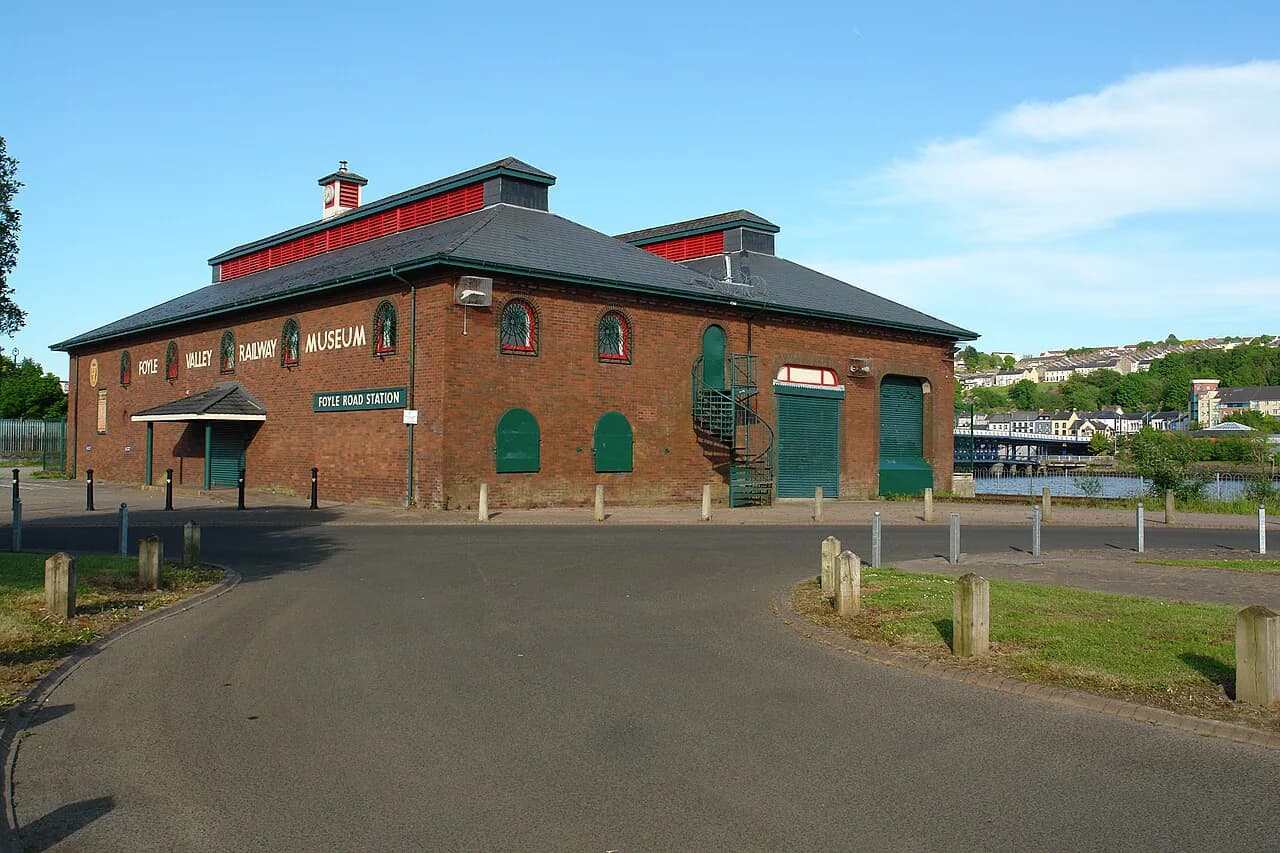
The museum carries the name of the Foyle Valley, the riverside ground it occupies, and its story is bound up with the Great Northern Railway's Derry Road route. Photographs of the site show the museum and its setting beside the former line. It is a modest heritage stop, not a national railway collection, and planning it as such keeps expectations realistic.
For context on how it fits among the city's other sights, our guide to Derry Attractions covers the wider set of museums, walls and landmark buildings. The railway museum earns its place as a niche stop for anyone interested in transport history, especially when combined with a walk along the river, and it is worth reading our guide to the museums in Derry if you are weighing up which heritage stops to prioritise.
Where it is on the former GNR Derry Road
The site sits along the old Great Northern Railway Derry Road alignment, which shapes what survives: the museum is tied to a railway corridor rather than a purpose-built exhibition hall in the city centre. Photographs on Wikimedia Commons show the museum building and track area in its riverside position. Because the line once carried trains into and out of Derry, the location is part of the exhibit as much as the objects inside. For a contrast in setting and scale, compare it with the museums in Derry that occupy purpose-built city-centre venues.
Use the riverside as your compass. The museum lies on the Derry side of the River Foyle, so a walk along the water will bring you close to the site. If you are planning a broader day, the city's official tourism site lists parks and green spaces within easy reach of the centre.
A short history of the narrow-gauge line
The Foyle Valley Museum used to operate a narrow-gauge railway along the former GNR Derry Road, with that operation running up to around 2000. That date is history, not a current service, so do not plan around riding a train today. Heritage railway coverage reported a planned summer reopening in 2017, which shows the site has had periods of activity and closure since the narrow-gauge era ended.
The narrow gauge matters because it explains the scale of the site: small locomotives and carriages suited to a short riverside run rather than mainline expresses. When you visit, read any on-site interpretation with that context in mind. It is the difference between a mainline depot and a compact heritage operation.
What to see at the site
Expect a compact site with railway remains and the atmosphere of a former line rather than a large collection of restored locomotives. The surviving track alignment and the riverside setting are the main draw. Any rolling stock or displays on show change over time, so judge the visit by the site itself and the walk that surrounds it.
If you want a fuller museum experience in the same city, the Tower Museum in Union Hall Place offers exhibitions in a central location. Our Tower Museum Derry guide explains what is inside and how to fit it into a city-centre day, and it is one of several museums in Derry worth weighing against a short riverside railway stop.
How long to allow
Plan a short stop at the museum itself and build the rest of the outing around the river. A walk from the city centre across the Peace Bridge to the Waterside and back takes in the Foyle at its best, and the railway site fits naturally into that route. Allow more time for the walk than for the museum.
If you are travelling with children, the nearby parks and activity centres listed on Visit Derry's family fun page give you options to extend the day. Oakfire Adventures at The Oaks Demesne and Creggan Country Park both appear there as outdoor activity bases. That makes a railway stop a sensible anchor rather than the whole plan.

Opening hours, admission and booking
The museum has had periods of closure and reopening, so check current opening days and any admission charge with Visit Derry's visitor information service before travelling. That service is the practical first call for current city information, and it is worth checking before you set out, especially outside the summer months.
The Visit Derry homepage gives the Visitor Information Centre's opening hours as Monday to Friday 9.30am to 5.30pm and Saturday and Sunday 10am to 5pm, which is useful if you want to ask in person. The page also notes that the Visit Derry Pass covers ten handpicked attractions over one or two days, saving on admission fees. Whether the railway museum is among them is worth asking when you enquire.
Getting there on foot from the city centre
The most straightforward approach is on foot along the river. From the walled city, head for the Peace Bridge and follow the Foyle towards the Waterside; the railway site sits on the Derry side of the water. The walk is level for most of its length and gives you views back to the walls.
Visit Derry notes that the city is a three-hour drive from Dublin and a 90-minute drive from Belfast, with City of Derry Airport served from London Heathrow, Glasgow, Manchester, Birmingham, Edinburgh and Liverpool. Aircoach connects Belfast International and Dublin airports directly into the city centre. Once in town, walking is the simplest way to reach the riverside.
Parking and practicalities
City-centre car parks and a walk down to the river are the simplest option for drivers. The riverside ground is largely level, but old track beds and platform edges can be uneven underfoot. Sturdy shoes are sensible if you plan to explore the alignment.
For a sense of the city's wider green spaces, Visit Derry's country and forest parks listing includes St Columb's Park, a 70-acre park on the Limavady Road with wooded walkways, the ruins of a medieval church, St Columb's Park House and a walled garden. It sits close to the museum side of the river and makes a good add-on.

Nearby: St Columb's Park and the Waterside
St Columb's Park is the obvious companion stop, with its woodland paths and the ruins of a medieval church within the grounds. Brooke Park, an eight-hectare public park about a kilometre north-west of the city centre, is another option if you want a second green space. Both are listed by Visit Derry among the city's parks and nature sites.
The Waterside across the Peace Bridge gives you a different view back towards the walls and the cathedral spires. It is a natural turning point for a riverside circuit. Combine the museum, the park and the bridge and you have a half-day that does not depend on a single attraction being open.
Combining it with the walled city
Derry's walls are the city's defining sight and a good way to frame a history day around the railway museum. Our guide to the Derry City Walls explains the circuit and the landmarks along it. Start on the walls, walk down to the river, and finish at the museum site.
For the city's political history, the Museum of Free Derry, run by the Bloody Sunday Trust, covers the Bogside and the events of Bloody Sunday. It sits near Free Derry Corner and pairs well with a walk through the Bogside. The railway museum then becomes a quieter contrast at the end of the day.
The Guildhall in Guildhall Square is another central landmark worth folding in, and our Guildhall Derry guide covers its place in the city. A route that takes in the walls, the Guildhall and the riverside gives you a full day without overloading any one site.
Honest trade-offs
This is a modest site. Compared with the National Railway Museum in York or the heritage lines of North Wales, the Foyle Valley Railway Museum offers a fragment of railway history rather than a full day out. Come for the setting and the story, not for a large collection. It is also worth weighing against the larger museums in Derry if you would rather spend your time indoors, and our guide to the museums in Derry sets out the alternatives.
The trade-off is worth it if you are already walking the Foyle and want a railway thread through the city's history. If you are choosing between this and a major museum, the Tower Museum or the Museum of Free Derry will fill more of your time. For more options, our guide to museums in Derry sets out the alternatives.
Plan Your Visit
Treat the Foyle Valley Railway Museum as a short, atmospheric stop on a riverside walk rather than a destination in its own right. Check current opening details with Visit Derry's visitor information before you go, then build the day around St Columb's Park, the Peace Bridge and the walled city. The railway history is the thread; the river is the reason to walk it.
Explore more Derry guides
Frequently Asked Questions
Where is the Foyle Valley Railway Museum in Derry?
It sits on the Derry side of the River Foyle, along the former Great Northern Railway Derry Road alignment. The simplest approach is on foot from the city centre via the Peace Bridge and the riverside path towards the Waterside.
Is the Foyle Valley Railway Museum free to visit?
Admission arrangements are not set out in the city's visitor information. Ask the Visit Derry Visitor Information Centre when you check opening times.
Is the Foyle Valley Railway Museum open?
The site has had periods of closure and reopening, so check current opening days with Visit Derry before travelling. Do not rely on older reports of reopening.
How long does a visit to the Foyle Valley Railway Museum take?
Allow a short stop for the museum itself and plan the rest of the outing around the riverside walk. A circuit taking in the Peace Bridge and the Waterside fills a half-day comfortably.
What was the narrow-gauge railway at the Foyle Valley Railway Museum?
A narrow-gauge operation once ran along the former GNR Derry Road from the museum site, continuing until around 2000. It is history rather than a current service, so do not plan around riding a train.
Is there parking at the Foyle Valley Railway Museum?
Parking arrangements are not set out in the city's visitor information. Ask when you confirm opening times, or use city-centre car parks and walk down to the river.