
Derry City Walls: A Visitor's Guide to the Historic Circuit

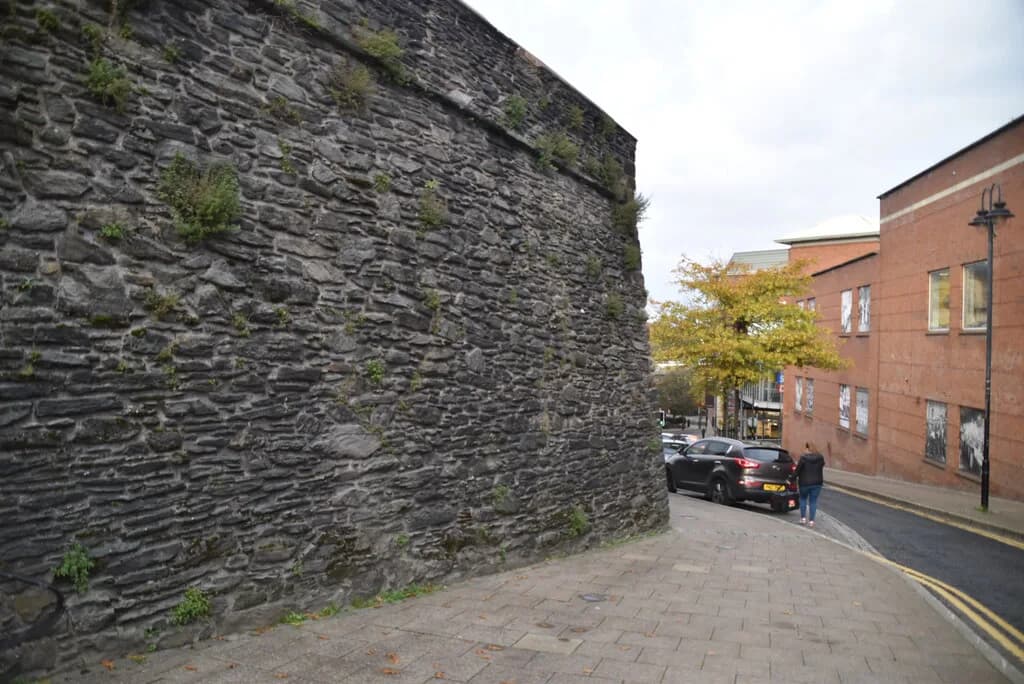
The Derry City Walls are a continuous walkway around the old city centre, and you can walk the full circuit without leaving the top of the monument. They were constructed between 1613 and 1619, stand up to 8 metres (26 feet) high and run almost 1.6km, or one mile, around the historic core.
This is the most complete circuit of historic walls of any town or city in Ireland, and the largest Monument in State Care in Northern Ireland. Allow around an hour for the loop at an easy pace, more if you stop at the cannon and the gates.
What the Derry City Walls Are
The walls are a defensive ring built around the planted city, high enough to dominate the rooflines below and wide enough to carry a paved walkway on top. The council describes them as standing up to 8 metres, or 26 feet, high with a circumference of almost 1.6km.
Because the circuit closes, you can treat the walls as a single sight rather than a series of fragments. Walk it once in full and you have seen the whole monument, with the city spread out on both sides.
Where the Walls Are and How to Get There
The circuit encloses the historic centre, with The Diamond at its middle and the four original gates sitting where the main streets meet the walls. The Guildhall stands just outside the western side, which makes it a sensible place to begin or finish.
Derry is a compact city, and the walls are within easy walking distance of the centre's hotels and transport links. Visit Derry notes that the city is a three-hour drive from Dublin and a 90-minute drive from Belfast, with City of Derry Airport served from several UK cities.
If you arrive by bus or train, aim for the city centre rather than a specific gate, then follow signs for the walls. The Visit Derry website carries maps and a visitor guide you can download before travelling.
The History in Brief
The walls were built as part of the Plantation of Ulster, the colonisation ordered by King James I in 1611 to bring the Gaelic region under the English crown. The Honourable The Irish Society was founded to run the plantation, and finance came from the City of London, which is where the Londonderry name comes from.
The new city was laid out while the walls went up, with four main streets crossing at a central square later called The Diamond and running straight to the four gates. That street pattern is still legible today, which is why the walk feels like a plan rather than a ramble.
Ownership is split in a way that surprises visitors: the walls remain the property of The Honourable The Irish Society, while the Department for Communities' Historic Environment Division manages and conserves them.
The 1689 Siege and Why It Still Matters
In 1689 the Catholic King James II and his Jacobite supporters laid siege to the city for 105 days, part of his campaign to reclaim the English throne from the Protestant King William III. Thirteen apprentices shut the city gates against the advancing troops, and the city withstood the attack.
That episode is the reason the walls carry weight beyond their stonework, and it explains the place names and commemorations you will meet around the circuit. Treat the story as the city's own account of itself, told plainly, rather than as a neutral footnote.
What to See on the Circuit
Start with the fabric itself: the four original gates, the surviving stretches of wall, and the cannon mounted along the ramparts. The eighteenth-century cannon that point out over the Bogside are the most photographed feature, and the walkway gives you a clear view of the streets below.
The Diamond, at the centre of the grid, is where the four main streets meet, and it is worth dropping down from the wall to see how the plan works on the ground. From the walkway you can pick out the gates and trace the route you have just walked.
The Guildhall Derry, just off the circuit, is a natural pairing with the walls: see the building, then climb to the ramparts.

Starting and Finishing at the Guildhall
The Guildhall is the most convenient anchor for the walk, sitting at the foot of the western walls with the river nearby. A council-led tour of the walls has departed from the front steps of the Guildhall, which confirms it as a practical meeting point.
Walk anti-clockwise or clockwise as you please, but finish at Guildhall Square so you can sit down afterwards rather than ending on a exposed stretch of rampart.
How Long the Walk Takes
Budget about an hour for the full circuit at an unhurried pace, and longer if you stop at every gate and cannon. The council's own guided version of the one-mile circuit is scheduled for 50 minutes, which is a fair indication of the walking time without photo stops.
Add time for the Guildhall, the Tower Museum and a cafe stop, and the walls easily fill half a day without feeling rushed. If you only have an afternoon, walk the circuit first and save the indoor sights for a wet spell.
Steps, Surfaces and Exposure
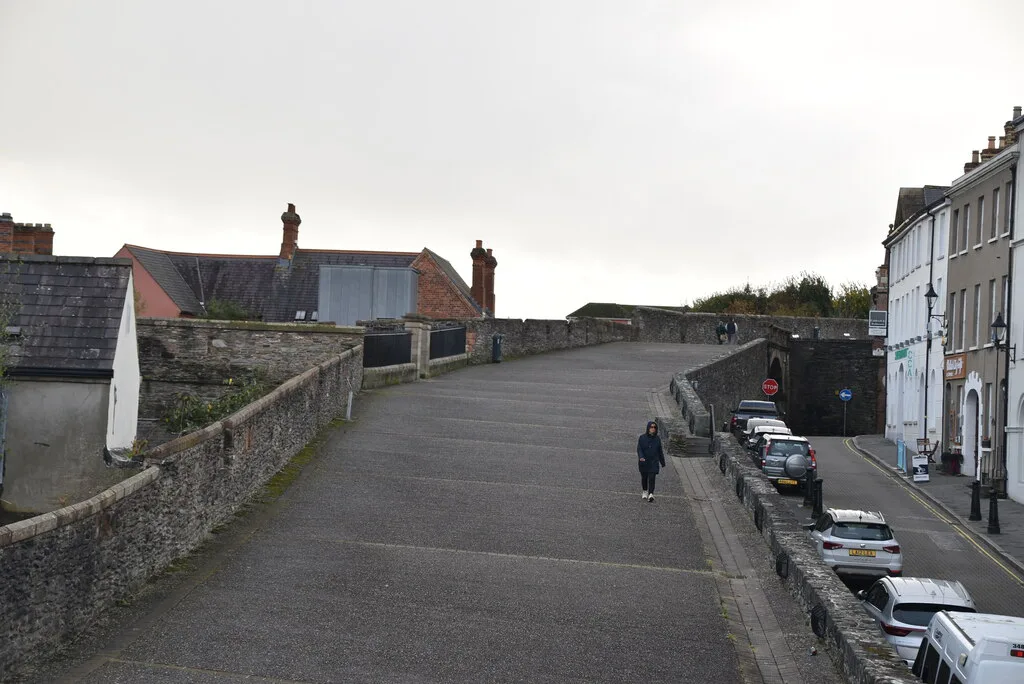
The walkway is paved but not flat: there are steps at several points and uneven sections where the rampart has settled. Wear shoes with grip rather than smooth soles, and take care in wet weather when the stone is slippery.
Parts of the circuit are open to the sky and to the wind off the Foyle, so a waterproof layer is more useful than an umbrella. In winter, daylight is short and the exposed stretches feel colder than the streets below.
There are handrails in places but not everywhere, and the walkway is narrow enough that passing other walkers takes a moment. Anyone with limited mobility should plan a shorter section rather than attempting the full loop.

Tickets, Access and Who Runs the Walls
The walls are managed by the Department for Communities' Historic Environment Division on behalf of The Honourable The Irish Society, which still owns them. The monument is the largest in State Care in Northern Ireland, a status that reflects its national importance rather than a commercial operation.
There is no published ticket desk or opening time for the walkway, so plan around daylight and check the Visit Derry site for any access notices before you travel. The Visit Derry Pass covers ten attractions in the city, but the walls are not listed among them, so treat the pass as a museum ticket rather than a walls ticket.
The Walls in a Wider Derry Visit
Pair the walls with the Tower Museum Derry, which sits at Union Hall Place and tells the city's story from the Plantation through the Troubles. The Derry Girls Experience is also at the Tower Museum, with original memorabilia and a recreation of the Quinn household set.
For a broader plan, see the full set of Derry Attractions: 8 Visitor Guides, which covers the cathedral, the Bogside and the city's museums in one place.
Nearby: the Bogside and the City Beyond
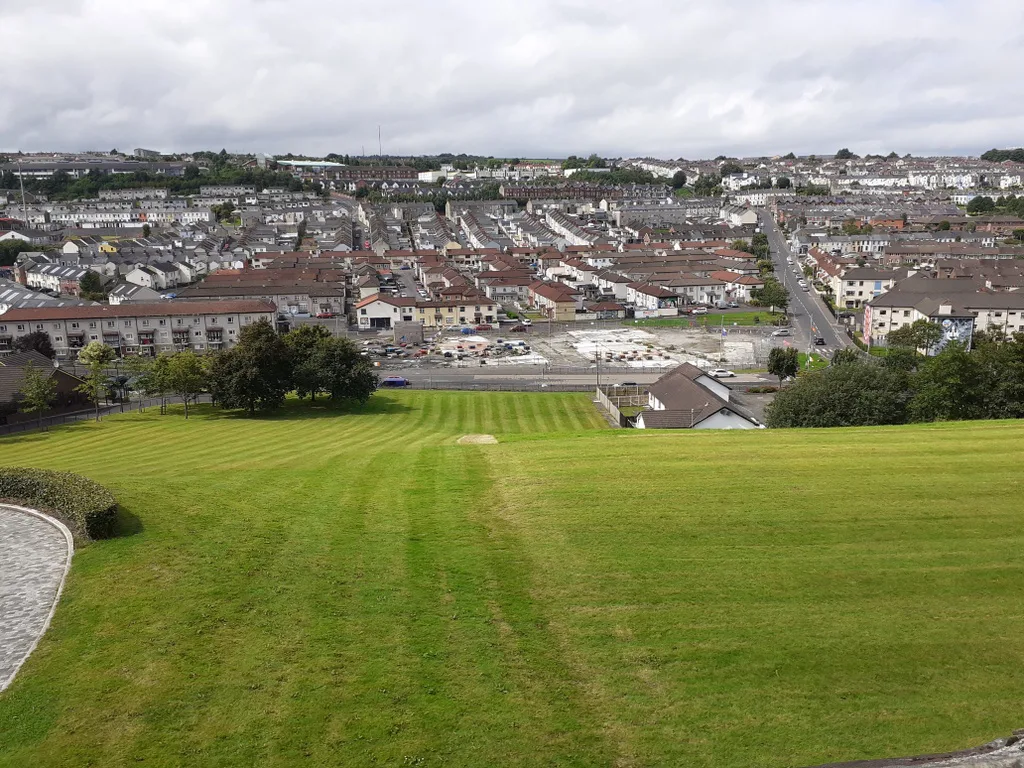
From the walls you look straight down into the Bogside, the neighbourhood outside the western ramparts, whose murals are a separate sight with their own walking route. Don't conflate the two: the walls are a single monument, while the Bogside Murals are a trail through the streets below.
The Museum of Free Derry, run by the Bloody Sunday Trust, is nearby and covers the civil rights era, with Free Derry Corner a short walk away.
Inside the walls, St Columb's Cathedral, Derry, sits close to the circuit and was built in the years after the walls went up.
Plan Your Walk
Walk the Derry City Walls early in the day, when the light is good and the ramparts are quiet, and finish with a museum or a cafe inside the gates. Wear grippy shoes, allow an hour for the circuit, and treat the cannon and the gates as the points worth slowing down for.
If you want more of the city's sights and stories in one place, browse things to do in Derry before you go. For anyone who enjoys a walled circuit, York City Walls offers a direct comparison and a useful benchmark.
Check the Visit Derry website for current visitor information, maps and any temporary access changes before travelling.
Explore more Derry guides
Frequently Asked Questions
How long does it take to walk the Derry City Walls?
Allow around an hour for the full one-mile circuit at an easy pace, and longer if you stop at the gates, cannon and viewpoints. A guided walk of the same circuit has been scheduled for 50 minutes, which gives a rough sense of the walking time without photo stops.
How high and how long are the Derry City Walls?
The walls stand up to 8 metres, or 26 feet, high and measure almost 1.6km, or one mile, in circumference. They were constructed between 1613 and 1619 and form the most complete circuit of historic walls of any town or city in Ireland.
Who built the Derry City Walls?
The walls were built as part of the Plantation of Ulster, ordered by King James I in 1611, to protect the English and Scots settlers of the new town. The Honourable The Irish Society was founded to run the plantation, and finance came from the City of London.
Who owns and manages the Derry City Walls today?
The Honourable The Irish Society still owns the walls, while the Department for Communities' Historic Environment Division manages and conserves them. They are the largest Monument in State Care in Northern Ireland.
What happened at the Siege of Derry?
In 1689 King James II and his Jacobite supporters besieged the city for 105 days during his campaign to reclaim the English throne from King William III. Thirteen apprentices shut the city gates, and the city withstood the attack.
Where should I start the walls walk?
The Guildhall is the handiest start and finish point, sitting at the foot of the western walls, and a council-led tour of the walls has departed from its front steps. The Diamond, at the centre of the old grid, is another obvious entry point.
Are the walls suitable for everyone?
The walkway is paved but not flat, with steps at several points and uneven sections where the rampart has settled. Parts of the circuit are exposed to wind and rain, so anyone with limited mobility may prefer a shorter section.
What is there to see near the walls?
The Tower Museum, the Guildhall, St Columb's Cathedral and the Bogside murals are all within easy walking distance of the circuit. Each is a separate sight, so budget time for them beyond the hour you need for the walls.