
West Highland Museum: A Visitor Guide to Fort William's Jacobite Collection

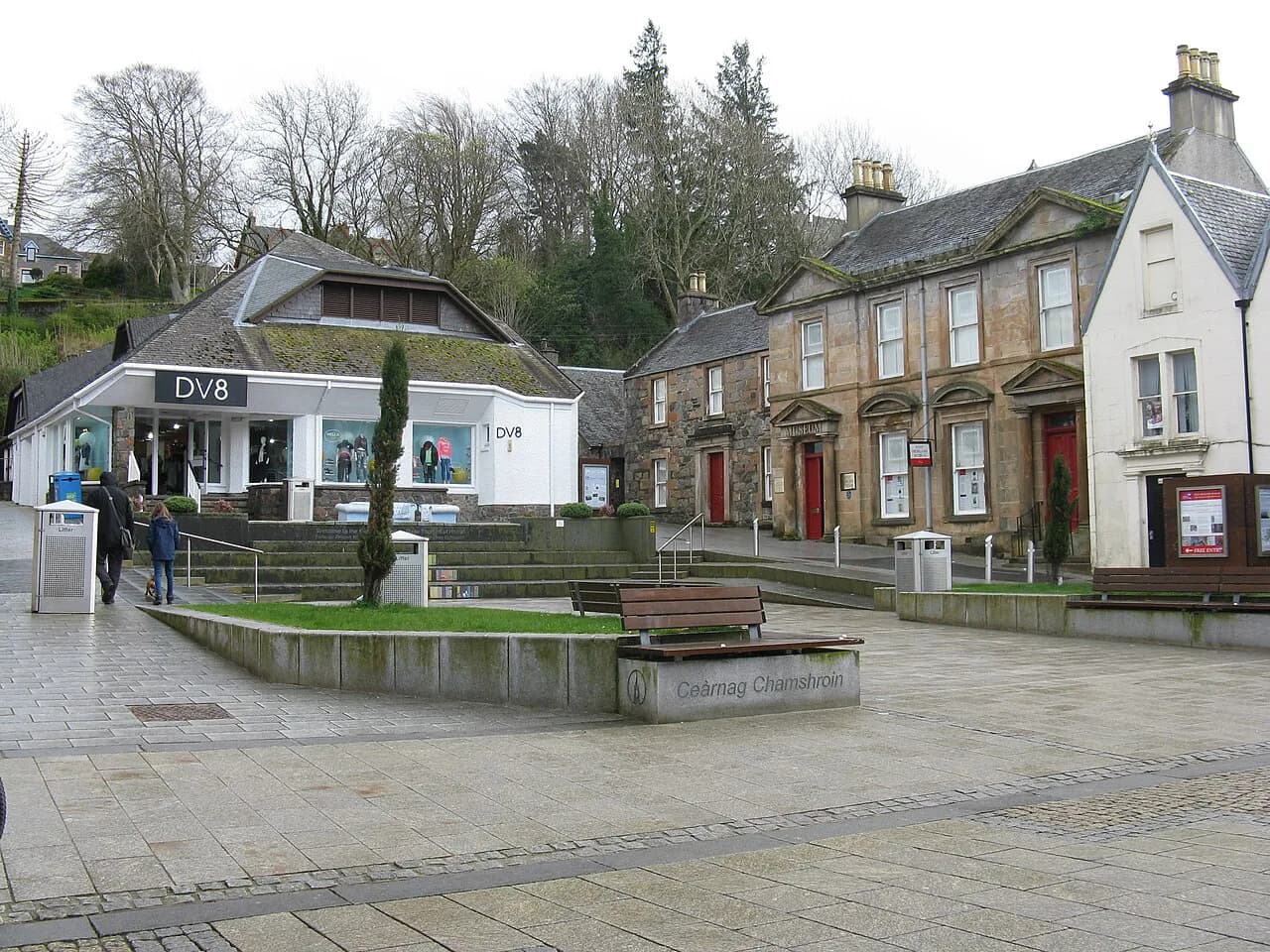
The West Highland Museum sits on Cameron Square in the middle of Fort William, a short walk from the High Street, and it is the town's obvious indoor stop for anyone interested in the Jacobite risings. It is a compact museum spread over two floors rather than a full-day attraction, so it slots neatly into a Highland itinerary built around hills, canals and distilleries.
Admission is free, with donations invited, which makes it an easy add-on rather than a competing cost against the area's paid castles and distillery tours. The collection's centrepiece is its Jacobite material, including objects linked to Charles Edward Stuart, and that alone justifies an hour of your time on a wet afternoon.
Where the West Highland Museum is in Fort William
The museum stands at Cameron Square, Fort William, Highland PH33 6AJ, in the town centre and within easy walking distance of the High Street shops and the railway station. If you are arriving by train or bus, you can walk to the door without needing a car, and there are charged car parks nearby if you are driving.
Fort William itself is the main service town for the west Highlands, sitting at the foot of Ben Nevis and the head of Loch Linnhe. That location makes the museum a natural first stop before you head out to the glens, the canal or the distillery, and it gives you context for the military history that shaped the town.
A small, free museum with a serious Jacobite collection
This is not a large national museum. It is a two-floor local collection with free admission and donations welcome, so set your expectations at a focused, old-fashioned display rather than blockbuster galleries. For the size of the place, the interpretation is good and the Jacobite material carries real weight.
Visitors typically spend half an hour to forty minutes inside, which reflects the scale of the building rather than the quality of the objects. If you read every label and linger over the Jacobite pieces, an hour is realistic, and that still leaves most of the day for the outdoor sights.
The building and its history in brief
The museum was established in 1922, making it one of the older museums in the Highlands, and it occupies a town-centre building on Cameron Square. Its collection grew around the military and social history of the west Highlands, which explains why the Jacobite story sits alongside commando material from the Second World War.
Fort William began as a garrison town, and that origins story runs through the displays. Knowing this helps you read the museum as a record of a working Highland community and its soldiers rather than a random assortment of objects.
What to see: the Jacobite and Bonnie Prince Charlie objects
The standout holdings relate to the Jacobite cause and to Charles Edward Stuart, popularly known as Bonnie Prince Charlie. The museum holds an outstanding collection of objects connected to the risings, and it has become a stopping point for fans of the Outlander books and television series who want the historical background behind the drama.
The Jacobite story is explained from its roots: the word itself comes from Jacobus, the Latin form of James, and refers to supporters of the Stuart line. The museum sets out how James VII and II lost the throne, how the Hanoverians succeeded, and how two risings on behalf of James and his son ended in failure.
Because the displays are dense with names and dates, it pays to give yourself permission to read selectively. Pick the objects tied to the 1745 rising and the aftermath of Culloden, then skim the rest rather than trying to absorb every caption in one pass.
The hidden portrait and the secret toast
One of the museum's best-known exhibits is a painted portrait concealed inside a tray, part of a tradition in which loyal supporters of the Stuart cause would raise a glass to the prince's likeness. After Culloden in 1746, supporting the Stuart claim was treasonable, so the device could be quickly dismantled if there was a risk of discovery.
The secret-toast story comes directly from the museum's own account of the tray, where loyal supporters would raise their glasses to the prince's likeness reflected in the cylinder or a goblet of claret. The artist is unknown and there is no record of the portrait's owners, so the romance of the toast is part of the object's appeal rather than its documented history.
The tray was discovered by chance in a London shop by the museum's founders, which is why it ended up in Fort William rather than in a private collection. Look for it among the Jacobite displays, because it is easy to walk past a painted tray without realising what you are seeing.


Beyond the Jacobites: the Fort, archaeology and Highland life
The rest of the collection broadens out into the archaeology and social history of the west Highlands, with material on the town's fort, Highland life, Victorian collecting and the military. Displays cover the Commandos who trained locally during the Second World War, a reminder that the region's military story did not end at Culloden.
There is also a strong human dimension in the museum's oral archive and podcast output, which record local voices rather than only objects. If you have limited time, choose between the Jacobite rooms and the Highland life galleries rather than rushing both.
How long to allow and when it gets busy
Budget forty-five minutes to an hour if you want to read the Jacobite captions properly; a quick circuit takes closer to thirty minutes. The museum is small, so a rainy day in Fort William can fill it quickly, and you may find yourself sharing the rooms with other wet-weather refugees.
Go early in the day if you want the Jacobite displays to yourself, or accept that a short wait is possible in high season. Because the whole visit is short, a busy spell costs you minutes rather than an afternoon.
Tickets, opening days and donations
Admission is free, and donations are invited to keep the museum running. That makes it one of the cheapest indoor stops in town and an easy contrast with paid attractions such as castle entries and distillery tours.
The museum's published hours are Monday to Saturday, 10:00 to 16:00, and it is closed on Sundays. Check the official site before you travel, because these are the kind of details that change with the season and with staffing.

Getting there from the High Street and the station
From Fort William railway station or the bus stance, walk into the town centre and head for Cameron Square, where the museum entrance sits among the shops. The walk is short and level enough to manage with a day bag, and you pass the High Street on the way, so you can combine the museum with errands or lunch.
Drivers will find charged car parks close to the centre, and the town is the junction point for roads heading to Mallaig, Oban and Inverness. If you are using public transport, the museum's central position means you do not need a taxi for the last stretch. If you are extending the trip along that road, our Oban guide covers the castles and whisky stops at the other end.
Accessibility and practical points for a short visit
The collection spreads across two floors, so expect stairs rather than a single-level gallery, and plan accordingly if steps are difficult for anyone in your party. The building is an older town-centre property rather than a purpose-built museum, which shapes both its charm and its constraints.
Treat the museum as a focused stop and plan refreshments on the High Street instead. Allow extra time if you want to listen to the oral archive material, which rewards slower attention than the display cases.
Nearby: what else to pair with the museum
The Caledonian Canal and Neptune's Staircase, the flight of locks designed by Thomas Telford, lie a short drive from the centre and make a natural follow-on for a half-day. It is an outdoor stop with no ticket needed, useful if the weather has cleared after your museum visit.
Ben Nevis Distillery is another straightforward addition on the edge of town, and it is the obvious choice if you want a contrast between the museum's free admission and a paid tour. Check tour times and booking directly with the distillery before you go.
For something older and quieter, Old Inverlochy Castle is a ruined thirteenth-century stronghold near the River Lochy, a short drive or a longer walk from the centre. Treasures of the Earth, a small geological exhibition, offers another indoor option if rain sets in for the day.
Is the West Highland Museum Worth Visiting?
Yes, if you want a compact, honest introduction to the Jacobite story and the military history of the west Highlands without paying an entry fee. It suits history-minded visitors, Outlander readers and anyone killing an hour in the town centre on a wet day; it will disappoint anyone hoping for a large, interactive museum experience.
Pair it with the canal, a distillery tour or a walk along the loch front, and the museum becomes a sensible anchor for a Fort William day rather than a destination on its own. Check the official site for current hours before you set out.
Frequently Asked Questions
Is the West Highland Museum free?
Yes. Admission is free and donations are invited, which makes it a low-cost stop in the centre of Fort William.
How long does it take to visit the West Highland Museum?
Most visitors see the museum in half an hour to forty minutes. If you read the Jacobite captions closely and use the oral archive material, allow around an hour.
What can you see at the West Highland Museum?
The core of the collection is Jacobite material connected to Charles Edward Stuart, including a concealed portrait in a tray that is one of the museum's best-known exhibits. Other displays cover the town's fort, Highland life, archaeology and the Commandos who trained locally.
Where is the West Highland Museum in Fort William?
It is at Cameron Square, Fort William, Highland PH33 6AJ, in the town centre within walking distance of the High Street and the railway station.
Is the West Highland Museum open on Sundays?
No, the published hours are Monday to Saturday, 10:00 to 16:00, with Sunday closed. Check the official site before travelling in case seasonal hours change.
Is the West Highland Museum worth visiting?
It is worth it if you want a short, free introduction to the Jacobite risings and the military history of the west Highlands. It is a small two-floor museum, so do not expect to fill a whole day there.