
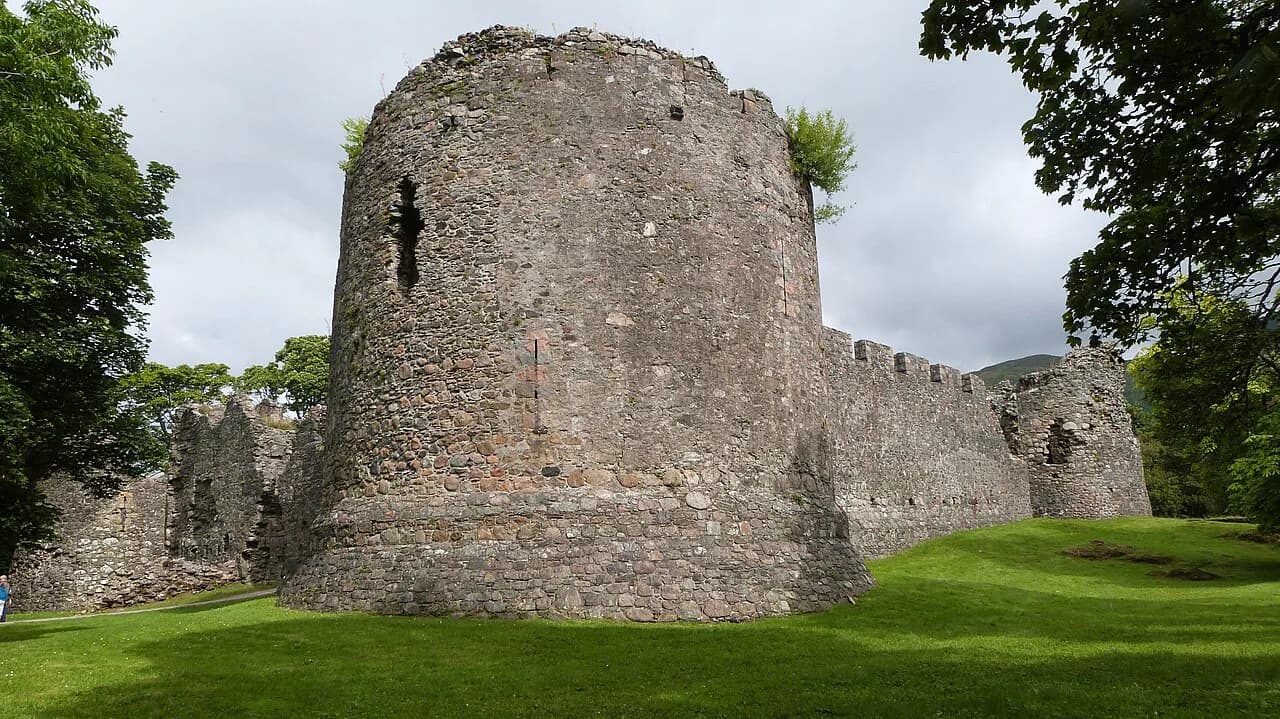
Old Inverlochy Castle: A Visitor's Guide to the Ruin near Fort William

Old Inverlochy Castle is a ruined 13th-century castle beside the River Lochy, just west of Fort William in the Scottish Highlands, and it is cared for by Historic Environment Scotland. It is a short outdoor stop rather than a half-day out: roofless walls and towers, no interiors to tour, and a setting that rewards a clear day.
The most common mix-up is the name. The baronial Inverlochy Castle hotel stands about two miles from today's ruin, so booking a room there is not the same as visiting the medieval site; the old castle is a separate, roofless structure on the riverbank.
Where Old Inverlochy Castle stands and how to reach it
The ruin sits at the western end of the Great Glen, beside the River Lochy and close to the head of Loch Linnhe, on the western approach to Fort William. Treat the riverbank setting as the landmark reference: the walls rise directly from flat ground next to the water, with Ben Nevis and the Glen Nevis hills behind the town.
Coming from the town centre, the site is reached on foot or by a short drive along the roads on the western edge of Fort William, and it also works as a stop on the way to or from Glenfinnan and the Road to the Isles. Historic Environment Scotland's own page for Inverlochy Castle carries the access notes and any current travel instructions, so check it before setting out.
If you are building a day around the ruin, the Caledonian Canal and Neptune's Staircase are on the same side of town and make a natural pairing by car or bike. For a wider shortlist of what else is within reach, start with the Fort William Attractions: 5 Visitor Guides collection.
The history in brief: Comyns, Crown and two battles
The old castle was built in 1208 by John III Comyn, Lord of Badenoch, a rival of Robert the Bruce for the Scottish crown. The site mattered because of who held it and what happened under its walls, not because of any palace interiors.
The first Battle of Inverlochy followed Alexander of Islay's imprisonment by King James I, when a force of Highlanders defeated Royalist troops at the castle. The second came in 1645, when a Royalist army of Highlanders and Confederate Irish troops marched through the winter mountains to destroy Archibald Campbell's pursuing forces encamped beneath the walls. Both events explain why the site is remembered far beyond its size.
Legend, rather than record, places an earlier Pictish fortress on this ground in the 600s, said to have been destroyed by Vikings. Treat that as a story told about the site, not as archaeology you can see today.
How the castle passed from the Comyns
After John III Comyn was murdered in 1306, Robert the Bruce took the Scottish crown and stripped the Comyn family of their lands and properties, Inverlochy Castle among them. That transfer is the pivot in the site's story: a private stronghold became a Crown asset, and the castle's later role was military and administrative rather than domestic.
Centuries later the lands passed to the Scarlett family, and Lieutenant General William Frederick Scarlett built the new Inverlochy Castle in the 1800s, the building that is now the hotel. The medieval ruin and the Victorian house share a name and a landscape but nothing structural.
What to see on the site
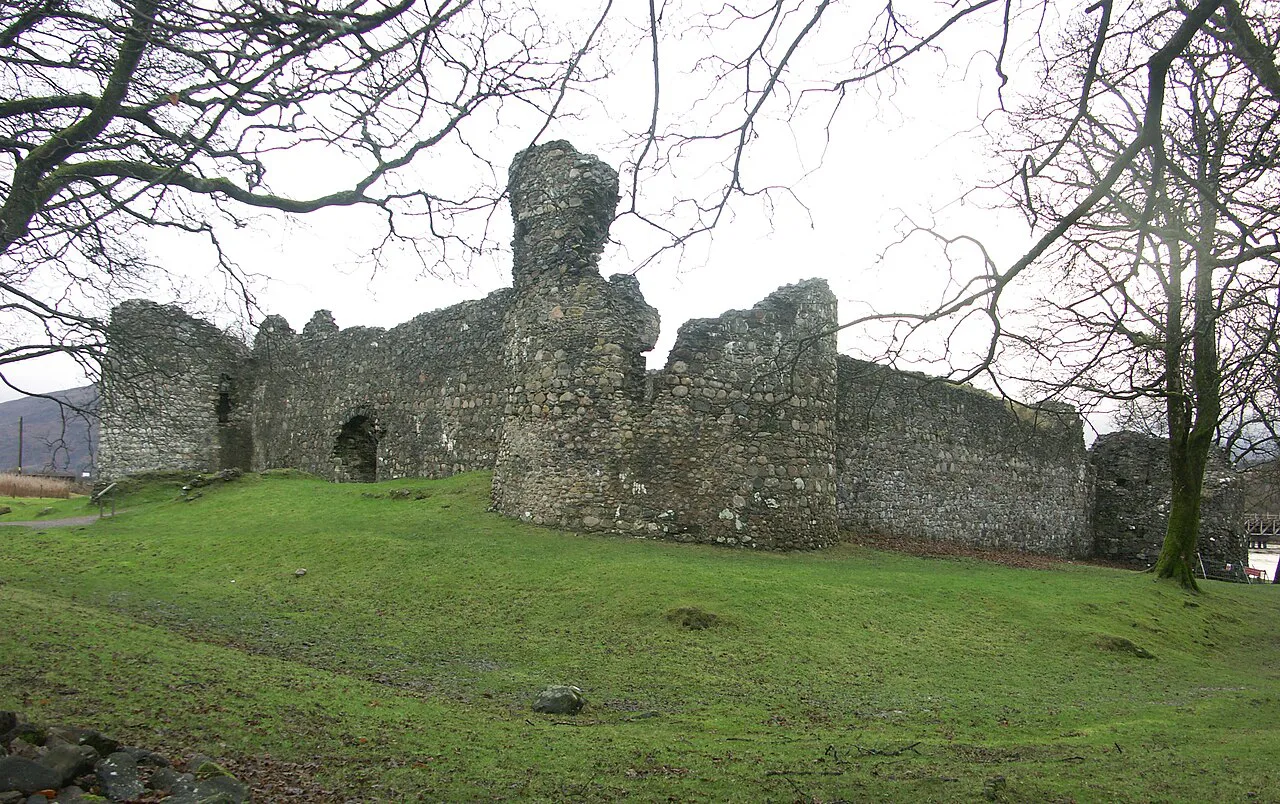
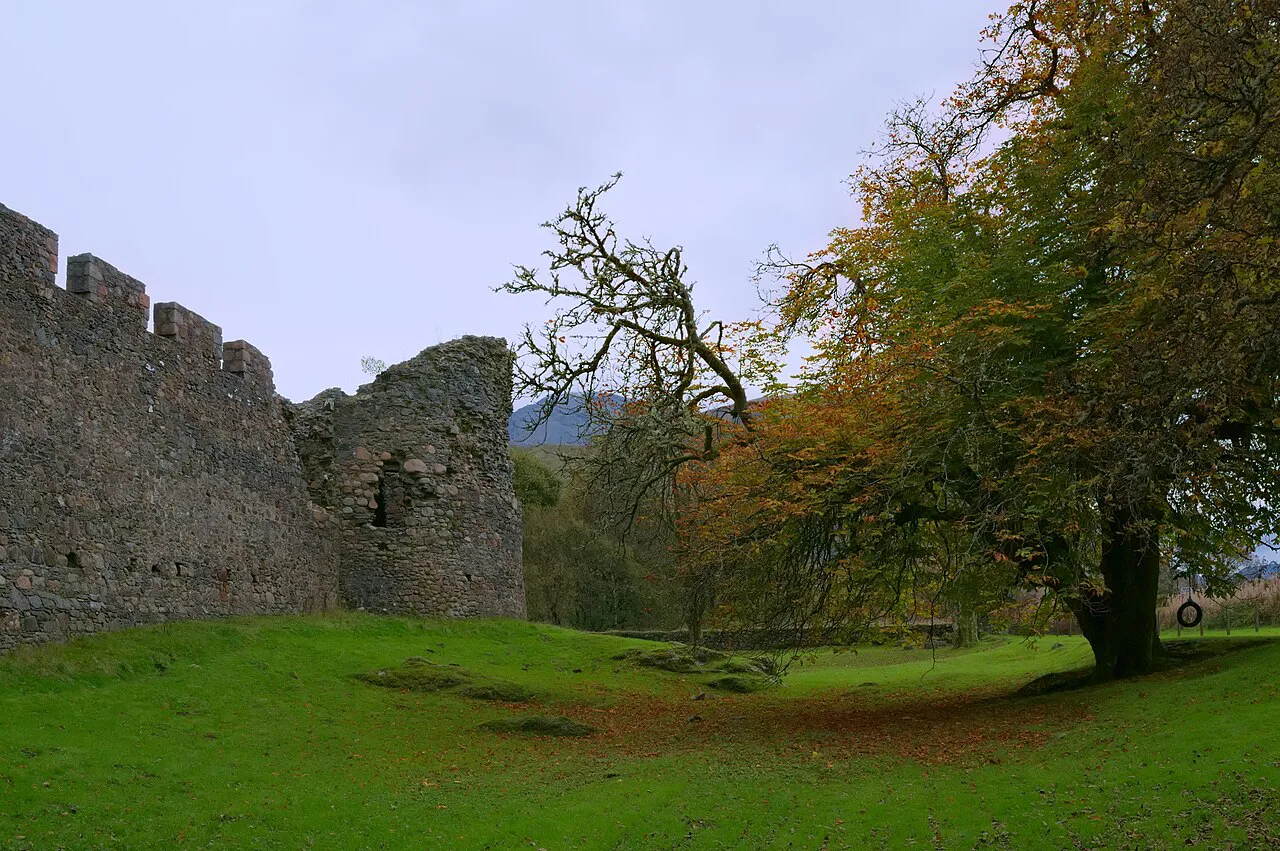
Four towers survive, and the largest, Comyn Tower, keeps its arrow slits — narrow openings that show how the building was designed for defence rather than comfort. Look for the wall walks and parapets topping the outer walls, the elements that make the plan readable when you walk the circuit.
The ruins remain relatively unaltered, which is unusual for a structure raised in the 1200s, so what you see is largely the medieval shell rather than a Victorian reconstruction. Give yourself time to walk the full outside wall and to read the site from the river side, where the defensive position makes most sense.

How long to allow
Plan on a short visit: a walk around the walls, a look at the towers and a few minutes by the river covers the site comfortably. It is an exposed, outdoor stop with uneven ground, so footwear matters more than stamina.
Because there are no interiors or displays to work through, the ruin fits into a morning or late afternoon alongside other stops rather than anchoring a whole day. Pair it with Glen Nevis and the Ben Nevis foothills, or push further west to Glenfinnan, and the driving does the work.
Tickets and opening: how to check before you travel
Historic Environment Scotland cares for the ruin and publishes the visiting information, so use its place page for the current position on access and any seasonal arrangements before you travel. That one check is worth doing the day before you go, particularly outside summer.
Do not assume the same arrangements as at staffed, ticketed sites such as Stirling Castle: this is an open ruin, and the practical questions are about access and ground conditions rather than a ticket desk. Where current details are not stated at the gate, the official page is the place to look.
The old castle and the hotel are not the same place
Inverlochy Castle hotel is a country house hotel in the baronial building erected by the Scarlett family, sitting about two miles from the medieval ruin. Visitors searching for the castle sometimes arrive at the hotel driveway instead of the riverbank, so fix the Historic Environment Scotland page as your destination rather than the hotel postcode.
The hotel runs guided excursions from its base, including days covering Loch Ness and Urquhart Castle, Glencoe, the Isle of Skye and a Glencoe and Trossachs route that finishes at Inveraray Castle. These are separate paid experiences arranged through the hotel, not tours of the old ruin, and they suit travellers using the hotel as a base for the wider Highlands.

Nearby options to add to the same day
Glen Nevis, the Ben Nevis foothills and Glenfinnan all sit within easy reach of Fort William and combine well with the ruin, especially if you have a car. The Glenfinnan Viaduct and the surrounding glen appear on the hotel's Skye route, which gives a sense of how the western glens string together.
Back in town, the West Highland Museum in Cameron Square is the obvious indoor counterpart when the weather turns, and the Ben Nevis Distillery, Fort William adds a different kind of stop on the north side of town. If you want more indoor options for a wet day, our guide to museums and history in Inverness shows how a Highland town turns its past into a rainy-afternoon itinerary.
For engineering on a grand scale, Neptune's Staircase on the Caledonian Canal is a short run north and pairs neatly with a riverside stop at the castle. A broader plan for the town and its glens is set out in things to do in Fort William.
Practical tips for the riverside setting
The site is open ground beside a river at the foot of Ben Nevis, so expect wind, rain arriving fast and soft ground after wet weather. Waterproofs and shoes with grip do more for the visit than any guidebook, and a spare layer is sensible even in a promising forecast.
Keep children and dogs away from the water's edge, and treat the walls as ancient masonry rather than climbing frames. Photography is best from the riverbank in low light, when the towers read clearly against the sky.
Plan Your Visit
Old Inverlochy Castle is worth an hour of anyone's time in Fort William: a genuine 13th-century shell with a battle history and a riverside position, reached without booking a tour. Go for the walls and the Comyn Tower, not for displays or facilities.
Confirm current access on the Historic Environment Scotland page before you set off, then build the rest of the day around Glen Nevis, the canal or the distillery.
Explore more Fort William guides
Frequently Asked Questions
Can you walk around Old Inverlochy Castle?
Yes. The ruin is an open, roofless site where you walk around the outside walls and towers, including Comyn Tower and the wall walks and parapets. There are no interiors or displays to tour, and the ground beside the River Lochy is uneven, so wear shoes with grip. Historic Environment Scotland publishes current access information on its place page for Inverlochy Castle.
Is Old Inverlochy Castle the same as Inverlochy Castle hotel?
No. Old Inverlochy Castle is the medieval ruin beside the River Lochy, cared for by Historic Environment Scotland. Inverlochy Castle hotel occupies the baronial house built by the Scarlett family in the 1800s, about two miles from the ruin. If you want the medieval site, navigate to the Historic Environment Scotland page rather than the hotel.
Why are there two Battles of Inverlochy?
The first followed Alexander of Islay's imprisonment by King James I, when a Highland force defeated Royalist troops at the castle. The second took place in 1645, when a Royalist army of Highlanders and Confederate Irish troops marched through the winter mountains and destroyed Archibald Campbell's forces encamped beneath the walls.
What is there to see at Old Inverlochy Castle?
Four surviving towers, the largest being Comyn Tower with its arrow slits, plus the wall walks and parapets along the outer walls. The shell is relatively unaltered for a structure of its age, so the visit is about reading the defensive plan and the riverside setting rather than seeing furnished rooms.
How long should I spend at Old Inverlochy Castle?
Allow a short stop rather than a half day. Walking the circuit, looking at the towers and taking in the river view is quick, and there are no indoor exhibits to extend it. Pair it with Glen Nevis, the Caledonian Canal or the West Highland Museum to fill a morning.
Where do I check opening details and tickets for Old Inverlochy Castle?
Historic Environment Scotland looks after the ruin and publishes the visiting information, so use its Inverlochy Castle place page for the current position on access and any seasonal arrangements before travelling. That is the page to trust over third-party listings.
What is the Pictish fortress story at Inverlochy?
Legend places a Pictish fortress on the site in the 600s, said to have been destroyed by Vikings. It is told as a story rather than proven archaeology, so enjoy it as part of the site's folklore without expecting to see remains of it on the ground.