
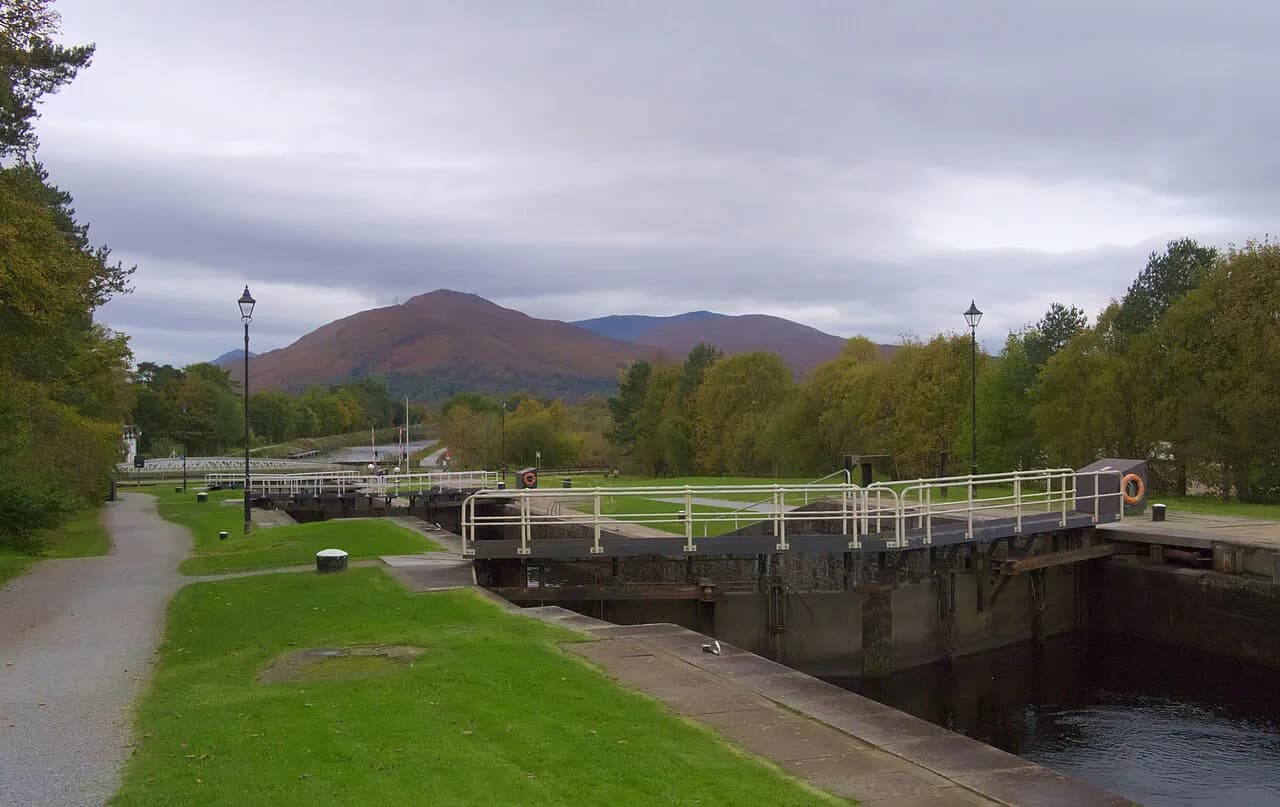
Neptune's Staircase: Britain's Longest Staircase Lock

Neptune's Staircase is the eight-lock staircase on the Caledonian Canal at Banavie, lifting boats 64 ft (19.5 metres) in one continuous flight. It is the longest staircase lock in the United Kingdom, and you can walk its length from the towpath without buying a ticket.
Most visitors come to watch a boat work through the flight, which takes around 90 minutes end to end. Time your arrival around a passage and the site makes sense; arrive between boats and it is a handsome piece of masonry with the water sitting still.
Where Neptune's Staircase Is
The staircase sits at Banavie, north-east of Fort William just off the A830, with the lock keeper's cottage at PH33 7PJ as the address to navigate by. The canal itself runs some 60 miles through the Great Glen between Corpach and Inverness, so Banavie is only one stop on a much longer waterway.
From Fort William the drive or bus ride takes about 10 minutes, which makes the locks an easy half-hour detour rather than a day out in themselves. Treat it as one stop in a wider day and you will get far more from the trip.
What You Are Looking At
A staircase lock is not a single chamber but a chain of them, each gate acting as the top of one lock and the bottom of the next. At Banavie eight locks run in an unbroken line over roughly a quarter of a mile of continuous masonry, so a boat entering at the bottom has to be moved up through every chamber in turn. That is why the flight takes so long to work and why the whole structure reads as one piece of engineering rather than eight separate ones.
Each chamber is about 180 ft (55 metres) long, which is worth knowing when you are standing beside one trying to judge scale. Look for the base plinths of the original hand-operated capstans along the edge; the capstans themselves have gone, but the mounts remain part of the fabric.
A Short History of the Caledonian Canal
Thomas Telford planned the Caledonian Canal from survey work done by James Watt three decades earlier, and construction began in 1803 as a government scheme to create work and slow emigration from the Highlands. The original plan assumed seven years and a budget that proved hopelessly optimistic; the canal finally opened in 1822 after 17 years and at a far higher cost.
The canal opened shallower than designed, at 14 ft rather than the 20 ft Telford intended, which limited the ships that could use it as vessels grew larger. That mismatch is the reason the waterway never became the freight route its backers imagined, and it explains why the locks today are mainly a pleasure-craft spectacle.
How the Locks Work
The gates were originally hand-powered and have since been converted to hydraulic operation using rams, though the labour has not vanished: the staircase needs a team of at least three lock keepers to run. Each current gate weighs 22 tons, so what looks like a slow, gentle process is a heavy mechanical job done in stages.
Information boards beside the flight explain the hydraulic system and the sequence of filling and emptying, which is the quickest way to understand what you are watching. Read them before a boat arrives rather than during the passage.

Watching a Boat Pass
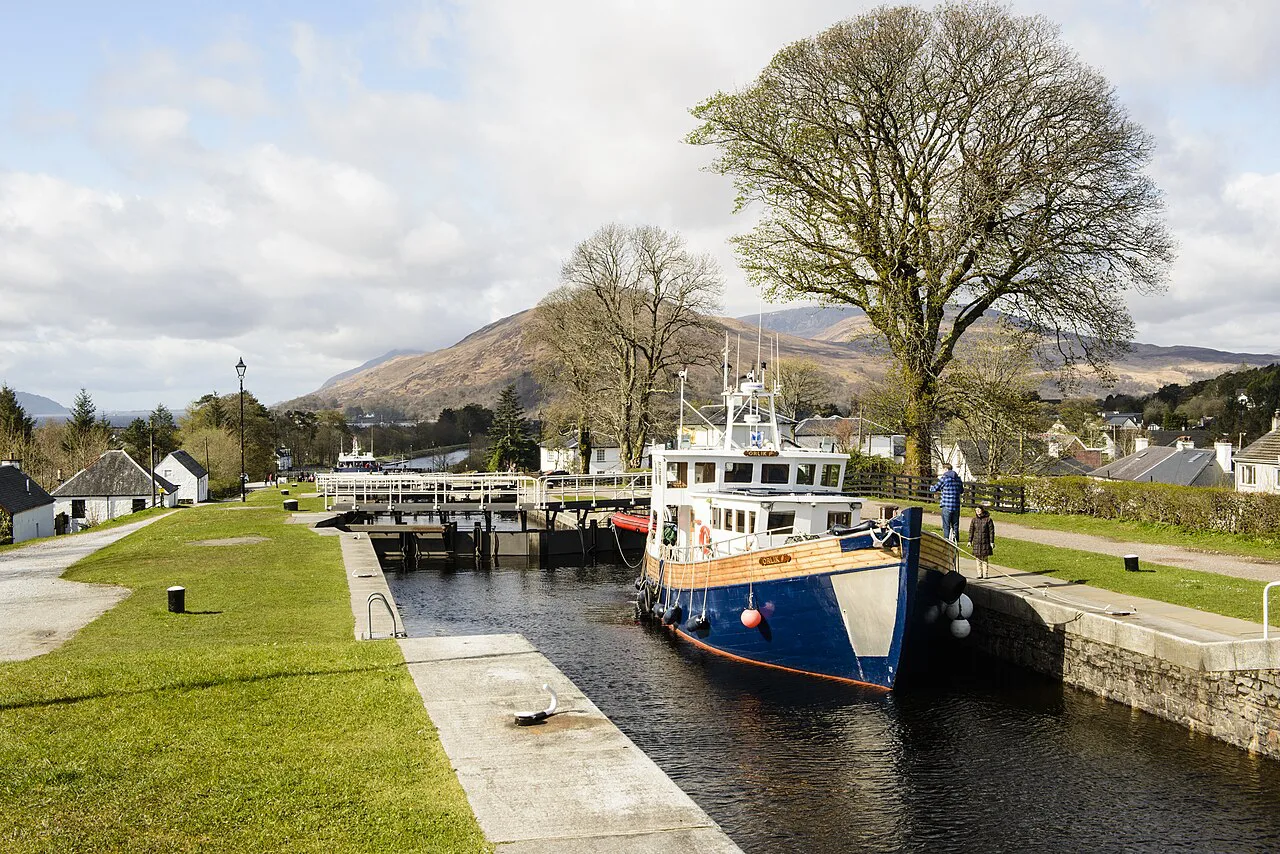
The best vantage point is the towpath alongside the flight, where you can walk from chamber to chamber and follow a boat the whole way up or down. The passage takes roughly 90 minutes, so a boat that has just entered the bottom lock will still be climbing when you have walked the full length twice.
If you want to see the machinery in action, ask at the lock keepers' cottage or check the canal operator's schedule before setting out, since passages depend on traffic rather than a fixed public timetable. The nearby Jacobite Steam Train passes on the line beside Banavie, so a visit can combine both if the timings suit.
How Long to Allow
A brisk walk along the flight and back takes about half an hour, which covers the viewpoints, the information boards and a look at the lock keeper's cottage. Add time if a boat is in the staircase, because you will want to stay for the full climb rather than catch the first two chambers and leave.
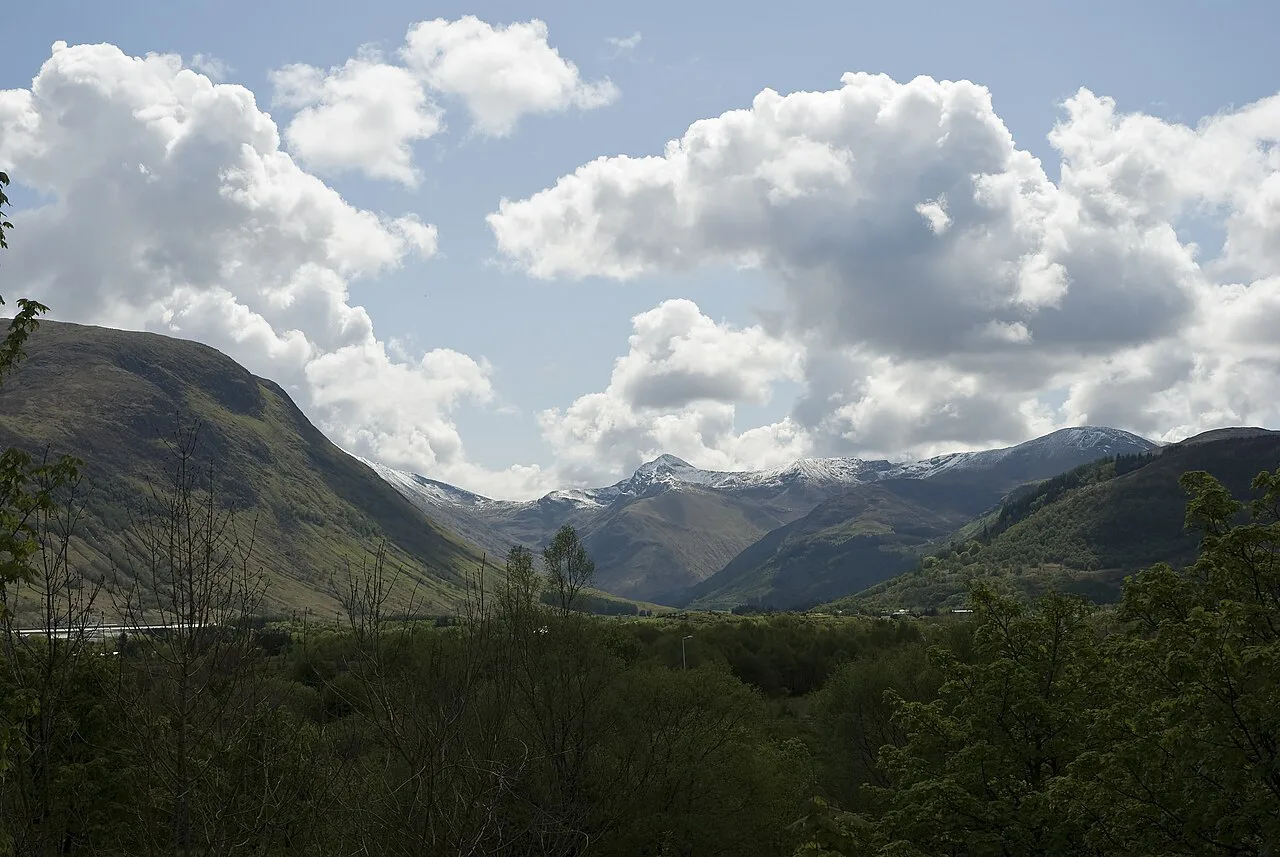
For a half-day, pair the locks with one nearby stop and keep the pace slow: the site rewards lingering on the grass banks with the mass of Ben Nevis rising behind the trees. Bring a picnic if the weather is settled, as the banks on both sides make natural seating.
Tickets, Access and Facilities
Walking the towpath and watching the locks costs nothing; there are no tickets for the exterior of the staircase. The site is visible at all times, though access arrangements are worth confirming locally before a winter trip.
There is no visitor centre at the staircase, so plan on the towpath being the whole experience and do not count on indoor shelter, toilets or a café at the site itself. For any bookable canal experience, including boat trips through the flight, check Scottish Canals directly, as fares and departure times are set by Scottish Canals rather than published at the locks.
Getting There from Fort William
By car, take the A830 north-east from Fort William to Banavie and leave the car in the free parking area at the site. By bus, services from the town centre cover the three miles in about 10 minutes, which avoids the narrow lanes around the canal.
Cyclists can reach Banavie easily along the canal towpath, and the route continues towards Corpach for anyone wanting a longer ride. Whichever way you arrive, the walk along the flight is on uneven ground with steps between some levels, so wear shoes you can trust in wet weather.

What Is Nearby
Ben Nevis Distillery sits just outside Fort William on the road towards the locks, making it a sensible pairing before or after the staircase. Old Inverlochy Castle, a ruined thirteenth-century stronghold beside the River Lochy, is a short drive south and is a different place entirely from the nineteenth-century Inverlochy Castle hotel.
The Jacobite Steam Train runs on the line by Banavie, and the schedule is worth checking if you want to see it pass while you are at the locks. Beyond that, Corpach and the road to Loch Linnhe give you a longer loop if you have a car, and the West Highland Museum in Fort William's Cameron Square fills a wet hour back in town.
Practical Points
The Great Glen weather changes fast, and the flight is fully exposed, so bring a waterproof even on a bright morning in Fort William. The walking surface along the flight is uneven masonry, so sturdy shoes matter more than any other kit.
Neptune's Staircase sits 32 miles from Fort Augustus, which is worth remembering if you are touring the canal rather than basing yourself in Fort William. Plan the visit as one stop among two or three, with the distillery or the castle filling the rest of the day. Then use the Fort William Attractions: 5 Visitor Guides hub to slot the staircase into a wider itinerary, and if your trip heads east along the canal, our Inverness guide covers the museums and history at the other end.
Plan Your Visit
Neptune's Staircase is at its best when a boat is in the flight, so build flexibility into your day and be prepared to wait on the towpath. The walk is free, the setting is dramatic, and the engineering is easier to appreciate once you understand the staircase sequence.
Check Scottish Canals for any bookable trips through the locks and confirm access details before travelling in winter, then use the staircase as one stop in a wider day around Fort William.
Frequently Asked Questions
How many locks are on Neptune's Staircase?
Eight. They run in a single continuous flight at Banavie on the Caledonian Canal, with each gate serving as the top of one lock and the bottom of the next.
How long does it take a boat to pass through Neptune's Staircase?
Around 90 minutes from bottom to top, because the boat has to be moved through every chamber in turn. Time your visit around a passage if you want to see the machinery working.
Where is Neptune's Staircase in Scotland?
At Banavie, north-east of Fort William just off the A830, on the Caledonian Canal. The canal runs about 60 miles through the Great Glen between Corpach and Inverness.
Is it free to visit Neptune's Staircase?
Walking the towpath and watching the locks is free, with no ticket needed for the exterior of the staircase. Any boat trip through the flight is a separate, bookable experience arranged through Scottish Canals.
How do I get to Neptune's Staircase from Fort William?
Take the A830 north-east to Banavie, roughly 10 minutes by car with free parking at the site, or catch a bus from the town centre. Cyclists can follow the canal towpath.
When was Neptune's Staircase built?
Construction of the Caledonian Canal began in 1803 to Thomas Telford's plans and the canal opened in 1822. The staircase locks are part of that original scheme.