
Inverness Cathedral (St Andrew's Cathedral): A Visitor's Guide

Inverness Cathedral is the Scottish Episcopal cathedral dedicated to St Andrew, standing right beside the River Ness in the centre of Inverness. It is the seat of the Bishop of Moray, Ross and Caithness, and it is a working church with a choir and a bell tower rather than a museum piece. Allow roughly half an hour inside, more if you catch a service or bell ringing.
The building is a Victorian Gothic Revival design by the Inverness architect Alexander Ross, put up between 1866 and 1869. That makes it relatively young for a cathedral, but the reddish Tarradale stone and granite columns give it real presence from the riverside path. For the opposite end of the age scale, compare it with Canterbury Cathedral, where the medieval fabric and pilgrim history tell a very different story. Entry arrangements are set by the cathedral itself, so confirm them on the official site before you travel.
What Inverness Cathedral is and where it stands
Inverness Cathedral, also called the Cathedral Church of Saint Andrew, sits by the River Ness in Inverness, the Highland capital. It belongs to the Scottish Episcopal Church and serves as the mother church of the Diocese of Moray, Ross and Caithness.
Its riverside position makes it easy to combine with a walk along the Ness, and it is a short step from the town centre streets around the Victorian Market. The cathedral has its own website at invernesscathedral.org, which is the place to confirm when it is open to visitors.
A short history: Bishop Robert Eden and the 1866 foundation stone
The cathedral owes its existence to Bishop Robert Eden, who chose Inverness as the seat of the diocese. The first stone was laid in 1866 by the Archbishop of Canterbury, and the building was finished by 1869. The congregation itself had begun as a small group on the other side of the River Ness in 1853.
The cathedral has long been described as the first new Protestant cathedral built in Great Britain since the Reformation. That status comes from the building's own chroniclers rather than from anything you can check on the day; the Gothic Revival architecture is the reason to come.
The building: Alexander Ross, Tarradale stone and Peterhead granite
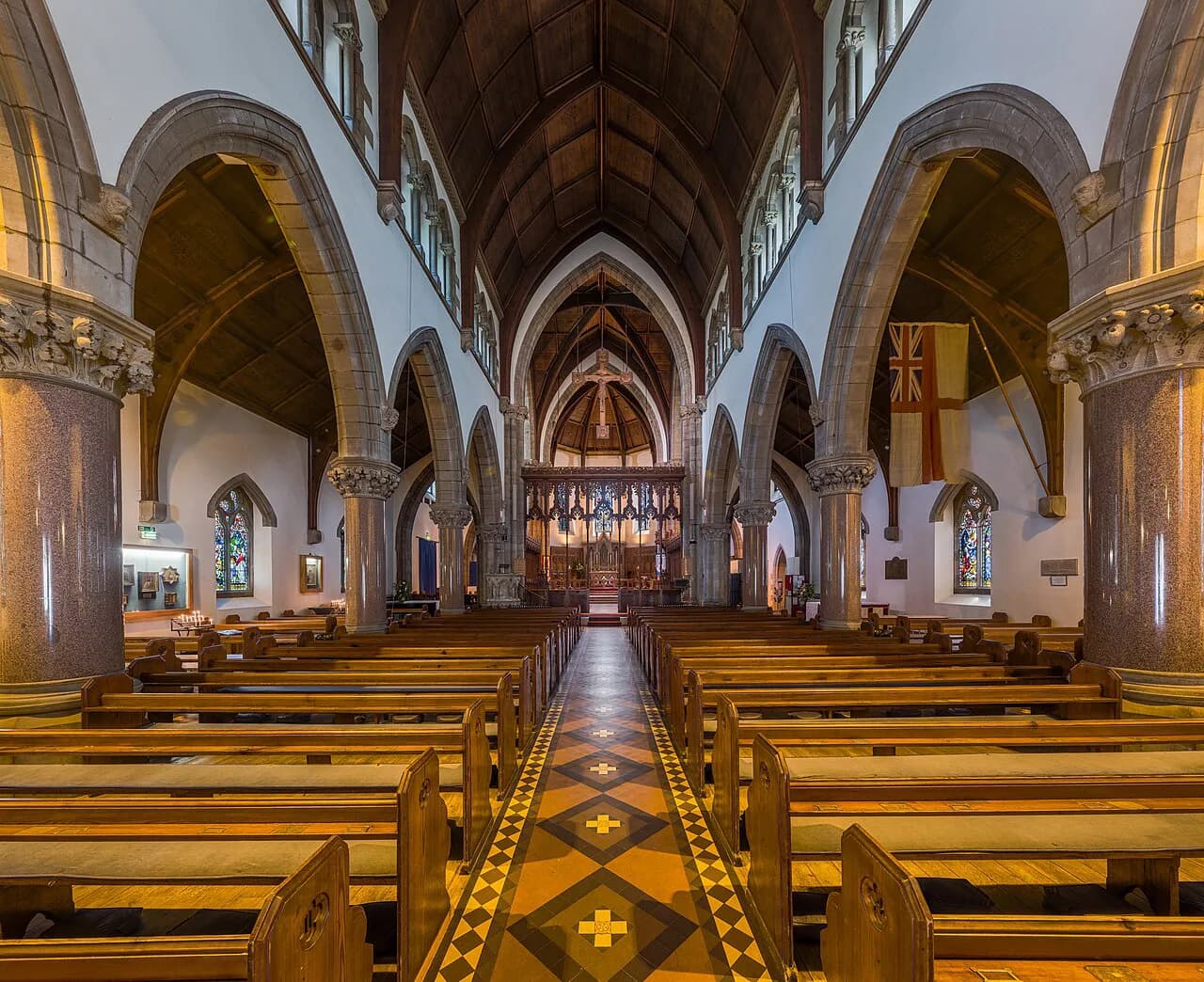
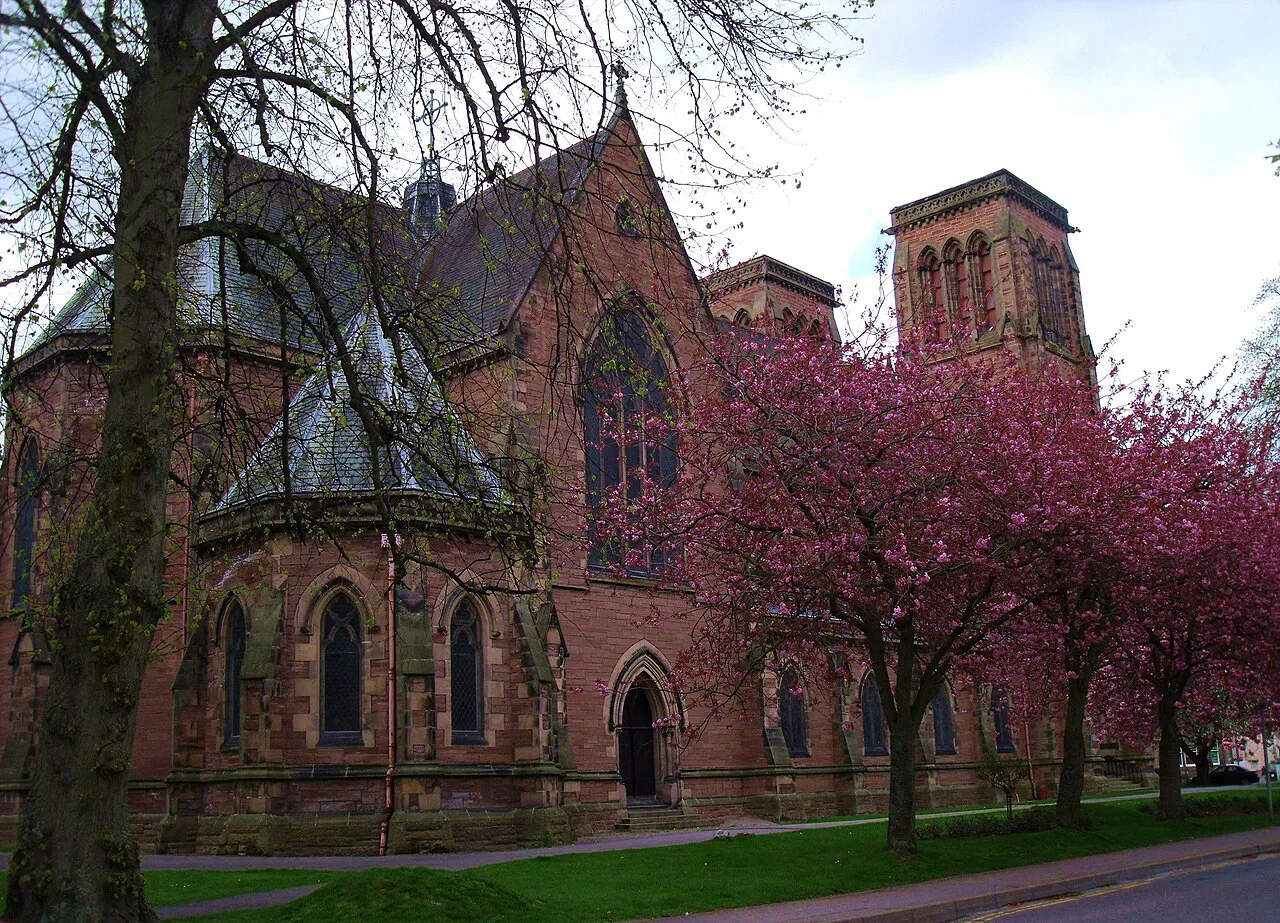
Alexander Ross, an Inverness architect, designed the cathedral in the Gothic Revival style, with pointed arches and detailed stonework. The exterior is built of reddish Tarradale stone, while the tall columns of the nave are made of Peterhead granite.
Look up at the nave columns and then at the stonework outside to see the contrast between the pale granite and the warm red walls. The style is deliberately medieval in inspiration, which is why the interior feels older than its 1860s dates suggest.
Why the two planned spires were never built
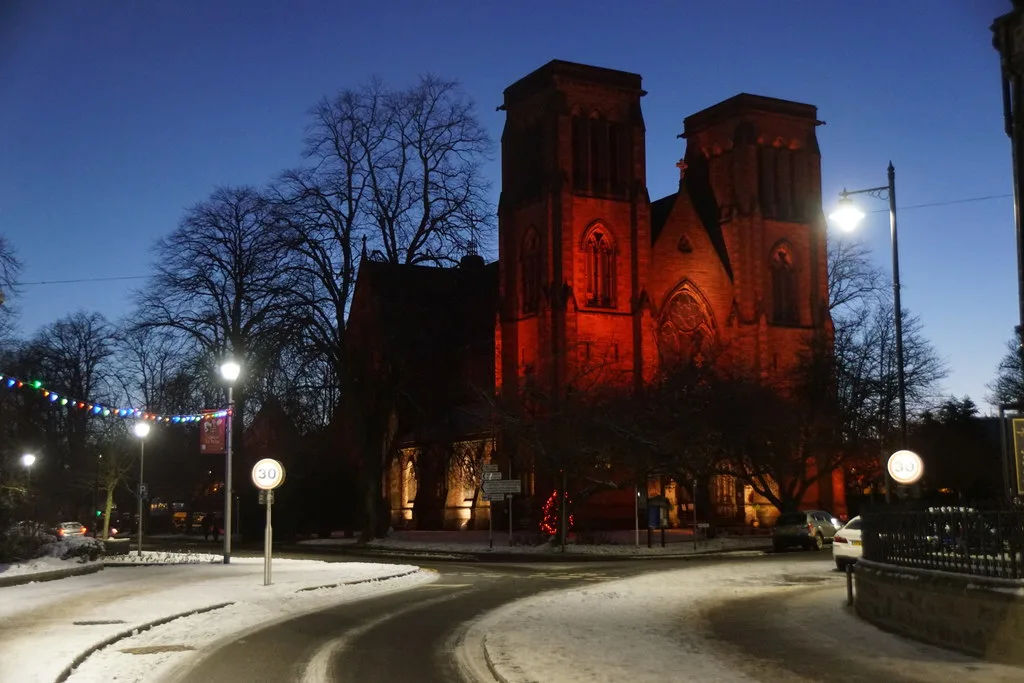
The original design called for two very tall spires, and they were never added because there was not enough money at the time. That is why the cathedral's skyline looks flatter and more compact than the drawings behind it.
Knowing this changes how you read the west front: the tower reads as a base waiting for something above it. It is also a useful reminder that Victorian church building ran on subscription and fundraising, not on guaranteed budgets.

The bells: ten change-ringing bells and a heavy tenor
The cathedral has a set of ten bells, described as the most northerly set of change-ringing bells in a church anywhere in the world. The largest, the tenor bell, weighs about 860 kilograms. Change-ringing means the bells are rung in changing sequences to make patterns rather than a fixed tune.
Bell ringing is part of the cathedral's working life rather than a performance laid on for tourists. The cathedral's own pages on music and events describe choral services sung by the cathedral choir on Sundays along with bell ringing and musical events, without publishing a full timetable.
Inside the nave, choir and altar: what to look for
Inside, the nave leads towards the choir and altar, and the granite columns frame the view down the length of the church. Look for the change in light and detail as you move from the entrance towards the east end.
The cathedral is dedicated to St Andrew, the patron saint of Scotland, and that dedication shapes the fittings and imagery around the building. Quiet, respectful visiting is the norm in a working Episcopal church, especially when a service is in progress.
Services, choral music and bell ringing
This is not a dormant monument: the cathedral choir sings at Sunday services and the building hosts musical events through the year. If music is the draw, check the cathedral's music and events page for what is actually scheduled during your dates.
Worship comes first, so time your visit around services rather than expecting to wander freely during one. The cathedral's website carries the current pattern of services; the page you are reading does not reproduce a timetable.
Tickets and opening times: where to check
The cathedral's own website, invernesscathedral.org, is where opening arrangements for visitors are published, together with any arrangements for groups. Confirm them before making the trip, since a working cathedral's hours can shift around services and events.
Third-party tour listings that mention the cathedral, such as a self-guided audio walk starting and ending at Inverness Castle, describe a separate product rather than entry to the building. Do not treat a tour page as the cathedral's own visitor information.

How to get there and how long to allow
The cathedral stands by the River Ness within walking distance of the centre of Inverness, so most visitors arrive on foot from the shops and bridges. Allow about half an hour for the building itself, and longer if you sit in on part of a service or listen to the bells.
Pair it with a riverside walk and you have a natural half-day: cathedral first, then along the water towards the islands or across to the other bank. Comfortable shoes matter more than timing here, because the pleasure is in the stroll.
Nearby: Inverness Castle, the Victorian Market and Eden Court
Inverness Castle and the Victorian Market sit close to the cathedral in the town centre, so both slot easily into the same walk. The castle's own visitor offering has its own booking arrangements, which are worth checking separately.
Nearby, Eden Court Theatre is a flexible next stop if you want an evening of music or theatre after a day of sightseeing.
For a wider plan covering museums, gardens and the riverside, the Inverness Attractions: 8 Visitor Guides collection maps out the rest of the city. Build the cathedral into that list rather than treating it as a standalone outing.
Plan Your Visit
Inverness Cathedral rewards a short, unhurried stop: a Victorian Gothic building of Tarradale stone and Peterhead granite, finished in 1869, with ten change-ringing bells and spires that never were. Go for the architecture, stay if the choir or the bells are in action, and treat the riverside setting as part of the visit.
Check the cathedral's own website for opening arrangements and music before you set out, then fold the visit into a walk that takes in the castle, the market and the river. It is one of the simplest good hours in the city.
Explore more Inverness guides
Frequently Asked Questions
Where is Inverness Cathedral?
It stands beside the River Ness in Inverness, the Highland capital, within walking distance of the town centre. It is the cathedral church of the Scottish Episcopal Diocese of Moray, Ross and Caithness.
Who designed Inverness Cathedral?
The Inverness architect Alexander Ross designed it in the Gothic Revival style, with pointed arches and detailed stonework. The exterior is Tarradale stone and the nave columns are Peterhead granite.
When was Inverness Cathedral built?
The first stone was laid in 1866 by the Archbishop of Canterbury, and the building was finished by 1869. The congregation had started as a small group on the other side of the River Ness in 1853.
Why does Inverness Cathedral have no spires?
Two very tall spires were part of the original design but were never built because there was not enough money at the time. The result is the flatter skyline you see today.
How many bells does Inverness Cathedral have?
It has ten change-ringing bells, described as the most northerly such set in a church anywhere in the world. The tenor bell weighs about 860 kilograms.
Do you need tickets for Inverness Cathedral?
Visitor arrangements are set by the cathedral itself, so check its official website before travelling. Third-party audio tours that pass the cathedral are separate products and not entry to the building.
Are there concerts at Inverness Cathedral?
The cathedral hosts musical events and its choir sings at Sunday services. Check the cathedral's music and events page for what is scheduled during your dates.
How long should I spend at Inverness Cathedral?
Allow around half an hour for the building, longer if a service, the choir or bell ringing is under way. It combines easily with a riverside walk and nearby town-centre sights.