
Canterbury Cathedral: A Visitor Guide to What to See

Canterbury Cathedral is the mother church of the worldwide Anglican Communion and the seat of the Archbishop of Canterbury, sitting in a walled precinct in the middle of the city. A visit covers an eleventh-century Romanesque crypt, a twelfth-century early Gothic quire and a fourteenth-century Perpendicular nave, all within a short walk of both city stations. Allow two to three hours, and check service times before you fix your day. If you are comparing cathedral visits on your trip, our guide to Birmingham Cathedral covers how a much smaller city-centre cathedral works.
What Canterbury Cathedral Is and Why It Matters
This is the church Augustine established after Pope Gregory the Great sent him to England as a missionary in 597, and where he set his seat as England's first Archbishop. That history makes it the mother church of the Anglican Communion rather than simply a large parish church. It is the building that gives the city its place on the map, and the reason the surrounding streets are laid out for visitors rather than traffic.
Thomas Becket was murdered in the cathedral in 1170, and accounts of miracles at his tomb turned Canterbury into one of Europe's most important pilgrimage centres. The money and crowds that followed paid for much of the rebuilding you walk through today. Read the building with that in mind and the oversized eastern end stops looking like vanity and starts looking like infrastructure.
Where the Cathedral Sits in Canterbury
The address is The Precincts, Canterbury, Kent, CT1 2EH, and the cathedral sits inside a walled close reached through Christ Church Gate off the city centre. Because the precinct is enclosed, you cannot see the west front from the main shopping streets; look for the gate rather than a spire. Once through, the scale changes abruptly and the noise of the high street drops away.
The cathedral, St Augustine's Abbey and St Martin's Church together form Canterbury's World Heritage Site, so the precinct is one component of a wider inscribed landscape rather than a standalone monument. If you are building a day around the cathedral, treat the other two as the natural second half. Our guide to Canterbury Attractions sets out the wider cluster so you can see how the pieces fit.
Getting There from the Stations and by Car
Both Canterbury East and Canterbury West are within walking distance of the precinct, about a mile from the cathedral, and the approach on foot through the city centre is straightforward and signposted. Fast trains cover the run from London in around 56 minutes, which makes the cathedral realistic as a day trip rather than an overnight. If you arrive at Canterbury East, you approach from the south through the old city walls.
By car, Canterbury is roughly 30 minutes from Dover for the continental ferries and from Folkestone for Eurotunnel, so the cathedral works well as a stop on the way to or from London. Parking in the centre is limited and the precinct itself has no visitor car park, so plan to leave the car at the edge and walk in. The same walking route serves both the cathedral and the Roman remains on Butchery Lane.
The History in Brief
A first church on the site was founded in 597, then the building was completely rebuilt between 1070 and 1077 after a fire, and much of it was rebuilt again in the Gothic style after another fire in 1174. The crypt survived the second fire and the outer walls of the choir were kept and raised, which is why the eastern end feels layered rather than uniform. Look for the join where Norman work meets Gothic.
Becket's shrine in Trinity Chapel was a jewel-covered chest that pilgrims came across Europe to see, and Henry VIII ordered it destroyed in 1538, with the treasures removed. The chapels built to manage those crowds still stand, even though the shrine itself does not. Walking east from the quire, you are following the route the pilgrimage took.
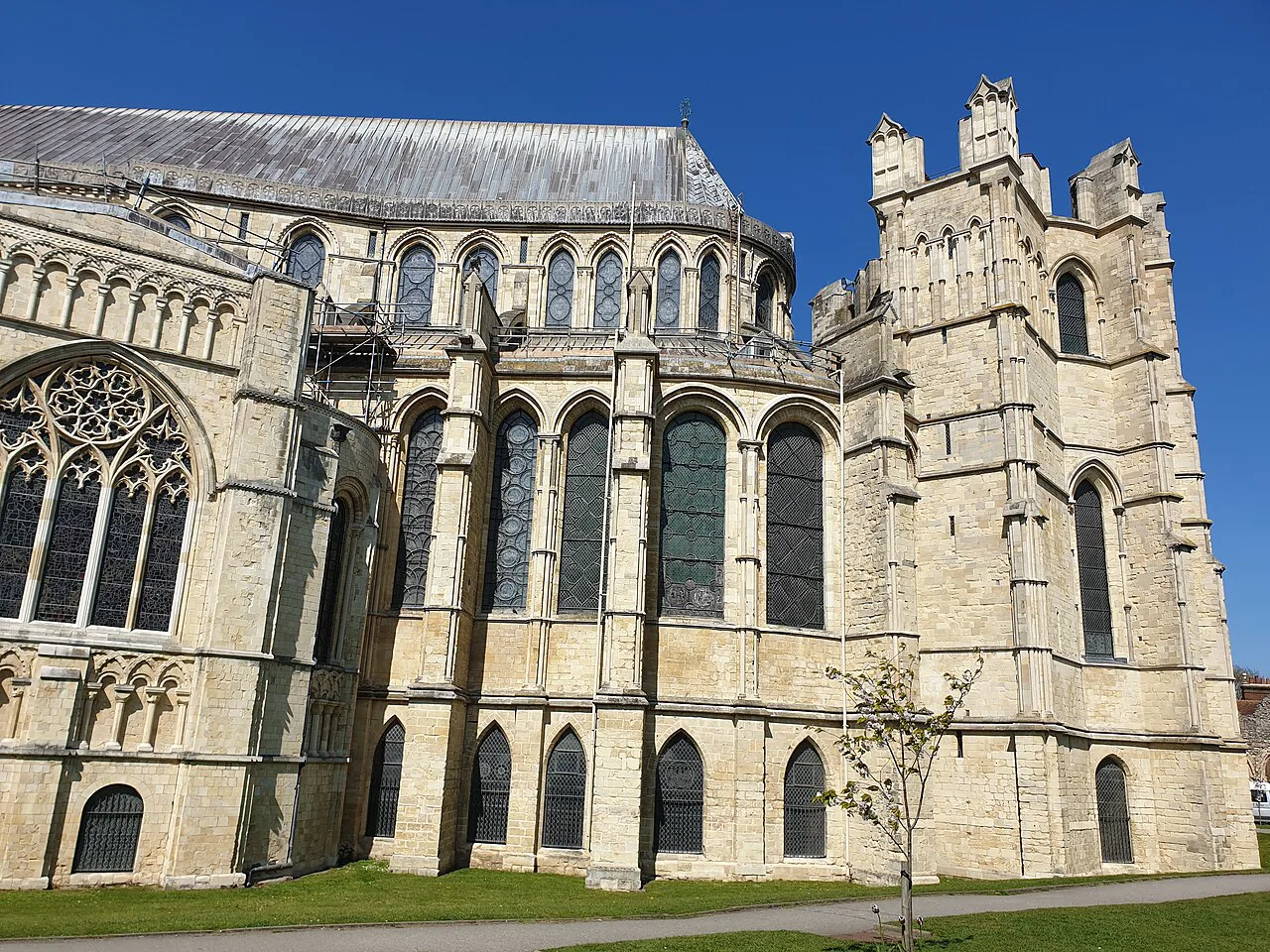
A large restoration programme called the Canterbury Journey, costing nearly £25 million, was scheduled to finish around 2021 and covered the grounds, visitor facilities and the exterior stonework. Scaffolding and hoarding therefore come and go on the outside of the building, and the interior routes can shift around conservation work. Treat any single route through the cathedral as temporary.
What to See Inside: Crypt, Quire and Nave
The eleventh-century Romanesque crypt is the oldest surviving part of the building and the quietest large space in the cathedral, with thick piers and low vaulting. It is worth going down first, before the nave fills up, because the contrast with the height above makes the rest of the visit legible. Allow a good fifteen minutes rather than a passing glance.
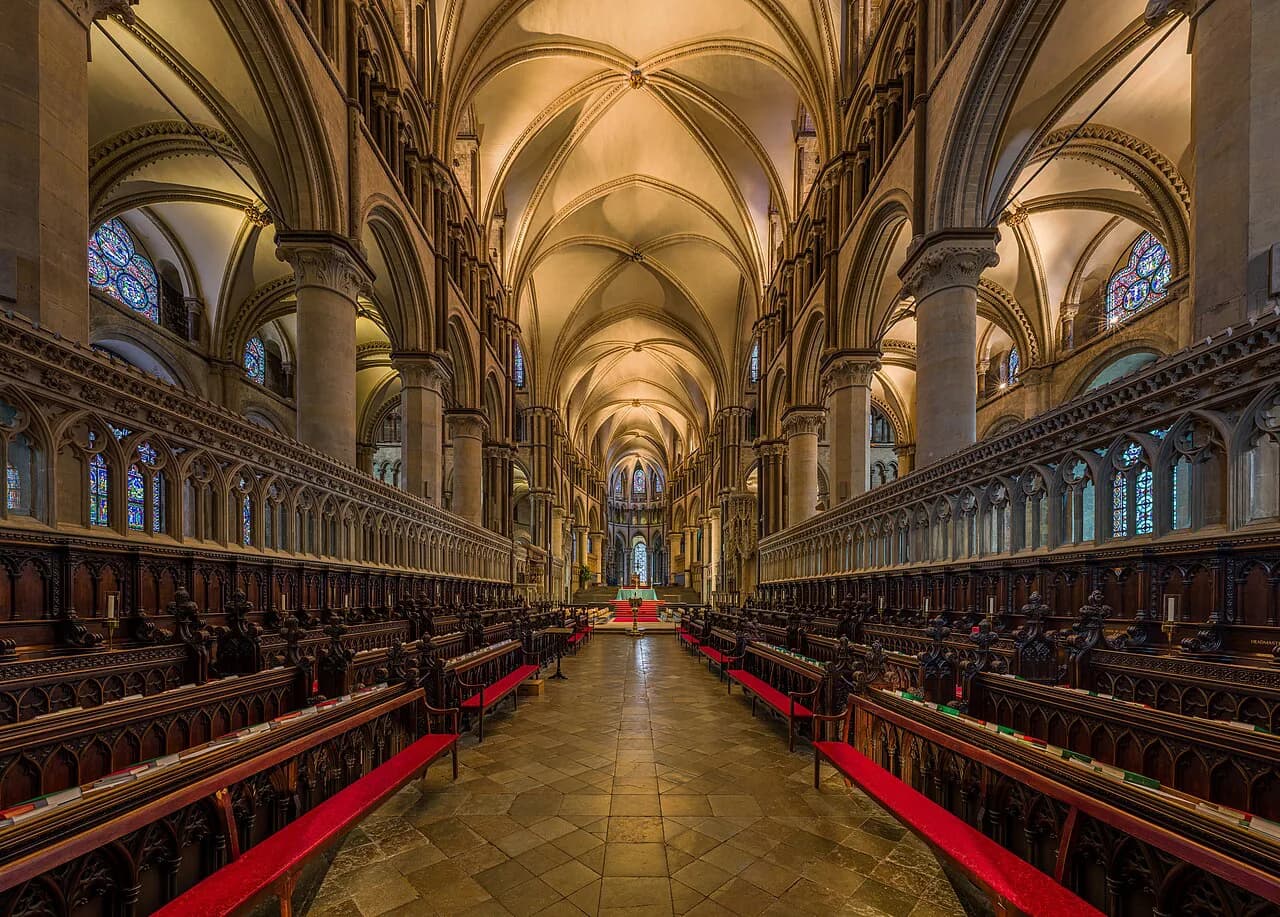
Above it, the twelfth-century early Gothic quire was rebuilt after the 1174 fire under William of Sens and then his successor, and it is the earliest major Gothic work in the building. The fourteenth-century Perpendicular nave came later, replacing Norman pillars with a taller, lighter arcade under a fan-vaulted ceiling in the central Bell Harry Tower. Stand at the west end of the nave and look up before moving east.
The spot where Becket was killed in the northwest transept is marked by a simple altar with a metal sculpture of a cross and two swords, added in 1986. It is easy to walk past, so look for the modern metalwork against the old stone. This is the one place in the building where the story and the fabric meet directly.
Stained Glass and the Becket Story
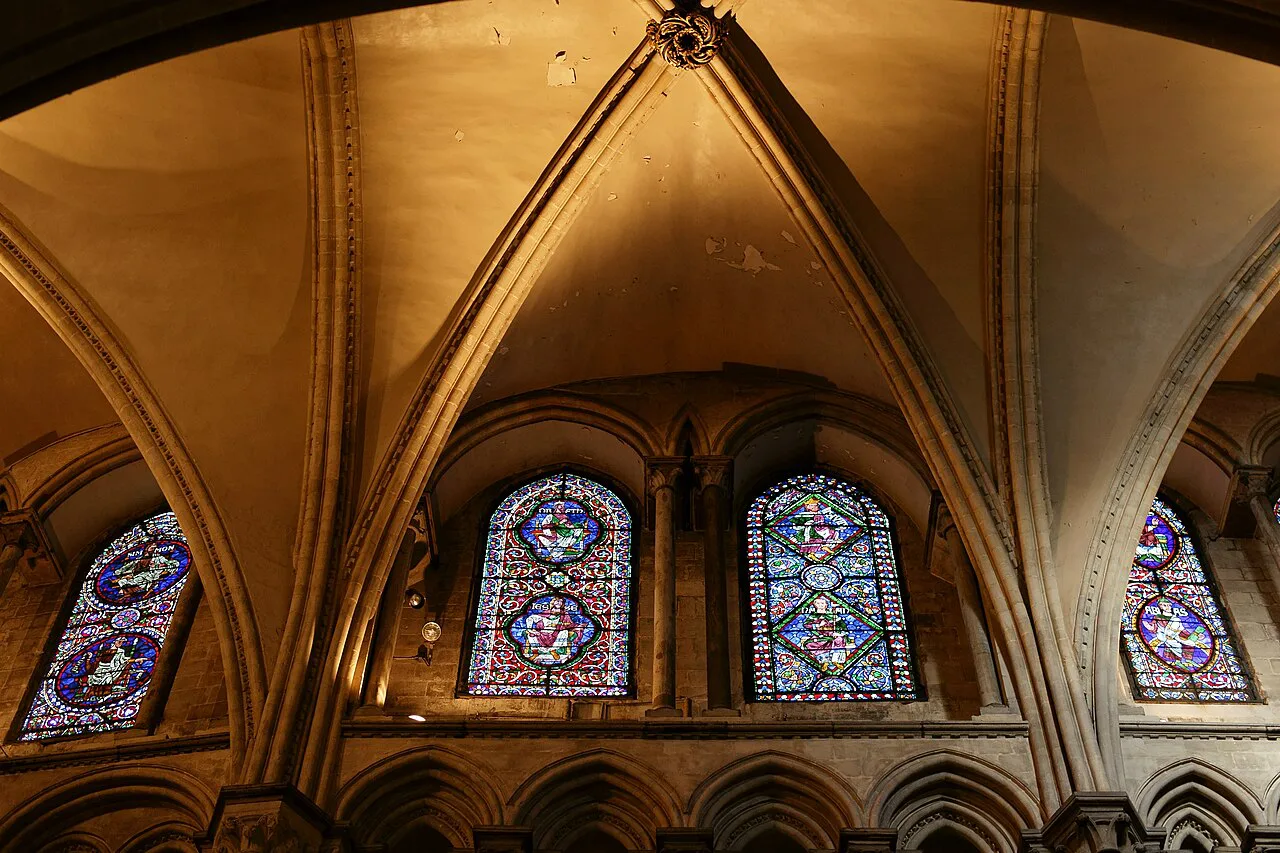
The medieval glass here illustrates the miracles and stories associated with Thomas Becket, and the oldest coloured panels date from the late twelfth century, with later additions through to the twentieth. Some windows are badly damaged and under conservation, so expect sections to be clearer than others. Bring binoculars or use a camera zoom if you want to read the detail.
The cathedral describes its windows as telling the story of Becket and the building's royal connections, and the chapter house glass carries a history of Canterbury in its own right. Because the panels are set high, the best reading is usually from the opposite side of the aisle rather than directly beneath. Give the glass its own twenty minutes instead of treating it as decoration on the way to somewhere else.

Tours: Guided, Audio, Evening and Behind the Scenes
Visitor facilities range from guided tours and audio tours to private evening tours and behind-the-scenes visits to the stained glass studio, archives and library. Availability varies with the working life of the building, so these are booked rather than simply joined on the day. If a behind-the-scenes slot matters to you, arrange it before you travel rather than hoping at the desk.
Private evening tours suit anyone who wants the nave without crowds, but they commit you to a fixed slot and a later finish. For a first visit, the audio tour plus your own pace is usually the better trade: less structure, more time in the crypt and the Trinity Chapel. Check what is running for your dates through the cathedral's own booking pages.
Tickets and Admission
The cathedral relies on visitor entry fees alongside income from its shop, property and the Cathedral Lodge Hotel to cover running costs, and it describes booking tickets through its own channels. It does not receive government or Church of England funding for general running costs, beyond the salaries of the dean and two canons. That is the context for why entry is charged at a working cathedral of this size.
Check the current admission price in pounds and any concessions or family rates on the cathedral's ticket page before you set a budget, and book ahead if you are visiting on a weekend or in summer. Prices are revised periodically, so an old figure from a guidebook is worse than no figure. If you are combining the cathedral with St Augustine's Abbey, buy and time each separately.
Opening Times, Services and the Evensong Closure
The cathedral is a working church used regularly for local, regional and national services and events, so some or all of it may close for general visiting at short notice. Contact the Visits Office before travelling if your day depends on seeing a particular chapel. Sundays in particular run to a service-led rhythm rather than a visitor one.
The east end, including the quire, closes each day in preparation for Evensong, from 16.30 Monday to Friday and from 14.30 on Saturday and Sunday, so the Trinity Chapel and the high altar are the first things you lose. Confirm those times with the cathedral for your date, as they can shift with the calendar. Plan the east end for the morning and leave the nave, crypt and shop for later in the day.
Bell Harry is rung at 8am and 9pm daily to mark the cathedral's opening and closing, which is a useful reminder that the building's day is set by prayer rather than by tourism. If you want to hear Evensong itself, build the afternoon around it instead of racing it. Attending a service is a different visit from sightseeing, and a better one for many people.
How Long to Allow, and How to Pace It
Two to three hours covers the crypt, nave, quire, Trinity Chapel and the glass at a reasonable pace; add an hour if you take the audio tour seriously or join a guided tour. A rushed forty-five minutes gets you the nave and little else, which misses the parts that make the building worth the journey. Build in a pause rather than trying to see everything in one sweep.
A sensible order is crypt first, then up to the quire and Trinity Chapel before the east end closes, then the nave and the Becket murder site, finishing with the shop and a look at the precinct. On a Saturday or Sunday the east end shuts at 14.30, so start earlier than you would on a weekday. If you arrive after that, accept that the eastern chapels wait for another visit.
Steps, Stone and Building Work
Much of the stone is old, the roofs leak and many windows are damaged, so conservation work is continuous and parts of the interior or exterior may be screened off. The cathedral has also been carrying out major roof, stone and glass projects for years, which means scaffolding is normal rather than a sign of bad luck. Check the Canterbury Cathedral website before you book a special tour to see what is affected.
Expect worn and uneven floors, steps between levels and low light in the crypt, and plan accordingly if anyone in your party uses a wheelchair or struggles with stairs. The precinct is flat and easy, but the building itself is not. Ask staff about the step-free route when you arrive rather than assuming one exists everywhere.

Shop, Toilets and Refreshments
The Cathedral Shop and the Cathedral Lodge Hotel are part of the income that keeps the building open, and the cathedral has the visitor facilities you would expect, including guided and audio tours and a shop. The shop is the practical stop for a guidebook or a gift on the way out rather than a reason to linger at the start. Eat before or after the cathedral rather than mid-visit if you want to keep your timing flexible.
Nearby: Westgate Towers, the Beaney and the Marlowe
Westgate Towers and City Gaol is the most prominent surviving gate of the city walls and is a short walk from the precinct, making it the obvious next stop on a walking route. The Beaney House of Art and Knowledge, an art museum and library, is a similar distance away. Both fit naturally into the hour after the cathedral.
The Marlowe Theatre is also close by in the city centre, so a matinee or evening performance can anchor the end of the day. Build the cathedral in the morning and the theatre in the evening, and you avoid the pressure of doing both at once. Check what is on before you fix the date.
Nearby: St Augustine's Abbey and the Rest of the World Heritage Site
St Augustine's Abbey lies just outside the city walls, about a mile from the cathedral, and is the second element of the World Heritage Site. It is a ruin rather than a roofed building, so it suits a dry day and a different mood from the cathedral. Read about it in our guide to St Augustine's Abbey Canterbury before you decide how much time to give it.
St Martin's Church completes the inscribed site and is the third piece of the same early Christian story, best visited as part of a longer walk east of the centre. The three together explain why Canterbury holds World Heritage status at all. If you only have one day, the cathedral and the abbey are the pair to prioritise.
For the Roman layer of the city, the Canterbury Roman Museum on Butchery Lane covers the town the cathedral was built into. It is a short walk from the precinct and pairs well with a wet afternoon. Neither the abbey nor the museum needs booking far ahead, which makes them easy fillers around a fixed cathedral slot.
Making a Day of It
A workable shape is crypt and quire in the morning, the nave and murder site before lunch, then the Beaney or Westgate Towers, and the abbey in the afternoon if the weather holds. Canterbury is compact enough that this involves walking rather than taxis, with the stations about a mile away at either end of the day. Keep the cathedral shop and a sit-down for the end, when your legs have had enough.
Plan Your Visit
Canterbury Cathedral rewards a planned visit more than a spontaneous one: the east end closes ahead of Evensong, the crypt deserves unhurried time, and the Becket story only makes sense if you see the chapels built to hold the pilgrims. Book tickets and confirm opening and service times for your date before you travel, then build the day around the building rather than squeezing it in.
Explore more Canterbury guides
Frequently Asked Questions
Is Canterbury Cathedral free to enter?
The cathedral relies on visitor entry fees, along with income from its shop, property and the Cathedral Lodge Hotel, to cover running costs. Check the current price in pounds, and any concessions, on the cathedral's own ticket page before you budget for the day.
Why is Canterbury Cathedral a place of pilgrimage?
Thomas Becket was murdered in the cathedral in 1170, and accounts of miracles at his tomb made Canterbury one of Europe's most important pilgrimage centres. The Trinity Chapel and Becket's Crown were built to manage the crowds, and the shrine was destroyed in 1538 on Henry VIII's orders.
What is the oldest part of Canterbury Cathedral?
The eleventh-century Romanesque crypt is the oldest surviving part of the building, and it came through the 1174 fire that led to the Gothic rebuilding of the quire. Start your visit down there before the nave fills up.
How long does a visit to Canterbury Cathedral take?
Allow two to three hours for the crypt, nave, quire, Trinity Chapel and the stained glass, and add an hour if you take an audio or guided tour. On Saturdays and Sundays the east end closes from 14.30, so an earlier start gives you the full building.
How do I get to Canterbury Cathedral from the station?
Canterbury East and Canterbury West are both about a mile from the precinct and the walk through the city centre is straightforward. Trains from London take around 56 minutes, which makes a day trip practical.
Can I book a tour of Canterbury Cathedral?
Guided tours, audio tours, private evening tours and behind-the-scenes visits to the stained glass studio, archives and library are among the options the cathedral offers. Availability varies with services and events, so arrange anything special through the cathedral before you travel.
When is the east end of the cathedral closed?
The east end, including the quire, closes daily in preparation for Evensong, from 16.30 Monday to Friday and from 14.30 on Saturday and Sunday. Confirm those times with the cathedral for your date, as they can move with the calendar.
What else is near Canterbury Cathedral?
Westgate Towers and City Gaol, the Beaney House of Art and Knowledge and the Marlowe Theatre are all within a short walk of the precinct. St Augustine's Abbey, part of the same World Heritage Site, is about a mile away and makes a natural second stop.