
Castlerigg Stone Circle: What to See and How to Visit

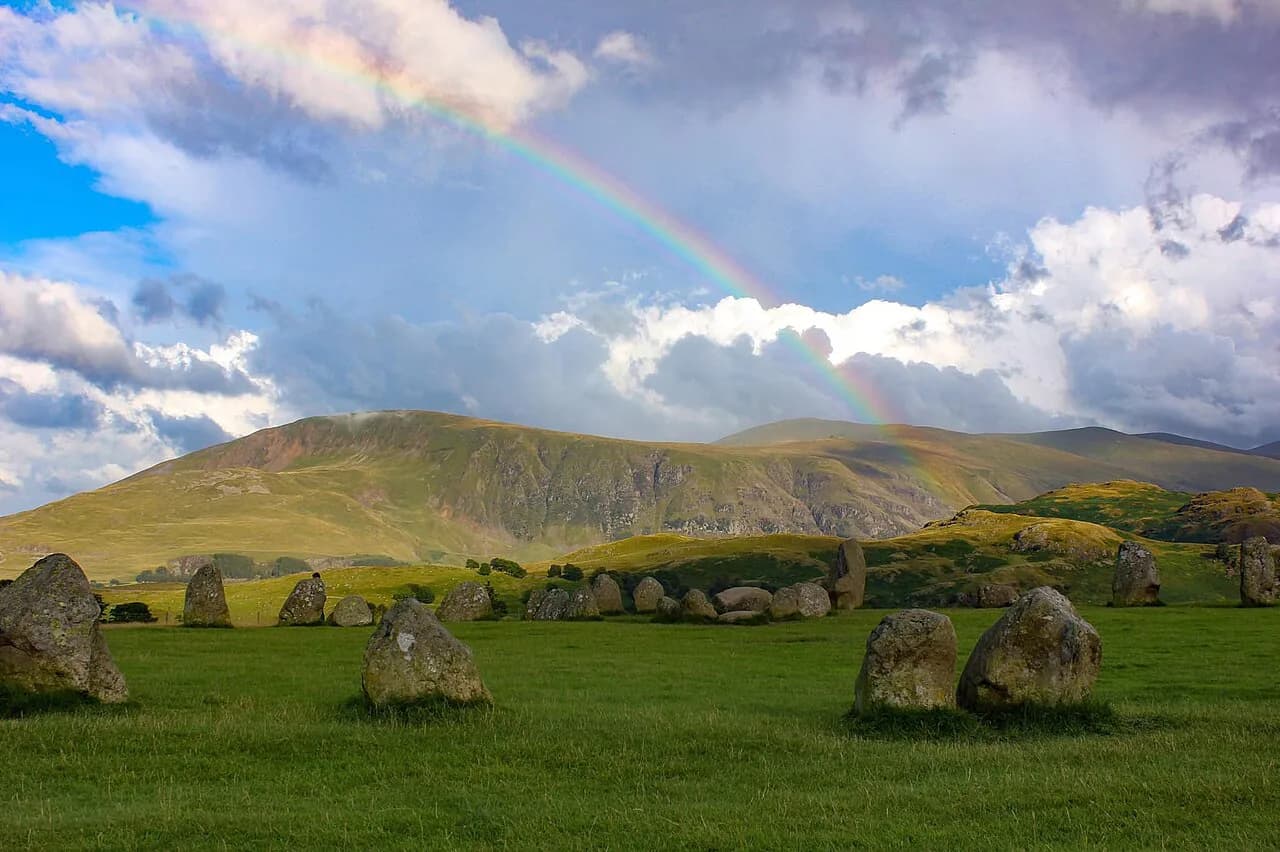
Castlerigg Stone Circle is free to visit and open at all times, so there is no ticket to book and no gate to catch. Thirty-eight free-standing stones, some up to three metres high, sit on a natural plateau east of Keswick with a 360-degree ring of fells around them. Allow around an hour on site, more if you walk in from town.
What Castlerigg Stone Circle is
Castlerigg is one of Britain's earliest stone circles and a monument of real scale: 38 free-standing stones arranged on a low hill, with the Lake District mountains standing all around. It is important for megalithic astronomy and geometry as well as for its setting, and the plateau gives a full circular panorama of the surrounding fells.
The stones date from the Neolithic period, four to five thousand years ago, which places the circle among the oldest prehistoric monuments in the country. It stands on National Trust land and is maintained by English Heritage, a split worth knowing before you arrive.
Where it stands
The circle is 1.5 miles south-east of Keswick on a natural plateau, with the ground falling away towards the town. The grid reference is NY291236, and the what3words location deodorant.pinks.pounce will take you to the site if you navigate by phone.
That short distance makes it an easy half-day from a base in Keswick rather than a full expedition. It also means the circle sits within reach of the town's other sights, so it pairs naturally with a morning or afternoon in the centre, much as you might weigh up the museums in Keswick for the rest of the day.
A short history
Castlerigg was one of the first sites covered by the Ancient Monuments Protection Act in 1888, which makes it a pioneer of British heritage protection. In 1913 it was acquired by the National Trust through the efforts of Canon Rawnsley, and it remains National Trust land maintained by English Heritage.
The protection came early because the monument was already recognised as exceptional, not because its purpose was understood. Five thousand years on, the stones still stand in open grazing land with the same mountain backdrop that drew the first visitors.
Why nobody knows what it was for
The original purpose of Castlerigg is unknown, and any guide that tells you otherwise is inventing a story. Three stone axes were found inside the circle, and in the Neolithic period axes were made from volcanic stone quarried in these fells, which has led to the idea of a trading post.
The other candidates are a meeting place for social gatherings, a site for religious ceremony and ritual, or an astronomical observatory with stones aligned to the sun, moon and stars. Treat each as a serious interpretation rather than a settled fact, and enjoy the uncertainty as part of the visit.
Tickets and opening
Admission is free and the circle is open at all times, so there is no booking system, no turnstile and no closing time to plan around. You can arrive at dawn or at dusk, and winter visits are possible on the same terms as summer ones.
English Heritage publishes the site's visitor information, which is the page to check for any change to access before you travel. There are no tours to book and no ticket price to budget for, which makes Castlerigg one of the cheapest stops in the Lakes.

Getting there
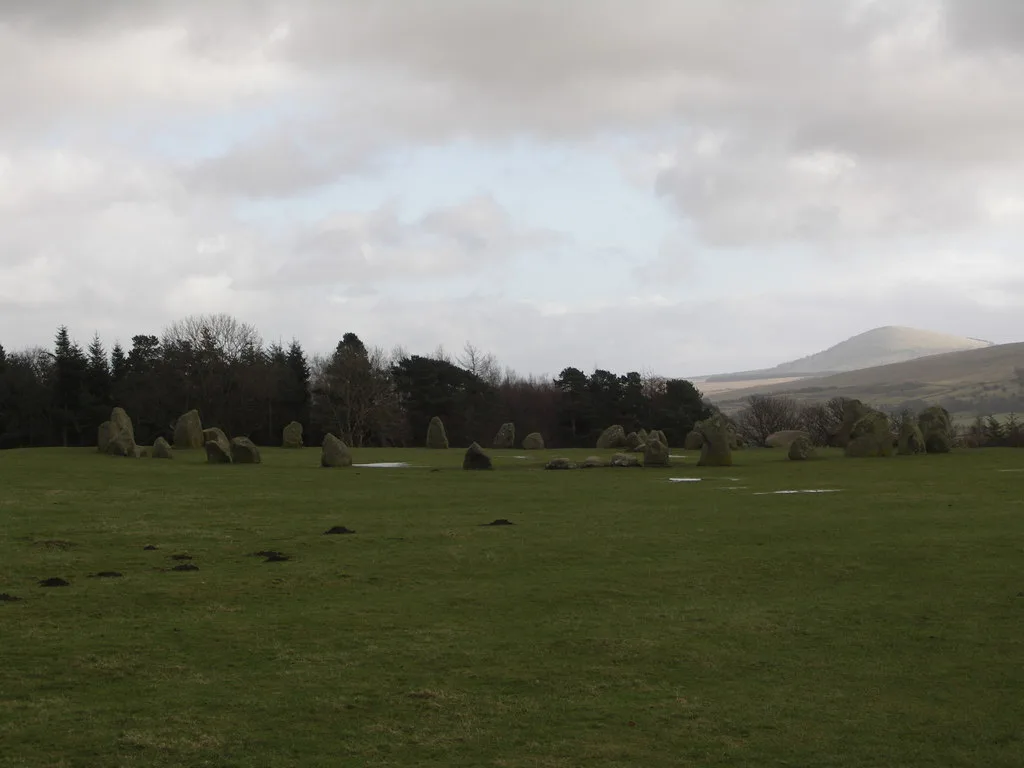
There is limited free roadside parking at the site, and it fills up; arriving early is the simplest way to avoid circling for a space. The lane is narrow, so park considerately and expect to walk the last stretch if the verge is already busy.
A circular walk from Keswick reaches the circle without a car, which suits anyone staying in town or basing themselves near the centre. The walk is the better choice on a clear day, when the fells open up on the approach.
If you are building a day around the town, the town centre is compact and walkable, with the pencil museum Keswick as an indoor option when the weather turns, and you can compare the town's other wet-weather stops in this guide to the museums in Keswick before deciding.
Time to allow and when to go
An hour on the plateau is enough to walk the full circuit, count the stones and take in the views, and most visitors spend less. Add time for the approach on foot and for the wind, which can cut a stop short on an exposed day.
The circle is at its best early, before the roadside fills up, and in winter, when the stones stand out of the snow and the fells behind them are white. Visit Keswick makes the case for the cold months plainly, and the low light flatters the stones.
What to look for in the stones
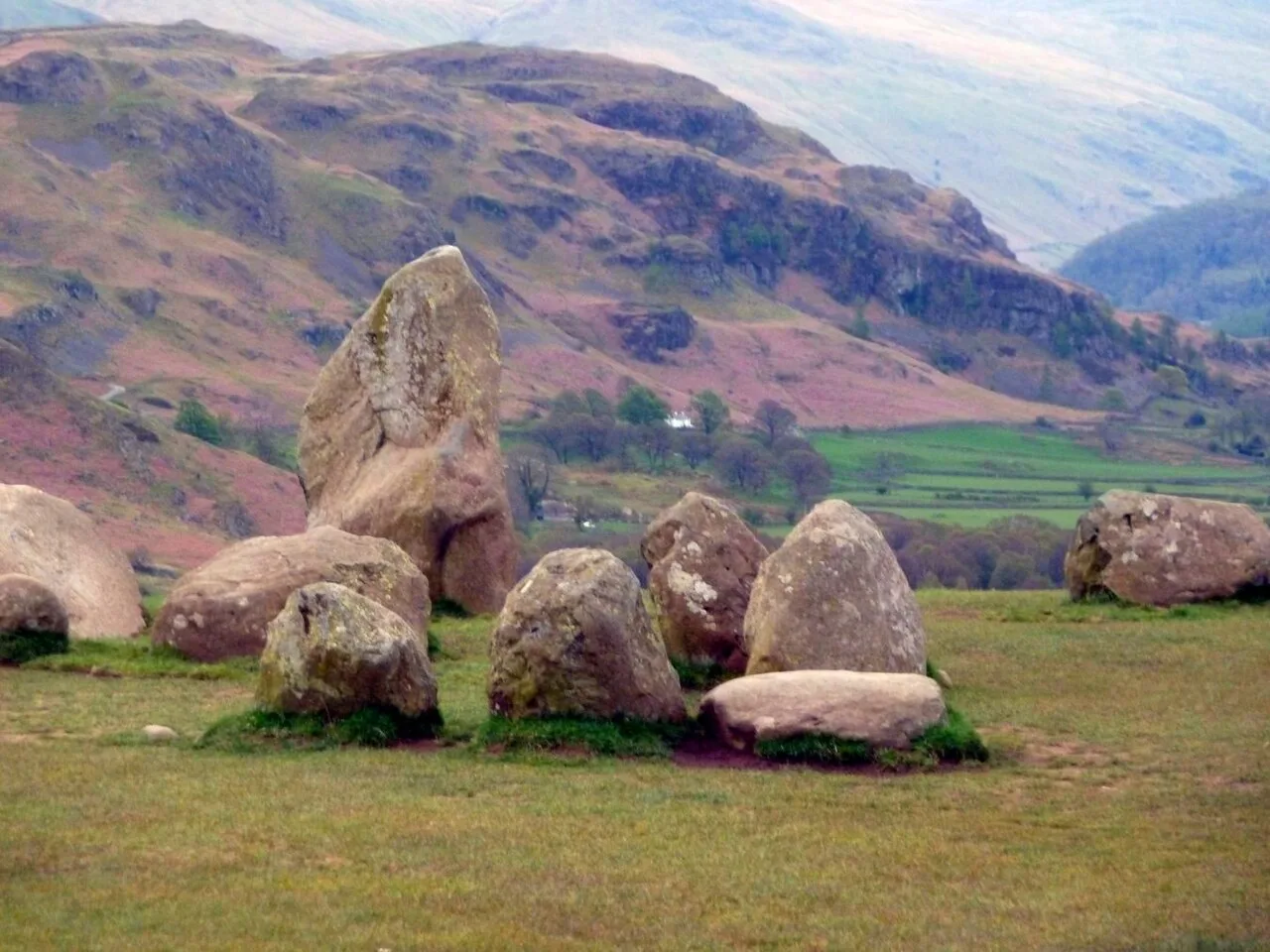
Try counting the stones and see whether you get the same number twice, a small game the site invites. Some stand up to three metres high, and the gaps between them frame the fells in different ways as you move around the ring.
The mountain backdrop takes in Helvellyn and High Street, and the circle's position means the peaks appear from every side rather than in one set view. Walk the circuit once, then pick a direction and stand still for a few minutes to let the scale land.

The Roman camp next door
A Roman camp of national significance has been found near the stone circle, dated to the first century, with underground remains covering an area the size of eight football pitches. Volunteers working with the Bassenthwaite Reflections programme found it by chance while searching for a second stone circle or a fourteenth-century castle.
There is nothing to see above ground, and there are no immediate plans for a formal dig, so do not go hunting for earthworks in the next field. The land was ploughed until thirty years ago and is used for hay and grazing, which explains why the enclosure leaves no visible trace.
Mark Graham, the archaeologist who identified it, has suggested the camp could have been part of the first push to Romanise the area, perhaps as early as 70 AD, and that it may have serviced campaigns into Scotland. The site was chosen in sight of a circle already three thousand years old, on ground well placed for defence, which gives you something to picture while you look across the fields.
Nearby options in the area
Threlkeld and St John's in the Vale are the obvious next stops, both within the surrounding valley and easy to add to the same outing. The circle sits between them, so the drive or walk between the two passes the stones either way.
Back in town, the museums in Keswick fill a wet afternoon, and the Derwent Pencil Museum is the quirky local favourite. Lodore Falls, Keswick sits further along the valley for anyone continuing south afterwards.
Practical notes
The plateau is exposed, so pack a windproof layer even on a mild day in town, and expect the ground underfoot to be rough grass or mud depending on the season. Sturdy shoes are more useful here than any other item in your bag.
There is free admission but no visitor centre, shop or cafe at the site, so plan refreshments in Keswick or a nearby village. Take your litter away with you and give the grazing sheep and the stones themselves a respectful distance.
Plan Your Visit
Castlerigg Stone Circle suits a short, early stop with a big view: free entry, open at all times and 1.5 miles from Keswick. The essentials are a windproof jacket, sturdy shoes and a decision on how you will get there, by car or on the circular walk.
Pair the stones with the town itself, from the pencil museum to Friars Crag, Keswick for a gentle lakeside finish, and you have a full day without needing another booking.
Explore more Keswick guides
Frequently Asked Questions
Is Castlerigg Stone Circle free to visit?
Yes. Admission is free, there is no ticket to buy and the circle is open at all times, so you can visit without booking. If you are driving, the only real constraint is the limited free roadside parking, which fills up and makes an early arrival worthwhile.
Who owns Castlerigg Stone Circle?
The circle stands on National Trust land and is maintained by English Heritage. It was acquired by the National Trust in 1913 through the efforts of Canon Rawnsley, after being one of the first sites covered by the Ancient Monuments Protection Act in 1888.
Can you park at Castlerigg Stone Circle?
There is limited free roadside parking at the site, on a narrow lane close to the stones. It fills up, especially in fine weather, so arriving early gives you the best chance of a space. Alternatively, a circular walk from Keswick reaches the circle without a car.
How long does it take to visit Castlerigg Stone Circle?
Allow around an hour to walk the full circuit, count the stones and take in the mountain views. Add extra time if you are walking in from Keswick, and allow more if you want to sit with the site rather than pass through.
Why was Castlerigg Stone Circle built?
Nobody knows. Three stone axes found inside the circle have prompted the idea of a trading post, while other interpretations include a meeting place, a ritual site or an astronomical observatory aligned to the sun, moon and stars.
Is Castlerigg Stone Circle older than Stonehenge?
Castlerigg dates from the Neolithic period, four to five thousand years ago, and is among the earliest stone circles in Britain. English Heritage describes it as a uniquely atmospheric and dramatically sited circle with panoramic mountain views.