

Oban War and Peace Museum: What to See and How to Plan a Visit

The Oban War and Peace Museum is a small local collection devoted to the town's wartime and peacetime story, kept in the heart of Oban a short walk from the ferry terminal and North Pier. It suits travellers who want a grounded, human-scale account of this Argyll coast town between ferry trips, rather than a grand national museum with galleries to march through.
Budget roughly an hour inside if you read the panels, and treat the museum as one stop on a waterfront circuit that also takes in the bay, the pier and a cup of tea. Confirm the day's opening and any admission charge with the museum before you set out, since both can vary by season.
What the museum is and who it suits
This is a volunteer-spirited local museum, not a national institution, and its appeal lies in that scale. The collection centres on artefacts from the town's past, displayed in a way that rewards slow reading rather than a quick scan.
It works best for adults with an interest in twentieth-century history, for anyone with family connections to Argyll, and for travellers waiting on a ferry who want context on the town they are standing in. Children may lose interest quickly unless they are already curious about military and maritime history, so plan a short visit and follow it with something more active.
If you are building a wider shortlist for the town, the full set of Oban Attractions guides covers castles, distilleries and towers alongside the museum, which helps you see where this collection fits.
Where it is in Oban and how to reach it
The museum sits in central Oban, close to the seafront and the pier area where ferries and excursion boats come and go. From the railway station and the town's main shopping streets, the walk down to the waterfront is short and mostly level, which makes it an easy add-on to a morning in town.
Trains along the West Highland line bring visitors into Oban station, and the museum's setting near the harbour makes it reachable on foot without a car. If you are arriving by ferry, the pier is your landmark: once ashore, you are already in the right part of town.
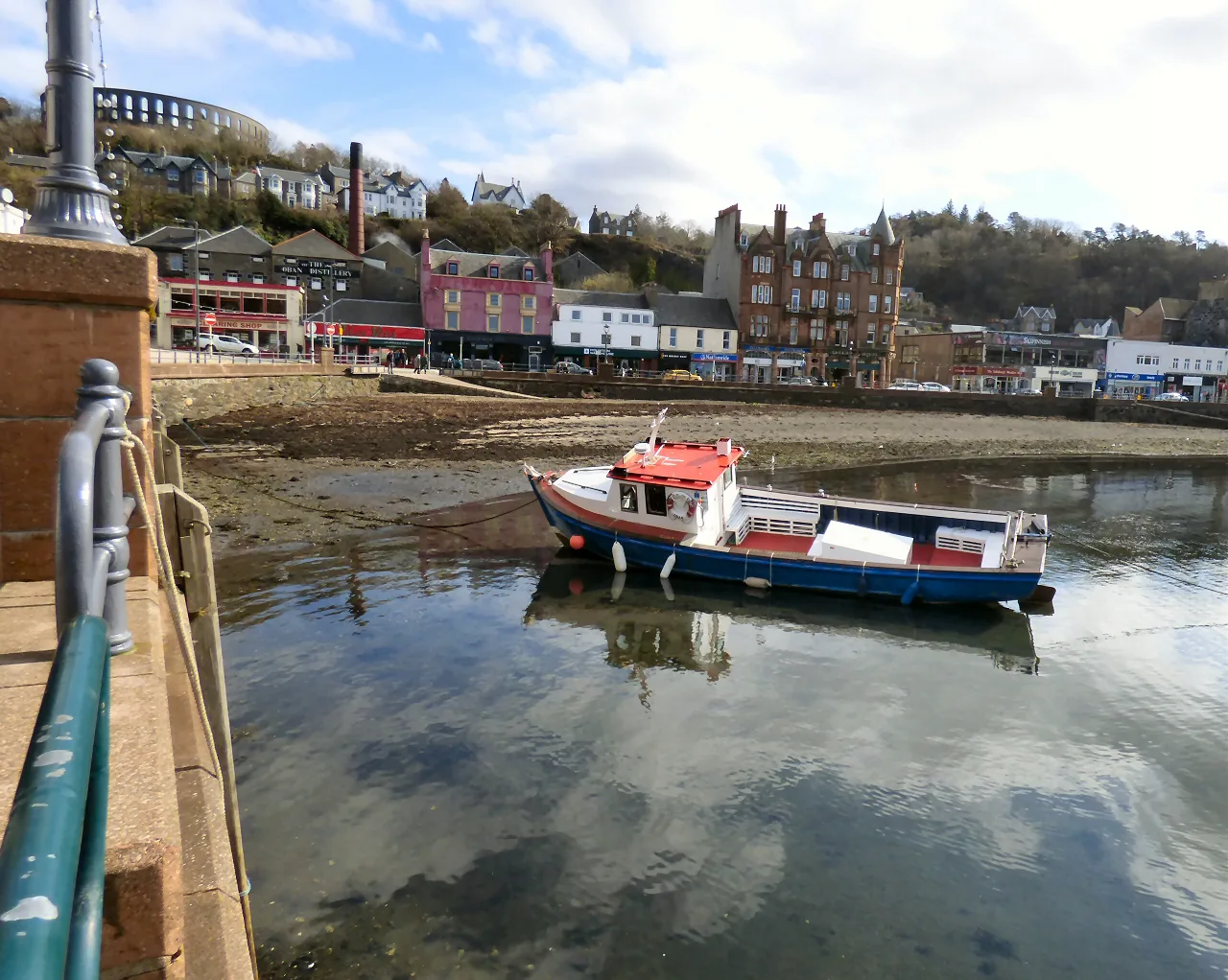
The wider harbour area is worth understanding before you arrive, because it shapes how the town works: ferries leave for the islands and small boats run wildlife and sightseeing trips from the same waterfront.
Oban's wartime story in brief
Oban's position on the west coast gave it a role in both world wars as a naval and convoy town, and that coastal connection is the thread running through a collection like this one. Flying boats and naval patrols used the shelter of the bay, and the town's peacetime life of fishing, ferries and tourism grew from the same waterfront.
Treat individual anecdotes about wartime incidents, secret operations or local characters as local legend unless a display or publication states them as documented history. Legends are part of how a town remembers itself, but they are not the same as records, and good museums usually tell you which is which.
Rail heritage enthusiasts also catalogue the museum as a location of interest, which is a reminder that Oban's story is bound up with the railway that carried visitors and servicemen to this coast.
What to see inside
Expect a modest, densely packed display of artefacts rather than interactive galleries. The pleasure of a museum at this scale is the detail: objects, photographs and printed material that put names and faces to a small coastal town's experience of national events.
Read the labels in order, because small volunteer collections often build an argument across a room rather than making one showpiece do the work. Give yourself permission to skip anything that does not grip you and linger where an object connects to a place you have already walked through in town.
If you have a specific interest, such as naval history, local regiments or the home front, ask at the desk where to look first. Staff at small museums are usually the fastest route to the items that matter to you.


How long to allow
Allow around an hour for the museum itself, longer if you read every panel and take notes. That is enough for most visitors, and it leaves the rest of the day free for the waterfront, a distillery tour or a climb to a viewpoint.
Pace it as a single stop rather than a half-day outing. Arriving early in the day keeps the visit relaxed, and if the rooms are busy you can move through in a different order rather than queueing behind a group.
Pair the museum with the Oban Distillery tour, which sits in the town centre and gives the town's history a very different flavour, or with the walk up to McCaig's Tower for the view over the bay.
Tickets, opening times and booking
Opening days and admission arrangements for the museum are best confirmed with the museum itself before you travel, since these can vary by season. That is especially worth doing out of season, when small volunteer-run sites often reduce their hours.
Admission arrangements for a small local museum like this one are worth checking in advance rather than assumed either way. If entry is by donation, ask about Gift Aid at the desk, and check whether group visits need telling in advance.
If your trip hinges on this one museum, message or ring ahead rather than turning up on spec. A quick confirmation is the difference between a planned highlight and a locked door.
Access and practical points
Expect the compact footprint typical of a town-centre collection: rooms close together, limited floor space and possibly a stair to part of the display. If anyone in your party uses a wheelchair or has limited mobility, ask about step-free access and lift provision before you go.
Summer and school holidays bring the heaviest footfall in Oban, and the museum's rooms can feel tight when a ferry crowd arrives at once. Mid-morning and late afternoon are usually calmer than the middle of the day.
Beyond the museum, much of central Oban is walkable, but pavements are uneven in places and the seafront can be windy and wet even in summer. Waterproofs and grippy shoes make the waterfront circuit more comfortable.
Nearby after your visit
The North Pier and the bay are the obvious next move: a flat walk with views across to Kerrera and, on a clear day, to Mull. Several boat operators run wildlife and island trips from the piers, so you can combine a museum morning with an afternoon on the water.
For a longer walk with a castle at the end, head north to Dunollie Castle Oban, a ruined seat of the MacDougall clan on a wooded headland with a museum of its own. It is a proper half-day outing when combined with the coastal path.
South of town, Dunstaffnage Castle stands on a rock above the water and is cared for by Historic Environment Scotland, with a ruined chapel nearby. It is a short drive or a longer walk from the centre and makes a strong contrast with the museum's indoor displays.
McCaig's Tower, Oban's circular colosseum-like landmark above the town, is the best free viewpoint for a sense of the harbour's shape. It rewards the climb with a panorama that makes the geography of the coast suddenly clear.
If you want to see what else earns a place on a short break, this guide to the things to do in Oban covers the town's main draws without stretching into a full itinerary.
On a wet afternoon, Corran Halls on the seafront is the town's main venue for performances and events, and Oban Library nearby offers a quiet, warm stop if the weather turns.

Where to stay and eat around the museum
Central Oban has the widest choice of accommodation, and staying near the waterfront means the museum, the pier and the ferry terminal are all within a short walk. Book early for summer weekends, when the town fills up with island travellers.
For seafood with a view, Ee-Usk on the North Pier is a well-known local restaurant, listed by Oban Holiday Lets among its local partners alongside the museum itself. Menus and hours change with the season, so check with the restaurant directly before you build an evening around it.
The same local guide lists other independent businesses, from chocolate to boat tours, which is a useful way to spot places a short walk from the museum. Treat any such listing as a starting point rather than an endorsement of quality.
Verdict: who should put it on the shortlist
Put the Oban War and Peace Museum on your list if you like small, story-led collections and want to understand the town beyond its ferry terminal. Skip it if you are short of time, travelling with impatient children, or looking for a large-scale day out.
The honest trade-off is scale: this is a compact collection that will not fill a day, but it adds meaning to everything else you see along the bay. Combine it with the waterfront, a distillery tour and a castle, and Oban's story comes together. If you are weighing up a similar small-scale history stop elsewhere in the Highlands, our Fort William guide covers its own museums and wartime heritage.
Plan Your Visit
Give the museum an hour, check opening days and admission before you travel, and build the rest of the day around the waterfront. A morning here followed by the bay, the distillery or a walk to Dunollie makes a coherent, unhurried day in town.
Explore more Oban guides
Frequently Asked Questions
Is the Oban War and Peace Museum free?
The museum's own site is the place to confirm whether there is an admission charge or a donation request, because rates and arrangements can change from season to season. Do not assume free entry on the basis that it is a small local museum.
How long does a visit to the Oban War and Peace Museum take?
Allow around an hour if you read the displays, and a little longer if you have a particular research interest. It is a compact collection, so most visitors finish well inside half a day and still have time for the waterfront.
What can you see at the Oban War and Peace Museum?
The collection displays artefacts from the town's history, with a focus on its wartime and peacetime experience. The interest lies in the detail of objects and photographs rather than in large interactive galleries.
Do you need to book the Oban War and Peace Museum?
Booking arrangements are not standard for a small volunteer-run museum, so confirm by contacting the museum directly, particularly for group visits. For a solo or couple visit, checking opening days in advance is the main thing.
What is there to do near the museum in Oban?
The North Pier, the bay and the ferry terminal are all within a short walk, and boat trips leave from the waterfront. Further out, Dunollie Castle and McCaig's Tower give you a walk with a view or a ruin at the end.
What county is Oban in?
Oban is a town in Argyll and Bute on the west coast of Scotland, and the museum sits in its town centre near the harbour.