

Anne Hathaway's Cottage: What to See and How to Visit

Anne Hathaway's Cottage is a thatched farmhouse in Shottery, the village just outside Stratford-upon-Avon where Anne Hathaway grew up before she married William Shakespeare in 1582. It is one of the Shakespeare Birthplace Trust's family homes, and the visit pairs naturally with a day in town: the cottage gives you the courtship story and the rural setting, while the town-centre houses give you Shakespeare's own childhood and later life. Allow a half-day for the round trip and treat the journey out as part of the plan rather than an afterthought.
What the cottage is
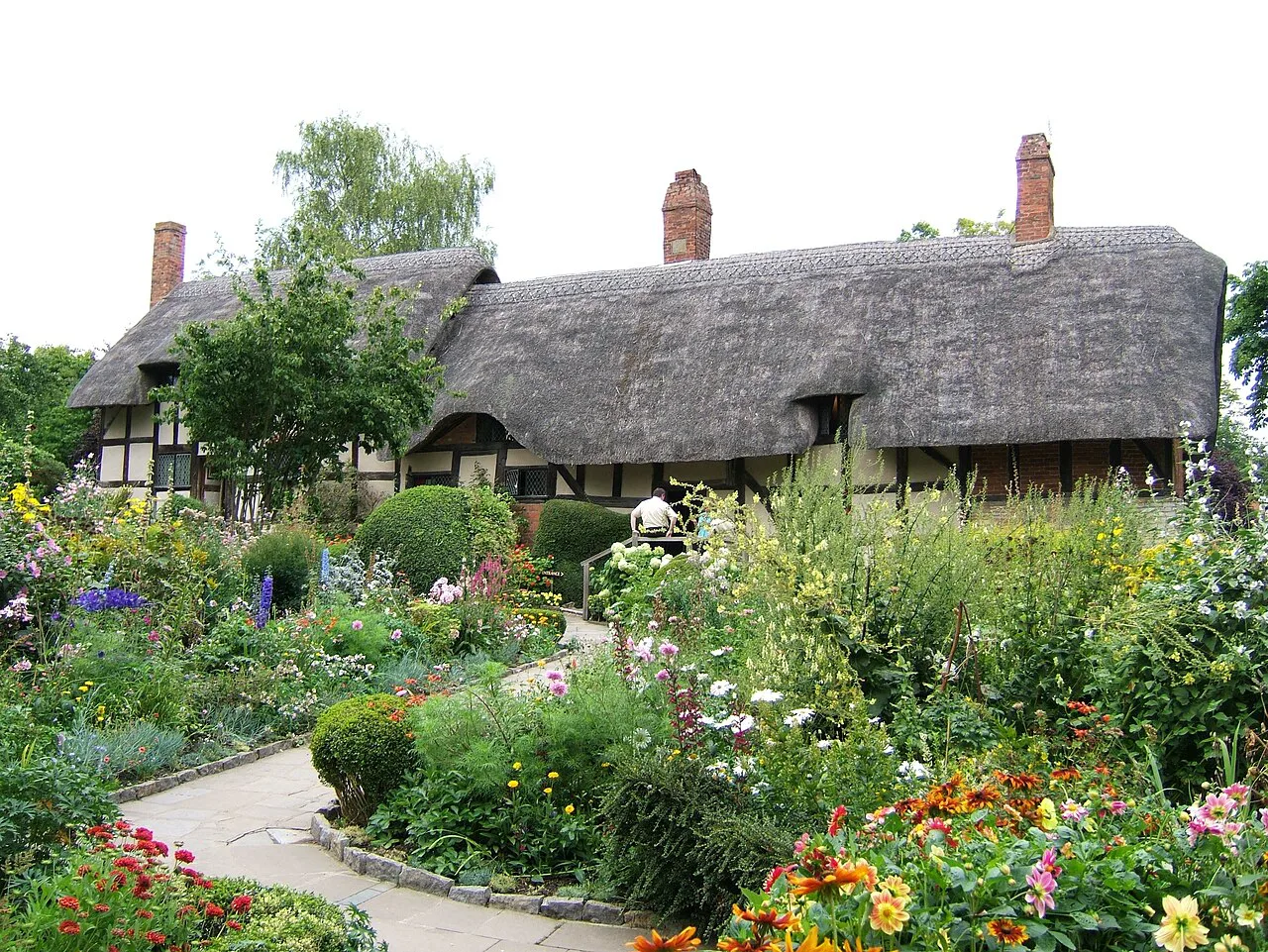
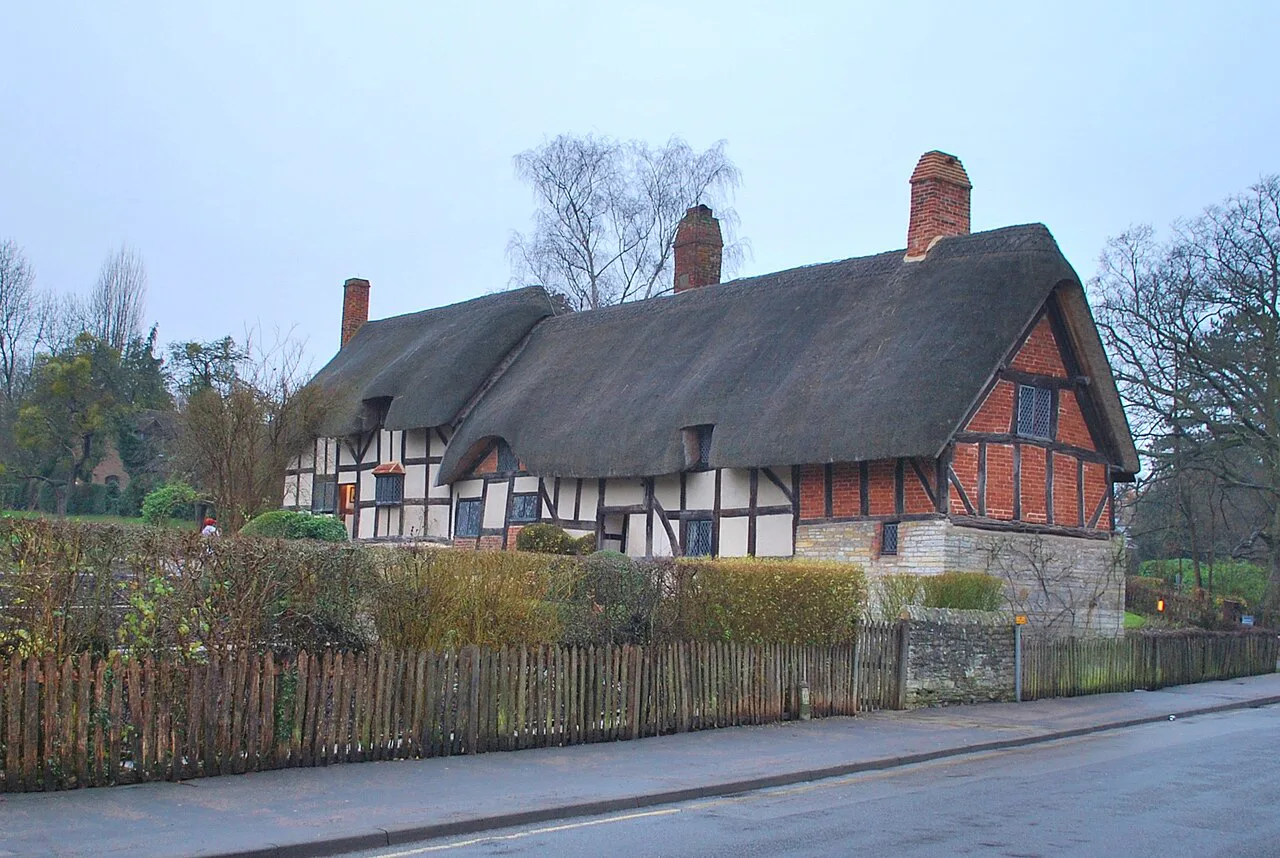
The building is a timber-framed farmhouse with a thatched roof in Shottery, and it is listed at Grade I for its historic interest. Historic England records it as the birthplace of Anne Hathaway, who lived from 1556 to 1623 and married Shakespeare in 1582, and as the home of the Hathaway family from the fifteenth century until 1892. That long family tenure is the reason the house survived with its story intact rather than being absorbed into later development.
Shakespeare himself did not live here. This was his wife's family home, and the visit is about her world and the farming household she came from, not about his working life as a playwright. Keep that distinction in mind when you plan: if you want the room where Shakespeare was born, that is a separate house in town, covered in our guide to Shakespeare's Birthplace.
Where it is in Shottery
The cottage sits in Shottery on the western edge of Stratford-upon-Avon, away from the Henley Street bustle of the town centre. Use the cottage itself as your landmark rather than a street number, and check the address on the official Shakespeare Birthplace Trust page before you set off. Shottery is a small village, so once you are on its lanes the thatched roof and the surrounding trees are hard to miss.
Stratford-upon-Avon is a compact market town with more than 800 years of history, and its central sights cluster tightly around the streets Shakespeare knew. That compactness makes the trip out to Shottery a deliberate extra rather than something you stumble across between shops, so build it into the day rather than squeezing it in at the end.
Getting there from Stratford-upon-Avon
The straightforward approach is on foot: the walk from the town centre out to Shottery takes you through the edge of town and into the village lanes, and it is short enough to do in ordinary shoes in dry weather. Build the walk into your timings rather than treating it as free, because the return leg comes at the end of the visit when energy is lower. For drivers, the cottage lies west of the town centre, and town parking is the easier base if you are combining several sights.
If you are relying on public transport, look up routes on the official Stratford-upon-Avon visitor site before you travel, since services and timetables change with the season. Do not assume a bus will drop you at the gate; check the nearest stop and the remaining walk while you plan. A taxi from the town centre is the other simple option if the weather turns.
Whichever way you travel, the round trip is the part of the day most likely to overrun your plans. A visit timed for late morning leaves room for a relaxed walk back into town and an afternoon at the town-centre houses. If you are visiting in winter, remember that daylight fades early and the walk back is less appealing in the dark.
The Hathaway family and the house
The Hathaway family farmed here for centuries, and their continuity is what kept the building recognisable as the house Anne knew. Historic England's listing notes the family's presence from the fifteenth century through to 1892, a span that covers the marriage, Shakespeare's career in London and the centuries after his death. That is the story the cottage tells: a prosperous yeoman household rather than a grand house or a museum set piece.
Treat any tales of ghosts, curses or secret tunnels attached to the cottage as local legend rather than history. The documented story is quieter and more interesting: a farming family, a marriage in 1582, and a building that survived because generations kept using it. For Shakespeare's own family homes, the Shakespeare Birthplace Trust cares for the Birthplace, New Place and Hall's Croft as well as this cottage, and a combined ticket or a planned sequence can make the most of the day; our guide to museums in Stratford-upon-Avon sets out the other collections worth your time in town.

What to see inside and in the garden
Inside, the appeal is the scale and texture of a lived-in farmhouse: low rooms, old timbers and furnishings that show how a household of this standing worked. Read the room labels as you go; they carry the detail about the family and the building's use across the centuries, and they are where the visit earns its time. Do not expect a large museum with galleries and interactive screens — this is a house, and the pleasure is in the fabric of it.
Outside, the cottage garden adds a genuine second half to the visit, with planting around the house and space to sit or walk. In good weather the garden is where you will want to linger, so allow for it when you judge how long you need. That combination of interior and garden is why the cottage is worth more than a quick photo stop.
How long to allow
Plan on a couple of hours for the cottage and garden together, then add the walk or drive each way. That makes it a half-day outing from the town centre rather than something to slot between two other visits. If you are short of time, do the house properly and skip the garden; if you have a full day, pair it with the town-centre sights.
Most people combine the cottage with Shakespeare's Birthplace on Henley Street, the house where Shakespeare was born in 1564 and where the Shakespeare Birthplace Trust's collection and exhibitions are displayed. The Birthplace is open daily from 10am to 5pm with last admission at 4.30pm, and the Trust recommends pre-booking, so it suits an afternoon slot after a morning in Shottery. The Trust puts Anne Hathaway's Cottage about a ten-minute drive from the Birthplace, which tells you how easily the two fit into one day.
Tickets, opening times and booking
Admission prices and opening times for Anne Hathaway's Cottage are set by the Shakespeare Birthplace Trust and change with the season. Check the Plan Your Visit pages of the Trust's website for the current ticket prices, opening days and last admission before you set out, and note that hours can differ between the family homes. Do not rely on a price you saw somewhere else last year.
Book ahead for peak weeks. The Birthplace page carries a clear recommendation to pre-book, and the same logic applies across the Trust's houses in busy holiday periods, when timed entry can sell out. Booking online also saves you queueing at the desk with a group, which matters if you are fitting the cottage around a theatre evening. If you are planning a Rooftop Restaurant dinner before a show, hold your cottage visit to the morning so the day does not run tight.
Access and practical points
This is a sixteenth-century farmhouse, so expect uneven floors, low beams and narrow stairs, which is part of the charm and a real constraint for anyone with limited mobility. If you use a wheelchair or struggle with steps, check the Trust's access information for the cottage before booking, since facilities differ between the family homes. Ask about step-free routes and seating in the garden on arrival, and allow more time if you need to move slowly.
Footwear matters more than you might think: the lanes and garden paths are less forgiving than town pavements, especially after rain. Carry a layer for the house itself, which stays cool even on warm days, and leave large bags behind if you can. These are small preparations that keep a short visit comfortable.

Nearby sights worth pairing
Back in town, Hall's Croft on Old Town was the home of Shakespeare's daughter Susanna and her physician husband John Hall, and the Trust describes it as a Grade I listed timbered house built in 1613. It is currently undergoing a significant conservation project, so check what is open and whether tours or talks are running before you build it into your day.
Shakespeare's New Place marks the site of the house Shakespeare bought and died in, and it is within walking distance of the Birthplace, which makes it the natural third stop after a morning in Shottery. Our guide to Stratford-upon-Avon Attractions sets out the full set of town sights if you want to plan the sequence properly.
Is it worth the trip?
Yes, if you care about the Shakespeare story as a family story rather than a single famous man. The trade-off is real: the cottage is out of town, it is small, and the visit is short compared with a major museum, so it works best when you have a full day in Stratford-upon-Avon rather than a flying afternoon. Visitors with a tight schedule should prioritise the Birthplace and leave the cottage for a return trip.
If you have time for a proper day, sequence it as cottage in the morning, town-centre houses after lunch, and a play or an afternoon tea to finish. Our guide to afternoon tea in Stratford-upon-Avon covers where to book and what to pay. Our guide to things to do in Stratford-upon-Avon covers the wider options if you want to build a longer stay around the Shakespeare houses.
Plan Your Visit
Treat Anne Hathaway's Cottage as a half-day outing: check the Trust's current prices, opening times and booking advice first, then decide whether you walk or drive out to Shottery. Build the journey into your timings, allow a couple of hours on site and keep the town-centre houses for the rest of the day. Do the planning, and the extra trip out earns its place.
Explore more Stratford-upon-Avon guides
Frequently Asked Questions
Did Shakespeare live in Anne Hathaway's Cottage?
No. The cottage in Shottery was the Hathaway family home, where Anne Hathaway grew up before marrying Shakespeare in 1582. Shakespeare's own childhood home is Shakespeare's Birthplace on Henley Street in Stratford-upon-Avon town centre.
Where is Anne Hathaway's Cottage and how far is it from Stratford-upon-Avon?
It stands in Shottery, the village on the western edge of Stratford-upon-Avon, and can be reached on foot from the town centre or by a short drive. The Shakespeare Birthplace Trust describes the drive between the cottage and Shakespeare's Birthplace as about ten minutes; check the Trust's directions page for the walking route before you set out.
Who was Agnes Shakespeare?
Anne Hathaway was recorded in some parish documents as Agnes, a variant of her name, and married William Shakespeare in 1582. She lived from 1556 to 1623, and her family held the Shottery farmhouse from the fifteenth century until 1892.
How long does a visit to Anne Hathaway's Cottage take?
Allow a couple of hours for the cottage and its garden, plus the walk or drive each way from the town centre, which makes it a half-day outing. If you are short of time, do the house and skip the garden.
Do you need to book Anne Hathaway's Cottage in advance?
The Shakespeare Birthplace Trust recommends pre-booking for its family homes, and booking ahead is sensible in school holidays and peak weeks when timed entry can sell out. Check the Trust's Plan Your Visit pages for the current booking rules for the cottage specifically.