
Yorkshire Museum: A Visitor's Guide to York's Museum Gardens Site

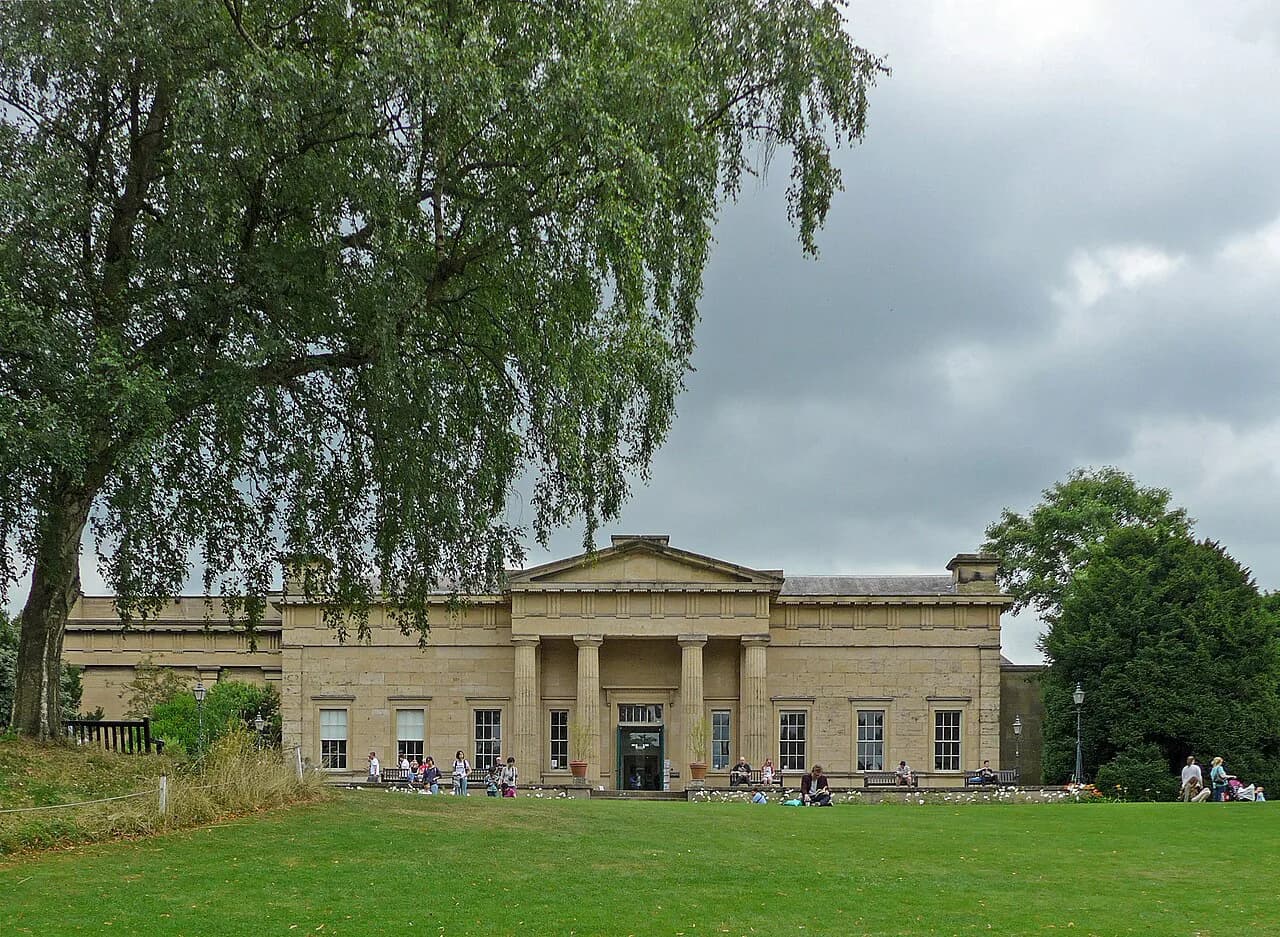
The Yorkshire Museum is York's main museum for archaeology, geology, fossils and natural history, housed in a Greek Revival building inside York Museum Gardens. It opened in 1830, so a visit combines display cases with a building and a landscape worth attention in their own right. This guide covers what is inside, how to reach it and how long to set aside.
Where the Yorkshire Museum sits in York
The museum stands within York Museum Gardens, just outside the city walls on the north-west side of the centre, close to the River Ouse and within easy walking distance of the railway station and the Minster. Because it is set back in the gardens, you approach through open ground rather than straight off a busy street, which makes the arrival part of the visit. The postcode given for the gardens is YO1 7FR if you are navigating.
Allow a few minutes simply to orientate: the museum is one building among several features in the gardens, including St Mary's Abbey ruins, the Multangular Tower and York Observatory. The gardens are open ground, while the museum is a separate, ticketed attraction run by York Museums Trust. If you are building a wider itinerary, our guide to [York Attractions](/attractions/york) sets out how the main sights fit together.
A short history of the building
The museum opened in 1830 as the new home for the collections of the Yorkshire Philosophical Society, and the first keeper was the geologist John Phillips. It was built on land given by royal grant in 1828, within the grounds of St Mary's Abbey, and parts of the Abbey buildings were constructed over rather than cleared away.
That decision left a physical trace that visitors can still see. Remains of some of the Abbey buildings survive in the museum's basement, which is the single most easily missed detail on a quick circuit. If you walk straight to the display galleries and back out, you will have skipped the layer of the building that ties it most directly to the site around it.
The Greek Revival design by William Wilkins
The building was designed by William Wilkins in Greek Revival style, and its neo-classical columns and detailing deliberately echo a Greek temple. Wilkins also designed significant parts of University College London and the National Gallery, so the facade is worth a moment before you go in.
On the west side, the Tempest Anderson lecture hall was added by Edwin Ridsdale Tate in 1912, paid for by Anderson as a gift. It is a very early example of a reinforced concrete building, and the concrete was designed to look similar to the York stone of the main building. Look for the join where the newer hall meets the original structure.
What to see inside: the permanent collections
The museum's five permanent collections cover biology, geology, archaeology and related fields, continuing the tradition of its founders by displaying Yorkshire's archaeology alongside geology, palaeontology and natural history. Expect rock specimens, fossils including dinosaurs, extinct plants and animals, and archaeological material from the region rather than a single chronological walk-through.
The displays also include statues and other decorated stonework from St Mary's Abbey, which links the indoor collection to the ruins visible outside. If you have limited time, decide before you enter whether you want the natural history or the archaeology, because trying to cover both properly in a short stop rarely works.
Dinosaurs and fossils: Yorkshire's Jurassic World
Yorkshire's Jurassic World is one of the museum's named attractions, drawing on the region's fossil heritage and the palaeontology collections. It is the section most likely to hold children's attention, and it pairs naturally with the geology material rather than sitting apart from it.
The museum's own site lists this alongside its other galleries and exhibitions, so check the current line-up before travelling if a particular display is the reason for your visit. Otherwise, treat the fossil galleries as a fixed stop and the rest as flexible.
Roman York and the people of the Empire
Roman York – Meet the People of the Empire is a named exhibition at the museum, presenting the city's Roman period through the people who lived in it rather than through objects alone. York was a major Roman base, and this is the gallery to prioritise if you want context before walking the walls or visiting other Roman sites in the city. It pairs well with our guide to York Neighborhoods if you want to walk the Roman layers of the centre area by area.
The museum also runs a Roman research project under the banner Old Collections, New Questions, which is a reminder that the displays are worked on rather than frozen. There is no need to plan around that research, but it explains why some interpretation may change between visits.


Viking North
Viking North is another of the museum's listed exhibitions, covering the Norse presence in the region. It complements rather than duplicates the city's better-known Viking attractions, so it works well as a quieter, collection-led counterpoint before or after a more theatrical Viking experience elsewhere in York.
If the Viking period is your main interest, pair this gallery with the [Jorvik Viking Centre](/attractions/york/jorvik-viking-centre) and give each its own slot rather than squeezing both into one afternoon.
Temporary exhibitions and the Melsonby Hoard
The museum runs a changing exhibition programme, and the current headline show is Chariots, Treasure and Power: Secrets of the Melsonby Hoard. There is also a related Save the Melsonby Hoard campaign, which reflects the museum's role as a charity rather than a purely commercial attraction.
Because temporary shows change, confirm what is on during your dates on the Yorkshire Museum website, which carries the exhibitions, events and collections pages. Do not assume a show you read about elsewhere is still running; the site is the reliable place to check.
St Mary's Abbey stonework and the lecture hall
Two features tie the inside of the museum to its setting. The decorated stonework from St Mary's Abbey is displayed indoors, so you can compare carved detail at close range with the ruined walls outside. Then look for the Tempest Anderson lecture hall on the west side, the 1912 reinforced concrete addition dressed to match York stone.
Neither takes long, but both reward a deliberate look rather than a glance on the way to the next case. Build them into your route instead of leaving them for the exit.
Tickets: how to book and what to check
The museum is operated by York Museums Trust, a registered charity that also runs York Art Gallery, York Castle Museum and York St Mary's. Its website promotes advance booking, and the ticket wording indicates that tickets last twelve months, which is a useful feature if you are in York more than once in a year.
Check the tickets page on the museum's own website before you budget, because that is where admission is set out. Book online if you want certainty on a busy day, and note that the gardens themselves are separate open ground rather than part of the ticketed museum.
Opening hours and seasonal changes
The gardens' visitor information lists opening hours, with a note to see Visitor Information for changes. Treat those as the published figure and confirm before you travel, particularly outside the main season.
The museum's own site is the place for current visitor information, including any adjustments for events or holidays. The museum also runs a programme of events, including October half-term activity and Portable Antiquities Scheme finds days, which can make some periods busier than others.

How long to allow inside
Two hours covers the main permanent collections and the dinosaur and fossil material without rushing, and that is the figure to plan for if the museum is one stop on a fuller day. Add time for a temporary exhibition, and add again if you want to read the archaeology labels properly.
A short stop of under an hour is possible if you pick one or two areas, but you will miss either the natural history or the archaeology. Remember that the basement Abbey remains and the lecture hall are extras on top of gallery time, so a tight schedule needs a decision before you go in.
Getting there and the Museum Gardens setting
York is compact and the museum is walkable from the station and the city centre, with the gardens acting as a green route in from the river side. The site sits close to the [York City Walls](/attractions/york/york-city-walls), so a walk along the walls can end or begin at the gardens.
If you are arriving by train, the [National Railway Museum](/attractions/york/national-railway-museum) on Leeman Road is within the same broad walking area, which makes a two-museum day feasible without a bus. Plan the order around opening times rather than distance.
Nearby: St Mary's Abbey, the Multangular Tower and York Observatory
Within the gardens you can see the ruins of St Mary's Abbey, the Multangular Tower and York Observatory, all of which are covered on the York Museum Gardens site. These are the natural add-ons to a museum visit and need no separate planning beyond a little walking time.
Further into the centre, [York Minster](/attractions/york/york-minster) is a short walk across the river, and the castle area with [cliffords tower York](/attractions/york/cliffords-tower) and the [York Castle Museum](/attractions/york/york-castle-museum) is a longer but manageable walk. Pairing the museum with the Minster works well because both are indoor stops with their own ticket arrangements.
Practical trade-offs: stairs, basements and busy periods
The Abbey remains are in the basement, so expect stairs or a lower level to reach them, and plan accordingly if anyone in your group has limited mobility. The lecture hall is a separate feature on the west side and is not part of the main gallery circuit.
School holidays and event days, including half-term activity, bring more families and longer dwell times at the dinosaur displays. Go early in the day if you want the galleries quiet, and leave the gardens and Abbey ruins for the busier middle of the day when the outdoors absorbs the crowds.
Plan Your Visit
The Yorkshire Museum rewards a two-hour slot rather than a quick pass: the Greek Revival building, the Abbey stonework, the basement remains and the named galleries all sit within one compact site in York Museum Gardens. Decide in advance whether your priority is the Jurassic material, Roman York or Viking North, and let the other galleries fill the remaining time.
Book through the museum's own site and confirm the day's opening arrangements before you set out, then use the gardens, walls and Minster to build the rest of the day. For the wider picture, our [York Attractions: 8 Visitor Guides](/attractions/york) hub links the main sights, and [afternoon tea in York](/afternoon-tea-in-york) is an easy way to round off a museum morning. If you are weighing up where to base yourself, our [York Neighborhoods](/neighborhoods/york) guide compares the city's main areas.
Explore more York guides
- The Shambles, York
Frequently Asked Questions
How long does it take to go round the Yorkshire Museum?
Allow about two hours for the permanent collections, the dinosaur and fossil displays and a look at the Abbey stonework indoors. Add extra time if a temporary exhibition is running or if you want to read the archaeology labels properly. The basement Abbey remains and the Tempest Anderson lecture hall sit outside the main gallery circuit, so a short visit needs a decision on priorities before you go in.
Is the Yorkshire Museum free to enter?
The museum is run by York Museums Trust, a registered charity, and it is a separate ticketed attraction from the gardens around it. The gardens themselves are open ground that you walk through to reach the entrance. Admission arrangements and any booking requirement are set out on the museum's own tickets page, so check there before you budget for the day.
What can you see inside the Yorkshire Museum?
Inside you get five permanent collections covering biology, geology, archaeology, palaeontology and natural history, including fossils and dinosaur material. Named galleries include Yorkshire's Jurassic World, Roman York – Meet the People of the Empire and Viking North, and statues and carved stonework from St Mary's Abbey are displayed indoors. The museum's site lists current exhibitions alongside these.
Where is the Yorkshire Museum in York?
It stands inside York Museum Gardens on the north-west side of the city centre, close to the River Ouse and within walking distance of the railway station and York Minster. The gardens postcode is YO1 7FR if you are navigating. You approach through the gardens rather than from a main street, and the same grounds hold St Mary's Abbey ruins, the Multangular Tower and York Observatory.
What exhibitions are on at the Yorkshire Museum?
The museum's website lists Chariots, Treasure and Power: Secrets of the Melsonby Hoard as its headline show, alongside Viking North, Yorkshire's Jurassic World and Roman York – Meet the People of the Empire. Temporary exhibitions change, so check the exhibitions page for your dates rather than relying on a listing you saw earlier. The site also carries the events programme, including half-term activity and Portable Antiquities Scheme finds days.
Is the Yorkshire Museum worth visiting?
It is worth it if you want Yorkshire's archaeology, geology and fossils in one building, and the 1830 Greek Revival architecture and the Abbey remains in the basement add context you will not get from a case-by-case circuit. Its position inside York Museum Gardens means you can pair it with the Abbey ruins, the Multangular Tower and the Observatory without travelling between sites. If your interest is mainly Viking, treat it as a quieter counterpoint to the Jorvik Viking Centre rather than a substitute.