Free Things to Do in Aberdeen: Street Art & Coast Guide
Free things to do in Aberdeen, from Nuart street art and Footdee cottages to Old Aberdeen's cobbled streets, the beach and dolphin-watching at Torry Battery.
On this page
Aberdeen's free sights cluster into four walks: the city centre for murals and painted doors, Footdee and the beach for coast, Old Aberdeen for cobbles and cathedral, and Torry Battery for harbour views. None of these needs a ticket, and all of them fit into a weekend without a car. The trade-off is that you see several of the city's big-hitters only from outside, and the North Sea wind decides how long you linger.
Pick two walking areas a day rather than trying to cover the whole city on foot. Old Aberdeen sits around two miles from the city centre with good bus connections, so it works best as a half-day rather than a detour, while Footdee is at the far end of the beach promenade and pairs naturally with the sand and the harbour mouth.
Start on Union Street and Castlegate
Union Street is Aberdeen's Granite Mile, a long commercial spine lined with mainstream shops. The interest is in the side streets running off it, where Thistle Street holds gift shops and clothing boutiques, Union Row carries several of the best murals, and a dip down towards Union Terrace opens views over the gardens and the rooftops of Belmont Street.
At the far end, Castlegate opens out around the Mercat Cross, carved from sandstone in the 17th century with symbols of Scottish royalty and topped by a unicorn. The same square holds the Gordon Highlanders statue and the Tolbooth, the city's former 17th-century jail, so a slow circuit gives you the historic heart without paying an entry fee.
Walking the centre is also the cheapest way to orient yourself before deciding what to pay for. The granite terraces, kirkyards and narrow alleys such as Correction Wynd sit squeezed between modern shopping centres, and a two-hour loop from Union Street to Castlegate and back covers most of it.
Nuart Aberdeen Street Art
Nuart Aberdeen began in 2017 and has been an annual event since, turning blank walls across the city into large-scale murals and installations. Pieces have included a unicorn collage of recycled plastics on Union Row and a striking figure looking out from Aberdeen Market. Treat the collection as changeable outdoor art: walls get repainted, buildings change hands and new works arrive, so what you find may differ from any older list.
The festival is described as Scotland's only street art festival, with an updated map showing locations from 2017 onwards, so you can build your own trail rather than joining a paid walking tour. Start near Union Row and Union Street, where the murals sit closest together, and allow a couple of hours for a loose loop that takes in side streets as well as the obvious big walls.
If the weather turns, the same streets work as a quick dash between doorways rather than a full circuit. Photograph the murals in flat light rather than waiting for sun, and note that some of the most celebrated pieces sit on commercial buildings that can be altered or covered at short notice.
Painted Doors Aberdeen
Painted Doors Aberdeen started in 2016 as part of Aberdeen Inspired's Summer of Art project, when twelve artists were invited to paint doors in the city's side streets, with many more added since. The doors brighten the granite lanes between the bus station and the main shopping streets, and there is a published map identifying the locations and the artists behind each one.
Together with the Nuart walls, the doors make up a body of public art that has grown year on year, with the count now running past thirty doors and thirty murals in the city centre. Because they are painted onto working buildings, individual doors can be repainted or repurposed, so use the map as a starting point rather than a guaranteed checklist.
Footdee (Fittie)
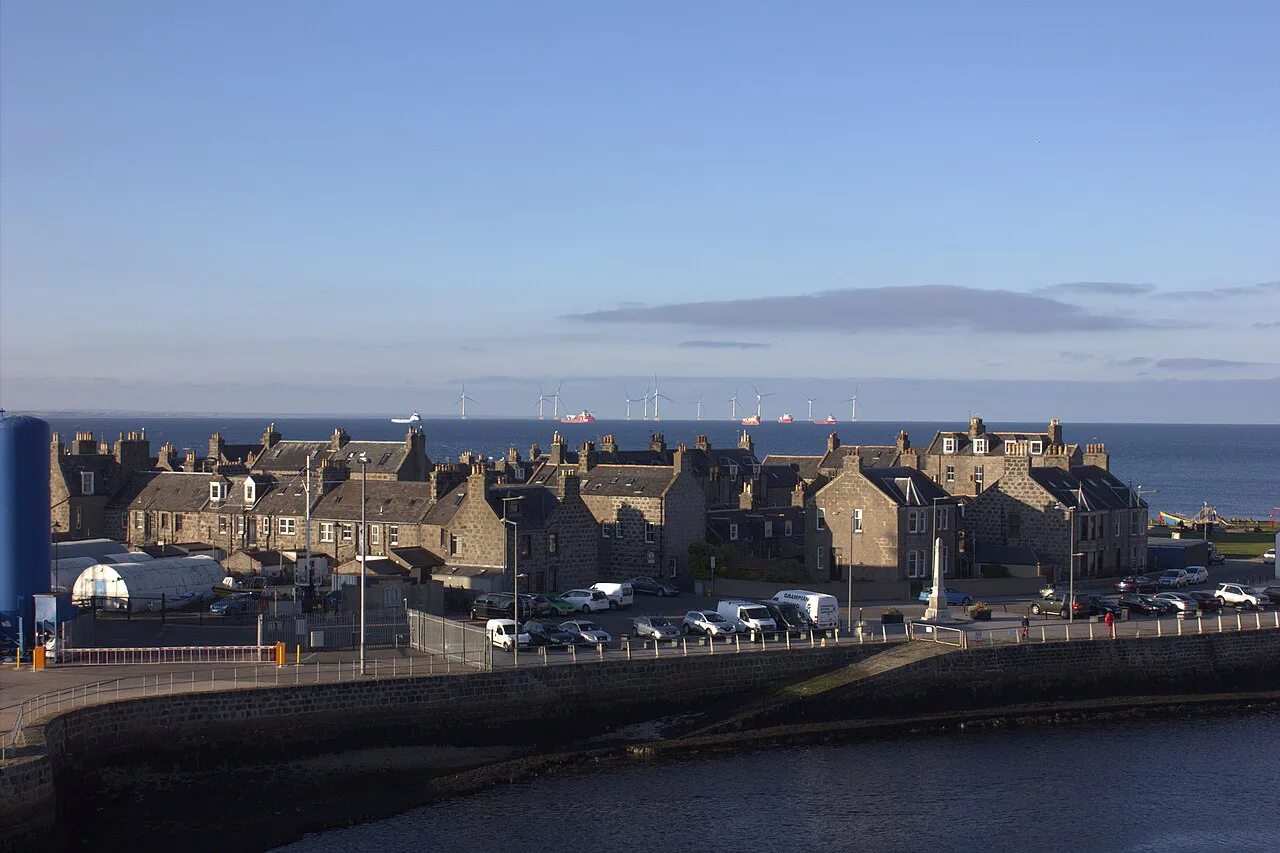
Footdee, known locally as Fittie, is a former fishing village at the end of the beach and harbour, laid out in squares in the early 1800s to rehouse local fishing families. The cottages face inwards to protect residents from the North Sea weather, and the communal squares hold tarry sheds originally built from driftwood and timber, now embellished with plant pots, gnomes and paint.
The village grew to four squares, with North Square, South Square, Pilot Square and a middle row, and it holds conservation area status protecting its architectural and historic interest. Look for the Footdee Mission Hall in the centre of North Square, easy to miss among the decorated sheds. Walk it slowly and quietly, because these are people's homes rather than a museum display.
Aberdeen Beach and the Harbour Mouth
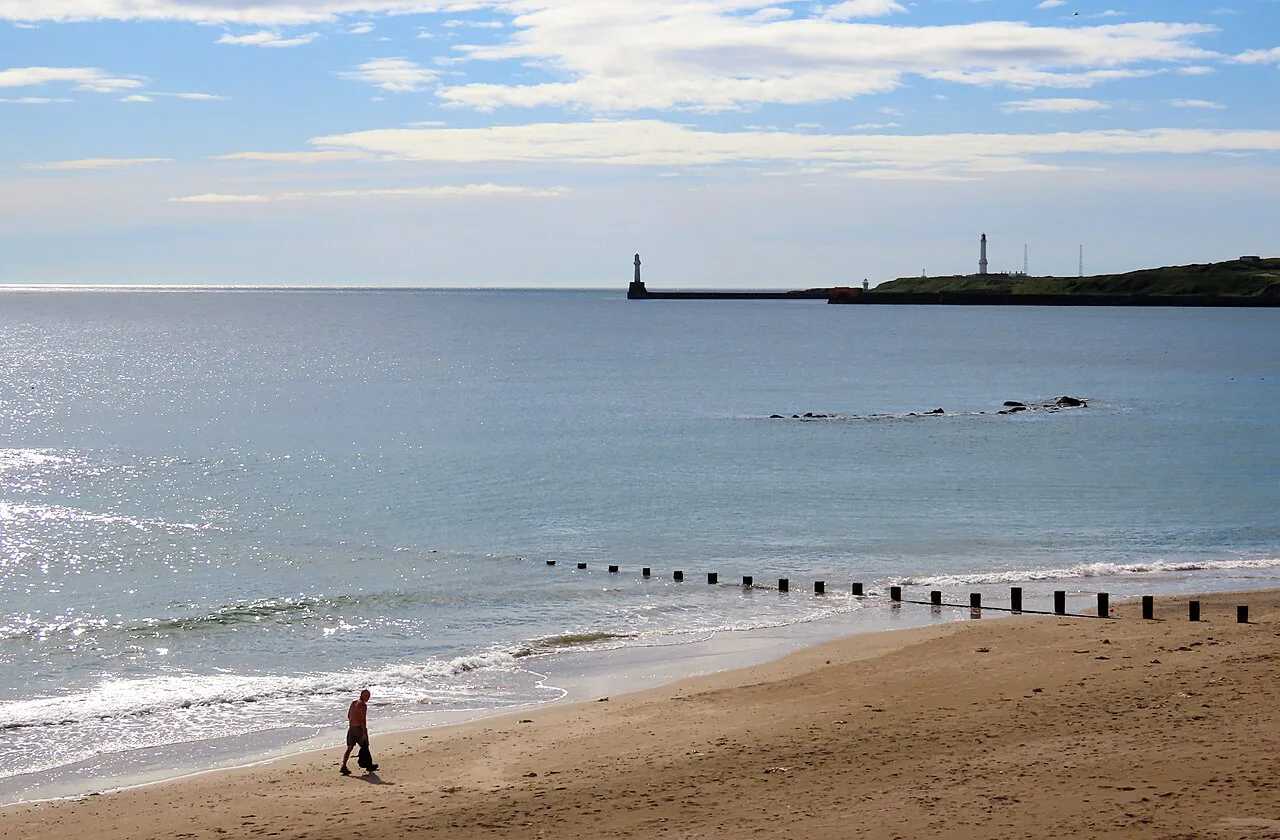
From Castlegate, Beach Boulevard leads down to Aberdeen Beach, a long sandy stretch backed by marram grass and a line of wooden breakwaters. The esplanade sits slightly below road level and gives some shelter from the wind, which matters on a chilly day. Beyond the sand, the road holds cafes, ice cream parlours and a funfair.
Carry on along the esplanade towards the mouth of the River Dee, where ships enter and leave the Port of Aberdeen, and you reach Footdee without any transport at all. This is the best free coastal walk in the city: flat, straightforward and best done in layers, since the wind off the water is stronger than it looks from the road.
Old Aberdeen: Cobbles, Cathedral and Botanic Garden
Old Aberdeen was once a separate burgh and now rewards a slow wander rather than a tick-list. King's College, the city's first university and now part of the University of Aberdeen, sits among fifteenth-century buildings alongside the university chapel and King's College Chapel, with Elphinstone Hall, built in 1931, a favoured spot for photographs.
From there, walk the Old Aberdeen High Street and the Chanonry, where many buildings still belong to the university and the streets feel a century away from Union Street. St Machar's Cathedral and Cruickshank Botanic Garden sit in the same quarter, so you can plan a loop that keeps walking short and shelters you among stone walls when the weather closes in.
Free areas such as the streets and garden are the draw here, not paid interiors. Allow a half day if you want the cathedral, the college quad and the garden without rushing, and check opening arrangements for individual buildings before you set out.
Marischal College and Marischal Square
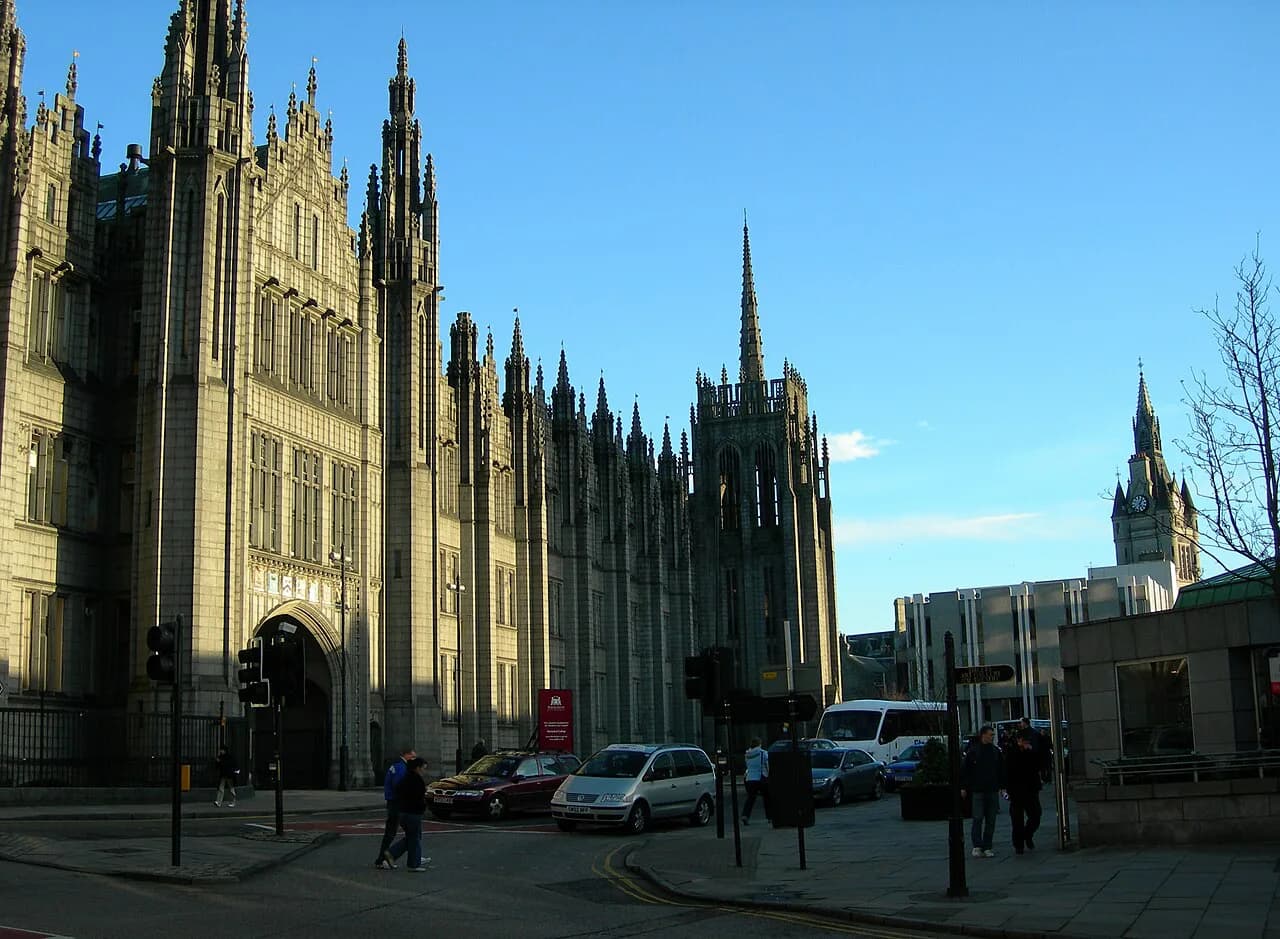
Marischal College is one of the city's most photographed granite facades, and you can admire it from the street without spending anything. Just behind it, the Marischal Square development holds a courtyard where Mackie's of Scotland sells its ice cream, and if you look up you will see a steel mesh leopard sculpture by Andy Scott, the artist behind the Kelpies, glittering about ten metres above the ground.
This is a short stop rather than a destination in its own right, so slot it between Castlegate and Union Street. The courtyard gives shelter and seating, which makes it a sensible pause on a wet day, and the sculpture is easy to miss if you keep your eyes at street level.
Torry Battery and Greyhope Bay
Torry Battery sits above the harbour mouth and offers panoramic views out to the North Sea, and the headland is one of the most reliable places in Europe to watch bottlenose dolphins from shore. RSPB Scotland runs Dolphinwatch from the Torry Battery car park off Greyhope Road, lending binoculars and telescopes and sharing information on the wildlife. It can be bitterly cold, so take warm layers and your own food and drink.
From Greyhope Bay, a coastal path leads to Girdleness Lighthouse, built in 1833 with an unusual double light and a gallery halfway up the tower. There is no public access inside, so this is a walk-and-look outing rather than a visit, and the same path gives you a good chance of seals, gulls and oystercatchers as well as the view back over the harbour.
A Cheap Day Out in Stonehaven
Stonehaven makes an easy day trip by train, with at least two trains an hour from Aberdeen and a journey of around 30 minutes, quick enough for a half-day extension. From the station, walk down to the town centre and along the promenade by the stony beach, then round the fishing harbour where painted boats and buoys brighten a grey day.
The Tolbooth Museum occupies the oldest building in Stonehaven, built by the Earl Marischal as a store during construction of nearby Dunnottar Castle and later used as a prison from 1624 to 1767. It is run by community volunteers, free to enter, and open every day except Tuesdays from 13:30 to 16:30, so time your arrival around that window. You can still see an original cell door and the crank, a punishment device.
From the harbour, a signposted path climbs between cottages and onto the clifftop towards Dunnottar Castle, a walk of around 30 minutes that gives you ruined towers on a headland with water on three sides. The castle interior is a paid visit down a slope and up steep steps, so budget for it or simply enjoy the headland and war memorial views and walk back to the station.
What Is Not Free
The free filter matters most where you would otherwise assume a ticket. Castles such as Dunnottar charge for entry and involve steep steps, while city-centre sights including Marischal College and the Mercat Cross are exterior viewing only. Plan paid interiors as a separate, deliberate spend rather than something you stumble into.
Attractions around the city also have their own seasonal patterns, which affect a day out more than price does. Kildrummy Castle, for example, opens between 1 April and 30 September, Wednesday to Friday, 09:30 to 17:30, so a ruined-castle trip needs checking against the calendar before you build a day around it.
For paid days, book ahead where a timed slot is offered and keep a wet-weather alternative in reserve. The city's galleries and museums give you indoor options when the coast is too exposed, and a flexible plan means one rainy morning does not sink the whole trip.
Practical Trade-offs: Weather, Steps and Distance
Aberdeen's free sights are spread out, and the weather sets the pace. The beach and Torry Battery are exposed and cold even on a bright day, Old Aberdeen is a two-mile walk or a short bus ride from the centre, and the clifftop path to Dunnottar involves a climb followed by steep steps down to the castle.
Build the day around two areas, wear shoes that cope with cobbles and wet grass, and keep a paid indoor stop in reserve for the worst of the rain. A morning of street art and a Marischal Square pause, then Footdee and the beach in the afternoon, covers a lot of ground without any tickets at all. If you are weighing Aberdeen against another Scottish city break, our guide to the free things to do in Leeds sets out a similar mix of museums, ruins and city walks.
If you want a longer day out, the train to Stonehaven adds a harbour, a free museum and a clifftop walk to your trip for the cost of a fare. Check train times on the day, since the museum's afternoon window is short and a missed connection can cost you the whole stop.
Plan Your Free Aberdeen Day
Start with Union Street and Castlegate for orientation and the Mercat Cross, follow the Nuart and Painted Doors maps through the side streets, then walk down to Footdee and the beach. Give Old Aberdeen its own half day, and save Torry Battery for a clear forecast when the dolphins and the lighthouse walk are worth the wind.
Keep your spending for one or two deliberate choices, such as a castle interior or a Stonehaven train fare, and treat everything else as a walking day. Check current opening details for individual buildings and the Tolbooth Museum before you travel, as seasonal hours change.
Explore more Aberdeen guides
Frequently Asked Questions
What are the best free things to do in Aberdeen?
The strongest free picks are the Nuart murals and Painted Doors in the city centre, Footdee's cottages and sheds, the beach esplanade, Old Aberdeen's cobbled streets and cathedral quarter, and the harbour views from Torry Battery. All of them are outdoor or exterior sights you can visit without buying a ticket.
Is Nuart Aberdeen street art free to see?
Yes, the murals are painted on walls and buildings across the city centre, so you can follow a self-guided trail using the published street art map at no cost. The artwork changes over time as walls are repainted, so treat any list of pieces as a starting point rather than a fixed set.
Can you visit Footdee for free?
There is no charge to walk around Footdee, which sits at the end of the beach and harbour promenade. It is a residential conservation area, so keep noise down and treat the cottages and decorated sheds as people's homes rather than an attraction.
Is Old Aberdeen free to walk around?
Walking Old Aberdeen's cobbled streets, the Chanonry and the area around King's College costs nothing. Some individual university and cathedral buildings have their own visiting arrangements, so check before planning your route around interiors.
Where can you see dolphins in Aberdeen for free?
Torry Battery and Greyhope Bay are the recognised spots, and RSPB Scotland runs Dolphinwatch from the Torry Battery car park off Greyhope Road, lending binoculars and telescopes. Wrap up warmly and bring your own food and drink, because the headland is exposed.
Is Dunnottar Castle free to visit?
No, entering the castle ruins is a paid visit. The clifftop walk from Stonehaven harbour to the headland is free, and the views of the ruins from outside are the reward if you would rather not pay or tackle the steep steps down and up.
What can you do in Aberdeen for free on a rainy day?
Shorten the street art trail to a dash between doorways, use Marischal Square's covered courtyard as a pause, and keep a paid indoor attraction in reserve for the wettest hours. The city's galleries and museums are the obvious wet-weather substitute for the coast.
How do you get to Stonehaven from Aberdeen?
Take the train from Aberdeen to Stonehaven, which runs frequently and puts you within walking distance of the town centre, promenade and harbour. From there, follow the signposted clifftop path towards Dunnottar Castle, roughly a 30-minute walk.
Sources
Notes for your next city break
Optional updates to our UK city guides.
You might also like



Continue reading
More guides you'll find useful