Aberdeen Architecture: Granite Buildings Worth Seeing
Aberdeen's granite architecture explained: Marischal College, King's College Chapel, St Machar's Cathedral and Old Aberdeen, with a practical walking route.
On this page
Aberdeen's architecture is a single-material story told across six centuries. Granite gives the city its nickname, the Granite City, and it runs through medieval church walls, a 1545 townhouse, Victorian college spires and the modern galleries beside them. The pleasure of the place is that you can walk most of it in a day.
This guide orders the buildings by type rather than by a top-ten ranking, so you can see how the same stone was used for a fortified cathedral, a crown-topped chapel and a civic showpiece. It also tells you which interiors are free, which need a seasonally timed visit and where the cobbles and stairs slow you down.
Granite as Aberdeen's Building Stone
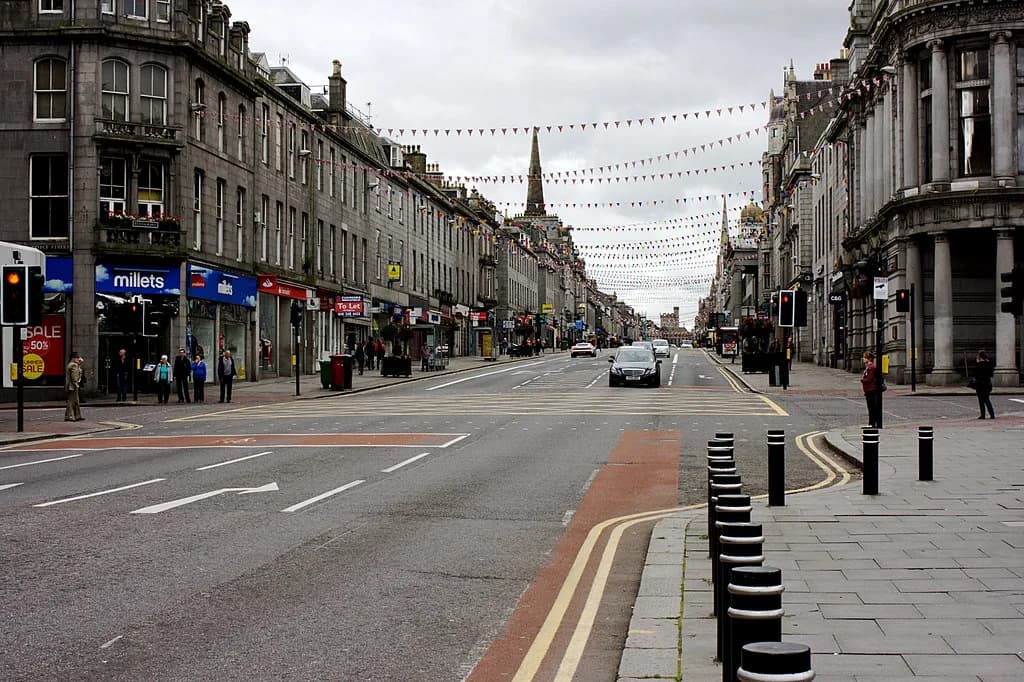
Granite is the principal construction material of Aberdeen, a hard grey stone durable enough to have shaped the city's look for centuries. That durability is why so much of the historic fabric survives and why the city reads as a coherent whole rather than a patchwork of periods.
The stone rewards the right weather. VisitScotland quotes the writer Keith Clark on how Aberdeen's granite glitters after rain as though newly cut, which is the single best argument for pulling on a coat rather than waiting for sunshine. Grey skies flatten the facades; wet stone and low sun bring out the sparkle in the mica.
Why Aberdeen Is Called the Granite City
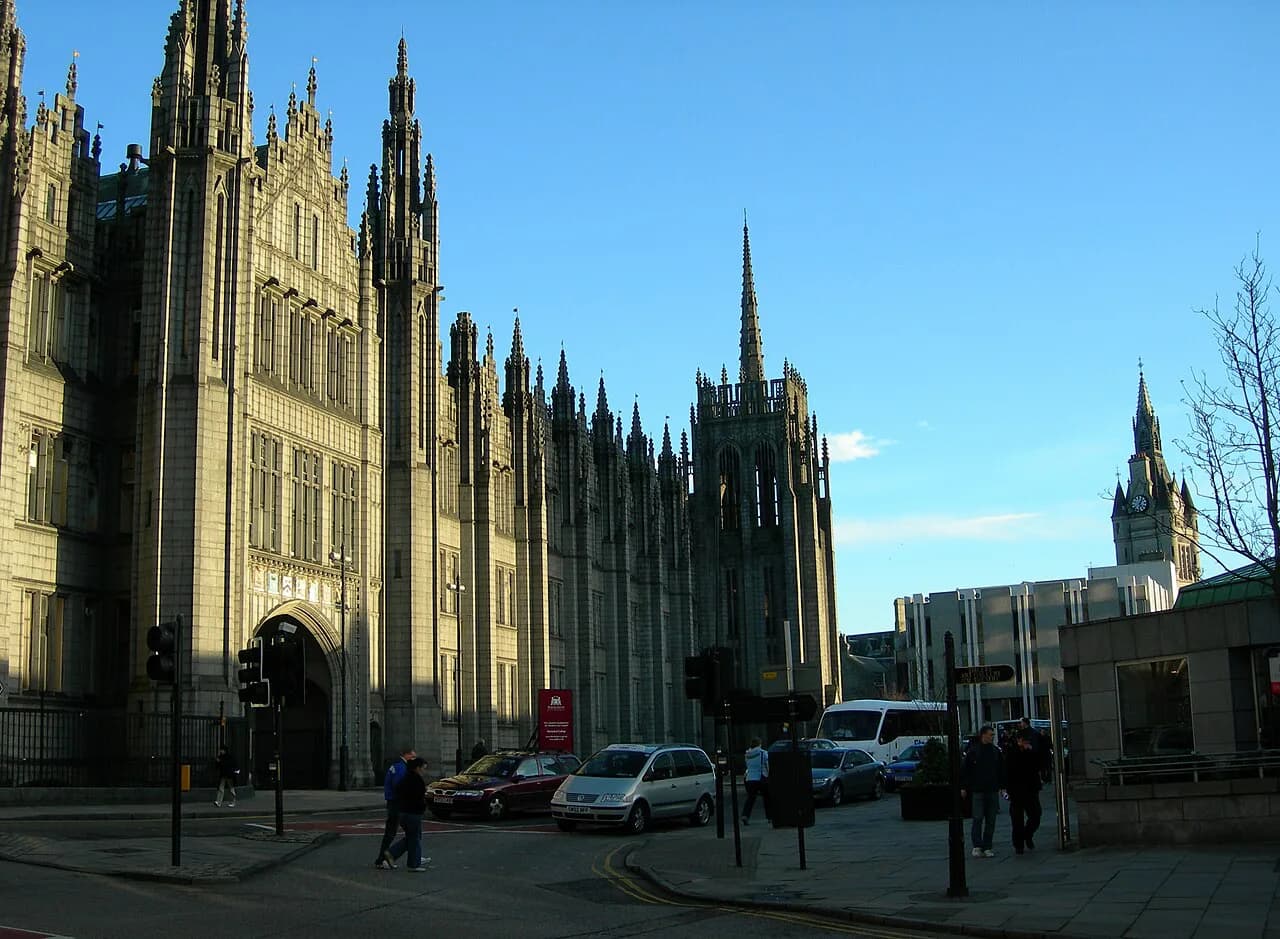
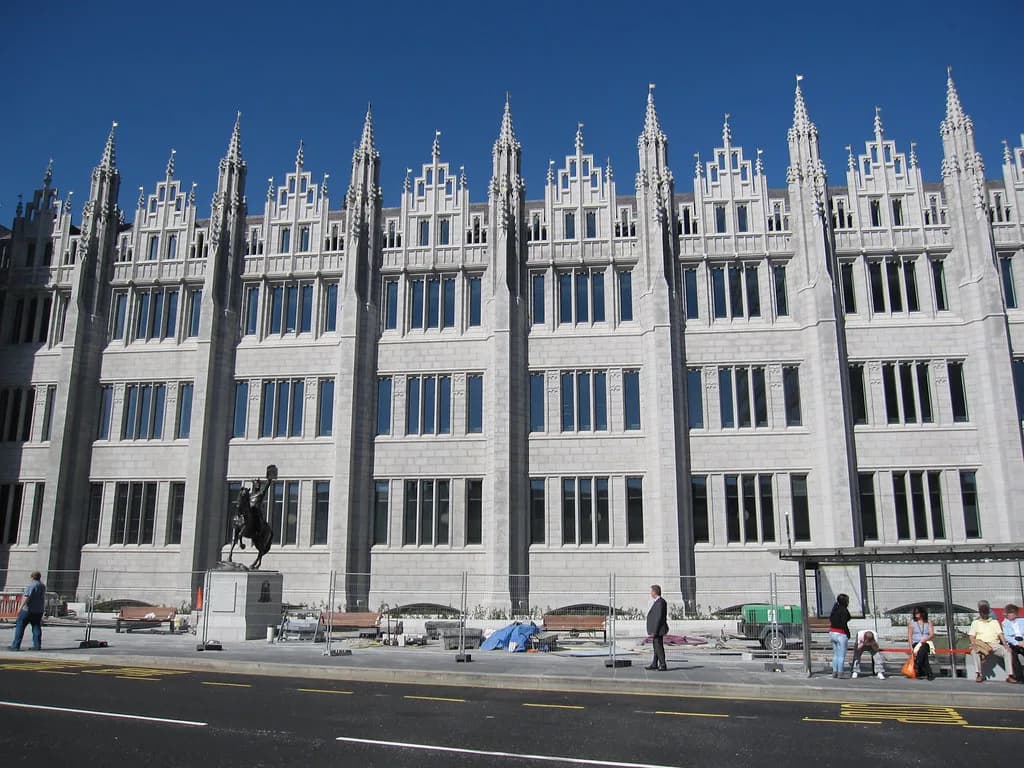
The nickname comes from the sheer consistency of the local stone. Marischal College shows it at its most theatrical: a soaring granite facade with ornate spires, built in a 19th-century design that earned the city its Granite City name.
Marischal College is now home to Aberdeen City Council, so treat it as a building to look at from the street and the quadrangle rather than an interior to tour. Just outside, a grand bronze statue of Robert the Bruce gives you a scale marker and a natural starting point for a city-centre walk.
King's College Chapel and the Crown Tower
King's College Chapel sits at the heart of the University of Aberdeen in Old Aberdeen, its distinctive crown tower rising above the surrounding rooflines. The chapel was completed around 1500, and inside you find ornate wooden features that survived the Reformation alongside stained glass completed in the 19th and 20th centuries.
The crown tower is the image to carry away: an open stone spire that looks almost impossibly light for its material. Pair the chapel with a wander through the university quarter, where cobbled streets and leafy squares show a quieter side of the Granite City. If university-quarter stonework leaves you wanting more, our guide to Cambridge architecture covers another city where colleges and chapels set the itinerary.
St Machar's Cathedral: Granite, Turrets and a Heraldic Ceiling
St Machar's Cathedral has overlooked the River Don since the 12th century, an imposing granite landmark with a fortified west front and dramatic twin turrets. Inside, look up: the 500-year-old heraldic ceiling carries 48 coats of arms representing kings, nobles and church figures, and is the reason to step through the door rather than photograph the outside and move on.
Allow time for the details beyond the ceiling, including intricate stained glass, an ancient Pictish cross and the atmospheric churchyard with the remains of medieval transepts. The cathedral sits in Old Aberdeen, an area worth giving a full day to if you like stone streets and old university buildings.
Old Aberdeen and the Brig o' Balgownie
Old Aberdeen is the historic heart of the university campus, and the walking order writes itself: St Machar's Cathedral, then King's College, the Chanonry and the Sir Duncan Rice Library, following the High Street past granite buildings and traditional cottages. Continue towards the River Don and Seaton Park, or head for the medieval Brig o' Balgownie, which has spanned the river for hundreds of years.
The bridge is believed to date from the late 13th or early 14th century and carries links to Robert the Bruce and Byron, which makes it a good full stop to the walk. Combine it with a riverside stretch and the Cruickshank Botanic Garden, and Old Aberdeen easily absorbs a half day or more.
Provost Skene's House: The Oldest Surviving Townhouse
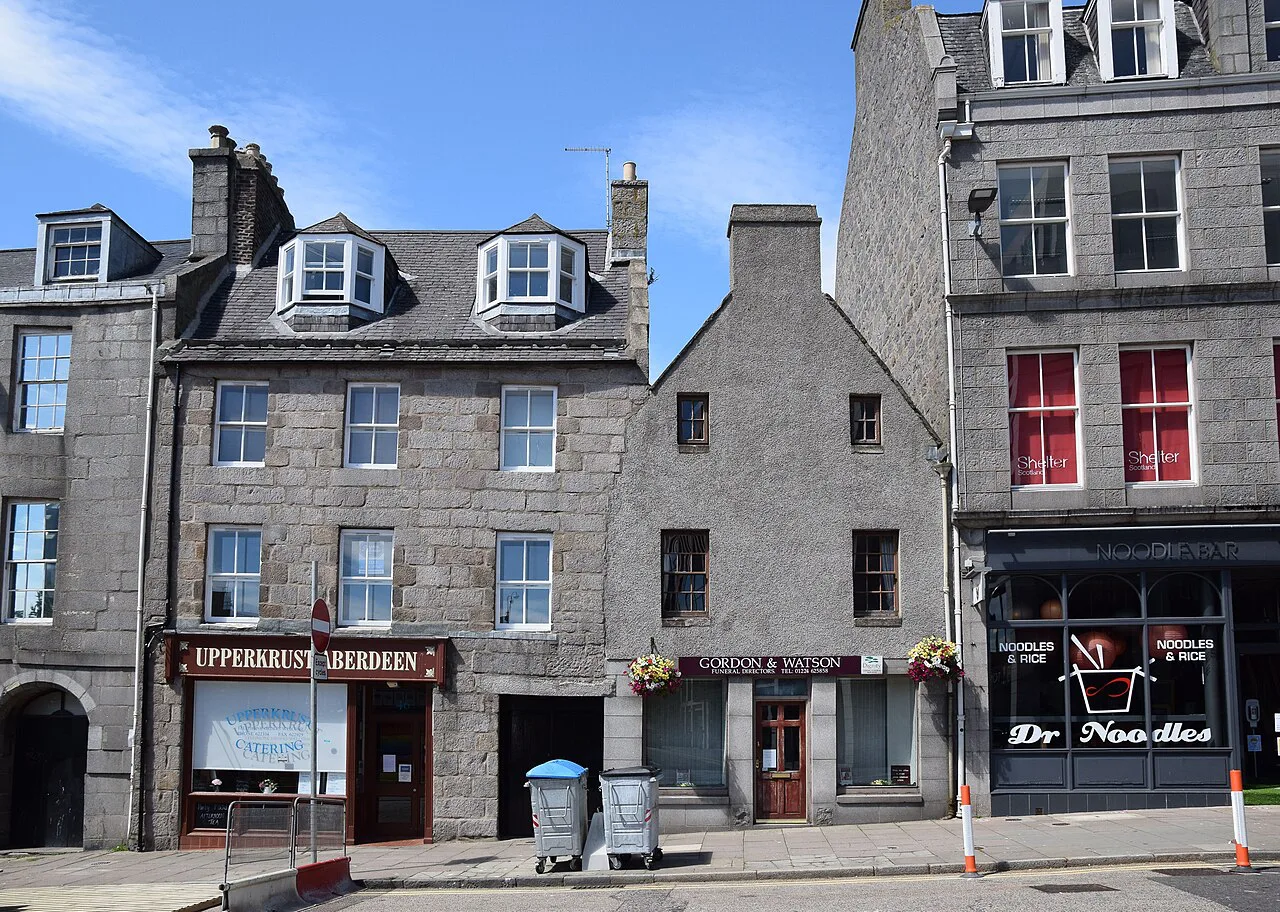
Provost Skene's House dates from 1545 and is the oldest surviving townhouse in Aberdeen. It has been extended and altered repeatedly, served as a lodging house when the surrounding Guestrow area declined, and was threatened with demolition in 1940 before a public campaign saved it; it opened as a museum in 1953. Inside, more than 100 people born, educated or working in the north-east are celebrated across ten themed displays, with hands-on activities for children.
Opening is seasonal and specific: April to October, Thursday to Monday 10am to 5pm, with Sundays 11am to 4pm, and closed Tuesday and Wednesday. Admission is free, no advance booking is required, and donations are warmly welcomed.
Access is the trade-off. The upper floors are reached by winding stone staircases and are not accessible to wheelchair users or visitors with restricted mobility, and low ceilings and uneven floors demand care. Ground-floor visitors can still see the Hall of Heroes, read the building's history in the Access Gallery and use a touchscreen that introduces the upper displays.
Modern and Civic Strands: Art Gallery and Sculpture Trail
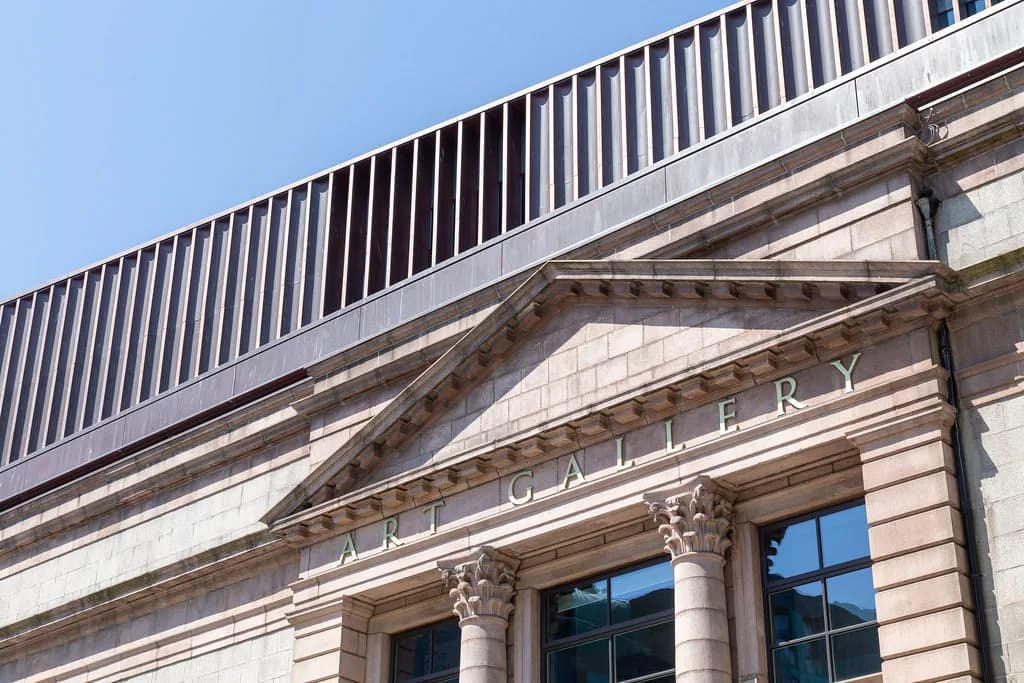
Aberdeen Art Gallery holds a collection spanning 700 years of art and design, from a sculpture court to 18 galleries of paintings, sculpture, fashion and decorative arts. Look for the Scottish Colourists and Joan Eardley alongside Barbara Hepworth, Francis Bacon and Tracey Emin, plus a rare portrait of Queen Victoria as a young bride in white.
For architecture on the street rather than behind glass, follow the Aberdeen Sculpture and Curios Trail, which gathers 20 public artworks across the city centre. It ranges from The Poised, a gleaming leopard above Marischal Square, to The Mannie, a bronze fisherman gazing towards the harbour, and the William Wallace statue opposite His Majesty's Theatre.
If you want more museum interiors between the buildings, the city's collections are clustered within walking distance of the granite set pieces, so a wet afternoon costs you nothing in planning.
A Practical Architecture Walk
Start at Marischal College for the granite facade and the Robert the Bruce statue, then work through the city centre's sculpture trail towards the gallery. Break for coffee, then head north to Old Aberdeen for St Machar's Cathedral, King's College Chapel and the Brig o' Balgownie. Most of the main central attractions are walkable, and public transport covers the rest.
Fit Provost Skene's House in on a Thursday to Monday between April and October, since it closes on Tuesdays and Wednesdays and outside that season. Its position between Broad Street and Flourmill Lane puts it close to the city-centre start of the route, so slot it in early rather than doubling back.
Budget a full day if you want interiors as well as facades, and a half day if you are content with exteriors and a cathedral ceiling. Footdee, the old fishing quarter with bright cottages, makes a fine detour for anyone who wants colour against all that grey.
Free Versus Ticketed
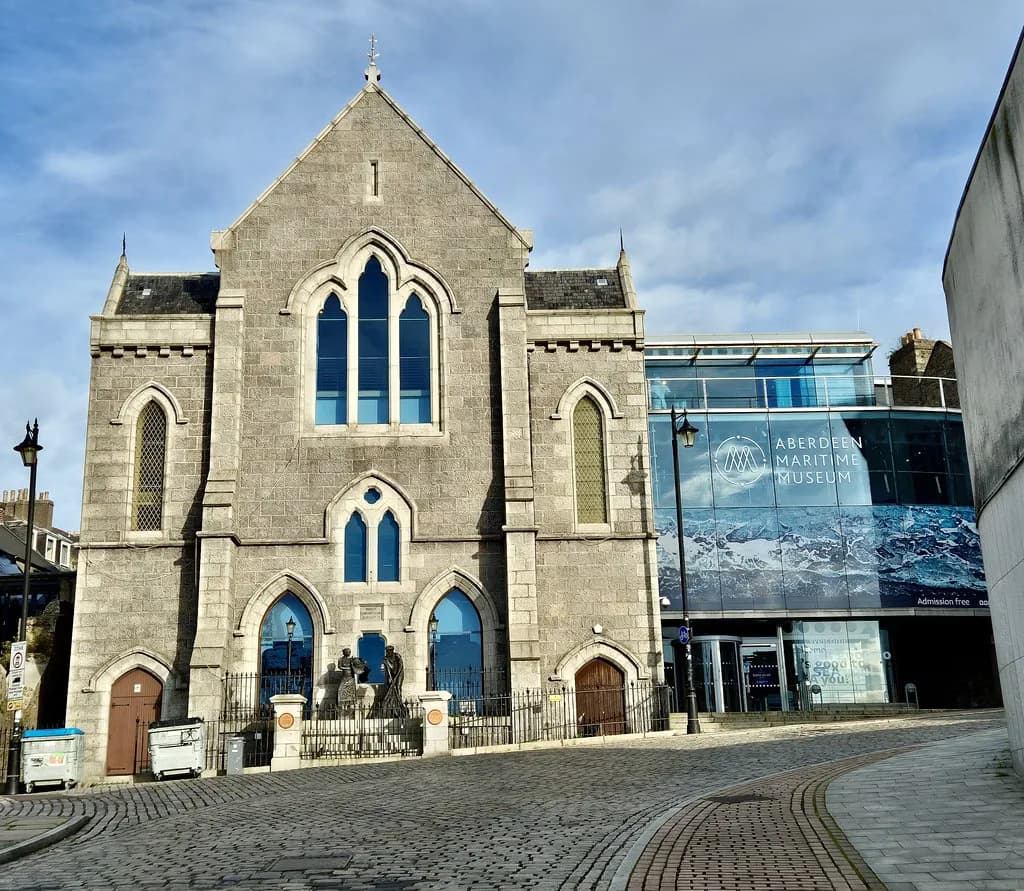
The architecture walk is largely free. Marischal College is a street-level landmark, and Provost Skene's House charges no admission, while Aberdeen Art Gallery and Aberdeen Maritime Museum appear in VisitScotland's list of free things to do in the city. The Maritime Museum overlooks the harbour at Shiprow and holds a nine-metre model of the Murchison offshore platform, deep-sea diving suits and objects raised from the sea floor.
For anything charging admission, including sites beyond the city, check the current ticket price before you travel. Neither the cathedral nor the chapel is described as ticketed in the visitor listings, so plan them as free stops and treat any donation as your own choice.
Access and Trade-offs
Historic stone comes with steps. Provost Skene's House is the clearest example, with upper floors off limits to wheelchair users and visitors with restricted mobility, but Old Aberdeen's cobbles and the cathedral churchyard also demand sturdy shoes. Aberdeen's museums and galleries generally offer accessible facilities, with details best confirmed with each venue before booking.
The Tolbooth Museum is closed for renovations and expected to reopen in spring 2027, so do not build a day around its 17th-century prison cells this year. Winter visits also reshape the itinerary: from November to February, indoor stops such as Aberdeen Art Gallery and the Maritime Museum make more sense than long riverside walks.
The Aberdeen Maritime Museum's harbour-side windows are a good rain plan, letting you watch ferries move through a working port while the weather passes.
Getting Around Aberdeen
Direct trains connect Aberdeen with Edinburgh, Glasgow, Dundee, Inverness and London, arriving in the heart of the city, which puts the granite centre within walking distance of the station. Regular coaches from the same cities arrive at Aberdeen Bus Station, and Aberdeen Airport sits around 20 minutes from the centre.
You do not need a car for the city itself: the main attractions are walkable and buses serve the rest. A car earns its keep only if you plan to push into Aberdeenshire for castles and coast, where the A90 and A96 make the connections straightforward.
Where to Go Next
Aberdeen is a base as much as a destination. Dunnottar Castle, Royal Deeside, the Cairngorms National Park and the region's whisky distilleries are all within reach for a day trip, and the Aberdeenshire countryside begins just beyond the city boundary.
Within the city, the granite thread continues into the older quarters, and the wider story of the port, the university and the oil years explains why the buildings look as they do. Several sites run reduced hours out of season, so confirm times on official venue pages before you set out.
Plan Your Architecture Visit
Aberdeen rewards a walker with an eye for stone. Line up Marischal College, St Machar's Cathedral, King's College Chapel and the Brig o' Balgownie in a single loop, and fit Provost Skene's House into a Thursday-to-Monday slot when it is free to enter.
Build the day around the constraints rather than fighting them: stairs at the townhouse, cobbles in Old Aberdeen, and a Tolbooth Museum that stays shut while it is renovated. Get the order right and the Granite City shows you six centuries of building in one afternoon.
Frequently Asked Questions
Why is Aberdeen built with granite?
Granite is Aberdeen's principal construction material, a hard grey stone durable enough to have shaped the city's look for centuries. That toughness helps explain why so much historic fabric survives, and it gives the city a visual coherence across medieval, Victorian and modern buildings.
Which Aberdeen buildings are free to visit?
Provost Skene's House has free admission, and Aberdeen Art Gallery and Aberdeen Maritime Museum appear in VisitScotland's list of free things to do in the city. Marischal College is a street-level landmark rather than a public interior, and the cathedral and chapel are best planned as free stops with any donation a personal choice.
Is Marischal College open to the public?
Marischal College is now home to Aberdeen City Council, so plan to admire the granite facade and spires from the street and quadrangle rather than touring inside. The bronze statue of Robert the Bruce just outside makes a natural start to a city-centre walk.
When is Provost Skene's House open?
The house opens April to October, Thursday to Monday from 10am to 5pm, with Sundays 11am to 4pm, and closes on Tuesdays and Wednesdays. Admission is free and no advance booking is required, but the upper floors are reached by winding stone staircases that are not accessible to wheelchair users or visitors with restricted mobility.
How long does it take to walk around Old Aberdeen?
Old Aberdeen easily absorbs a half day or more if you take in St Machar's Cathedral, King's College Chapel, the university streets and the Brig o' Balgownie over the River Don. Add a riverside stretch and the Cruickshank Botanic Garden and it fills a full day comfortably.
Sources
Notes for your next city break
Optional updates to our UK city guides.
You might also like

Continue reading
More guides you'll find useful