Things to Do in Aberdeen: Museums, Old Aberdeen & Beach
Plan an Aberdeen city break with free museums, Old Aberdeen's cathedral and cobbles, Duthie Park's glasshouses and a beach walk from the harbour.
On this page
Aberdeen suits a city break built on foot. Granite streets, a working harbour, the medieval lanes of Old Aberdeen and a long sandy beach sit close enough together that you can link several in a single day, with buses filling the gaps to the old town and the seafront.
The best-value core is free: the Aberdeen Maritime Museum, the Tolbooth Museum, St Machar's Cathedral and the glasshouses at Duthie Park all cost nothing to enter. Castles and paid experiences elsewhere in Aberdeenshire are a different budget, so sort the free stops first and spend the rest on a bookable extra.
Plan by area rather than by pin. The centre holds the museums and gallery, Old Aberdeen sits a short bus ride north, and the beach and Footdee lie east of the harbour, so grouping them saves you criss-crossing the city.
Aberdeen Art Gallery and the city centre
Aberdeen Art Gallery anchors the centre, with wide galleries holding Scottish painting and modern work, plus a rooftop café for a coffee and pastry with views over the Granite City. It is the natural first stop if you arrive by train, since the station and Union Street are within easy walking distance.
From the gallery you can walk to Provost Skene's House, the oldest surviving town house in the city, dating back to 1545. Its displays profile scientists, writers and screen names from the north-east, which makes it a good half-hour primer on Aberdeen's people before you tackle the bigger collections.
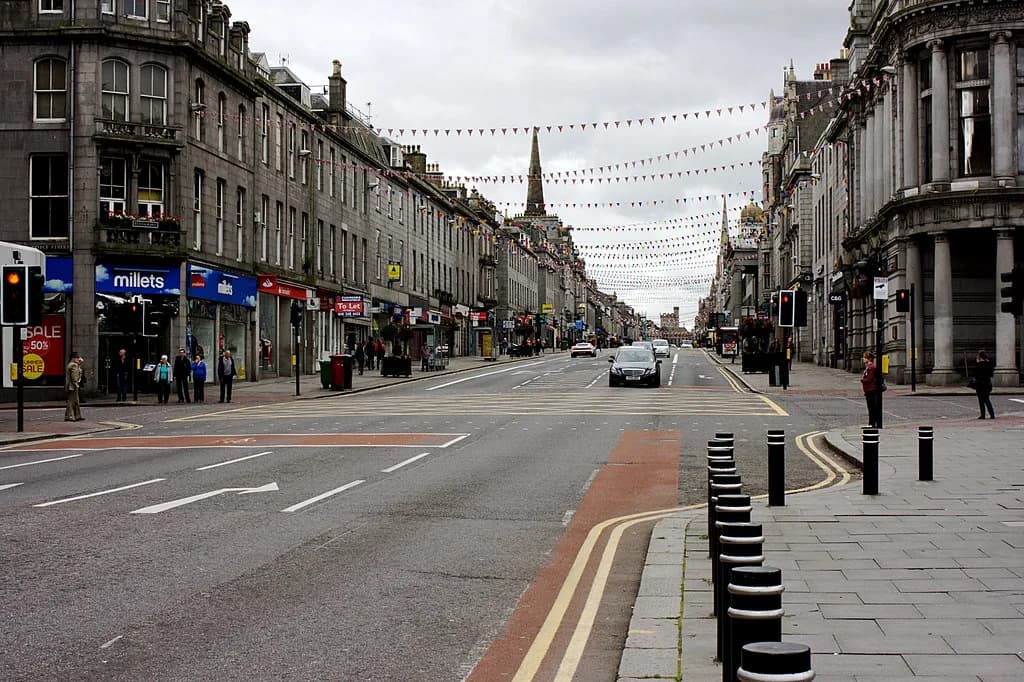
Union Street is the spine of the centre, and buses run from it to the outer sights, including the gardens at Duthie Park. If retail is part of your plan, build a wet-hour slot around the city centre shops rather than trekking out to a retail park.
Aberdeen Maritime Museum on Shiprow
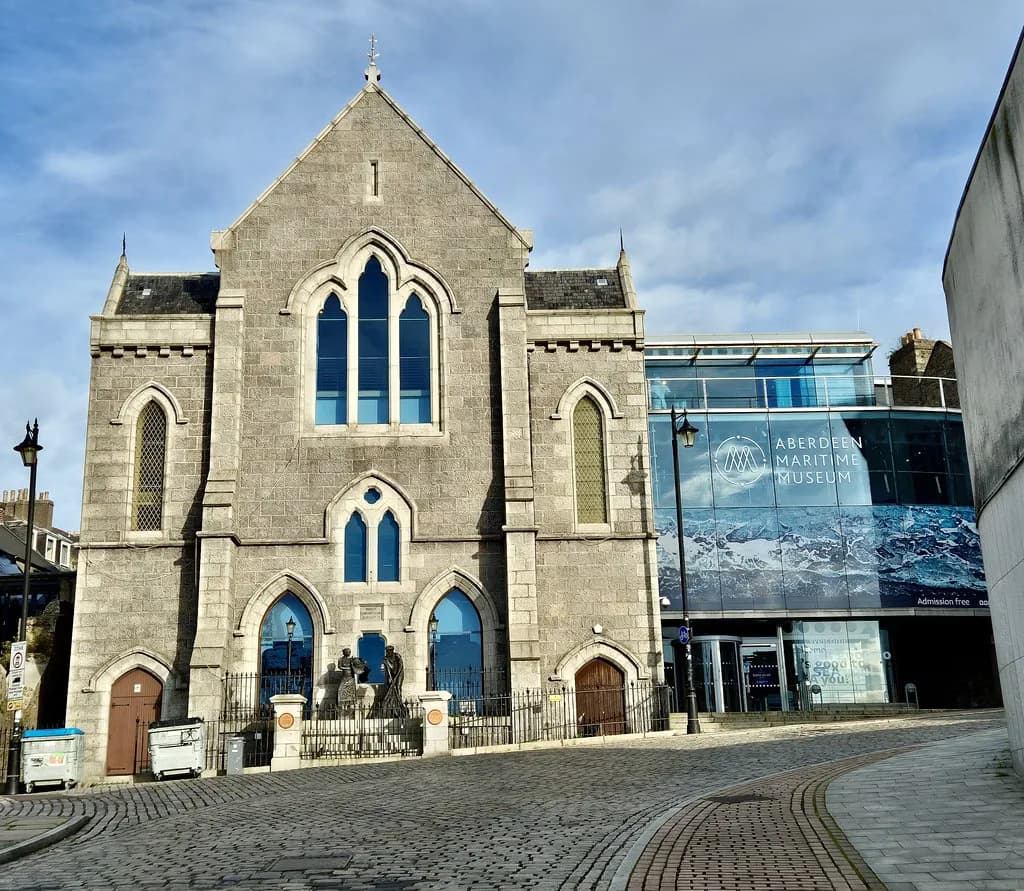
The Aberdeen Maritime Museum sits on historic Shiprow, a street first mentioned in documents in 1281, and incorporates Provost Ross's House, built in 1593. Entry is free, and an hour is a sensible minimum; the main exhibition room has cathedral-like windows looking onto the working harbour, so the boats and machinery become part of the story.
Its distinctive draw is the display on the North Sea oil and gas industry, alongside shipbuilding, fishing and port history, with touchscreens and hands-on exhibits that work well for children. Check the museum's own listings for current opening days before you build a day around it.
Shiprow's cobbles lead straight down to the harbour, so pair the museum with a look at the water before heading on. If museums are your main interest, it is worth planning a wider circuit of the city's collections.
The Tolbooth Museum: a 17th-century gaol
The Tolbooth Museum occupies one of Aberdeen's oldest buildings and is among the best-preserved 17th-century gaols in Scotland, with original cells, doors and barred windows intact. Built between 1616 and 1629, it served as the prison for the city and county for more than 200 years, and entry is free.
The displays cover prisoners from debtors to Quakers, and almost 100 known or suspected Jacobites were held here for questioning after Culloden. A farm hand named Charles Duff was charged with wearing tartan under the Dress Act of 1746, which shows how ordinary the charges could be. Allow at least 30 minutes, and note the steep, winding stone stairs, which are awkward for anyone with mobility difficulties.
The building is said to be haunted, so treat that as a story attached to the place rather than a promise of anything. It sits a short walk from the Maritime Museum, which makes the two easy to combine in one wet morning.
Old Aberdeen on foot
Old Aberdeen is the oldest part of the city and now home to the University of Aberdeen, with less granite and more sandstone, cobbled lanes and smaller buildings. First Bus 19 runs here from the centre, and the neighbourhood rewards a slow wander rather than a rushed checklist.
St Machar's Cathedral is the anchor, free to visit, with a heraldic ceiling dating from 1520 and a fortified west front with twin turrets. The present building mainly dates to the 15th and 16th centuries, and it is the oldest building still in active use in Aberdeen.
Nearby, Kings College Chapel and the Sir Duncan Rice Library show the university's two architectural moods, old stone against modern glass, and the Cruickshank Botanic Garden gives you a green pause between them. Give Old Aberdeen half a day if you want the cathedral, the lanes and a riverside stretch.
Seaton Park, the Brig o' Balgownie and the River Don
Behind St Machar's Cathedral lies Seaton Park, and a walk across it brings you to the Brig o' Balgownie, a stone bridge over the River Don with links to Robert the Bruce and Byron. Heritage sources date the bridge to the late 13th or early 14th century, which makes it one of the oldest structures on a city walk anywhere in Scotland.
The woodland either side of the bridge towards the sea forms the Donmouth Local Nature Reserve, where seals often rest on the island in the middle of the river and birdlife is plentiful. Continue towards the dunes and you can pick up the northern end of Aberdeen Beach, with bird hides along the shore for shelter and watching.
This stretch is the best argument for keeping Old Aberdeen and the seafront in the same day, since the river walk joins them without a bus. Wear shoes you don't mind getting muddy after rain.
Duthie Park and the David Welch Winter Gardens
Duthie Park sits on the south side of the city, and its David Welch Winter Gardens are among the largest indoor gardens in Europe, with fern houses, a perfume corridor, a Victorian corridor and a tropical house. Entry is free, and a bus from Union Street in the centre takes about 15 minutes.
Inside, warm air and dense greenery make it the single best wet-weather bolthole in Aberdeen, with benches, a coffee shop and one of Britain's larger cactus collections. It is also a family-friendly stop, with play areas, a boating pond and sports fields in the surrounding park.
If green space is a priority, this is the pick to build a morning around, and the wider city has other parks worth folding into a longer stay.
Footdee, the beach and the promenade
Footdee, known locally as Fittie, is a former fishing village squeezed between the harbour and the beach, with a few rows of stone cottages whose residents keep the lanes and gardens colourful and quirky. It is free to wander and takes perhaps half an hour, but the charm is in the detail, so don't rush the little lanes.
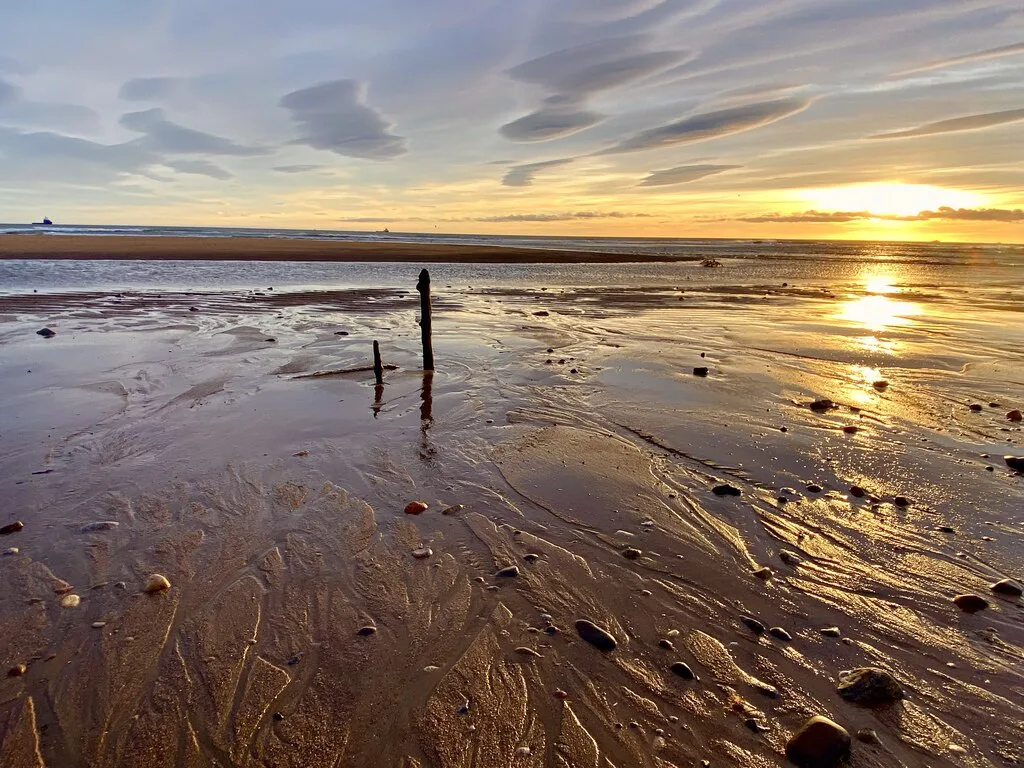
Aberdeen Beach runs from Footdee and the harbour north towards the River Don, with a broad promenade, food trucks and benches above the sand. The beach is about 30 minutes on foot from the city centre, so it works as a walking finish to a day rather than a separate trip.
The seafront also holds the leisure centre, ice rink, climbing centre, skatepark and fun fair, which makes it the obvious choice for families who want activity after the museums. Cold-water swimmers use the beach year-round, and there are steps down to the water at intervals along the esplanade.
Greyhope Bay, dolphins and the Gordon Highlanders Museum
Greyhope Bay, at the southern lip of the harbour mouth, is the city's dolphin-spotting viewpoint, and the beach itself gives you a chance of seeing them leap from the promenade. Go with patience and binoculars rather than a timetable; wildlife does not run to one.
For military history, the Gordon Highlanders Museum covers 200 years of the regiment from the Napoleonic Wars onwards, with films, displays and a replica First World War trench. It sits away from the centre in the city's west end, so give it its own slot rather than trying to squeeze it between harbour sights.
Boats and the water are a theme throughout the city, and if you want time on the sea rather than just looking at it, plan that separately from the harbour-side museums.
Rainy-day Aberdeen
When the rain sets in, head for the centre and stay there. The Maritime Museum and the Tolbooth are a short walk apart on and around Shiprow, and the Art Gallery and Provost Skene's House fill the rest of a wet day without a bus ride.
Duthie Park's glasshouses are the exception worth travelling for, since the tropical heat inside is a genuine contrast to a dreich afternoon. Add a café stop to break up the museums and the day still feels unhurried.
Other indoor options include the independent Belmont Filmhouse, the Aberdeen Performing Arts programme and the three museums on the University of Aberdeen campus. None of these needs booking far ahead, but check programmes before relying on a specific screening or show.
Cafés, afternoon tea and the evening
For a sit-down treat, afternoon tea at Maryculter House, a historic hotel in a village just outside the city, cost £25 in 2024, which is modest for the setting. It is remote, so plan the journey in advance.
In the centre, Foodstory and Books and Beans are the useful daytime stops: Foodstory leans on organic, vegetarian and vegan cooking with plenty of gluten-free cakes, while Books and Beans combines sandwiches, soups and breakfast pancakes with thousands of books upstairs. Bonobo, a vegan workers' co-operative, serves a compact, frequently changing menu and can involve a lunchtime wait.
In the evening the city's pubs and restaurants take over, with Ma Cameron's, The Old Blackfriars and O'Neill's among the pub options and Rustico a reliable Italian. If tea is the point of the trip, work the timing around your other stops.
Getting around Aberdeen
The centre is very walkable and the beach is about 30 minutes on foot, while First Bus services cover Old Aberdeen and the further-flung sights; contactless tapping works on local buses. Direct trains run from Glasgow and Edinburgh, with the Glasgow journey taking roughly 2.5 hours.
Drivers should know that Aberdeen has a low-emission zone restricting some vehicles, and that parking in the city costs money. If you are arriving by train, stay central and use buses for the old town and Duthie Park rather than hiring a car for a short break.
The city also has its own street art scene, with guided tours running in summer rather than year-round. If that appeals, fit it into a warm-weather visit.
A one-day and a two-day plan
For one day, start at Aberdeen Art Gallery, walk to the Maritime Museum and the Tolbooth on Shiprow, then follow the harbour to Footdee and finish along the beach. That keeps you on foot for most of the day and leaves the bus rides for a longer stay.
With two days, give the second morning to Old Aberdeen: bus up, see St Machar's Cathedral and Kings College Chapel, then walk through Seaton Park to the Brig o' Balgownie and back along the River Don. Spend the afternoon at Duthie Park's glasshouses, which works whatever the weather is doing.
A third day opens up the castles and coast of Aberdeenshire, including Crathes Castle, Castle Fraser, Craigievar Castle and Balmoral, plus the cliffs at the Bullers of Buchan and the seal colony at Newburgh. Most of these need a car or a booked tour, so decide before you arrive whether to hire one.
Plan Your Visit
Build your Aberdeen days by area: centre museums first, Old Aberdeen and the River Don second, then the beach and Footdee. Check opening days on each venue's own page before you travel, since seasonal hours change and a closed gallery can unravel a tightly packed plan.
Keep the free stops as your base and treat afternoon tea, saunas and guided tours as the paid extras. That way the city break stays affordable without missing the things that make Aberdeen distinctive.
Explore more Aberdeen guides
Frequently Asked Questions
Is Aberdeen worth visiting for a city break?
Yes, if you want a compact city where museums, a medieval old town and a beach sit within a short walk or bus ride of each other. The Maritime Museum, Tolbooth, St Machar's Cathedral and the Duthie Park glasshouses are all free to enter, so the core of a short break is inexpensive.
What is free to do in Aberdeen?
Entry is free at the Aberdeen Maritime Museum, the Tolbooth Museum, St Machar's Cathedral and the David Welch Winter Gardens at Duthie Park. Walking Old Aberdeen, Footdee and the beach promenade also costs nothing, and the city centre is walkable.
How far is Aberdeen beach from the city centre?
Aberdeen Beach is about a 30-minute walk from the centre, reached by heading through or past the harbour towards Footdee. Local buses run along the seafront if you would rather not walk both ways.
Do you need a car to see Old Aberdeen?
No. First Bus 19 runs from the city centre to Old Aberdeen, and once there the cathedral, university buildings and cobbled lanes are within walking distance. A car is more useful for castles and coast trips beyond the city.
What can you do in Aberdeen when it rains?
Head for the centre: the Maritime Museum, the Tolbooth and the Art Gallery are close together and indoors. The David Welch Winter Gardens at Duthie Park are the best wet-weather trip out of the centre, with warm glasshouses and a coffee shop.
Where can you have afternoon tea in Aberdeen?
Afternoon tea at Maryculter House, in a village just outside the city, is a formal option, though it is remote enough to need planning. In the centre, cafés such as Foodstory and Books and Beans cover lighter daytime stops.
Are there ghosts at the Tolbooth Museum?
The Tolbooth is said to be haunted, which is a story told about the building rather than a documented fact. Visit for the preserved 17th-century cells, original doors and the accounts of its prisoners.
What are some quirky things to do in Aberdeen?
Look for the cactus collection in the Duthie Park glasshouses, wander the decorated lanes of Footdee, walk to the Brig o' Balgownie, and watch for dolphins from Greyhope Bay. The city's street art tours run in summer.
Sources
Notes for your next city break
Optional updates to our UK city guides.
You might also like
Continue reading
More guides you'll find useful