History of Ullapool: From Herring Port to Loch Broom
Ullapool was founded in 1788 as a herring port designed by Thomas Telford. Trace its Norse name, curing sheds, clearances and harbour history.
On this page
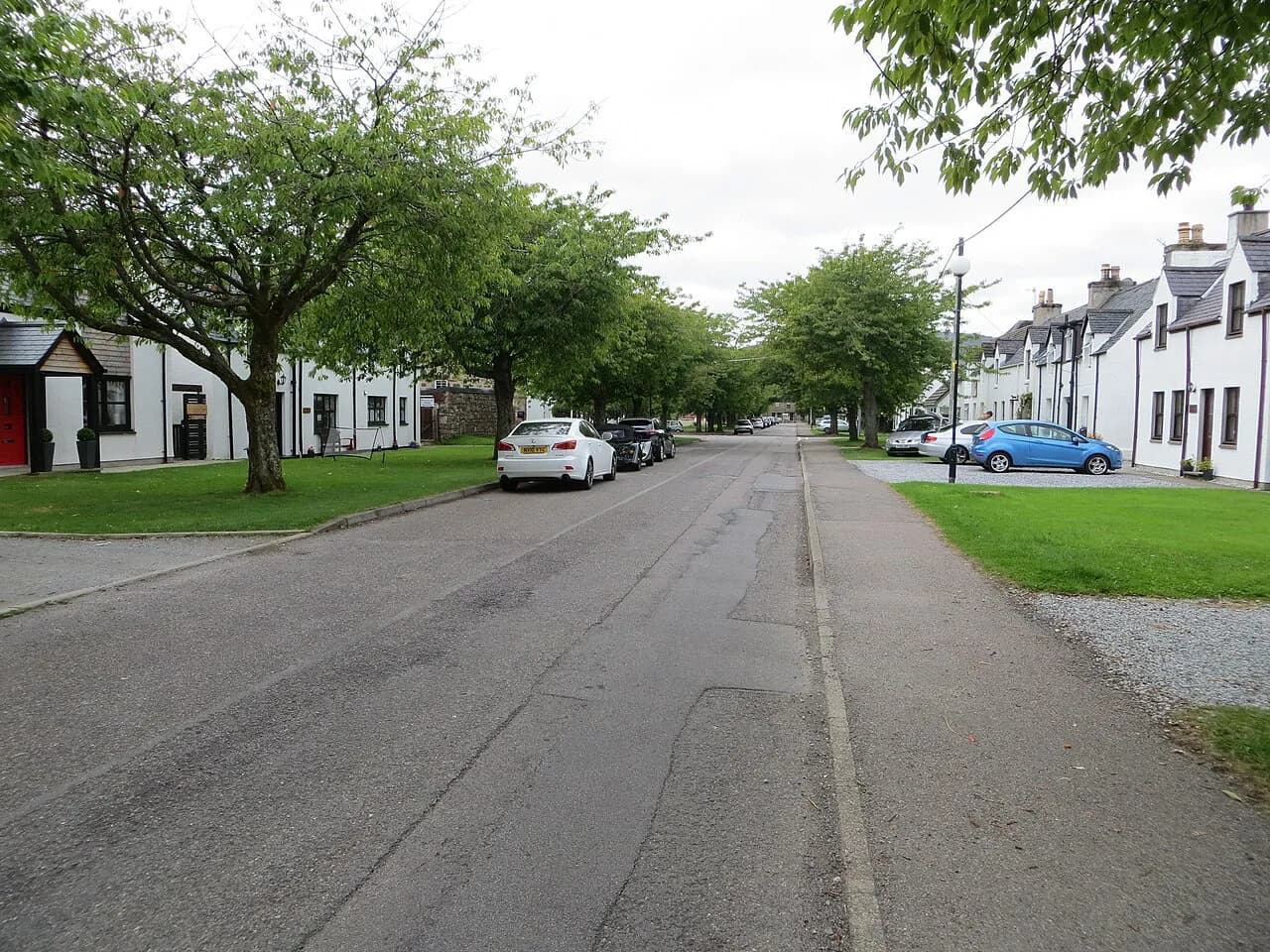
Ullapool is a planned fishing village on the east shore of Loch Broom, founded in 1788 as a herring port by the British Fisheries Society and designed by Thomas Telford. That single fact explains much of what you see today: a grid of streets behind a working pier rather than a village that grew up by accident.
The history around the village reaches much further back than the planned streets. Iron Age forts, a Norse-derived name and a Viking-era fish trap in the bay all belong to the same coastline, and several are visible on foot or within a short drive.
Where Ullapool sits on Loch Broom
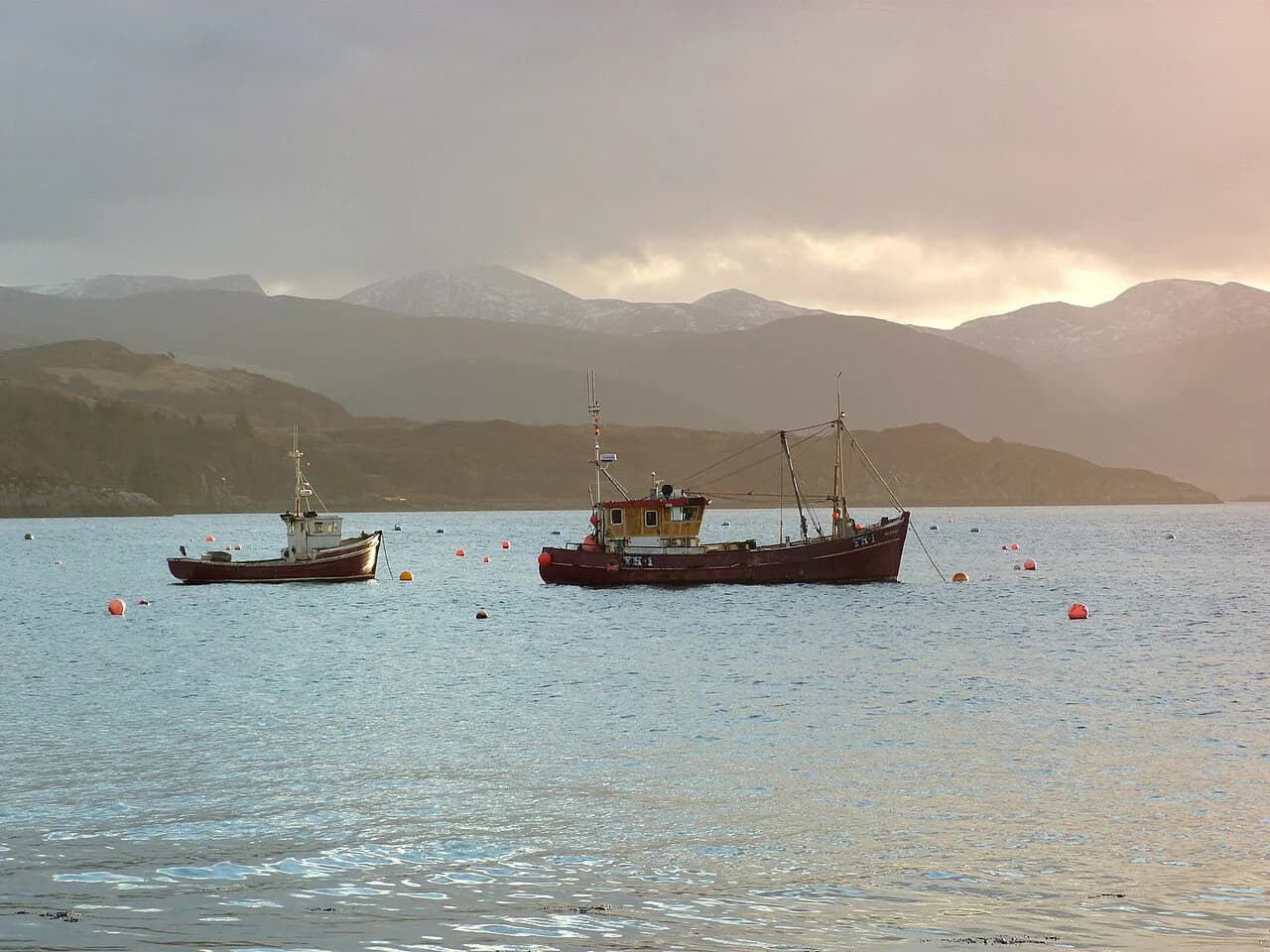
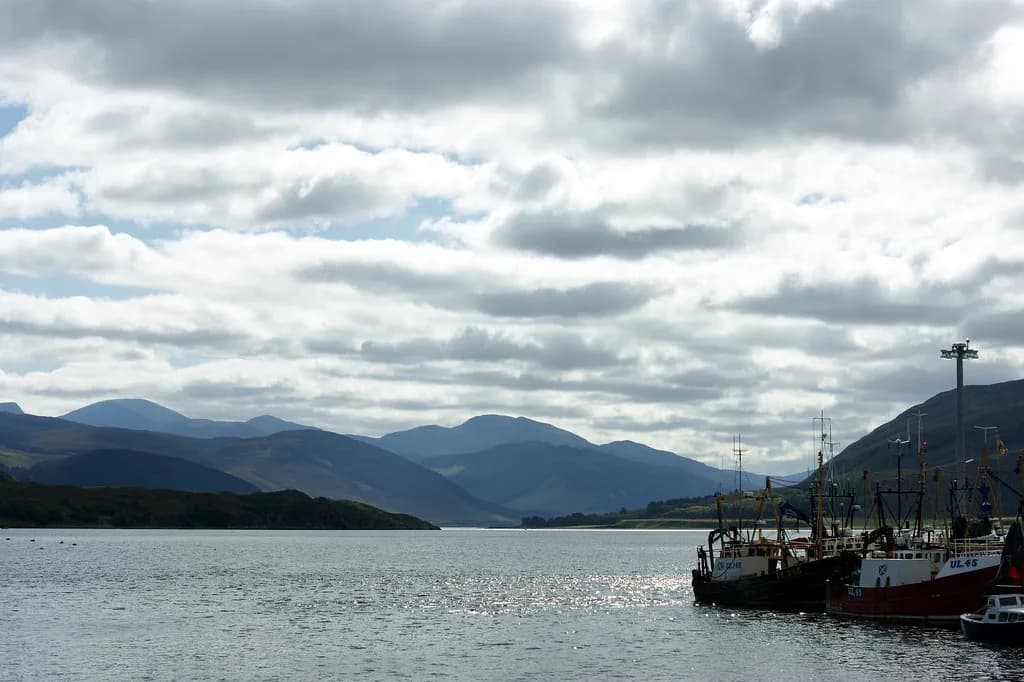
Ullapool occupies the east shore of Loch Broom in the north-west Highlands, a position chosen for shelter and deep water. The harbour trust describes the bay as the reason the village exists at all: fresh water and fertile fishing grounds drew settlers long before any town was planned.
That geography makes the village a natural base for exploring the coast, and it is why the pier remains the working heart of the place rather than a decorative add-on. If you are weighing up how to spend your days here, the wider selection of things to do in Ullapool shows how the harbour, streets and surrounding hills fit together.
Why Ullapool is called Ullapool
The name is widely derived from the Norse for Ulla's steading, and the harbour trust notes that some believe a Viking settler called Ulla gave the village its name. Treat this as a tradition rather than a settled etymology: no one recorded the naming, and the sources phrase it as a belief rather than a fact.
Whatever the derivation, the Norse layer is real. Soapstone bowls made by Viking settlers were dug up by road builders at Braemore, about twelve miles from Ullapool, and a third was found on the Isle of Tanera. That third bowl is now held at Ullapool Museum, so the Norse story has something physical to look at indoors.
Bronze Age and Iron Age remains around the village
Archaeological remains in the area go back to the Bronze Age, with several Iron Age forts surviving as grassy outlines. Dun Canna, a few miles north of the village, is the largest and most rewarding to visit, and the walk into the bay where it sits reveals a fort system dated at over 2,500 years old.
Stone circular foundations can still be seen at Rhue and elsewhere in the region, many dating back more than two thousand years, and old stone forts, or brochs, stand at Dun Logie and Rhiroy on the loch side as well as further north at Strathkanaird, Coigach and Assynt. These are open sites rather than ticketed attractions, so a pair of boots matters more than a booking.
A Viking fish trap in the bay below Dun Canna, built in the 8th century according to the village history, shows up on a low tide. Time a visit to the falling tide if you want to see it.
1788: the British Fisheries Society and Thomas Telford's planned village
Modern Ullapool was commissioned in 1788 by the British Fisheries Society, which asked Thomas Telford to design a village and port for an important herring fishery. Telford was the engineer behind a great deal of Highland infrastructure, and here his job was a settlement laid out to serve boats rather than to grow organically.
Before that declaration the shore had been home to fishermen for centuries, so the founding date marks a planned port rather than the first people here. Keep that distinction in mind when reading local history: 1788 is the start of the town, not the start of the story.
What survives from 1788: the curing sheds across from the harbour
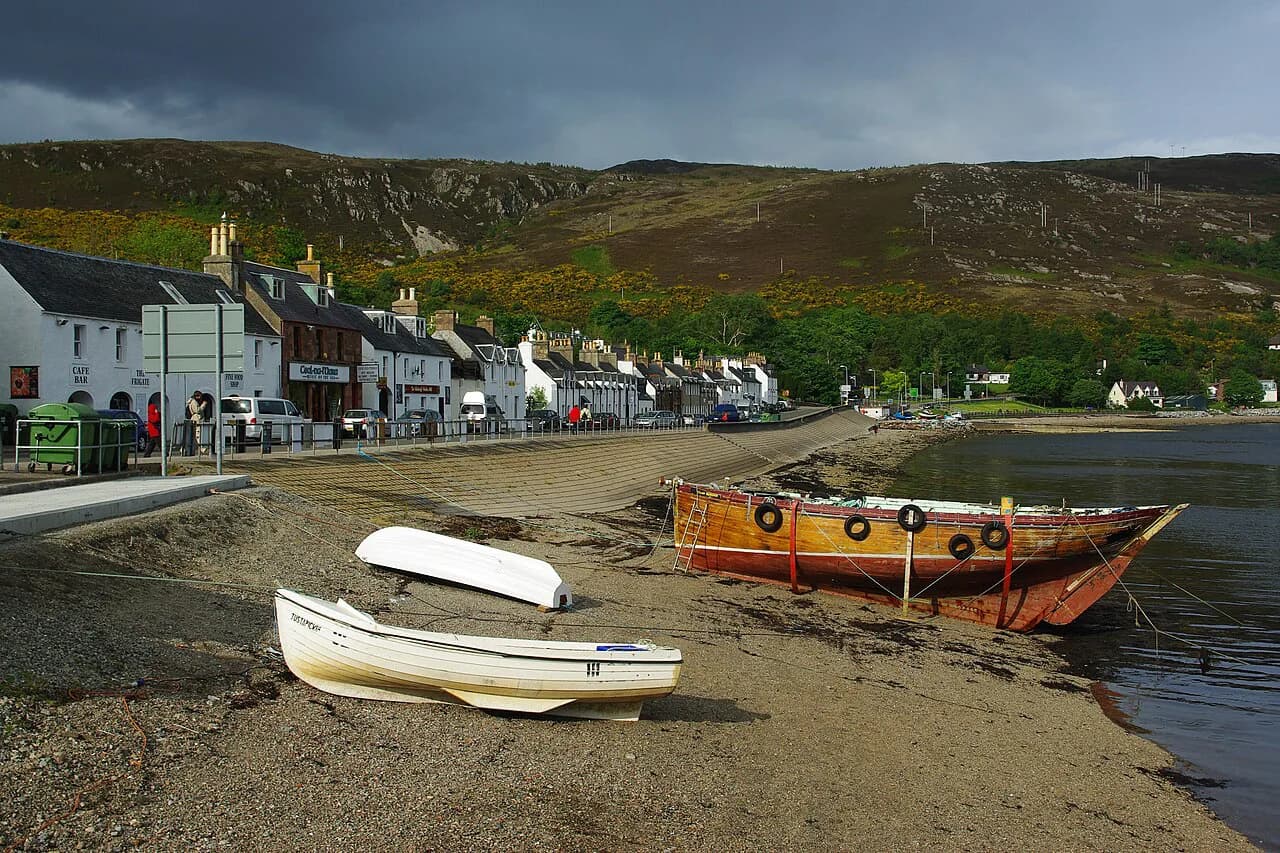
Some of the original village buildings still stand across from the harbour. The vault-roofed structures that now house Made in Ullapool, the West Highland College and the Captain's Cabin were originally built as curing sheds in 1788, where herring were prepared for market.
These are the most direct piece of the founding era you can walk past. The same short stretch of harbourfront also holds independent shops and is a natural part of any wander, which our guide to shopping in Ullapool covers in more detail.
The Hector and emigration to Nova Scotia
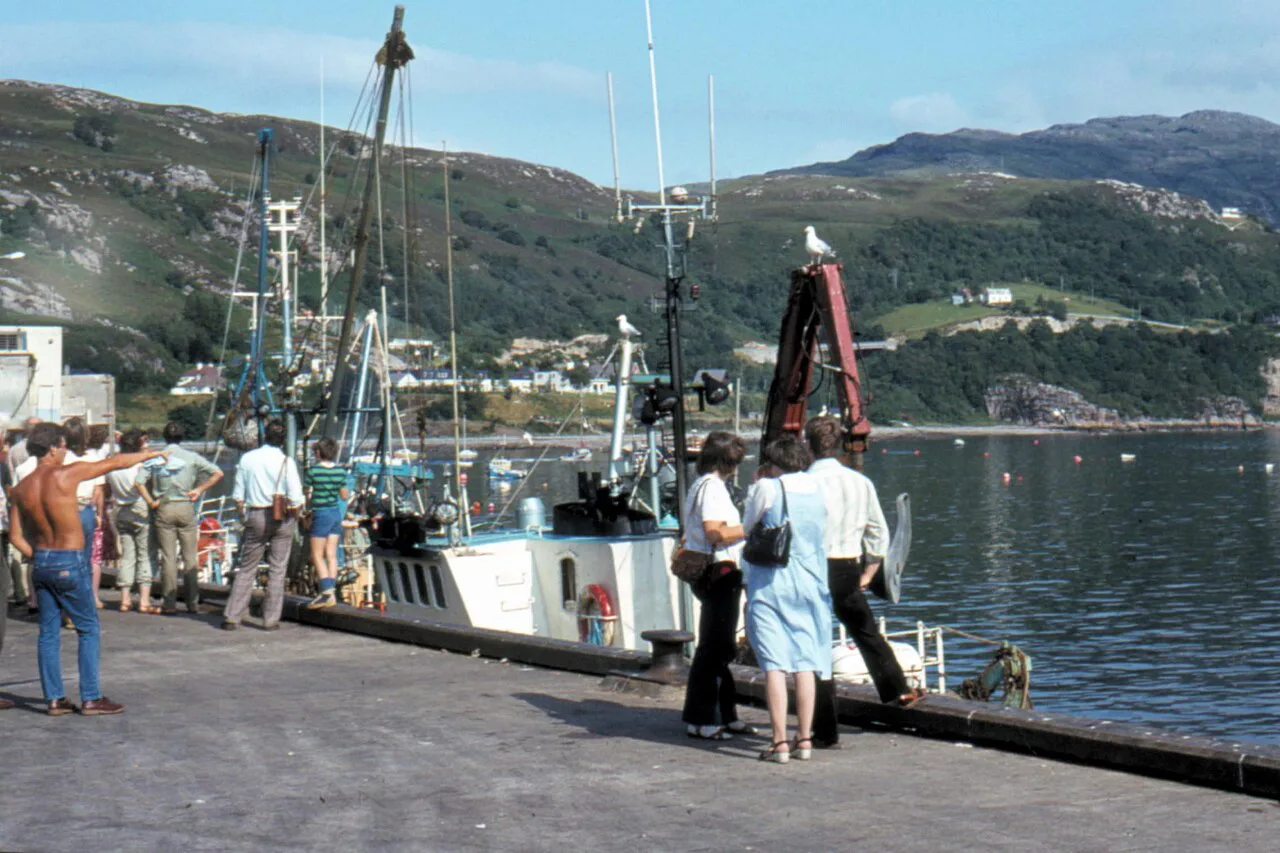
In 1773 a ship called the Hector left Ullapool carrying emigrants to Nova Scotia, five years before Telford's village was laid out. The departure is remembered in the village's history and gives the clearances a named vessel and destination rather than a general movement of people.
It is worth reading any local account of the sailing carefully, because the same period covers both the planned village and the displacement of Highland communities. The village history sets the Hector alongside the clearances rather than in isolation, which is the right frame for understanding why people left.
The clearances and the reshaping of the north-west Highlands
Many communities across the region were devastated by the clearances, when landowners decided sheep were more profitable than people. That judgement changed settlement patterns across the north-west, and Ullapool's own story of growth sat beside it, which can make the village's neat grid feel more complicated than it looks.
If parish-level history interests you, it is worth comparing how other British ports and cities handled the same era of migration, as in our history of Liverpool on the River Mersey. The contrast between a Highland emigration point and a large industrial port makes the scale of nineteenth-century movement clearer.
Herring, klondykers and the 20th-century boom
The fishing industry declined and revived more than once. During the Second World War, east coast waters became too dangerous to fish because of enemy mines, and fishing pressure shifted to the west; later, improved catching technology brought thousands of tons of herring ashore and the harbour had to be doubled in size.
From the late 1960s, large Scandinavian factory ships known as klondykers anchored in the bay, and in time up to 70 of them were counted there, with a further harbour extension needed to cope. Their crews bought goods locally and some settled into community life; when the eastern economies collapsed, the price of mackerel fell and the factory ships left.
Villagers remember the 1970s and 1980s as a boom, when hundreds of boats worked the port and eastern bloc factory ships processed herring and mackerel offshore for export. That era is history rather than present-day scenery, so look for it in museum displays and photographs rather than on the quay.
The harbour today: ferries, fishing and fish farming
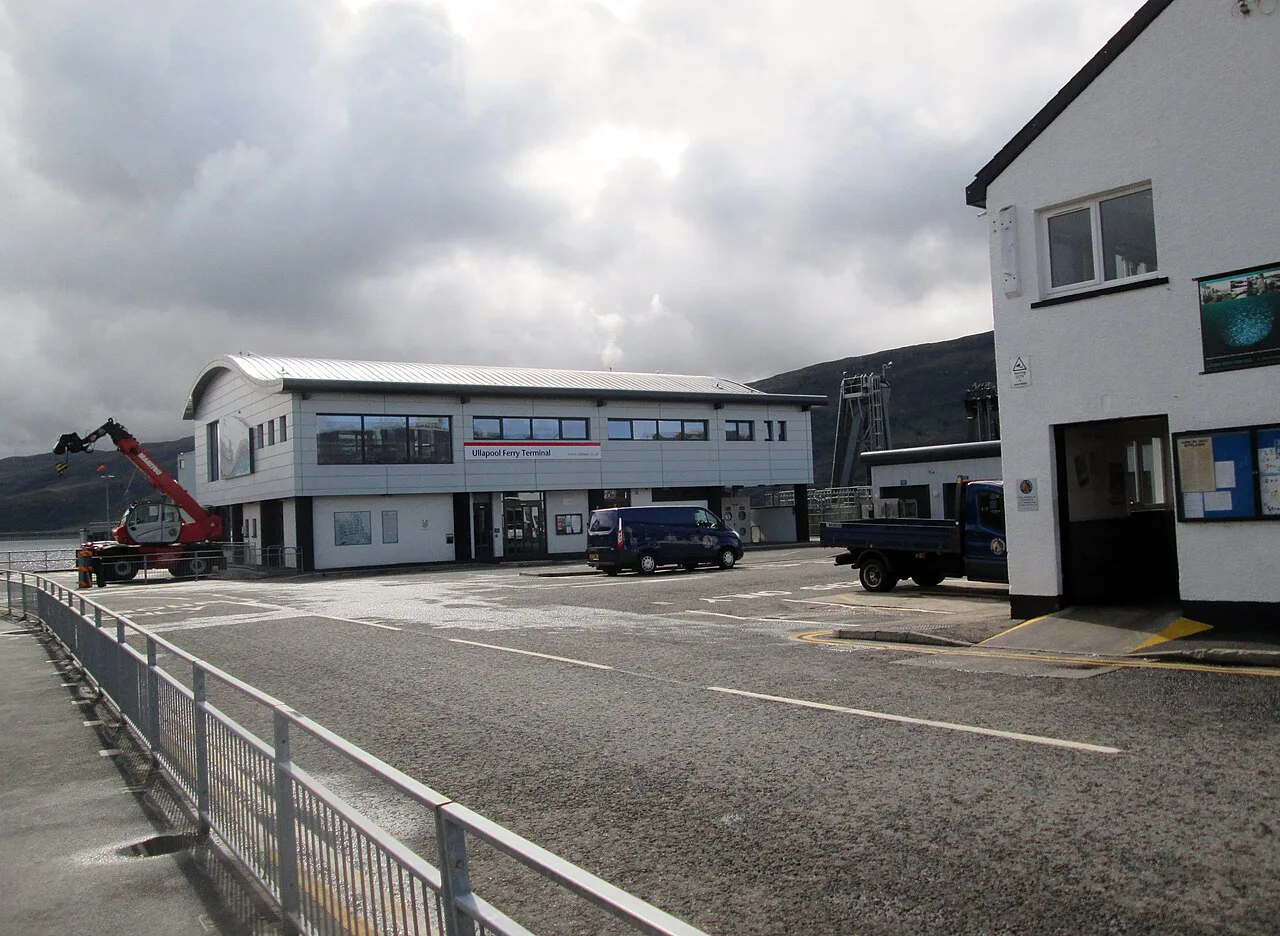
The harbour's main customer is now Caledonian MacBrayne, which runs a daily passenger and car ferry from Ullapool to Stornoway along with an overnight freight service on the same route. Arrive at the pier in time to watch a sailing out through Loch Broom if you like ships, and book any crossing you need well before you travel.
Fishing continues alongside the ferries: a local inshore shellfish fleet works prawn creel and trawl gear all year, with seasonal landings of crabs, lobsters and scallops, and the harbour has long supported fish farming, including transfers of live salmon smolts to west coast sea farms. Haddock and squid landings come in bursts with the seasons, followed by hake and monkfish from the Spanish fleet.
A walk along the pier shows this mix in a short distance, and it pairs naturally with getting out on the water; our guide to Ullapool boat trips covers the options for seeing the loch from sea level.
Where to see the history for yourself
Ullapool Museum holds the local collections, including the soapstone bowl from Tanera, and the village history points anyone wanting more depth to its displays. Opening arrangements vary by season, so check the museum's current times before you build a day around it.
Outdoors, the quick circuit is the harbourfront curing sheds, then the pier, then a drive north to Dun Canna for the fort and the bay below. Allow a half day for the prehistoric sites and bring waterproof footwear, since the ground is rough.
If your taste runs to stone walls and ruins rather than industrial history, the castles near Ullapool make a good companion outing, though most are a drive from the village rather than a walk.
Practical notes for a history-minded visit
Most of Ullapool's history is free to see: the streets, the pier, the curing sheds and the fort sites cost nothing beyond fuel and time. The indoor museum is the one place to plan around, and its own published information is the reliable source for days and admission.
Distances are modest in the village itself, so a morning covers the harbour and the 1788 buildings on foot. The forts and brochs sit several miles out along single-track roads, which makes a car or a booked tour the practical way to reach Dun Canna, Dun Logie and Rhiroy without losing hours to walking.
Weather on this coast changes quickly, and the low-tide fish trap and exposed fort sites are best attempted in a settled spell. Build slack into the day rather than chaining fixed stops, and keep one indoor option in reserve for when the rain sets in.
Plan Your Visit
Ullapool's history is unusually legible for a village of its size: a Norse name, Iron Age forts, a Telford grid of 1788, curing sheds still in use as shops and college space, and a pier that has moved from herring to klondykers to ferries and fish farming. Start at the harbourfront, look across at the sheds, then head north to Dun Canna to see how far back the story goes.
Check the museum's current opening days and the ferry operator's timetable before booking accommodation or a crossing, since both shape how much of the surrounding coast you can fit in. Everything else, from the pier to the fort, rewards a pair of boots and a flexible afternoon.
Explore more Ullapool guides
Frequently Asked Questions
Why is Ullapool called Ullapool?
The name is widely explained as coming from the Norse for Ulla's steading, with a Viking settler called Ulla said to have given the village its name. The harbour trust presents this as a belief rather than a settled etymology, so treat the Ulla story as tradition. The physical Norse layer is easier to pin down: soapstone bowls linked to Viking settlers were found near Braemore and on the Isle of Tanera, and one is held at Ullapool Museum.
When was Ullapool founded and who designed it?
Ullapool was founded in 1788, when the British Fisheries Society declared it a fishing port and commissioned a planned village and harbour for the herring trade. Thomas Telford designed the layout, which is why the centre has a grid of streets behind the pier rather than an organic tangle. Fishermen had lived on this shore for centuries before that, so 1788 marks the planned town rather than the first settlement.
What can I still see from Ullapool's 1788 beginnings?
The clearest survivor is the row of vault-roofed curing sheds across from the harbour, built in 1788 to prepare herring for market. They now house Made in Ullapool, the West Highland College and the Captain's Cabin, so you can walk past the original fabric while using the buildings. The street plan itself is the other piece of Telford's design you experience simply by wandering the centre.
What prehistoric remains are near Ullapool?
Dun Canna, a few miles north of the village, is the largest of the local Iron Age forts, and the bay below it holds a fort system dated at over 2,500 years old. Stone circular foundations survive at Rhue and elsewhere in the region, and brochs stand at Dun Logie and Rhiroy on the loch side and further north at Strathkanaird, Coigach and Assynt. These are open, unstaffed sites reached by road and on foot, so allow time and wear sturdy footwear.
Where can I learn about Ullapool's history indoors?
Ullapool Museum is the place for local collections and background, and the village history directs anyone wanting more depth to its displays. It holds one of the soapstone bowls linked to Viking settlers, found on the Isle of Tanera. Check the museum's current opening days and admission details directly before planning a day around it, as these change with the season.
Did the Hector sail from Ullapool?
Yes. A ship called the Hector left Ullapool in 1773 carrying emigrants to Nova Scotia, which was five years before Telford's planned village was laid out. The departure is remembered as a named event in the village's history and sits alongside the wider story of the clearances, when landowners across the north-west decided sheep were more profitable than people.
Sources
Notes for your next city break
Optional updates to our UK city guides.
You might also like
Continue reading
More guides you'll find useful