
Baltic Triangle, Liverpool: What to See, Eat and Expect

The Baltic Triangle is the compact district just south of Liverpool city centre where warehouses, workshops and markets now sit alongside street art and independent businesses. It rewards a half-day of wandering by day and a booked event after dark, and it suits travellers who prefer an informal, creative scene to grand civic set pieces. This guide covers its character, what to see, where to eat and drink, evening venues, and the honest trade-offs around crowds and parking.
What the Baltic Triangle is and where it sits
The Baltic Triangle is an area of Liverpool city centre formed by a triangular parcel of streets, bounded on its sides by the lines of Liver Street, Park Lane and St James Street among others. That geometry explains the name visitors see on maps and why the district feels enclosed rather than sprawling: you can cross it on foot in a short walk. It sits immediately south of the main shopping and business core, so it works as an extension of a city-centre day rather than a separate excursion.
For planning, treat the district as one stop in a wider Liverpool itinerary rather than a destination in itself. If you are weighing up several areas, our guide to Liverpool Neighborhoods sets out how the centre, waterfront and southern districts fit together for a short break.
From industrial roots to a creative hub
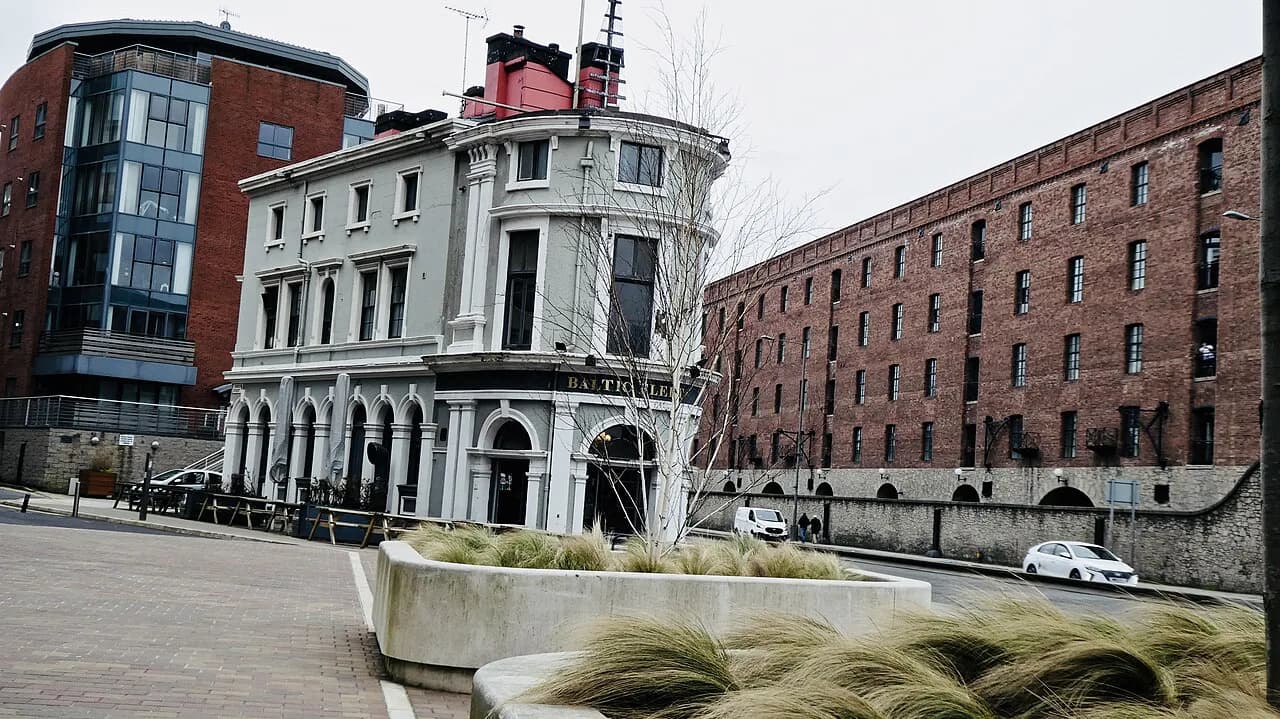
The district's character comes from conversion rather than new build. Camp and Furnace describes a remarkable transformation from industrial roots into a hub of creativity, culture and entertainment, with venues occupying repurposed warehouse buildings that keep exposed brickwork and industrial fittings. What you see on a walk today is that layering: old commercial shells now holding galleries, studios, bars and event spaces.
Visit Liverpool frames the area as somewhere for day exploring and skating, then night-time dancing and bingo, which is a fair summary of its split personality. The daytime version is slow and visual; the evening version is loud and ticketed. Plan which one you want, because the same streets feel quite different across the two, and if you would rather spend the day between museums in Liverpool, treat the Baltic Triangle as an evening-only addition.
Who the Baltic Triangle suits, and who it does not
The district suits travellers who like street art, independent food and drink, and informal warehouse venues, and who are happy to build an evening around a specific event. It is also workable for families in daylight hours, when the streets, cafés and market are the draw. Those seeking grand museums, cathedrals or formal afternoon tea should look elsewhere in the city and treat this as an optional extra; for the latter, our guide to afternoon tea in Liverpool covers the bookings worth making. If instead it is the city's galleries and collections you want, our guide to museums in Liverpool sets out what is free and how long each one takes.
If your trip is built around the city's historic core, the Georgian Quarter Liverpool gives you another contrast: stuccoed terraces and cultural venues rather than warehouses. Read the two side by side and you can decide where to spend your limited evenings.
Anyone expecting a polished, signposted visitor quarter will find the Baltic Triangle rougher at the edges, with art on gable ends and venues tucked inside commercial buildings. That is the appeal for some and a frustration for others. If you want a conventional high street with clear frontages, stay in the retail core.
Street art and the open-air gallery of the streets
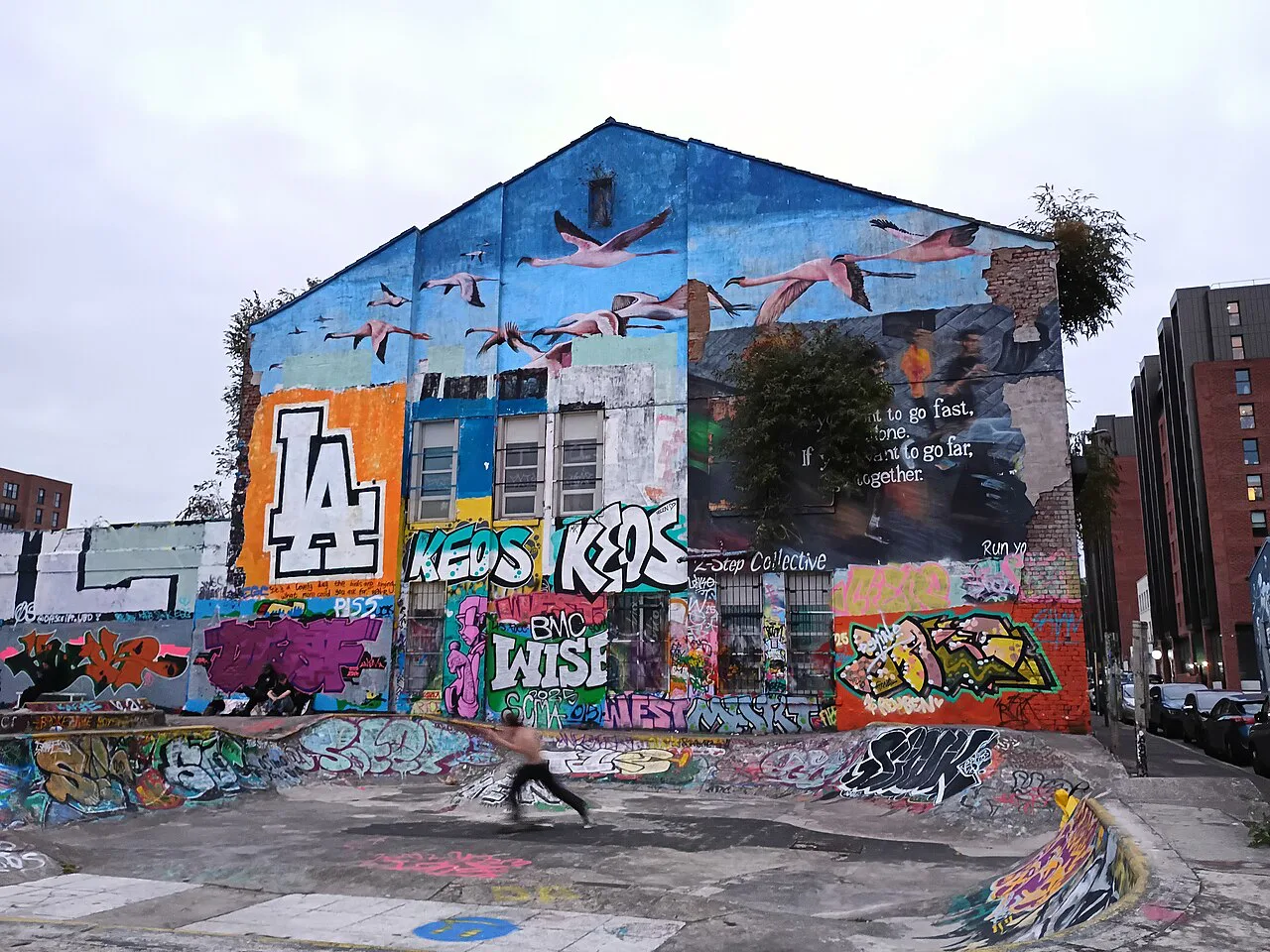
The streets themselves are the main free attraction: walls, buildings and alleyways carry murals and installations that Camp and Furnace describes as an open-air gallery with constant photo opportunities. Walk slowly and look up, because much of the work is above shopfront height and easy to miss at pavement level. Allow an hour for a loop through the district rather than treating it as a single photo stop.
Street art changes, so there is no fixed checklist to tick off. Treat any particular mural as a bonus rather than the reason for the trip, and build the walk around the district's atmosphere and its cafés instead. Photography is the obvious use of the streets, so bring a charged phone if murals matter to you.
Baltic Creative Campus and its creative community
Baltic Creative Campus is the cornerstone of the area's regeneration and houses a community of artists, designers and technology businesses. For visitors, the practical value is the cafés inside, where you can stop for a coffee among people working in the studios. It is a working campus rather than an attraction with a turnstile, so treat it as a coffee-and-observe stop on the walk.

Eating and drinking: Baltic Market and independents
Baltic Market, described as Liverpool's first street food market, sits inside the old Cains Brewery and gathers stalls serving food from around the world, from wood-fired pizza and burgers to vegan dishes, with communal seating that makes it easy to eat alongside locals. It is the obvious lunch stop for a group with mixed tastes, since everyone can order separately and regroup at one table. Vegetarian and vegan options are part of the mix.
Market hours shift with the season, so check the market's own website on the morning of your visit before making it the centrepiece of your day. If you want a guaranteed sit-down meal instead, plan around a booked restaurant elsewhere in the city centre.
For a quieter pause, the Botanical Garden is a greenery-filled bar in the heart of the district known for a large gin selection, and it works well as a late-afternoon reset before an evening event. Its laid-back garden setting is the opposite of the market's bustle. If gin is not your thing, the district's cafés cover the daytime gap.
Beyond these named spots, independent eateries and bars are scattered through the streets, and the Visit Liverpool listing is the simplest starting point for what is currently trading. Restaurant openings and closures move faster than print guides, so confirm before you set out. For daytime collections worth building into the same trip, our guide to museums in Liverpool covers what is free and how long each one takes.
Shopping: vintage stores and independent boutiques
The district is dotted with independent boutiques and vintage shops selling retro clothing and bespoke art pieces, which makes it a good place to pick up a one-off souvenir rather than a chain-store purchase. Opening days vary between shops, so browse on a weekday afternoon or Saturday; not everything trades on a Sunday. Budget an hour if you like browsing, less if you do not.
Evening: Camp and Furnace and 24 Kitchen Street
Camp and Furnace occupies a repurposed warehouse on Greenland Street and hosts live music, themed parties, food festivals and immersive events in an industrial-chic setting. Tickets frequently sell out, so check the venue's event schedule and book in advance rather than turning up on the night. The programme varies widely, so pick the event you actually want from Camp and Furnace's listings before settling on a night.
24 Kitchen Street offers an intimate room for live music and DJ sets, hosting both emerging artists and established names, and it is the natural next stop if you want to extend the night after a main event. Check who is playing before you commit, since the room's small size means the bill matters more than the venue's atmosphere alone.
If warehouse gigs are not your idea of an evening, the Cavern Quarter Liverpool offers a different night out built around music heritage and busy bars. Choose one or the other rather than trying to do both in a single evening.

Getting there and getting around on foot
The district's position just south of the city centre means the simplest approach is on foot from the retail core, following the line of the streets that form its boundary, including Liver Street, Park Lane and St James Street. Once inside, everything is walkable, and a loop taking in the street art, the market and the campus fits comfortably into an afternoon. Wear shoes you can stand in, since the ground is a mix of pavements and former industrial surfaces.
Parking is limited to street spaces, and Camp and Furnace advises using public transport or nearby car parks given how popular the area is. Arriving by train or bus and walking in removes the parking question entirely. If you must drive, look at city-centre car parks and walk the last stretch.
For a wider view of how the centre's districts connect on foot, the Ropewalks Liverpool guide covers the streets between the retail core and the waterfront. Read it alongside this one if you plan to walk between areas rather than take taxis.
Staying in and around the district
The Baltic Triangle is not known as a place to stay, so most visitors base themselves in the city centre and walk down for an afternoon or evening. That arrangement keeps you close to the main transport links and to the rest of the city's attractions. For help deciding where to base yourself, start with Liverpool Neighborhoods: 4 Area Guides, which compares the districts on character and convenience.
If you want a base with more historic streets around it, the Georgian Quarter puts you among terraces and cultural venues within walking distance of the centre. The trade-off is a longer walk to the Baltic Triangle's evening venues, so plan a taxi back if you are out late.
Practical trade-offs: crowds, parking and planning ahead
The main trade-offs are straightforward. Event nights at the warehouse venues sell out, parking is limited, and the district's popularity means the market and bars get busy at peak times. Book headline events in advance, travel by public transport where you can, and keep the daytime walk flexible so you can retreat to a café when the streets fill.
Because the area changes after dark, plan your day in two halves: art, coffee and market food in daylight, then a booked venue for the evening. That structure avoids the common mistake of arriving mid-afternoon with no plan and finding the headline event already full. It also leaves room to add a city-centre attraction earlier in the day, drawn from our pick of things to do in Liverpool.
For a break from the district's informal food, afternoon tea in Liverpool makes a good contrast earlier in the day, and you can be back in the Baltic Triangle for the evening. Book the tea in advance and treat it as a separate outing rather than something to squeeze between venues.
Plan Your Visit
The Baltic Triangle works best as a half-day of street art, market food and independent shopping, followed by a booked evening at one of its warehouse venues. Go on foot, choose your event before you travel, and accept that the district's appeal is its informal, slightly rough-edged character rather than polished visitor infrastructure.
Before you set out, confirm market trading and venue listings on the day, since both can change with the season. Everything else about the district, from its geography to its street art, rewards simply turning up and walking.
Explore more Liverpool guides
Frequently Asked Questions
Why is Liverpool called the Baltic Triangle?
The name comes from the shape of the district: it is the triangular portion of Liverpool city centre bounded by streets including Liver Street, Park Lane and St James Street. The enclosed, wedge-like footprint is why the area feels compact and easy to cross on foot rather than sprawling like a suburb.
Where is the Baltic Triangle in Liverpool?
It sits immediately south of the city centre's main shopping and business core, so the easiest approach is a short walk from the retail district rather than a bus or taxi ride. Use Liver Street, Park Lane and St James Street as your mental boundary lines when you look at a map.
What is there to see and do in the Baltic Triangle?
The streets carry murals and installations that function as an open-air gallery, Baltic Creative Campus holds studios and cafés, and Baltic Market inside the old Cains Brewery gathers street food stalls under one roof. Independent boutiques and vintage shops fill the gaps, and warehouse venues such as Camp and Furnace and 24 Kitchen Street take over in the evening.
Is the Baltic Triangle suitable for families?
In daylight hours it works well, with street art to spot, cafés to break up the walk and market stalls that let each person choose their own food. Evenings are built around ticketed gigs, parties and club-style events, so families should plan around the daytime version and head back before the venues open.
Is there parking in the Baltic Triangle?
Parking is limited to street spaces, and Camp and Furnace advises visitors to use public transport or nearby car parks because the area is so popular. Arriving on foot from the city centre removes the problem entirely and saves you circling for a space on an event night.
Do I need to book evening events in advance?
Yes, if a particular gig or themed night is the reason for your visit. Camp and Furnace's events often sell out, and 24 Kitchen Street is an intimate room where the bill matters, so check listings and secure tickets before you travel rather than turning up on the night.