Newcastle Architecture: A Walking Guide to the Buildings
Newcastle's architecture runs from medieval walls and Jacobean merchant houses to Art Deco and Brutalism. See the named buildings and styles on a city-centre walk.
On this page
Newcastle's architecture fits into a walkable centre: a thirteenth-century castle and town wall, a Georgian square and formal street, Jacobean riverside merchant houses, Victorian shopping arcades, Art Deco frontages and post-war concrete, all within a couple of miles of each other. The buildings sit cheek by jowl rather than in separate quarters, so a single loop through the centre lets you read the periods in sequence. Plan on foot, wear shoes for hills, and accept that most of what you are looking at is an exterior.
Newcastle's architecture in brief: one compact centre, many periods
Newcastle's centre is unusually dense with survivals from different centuries. Grey's Monument sits in a public square that you will cross repeatedly, the Central Arcade dates from 1906 in the Victorian and Edwardian shopping-arcade tradition, and the Art Deco former co-operative building on Newgate Street was opened in 1932. Because these landmarks are minutes apart, you can walk the whole sequence in an afternoon rather than stringing it across a weekend.
What makes the centre readable is the contrast rather than any single masterpiece. A 1970s Brutalist block, a 1930s Art Deco frontage, an early twentieth-century arcade and medieval defences all appear within sight of one another. Take the walk as a survey of styles and give yourself permission to stop for detail: carved plasterwork, copper corner domes, clock faces and faded painted signage reward a slower pace.
Medieval Newcastle: the castle keep and the town wall
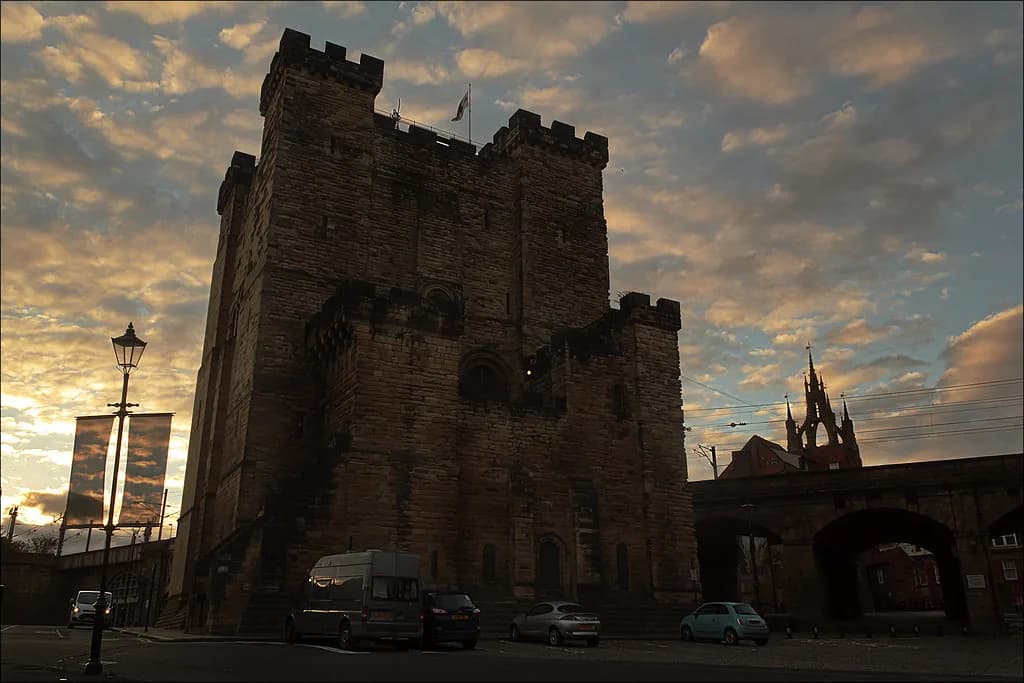
Start where the city starts, at the old castle, then look for the town wall. Fragments of the wall built in the thirteenth and fourteenth centuries to defend the city from Scottish raiders survive, and one stretch sits close to the Tyne Theatre and Opera House, so you get medieval stonework and a Victorian playhouse on the same short leg. Treat both as outdoor viewing stops rather than indoor visits.
The wall and castle together explain why the centre sits where it does, on the ridge above the river crossing. Read the plan before you walk: the city's defences and its merchant streets grew up on the slope down to the Tyne, and the drop is steeper than the map suggests. Build in a breather at this end of the route rather than racing on.
Grey Street and Grey's Monument: the formal set piece
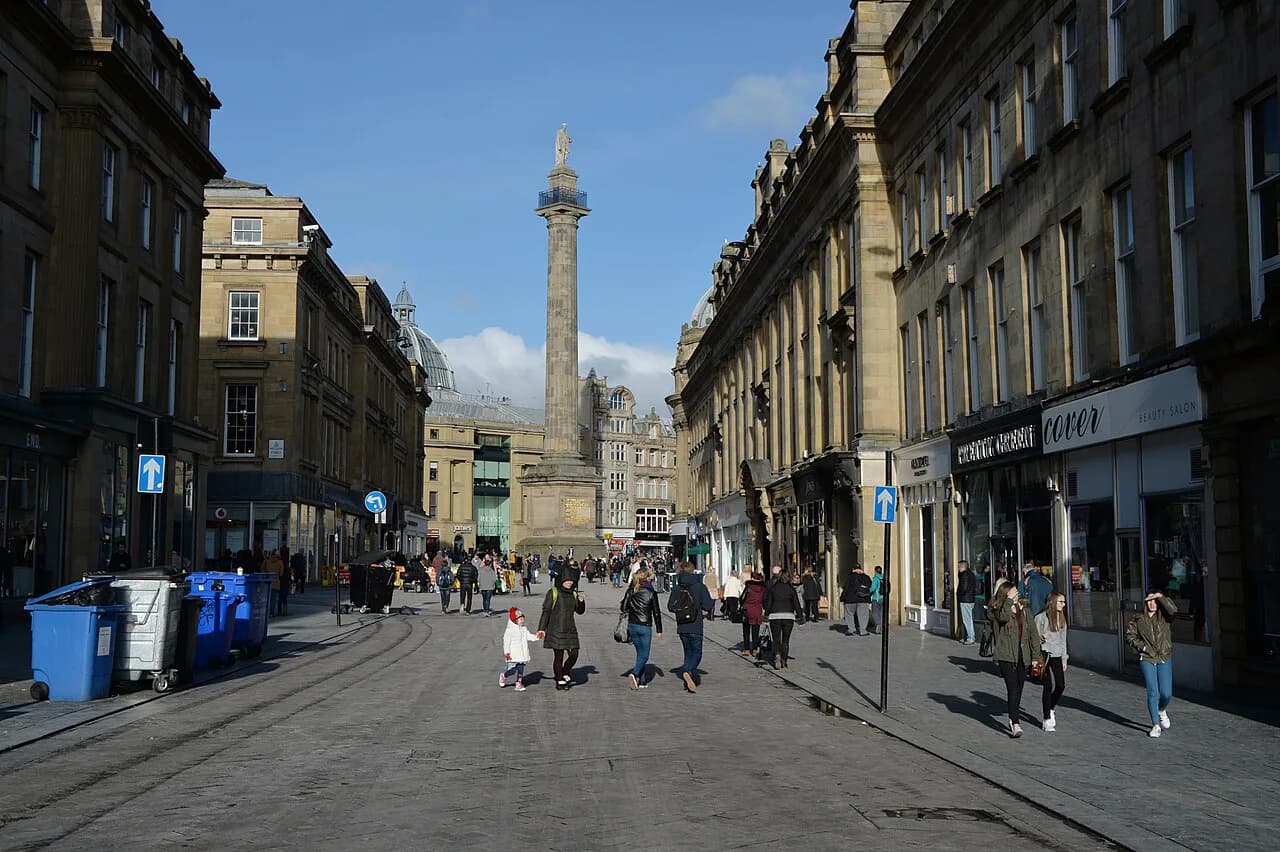
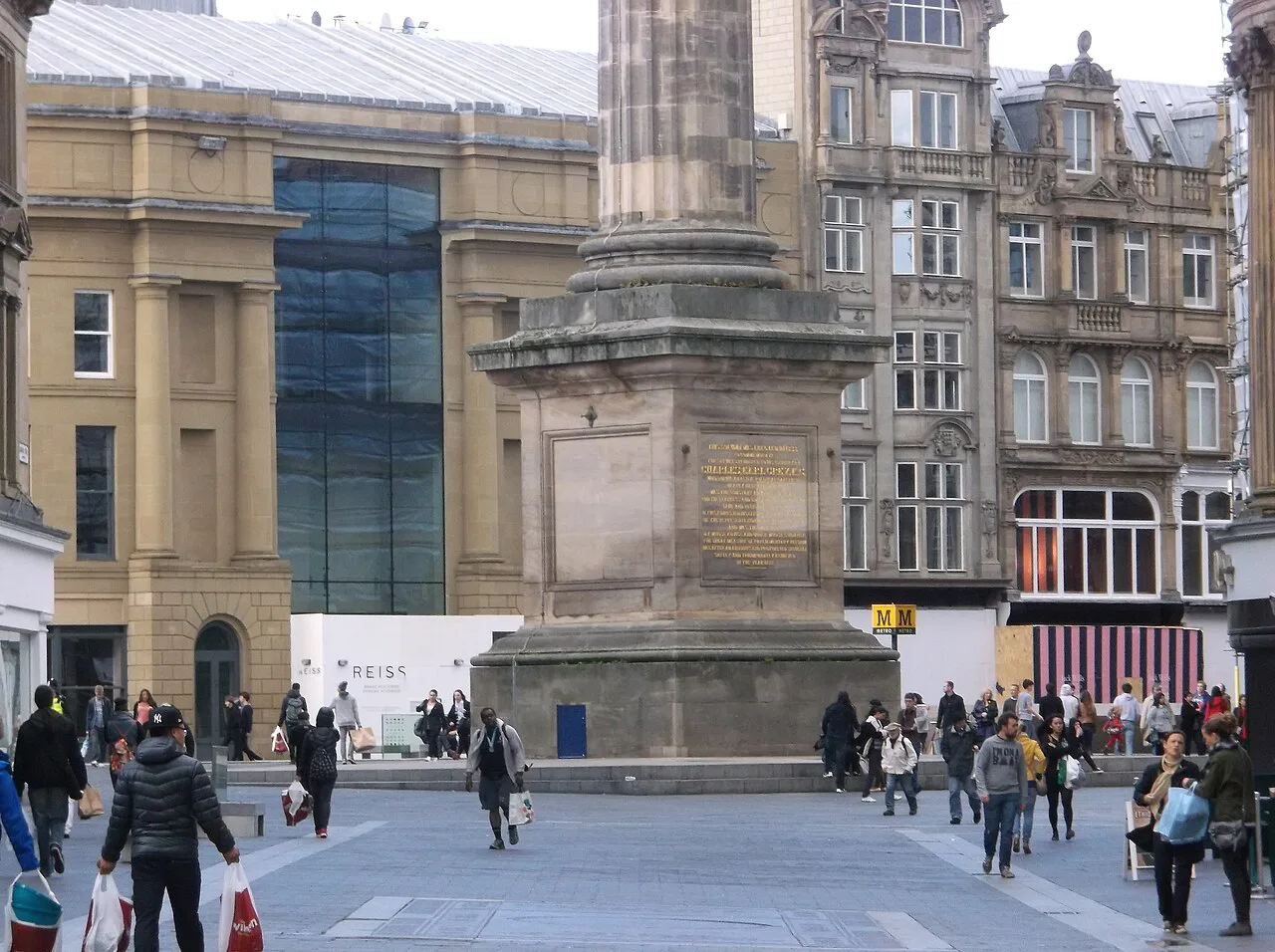
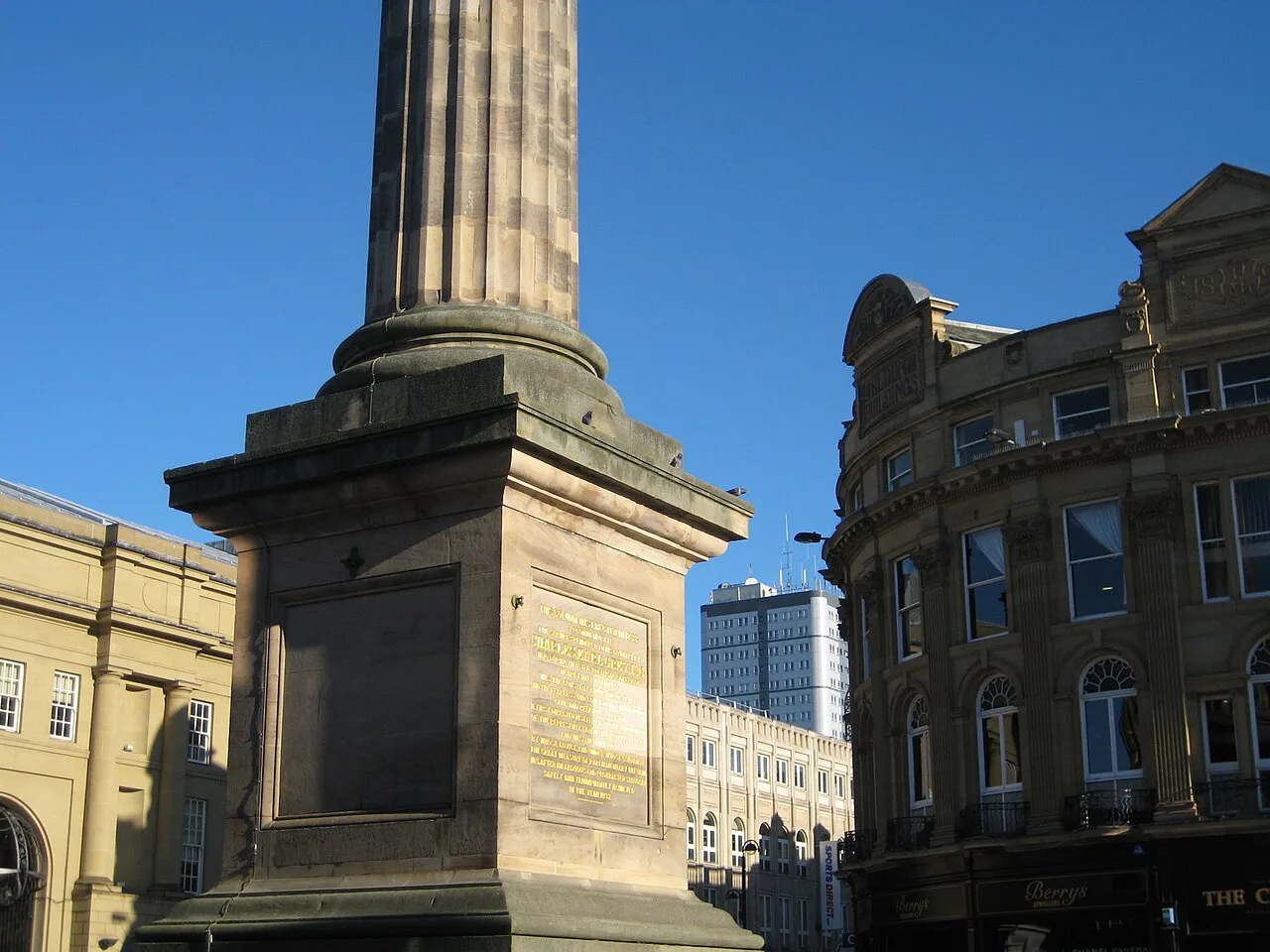
Grey's Monument was raised in 1838 in thanks to Earl Grey for the Great Reform Act, and it works as the hinge of the city-centre walk. The surrounding streets step down in a formal Georgian layout with long curving terraces and a theatre at the bottom, making this the grandest set piece in the centre. Come for the street itself as much as the buildings, and look up at the rooflines as well as along the facades.
This is the stretch to photograph rather than to tick off individual buildings. A wide, paved square, a memorial column and a curving terrace create the postcard view, and a couple of minutes spent reading the layout tells you how the Georgian town was planned to impress. Give it 20 to 30 minutes if you are walking with purpose, more if you stop at a cafe on the square.
Grainger Town and the Central Arcade
Grainger Town is where Victorian and Edwardian Newcastle put its shopping money. The Central Arcade, built in 1906 in the Central Exchange building, is a covered shopping arcade of the kind that came to prominence in the late Victorian and early Edwardian period, with tiled finishes and decorative ironwork above the shopfronts. Walk through in both directions rather than passing once, because the ceiling detail is easy to miss at street level.
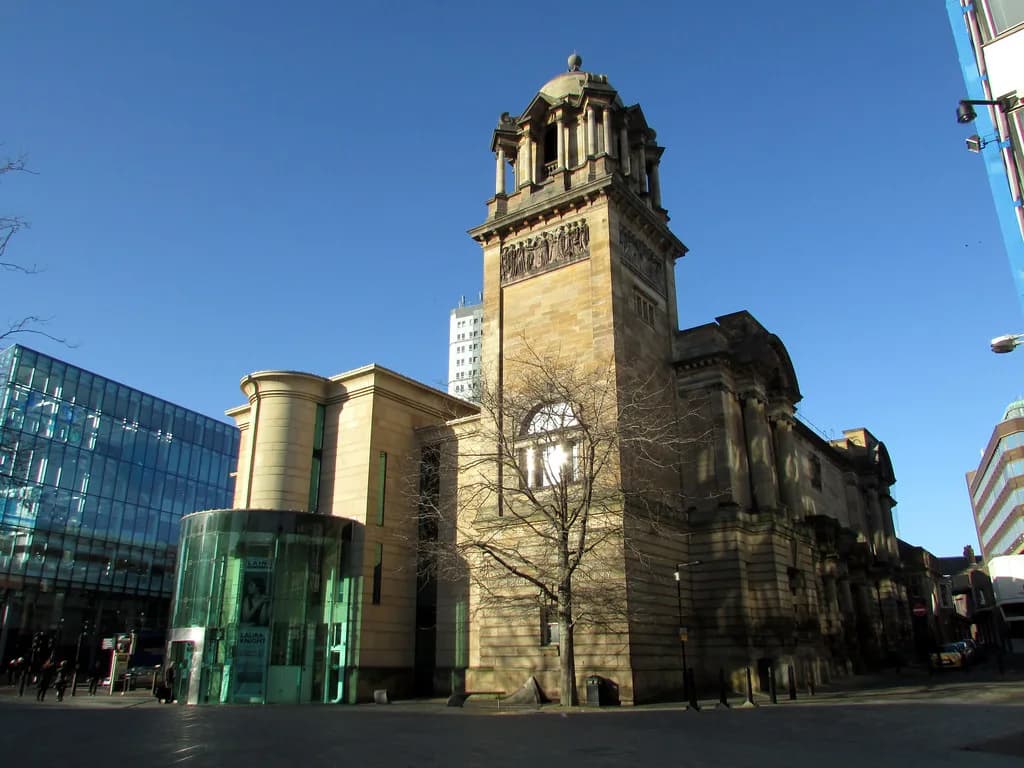
If you want to break the architecture walk with art, the Laing Art Gallery is a short walk from the centre and worth pairing with the Victorian and Edwardian stretch. Full details of what is on and where to find the other collections are in our guide to art galleries in Newcastle, which is the practical way to plan that stop around opening times.
Jacobean riverside: Bessie Surtees House and the old merchant houses
Down by the bridges, Bessie Surtees House is the survivor to seek out: a sixteenth- and seventeenth-century Jacobean merchant house whose name comes from Bessie Surtees, who climbed down from a window there in 1772 to elope with a coal merchant's son, later Lord Chancellor John Scott. The riverside streets here had been a trading centre since Roman times, and the timber-framed upper storeys above the street are the reward for the climb back up. Allow ten minutes to look, then head uphill again.
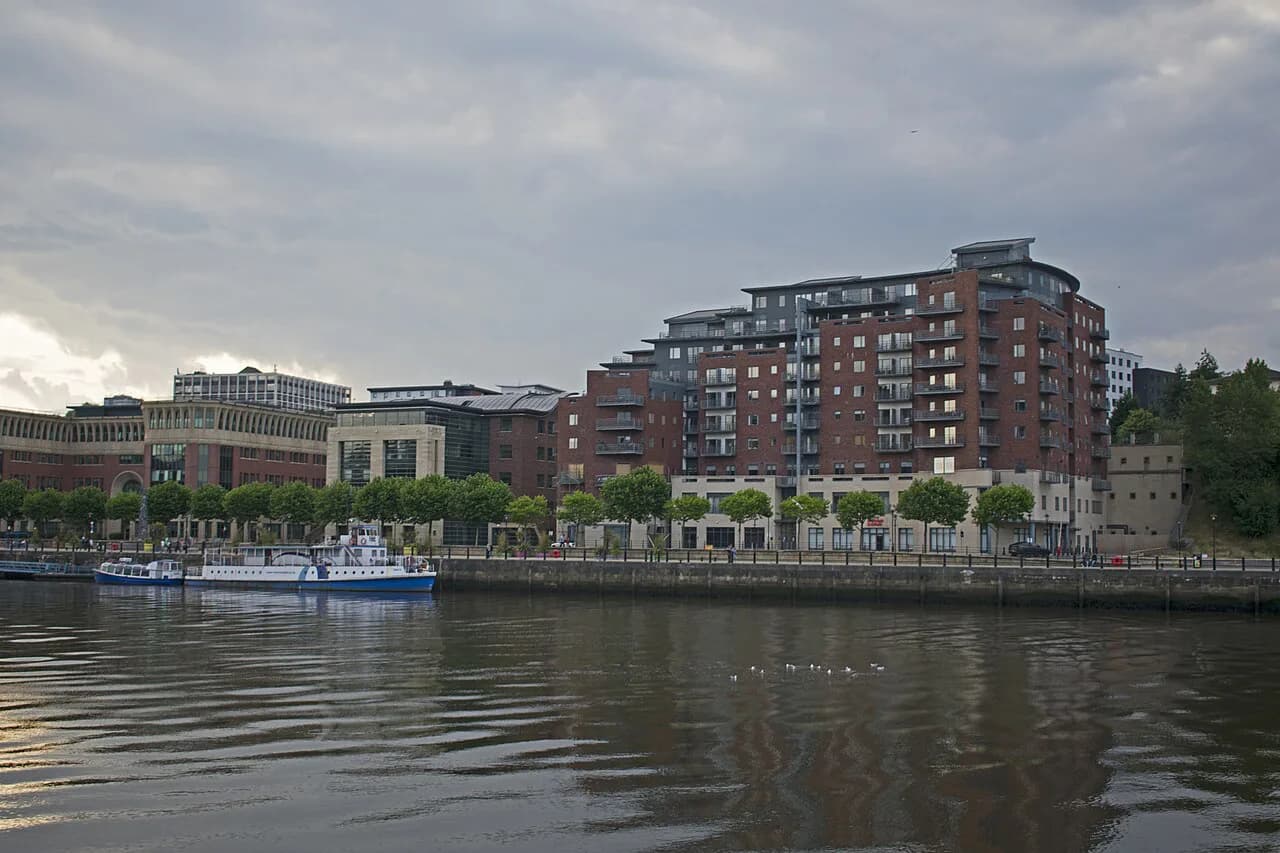
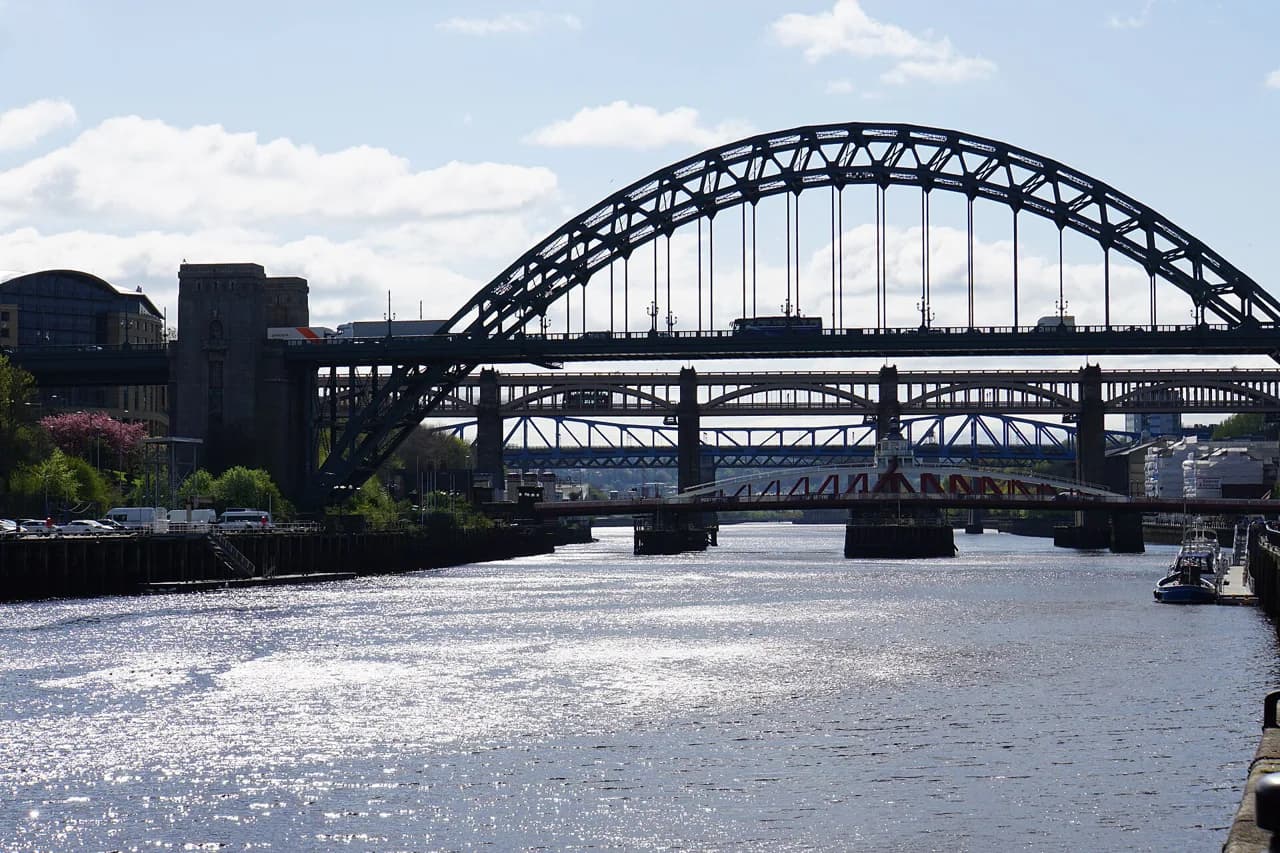
Group the Jacobean houses with the river crossing. The Tyne here was the working spine of the town, and the merchant houses sit just above it rather than in the ceremonial centre. Read the lower town as a separate layer of the story from Grey Street and the arcades, and the walk starts to make sense as a history rather than a list.
Victorian and Edwardian: the Tyne Theatre and Emerson Chambers
The Tyne Theatre and Opera House opened in 1867, and the words Stoll Picture Theatre on the building record its 1919 conversion into a cinema, with its first film Tarzan of the Apes and its place as the first cinema in Newcastle to show talkies. It is the Victorian element in the centre to look at closely, and it sits near the surviving town wall so one walking leg covers both.
For Edwardian style, Emerson Chambers is the name to look up for. It is an early twentieth-century building with Art Nouveau features alongside Baroque and Jacobean flourishes, and its copper corner domes and clock faces are the details worth the effort. The building mixes three vocabularies in one block, which is exactly what makes this period in Newcastle enjoyable to study on foot.
Art Deco: the former Newcastle Co-op on Newgate Street
The former Newcastle Co-op building on Newgate Street, opened in 1932, is the Art Deco frontage to plot into the route. The site had held a Victorian and Edwardian shopping arcade dating from 1902, and during exploratory works for refurbishment in 2012 the original ornate iron piers from that arcade were rediscovered, so one address holds two eras of retail architecture. Approach from the top of the street for the full elevation.
The Art Deco pairing is worth planning as a small detour south and west of Grey's Monument. The DEX Garage, opened in 1931, was recorded as the oldest straight-ramped multi-storey car park in the country outside London, originally with a turntable and lift to move cars between spaces. The building was due for demolition at the time the account was written, so confirm its status on the ground before walking out of your way for it.
Post-war and Brutalist: the Pearl and the Commercial Union Building
The Pearl, the former Pearl Assurance House, is a 1970s piece of Brutalism near the art gallery, with a small neighbour whose wildly contrasting plasterwork blends Art Nouveau and Tudor motifs in decoration dating from the early 1950s. That juxtaposition is the point: post-war Newcastle is not one style but a quarrel between several, and the centre shows it at close quarters. Bring an eye for concrete detailing, not just a checklist.
The Commercial Union Building, dated 1971, is the modernist counterpart, built from pre-cast reinforced concrete blocks with supporting pillars in the manner of Le Corbusier's Five Points of Architecture. It is functional rather than pretty, and the criticism of how it sits with its neighbours is part of the story. Compare the two buildings as a case study in post-war confidence and its later reputation.
A walking route through the centre, with time allowances
A sensible loop starts at Grey's Monument and the formal streets, walks down to the Tyne for Bessie Surtees House, crosses to the castle and town wall, then climbs back through the Victorian and Edwardian buildings, the Central Arcade and Newgate Street before finishing with the post-war blocks near the gallery. Budget three to four hours at an unhurried pace including stops, or about two hours if you walk it briskly without going inside anywhere. The route is short in distance but hilly, with the riverside stretch the steepest part.
If you would rather have the streets explained as you go, a guided Newcastle walking tour takes the planning off your hands and gives the dates of the monuments and buildings context. Check what is running and book ahead if you want a specific slot; a museum or gallery elsewhere in the city makes a good wet-weather substitute. Our guide to free museums in Newcastle covers which collections ask for nothing at the door.
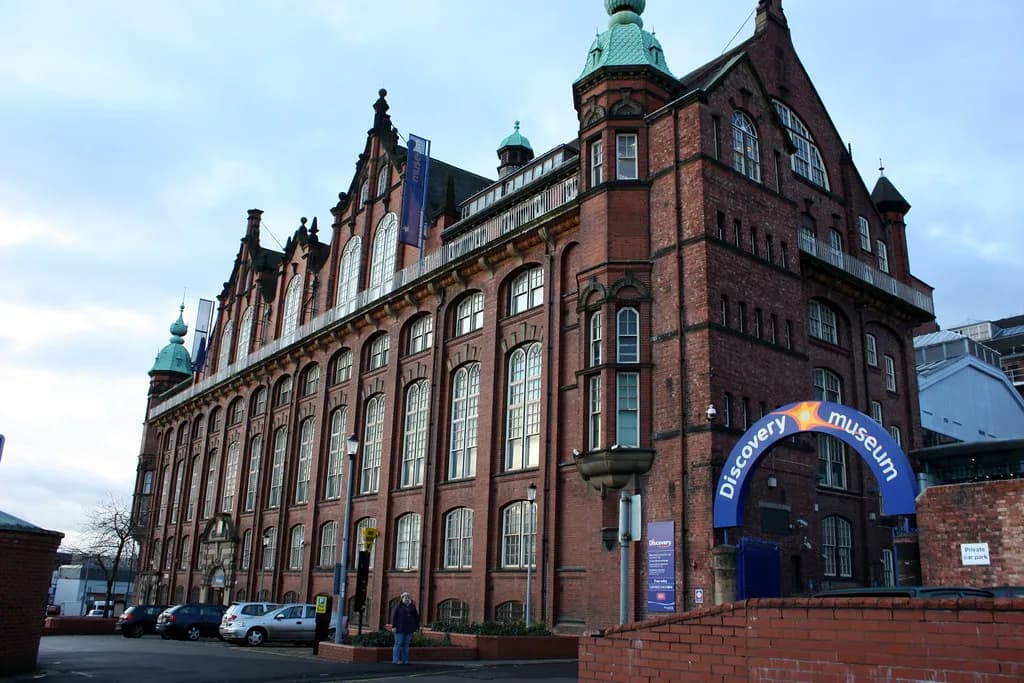
For the broader set of indoor stops, from the Discovery Museum to the city's galleries, our round-up of museums in Newcastle is the place to match a collection to the weather and your remaining time. The architecture walk works best as a spine, with one museum or gallery slotted in at the midpoint rather than tagged on at the end.
Studying architecture in Newcastle: the university course, fees and entry requirements
The city is also where architects are trained. Newcastle University's Architecture BA Honours is a three-year full-time course, UCAS code K100 with institution code NEWC / N21, and it is the first step towards qualification as a professional architect. Typical entry requirements for 2027 entry are AAA at A-Level or 36 points at IB, with contextual and alternative offer routes available for eligible applicants.
Fees for 2027 entry, as published for Year 1, are £10,050 for home students and £30,900 for international students, and the next start date is September 2027. The course is not available in Clearing 2026, which matters if you are looking for a late place this cycle. Confirm the fee position and any changes for the year you apply before committing.
The course's selling point is the city itself as a case study: the university describes Newcastle as having an architectural legacy few UK cities can rival, and teaching is largely through studio design projects supported by lectures and personal research. Assessment combines coursework, portfolios, presentations, essays and a dissertation, with a residential field trip built into the final-year design studio.
Practicalities: what to book, what is free, and the seasonal limits
Most of this walk is streets and exteriors, so there the architecture itself is something you view from the pavement rather than book a ticket for. Plan around the buildings you want to enter, check the day's conditions before setting out, and treat the hills and weather as the real constraints on a winter visit. The city centre is compact enough that you can split the route across two mornings if the rain sets in.
For a longer stay, other UK cities reward the same period-by-period approach, and our guide to Birmingham architecture is useful if you are comparing centres. Finish the Newcastle walk with something warm: afternoon tea in Newcastle is the natural reward after the climb back up from the river, and it is worth booking a table in advance.
Plan Your Visit
Walk Newcastle for the sequence, not for a single building: the castle and wall, the Georgian set piece, the Jacobean riverside, the arcades, the Art Deco frontage and the post-war concrete all sit inside one compact, hilly centre. Give it three to four hours on foot, slot in one museum or gallery as cover, and leave the interiors for the buildings you actually want to enter.
If you are visiting in autumn or winter, start earlier than you think you need to and keep the riverside leg for the middle of the day. Check opening arrangements for any building you plan to go inside, since the street walk itself passes the facades from the pavement.
Frequently Asked Questions
What architectural styles can you see in Newcastle city centre?
The centre covers medieval defences at the castle and town wall, a formal Georgian layout around Grey's Monument and Grey Street, Jacobean merchant houses at Bessie Surtees House, Victorian and Edwardian buildings including the Tyne Theatre and Emerson Chambers, Art Deco at the former Newcastle Co-op on Newgate Street, and post-war Brutalism and modernism at the Pearl and the Commercial Union Building.
Does Newcastle have Georgian architecture?
Yes. Grey's Monument was raised in 1838 and the surrounding streets form a formal Georgian set piece with long curving terraces and a theatre at the bottom. It is the grandest planned ensemble in the centre and the natural starting point for an architecture walk.
Where are the best streets to walk for architecture in Newcastle?
Start around Grey's Monument and Grey Street, walk down to the riverside for Bessie Surtees House, cross to the castle and town wall, then climb back through the Victorian and Edwardian buildings to the Central Arcade and Newgate Street. Finish near the Laing Art Gallery for the post-war blocks.
How long does an architecture walk in Newcastle take?
Three to four hours at an unhurried pace with stops, or roughly two hours if you walk it briskly without going inside anywhere. The distance is short but the route is hilly, with the riverside stretch the steepest part.
Is Newcastle University good for architecture?
Newcastle University's Architecture BA Honours is an accredited three-year full-time course described by the university as the first step towards qualification as a professional architect, with studio-led teaching, portfolio and dissertation assessment, and a residential field trip in the final-year studio. It uses the city itself as a case study.
What are the entry requirements and fees for Newcastle University's Architecture BA?
For 2027 entry the typical requirements are AAA at A-Level or 36 points at IB, with contextual and alternative offer routes for eligible applicants. The next start date is September 2027, and the course is not available in Clearing 2026. Year 1 tuition fees are published on the university's course page, so check the official listing for the year you apply.
Sources
Notes for your next city break
Optional updates to our UK city guides.
You might also like
Continue reading
More guides you'll find useful