Birmingham Architecture: A City-Break Guide to Its Buildings
Plan a Birmingham architecture walk with a period-by-period guide to the city's buildings and how to use the Modernist Society's Birmingham map.
On this page
Birmingham rewards a walker who picks one quarter and stays with it. The Modernist Society's 2018 map is a ready-made spine for the twentieth-century buildings, and the city's museums supply the context that plaques and facades cannot. Treat the rest of the day as browsing rather than a checklist, because the centre is spread out and the interesting streets rarely sit in a neat line.
This guide works period by period, then narrows to the studios and collections that explain what you have just passed. Use it to decide where to start, how long to allow and which indoor stop to keep in reserve for rain or tired legs.
What Birmingham architecture is known for
Birmingham's built character is a layered one: nineteenth-century commercial confidence, twentieth-century experiment, and a centre that keeps being rebuilt. The Modernist Society singled out the city's best twentieth-century buildings for a dedicated map, first published in December 2018. That alone makes the modern stock worth planning around rather than treating as background.
Practically, that means a city-break walk here should be themed rather than comprehensive. Choose a period or a style, follow it through one district, and let the unplanned buildings you pass do the rest of the work.
How to plan an architecture walk: one district at a time
Pick a single quarter per half-day and build the walk around one anchor stop: a museum, a booked tour or a specific run of streets. Two quarters in a day is realistic for confident walkers; three usually turns into transport-hopping. The gain from slowing down is that you actually look at the buildings instead of photographing them from a crossing.
Allow roughly an hour for a short themed loop and half a day if you are adding an indoor collection. Keep a wet-weather alternative within walking distance of your route, and plan the tea stop before your legs decide for you. Bookable walks and talks are the one element worth sorting before you travel, since spaces are limited and times change.
Victorian and Edwardian Birmingham: confidence in stone and brick
The nineteenth-century city is the easiest layer to read on foot because it sits at street level and in plain sight: banks, warehouses, civic fronts and the streets laid out to serve them. Walk with your eyes at first-floor height as well as shopfront level, where the decorative detail usually survives. This is also the layer that gives the centre its colour, from soot-darkened stone to warm terracotta.
Treat this as a context-setting hour rather than a tick-list. If you want the fuller story of how the town became a city, the history of Birmingham is the better place to start before you walk the streets themselves.
If your architecture interest runs to older institutional buildings as well, Cambridge architecture offers a useful comparison for how a different English city handled its civic and collegiate set pieces. It is a reminder that Birmingham's Victorian confidence was a commercial one, not a university one.
Twentieth-century Birmingham: the Modernist Map and how to use it
The Modernist Society's Modernist Map was published in December 2018 as a guide to the city's best twentieth-century buildings. It was researched and conceived by Michael Dring with students of the Birmingham School of Architecture & Design as part of Co.Lab 2017-18, with text by Dring and images by Dring unless otherwise stated. It runs to 16 pages, A5 with foldouts.
The map itself is sold out, so plan your route from the published description rather than expecting to pick up a copy at a shop. Its value now is as a curated list: it tells you which twentieth-century buildings a group of Birmingham architecture students and their lead researcher thought worth a map. Use it as a shortlist, then check each building's current access on its own page.
Walking a modernist shortlist works best in daylight and at a steady pace. Twentieth-century buildings often read as offices or car parks from the pavement, so give yourself time to look up, walk around the block and see the composition from more than one angle. If a building has a public interior or a viewing point, that is worth booking or checking ahead.
Brutalism in Birmingham: what the term means and why it matters here
Brutalism takes its name from béton brut, the raw concrete that gives the style its surface and its reputation. The label was applied to post-war buildings that exposed their structure and materials instead of hiding them behind stone or render. That is why the term is about how a building is made, not simply how heavy it looks.
In a city that rebuilt large parts of its centre after the war, that approach left a visible mark on the streetscape. Some of it is admired, some of it is contested, and much of it has been altered or replaced. Approach a concrete building as a piece of structural thinking and you will get more from it than a quick judgement about whether you like the colour.
Pair a concrete walk with an indoor collection so the style has a context, not just an opinion attached to it. The museums in Birmingham are the natural place to reset before or after a morning outdoors.
Post-war and contemporary work: how the city keeps building
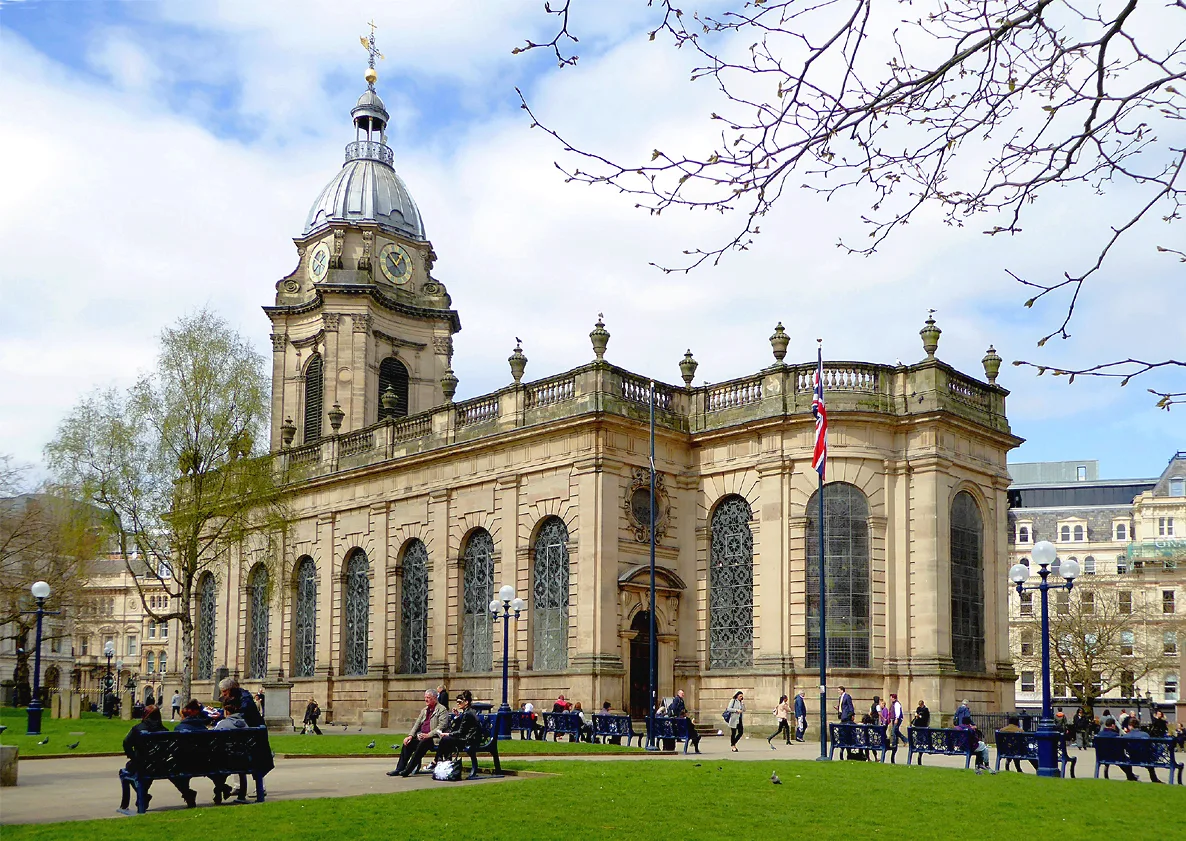
Birmingham's current architecture is best understood as a live process: studios, planners and clients working through sites in a city that keeps replacing its own fabric. Rather than hunting for a single trophy building, look at how new work meets the street, how it handles height, and what it does at ground level where people actually walk.
The city's own practices are part of that picture. Intervention Architecture describes itself simply as an interdisciplinary design studio based in Birmingham, which is a useful indicator of how contemporary work here spans interiors, buildings and urban thinking rather than one discipline.
A half-day spent on recent buildings works well if you keep the ambition modest. Choose two or three streets where new and old sit side by side, and save the deeper architectural reading for a gallery or a bookshop afterwards.
Where architects work in the city
For visitors who like to see how a city builds itself, the practices based here are worth naming. Paragon Architecture is a RIBA-chartered and ARB-registered practice in Birmingham with more than 30 years of experience across residential and commercial work, which places it firmly in the city's day-to-day building economy.
The professional picture is a useful reality check on a walking route. Much of what you see is the work of ordinary, competent practice rather than landmark names, and that is exactly what keeps a city liveable. Notice the housing, the school extensions and the shopfronts as much as the set pieces.
Museums and collections that explain the buildings
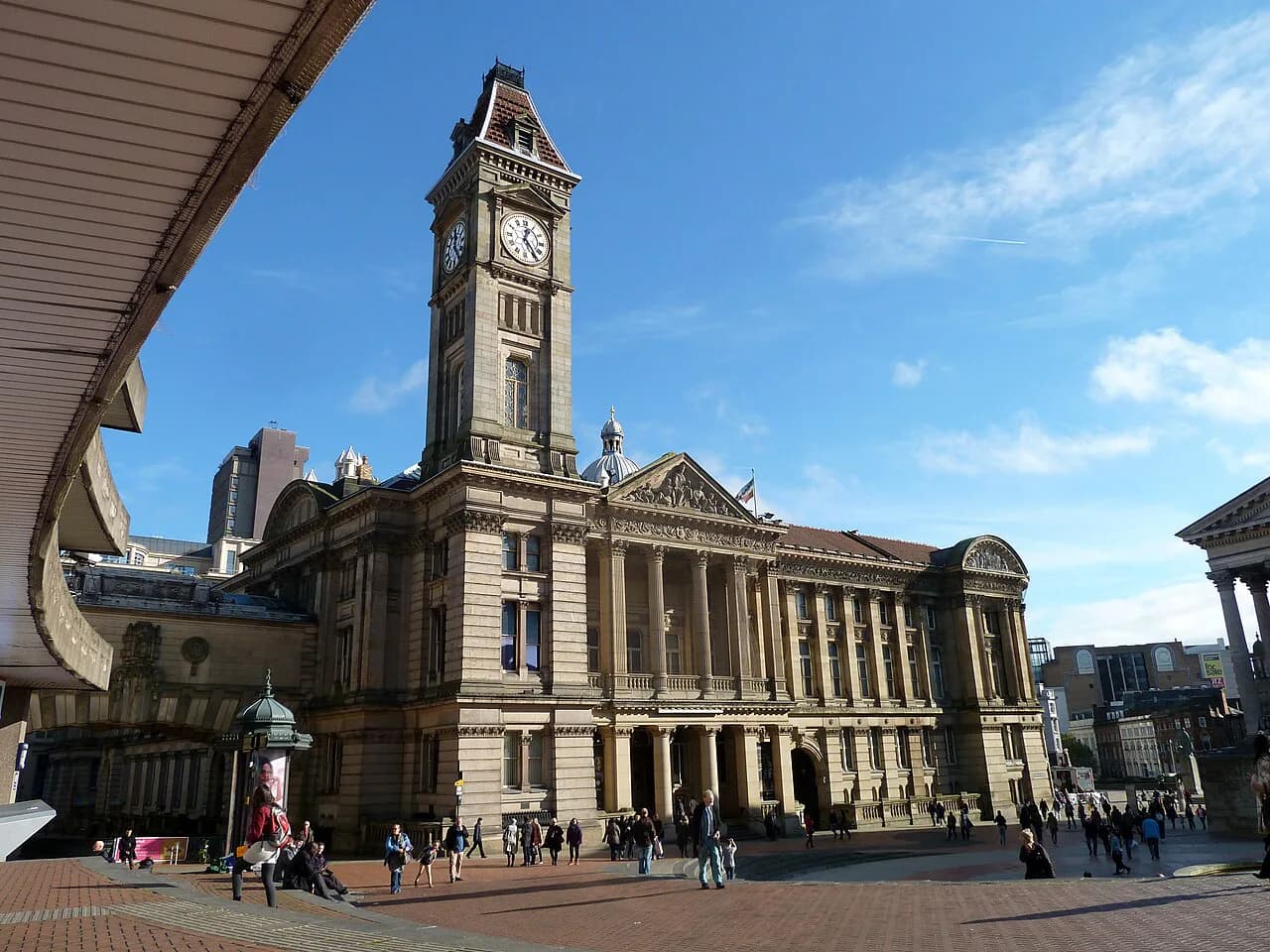
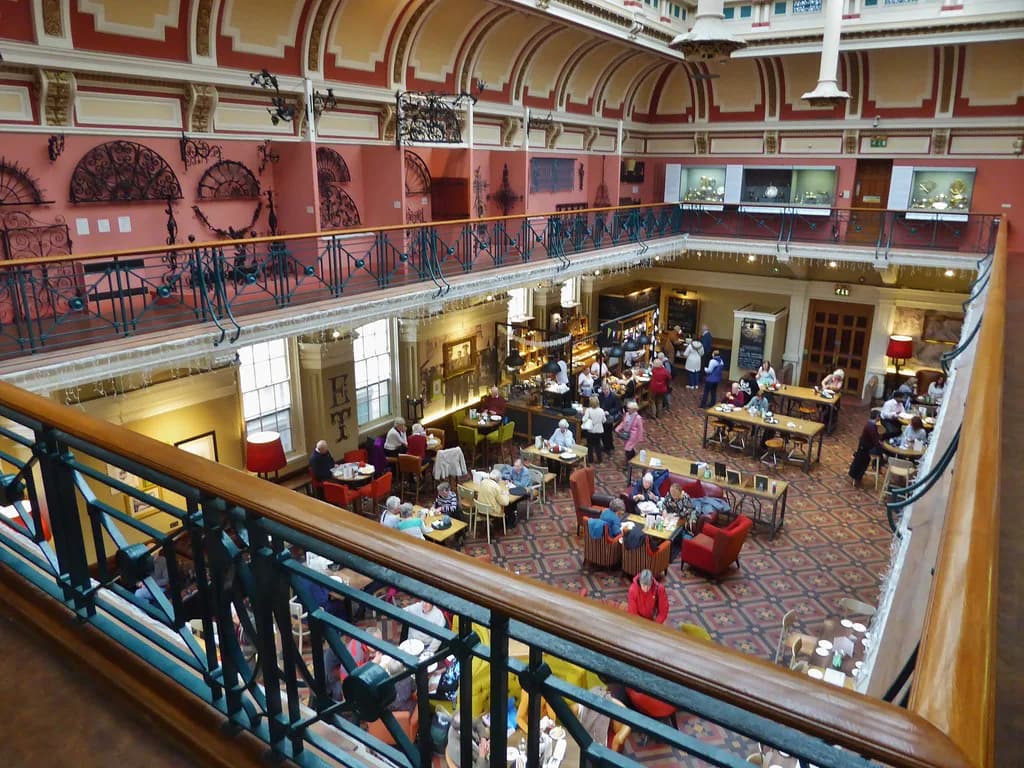
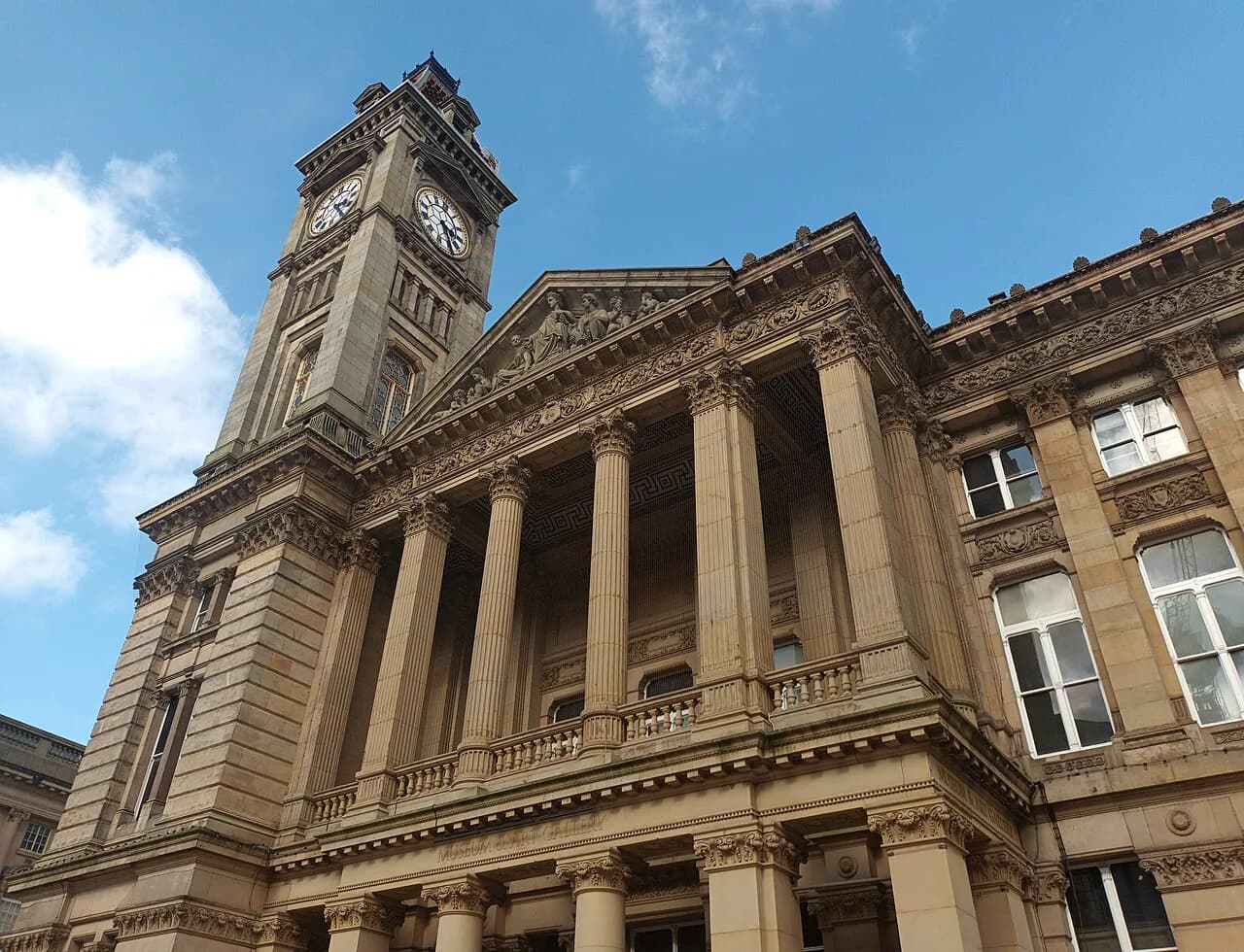
An hour indoors makes the streets legible. Birmingham Museum & Art Gallery is the obvious anchor for art, social history and the city's own story, and it lets you put buildings into a timeline before you walk past them again.
If budget is the deciding factor, the free museums in Birmingham are the sensible starting point and remove any hesitation about popping in for twenty minutes. Build the day around one paid or booked element and let the free collections carry the rest.
For a different indoor stop, the art galleries in Birmingham add contemporary and applied work to the mix, which pairs neatly with a modernist walk. Keep one gallery in reserve as your rain plan rather than trying to fit two into the same afternoon.
Bookable architecture walks and talks
Guided walks and talks are the one part of an architecture break that benefits from booking before you arrive. Operators publish their own dates and prices, so check those pages directly rather than relying on a printed map or an old listing. The Modernist Society runs talks and tours alongside its publishing, and its site is the place to see what is currently scheduled.
When comparing options, ask what the walk covers, whether it runs in the evening and how far it goes. A short, focused tour beats a long one that tries to cover the whole centre. If a date sells out, a self-guided route built around one district is a perfectly good substitute.
Trade-offs: distances, crossings and tired legs
Birmingham's architectural set pieces are not clustered tightly enough for a single continuous loop. Road crossings, ring-road edges and long blocks eat time, and the centre has enough change of level to notice by late afternoon. The honest approach is one quarter in the morning and a second after lunch, with a seated break in between.
If you are travelling with children or slower walkers, cut the list to one anchor stop and one short street loop. And if you want a day out beyond the city streets, the castles near Birmingham make a straightforward counterpoint to an urban itinerary, with Warwick Castle the best-known of them.
Footwear matters more than any app here. Pavements vary, some stretches are busy at commuter hours, and a route that looks short on a map can take twice as long when you keep stopping to look up.
Practicalities: when to go, how long to allow and where to break for tea
Weekday mornings give you quieter pavements and better light on the main facades. Allow a full day for one museum plus a district walk, or half a day if you are staying close to the centre. If the weather turns, swap the outdoor leg for an indoor collection and walk in the late afternoon instead.
Build in one proper sit-down stop rather than three coffee grabs. Afternoon tea is the natural punctuation mark for a day of looking at buildings, and it is the moment to reread your notes and decide whether an evening walk or an early train wins.
Plan Your Visit
Start with a period: the Victorian street layer, the twentieth-century shortlist that the Modernist Society mapped in 2018, or the concrete buildings of the post-war decades. Choose one district, name one indoor stop and book any walk or talk before you travel.
That structure gives you a walk with a point rather than a shuffle between landmarks, and it leaves room for the thing most city breaks actually deliver: turning a corner and finding something better than the list.
Explore more Birmingham guides
Frequently Asked Questions
How do I plan a Birmingham architecture walk without overdoing it?
Choose one quarter for the morning and, if you have the energy, a second after lunch, with a seated break in between. Build each leg around a single anchor such as a museum or a booked walk, and keep one indoor collection in reserve as a rain plan. Birmingham's set pieces are spread out enough that three districts in a day usually means spending more time getting between them than looking at them.
Where can I get the Modernist Society's Birmingham architecture map?
The Modernist Map: Birmingham was published in December 2018 as a guide to the city's best twentieth-century buildings, researched by Michael Dring with students of the Birmingham School of Architecture & Design as part of Co.Lab 2017-18, and it runs to 16 pages, A5 with foldouts. That edition is sold out, so use the published description as a shortlist of buildings to look up rather than expecting to buy a copy.
Why is the style called brutalism?
The name comes from béton brut, the raw concrete that gives the style its surface. It was applied to post-war buildings that left their structure and materials exposed instead of covering them in stone or render, so the term describes how a building is put together rather than how heavy it looks. Birmingham rebuilt large parts of its centre after the war, which is why concrete buildings feature so prominently in the city's modern stock.
Which museums help make sense of the buildings I have just walked past?
Birmingham Museum & Art Gallery is the obvious anchor for art, social history and the city's own story, and an hour there puts buildings into a timeline before you see them again on the street. If budget matters, start with the free collections in the city and spend your money on one booked tour or talk instead.
Should I book architecture walks and talks before I travel?
Yes, because guided walks are the one element of an architecture break with limited spaces, and operators publish their own dates and prices on their own pages. Check what the walk covers, whether it runs in the evening and how far it goes, since a short focused tour usually beats a long one trying to cover the whole centre. If a date sells out, a self-guided route around one district is a sound substitute.
Sources
Notes for your next city break
Optional updates to our UK city guides.
You might also like
Continue reading
More guides you'll find useful