
Aberdeen Maritime Museum: A Visitor's Guide

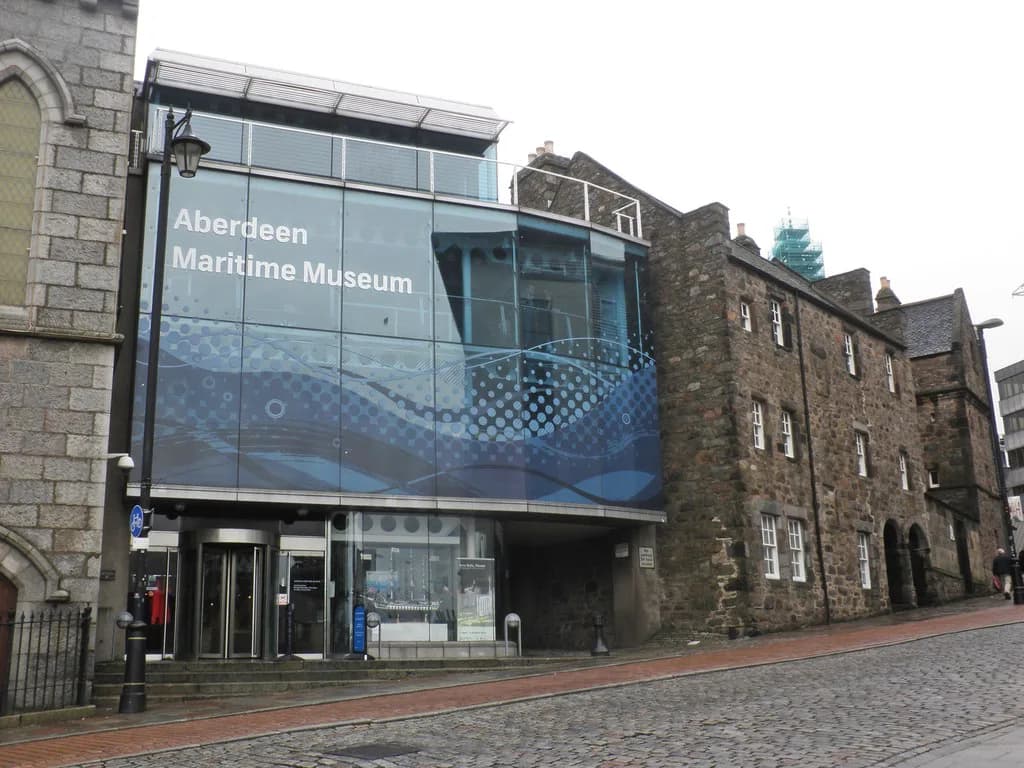
Aberdeen Maritime Museum is free to enter and sits on Shiprow, a short walk from the busy harbour it exists to explain. Displays run thematically over four floors across three linked buildings, so a visit gives you shipbuilding, fishing, trade and offshore energy in one stop. Allow roughly 90 minutes to two hours, and longer if you read every label.
The museum is run by Aberdeen City Council through Aberdeen Art Gallery & Museums, and it occupies the historic 16th-century Provost Ross's House alongside a former church building and a modern link between them. That mixed architecture is why the floors feel so different as you climb. It is a compact, city-centre attraction rather than a full-day outing.
What Aberdeen Maritime Museum Is and Where It Sits
The museum stands on Shiprow at AB11 5BY, close to the working harbour, and its subject is Aberdeen's long and often dramatic relationship with the sea. Displays cover the earliest trading and fishing days, shipbuilding, the offshore energy industry and the city's place in the global energy transition. Because it looks outward to the harbour, it works well as an introduction to the city before you explore the waterfront itself.
Before you go in, stop at the Aberdeen Fishing Memorial outside, made by sculptor David Williams-Ellis and unveiled in 2018. Its bronze figures commemorate the contribution fishing and fishing folk made to the city, and they set the tone for the fishing galleries indoors. It takes only a couple of minutes to look, but it frames the stories inside.
Opening Hours and Free Admission
Admission is free, with donations welcomed. The museum opens Monday to Saturday from 10am to 5pm and Sunday from 11am to 4pm. Those hours are the ones Aberdeen City Council publishes, so treat them as your planning baseline and confirm any seasonal change before a special trip.
The free entry makes this an easy add-on rather than a budget decision, which is worth knowing if you are weighing it against paid castles and historic houses elsewhere on your trip. Facilities inside are a shop, a lift, toilets and baby changing, so plan refreshments for before or after your visit.
The Building: Provost Ross's House, the Church and the Link
The museum is arranged across the historic 16th-century Provost Ross's House, a church building with a painted ceiling, and a modern link building between the two. The link is dominated by the scale model of the Murchison platform, so you meet the offshore story almost as soon as you move between the old buildings. Knowing the layout helps: the historic rooms and the modern energy displays feel deliberately different.
Ground to Top Floor: How the Displays Are Arranged
Displays are thematic rather than strictly chronological, spread over four floors. You will move between shipping, shipbuilding, the harbour, fishing and offshore energy, with objects, paintings and photographs carrying each theme. Give each floor a little time instead of rushing to the top, because the strength of the collection is in the detail.
A lift serves the floors, which matters if stairs are a concern, and the council publishes an access guide and a visual guide to help you plan. Lifts and toilets mean the museum copes well with a mixed-age group. Check the access pages before you go if anyone in your party needs step-free routes.
Ship Models, the Thermopylae and the Star of Tasmania
Highlights include finely detailed ship models from 1689 to the present day, among them the Aberdeen-built tea clipper Thermopylae, the celebrated rival of the Cutty Sark. You can also see the lost figurehead of the Star of Tasmania, a female figure recovered from the Aberdeen sailing ship. Around 3,000 ships were built in Aberdeen between 1790 and 1989, and the displays use ship plans, models, tools and photographs to explain that industry.
Among the shipbuilding stories is the Jho Sho Maru, one of the first warships in the modern Japanese navy, built in Aberdeen. That international connection surprises many visitors, and it is a good example of how the museum ties local yards to global trade. Read the labels here rather than skimming; the objects reward it.

The Lighthouse Lens and the Fox Propeller
Look for a complete lighthouse lens assembly, an impressive piece of engineering that shows how coastal navigation worked. Nearby is the propeller from the steam yacht Fox, which set sail from Aberdeen in 1857 to discover the fate of Sir John Franklin's 1845 expedition to find a route through the Northwest Passage. Both are the kind of object that stops people in their tracks, so leave time for them.
Aberdeen Harbour and the Fishing Story
The harbour galleries explain Aberdeen's global trade links, with archaeological finds excavated just a stone's throw from the museum. Aberdeen Harbour is described as the oldest existing business in Britain, with a history spanning almost 900 years. The fishing displays cover the 19th and 20th centuries, when the city built vessels, crewed them and processed catches landed at the fish market.
One figure to carry away: an incredible 97,500 tons of fish was landed in 1950. Black-and-white photographs of crews, such as the Ben Iver off Iceland in 1942, put faces to the trade. If you want more of the city's seafaring side afterwards, the waterfront and the historic streets around Shiprow are the places to wander.
Offshore Energy and the Murchison Platform Model
With the discovery of North Sea oil and gas in the late 1960s, Aberdeen became the energy capital of Europe, and the museum shows how oil and gas are found and extracted. The centrepiece is a 9-metre-high model of the Murchison platform in the link building, detailed enough to include tiny divers. It is the image most visitors remember.
The energy displays also cover life in the industry and the city's place today in the global energy transition. That framing gives the museum a contemporary edge rather than leaving it purely historical. A free digital guide on the Bloomberg Connects app includes curators' and staff highlights if you want extra context on your phone.
Harbour Views from the Top Floor
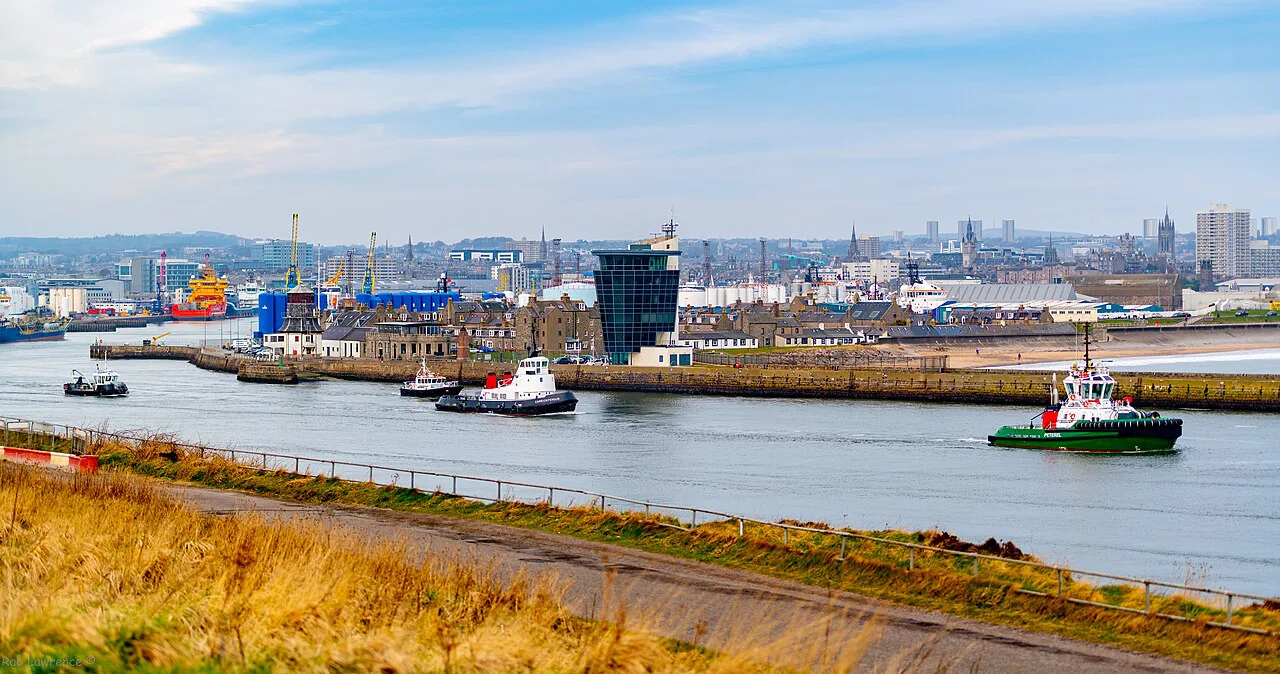
From the top floor you get fantastic views over the bustling Aberdeen Harbour, so end your visit up there rather than starting at the top. The working port is part of the story, and seeing it from above ties the galleries together. Bring a phone or camera, and time it so you are not rushing.

How Much Time to Allow
Budget around 90 minutes to two hours for the four floors and the fishing memorial outside. Add time for the harbour views and the Murchison model, which hold people longer than expected. If you are short on time, prioritise the ship models, the energy displays and the top-floor view.
Getting There: Train Station, Buses and No Parking
The museum is a short walk from Aberdeen train station, and a number of buses stop close to the museum. There is no parking outside the museum, so drivers should use a city car park and walk in; blue badge parking information is published by the council. The trade-off is simple: the train-and-walk approach avoids circling the harbour streets.
Nearby: What to Pair with the Museum
The city centre offers easy pairings on Paper: Aberdeen Art Gallery is another free-to-enjoy council-run museum experience, and Provost Skene's House on Broad Street continues the historic-house theme. Both fit a single day with the maritime museum without much travel. Add a walk along the harbour if the weather holds. If you want to base yourself near these pairings, our Aberdeen Neighborhoods guide covers the areas around the city centre, and you can weigh this museum against the others in our guide to museums in Aberdeen.
On a fine day, Duthie Park gives you the David Welch Winter Gardens and a break from the exhibits. Old Aberdeen, with St Machar's Cathedral and the Brig o' Balgownie over the River Don, is a longer walk or a short bus ride. For a different coastal flavour, Footdee (Fittie) sits by the harbour mouth.
If military history appeals, the Gordon Highlanders Museum makes a worthwhile contrast to the maritime story. Whichever you choose, check opening days for the paid sites before you set out, because volunteer-run museums and historic houses keep narrower hours than the free city museums.
Plan Your Visit
Aberdeen Maritime Museum is a free, compact city-centre attraction with a clear shape: historic buildings, ship models and fishing, then offshore energy and a harbour view from the top. Allow a couple of hours and start or finish outside with the Fishing Memorial. If it whets your appetite for the wider city, our guide to museums in Aberdeen covers the rest of the free council-run collections.
Come by train or bus and walk in, since there is no parking at the door, and pair the visit with another city-centre museum such as Aberdeen Art Gallery or Provost Skene's House. Confirm opening hours on the council page before a special trip, especially around public holidays.
Frequently Asked Questions
Is Aberdeen Maritime Museum free?
Yes. Aberdeen City Council lists admission as free, with donations welcomed. You do not need to buy a ticket for the permanent displays, and there is a shop, lift, toilets and baby changing inside.
How long should I spend at Aberdeen Maritime Museum?
Plan on roughly 90 minutes to two hours for the four floors, plus a few minutes for the Aberdeen Fishing Memorial outside. The harbour views from the top floor and the 9-metre Murchison platform model tend to hold people longer.
Where is Aberdeen Maritime Museum?
It is on Shiprow in Aberdeen, postcode AB11 5BY, close to the busy harbour. The museum is a short walk from Aberdeen train station, and a number of buses stop nearby.
Is there parking at Aberdeen Maritime Museum?
There is no parking outside the museum. Drivers should use a city car park and walk to Shiprow; blue badge parking information is published by Aberdeen City Council.
Does Aberdeen Maritime Museum have a cafe?
Aberdeen City Council lists a shop, lift, toilets and baby changing among the facilities. There is no cafe in the published list, so plan refreshments before or after your visit in the city centre.
How do I get to Aberdeen Maritime Museum from the train station?
Leave the station and walk; the museum describes itself as a short walk from the train station on Shiprow. Several buses also stop close by if you are coming from elsewhere in the city.