
Brig o' Balgownie: Visiting Aberdeen's Medieval Bridge

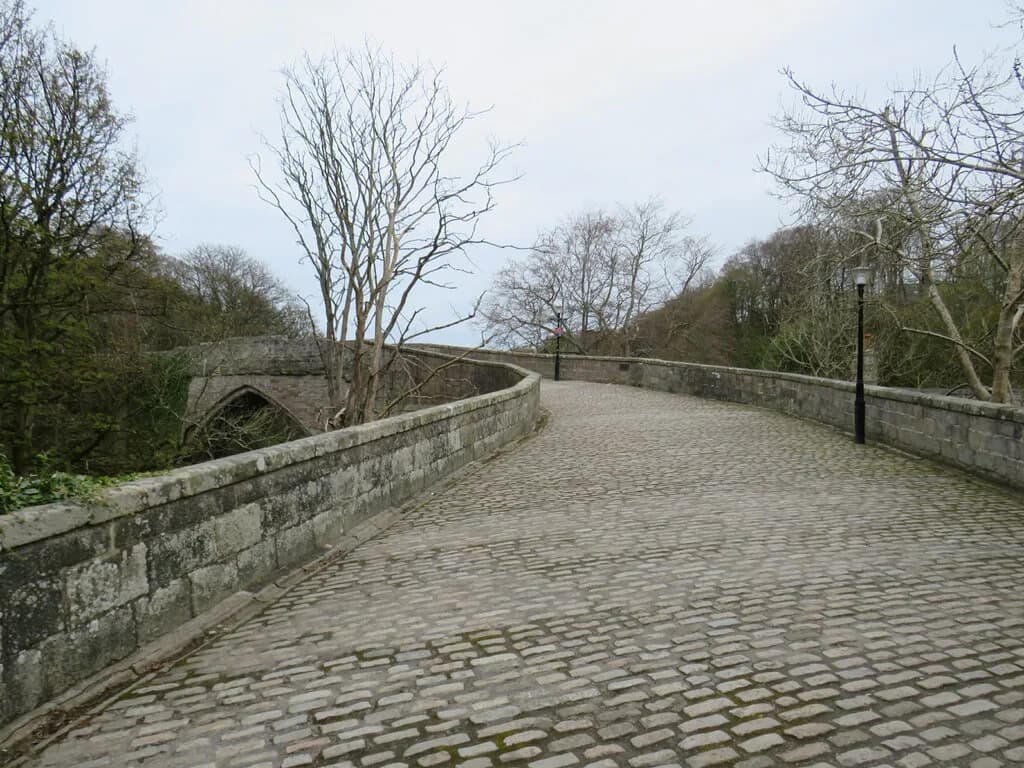
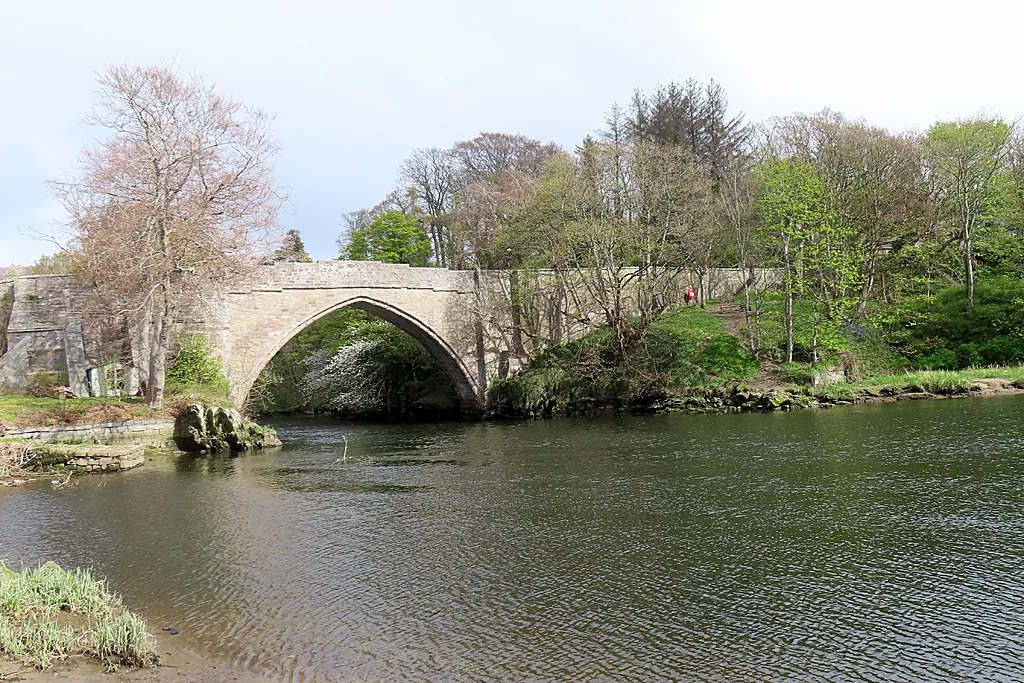
The Brig o' Balgownie carries a single Gothic arch over the River Don in Old Aberdeen. Construction began in the late 13th century and the bridge was finished by 1320, making it one of the oldest surviving structures in the city rather than a modern crossing dressed up as old stone. It is open-air and free to walk across, so the visit is really about the fabric of the thing: granite and sandstone, one span, and a street of tiny cottages on the approach.
Brig o' Balgownie at a glance
The bridge crosses the River Don in Old Aberdeen, at the northern edge of the city rather than in the commercial centre. Construction started in the late 13th century and was completed by 1320, and the surviving structure is built of granite and sandstone. It is a single-arch bridge, not a multi-span crossing, so the whole thing reads as one piece of medieval masonry from the bank.
Treat the bridge as part of a walk rather than a destination with a turnstile. There is no visitor centre, no ticket desk and no exhibition here; you arrive, you look, you walk over the arch and you carry on. That makes it a natural add-on to Old Aberdeen's streets rather than a half-day outing in its own right, and it suits anyone who likes old stone more than they like interpretive panels. If you would rather start from neighbourhoods than single sights, these Aberdeen Neighborhoods area guides show how Old Aberdeen fits into the wider city.
Where the bridge stands
Approach from the Cottown of Balgownie side and the bridge arrives at the end of a short street lined with cottages on one side. The blogger behind Daisy Chains and Picnics describes these as charming late 18th-century stone cottages, restored in the mid 20th century, that neatly line one side of the street and lead you to the bridge. It is a domestic, lived-in approach rather than a formal esplanade, and that is much of the appeal.
From the bridge itself, looking back towards Cottown gives you the view that makes the site: the arch in the foreground, the river below and the little row of houses behind. Allow a couple of minutes for that backward glance, because the street is easy to walk past when you are concentrating on the span.
A short history in three phases
Construction of the granite and sandstone bridge began in the late 13th century, though it was not completed until 1320. Keeping those two dates separate matters: the start of the build and the finished crossing are roughly a generation apart, so it is inaccurate to call the bridge simply a 1320 structure or a 13th-century one.
After falling into disrepair in the mid 16th century, the bridge was extensively renovated in 1605. That renovation is the third phase in the story and explains why the masonry you see is not all of a single medieval date. Read the bridge as a medieval structure with a Jacobean repair campaign layered onto it.
What to look for: the single Gothic arch
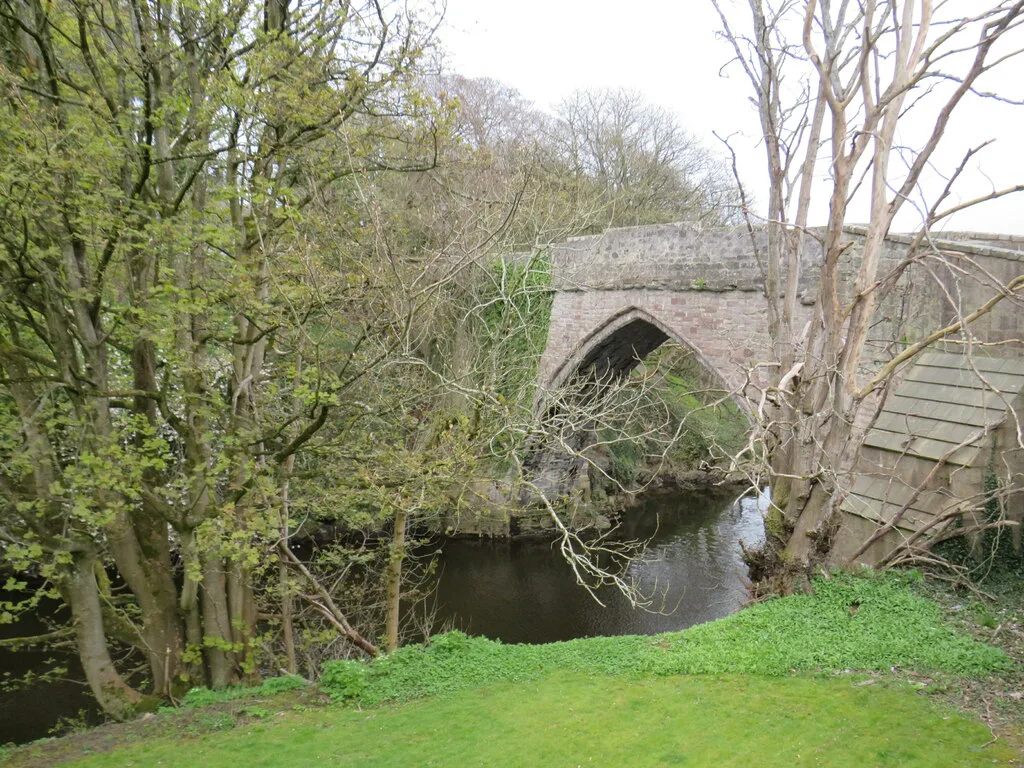
The defining feature is one Gothic arch with a span of over 12 metres, which is a considerable width for a medieval crossing. Stand back on the bank to see the full curve, then walk onto the bridge to feel how narrow the roadway is compared with a modern crossing. The single span is what gives the site its clean, uncluttered profile.
Look at the stone rather than through it. Granite and sandstone behave differently in the way they weather, and a bridge that has been through a 1605 renovation gives you visible evidence of more than one building campaign if you give it a minute. This is a five-minute architectural stop for most visitors, and an enjoyable one precisely because nothing is staged.

The cottages at Cottown of Balgownie
The cottages are tiny, and the doorways are low enough that an adult would have to duck to get inside. They are private homes rather than a museum row, so admire the street from the outside and respect the doors as residents' entrances. The restoration in the mid 20th century is what keeps the row looking so neat today.
Photograph the row from the bridge end of the street, where you can get the cottages and the bridge into one frame. Morning light generally flatters the stone frontages, and the street is short enough that you will not need to scout for long. Keep to the pavement and leave room for residents passing through.
How long to allow
Budget ten to fifteen minutes for the bridge and the Cottown street together. The site is compact, and the walk from one end of the cottages to the far side of the arch is a matter of minutes rather than miles. If you are pairing it with a wider Old Aberdeen walk, it slots in as one stop among several.
Add time if you want to linger on the bank and watch the River Don, or if you are photographing the arch from multiple angles. Otherwise, do not build a day around the bridge alone: it rewards a short, unhurried look rather than a long queue-based visit.
Getting there and the approach on foot
The bridge sits in Old Aberdeen, north of the city centre, and the classic approach is on foot along the street past the cottages from the Cottown side. Walking is the sensible way in, since the streets around the bridge are narrow and residential. Bus routes and timings are worth checking with the local bus operator before you set out, as services change.
Wear shoes with a bit of grip. The historic stonework underfoot on and around the bridge is uneven, and the roadway is not a smoothed pedestrian surface. This is open-air ground, so it is also weather-dependent: a wet day makes the stone slippery and the river less appealing.
Nearby options in Old Aberdeen
Old Aberdeen is a compact, walkable quarter and the bridge works best as the northern end of a longer wander. St Machar's Cathedral, with its granite towers and heraldic ceiling, sits nearby and gives the walk a second substantial stop. Pairing the bridge with the cathedral makes for a coherent half-day rather than a five-minute detour.
For a contrast in scale and period, head south into the city centre. Aberdeen Art Gallery is a strong anchor for a day that mixes medieval stone with a proper collection, and it gives you somewhere warm if the weather turns. If you are weighing a museum stop rather than a gallery, this guide to museums in Aberdeen covers which ones are worth your time. If you would rather plan your days around districts than single sights, these Aberdeen Neighborhoods area guides map out the quarters worth wandering.
If you want green space after the riverbank, Duthie Park is the city's big Victorian park and makes a sensible afternoon pairing for families. The David Welch Winter Gardens give you an indoor option when the Aberdeenshire sky does its usual thing.

Practical trade-offs
This is an open-air, unprotected historic structure. There is no shelter on the bridge, no staffed facility and no interpretive display to fall back on, so bring what you need and expect to be exposed to the weather. The uneven historic stonework is the main practical hazard, particularly in wet or icy conditions.
The payoff is that the bridge is not a managed attraction with timed slots or ticket queues. You turn up, you look, you walk across. That suits some visitors perfectly and frustrates others, so be honest with yourself about which sort you are before making the trip north from the centre.
Check before you go
Access, maintenance and any temporary restrictions around the bridge and the surrounding streets can change, and the local council is the authority to consult for current conditions. Check current access details before you set out, especially if you are travelling any distance to reach Old Aberdeen.
Plan Your Visit
The Brig o' Balgownie is a short, free, open-air stop that earns its place on an Old Aberdeen walk: one Gothic arch over the River Don, a 1605 renovation in the stonework, and a street of low-doored cottages leading up to it. Give it fifteen minutes, wear decent shoes and pair it with St Machar's Cathedral rather than making it the whole trip.
Explore more Aberdeen guides
Frequently Asked Questions
What is the history of the Brig o' Balgownie?
Construction of the granite and sandstone bridge began in the late 13th century and it was completed by 1320. After falling into disrepair in the mid 16th century, it was extensively renovated in 1605.
How old is the Brig o' Balgownie?
The build started in the late 13th century and the crossing was finished by 1320, so the structure spans the medieval and early 14th-century period rather than a single construction date. The 1605 renovation later added a distinct phase of repair work.
Where is the Brig o' Balgownie?
It crosses the River Don in Old Aberdeen, on the northern side of the city. The usual approach is through the street lined with cottages at Cottown of Balgownie, which leads directly to the bridge.
How long do you need at the Brig o' Balgownie?
Allow ten to fifteen minutes for the bridge and the Cottown street together, plus more if you want to photograph the arch or walk the riverbank. It works best as one stop on a longer Old Aberdeen walk.
What can you see near the Brig o' Balgownie?
St Machar's Cathedral is nearby and pairs naturally with the bridge for a half-day walk in Old Aberdeen. Aberdeen Art Gallery and Duthie Park are further into the city and suit a fuller day out.
Are there tickets or opening hours for the Brig o' Balgownie?
It is an open-air bridge rather than a managed visitor attraction, so there is no ticket desk or exhibition at the site. Check current access details with the local council, particularly in poor weather.