
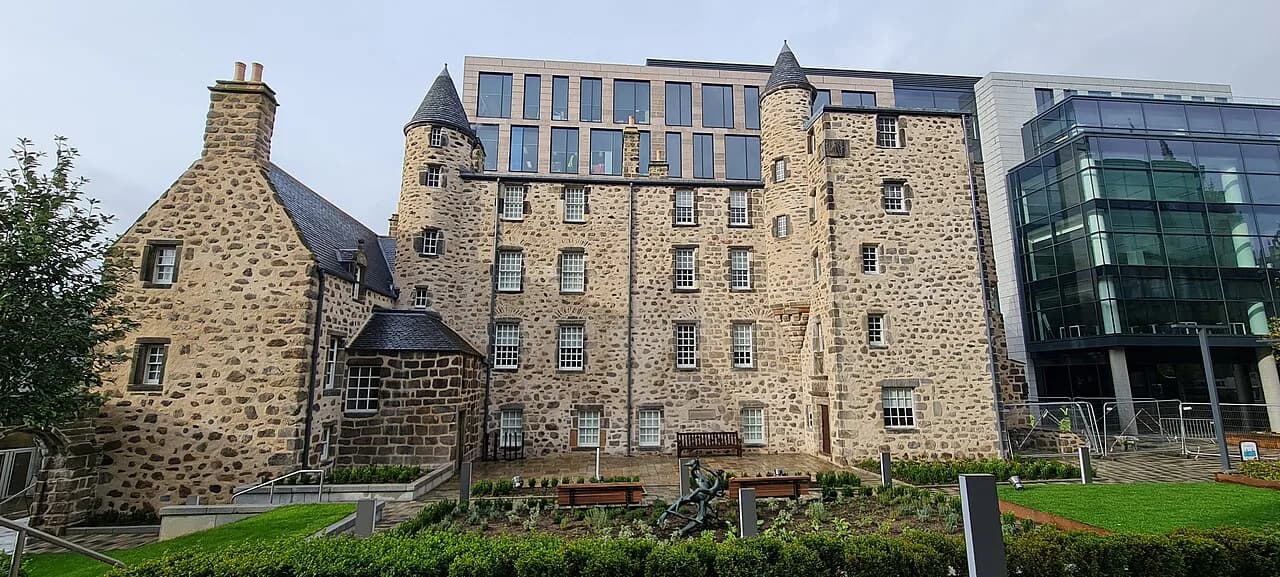
Provost Skene's House: Aberdeen's Oldest Townhouse

Provost Skene's House is a free museum inside Aberdeen's oldest surviving townhouse, a building that dates from 1545 and now holds interactive displays on more than 100 people who shaped the city and the North-East. It sits on Guestrow in the city centre, between Broad Street and Flourmill Lane, and makes a compact, low-cost stop that pairs well with the galleries and streets around Marischal Square.
What Provost Skene's House Is
The house is one of Aberdeen's oldest buildings and its oldest surviving townhouse, with a history of extensions and alterations since the mid-16th century. Aberdeen City Council reopened it after major refurbishment as part of its City Centre Masterplan, and it now runs as an Aberdeen Art Gallery & Museums venue rather than a preserved period home. Expect modern interpretive displays set inside a historic shell, not rooms dressed with original furniture.
The subject is people rather than objects. Ten themed displays introduce innovators, scientists, writers, sporting champions and stage and screen stars, all of whom were born, lived, studied or worked in Aberdeen or the North-East. That focus makes it a useful first stop if you want the city's story in outline before tackling the bigger collections elsewhere in the centre.
Where It Is and How to Get There
The address is Guestrow, Aberdeen AB10 1AS, a pedestrian lane running between Broad Street and Flourmill Lane beside the Marischal Square development. Plenty of buses stop on Union Street, and the walk from there to Broad Street is short and signposted through the shopping heart of the city.
You cannot park on the doorstep: the house sits in a pedestrian area with no on-street parking. The nearest car parks are the NCP at Harriet Street, the Bon Accord shopping centre and Shiprow, so budget a few minutes' walk from any of them. If the weather is kind, the approach on foot through the Broad Street area is the simplest option.
What to See Inside
Start on the ground floor in the Hall of Heroes, which references ten individuals from the upper-floor displays chosen by public vote before the house opened. Beyond it, a small Access Gallery holds a short history of the building and its former occupants, so you can place the house itself before meeting the people it celebrates.
The main galleries upstairs spread across ten themed areas and mix reading panels with audio, film and hands-on activities aimed at children and their adults. Interactive elements and a voting screen make it livelier than a conventional civic museum, and the free admission means you can dip in for half an hour rather than committing a whole morning.
If you want a structured introduction, a free digital guide on the Bloomberg Connects app covers the house's history and highlights some of the featured achievements. Staff are on hand to help with it, which suits anyone visiting alone or with children who prefer a screen to a wall of text.
Who Is Featured
The roll call runs from Nobel laureate Lord Boyd-Orr, who helped establish the Rowett Institute of Nutrition and Health, to operatic soprano Mary Garden and football legend Denis Law. A steering group of historians, curators, archivists, academics and cultural partners chose the final list from nearly 400 public nominations. That mix of science, sport and entertainment gives the displays a broader reach than a local history collection would.
Writer Stuart MacBride, illustrator Johanna Basford and Olympic swimmer Hannah Miley are among the guests who have reacted to the attraction in the venue's own films. It is worth knowing that the people on show were selected by a public nomination process rather than by a single curator, so the displays reflect what Aberdonians themselves consider worth celebrating.

The Building's History in Brief
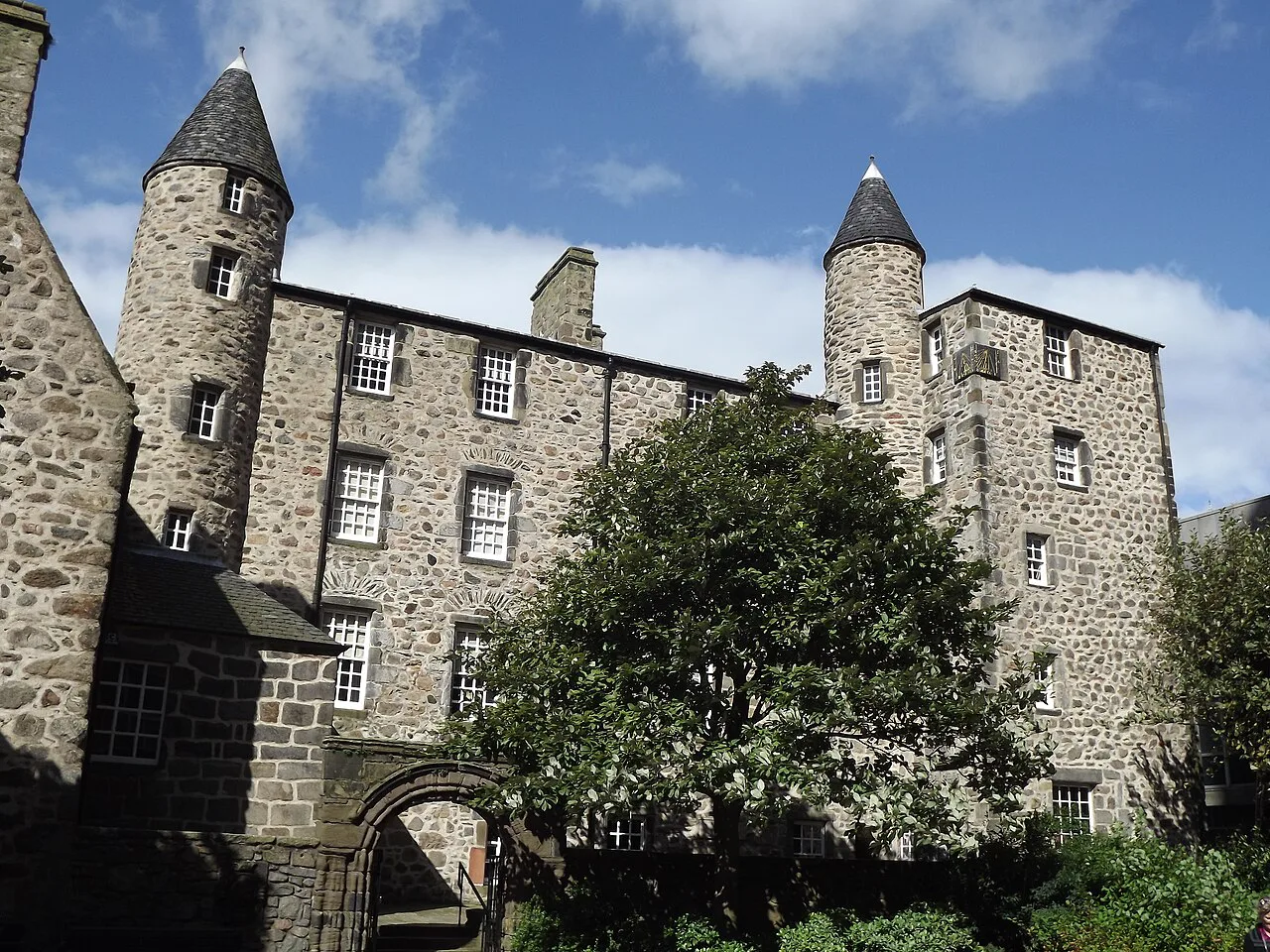
The house is named after Sir George Skene (1619-1708), a wealthy merchant and Provost of Aberdeen from 1676 to 1685, one of several owners across its long life. Hanoverian troops used it as a billet during the Jacobite rebellion, and the Duke of Cumberland stayed here on his way to Culloden, according to the venue's own account.
Its later story is less grand: the once fine home became Victoria Lodging House, a hostel for homeless people, as the surrounding Guestrow area declined in the 1800s. Demolition threatened it in 1940, but a long public campaign saved the building, restoration began in 1951 and it opened as a museum in 1953. Knowing that arc makes the surviving stone stairs and low ceilings feel like survivors rather than stage sets.
Opening Hours and Season
The house opens from April to October, Thursday to Monday, 10am to 5pm, with shorter Sunday hours of 11am to 4pm, and it is closed on Tuesdays and Wednesdays. Those are seasonal opening months rather than year-round hours, so a winter trip should be planned around a different museum.
Because the published hours are tied to the April to October season, it pays to confirm the current timetable on the council's page before you build a day around it, particularly at the edges of the season. The rest of the city's collections keep their own schedules, so a little planning keeps a rainy Tuesday from being wasted, and our guide to the museums in Aberdeen shows which ones fill that gap.
Tickets and Booking
Admission is free, no advance booking is required, and donations are welcomed. There is no need to reserve a slot or print anything: you walk in during opening hours and start on the ground floor. Small parties and families can simply turn up, which makes it an easy filler between fixed appointments elsewhere in the centre.
Access and Steps
The historic structure creates a real access trade-off. The upper floors are reached by winding stone staircases and are not accessible to wheelchair users or visitors with restricted mobility, and there are low ceilings and uneven floors to watch for as you move around. Anyone with limited stamina should treat the stairs as the deciding factor rather than an afterthought.
The ground floor offers a workable alternative: the Hall of Heroes, the Access Gallery history display, large print booklets with the biographies from the upper floors, and a touchscreen with object images, text, audio and film. That touchscreen also lets you cast a vote for the next person to enter the Hall of Heroes, so the accessible route still covers the substance of the visit.
Facilities include toilets, an accessible toilet, baby changing and public wifi, though the thick walls cause some dead spots. The house is a museum in the city centre rather than a country estate, so once you are inside everything is close at hand.

How Long to Allow and What Suits Families
Allow around an hour for the upper floors, longer if you read every panel or watch the films, and rather less if you stay on the ground floor. The scale is modest compared with a national museum, which is exactly why it works as a short stop rather than a half-day outing.
Families get the most from the hands-on activities, the listening and watching stations and the voting screen, and the free entry removes the pressure to stay until you have had your money's worth. Children who tire of reading can move between interactives while adults finish the biographies.
Nearby Options in the City Centre
The house sits beside Marischal Square, a short walk from Union Street and within easy reach of the rest of the city centre's cultural sights. The Aberdeen Art Gallery is the obvious next stop for a bigger collection, and it makes sense to check its own opening days before walking over. If you want the wider picture of where these sights sit within the city, these Aberdeen Neighborhoods area guides are a handy companion.
Towards the harbour, the Aberdeen Maritime Museum occupies Provost Ross's House and covers the city's fishing, shipping and oil history, including a Murchison platform model. It is a natural pairing if you want the working city alongside the Skene's House story of its notable people.
For green space and a change of pace, Duthie Park holds the David Welch Winter Gardens, a good option on a wet afternoon or for letting children run after a museum stop. North of the centre, St Machar's Cathedral in Old Aberdeen and the Brig o' Balgownie over the River Don reward a separate trip.
Plan Your Visit
Provost Skene's House suits anyone who wants Aberdeen's story in an hour without spending a penny: the Hall of Heroes and themed galleries cover inventors, writers, sports stars and performers from one compact city-centre building. Go on a Thursday to Monday between April and October, arrive on foot or from the Harriet Street, Bon Accord or Shiprow car parks, and leave time for the ground floor if stairs are a problem.
Pair it with the art gallery or the maritime museum for a fuller day, and confirm the current timetable on the council's page before travelling at the start or end of the season.
Frequently Asked Questions
Is Provost Skene's House free to visit?
Yes. Admission is free, donations are welcomed, and no advance booking is required, so you can walk in during opening hours.
When is Provost Skene's House open?
It opens from April to October, Thursday to Monday, 10am to 5pm, with Sunday hours of 11am to 4pm, and is closed on Tuesdays and Wednesdays. Check the current timetable before travelling at the edges of the season.
What is the oldest house in Aberdeen?
Provost Skene's House is described by Aberdeen City Council as the oldest surviving townhouse in the city, dating from 1545.
How long does a visit take?
Allow about an hour to read the ten themed displays and use the interactives on the upper floors, or less if you stay on the ground floor.
Is Provost Skene's House accessible?
The upper floors are reached by winding stone staircases and are not accessible to wheelchair users or visitors with restricted mobility. The ground floor has the Hall of Heroes, an Access Gallery with large print booklets and a touchscreen guide covering the upper-floor content.
Where can I park near Provost Skene's House?
The house is in a pedestrian area with no on-street parking. The nearest car parks are the NCP at Harriet Street, the Bon Accord shopping centre and Shiprow.
Who was Sir George Skene?
Sir George Skene (1619-1708) was a wealthy merchant and Provost of Aberdeen from 1676 to 1685, and the house is named after him.