
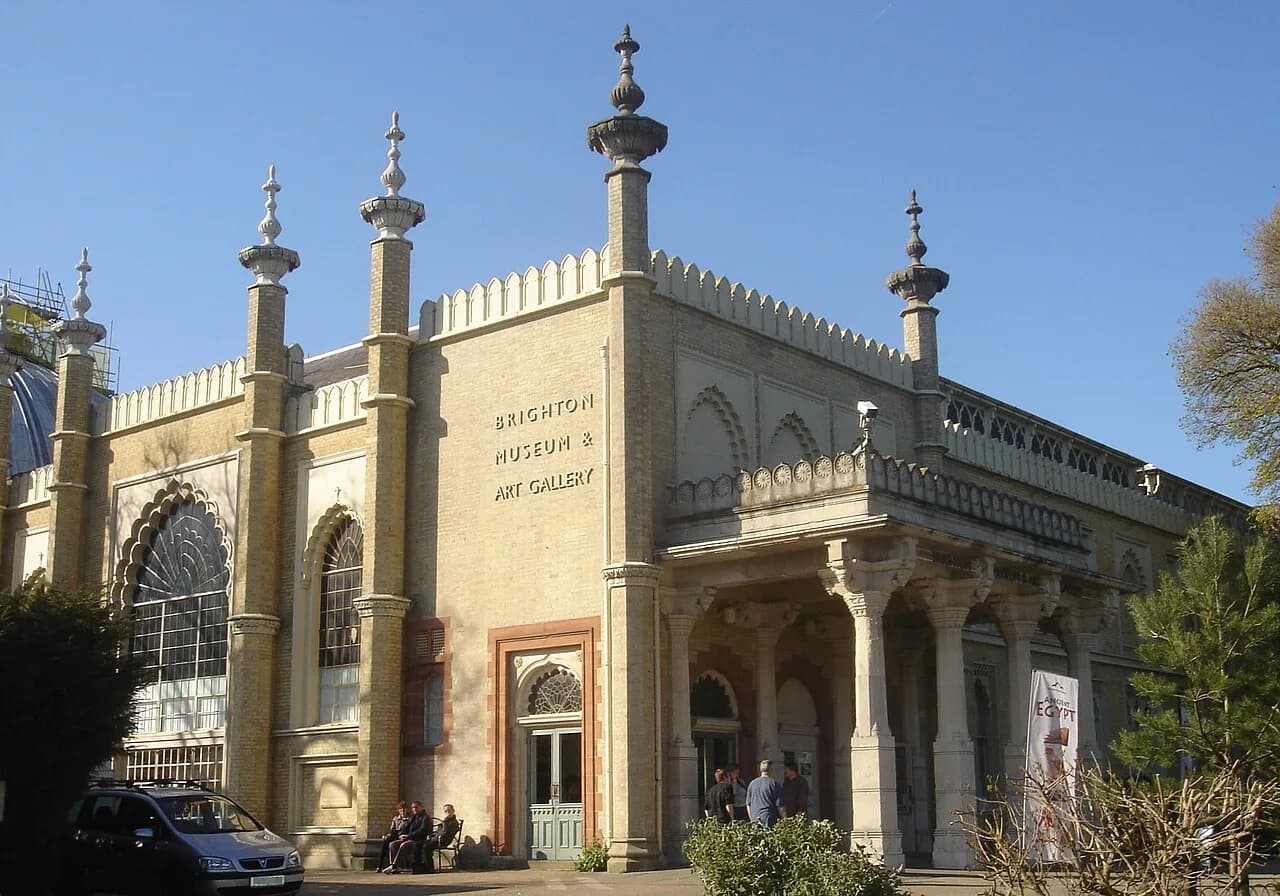
Brighton Museum & Art Gallery: a visitor's guide to the Pavilion Gardens museum

Brighton Museum & Art Gallery is the city's main museum, set in the Royal Pavilion estate in central Brighton, a few minutes' walk from the seafront and the Lanes. It is run by Brighton & Hove Museums, the same organisation behind the Royal Pavilion Brighton, Preston Manor Brighton and the Booth Museum. Treat it as one stop on a Pavilion-estate visit rather than a whole day out, and you will pace it well.
Where the museum sits in the Royal Pavilion estate
The museum occupies a building on the Pavilion Gardens estate, next door to the Royal Pavilion and close to Brighton Dome. That position makes it easy to combine with the Pavilion itself, a wander through the Lanes or a walk down to the seafront. For a wider sense of how it fits among the city's sights, our Brighton Attractions: 8 Visitor Guides sets out the other stops worth your time. If you are weighing up bases for a longer stay, our Brighton Neighborhoods shows which areas keep you within easy reach of this central cluster.
Brighton & Hove Museums lists the museum alongside the Royal Pavilion & Garden, Hove Museum of Creativity, Preston Manor & Gardens and the Booth Museum of Natural History. If you want to see more than one of these in a trip, plan which ones matter most rather than trying to tick off all five. Preston Manor, Brighton sits outside the immediate centre, while the Pavilion and this museum are effectively neighbours.
A short history of the building
The museum shares its setting with one of Britain's most recognisable royal buildings, the seaside pleasure palace built for the Prince Regent, later King George IV. The estate grew into a cultural quarter, and the museum now anchors it as the city's home for art, history and collections. You do not need the history to enjoy the visit, but knowing the setting helps explain why the museum feels embedded in the city rather than parked on its edge.
Brighton & Hove Museums describes the museum as part of the same trust as the Pavilion, so the two share an institutional story as well as a postcode. Allow time to look at the building and the gardens between the two rather than dashing from one door to the next.
What to see inside: local history, decorative art and contemporary collecting
The collection spans local history, decorative arts and contemporary work, which means you can move from Brighton's social past to ceramics and costume without leaving the building. That mix rewards browsing rather than a strict route: pick the galleries that match your interests and give them proper time. If you are travelling with someone who prefers objects to labels, the decorative arts displays tend to be the easier sell.
Whichmuseum describes the museum's holdings as a diverse collection covering local history, decorative arts and contemporary collecting. Use that as your planning guide: it is a broad city museum, not a single-subject attraction, so a highlights-first approach works better than trying to see everything.
The Brighton & Hove Albion gallery opening in August 2026
Brighton & Hove Museums has announced a permanent gallery dedicated to Brighton & Hove Albion at the museum, opening in August 2026 for the start of the 2026/27 season and timed to the club's 125th anniversary. The gallery will be curated jointly by the club and the museums trust and will tell the club's history and its connection with the city and its fans. It is not open yet, so do not plan a visit around it before that date.
The announcement follows the exhibition Brighton & Hove Albion: A First Year in Europe, which opened in October 2024 and had its run extended by four months to meet demand, as the museum's own announcement records. The permanent gallery replaces the club museum that had been at the American Express Stadium before it closed during stadium redevelopments. If football is the reason for your visit, the honest advice is to wait for the opening rather than expect a display now.

Tickets and opening hours: where to confirm before travelling
Ticket prices for the museum vary between third-party listings, so check the official Brighton & Hove Museums site before you travel rather than relying on an old figure. Whichmuseum lists entry at £4.50 for under-18s and £9.50 for adults aged 19 and over, with a family rate, while Tripadvisor shows admission tickets from £11. Those figures are worth treating as listed starting points, not a guarantee of what you will pay at the door.
The museum's official pages do not set out current opening days or times, so confirm them before setting out, especially if you are visiting on a Monday or a bank holiday. Book ahead if you are coming in school holidays or planning to combine the museum with a timed entry to the Pavilion.
How long to allow, and how to pace it alongside the Royal Pavilion
Give the museum around two hours if you want to see the main galleries without rushing, and longer if decorative arts and local history are your priority. If you are short on time, pick two or three areas and skip the rest rather than walking every room at speed. The museum works best as a morning stop before the Pavilion or as an afternoon escape when the seafront turns windy.
Pairing it with the Royal Pavilion is the obvious move: see the Pavilion first while you are fresh, then use the museum as a slower contrast. The two are close enough that you can walk between them in a couple of minutes, which makes a half-day of the estate easy to plan.
Getting there: walking from the station and the seafront
The museum sits in the centre of Brighton, within walking distance of both Brighton station and the seafront. From the station it is a downhill walk through the North Laine area towards the Pavilion estate, which takes most people around fifteen to twenty minutes at an easy pace. From the beach, head north from the pier area and you will reach the Pavilion Gardens in roughly ten minutes. If you are still deciding where to stay for a longer trip, our Brighton Neighborhoods weighs the central areas against the rest of the city; for a comparable city-break decision elsewhere, an Inverness Museum and Art Gallery visit has the same central-versus-outlying trade-off.
Buses run frequently through the city centre, and the estate is served by stops along the main roads around the Pavilion and Old Steine. If you are coming from further along the coast, the train into Brighton station is the simplest option, with the museum reachable on foot from there.
Access and practical points
Museum buildings of this age often involve stairs and uneven floors, so ask at the entrance about step-free routes and lift access if anyone in your group needs them. Pushchairs are usually manageable in the larger galleries but can be tight in smaller rooms. None of this is worth guessing at: a quick question at the desk saves a frustrating loop around the building.
Lockers and cloakroom facilities are common in city museums of this size, but confirm on the day rather than carrying expectations. If you are visiting with young children, plan a shorter loop and leave room for a break in the gardens.

Nearby: the Royal Pavilion, Brighton Dome and the Lanes
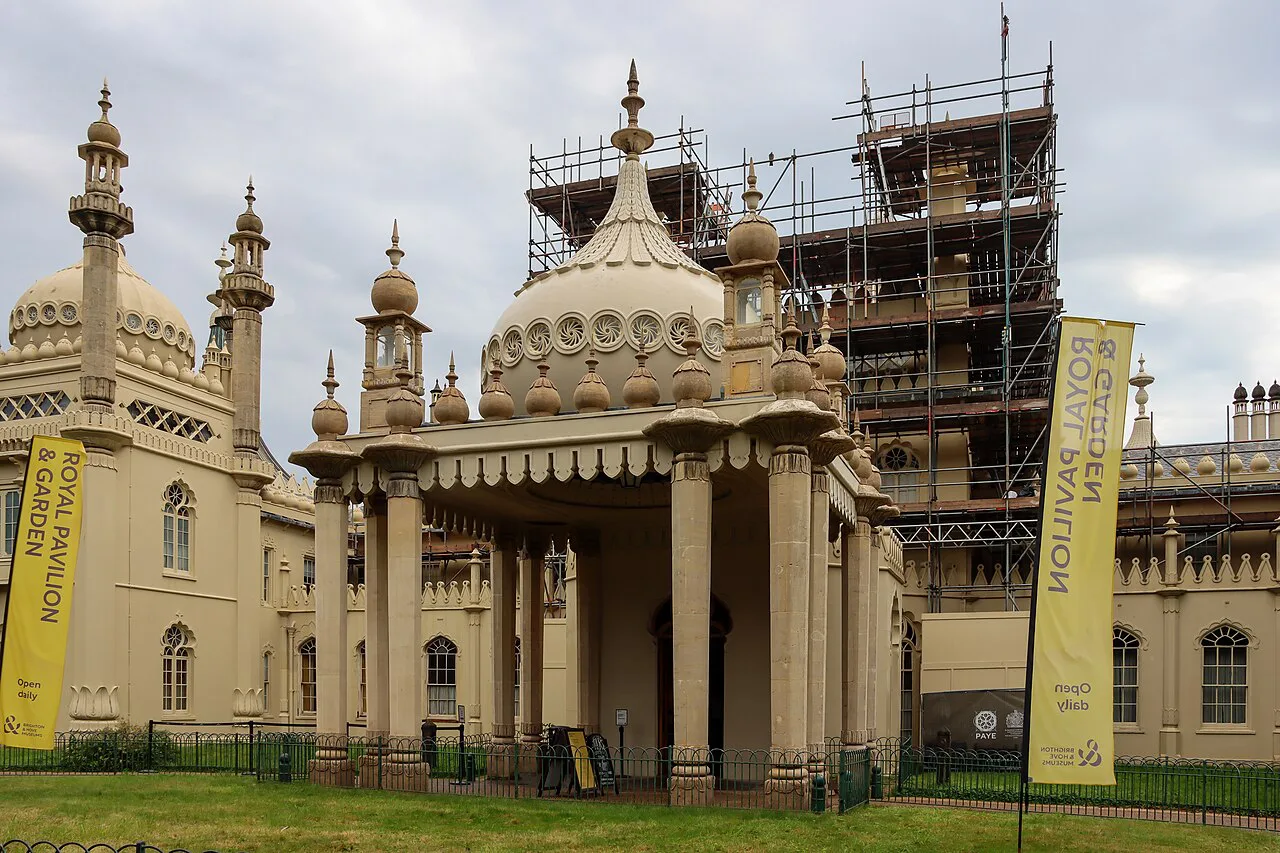
The Royal Pavilion & Garden is the immediate neighbour, and its gardens are a good place to sit between museum galleries. Brighton Dome sits on the same estate and hosts concerts and events, so check what is on if you fancy an evening show. The Lanes, with their small shops and cafes, are a short walk south and make a natural next stop for lunch.
If you are heading to the beach afterwards, Marine Parade and the pier are within walking distance, and SEA LIFE Brighton is on the seafront for families who want an indoor backup. For a wider look at the city's options, there are plenty of other things to do in Brighton beyond the Pavilion estate.
Afternoon tea in Brighton is a sensible way to round off a Pavilion-estate morning, with several tea rooms in the surrounding streets. Book ahead for weekend sittings, when central Brighton gets busy.
Who this museum suits, and when to skip it
This is a strong choice for anyone interested in Brighton's social history, decorative arts or the story of the city beyond the pier. It also suits families looking for an indoor stop that is close to the seafront without being on it. If you are in Brighton purely for the beach and Brighton Palace Pier, you can reasonably give it a miss on a short trip.
Skip it if your day is already full with the Royal Pavilion and the Lanes, or if you are travelling with someone who finds museums tiring. On a sunny summer afternoon, the gardens and the seafront will usually win.
Plan Your Visit
Brighton Museum & Art Gallery is a practical, central stop on a Pavilion-estate day, best given about two hours and paired with the Royal Pavilion next door. Check the official Brighton & Hove Museums site for current ticket prices and opening times before you travel, particularly if the football gallery is part of your reason for visiting after August 2026.
Explore more Brighton guides
Frequently Asked Questions
Is Brighton Museum & Art Gallery free?
Third-party listings show an admission charge rather than free entry, and the quoted rates differ between them. Check the official Brighton & Hove Museums site for the current price list before you travel, and treat any third-party figure as a starting point only.
How long does it take to go round Brighton Museum?
Allow around two hours for the main galleries at an unhurried pace, and longer if decorative arts and local history interest you. If you are short on time, choose two or three areas and skip the rest rather than trying to cover every room.
Where is Brighton Museum & Art Gallery?
It is in the Royal Pavilion estate in central Brighton, next to the Royal Pavilion and close to Brighton Dome. It is roughly fifteen to twenty minutes on foot from Brighton station and about ten minutes from the seafront.
What can you see at Brighton Museum?
The collection covers local history, decorative arts and contemporary collecting, so expect a broad city museum rather than a single-subject attraction. Plan around the displays that match your interests and give them proper time.
When does the Brighton & Hove Albion gallery open at Brighton Museum?
Brighton & Hove Museums has announced the permanent Albion gallery for August 2026, opening for the 2026/27 season and marking the club's 125th anniversary. It is not open yet, so do not plan a visit around it before then.
Is Brighton Museum worth visiting?
It is worth it if you want Brighton's social history and decorative arts in one central stop, especially combined with the Royal Pavilion next door. If your trip is built around the beach and the pier, it is reasonable to leave it for another visit.