
Royal Pavilion Brighton: A Visitor's Guide to the Seaside Palace

The Royal Pavilion is Brighton's headline sight: a former royal residence turned museum, set in a Regency garden a short walk from the seafront and the railway station. You can go inside, and the interiors are the reason to pay rather than just photograph the domes. Allow a half day if you want the palace, the garden and one tour.
It suits anyone interested in Regency design, royal excess or the First World War history of the building, and it works well for families because children's tickets are cheaper and under-fives go free. It suits less well anyone who cannot manage stairs or who wants a cheap rainy-day stop, since this is one of Brighton's paid attractions.
What the Royal Pavilion Is
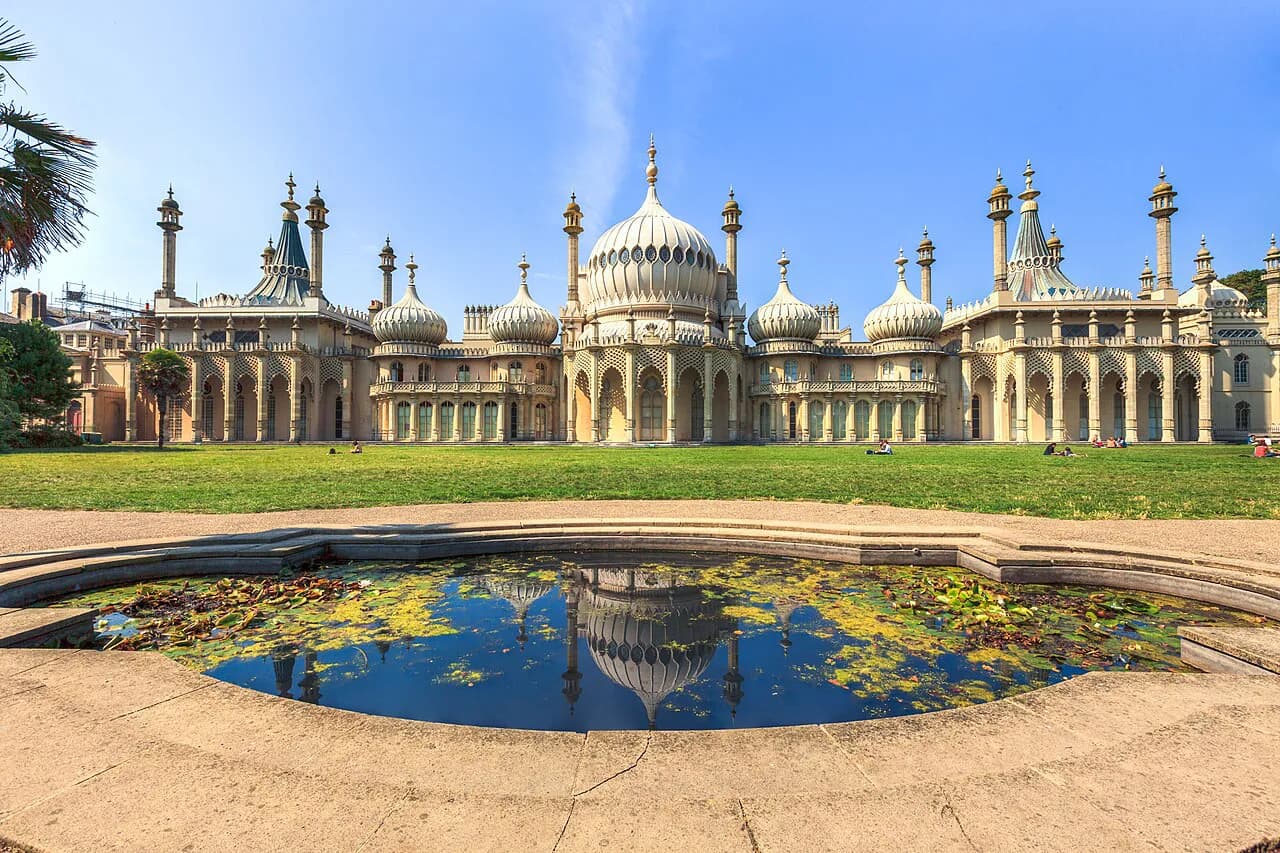
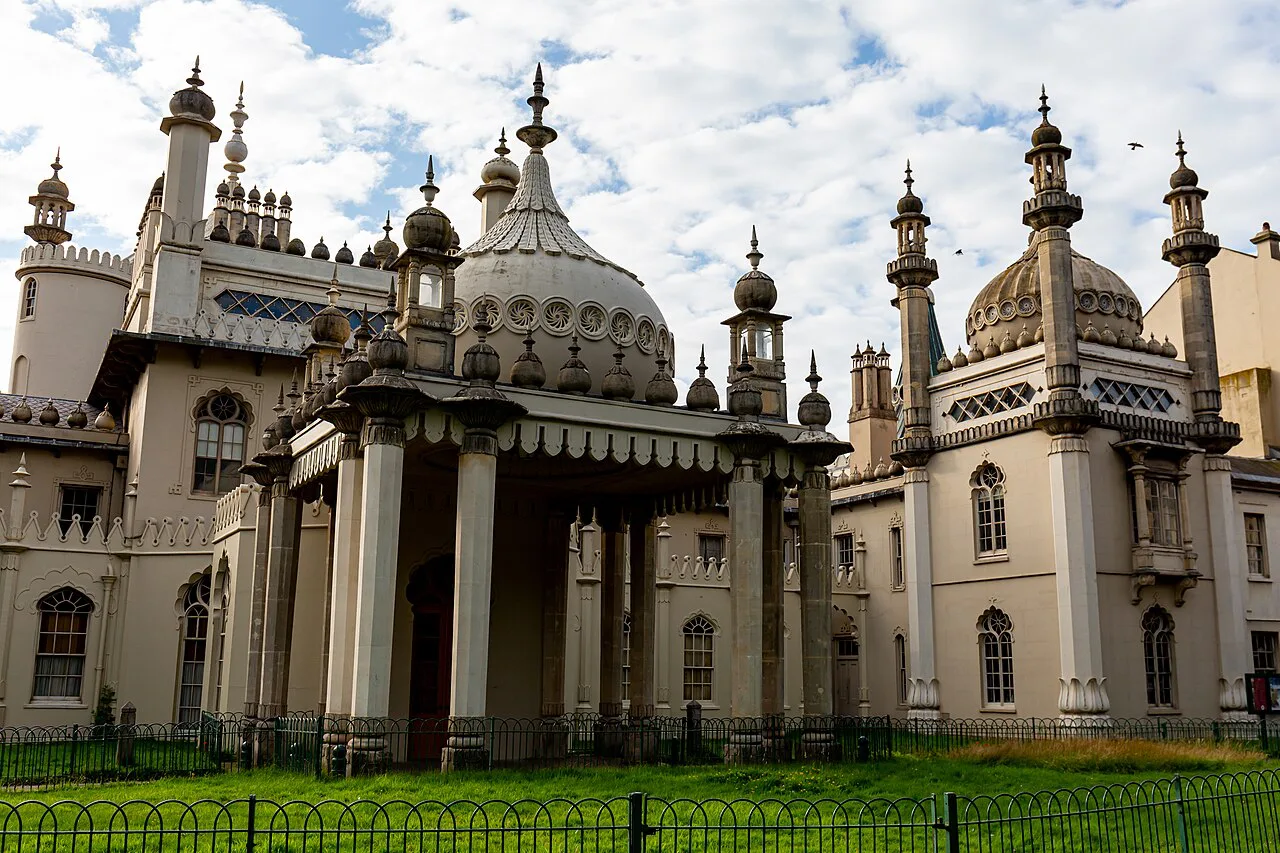
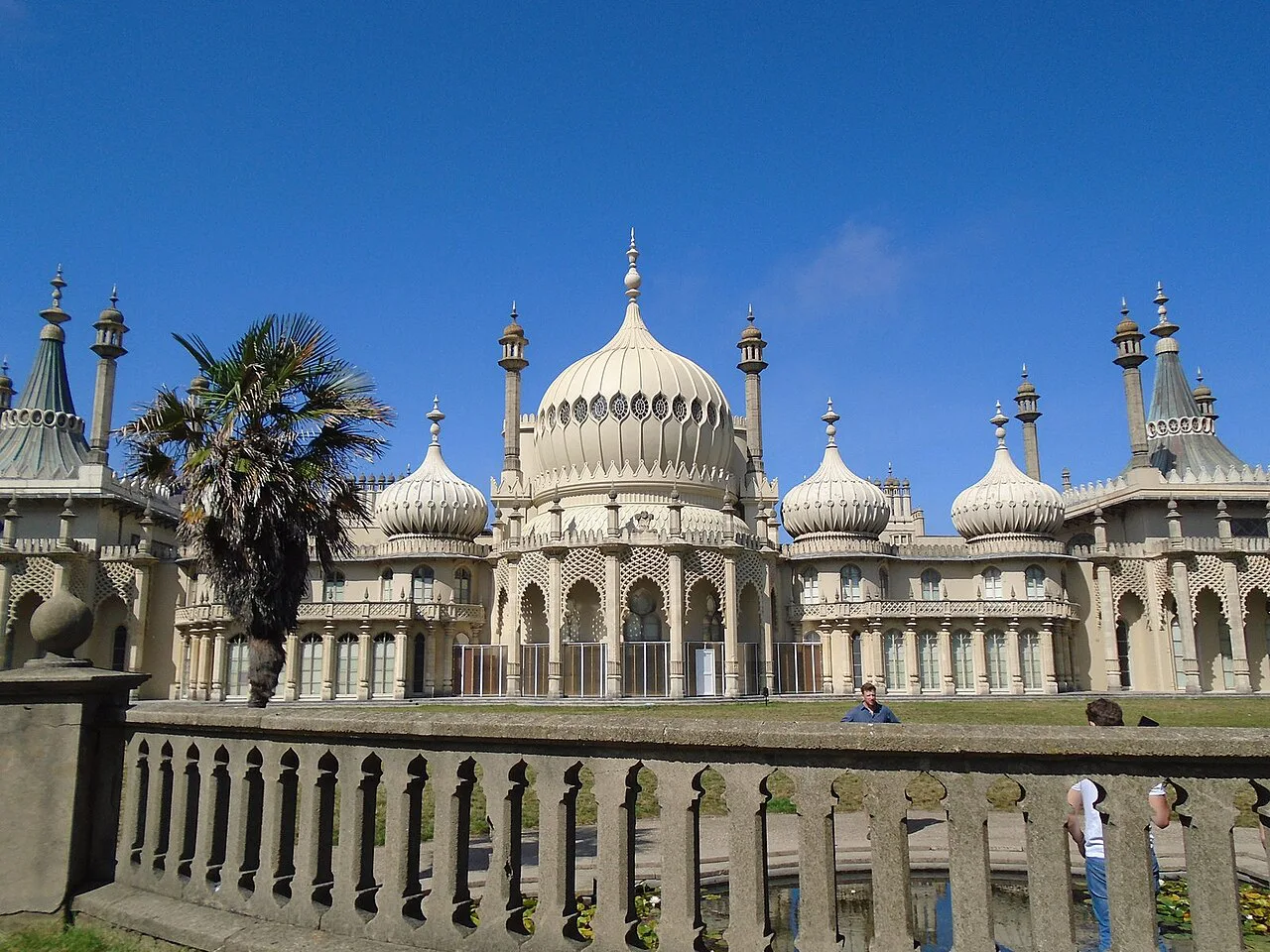
The Royal Pavilion is a Grade I listed former royal residence in central Brighton, built from 1787 in three phases and now run as a museum by Brighton & Hove Museums. Its silhouette is deliberately theatrical: Indian-inspired domes and minarets outside, Chinese-inspired decoration within. That contrast is what makes it unlike any other palace in Britain.
It was first built for the Prince of Wales, later King George IV, as a seaside retreat. Today it functions as a visitor attraction and events venue, with ticketed entry, a shop, guided tours and seasonal exhibitions. Weddings and private hire run alongside public opening, which occasionally affects access to particular rooms.
Where It Is and How to Get There
The Pavilion stands in the centre of Brighton, just north of the Old Steine and a few minutes' walk from the seafront, the railway station and the main shopping streets. The official address is Royal Pavilion & Garden, Brighton BN1 1FN.
From Brighton railway station, Southern Railway describes the walk as under 10 minutes, downhill through the North Laine area towards the Pavilion gardens. Trains from London Victoria, Gatwick Airport and the south coast all arrive at the same station, so the Pavilion is reachable without a bus or taxi.
If you are driving, central Brighton parking is tight and expensive, and the Pavilion sits in a pedestrian-heavy part of town. Arriving by train is the simpler plan, and rail passengers can use the National Rail 2FOR1 offer for two adult tickets for the price of one, which needs to be arranged with your train ticket.
A Short History: Holland, Nash and the Town Purchase
In 1787 the Prince of Wales commissioned architect Henry Holland to remodel a modest seaside lodging into a private retreat known as the Marine Pavilion. That early building was a restrained neoclassical villa, nothing like the palace visible today. Its later transformation came from a different hand entirely.
From 1815 John Nash rebuilt and extended the building on a far grander scale, using a cast-iron frame to support the domes and minarets inspired by Indian architecture. The interiors were decorated in the chinoiserie style fashionable in Regency Britain, with hand-painted wallpapers and lavish furnishings. Most of the work was complete by the early 1820s.
Royal use faded after George IV's death. Queen Victoria disliked Brighton as a setting for court life and sold the Pavilion to the town of Brighton in 1850, and many original furnishings were removed before the sale. During the First World War the building became a hospital for wounded soldiers of the Indian Army, and restoration to its Regency appearance followed the war.
What to See Inside
The Banqueting Room is the set piece, with a long table laid as it would have been for an 1820s dessert course and a vast chandelier held aloft by sculpted dragons. It is the room most visitors photograph and the one that best explains George IV's taste for spectacle. Give it a few minutes rather than passing through.
The Music Room was built for concerts and social gatherings, with a domed ceiling, elaborate wall decoration and bold colour, all in the Chinese-inspired style of the period. Restoration has reinstated its visual impact using historic records and surviving fragments. Look up: the ceiling is the point of the room.
The Long Gallery once linked the main state rooms and still guides visitors through the palace in much the same sequence as a royal reception would have. Its painted glass ceiling and hanging lanterns are easy to walk past in a crowd. The private apartments beyond are smaller but richly hung with silk and show how the household lived day to day.

The Regency Garden
The garden around the Pavilion is one of the few fully restored Regency gardens in England, laid out from John Nash's plans of the 1820s with planting chosen to match the period. It was not an untouched survival, and restoration work continues with donor support. Walking through it before or after your timed entry is the natural way to frame the building.
Tickets and Admission
You pay to go inside. Tickets can be bought on the day or booked online in advance, and online bookings need to be made at least one day ahead. Adult tickets cost £19.50, children aged 5 to 18 pay £11.75 and under-fives go free. Treat those figures as the published rates for planning and confirm them when you book, since admission charges change.
Booking ahead matters most at weekends and in school holidays, when the palace interior gets crowded and a timed slot spares you a queue at the door. If you are travelling by train, the 2FOR1 deal can undercut the advance online price for two adults, so compare the two before paying.
Opening times and closing days are published on the Plan Your Visit page, which is the page to check before travelling. Admission charges, access information and any changes to the visitor route are listed there too.
Tours and Exhibitions Worth Planning Around
The official guided tour of the Royal Pavilion runs every Saturday at 2pm, and it is the simplest way to get the building's history from someone who knows it. Separately, the Basement & Tunnel Tours cover servant life and the Second World War shelters beneath the palace, with tours from May to August. The Secrets of the Royal Pavilion tours split between the ground floor and the first-floor Upper Chambers, the latter opening up spaces usually off-limits.
Seasonal exhibitions change the reason to visit. A Dragons exhibition is listed for 28 March to 1 November 2026, an adventure of magic, myth and mayhem through the palace. Dates for tours and exhibitions are scheduled listings, so check them against your travel dates before you build a trip around one.
How Long to Allow
Plan on two to three hours for the palace and garden together, longer if you join a tour or an exhibition is on. The state rooms themselves take around an hour at an unhurried pace. What slows a visit down is other people: narrow routes between rooms, school groups and pushchairs all bunch up in the Long Gallery and the Music Room.
Go early on a weekday if you want the Banqueting Room to yourself, or accept that a Saturday visit will be a shared experience and book the 2pm tour so the crowd becomes part of the entertainment. Baggage storage is available at the Pavilion, which helps if you are arriving with luggage before checking in to your accommodation.

Access, Steps and Practical Points
This is a historic building spread over several floors, so expect stairs between the state rooms and the private apartments, and check the access information on the official site if anyone in your party uses a wheelchair or finds steps difficult. Visitor routes and room access can change on event days, which is another reason to look before you travel.
Nearby Options in Central Brighton
The seafront is a few minutes' walk south, where Brighton Palace Pier and the pebble beach make an easy next stop, and SEA LIFE Brighton sits further along Marine Parade towards the cliffs. Both are separately ticketed attractions, so decide in advance how much you want to pack into one day.
Brighton Museum & Art Gallery is next to the Pavilion gardens and shares the same museum trust, which makes it a sensible pairing if you want a second indoor stop without another journey. If you are planning a fuller day, our Brighton Attractions: 8 Visitor Guides covers the rest of the city's main sights, and our Brighton Neighborhoods shows which districts sit closest to these central sights.
For a slower afternoon after the palace, the Lanes and North Laine are within walking distance for independent shops, and afternoon tea in Brighton is a reasonable way to round off a Regency-themed day. If you are still weighing up which part of the city to base yourself in, our Brighton Neighborhoods compares the districts around the centre. Book tea rooms ahead on weekends, as the good ones fill up.
Plan Your Visit
The Royal Pavilion rewards a paid visit rather than a photograph from the garden: book online a day ahead, arrive by train if you can, and give yourself two to three hours. Pair it with the garden and the museum next door for a full indoor day in central Brighton.
Explore more Brighton guides
Frequently Asked Questions
What is in the Royal Pavilion in Brighton?
The former royal palace contains state rooms including the Banqueting Room with its dragon-supported chandelier, the domed Music Room, the Long Gallery and the private apartments. There is also a restored Regency garden outside, plus seasonal exhibitions and behind-the-scenes tours.
Can you go inside the Royal Pavilion in Brighton?
Yes, it is open as a museum with ticketed admission. Tickets are sold on the day or online in advance, and online bookings must be made at least one day ahead. Opening times are published on the official Plan Your Visit page.
Is the Brighton Royal Pavilion worth visiting?
Yes if you like Regency design, royal history or theatrical interiors, and it is the building most associated with Brighton. The trade-off is a paid ticket and crowds at busy times. Pair it with the free-to-enter garden and the museum next door to fill a day.
Why did Queen Victoria sell the Brighton Pavilion?
Queen Victoria disliked Brighton as a setting for court life and sold the Pavilion to the town of Brighton in 1850. Many original furnishings were removed before the sale, and later restoration used detailed inventories to guide the work.
How long does it take to visit the Royal Pavilion?
Allow two to three hours for the palace and garden together, or longer if you join a tour or a temporary exhibition is running. The state rooms alone take about an hour at an unhurried pace.
Do you need to book Royal Pavilion tickets in advance?
Not strictly, as tickets are available on the day, but online bookings must be made at least one day ahead. Advance booking is worth it at weekends and in school holidays when the interior gets crowded.
How far is the Royal Pavilion from Brighton station?
It is under a 10-minute walk from Brighton railway station, downhill through the North Laine area. The Pavilion is also a few minutes from the seafront and the main shopping streets.
Is there a discount for arriving by train?
Yes, National Rail's 2FOR1 offer gives two adult Royal Pavilion tickets for the price of one when you travel to Brighton by train. Check the current offer terms before you buy, since it can work out cheaper than two advance online tickets.