Castles Near Aberdeen: 14 Day-Trip Castles Worth the Drive
Plan castle days out from Aberdeen: Dunnottar, Crathes, Craigievar, Fyvie and more, with who runs each site, what a ticket buys and when a car is essential.
On this page
The easiest castles to reach from Aberdeen are Dunnottar, south of Stonehaven, and the National Trust for Scotland tower houses at Crathes and Drum, both within about half an hour of the city by car. Aberdeenshire holds dozens of castle sites, but most are private, fragmentary or simply not open, so a short break works best with three or four chosen properly rather than a long tick-list. If you are weighing up another region entirely, the castles near Birmingham make a similar short-break exercise with a different set of owners and opening patterns.
Nearly all the visitable ones are tower houses or big baronial houses with furnished rooms, and a handful are roofless ruins kept mainly for their setting. Each has an owner that matters for tickets and passes: the National Trust for Scotland runs Craigievar, Crathes, Drum, Fyvie, Castle Fraser and Leith Hall, Historic Environment Scotland looks after Corgarff, Kildrummy and Tolquhon, and Dunnottar is privately operated.
What to expect from castles near Aberdeen
Expect two very different days out. The tower houses are roofed, furnished and shown room by room, often with original family contents still in place, and several sit in walled gardens or policies worth an hour on their own. The ruins give you walls, vaults and cliff or valley scenery, with far less in the way of furnishings.
Many of the interiors are guided-tour only at least in part, which sets the rhythm of a visit: you may wait for the next departure rather than wander at will. Craigievar in summer runs tours about every half hour on a first-come, first-served basis with no reservations, so arriving early matters more there than anywhere else on this list.
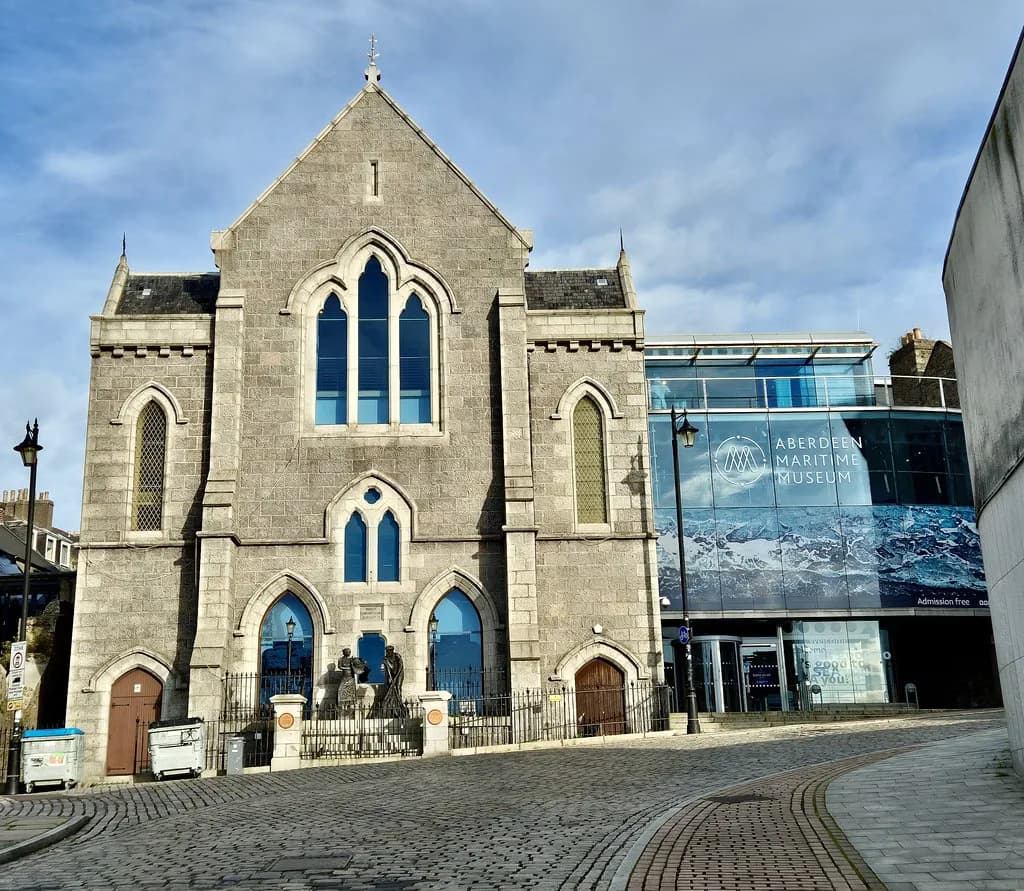
Accessibility is the other thing to plan around. These are historic buildings with spiral stairs, narrow turnpikes and uneven ground, and several interiors are not wheelchair accessible, so anyone with mobility limits should pick a ground-floor-heavy site or a ruin with level paths. If you want indoor, city-centre history instead, the museums in Aberdeen fill a wet morning without a car.
Which castles need the least driving from Aberdeen
For the shortest hops, aim at Drum, Crathes and Castle Fraser. Drum lies about ten miles west of Aberdeen near Peterculter, Crathes is roughly fifteen miles west on the A93 just east of Banchory, and Castle Fraser is around sixteen miles west near Dunecht. All three work as a half-day each, or two in a long day if you start early.
Dunnottar is the next ring out, a coastal run south past Stonehaven rather than an inland drive, which makes it easy to combine with a harbour wander and a late lunch. Craigievar, south of Alford, is about twenty-six miles west of the city, and Fyvie is around twenty-five miles north-west near Turriff. Braemar and Balmoral push the day out to roughly an hour and a half each way.
Dunnottar Castle: the clifftop ruin south of Stonehaven
Dunnottar is the one to build a day around. The ruins sit on a 160-foot rock surrounded on three sides by the North Sea, once the fortress of the Earls Marischal, and the walk from the car park down and back up is steep enough to count as part of the visit. Allow a couple of hours on site; the ruins are more extensive than the first view suggests, with rooms above and below ground.
The site is 1.6 miles south of Stonehaven and about 20 miles from Aberdeen International Airport, and there is on-site parking for cars, motorhomes and coaches. Seasonal hours run long in summer and shorten sharply from late October, last entry is an hour before closing, and the castle can shut at short notice in high winds, snow or ice, so check the weather before setting off. Card payments only, whether you buy on arrival or in advance.
Its history is the draw as much as the setting: the castle sheltered the Honours of Scotland, the Scottish crown jewels, from Cromwell's army in the 1650s, and William Wallace and Mary Queen of Scots both feature in its story. Pair it with Stonehaven's harbour rather than trying to add a second castle the same afternoon.
Crathes Castle and its walled garden
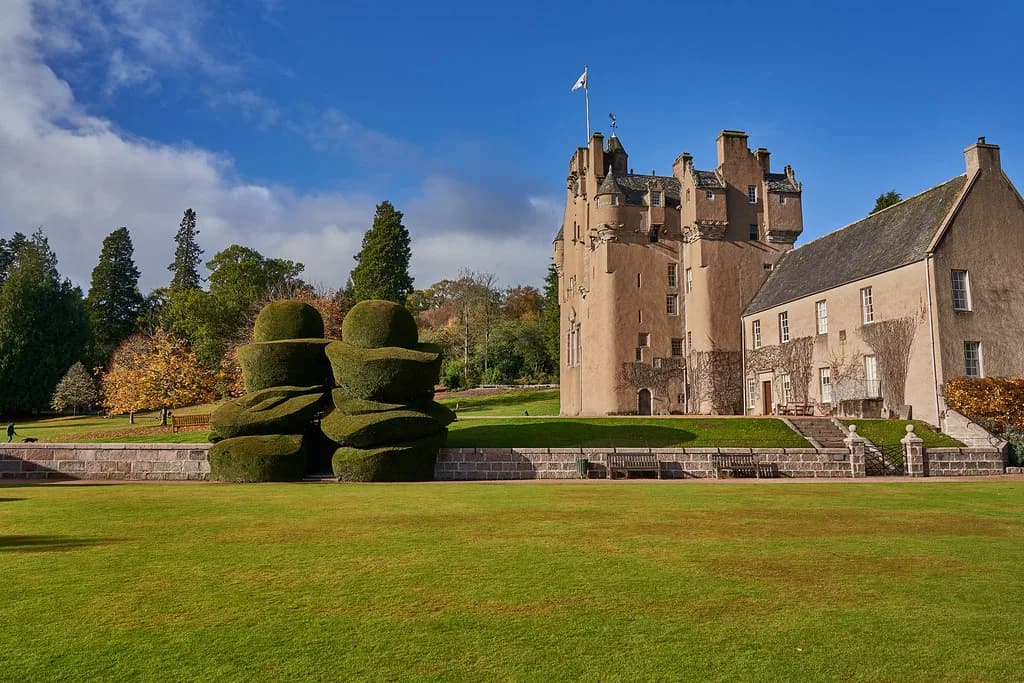
Crathes is a sixteenth-century tower house with later additions and ornate painted ceilings, and the garden is as much the reason to come as the rooms. The topiary is the memorable feature, and the grounds give you somewhere to walk if you are waiting for a tour slot. It sits on the A93 about three miles east of Banchory, a straightforward run west from Aberdeen.
Opening is seasonal rather than uniform, and the property closes for a stretch around Christmas and New Year, so a winter visit needs checking first. Crathes is one of six Aberdeenshire properties run by the National Trust for Scotland, which matters if you are weighing a membership against individual tickets.
Craigievar Castle: the pink tower house you tour by guided tour only
Craigievar is the fairytale one, a pink seventeenth-century tower house taller than it is wide, and the interior is seen only on a guided tour. In June to August tours leave roughly every half hour and cannot be reserved, so you queue and take the next place; interior photography is not allowed. The grounds are free and open daily from dawn to dusk all year, which makes it a reasonable stop even outside tour hours.
Summer opening is the most generous, spring and autumn drop to long weekends, October narrows to weekends only, and the castle closes entirely from November to March. It lies off the A980 about six miles south of Alford, so it pairs naturally with a drive through the Don valley rather than with a city morning.
Drum Castle: tower house, Victorian rooms and historic roses
Drum mixes a thirteenth-century tower with seventeenth-century and Victorian additions, which is why it reads as a house as much as a fortress. The garden of historic roses shows how roses have been cultivated across the centuries, and the ancient oak forest is a proper walk rather than a lawn. Inside, the Victorian refurbishment reshaped some rooms, and the guided tour covers the period when the castle housed English troops during the Jacobite rebellions.
The castle is shown by guided tour running through the day, while the walled garden has its own set hours from April to the end of October and the grounds are free and open daily from dawn to dusk. It is about three miles west of Peterculter, so it makes the shortest castle outing from the city.
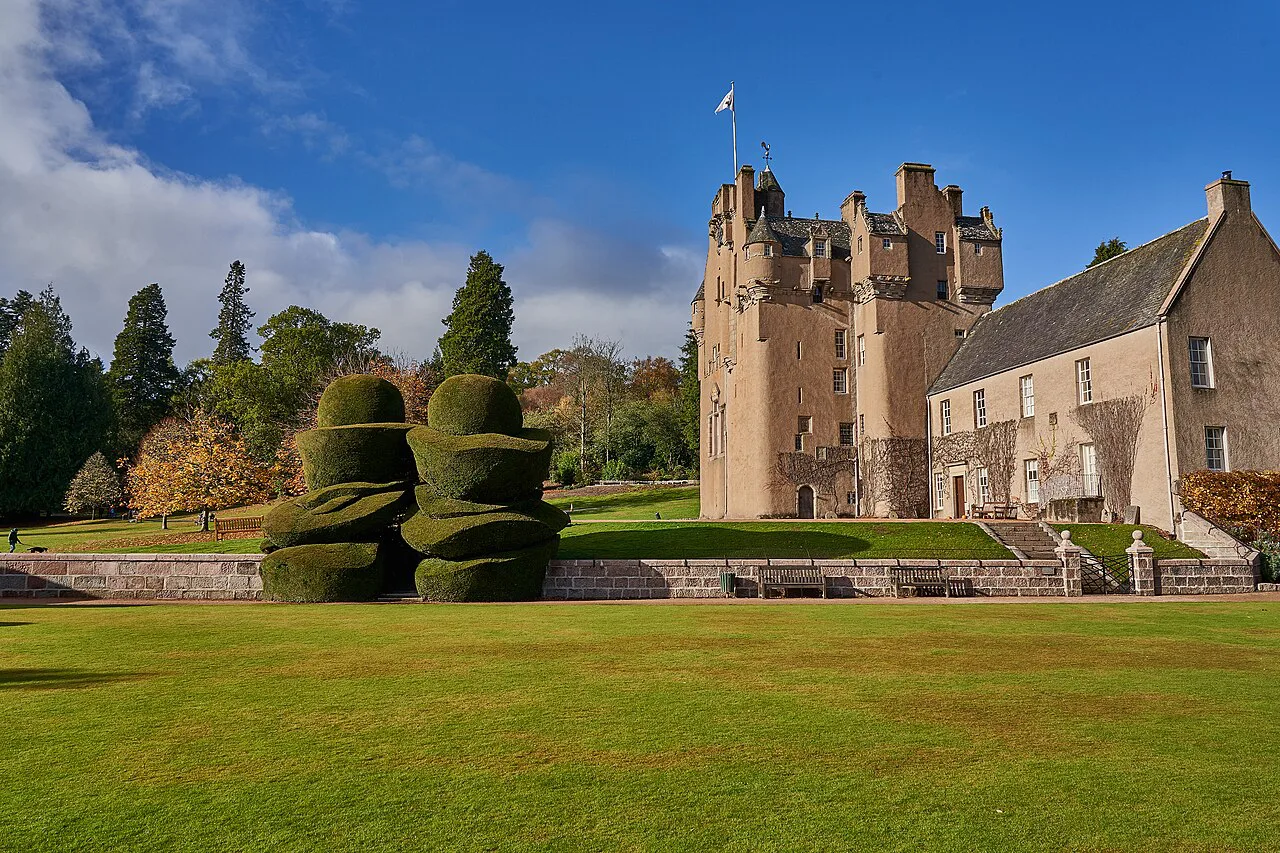
Castle Fraser and Fyvie Castle: the big baronial interiors
Castle Fraser is a Z-plan tower house built across the sixteenth and seventeenth centuries, still holding the Fraser family's original furnishings, and its sheer size makes it the most castle-like of the tower houses. It sits about four miles north of Dunecht and sixteen miles west of Aberdeen, with seasonal hours that vary outside high summer, and January and February visits are guided rather than self-guided.
Fyvie is the grandest exterior of the group, Scottish Baronial with a massive arched entrance, first built in the thirteenth century and added to by each family that held it. The interiors are decorated floor to ceiling, with detailed ceilings, paintings and family objects, and the grounds include a garden of Scottish fruits. It lies off the A947 about eight miles south-east of Turriff and twenty-five miles north-west of Aberdeen, and closes from late October to late March.
Braemar and Balmoral: the western pair
Braemar is a tall tower house of 1628, home to the Clan Farquharson, with twelve furnished rooms showing how life worked inside thick fortified walls and later-added windows. The grounds open daily all year and the castle itself opens daily from April to October. It sits just east of Braemar village on the A93, about fifteen minutes west of Balmoral, so the two fit one western day.
Balmoral is a different proposition: Queen Victoria rebuilt it in the 1850s, the royal family still uses it for holidays, and visitor access is limited to a single room, the ballroom, with the rest of the tour largely outdoors. Go for the estate and the setting rather than the interiors, and treat the drive, about an hour and a half from Aberdeen on the A93, as part of the outing.
Smaller and ruined sites: Corgarff, Kildrummy and Tolquhon
Corgarff is a sixteenth-century tower house that became a British military base in 1748 after the Jacobite uprisings and was later used by the army against whisky smuggling. Historic Environment Scotland runs it, and the rooms are furnished to show army life rather than castle life, so expect replica beds and tables rather than family interiors. It stands on the A939 about eight miles west of Strathdon, a dramatic valley setting with a star-shaped defensive wall.
Kildrummy is a ruined thirteenth-century castle, once enormous with exceptionally strong walls, and there is little to see beyond the masonry, so go for scale and landscape rather than rooms. Tolquhon is a sixteenth-century Scots Renaissance house built onto an earlier tower, with relatively intact walls and fine detailing but no roof. If you can only manage one ruin, Dunnottar beats Tolquhon for extent and drama.
Leith Hall and Delgatie Castle: the quieter stops
Leith Hall looks more stately home than fortress, with fewer turrets, and the Leith-Hay family lived there for ten generations before giving the house and its contents, including original furnishings and artwork, to the National Trust for Scotland at the end of the Second World War. It is shown by guided tour, opens in blocks from April to October and closes entirely from November to March. It sits off the B9002 about a mile west of Kennethmont.
Delgatie is a tower house of the 1570s built onto an eleventh-century predecessor, with sixteenth-century painted ceilings and an unusually wide spiral staircase climbing all eight storeys. The interior needs serious investment to hold together, and the castle tour is not advertised on its website, so the tea room and self-catering apartments are the reliable part of a stop. It lies off the A947 north-east of Turriff, and phoning ahead is the sensible way to ask about touring.
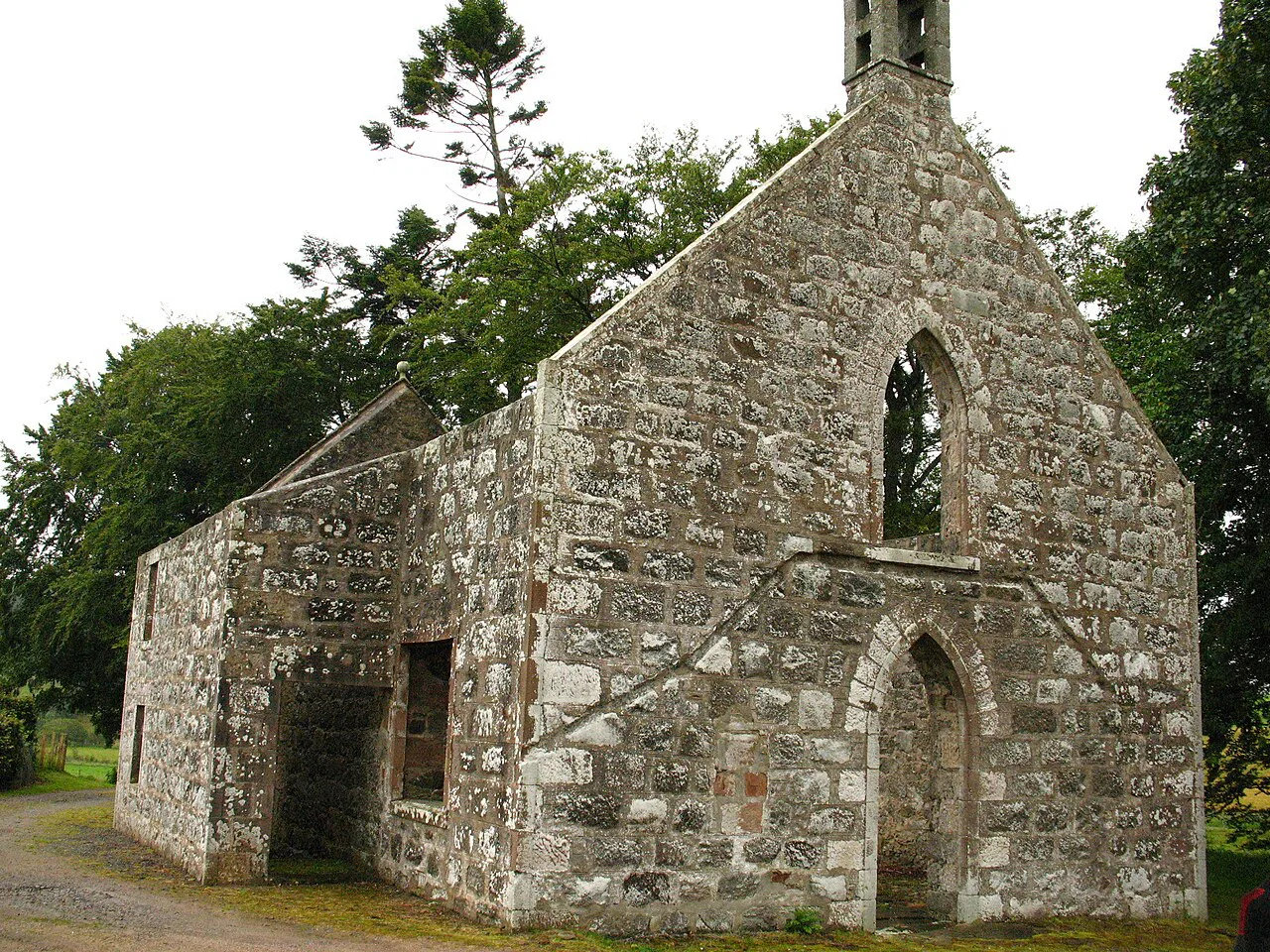
Doing it without a car: tours and public transport trade-offs
Seeing several castles without a car is the main practical difficulty, because they are scattered across rural Aberdeenshire and train and bus links serve the towns rather than the gates. Organised options exist: a private tour pairing Crathes and Dunnottar with a distillery, an overnight small-group tour covering Balmoral, Dunnottar and Crathes, and a multi-day castle tour from Edinburgh that includes Fraser, Crathes and Fyvie.
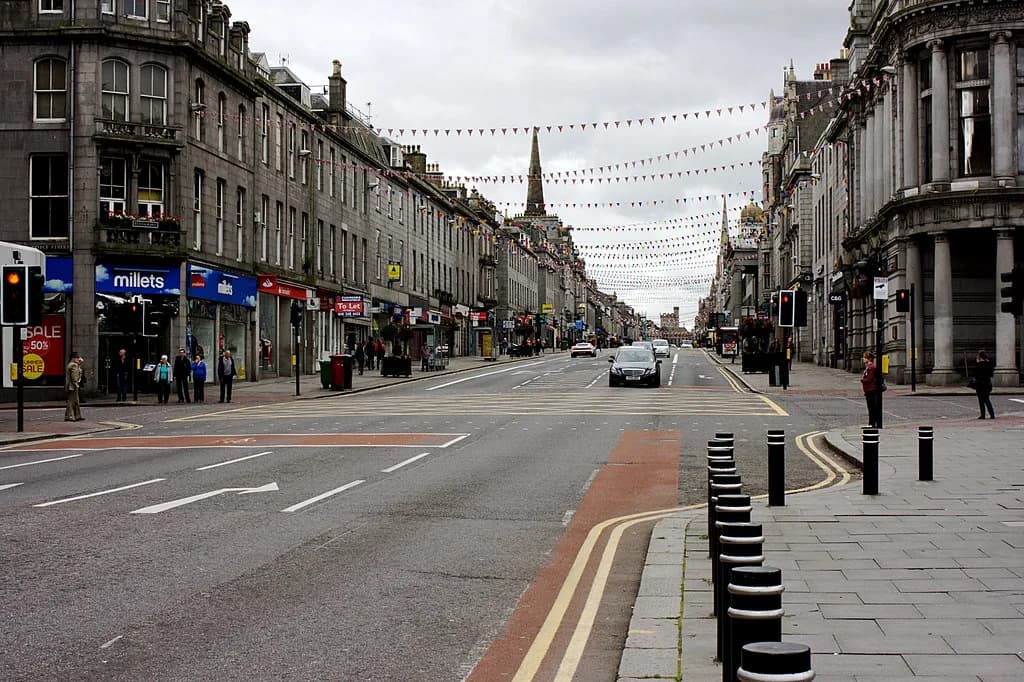
If you would rather stay city-based, treat Dunnottar as the one castle you do independently by train to Stonehaven and accept the walk, then use Aberdeen's own sights for the rest of the trip. The art galleries in Aberdeen and the city's granite streets fill a day comfortably, and a walking tour covers the centre without any transport at all.
National Trust for Scotland membership: when it pays for itself
Six of the castles here are National Trust for Scotland properties: Craigievar, Crathes, Drum, Fyvie, Castle Fraser and Leith Hall. If you plan to visit three or more in a trip, compare the combined ticket total against an annual membership, which admits you to Trust sites for a year and comes in individual, joint and senior versions. The price is published on the Trust's own site, so check the current figure before deciding rather than relying on an older number.
Membership does not cover Dunnottar, which is privately operated and ticketed separately, nor the Historic Environment Scotland sites at Corgarff, Kildrummy and Tolquhon. Those three sit under a different membership scheme, so a pass for one organisation will not get you into the other's properties. Build your shortlist first, then buy the pass that matches it.
Access, steps and weather: what to plan around
Steps and uneven ground are the norm. Tower houses mean spiral stairs in confined spaces, Dunnottar means a steep descent and climb on the coastal path, and ruins mean rough grass and loose stone. Many of the castles are not wheelchair accessible, so choose a site with level grounds and a ground-floor experience if that is the priority, and check access information before booking.
Weather decides some days outright. Dunnottar can close at short notice for high winds, excessive snow or ice, and its winter hours end mid-afternoon, so a coastal castle day belongs in the longer months. Inland properties mostly shut for the winter too: Craigievar, Leith Hall and Fyvie all close from around November to March, while Braemar's grounds stay open daily year-round.
Where to slot castles into an Aberdeen city break
A three-day break works well with one coastal day at Dunnottar and Stonehaven, one inland day taking in Crathes and Drum, and one day in the city itself. Staying in Aberdeen rather than moving hotels keeps the driving simple, since all of these are day trips rather than stopovers, and the city's museums and galleries give you a fallback when the forecast turns.
If you want the castle trips to make sense of the city too, read up on the history of Aberdeen before you go: the harbour trade, the granite building boom and the Jacobite years all connect to what you see at Drum and Dunnottar. A short Aberdeen walking tour of the centre rounds off the picture without using a day.
Plan Your Castle Days Out
Pick Dunnottar for drama, Crathes for garden and painted ceilings, Craigievar for the guided-tour fairytale, and Fyvie or Castle Fraser for the grandest interiors. Add Braemar and Balmoral only if you are happy with a long western drive, and save Corgarff, Kildrummy, Tolquhon and Delgatie for a second visit.
Book Dunnottar tickets online in peak season, arrive early at Craigievar for a tour place, carry a card for the cliff-top kiosk and keep a wet-weather plan in the city. Confirm seasonal hours and ticket prices on each property's own site close to your dates, since winter closures and short-notice weather shutdowns are routine.
Explore more Aberdeen guides
Frequently Asked Questions
Which castles near Aberdeen are easiest to reach without a car?
Dunnottar is the most workable car-free choice, because it sits just outside Stonehaven with a railway station and a walk from town. Most of the National Trust for Scotland tower houses sit in open countryside with no practical bus link to the gate, so a tour or a hire car is the realistic alternative.
Do you need to book castle tickets in advance?
For Dunnottar you can buy on arrival at the kiosk or in advance online, and the site takes card payments only. Craigievar cannot be reserved at all, since tours run first-come, first-served. Other properties sell admission at the door, but guided-tour slots are worth arranging ahead where the property offers that.
Which Aberdeenshire castles are ruins?
Dunnottar is the most substantial ruin, with walls, vaults and rooms above and below ground on its clifftop rock. Kildrummy is a ruined thirteenth-century castle with strong walls but little else standing, and Tolquhon keeps relatively intact walls and detailing with no roof. All three suit travellers who prefer setting and masonry to furnished rooms.
Is Fyvie Castle worth visiting?
Fyvie has the grandest exterior of the northern group, Scottish Baronial with a massive arched entrance, and the interiors are decorated floor to ceiling with detailed ceilings, paintings and family objects. It is a long drive from Aberdeen at around twenty-five miles north-west, so pair it with another stop rather than making the round trip for one house.
Sources
Notes for your next city break
Optional updates to our UK city guides.
You might also like
Continue reading
More guides you'll find useful