Derry Architecture: A Walking Guide to the City's Buildings
Derry architecture spans a walled plantation city, a Victorian guildhall and twin cathedrals. See the buildings that explain the city and how to walk them.
On this page
Derry is known architecturally for a walled city whose 17th-century street plan still shapes the centre, and for the Victorian civic building that anchors its main square. The historic core is compact enough to read on foot, which is why the strongest approach is not a list of facades but a route that moves from the defences inward.
The city also has an ecclesiastical thread worth following: two cathedrals on opposite banks, plus other churches designed by Derry-based architects. Several of these are working buildings, so what you can see inside depends on services and events rather than a fixed visitor timetable.
What makes Derry's architecture distinctive
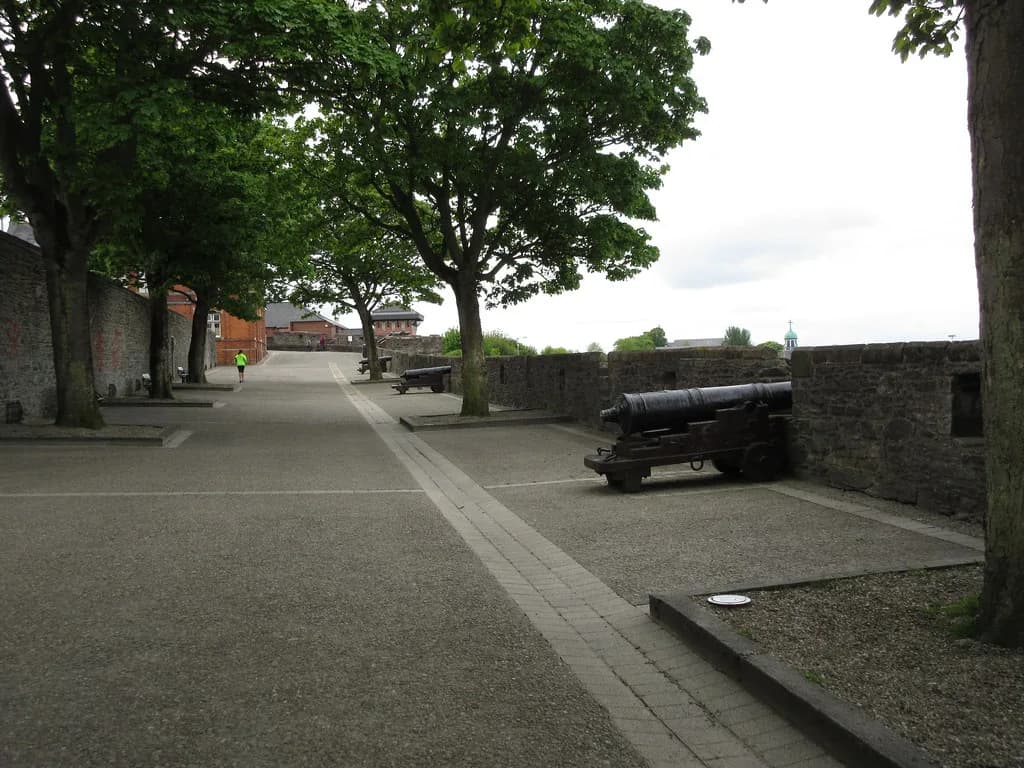
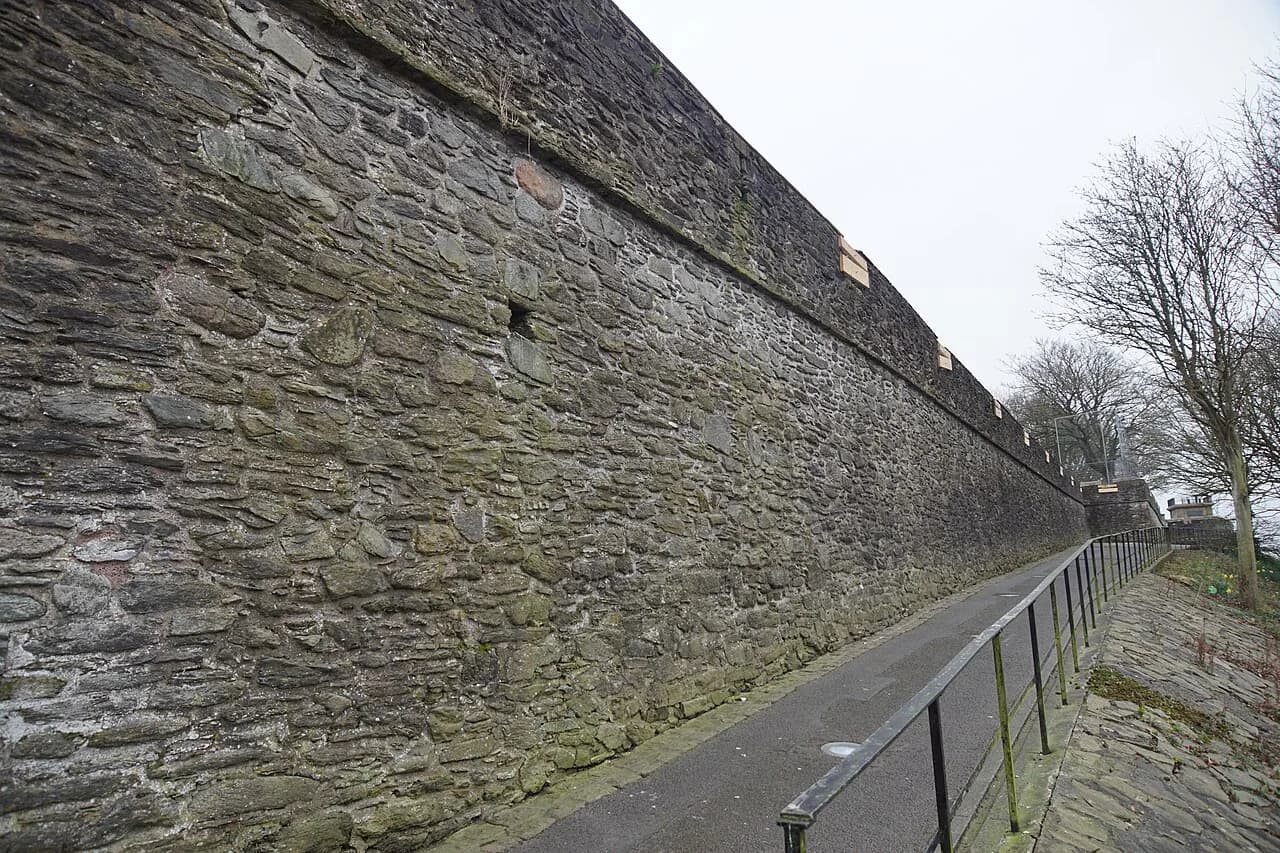
Most British cities ask you to imagine their medieval defences. Derry still has a complete circuit of walls enclosing the old centre, and the streets inside follow a plantation-era grid rather than growing organically. That combination gives the city centre an unusual coherence: you can walk the edge and then cross the interior in a few minutes.
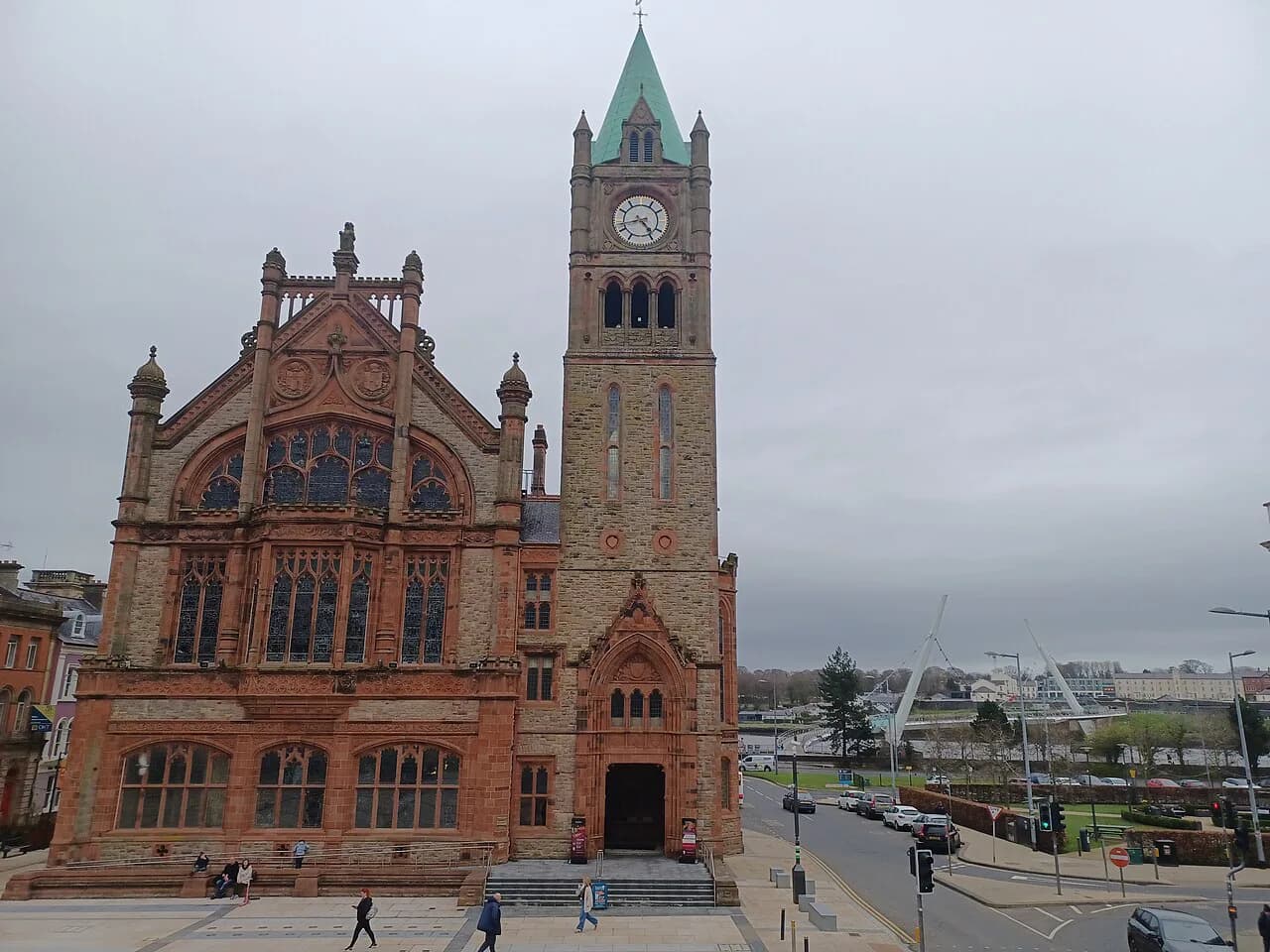
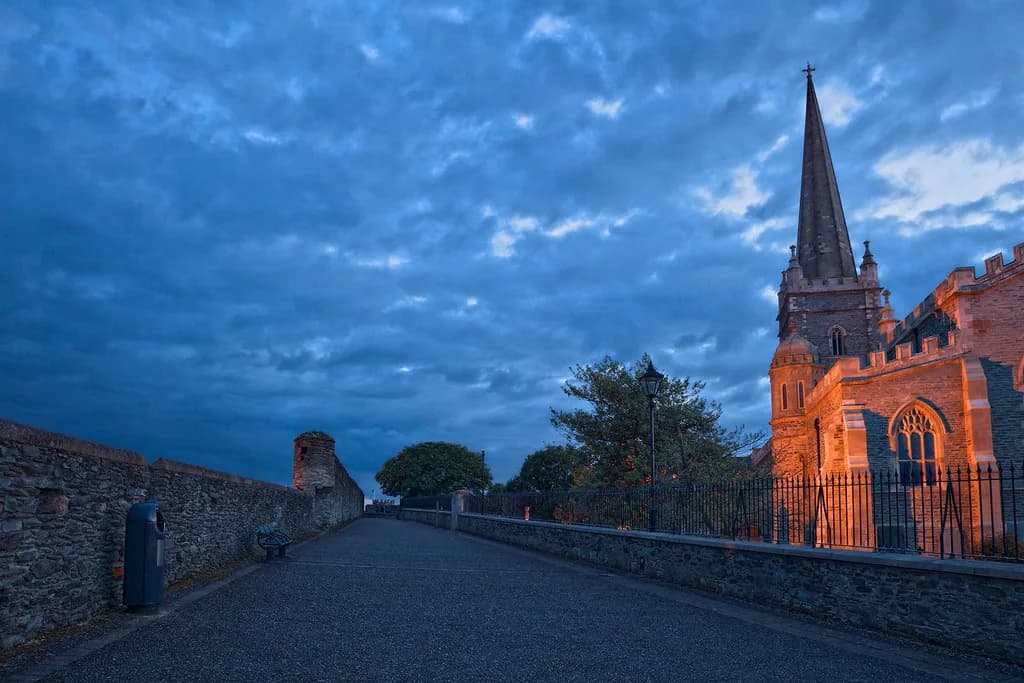
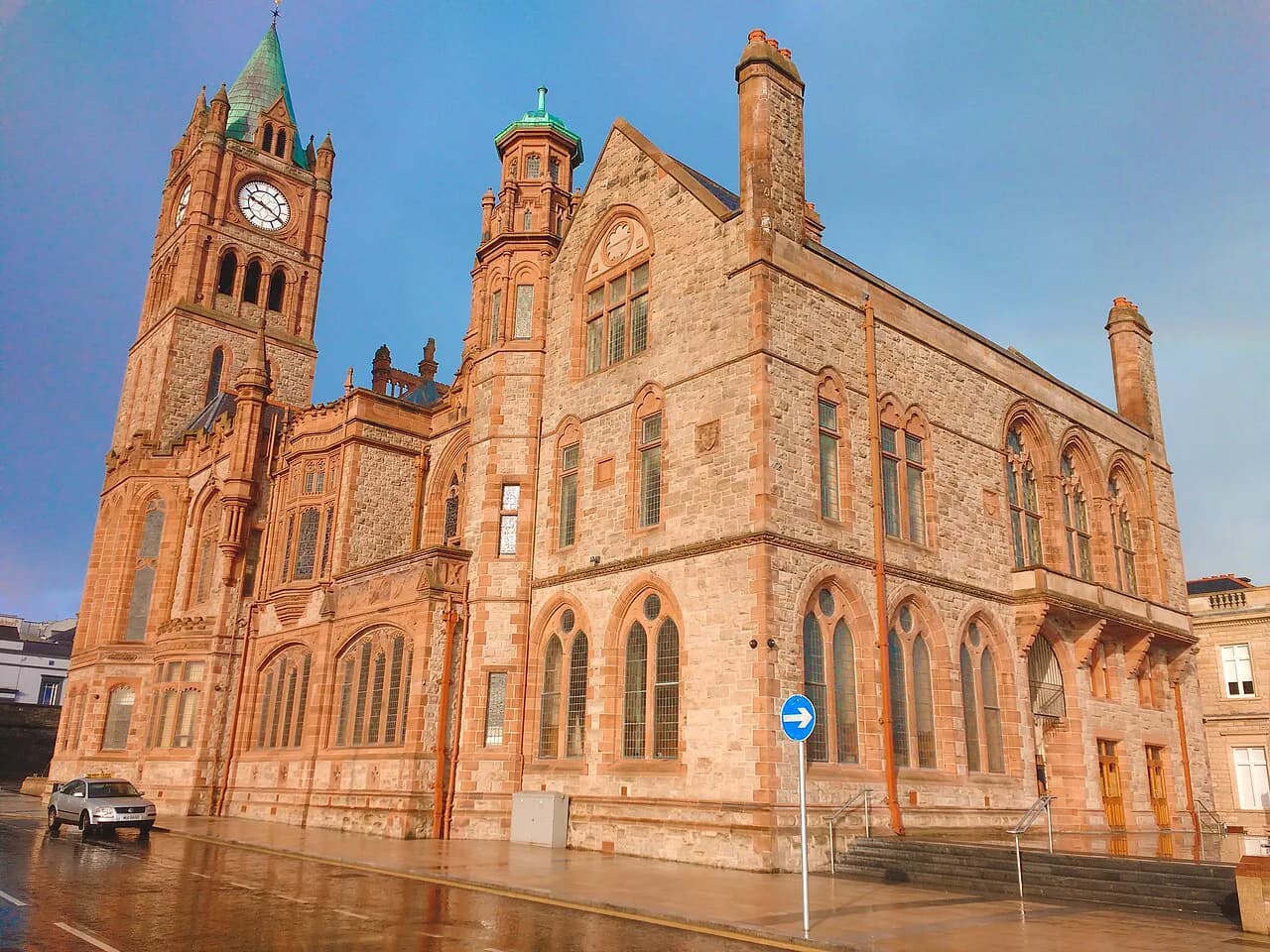
The second layer is Victorian confidence, visible in the civic buildings around the Diamond and the commercial streets leading off it. Architectural buildings in the city, as listed in visitor guides, include the Guildhall, St Eugene's Cathedral, St Augustine's Church and the Apprentice Boys Memorial Hall.
If you want the historical background behind the street pattern before you walk it, the story of the city's plantation and later growth is covered in our guide to the history of Derry.
The walls and the plantation street plan
Start by understanding the shape. The walls form a closed loop around the historic centre, and the four original streets converge on the central square known as the Diamond. Because the plan was laid out rather than accumulated, the geometry is legible even from street level, and a single lap of the walls gives you the whole outline before you look at individual buildings.
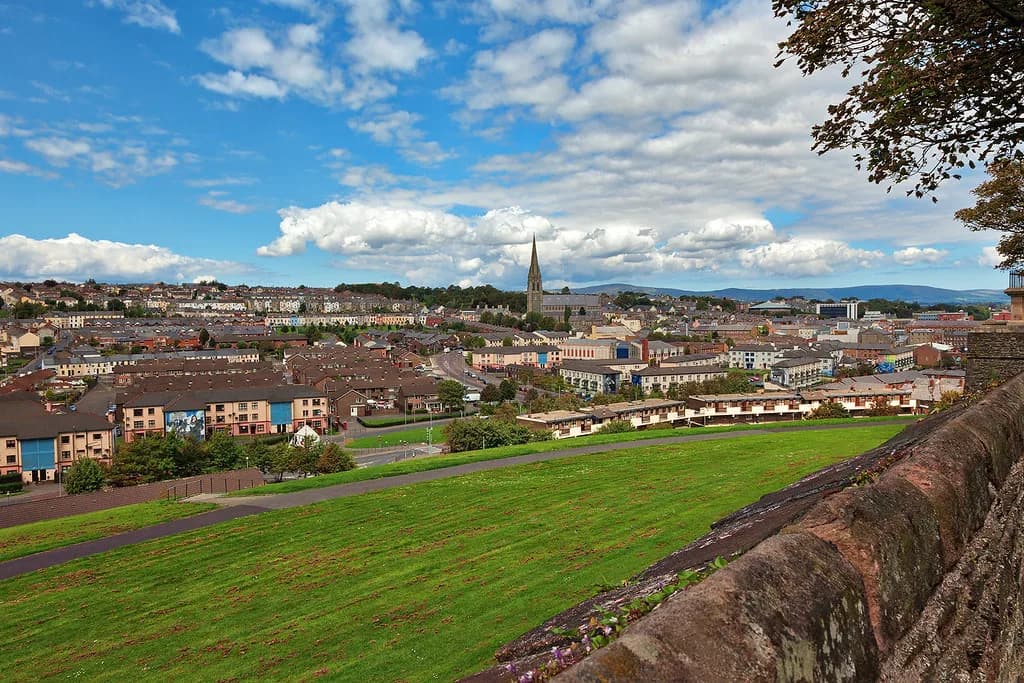
Walking the circuit takes under an hour at an unhurried pace, with pauses for the views over the Bogside and the river. The surface is partly uneven and there are steps at some access points, so anyone with mobility difficulties should plan entry and exit points rather than assume a continuous level route.
If you would rather have the walls and the streets explained as you go, a guided Derry walking tour covers the ground in a fixed time and saves you navigating the one-way system of lanes inside the grid.
Victorian civic architecture around the Diamond
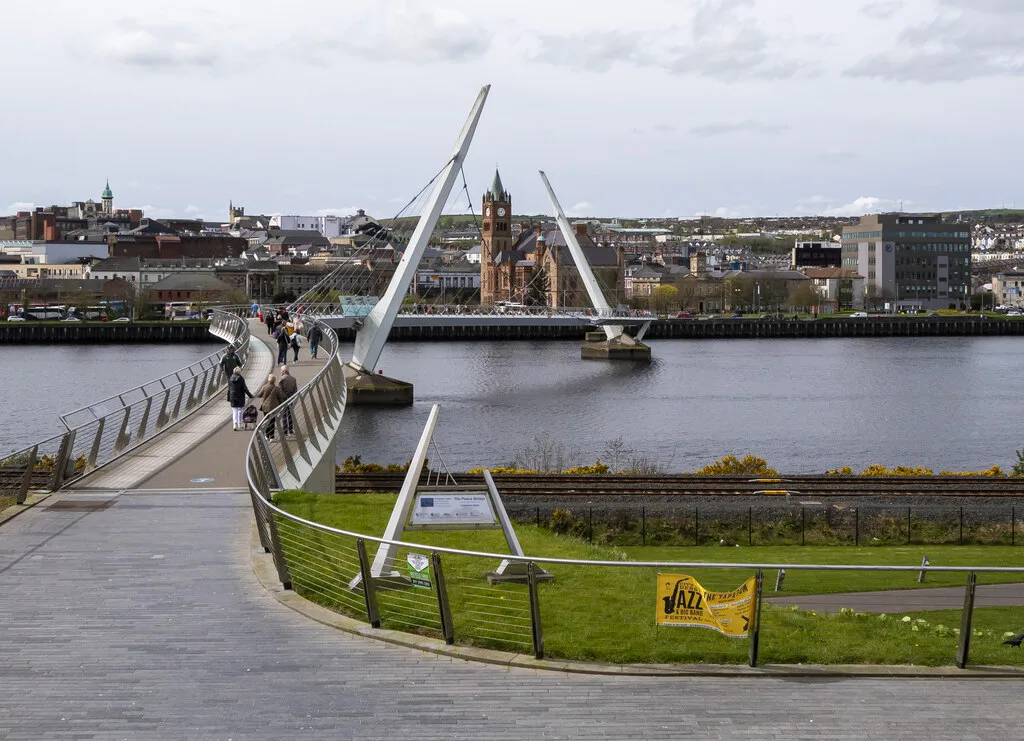
The Guildhall is the city's most prominent piece of Victorian civic building, sitting at the edge of the Diamond, where the old grid meets the river. Treat it as the pivot of the walk: the walls, the Diamond and the Waterside are all within a short distance of its doors.
Its role in the city's public life is part of what makes it worth the detour, and it pairs naturally with the museums and heritage sites covered in our guide to museums in Derry if you want an indoor stop in the same area.
Access depends on the building's civic use rather than a visitor attraction timetable, so check the day's arrangements before you build a morning around it. The same caution applies to the halls and churches nearby, which open around their own events.
St Eugene's Cathedral on the west bank
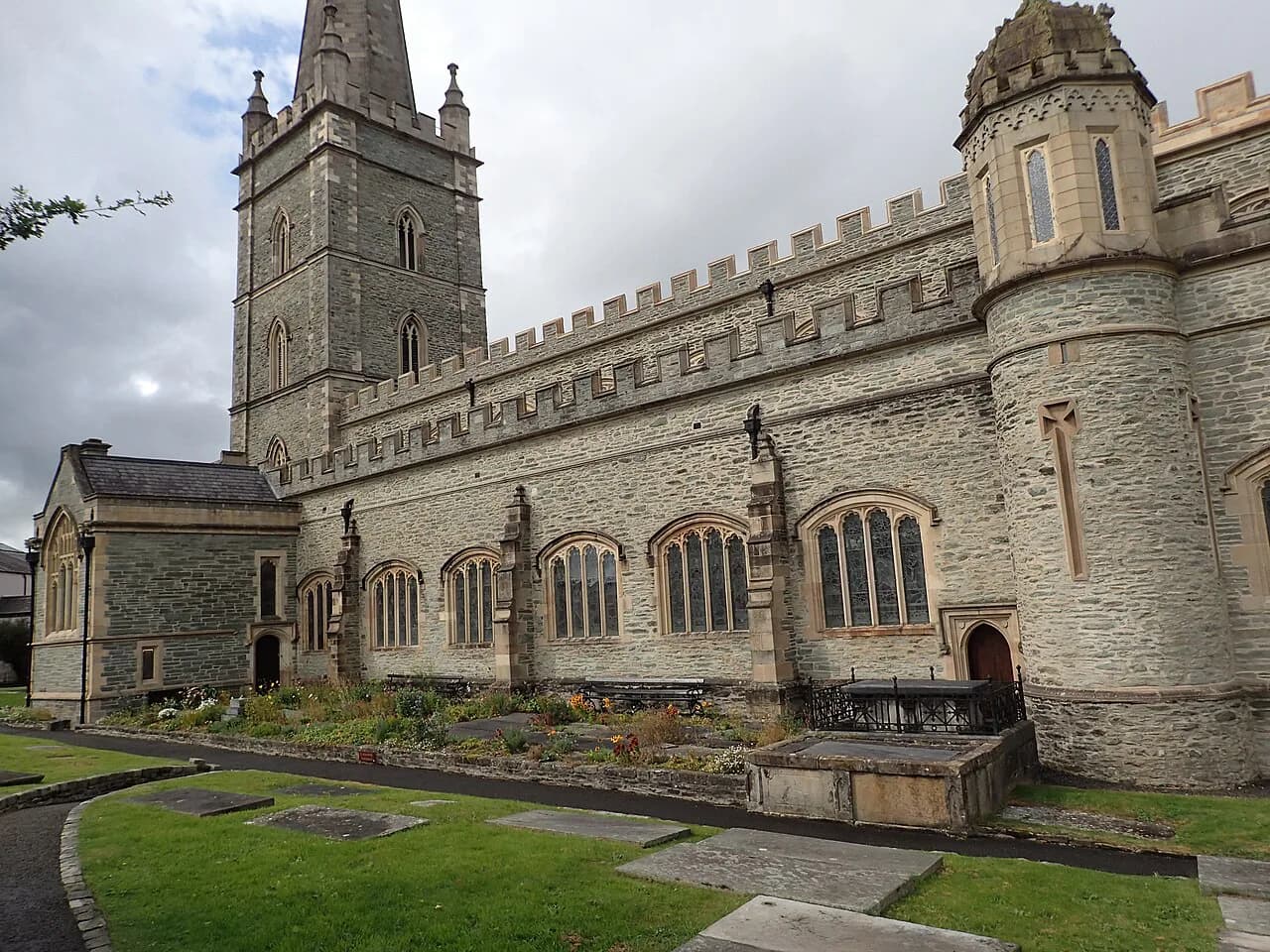
St Eugene's Cathedral sits on the west side of the city and is one of the named architectural buildings in Derry. It is a working cathedral, which shapes how you should plan a look inside: services take priority over sightseeing, and quiet, respectful timing matters more than a ticketed slot.
The cathedral also has a design pedigree worth knowing: it appears in the ecclesiastical portfolio of Tracey Architects, the Derry practice whose project list includes churches, conservation work and public buildings across the north-west.
From the walls and the Diamond it is a short walk across the river, which makes it the natural second half of an architecture route rather than a separate trip. Allow time to stand back and take in the setting as well as the facade.
St Augustine's Church and the Apprentice Boys Memorial Hall
Two further stops round out the named set of architectural buildings in the city: St Augustine's Church and the Apprentice Boys Memorial Hall. Both are working buildings with their own patterns of use, so they are best treated as exterior stops on the walk, with an interior look only when the doors are open to the public.
Placing them in the route is straightforward because the historic centre is small: you can pass them between the walls and the river without adding a bus journey. If you are building a fuller day, our round-up of things to do in Derry helps you slot them alongside the museums and galleries.
Ecclesiastical work by Derry architects
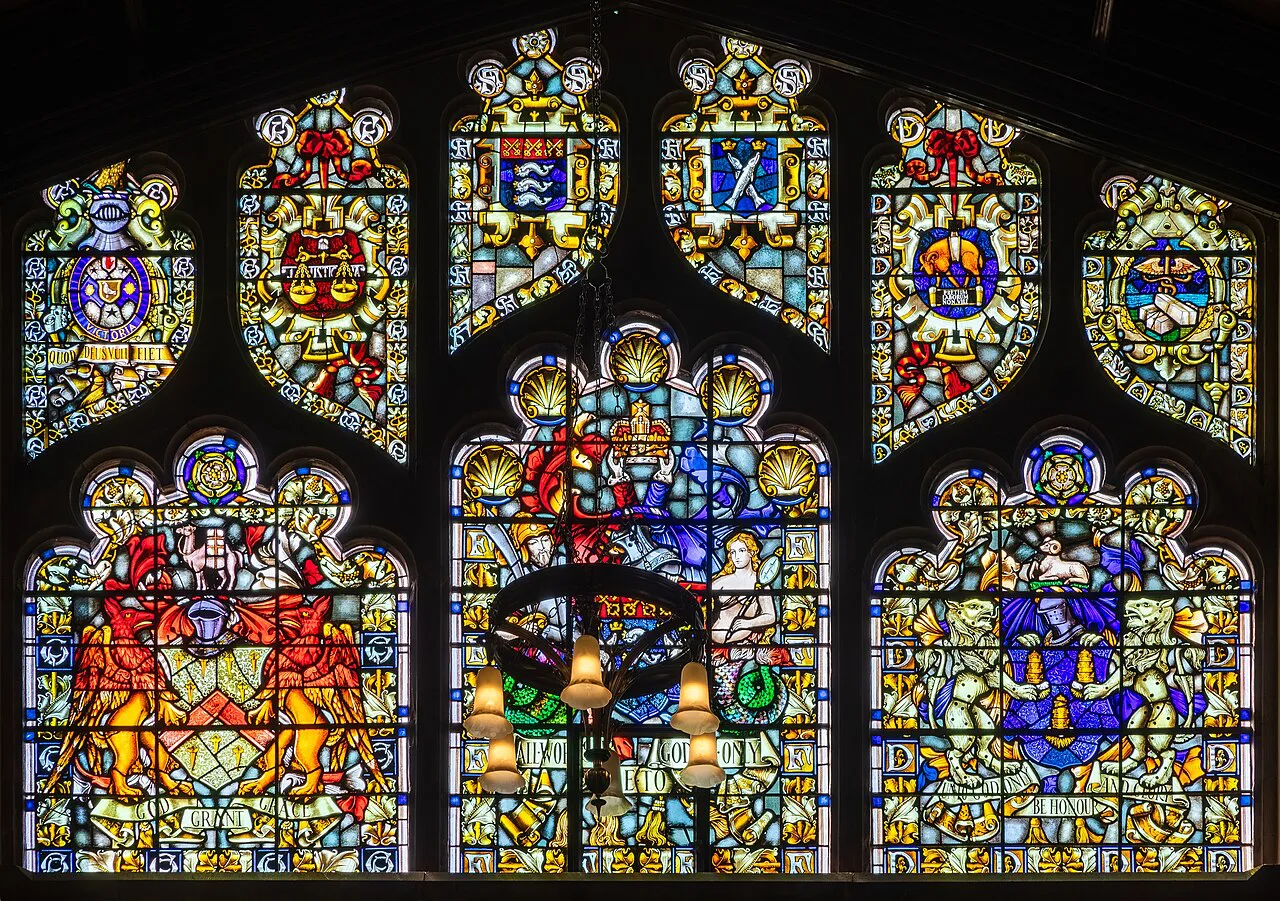
Following the city's church architecture leads outward as well as inward. Tracey Architects lists St Eugene's Cathedral and St Patrick's Purgatory on Lough Derg among its ecclesiastical projects, alongside a run of parish churches in County Derry, Tyrone and Fermanagh.
Lough Derg is a pilgrimage site rather than a city stop, so it belongs in a separate trip. Reading the project list is still useful before you walk the centre, because it shows how much of the region's church building was designed from offices in Derry itself.
For contrast in how another city handled its religious and civic architecture, our Cambridge architecture guide looks at a comparable relationship between chapel, college and street.
Conservation and refurbishment in the city centre
Architecture in Derry is not only about new buildings. The same practice's conservation portfolio includes a refurbishment at Castle Gate in Derry and work on the Northern Counties building, both of which show how the historic fabric is being adapted rather than replaced.
That matters for a visitor because the centre's character comes as much from reused structures as from landmark set pieces. Look at the upper storeys and rooflines as you walk the grid, where later work on older buildings is usually easiest to spot from the street.
If you want to compare how a bigger Victorian commercial city handled the same challenge of adapting old stock, our Leeds architecture guide covers Victorian arcades and the warehouse-to-gallery conversion habit.
Local practices working in the county are listed in regional trade directories, which is a useful way to see the range of conservation and domestic work going on beyond the landmark buildings.
A practical walking route through the centre
An efficient order is: begin on the walls for the overview, descend to the Diamond, take in the Guildhall, cross to the west bank for St Eugene's Cathedral, then return through the centre past St Augustine's Church and the Apprentice Boys Memorial Hall. That sequence keeps the walking short and puts the two cathedrals at opposite ends of the day.
Budget half a day for the exteriors and the wall circuit, and add time only for interiors that are actually open when you arrive. The compact centre means the route is easy to cut short if weather turns, which matters in a city where rain arrives quickly off the river.
If you want to add indoor stops, the city's art galleries in Derry give you a dry alternative close to the centre, and our Derry Attractions: 8 Visitor Guides hub pulls the individual attraction guides together in one place.
Trade-offs: steps, walls and which interiors earn the detour
The honest trade-off is that Derry's best architecture is largely seen from outside. The walls give you the plan and the views, the Guildhall gives you the civic set piece, and the cathedrals give you the ecclesiastical thread, but access to interiors is governed by services, events and civic use.
Steps at wall access points and the exposed, windy character of the circuit are the other practical constraint. Wear something that copes with rain, and treat the walls as the flexible part of the day that you move earlier or later depending on the sky.
Nearby: projects outside the city
Tracey Architects' public buildings list extends beyond Derry to the Ulster History Park, the Ardhowen Theatre, Milford District Offices and Westport Civic Offices, which makes a short list of reasons to use the city as a base for a wider northern trip.
None of these are substitutes for the walled centre, so keep them as optional additions rather than the main event. Check each site's own arrangements for opening before making a journey, since these are civic and visitor facilities with their own timetables.
Where to read more before you go
For the city's indoor heritage, the museums guide covers the venues that explain the walls, the siege and the plantation in more depth than a street walk can. Pair it with the architecture route so that context and buildings reinforce each other.
Our Derry guide collects the individual attraction pages if you want to plan around a single building, and the Derry City Walls piece in the walking material covers the circuit in its own right.
Plan Your Visit
Read Derry by period: start with the walls for the plantation plan, move to the Diamond for the Victorian civic layer, then cross the river for the cathedral that anchors the west bank. That order explains the city faster than any single building does.
Check service and event arrangements for the working churches and civic halls before you travel, since those determine what you can see inside. Everything else in the centre can be walked without booking.
Explore more Derry guides
Frequently Asked Questions
What is Derry's architecture known for?
It is known for a complete circuit of walls enclosing a plantation-era street grid, with the four main streets converging on the central Diamond. Later Victorian civic building around that square, plus cathedrals on both banks of the river, gives the centre a compact set of layers you can read on foot in half a day.
How long does an architecture walk in Derry take?
Allow about half a day for the wall circuit and the main exterior stops: the Guildhall, St Eugene's Cathedral, St Augustine's Church and the Apprentice Boys Memorial Hall. Add time only for interiors that are open on the day, since the churches and halls follow their own service and event patterns.
Which named buildings should I see first?
Start with the walls, because they explain the layout of everything else, then walk to the Diamond for the Guildhall. Cross the river for St Eugene's Cathedral afterwards, and pick up St Augustine's Church and the Apprentice Boys Memorial Hall on the way back through the centre.
Can I go inside the cathedrals and churches?
These are working buildings, so access depends on services and events rather than a visitor timetable. Plan to see the exteriors as part of the walk and treat an interior visit as a bonus when the doors are open. Check the day's arrangements with each building before building a morning around it.
Are there steps on the city walls?
Yes, some wall access points involve steps, and the surface of the circuit is partly uneven. If you have mobility difficulties, choose your entry and exit points in advance, as the full loop is not a continuous level route.
Which Derry architects designed local churches?
Tracey Architects, a Derry-based practice, lists St Eugene's Cathedral and St Patrick's Purgatory on Lough Derg among its ecclesiastical projects, along with parish churches across County Derry, Tyrone and Fermanagh. Its portfolio also covers conservation and refurbishment work in the city centre.
What else can I see from the same practice's projects?
The practice's public buildings include the Ulster History Park, the Ardhowen Theatre, Milford District Offices and Westport Civic Offices. These sit outside the historic centre, so treat them as optional additions to a wider northern trip and check each site's own opening arrangements.
Where can I read more about Derry's history before visiting?
Our history of Derry guide covers the plantation and later growth behind the street plan, and the museums guide explains the venues that interpret the walls and the siege. Reading either before you walk the circuit makes the geometry of the centre much easier to follow.
Sources
Notes for your next city break
Optional updates to our UK city guides.
You might also like
Continue reading
More guides you'll find useful