
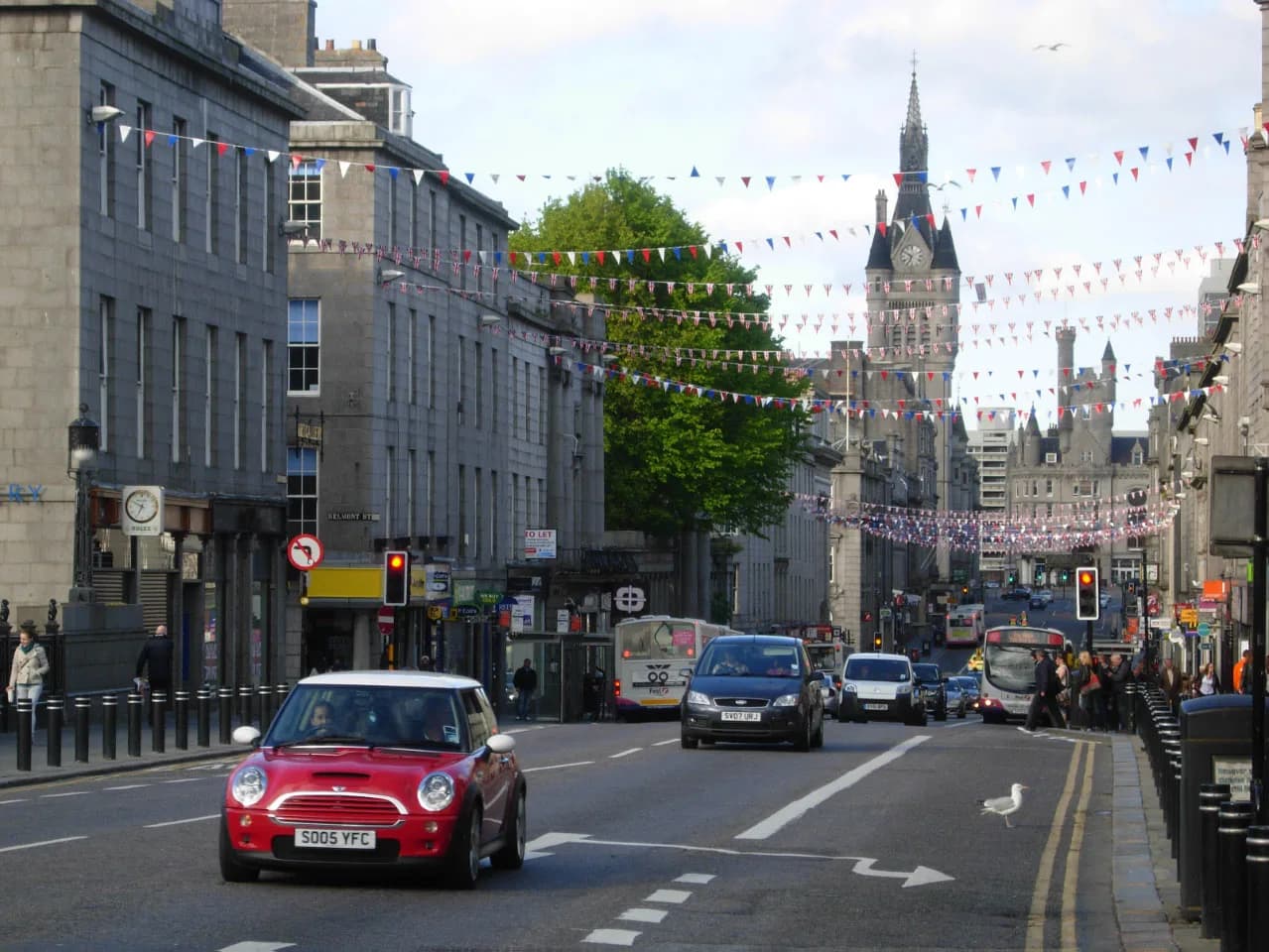
Aberdeen City Centre: A Practical Guide to the Granite City's Heart

Aberdeen city centre is the tight, granite-built core of Scotland's third-largest city, and it rewards a day of walking rather than a taxi. Union Street and the Castlegate form its two main spines, with Marischal College, two free museums and a self-guided sculpture trail all within easy reach of each other. Base yourself here if you want rail links, shops and museums on foot; look to Old Aberdeen or the beach if you want atmosphere over convenience, and browse a guide to the museums in Aberdeen if you plan to compare the free collections across the city.
Aberdeen City Centre in brief: what the district is and who it suits
The centre is a working Scottish city core rather than a preserved old town: offices, shops, council buildings and museums share the same few streets. That makes it practical rather than picturesque in the postcard sense, and it suits travellers who like their sightseeing interleaved with coffee, shopping and a train station at the end of the road.
It is a strong fit for a short break, for anyone arriving by train, and for budget-conscious visitors, since several of the headline sights cost nothing. It is a weaker fit for people who want cobbled lanes and ancient streets outside the door, because that mood sits in Old Aberdeen, a separate district around the university. Self-catering families and coastal walkers may prefer to base themselves nearer the beach.
One source of confusion to clear up early: Aberdeen's centre is not the same as the old fishing village of Footdee at the harbour mouth, nor the residential streets of Ferryhill just south of the centre.
Why 'Granite City' shapes the look of the centre
Aberdeen's nickname comes from the grey stone that gives its buildings their distinctive sparkle in low sun and their solid, slightly austere look in rain. The city's granite architecture is the reason visitors stop in the street to photograph façades that elsewhere would be ordinary offices.
Practically, that means two things for a visit. First, the architecture is the sight: look up at spires, carved façades and corner towers as you walk rather than expecting a single grand set piece. Second, the stone reflects light in a way that makes even a grey afternoon photogenic, so keep a camera handy on Union Street and around Marischal College.
Marischal College and the Robert the Bruce statue
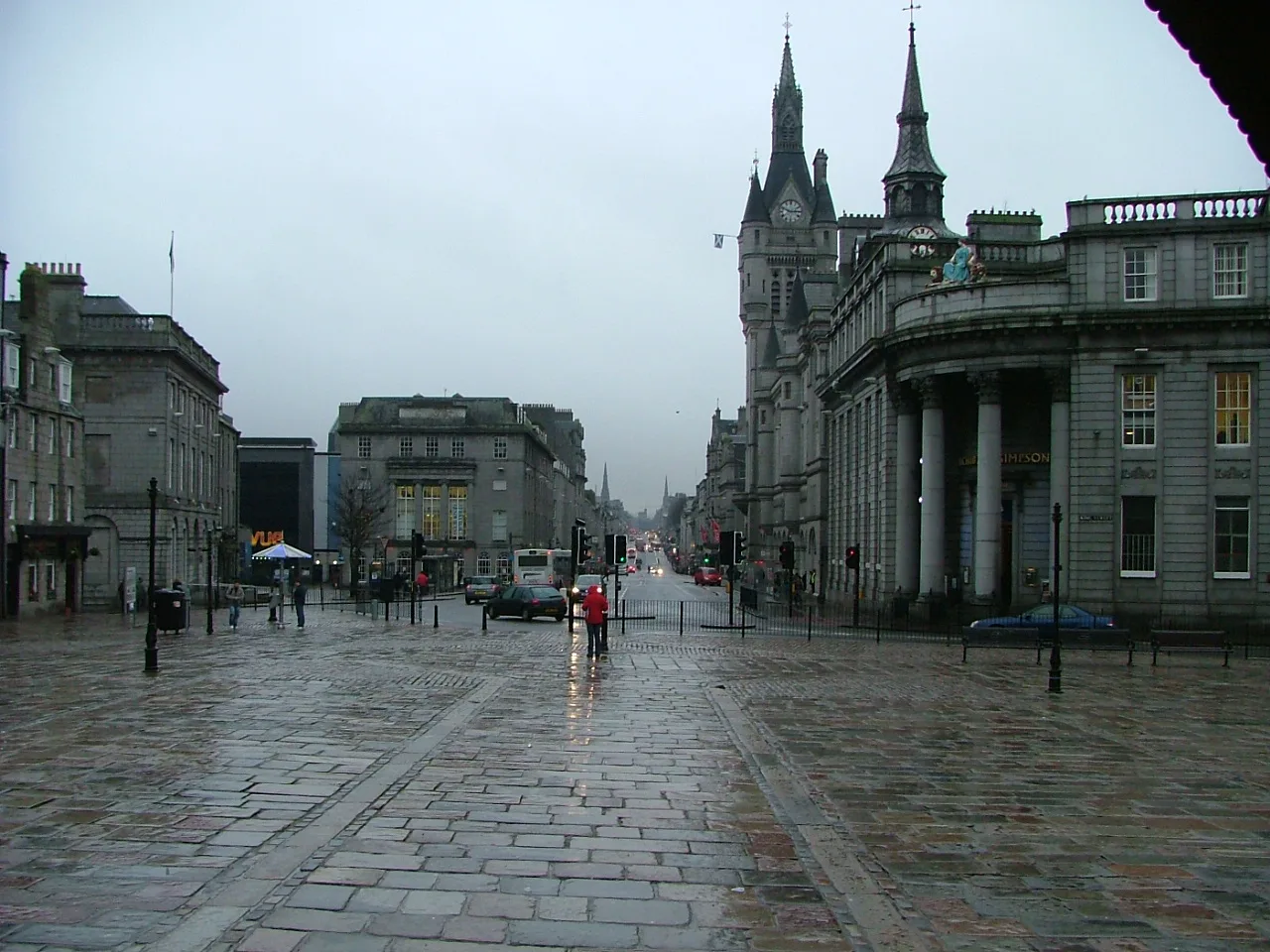
Marischal College is the centre's most photographed building, a soaring granite façade with spires that was once part of the University of Aberdeen and now houses Aberdeen City Council. The masonry is the draw, and the building is admired from the street rather than toured inside.
Just outside the quadrangle stands a large bronze statue of Robert the Bruce, an easy photo stop that pairs naturally with a walk along Union Street. Allow a few minutes here rather than an hour, then move on towards the Castlegate and the museums.
Union Street and the Castlegate: the main spines of the centre
Union Street is the centre's long commercial spine, lined with shops and grand granite frontages; the Castlegate is the older civic square at its eastern end. Most of what a visitor wants in the centre sits within a short walk of one or the other, which is why a car is a liability here rather than an asset.
Treat the two as your orientation lines. If you learn where Union Street meets the Castlegate, you can find the Art Gallery, the Maritime Museum on Shiprow and Marischal College without a map in hand.
Aberdeen Art Gallery: 18 galleries and the Sculpture Court, free to enter
Aberdeen Art Gallery is the centre's big cultural draw, a light interior with a grand Sculpture Court leading into 18 galleries spanning seven centuries of art and design. The collection includes Scottish Colourists and Joan Eardley alongside Barbara Hepworth, Francis Bacon and Tracey Emin, plus a rare portrait of a young Queen Victoria.
VisitScotland lists it among the free things to do in Aberdeen, so it is the obvious choice when you want a substantial museum without spending on tickets. Give it a couple of hours if you like painting and decorative arts, or an hour for the Sculpture Court and a couple of rooms. If you want to weigh it against the city's other free collections before committing the time, our guide to museums in Aberdeen compares them.
Aberdeen Maritime Museum on Shiprow: the harbour, fishing and North Sea oil story
The Maritime Museum on Shiprow sits above the harbour and tells how the sea made the city, from fishing and trade through shipbuilding to the discovery of North Sea oil in 1970 and today's energy industry. The centrepiece is a nine-metre model of the Murchison offshore platform, with deep-sea diving suits and objects raised from the seabed alongside.
It sits on the same free-attractions list as the Art Gallery, and the upper floors give you a view over working ships entering and leaving the port, which makes it a good wet-weather stop. Pair it with a walk along the harbour edge, and leave time to read the oil-industry displays properly if that history interests you.

The Tolbooth Museum: closed for renovation, expected to reopen in spring 2027
The Tolbooth Museum is a small 17th-century former prison where original gaol cells held everyone from petty thieves to Jacobite rebels awaiting trial, execution or transportation. It is the centre's darkest and quirkiest sight, and exactly the kind of place that rewards half an hour of curiosity.
VisitScotland reports that it is currently closed to the public for renovations and expected to reopen in spring 2027. Do not build an itinerary around it until that reopening is confirmed on the VisitScotland listing.
The Aberdeen Sculpture & Curios Trail: 20 statues and public artworks on foot
VisitScotland publishes a self-guided Sculpture & Curios Trail covering 20 statues and public artworks around the centre, which turns an ordinary walk into a scavenger hunt. Highlights include The Poised, a gleaming leopard above Marischal Square, The Mannie, a bronze fisherman gazing towards the harbour, and the William Wallace statue opposite His Majesty's Theatre.
It costs nothing and fills a spare hour between museum visits, and it suits families who need a goal to keep children walking. Plan it as a loop through the centre rather than a separate outing, and pick the statues nearest your route instead of chasing all 20.
Walking from the centre to Old Aberdeen: St Machar's Cathedral and King's College Chapel
Old Aberdeen is a distinct historic district around the university, reached on foot from the centre by heading north past the shops towards the River Don. It feels markedly older: granite houses, cottages and cobbled lanes replace the commercial bustle, which is why some visitors prefer to stay here instead.
St Machar's Cathedral has overlooked the River Don since the 12th century, and its 500-year-old heraldic ceiling carries 48 coats of arms of kings, nobles and church figures. King's College Chapel, completed around 1500, has a crown tower, carved woodwork that survived the Reformation and stained glass from the 19th and 20th centuries.
Both appear on VisitScotland's free-attractions list and sit within the same walk, along with the Chanonry, the Sir Duncan Rice Library and Seaton Park. Continue towards the medieval Brig o' Balgownie if you have the legs for it, and allow a half-day rather than an afternoon dash.
Aberdeen Beach and Footdee: how far from the centre and whether to walk it
Aberdeen Beach is a sweeping stretch of sand and promenade on the North Sea edge of the city, good for a bracing walk, cycling or watching surfers. Bottlenose dolphins are sometimes seen around the harbour mouth, which is reason enough to linger and look.
Hazlehead Park, with woodland trails, gardens and the Piper Alpha Memorial in its rose garden, is the other free green escape, though it lies away from the seafront and needs its own trip. Choose the beach for a coastal mood and Hazlehead for trees and a quiet hour.
Where to stay: city centre versus Old Aberdeen and the beach
Stay in the centre if your priorities are the Art Gallery, the Maritime Museum, Union Street shopping and a train home without a taxi. It is the practical base for a two-night city break and for anyone arriving late or leaving early.
Choose Old Aberdeen for university atmosphere, with the cathedral and chapel on the doorstep and a quieter evening.
Choose the beach side if sea air and promenade walks matter more than shops, accepting a longer walk or a short bus or taxi ride into the centre. Ferryhill, just south of the centre, is another option for those who want to be close but not in the thick of it.

Where to eat and drink in the centre: what to look for and what to book
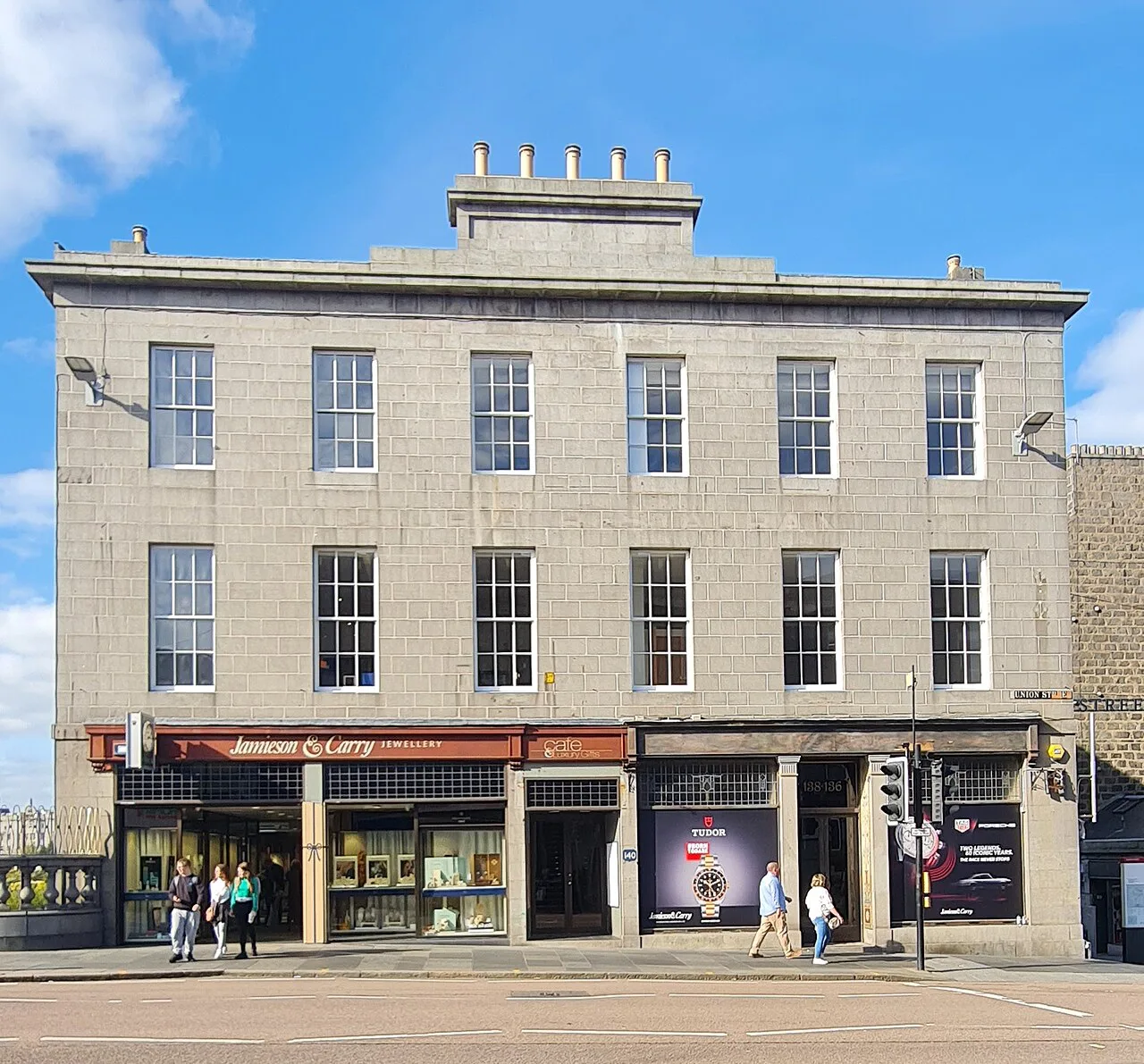
The centre's eating is built around its shopping streets, with the densest cluster of options along and around Union Street and towards the Castlegate. Look for independent cafés and lunch spots on the side streets off the main drag, where you will be away from the chain-heavy frontage. Many visitórios pair a meal with a nearby collection, so it helps to know which museums in Aberdeen are closest to the centre before you book.
Book ahead for dinner on Friday and Saturday evenings and around any big event at His Majesty's Theatre, when the surrounding streets fill quickly. Lunch is easier to improvise, and museum cafés are handy for a quick stop between the Art Gallery and the Maritime Museum.
Getting there and around: rail, bus and walking times across the centre
Aberdeen's rail and bus stations sit in or beside the centre, so you can step off a train and be among the granite streets within minutes. From there, the Art Gallery, Marischal College, the Castlegate and Shiprow are all walkable, and walking is genuinely the fastest way around the core.
Leave the car behind for centre sightseeing: parking in a dense city core is a distraction, and the one trip worth mechanised transport is out to Old Aberdeen or the beach if your legs are tired. For comparison with the city's other districts, the area guides set out the alternatives.
Who the city centre suits, and who should base themselves elsewhere
The centre suits first-time visitors, rail arrivals, museum-goers and anyone on a tight budget, because the two headline museums and the sculpture trail cost nothing. It also suits short breaks where you want everything within a walk and no transport planning.
It suits less well if you want an old-town setting, in which case Old Aberdeen is the better base, or if your main aim is coastal walking, which points you towards the beach end of the city.
Practical trade-offs: weather, hills, steps and seasonal hours
Aberdeen's weather is coastal and changeable, so plan museums for the wet hours and the sculpture trail or the beach for the dry ones. The centre is compact but not flat, with slopes between Union Street and the harbour, so comfortable shoes matter more than a map.
Daylight is short in the north-east in winter, which makes a tighter, museum-led day sensible between November and February, and the Tolbooth closure runs into 2027. The VisitScotland free-attractions listing is the place to confirm current status before you set out.
Plan Your Visit
Build your Aberdeen city centre day around two free anchors, the Art Gallery and the Maritime Museum, and fill the gaps with Marischal College, the Castlegate and the sculpture trail. Add Old Aberdeen as a half-day walk if the cathedral and chapel appeal, and save the beach for a dry afternoon. If you would rather compare collections before choosing, our guide to the museums in Aberdeen covers the rest.
Book dinner for weekend evenings, skip the car for the centre, and confirm opening times before travelling out to Old Aberdeen or the seafront. Another district such as Torry, across the harbour, is worth a look if you want a different side of the city.
Explore more Aberdeen guides
Frequently Asked Questions
What is Aberdeen city centre known for?
It is known for its granite architecture, which earned Aberdeen the nickname the Granite City, and for a compact core where Marischal College, Union Street, the Castlegate and two free museums sit within walking distance of each other. The city's granite streets and buildings are its defining sight.
What can you do for free in Aberdeen city centre?
Aberdeen Art Gallery, with its Sculpture Court and 18 galleries, and the Aberdeen Maritime Museum on Shiprow both appear on VisitScotland's list of free things to do in Aberdeen. The self-guided Sculpture & Curios Trail, covering 20 statues and public artworks, also costs nothing and can be walked through the centre.
Is the Tolbooth Museum open?
VisitScotland reports that the Tolbooth Museum is closed to the public for renovations and is expected to reopen in spring 2027. Check the VisitScotland listing before planning a visit around it, and treat the reopening as an expectation rather than a fixed date.
Can you walk from Aberdeen city centre to Old Aberdeen?
Yes. Old Aberdeen is a separate historic district reached on foot from the centre by heading north towards the River Don. The walk brings you to St Machar's Cathedral, King's College Chapel, the Chanonry and the Sir Duncan Rice Library, so allow a half-day rather than a quick dash.
Where should you stay in Aberdeen for a city break?
Stay in the centre for the Art Gallery, the Maritime Museum, Union Street shopping and easy rail access. Old Aberdeen suits anyone who wants university atmosphere and the cathedral on the doorstep, while the beach side is better for promenade walks and sea air than for shops.
Is Aberdeen city centre walkable?
Yes. The core is compact and the main sights, including Marischal College, the Art Gallery, Shiprow and the Castlegate, are all reachable on foot from the rail and bus stations. The centre is not flat, though, with slopes between Union Street and the harbour, so wear comfortable shoes.
What is Aberdeen nicknamed?
Aberdeen is known as the Granite City, a name that comes from the grey stone used across its buildings. The granite gives the centre its sparkle in low sun and its solid, slightly austere look in the rain.