Parks in Derry: City Centre Green Spaces and Country Parks
Parks in Derry range from St Columb's Park and Brooke Park near the city centre to Ness Country Park and the Faughan Valley woodlands further out.
On this page
The parks in Derry fall into two useful groups. St Columb's Park and Brooke Park sit within walking distance of the city centre, so they slot easily into a day between the Walls and the museums. Ness Country Park, the Faughan Valley woodlands and the forests of the Sperrins are country outings that need a car or a bus and half a day or more.
This guide names what is actually inside each green space, from the medieval church ruins at St Columb's to the waterfall in the Burntollet glen, and is honest about the terrain. If you are still shaping the trip, our guide to the best things to do in Derry sets the parks alongside the walls, museums and cathedrals.
Parks You Can Walk to From the City Centre
Two of Derry's public parks are close enough to reach on foot from the centre, which makes them the easy option on a short break. St Columb's Park lies on the Limavady Road in the Waterside, across the river from the walled city, while Brooke Park sits on Rosemount Avenue on the city side. Both are free public parks rather than ticketed attractions, so they work well as a breather rather than a planned excursion.
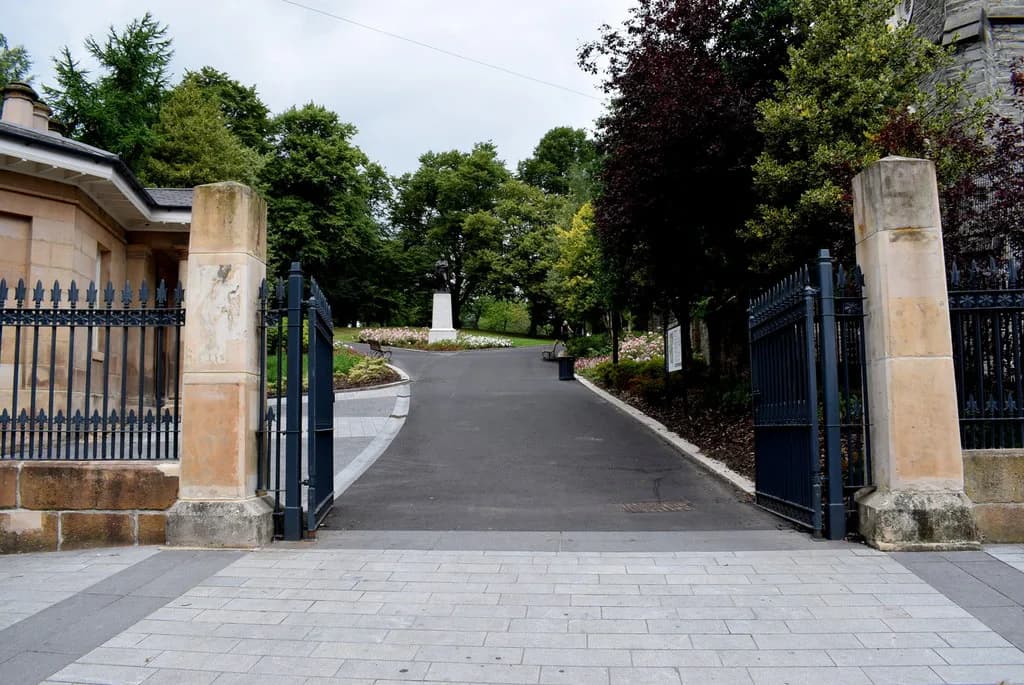
St Columb's Park covers 70 acres and holds more than open grass. Visit Derry lists wooded walkways, the ruins of a medieval church, the 18th-century St Columb's Park House and a walled garden within its grounds, all of which reward a slow loop rather than a quick crossing.
Brooke Park is the smaller and more central of the two, an 8 hectare public park about 1km north-west of the city centre. That distance is a walk of roughly fifteen minutes at an easy pace, which makes it the simplest green space to add to a day centred on the Walls. Because it is a municipal park rather than a country estate, allow under an hour unless you plan to sit a while.
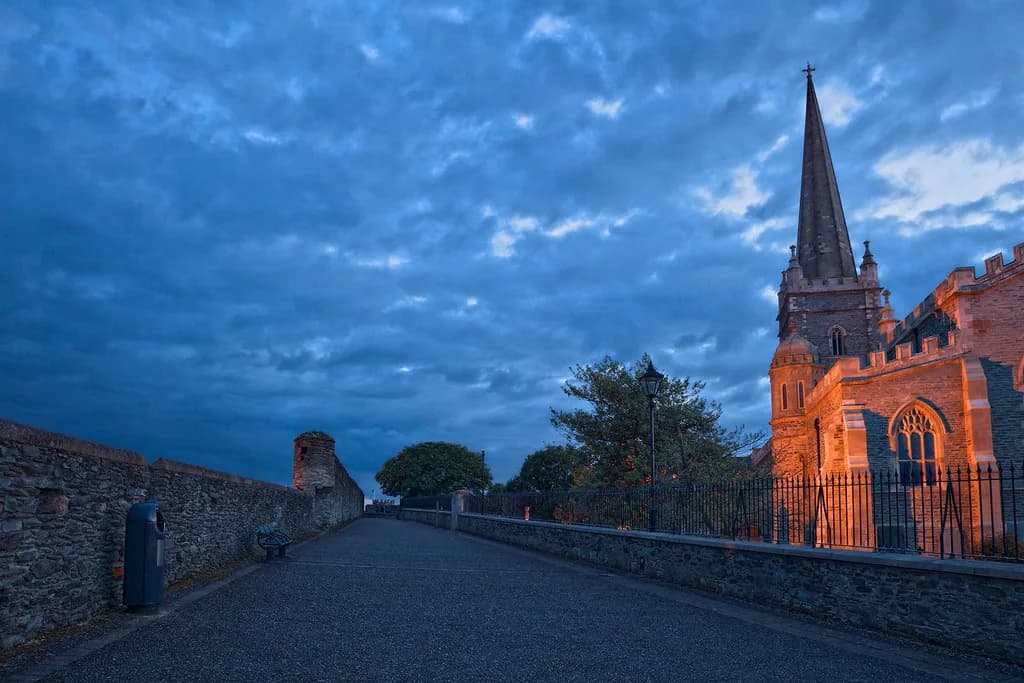
Pick St Columb's Park if you want history and a walled garden with your walk, and Brooke Park if you want the shortest detour from the centre. Neither needs booking, and neither takes a big bite out of a sightseeing day. Pair either with a circuit of the Derry City Walls, which remain the city's defining walk.
Riverside Nature Reserves on the Foyle
Two sites on the edge of the city show how former industrial ground has been turned back into habitat. Bay Road Nature Reserve is a 20 hectare reserve on the banks of the River Foyle, reached off the Culmore Road. Culmore Country Park, off Coney Road, opened to the public in November 2016 after a restoration project at the former landfill site.
These are waterside walks for birds, reed beds and river views rather than formal gardens with benches and bedding. Ground is generally level, but the appeal is quiet and observational, so they suit a slow hour with binoculars more than a family afternoon. Neither site has the draw of a paid attraction, and that is the point.
Reaching them is easier by car or a local bus along the Culmore Road than on foot from the centre. If you are weighing up how to spend a short trip, they fit best as a filler on a day when the weather is kind. Our weekend in Derry itinerary shows where a riverside stroll can sit between bigger sights.
Ness Country Park: The Riverside Glen at Killaloo
Ness Country Park is the strongest half-day park close to Derry. It sits in the steep, wooded glen of the Burntollet River south-east of the city, at Killaloo off the Oughtagh Road, and holds over 7km of riverside walks. A visitor centre, a natural-themed play park, a waterfall and picnic tables give it more substance than a simple woodland loop.
The honest trade-off is the terrain. The paths run through a steep, wooded glen, so expect gradients and uneven ground underfoot, and wear shoes with grip after rain. Families with young children will appreciate the play park and picnic tables, but pushchairs and anyone unsteady on steps should plan a shorter there-and-back route rather than the full circuit.
Because it lies outside the city, Ness needs a car or a bus rather than a stroll from your hotel. Allow two to three hours to walk the riverside paths at a relaxed pace, plus travel time each way. That makes it a morning or an afternoon in its own right, not something to squeeze between a museum and dinner.
Faughan Valley Woodlands and the Woodland Trust
The Faughan Valley Woodlands are the place to go for old trees rather than open lawns. The Woodland Trust has bought small clusters of native woodland in the valley since 2000, and the site holds a significant proportion of ancient woodland, a habitat covering just 0.04% of the Northern Ireland landscape.
Ancient woodland means shade, moss, bluebell woods in season and narrow paths rather than trimmed edges. It suits walkers who like quiet and dislike crowds, and it is a poor fit for anyone wanting facilities, a cafe or a flat promenade. Ground can be muddy and roots make footing uneven, so boots earn their place here.
The valley lies outside the city and needs a car or a taxi in practice. Treat it as a couple of hours of gentle walking, and check the Woodland Trust's own pages for the particular wood you plan to visit, since the trust manages the sites individually.
Forests and Hills Further Out in the Sperrins
Beyond the immediate surroundings of Derry, the Sperrin Mountains hold forest and hill walks for anyone with a full day and a car. Learmount Forest covers 118 hectares on the northern face of the Sperrins, bought by the Forest Service at the end of the Second World War, with a mix of pine and deciduous trees and roads and paths through it. Killeter Forest Trails, at Tullycar Road near Killeter in County Tyrone, offer waymarked walking that changes with the seasons.
Two hill walks give a taste of the range. Bessy Bell rises to 420m, dominating Baronscourt to the west and the Strule Valley to the east, and the summit gives long views across the Sperrins. Moor Lough is an upland lake of about 16.2 hectares in the Sperrin Area of Outstanding Natural Beauty, sitting at roughly 170m and offering a gentler waterside option than a summit climb.
These are exposed upland routes, so weather turns faster than in the city and cloud can cut visibility on the tops. Carry a map, waterproofs and warm layers, and save Bessy Bell for a clear day when the view is the reward. A car is effectively essential, and each walk is a half-day or more once travel is counted.
Across the Border: Inishowen's Wild Ireland and Fort Dunree
County Donegal's Inishowen Peninsula puts two contrasting stops within a short drive of Derry. Wild Ireland is a wildlife sanctuary set in an ancient Celtic rainforest at Burnfoot, on the Inishowen Peninsula a short drive from the city and Greencastle Port. Fort Dunree, at Linsfort near Buncrana, is a historic coastal fort whose Irish name, Dun Fhraoigh, means Fort of the Heather, and which now draws visitors for its setting and wildlife.
Fort Dunree is listed as open from 10:30 to 16:30 for 2026, which is a listing to confirm against the fort's own site before you drive out rather than a guaranteed daily pattern. Wild Ireland keeps its own admission arrangements, so check its site for current admission and booking before setting off.
Both are cross-border trips, so carry the right documents and allow for the drive on top of the visit. They suit a full day out combined with the Inishowen coast rather than a quick stop. If time is tight, choose one and give it the hours it deserves.
Practicalities: Transport, Terrain and Weather
Split your planning by how you are travelling. St Columb's Park and Brooke Park need no vehicle, no booking and no ticket, so they can fill a spare hour whatever the forecast. Ness Country Park, the Faughan Valley, Learmount Forest, Killeter Forest Trails and the Sperrin hills all require a car or a bus and a half-day commitment.
Terrain is the detail that catches people out. The Burntollet glen at Ness is steep and wooded, the Faughan Valley woods are muddy and root-strewn, and the Sperrin routes are exposed upland ground. Sensible shoes, a waterproof layer and a map are the difference between a good day and a wet slog.
None of these parks is a paid attraction with published admission prices, so the cost is travel and your time. Where a site has a visitor centre, its seasonal opening is the thing to check before a long drive. A quick look at the official pages the week you travel settles hours and access.
Where Parks Fit Around a Derry Itinerary
On a two-day break, give the city your first day and use Brooke Park or St Columb's Park as a breather between sights. The Walls, the museums and a proper afternoon tea in Derry fill a day comfortably, and a riverside or wooded walk keeps everyone's energy up. Book tea in advance if it matters to you, then save the country parks for a second day.
With three days or a car, add Ness Country Park as a half-day and stop in the city on the way back. If retail is on your list, keep the shopping in Derry for the afternoon so the morning stays free for the glen. Our guide to Derry Attractions has the cathedral, museum and castle options that fit either schedule.
If you like comparing green spaces across British cities, the parks in Leeds and the parks in Liverpool offer useful points of reference for scale and facilities. Derry's strength is that the best city parks are minutes from the Walls and the country parks are a short drive beyond.
Plan Your Visit
Start with St Columb's Park for history and a walled garden, or Brooke Park for the shortest walk from the centre. Give Ness Country Park a half-day if you have a car, and keep the Sperrin forests and Inishowen for a full day when the forecast is settled.
Check the official pages for the site you choose the week you travel, particularly for visitor centres and the Fort Dunree listing. Wear shoes for uneven ground, carry a waterproof, and treat the upland routes with respect. That is all Derry's parks ask of you.
Frequently Asked Questions
Which parks in Derry are close to the city centre?
St Columb's Park lies on the Limavady Road in the Waterside, across the river from the walled city, and Brooke Park sits about 1km north-west of the centre on Rosemount Avenue. Both are public parks you can reach on foot, so neither needs a car or a booking. Of the two, Brooke Park is the shorter walk.
What can you see at St Columb's Park?
St Columb's Park covers 70 acres and holds wooded walkways, the ruins of a medieval church, the 18th-century St Columb's Park House and a walled garden. It is a public park rather than a ticketed attraction, so it suits a slow loop combining a walk with a look at the historic buildings. Allow an hour or so to see the main features.
Is Brooke Park worth visiting?
Brooke Park is worth it if you want green space without leaving the centre. It is an 8 hectare public park about 1km north-west of the city centre, roughly a fifteen-minute walk from the middle of town. Give it under an hour unless you plan to sit, and pair it with a circuit of the Walls.
Are there forest parks near Derry?
Yes. Learmount Forest covers 118 hectares on the northern face of the Sperrins with a mix of pine and deciduous trees, and Killeter Forest Trails near Killeter in County Tyrone offer waymarked walking that changes with the seasons. Both need a car or a bus and half a day, so plan them as outings rather than strolls.
Do you need a car to reach Ness Country Park?
In practice, yes. Ness Country Park sits at Killaloo in the Burntollet River glen south-east of the city, outside the centre, so a car or a local bus is the realistic way there. Allow two to three hours on the riverside paths plus travel each way. Wear shoes with grip, as the glen is steep and wooded.
Which Derry parks suit families?
Ness Country Park is the best family choice, with a natural-themed play park, picnic tables and more than 7km of riverside walks. St Columb's Park in the Waterside also works well, with open grass, wooded walkways and historic features to keep children interested. Older walkers can tackle the Sperrin hill routes on a clear day.
Sources
Notes for your next city break
Optional updates to our UK city guides.
You might also like

Continue reading
More guides you'll find useful