Stirling Architecture Guide: Buildings and Styles to See
James Stirling was a Glasgow-born architect whose bold modernist buildings shaped British architecture. Here is his work and where you can see it.
On this page
Stirling architecture refers to the work of James Stirling, the Glasgow-born architect who became one of the leading figures of post-war British design, not to the buildings of the Scottish city. His career ran from a first practice in 1955 to the Neue Staatsgalerie in Stuttgart in 1984. The buildings that made his name sit in Leicester and Stuttgart.
What Stirling architecture means
James Frazer Stirling was born in Glasgow in 1924 and moved to Liverpool as a child when his father came to work for the Blue Funnel line. He is a separate figure from the city of Stirling, and searches for one often surface the other.
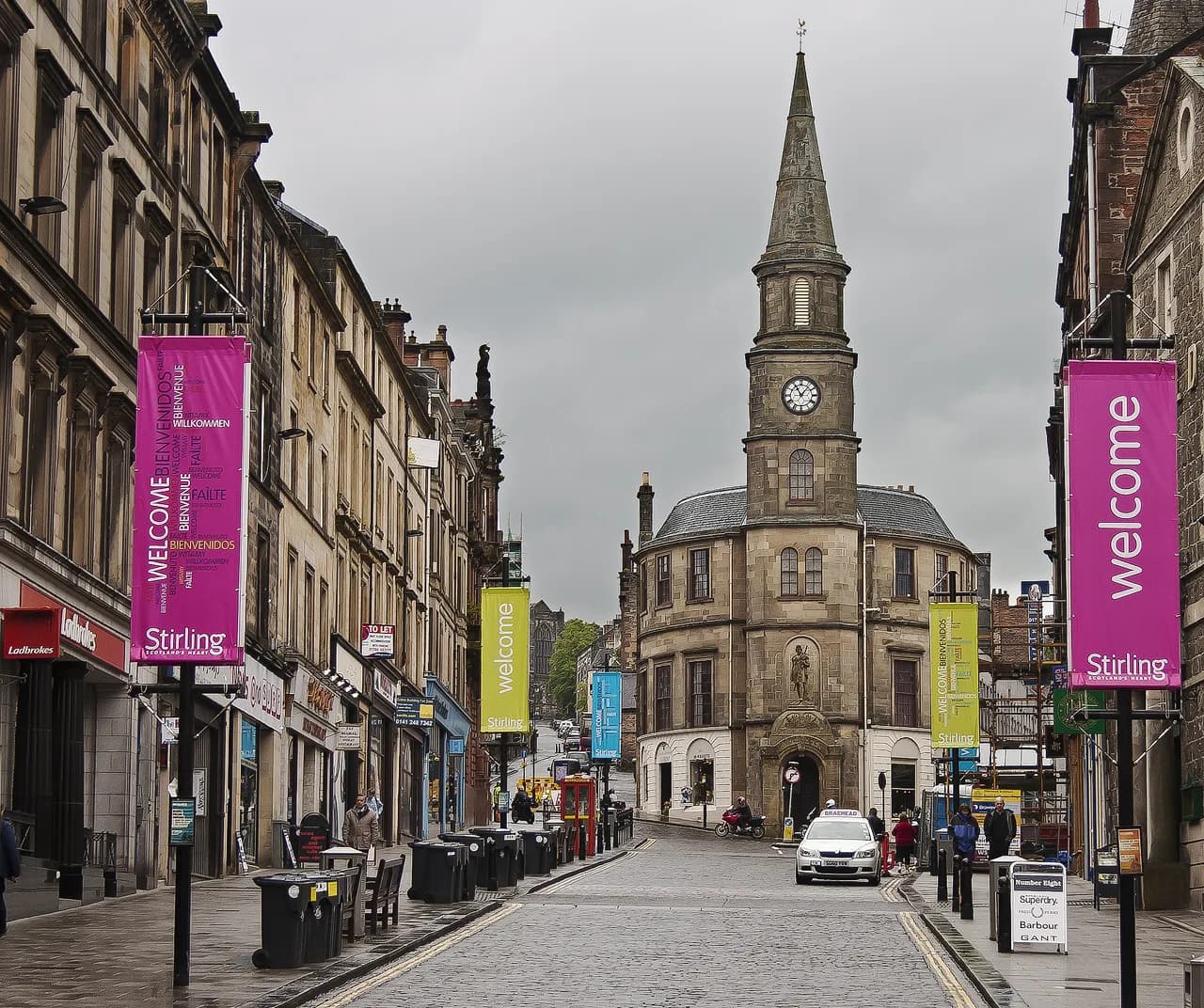
If you are planning a city break in Stirling itself, the architecture you will see is medieval and Victorian rather than modernist. Start with the Old Town and the castle, then work through the local collections. Our guide to the museums in Stirling covers the indoor options, and the castles near Stirling page covers the big set-piece sites around the city.
His career in a few dates
Stirling left school in 1941 with no qualifications and was steered into Liverpool Art School by his headmaster, then volunteered for the army in 1942. He served in the Black Watch and later the Parachute Regiment, was wounded in the fighting around Caen, and returned to Liverpool to study architecture at the university from 1946 to 1950. He moved to London after qualifying.
He set up his own practice in 1955 on the back of a small housing commission in West Ham. A break came in 1959 when he won the job of designing the engineering building at Leicester University. That building, completed in 1963, brought him international attention and established him as a leading modernist.
The Leicester Engineering Building that made his name
The Leicester Engineering Building is the work that turned Stirling from a promising London architect into an international name. Completed in 1963, it drew acclaim for its geometry and its expressive structure. It remains his key British building from the early period.
The building sits on the Leicester University campus, so access is governed by the university rather than a heritage body. Check the university's own visitor pages before travelling, and treat it as a building to look at from outside rather than an exhibition to visit.
The lean years, 1969 to 1977
Between 1969 and 1977 Stirling gained no new commissions, a fallow stretch that followed criticism that his buildings were hard to build and suffered from underfunding. He used the time to develop his teaching role at Yale University. The period is the hinge of his career rather than a footnote to it.
The criticism matters for anyone tracing his buildings today: several were celebrated in design but troubled in construction. Read the buildings as experiments in form rather than as polished set pieces. That framing makes the Leicester building and the Stuttgart gallery easier to understand as a pair.
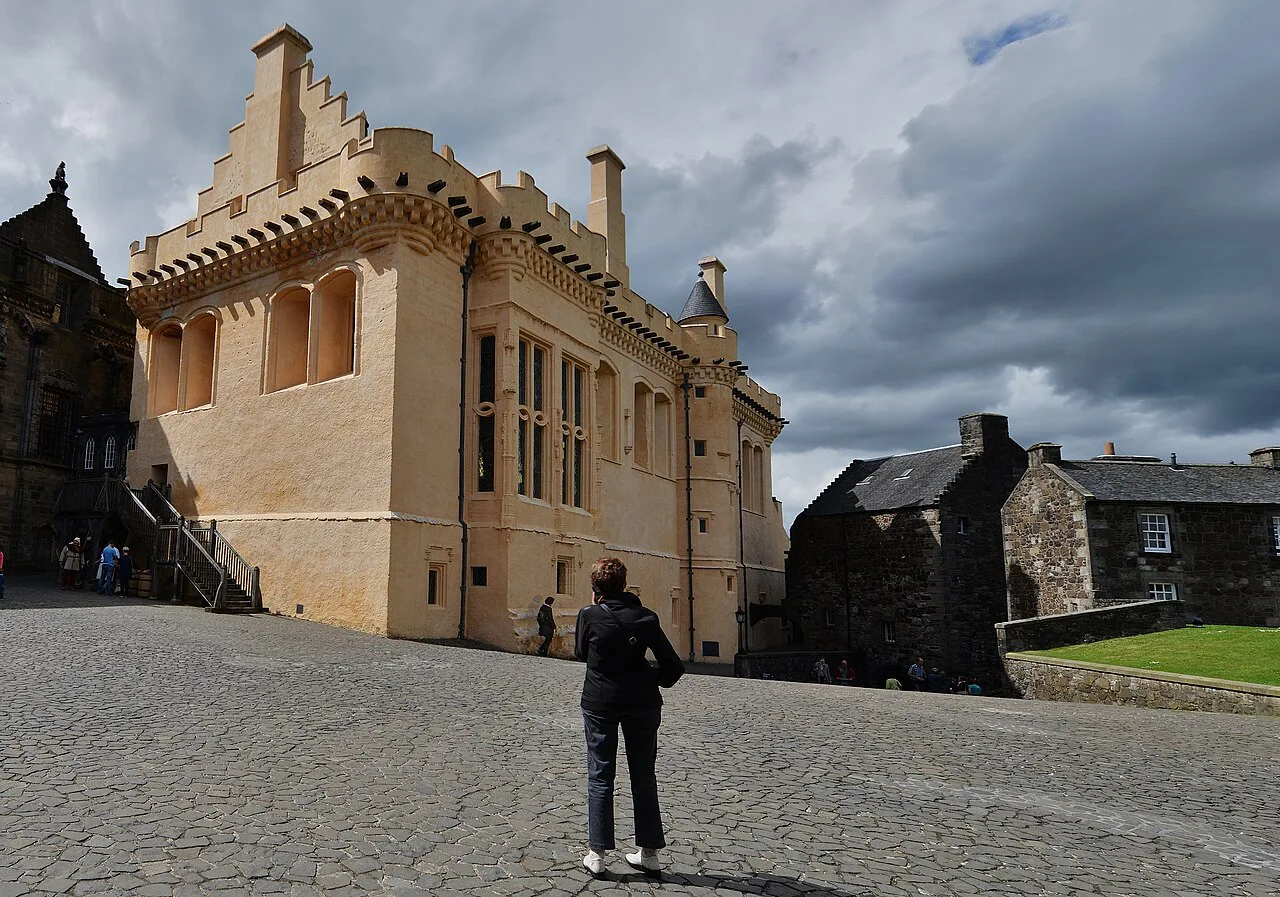
The Neue Staatsgalerie in Stuttgart, completed 1984
In 1978, with his practice close to closing for lack of work, Stirling won the commission to extend the Staatsgalerie in Stuttgart. The resulting Neue Staatsgalerie was completed in 1984 and met with a triumphal reception, bringing a rush of new work. It is the building most often cited as his masterpiece.
Stirling took the gallery's quirky turn-of-the-century detailing as given and filled the building with a deliberately eclectic, contrasting mix of contents and references. That blend of old and new is the clearest statement of his mature style. If you are in Stuttgart, it is the one Stirling building to prioritise.
His style: geometric forms, bold colour and historical references
Stirling's architecture combines modernist principles with bold, expressive design, using geometric forms, complex spaces and vibrant materials. He was equally at home quoting historical motifs and setting them against modern structure. That mixture is why he is often described as a bridge between modernism and postmodernism.
For comparison with other British cities where twentieth-century architecture is the draw, our guide to Birmingham architecture shows how modern buildings sit in a Victorian street grid. It is a useful counterpoint to Stirling's approach of layering historical references onto new structures.
His later years and the knighthood
Stirling received the Royal Institute of British Architects' Queen's Gold Medal in 1980. He died on 25 June 1992 after a routine hernia operation went wrong, just twelve days after his knighthood was announced. He never used the title.
The Stirling Prize and his legacy
In 1996 the Royal Institute of British Architects created an annual prize and named it the Stirling Prize. It is now regarded as the UK's most prestigious award for architects. The name on the prize is the clearest sign of how far his reputation has travelled.
For a Scottish city break that covers architecture alongside art, the art galleries in Stirling give a sense of the local visual culture, while the Stirling walking tour covers the old streets on foot. Both pair well with a morning at the castle.
Seeing Stirling's Buildings
Plan around two buildings: the Leicester Engineering Building for his breakthrough and the Neue Staatsgalerie in Stuttgart for his mature style. Both are working institutions rather than visitor attractions, so confirm access with the university and the gallery before you travel. The rest of his output is best understood through the career dates above.
Explore more Stirling guides
Frequently Asked Questions
Is Stirling architecture about the city of Stirling?
No. As a search term it usually refers to James Stirling, the Glasgow-born architect who designed the Leicester Engineering Building and Stuttgart's Neue Staatsgalerie. The Scottish city has its own medieval and Victorian architecture, best seen in the Old Town and around the castle.
What is James Stirling best known for?
He is best known for the Leicester Engineering Building, completed in 1963, which established him as a leading modernist, and the Neue Staatsgalerie in Stuttgart, completed in 1984. The Stuttgart building was received triumphantly and revived his practice.
Where can I see James Stirling buildings?
The two buildings named in the sources are the Leicester Engineering Building on the Leicester University campus and the Neue Staatsgalerie in Stuttgart. Both are working institutions, so check access with the university or gallery.
What happened to James Stirling?
He died on 25 June 1992 after a routine hernia operation went wrong, twelve days after his knighthood was announced. He had received the RIBA Queen's Gold Medal in 1980.
What is the Stirling Prize?
The Royal Institute of British Architects created an annual prize in 1996 and named it after James Stirling. It is now regarded as the UK's most prestigious architecture award.
Sources
Notes for your next city break
Optional updates to our UK city guides.
You might also like
Continue reading
More guides you'll find useful