History of Stirling: A Timeline Tied to Places You Can Visit
Trace the history of Stirling from Roman frontiers and independence battlefields to Stewart palaces, with the castle, kirk and town walls you can still see.
On this page
Stirling's history turns on geography. The town grew where a crossing of the River Forth met a castle perched on a volcanic rock, a combination that gave it strategic weight for centuries. That single fact explains why Romans, Stewart kings and Jacobite armies all ended up here, and why the old town still packs so much into a short walk.
The period-by-period account below comes from published regional history. It is organised so you can read a chapter, then go and find its traces on theground, rather than treating the past as a list of dates.
Stirling in Brief: Why the Crossing and the Castle Rock Shaped Everything
For thousands of years Stirling mattered because it controlled a crossing point over the River Forth, with the castle standing guard on its volcanic rock above. That pairing of road, river and fortress is the thread running through every later chapter of the town's story.
The result is a compact historic centre where a medieval kirk, stretches of town wall and a royal palace sit within easy reach of one another. Visitors who understand the geography find the chronology much easier to follow, because the key sites are stacked up the same hill.
Prehistoric and Roman Stirling: Hill Forts, the Antonine Wall and Rough Castle
The Forth Valley was among the first parts of Scotland settled by prehistoric people, and traces of Stone Age life, Bronze Age farms and Iron Age hill forts are scattered across the wider area. The National Wallace Monument itself stands inside the remains of a Celtic fort, an unexpected layer beneath a much later landmark.
Rome spent three centuries trying to hold this ground. The Antonine Wall, now a World Heritage Site, runs through the Falkirk area, and Roman fort remains survive particularly well at Rough Castle near Bonnybridge, while the ramparts of Ardoch Roman Fort lie north of Dunblane at Braco.
These are outdoor sites spread across a wide area rather than a single museum stop, so they reward anyone with a car or a willingness to use local buses. Treat the wall and fort earthworks as landscape history: you are reading shapes in the ground, not walking through reconstructed rooms.
The Wars of Independence: Stirling Bridge, Falkirk and Bannockburn
In the Middle Ages this area became the main stage of the Scottish Wars of Independence. William Wallace defeated the English at Stirling Bridge and later lost at Falkirk, while Robert the Bruce won his decisive victory at Bannockburn in 1314.
One easily missed detail sits at Falkirk's ancient parish church, where two Scottish knights are buried in the grounds. These are the only known graves from the Wars of Independence, which makes a working churchyard one of the most specific stops on any independence-themed day out.
The National Wallace Monument runs an activity called A Walk with Wallace, which is the obvious way to pair the battlefield story with the landmark that overlooks it. If battlefield ground is your priority, plan a loop that takes in the monument and the Bannockburn area rather than trying to see everything in one afternoon.
Stirling Castle as a Stewart Royal Residence
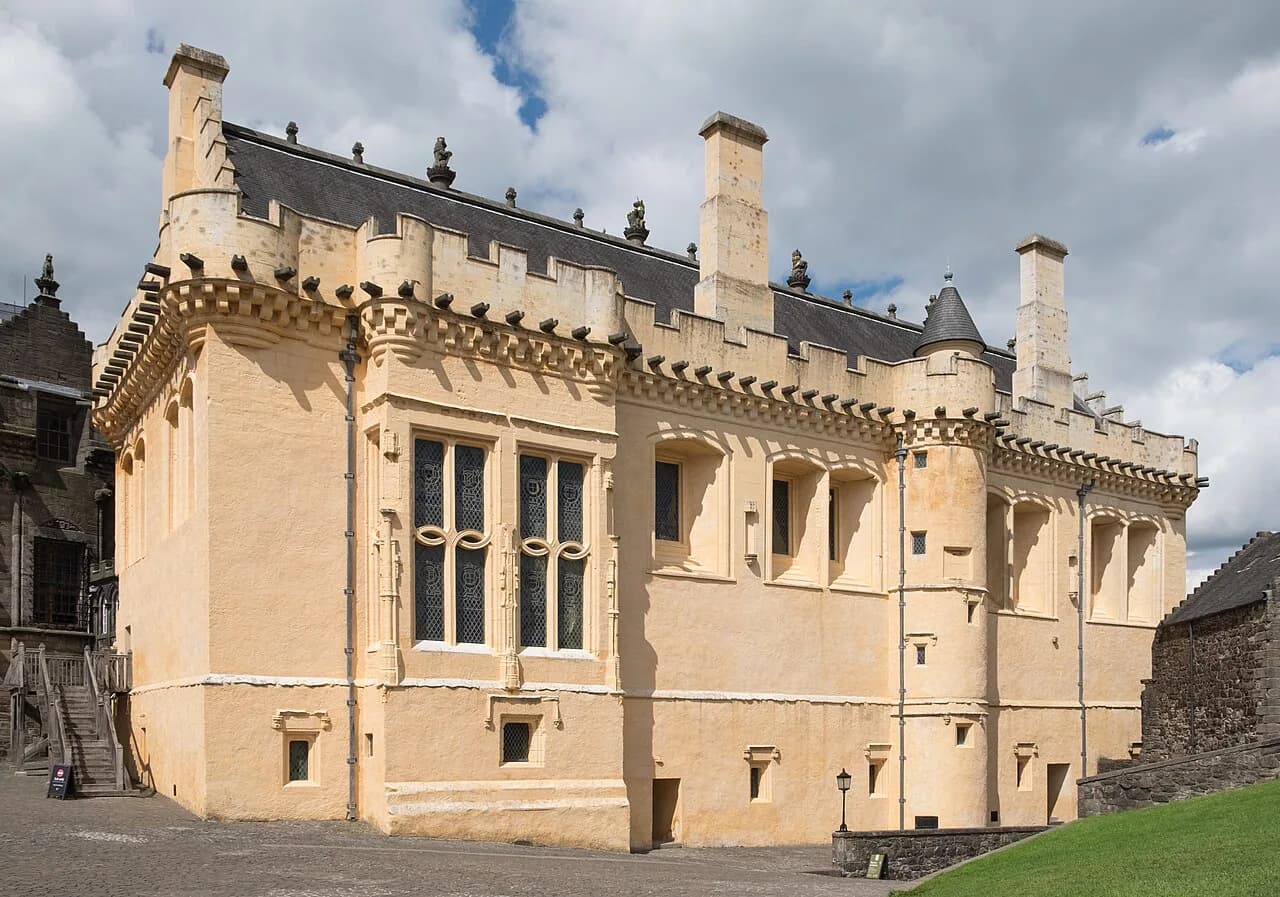
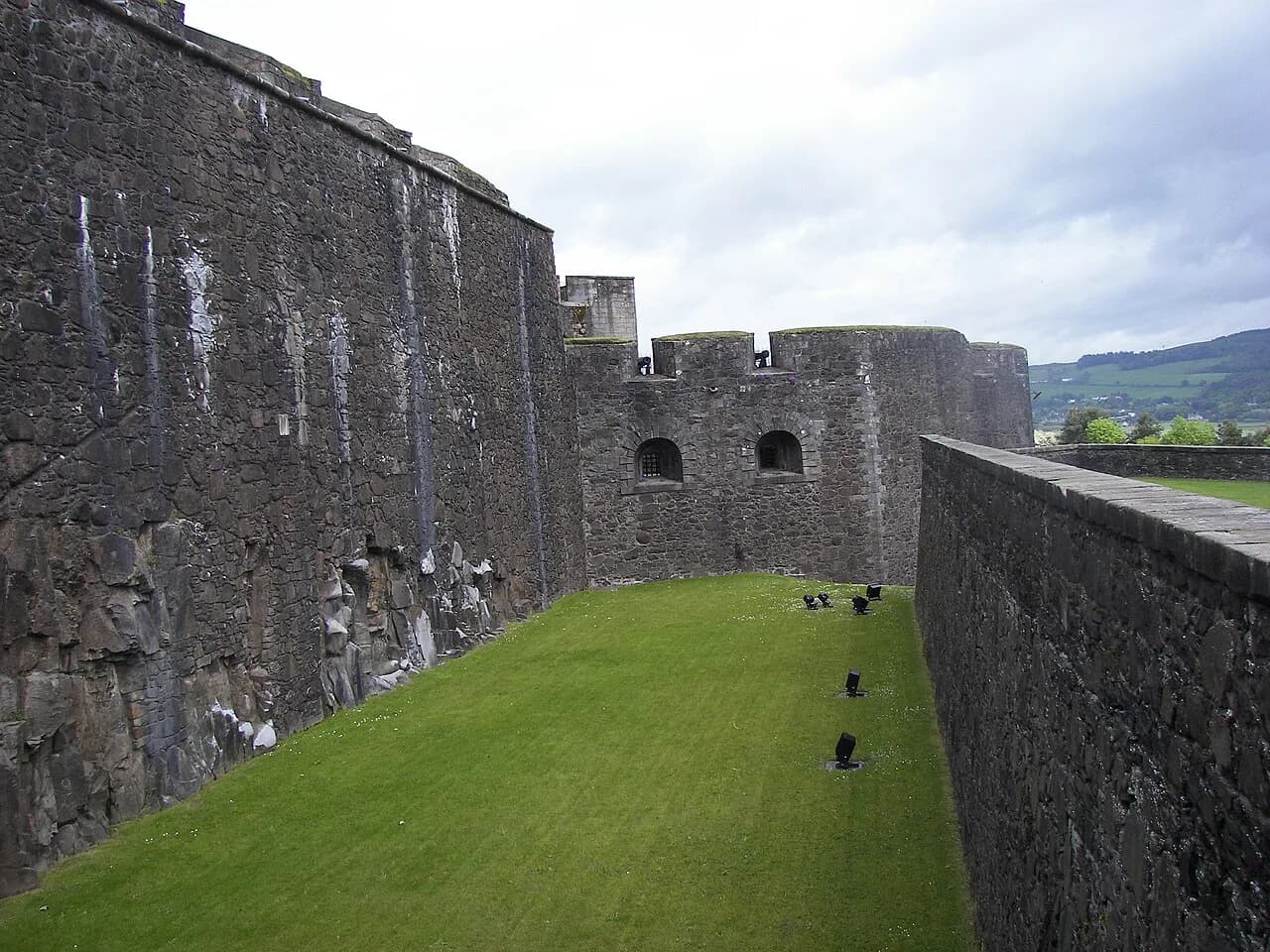
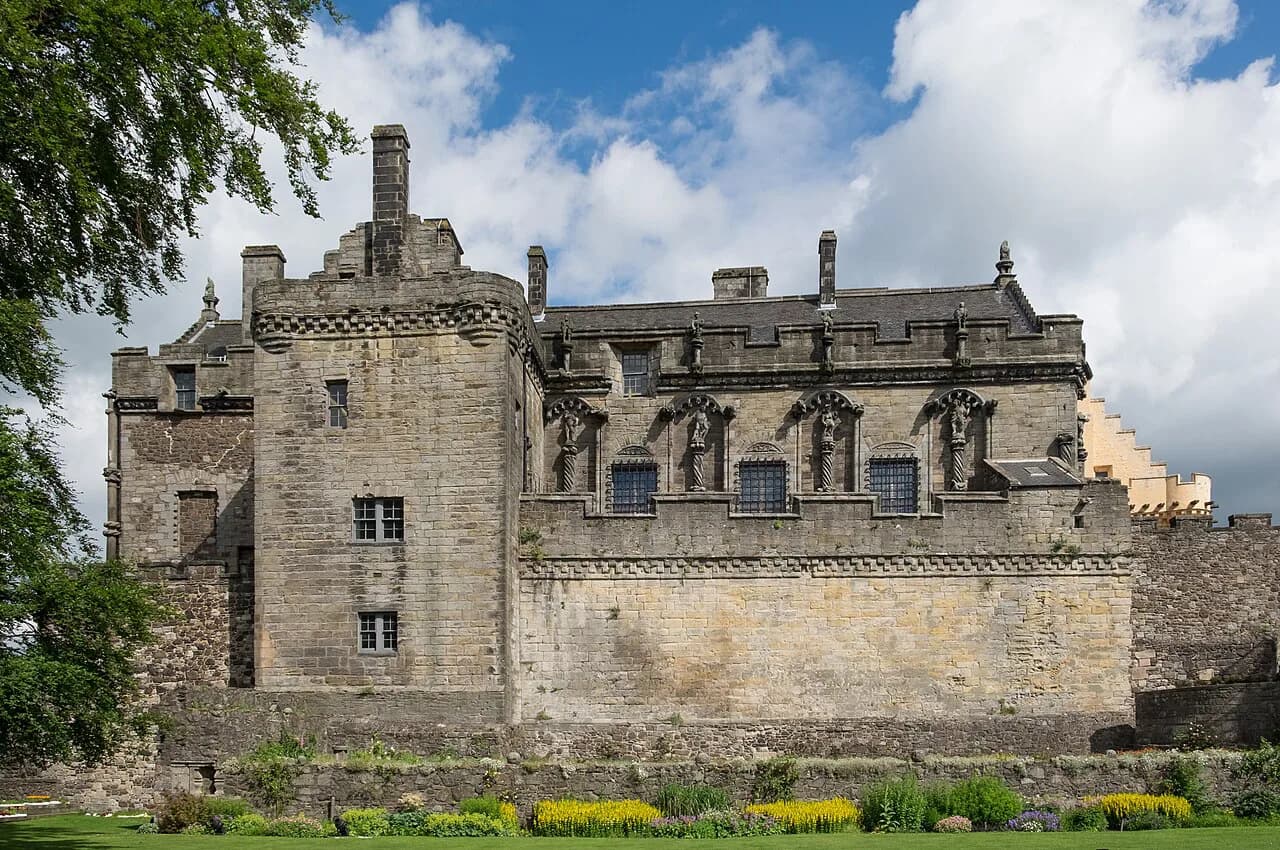
Stirling Castle became a favoured residence of Scotland's Stewart royal family, helped by its hilltop position and sheer surrounding cliffs. Most of what a visitor sees today dates from the 15th and 16th centuries, the era of James IV, Mary Queen of Scots and James VI.
Within that span, James IV's Great Hall, James V's restored Palace, the royal kitchens and James VI's Chapel Royal each represent a different generation of royal building. Reading them in that order turns a castle wander into a short course in Renaissance Scotland.
The castle is also the natural anchor for a wider day of fortresses and tower houses in the surrounding area. Opening arrangements change with the seasons, so confirm times and admission on the castle's own site before you build a day around it.
The Holy Rude: The Medieval Kirk and Its Royal Coronation
James VI was crowned in Stirling's medieval Holy Rude Kirk. The church is the only surviving one in Britain, Westminster Abbey aside, where a monarch has been crowned, which gives a modest-looking building an outsized place in the national story.
Pair the kirk with the castle on the same climb: the two together explain how royal ceremony and royal power sat side by side on one hill. Allow time to sit in the churchyard as well as the nave, since the setting carries as much of the story as the interior.
The Royal Burgh: Town Walls and the Argyll Lodging
Stirling's status as a thriving royal burgh is still legible in its substantial town walls and in the survival of many old buildings. The Argyll Lodging is the standout example, a townhouse that carries the feel of 17th- and 18th-century life into the present streetscape.
The walls and old closes are part of the everyday fabric of the town, so walking between the castle and the centre is itself the sight. A guided route helps here, because the most interesting survivals are often plain facades you would otherwise pass.
For a wider frame on how Scottish cities grew through trade and industry, the story of another manufacturing powerhouse offers a useful comparison.
Jacobite Stirling: Sheriffmuir, the 1746 Siege and the Marks on the Castle
Both Jacobite risings reached into this area. The 1715 battlefield of Sheriffmuir lies above Dunblane, where a monument to the dead of Clan McCrae can still be seen.
In 1746 Bonnie Prince Charlie besieged Stirling Castle. His Highland army beat a government force at Falkirk, where a monument now stands, but the occupation of Stirling and the siege itself failed, and the castle walls still carry bullet marks from the attempt.
This is the period most short histories skip, yet it leaves visible evidence on the castle itself. Look for the marks while you are on the esplanade rather than treating the castle purely as a Renaissance palace.
Industry and Canals: Coal, Iron, Weaving and Bannockburn's Tartan Mills
The 18th and 19th centuries brought heavy industrial change, with the Falkirk and Alloa areas becoming centres of canals, coal mining, iron making, brewing and weaving. Clackmannanshire's coal and weaving trades continued well into the 20th century.
Bannockburn's woollen mills produced roughly 90 per cent of the world's tartan during the 19th century, and at Grangemouth the Charlotte Dundas, launched in 1803, is now regarded as the world's first practical steamship. Those two facts alone reframe the area as an industrial pioneer rather than a footnote to its medieval past.
Canals make this industrial layer easy to explore on foot today, and the towpaths suit an unhurried half-day away from the castle crowds.
Later Stirling: The National Wallace Monument and the Hill House
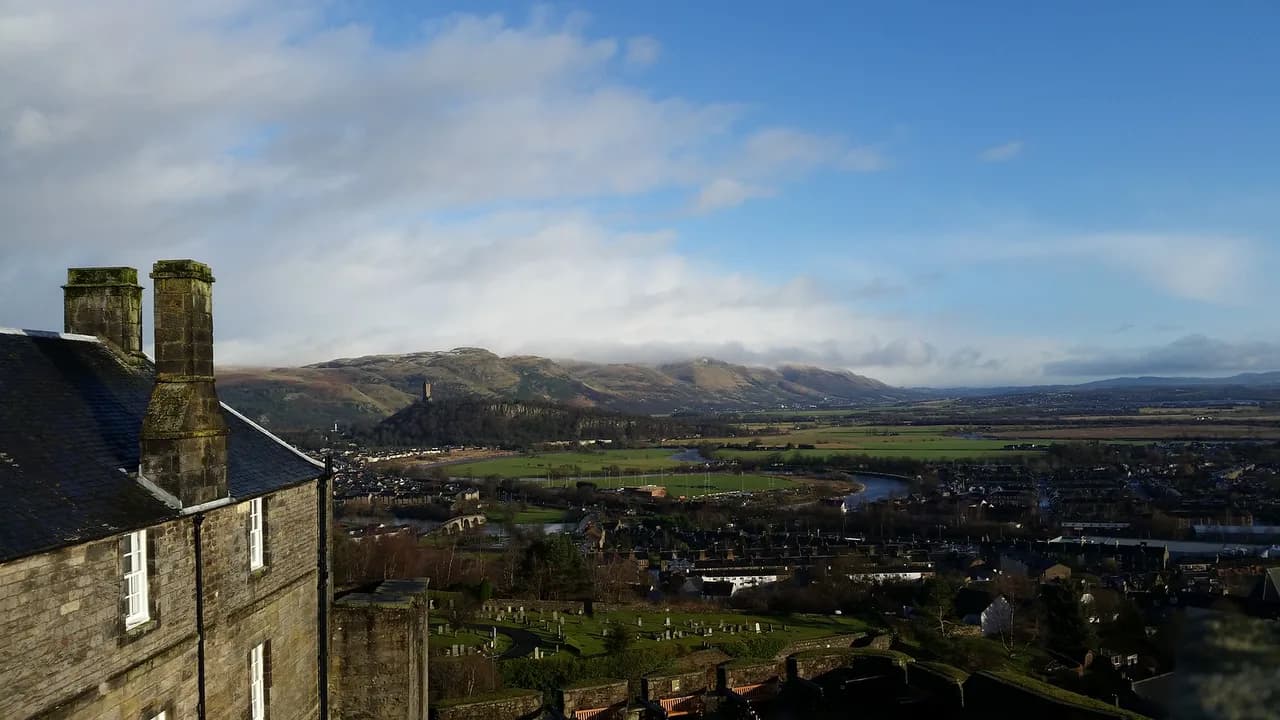
The National Wallace Monument, standing inside that Iron Age fort site, is the town's best-known later monument and a natural starting point for the independence story. Its position above the plain makes the geography of the battles legible in a way no indoor display can match.
Further afield, Charles Rennie Mackintosh's Hill House overlooks Helensburgh and is considered his domestic masterpiece. The National Trust for Scotland has restored it to look much as it did in 1904, when Mackintosh and his artist wife Margaret Macdonald were commissioned by the publisher Walter Blackie to design almost everything in it.
That makes the Hill House a deliberately different excursion from the medieval old town, and a strong choice for anyone who wants a design-led counterpoint to the castle.
Walking the History: Castle, Holy Rude and the Old Town
The core of Stirling's history can be covered on foot in a single loop: castle esplanade, the Holy Rude, the old town's walls and closes, then down towards the river crossing. Because the sites sit on one hill, the route doubles as a chronological walk from Stewart palace to medieval kirk to burgh defences.
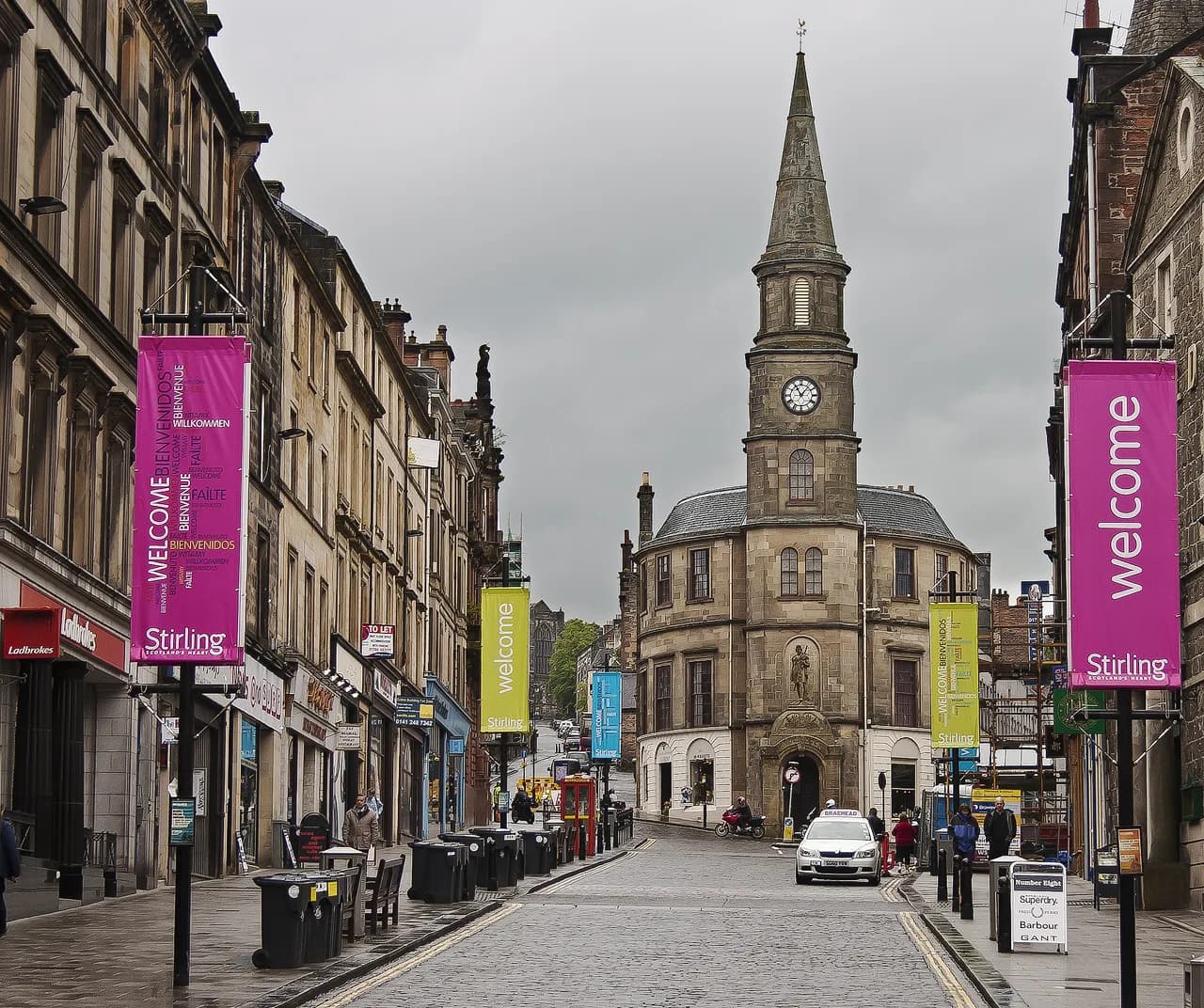
Streets, walls and the exteriors of old buildings are free to look at; the castle and other staffed sites are the parts to budget for. The town's architecture repays a slower pace, particularly around the older commercial streets and the surviving townhouse fronts.
For indoor context on days when the weather turns, the city's museum collections fill in the gaps between the monuments.
Practicalities: What to Book, How Long to Allow and What to Check
Treat the castle as the fixed point of a day and build the rest around it, since it takes the longest and sits at the top of the climb. The Holy Rude, the old town walls and the Argyll Lodging work as a half-day on foot, while Rough Castle, Ardoch and Sheriffmuir are separate trips needing transport.
Admission charges, seasonal hours and event schedules vary by site and by owner, so check each venue's own website before travelling. Book the castle in advance in busy periods and leave the battlefield and Roman sites for a dry day, since they are outdoor ground.
If your trip leans towards galleries and studios rather than fortifications, Stirling has a separate design and craft side worth researching before you go.
Evening storytelling tours give the old town a different atmosphere after dark, and they are best treated as entertainment built on local legends rather than as verified history.
Plan Your Visit
Stirling rewards a history-first itinerary: read the timeline, then walk it from the castle down through the Holy Rude and the old town to the river crossing. The medieval and Stewart layers sit in one compact centre, while the Roman, battlefield and industrial stories need a car or a bus and a little more planning.
For a wider comparison of how British cities layered industry over older foundations, the history of Liverpool offers a useful parallel.
Explore more Stirling guides
Frequently Asked Questions
Why was Stirling so important in Scottish history?
Stirling controlled a crossing point over the River Forth and was protected by a castle on a volcanic rock, which gave it lasting strategic value. It became a Stewart royal residence, hosted a royal coronation at the Holy Rude, and saw action in the Wars of Independence and both Jacobite risings.
Did Mary, Queen of Scots live at Stirling Castle?
Mary Queen of Scots is associated with Stirling Castle during the Stewart period, when the castle served as a favoured royal residence. Most of the castle fabric you see today dates from the 15th and 16th centuries, the era of James IV, Mary and James VI.
When was Stirling Castle first built?
The visible castle largely dates from the 15th and 16th centuries, when it was developed as a Stewart royal residence. Its defensive hilltop position and sheer cliffs were the reason it was fortified in the first place. For construction history and current visiting arrangements, check the castle's official site.
What can you still see from the Wars of Independence in Stirling?
The National Wallace Monument commemorates William Wallace and stands inside an Iron Age fort site, while the battlefields of Stirling Bridge, Falkirk and Bannockburn lie in the surrounding area. At Falkirk's ancient parish church, two Scottish knights are buried in the grounds, the only known graves from the Wars of Independence.
Can you walk between Stirling's historic sites?
Yes. Stirling Castle, the Holy Rude and the old town's walls and closes sit on and around the same hill, so they can be covered in a single walking loop. The Roman sites at Rough Castle and Ardoch, Sheriffmuir and the industrial sites around Falkirk and Grangemouth need separate transport.
Was Stirling ever the capital of Scotland?
Stirling's documented role is as a royal burgh, a Stewart royal residence and the site of a royal coronation at the Holy Rude. Its importance came from the Forth crossing and the castle rock rather than from holding the formal status of capital.
Is the Hill House in Stirling?
No. Charles Rennie Mackintosh's Hill House overlooks Helensburgh and has been restored by the National Trust for Scotland to look much as it did in 1904. It works as a separate day out from Stirling rather than a stop on the old town walk.
What costs money and what is free in Stirling?
The castle and other staffed visitor sites charge admission, while the town walls, streets and the exteriors of old buildings can be seen at no cost. Admission prices and seasonal hours change, so check each venue's official website before you travel.
Sources
Notes for your next city break
Optional updates to our UK city guides.
You might also like
Continue reading
More guides you'll find useful