
Liverpool Metropolitan Cathedral: What to See and How to Visit

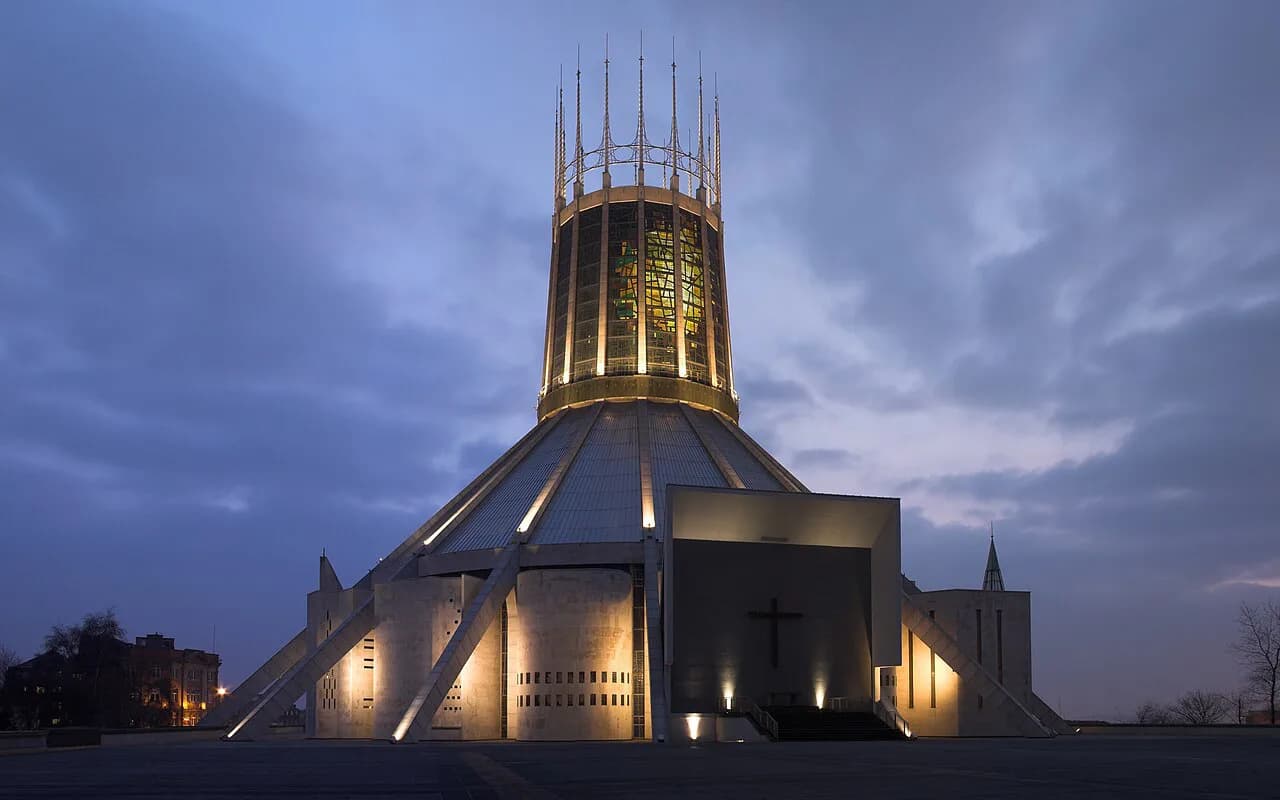
Liverpool Metropolitan Cathedral is the Catholic cathedral of Christ the King on Mount Pleasant, and its circular concrete form and glassy lantern tower make it one of the most recognisable shapes on the Liverpool skyline. Locals call it Paddy's Wigwam, a nickname earned by the tent-like profile, and entry to the cathedral itself is free.
This guide covers one building: where it sits, how to walk up to it, what to look for inside and underneath in the Lutyens Crypt, and how to judge the time you need. It also separates the free cathedral from the charged crypt, so you know exactly what you are paying for before you set off.
What Liverpool Metropolitan Cathedral is
The Metropolitan Cathedral of Christ the King is the largest Catholic place of worship in the UK, built in white concrete with Portland stone cladding and a circular plan roughly 195 feet across. Thirteen chapels ring the perimeter, and a conical tower crowned with a stained-glass lantern sits above the central space. It is a Grade II* listed building and a working Catholic cathedral rather than a museum piece.
First-time visitors often confuse it with the Anglican cathedral further along Hope Street, which is Gothic in style and sits lower on the hill. The two are distinct buildings with separate entrances, and seeing both in one walk is one of the best half-days in the city. If you are weighing up where to stay between visits, our Liverpool Neighborhoods cover the areas around Hope Street.
Where it is on Mount Pleasant
The cathedral address is Cathedral House, Mount Pleasant, Liverpool L3 5TQ, at the top of the city centre's rise near the universities. It stands a short walk from Hope Street, the Georgian and Victorian corridor that links the two cathedrals and is lined with pubs, theatres and the Philharmonic Hall.
Because the building sits uphill from the main shopping streets, it works well as a first stop on a walking day before you drop down towards the centre. From the cathedral you can walk back along Hope Street to the other cathedral, or continue into the city for the museums and galleries.
Getting there and the uphill approach
On foot, the simplest approach from the city centre is up Mount Pleasant itself, which climbs steadily past the university buildings to the cathedral forecourt. From Liverpool Lime Street station the walk is uphill for most of the way, so allow more time than the distance suggests, especially with luggage or in wet weather.
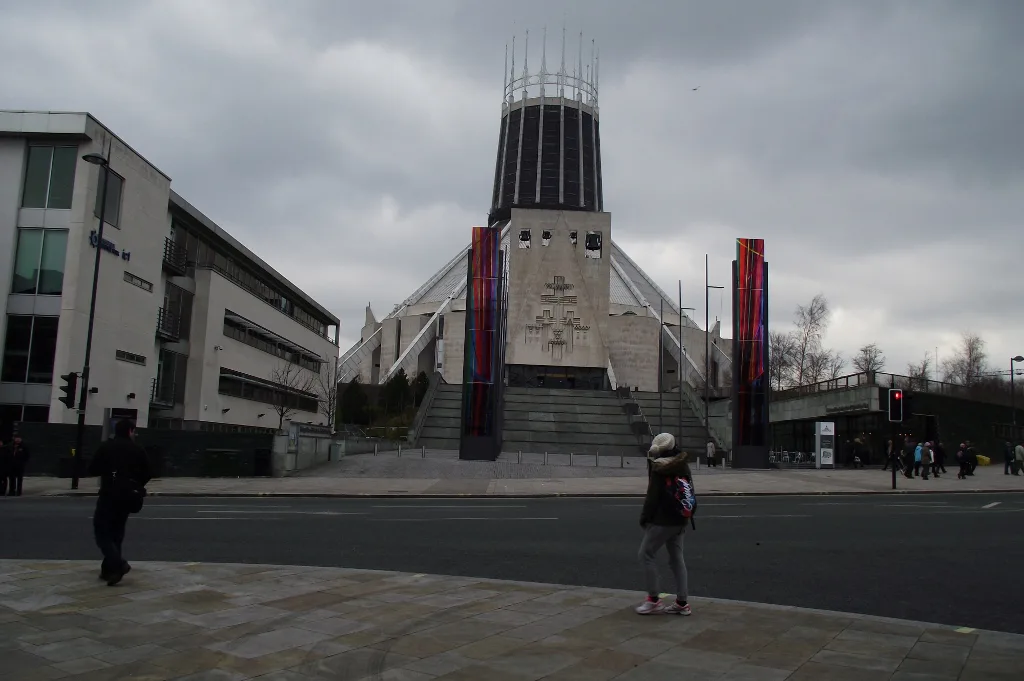
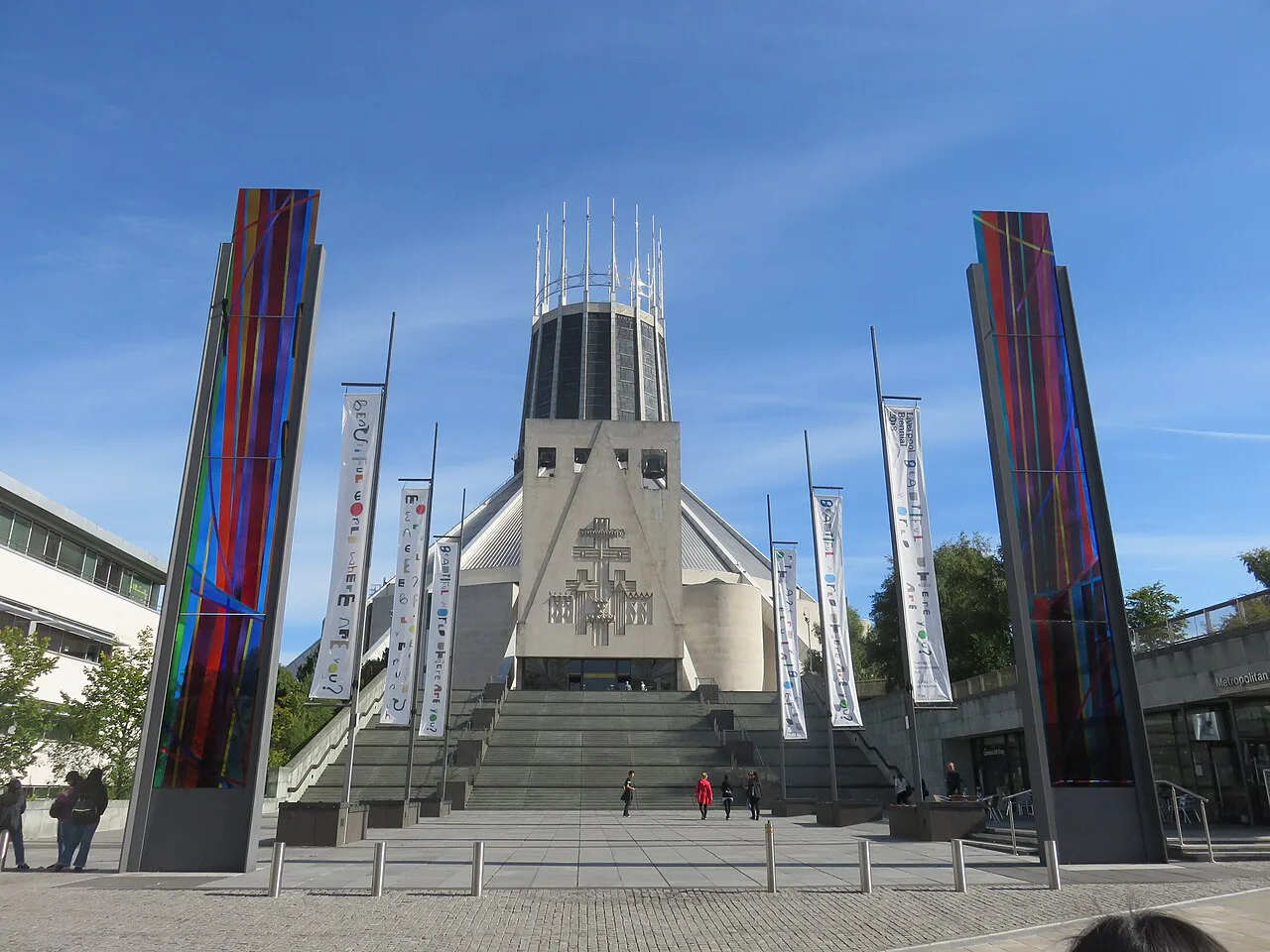
The final approach from Hope Street is a flight of steps, with a bell tower and sculptures by William Mitchell beside the entrance. The steps are the practical detail worth planning for: if anyone in your group struggles with stairs, approach from the Mount Pleasant side rather than climbing from Hope Street.
The design story in brief
The cathedral that stands today is the fourth attempt to build a Catholic mother church for Liverpool. In 1933 work began on Sir Edwin Lutyens' colossal domed design, funded largely by contributions from Liverpool's working-class Catholics, but construction was suspended in 1941 as war and costs intervened; only the crypt was finished before the scheme was abandoned.
A scaled-down domed scheme by Adrian Gilbert Scott was then dropped, and in 1959 an open competition drew 300 entries. Sir Frederick Gibberd won with a circular plan that put the altar at the centre so a congregation of 2,000 could all see it, and reused the crypt roof as the elevated platform for the new church.
Construction began under Taylor Woodrow and the cathedral was consecrated on the Feast of Pentecost, 14 May 1967, less than five years later. Leaks in the aluminium roof covering and defects in the mosaic tiles followed, and the finished building is a compromise between ambition and budget rather than the giant Lutyens imagined. To see what Lutyens had in mind, a model of his cathedral is displayed at the Museum of Liverpool.

The exterior: tower, chapels and lantern windows
From the forecourt, look first at the ring of thirteen chapels around the base and the sixteen boomerang-shaped concrete trusses that carry the conical tower and its flying buttresses. The lantern at the top holds stained glass by John Piper and Patrick Reyntiens, and the tower is at its most striking after dark when the glass glows against the concrete.
The concrete mass is softened by Portland stone cladding and the aluminium roof, a combination that reads very differently in bright sun and in grey drizzle. Photographers do best from the Mount Pleasant approach, where the full circular plan and the tower fit into one frame.
Inside: the central altar and the chapels
Inside, the white marble altar from Skopje in North Macedonia holds the centre of the circular nave, with marble flooring designed by David Atkins beneath it. Nine chapels surround the central space, among them the Blessed Sacrament Chapel, the Lady Chapel and the Chapel of St Joseph, and their artworks include sculptures by Elisabeth Frink and Robert Brumby and stained glass by Margaret Traherne and Ceri Richards.
The organ, built by J. W. Walker and Sons and completed days before the 1967 inauguration, was designed to stand out against the concrete, with shiny zinc pipes and brass trumpets. Because the plan is open, a circuit of the chapels takes little time; the reward is in looking up at the lantern and down at the floor rather than following a fixed route.
The Lutyens Crypt
Under the cathedral, the crypt is the surviving fragment of Lutyens' abandoned scheme, built of brick and granite from Penryn in Cornwall and incorporated into Gibberd's design in 1962. It has had a varied life: it has hosted the Liverpool Beer Festival and has been used by University of Liverpool students as an exam hall, and in 2009 a restoration costing about £3 million, unveiled by the Duke of Gloucester on 1 May, improved access, lighting and archive facilities.
Entry to the crypt is charged separately from the cathedral, and the published rate is £5.00 per person with a family ticket at £12.00. Treat it as a second, smaller visit rather than part of the main nave circuit, and check the published times before travelling because the crypt keeps shorter hours than the cathedral and is closed on Sundays.
Tickets and opening hours
Entrance to the cathedral is free of charge, and the published 2024 schedule listed daily opening from 7:30 am to 6:00 pm; the Lutyens Crypt was listed as open Monday to Saturday from 10:00 am to 3:30 pm and closed on Sundays. These are the published times rather than a live timetable, so confirm them on the official site before you travel, especially around services and bank holidays.
The free entry applies to the cathedral itself, not to concerts, events or anything else the cathedral may run. If you are planning around a specific service or performance, check the cathedral's own listing before you set out, as opening hours can differ from the pattern above.

How long to allow and when to go
Allow about an hour for the cathedral and its chapels at an unhurried pace, and add another half hour or so if you are going down into the crypt. If you want to read the architecture properly, photograph the tower and still walk along Hope Street to the Anglican cathedral, set aside a full morning.
Mornings are the quieter bet, since the building opens early and coach parties and lunchtime visitors arrive later. Late afternoon light through the lantern glass is the reward for timing your visit towards the end of the day, though you need to be inside well before the published closing time.
Nearby: Hope Street and the other cathedral
Walking down Hope Street from the Metropolitan Cathedral brings you to Liverpool Cathedral, the Anglican building designed by Giles Gilbert Scott that sits on St James Mount. The two are close enough to visit on foot in one outing, but they are separate buildings with their own opening arrangements and their own visitor information, so plan them as two stops. If you want to spread your sightseeing across the city, our Liverpool Neighborhoods can help you decide where to base yourself.
Hope Street itself is worth lingering on, with its theatres, pubs and the Philharmonic Hall forming one of the city's most distinctive streets. Downhill from there, the museums and galleries around William Brown Street, including St George's Hall Liverpool, fill out a full day of sightseeing.
For a longer stay, the Royal Albert Dock Liverpool and the Liverpool waterfront are a short bus or taxi ride from the centre, with the Museum of Liverpool and the Pier Head in the same cluster. Afternoon tea in Liverpool is an easy way to close a day spent between the two cathedrals and the waterfront.
Plan Your Visit
The Metropolitan Cathedral rewards a modest slot in your Liverpool itinerary: free to enter, quick to see, and architecturally unlike anything else in the city. Pay for the crypt only if the Lutyens story interests you, and go early in the day if you want the nave to yourself.
Pair it with the Anglican cathedral on Hope Street, then carry on into the city centre or down to the waterfront. Check the official site for any changes to published times and crypt charges before you set out, and you can plan the rest of the day around what you find.
Explore more Liverpool guides
Frequently Asked Questions
Are there two cathedrals in Liverpool?
Yes. Liverpool Metropolitan Cathedral on Mount Pleasant is the Catholic cathedral, known as Paddy's Wigwam for its tent-like circular shape. Liverpool Cathedral on St James Mount, designed by Giles Gilbert Scott, is the Anglican building. They stand close together at either end of Hope Street and can be visited on foot in one outing.
Is Liverpool Metropolitan Cathedral free to visit?
Entry to the cathedral is free of charge. The Lutyens Crypt beneath the building is charged separately, so budget for that if you want to go down. Check the official site for the current position before you travel.
How much is the Lutyens Crypt?
The crypt carries a separate charge from the cathedral, with a per-person rate and a family ticket option, and it keeps shorter hours than the cathedral, closing on Sundays. The official cathedral site is where the current price list and opening times are published, so confirm both there before you go.
How long does it take to visit Liverpool Metropolitan Cathedral?
Allow around an hour for the cathedral and the ring of chapels, plus roughly half an hour if you add the crypt. If you also walk along Hope Street to the Anglican cathedral, set aside a full morning for the pair.
Why is it called Paddy's Wigwam?
The nickname comes from the cathedral's circular concrete form and conical tower, which give it the look of a tent or wigwam. It is an affectionate local name for the Metropolitan Cathedral of Christ the King, the largest Catholic place of worship in the UK.
Who designed Liverpool Metropolitan Cathedral?
Sir Frederick Gibberd won the 1959 competition, chosen from 300 entries, with a circular design that put the altar at the centre and reused the earlier crypt as a platform. The cathedral was consecrated on 14 May 1967. The crypt survives from Sir Edwin Lutyens' abandoned domed scheme, begun in 1933.
How do you walk to Liverpool Metropolitan Cathedral?
From the city centre, walk up Mount Pleasant until you reach the cathedral forecourt at Cathedral House, L3 5TQ. From Hope Street the entrance is up a flight of steps, so anyone who struggles with stairs is better approaching from the Mount Pleasant side.