
Liverpool Cathedral: what to see, tickets and how long to allow

Liverpool Cathedral is Britain's biggest cathedral and free to enter, sitting on St James Mount above the city centre with a paid Tower Experience that lifts visitors 500ft above sea level for the view. It is the Church of England cathedral for the city, so keep it distinct from the Catholic Liverpool Metropolitan Cathedral on Mount Pleasant.
What Liverpool Cathedral is and where it sits on St James Mount
Liverpool Cathedral stands at St James Mount, Liverpool, Merseyside, postcode L1 7AZ, on high ground to the south-east of the main shopping district. The National Churches Trust describes it as the largest cathedral in the UK and the fifth largest in the world, while the Scott family archive calls it one of the most important examples of 20th-century architecture in Britain. Both descriptions are worth carrying with you: the building is vast in a way that photographs flatten.
Its position matters for planning. Because it sits on the mount rather than in a busy commercial street, the exterior reads as a landmark from some distance, and the approach is uphill from parts of the centre. If you are working through a shortlist of Liverpool attractions, treat the cathedral as a half-day anchor rather than a ten-minute detour.
A short history: Giles Gilbert Scott and a cathedral built from 1904 to 1978
The design competition was launched in 1901 and won by Giles Gilbert Scott, then 22 years old and still working under Temple Moore. The Scott family archive records that the judging panel included Norman Shaw and G. F. Bodley, and that concerns about Scott's inexperience led to Bodley mentoring him until Bodley's death in 1907, after which Scott took full control.
Building began in 1904 and the cathedral was not completed until 1978, decades after Scott's death. A reworking of the design from 1910 onwards abandoned twin transept towers in favour of one vast central tower, and Scott deliberately narrowed that tower and added features such as the Dulverton Bridge to make the interior feel layered rather than open-plan. That decision is why the inside feels unlike an older Gothic cathedral with a single sweeping nave.
What to see inside: the central tower, chapels, stained glass and memorials
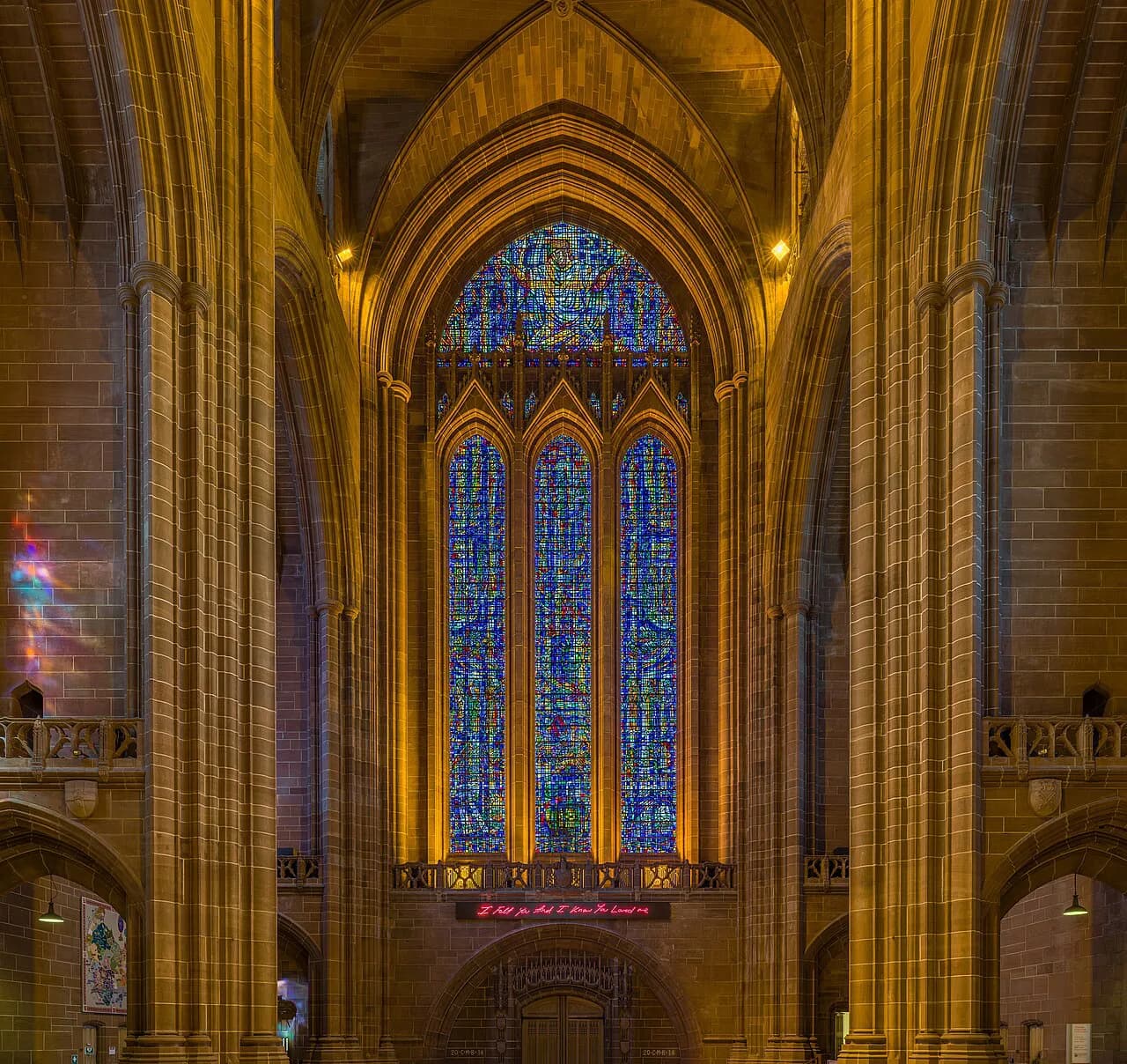
Start with the central tower, the element that defines the building from outside and organises the space within. Scott's later revisions mixed Gothic verticality with a classical sense of mass, and the result is a series of big architectural statements rather than dense ornament.
The Lady Chapel combines Gothic and Renaissance elements, while the War Memorial Chapel uses restrained classical motifs against the more ornate Gothic reredos of the main sanctuary. Scott worked with sculptors including Edward Carter Preston so that carving formed part of the architectural scheme rather than being applied afterwards. Look for the stained glass and memorials as you move between chapels; the National Churches Trust lists glorious furnishings, magnificent memorials and spectacular stained glass among the cathedral's key features.
The Tower Experience: the Great Space Film, the Bell Chamber and the view
The Tower Experience is the paid add-on and the reason many visitors come. It takes you to the top of the tower for panoramic views from 500ft above sea level, which the National Churches Trust rates as one of the best places to catch a Mersey sunset. The ticket includes the Great Space Film on how the cathedral was built, available in seven languages, a stop in the Bell Chamber to see the world's heaviest peal of bells, and the climb to the top.
Allow for the tower as a separate block of time rather than folding it into a quick look around the nave. The film and bell chamber sit between you and the view, so the experience rewards a relaxed pace. Visitors with limited mobility should note that the National Churches Trust lists level access to the main areas of the cathedral, while the tower trip is a climb.

Tickets and opening hours
Entry to the cathedral is free, and the National Churches Trust notes that the cathedral remains committed to keeping entry free despite receiving no government funding or subsidy. The Tower Experience and the audio tour are the recommended paid extras, and tickets can be booked through VisitLiverpool to save time on arrival. Book the tower in advance if it is the main reason for your visit, particularly at weekends and around sunset.
Opening is listed as daily from 8am to 6pm. The National Churches Trust also notes that times and contact details can change, so confirm on the cathedral's own website before making a special trip.
How long to allow
Budget roughly an hour for the free part of the cathedral: the nave, the Lady Chapel, the War Memorial Chapel and a pass through the stained glass and memorials. Add the Tower Experience on top of that, allowing extra time for the film, the Bell Chamber and the climb, so a combined visit runs comfortably into a half day.
If your schedule is tight, choose one: the chapels and interior for architecture, or the tower for the view. Trying to do both in a rushed twenty minutes is the common mistake, because the tower sequence cannot be shortened without missing what you paid for.
Getting there and access
A bus stop sits within 100m of the cathedral, and on-street parking is available at the church with further parking within 250m. Accessible toilets are available in the church and nearby, there is level access to the main areas, and walkers and cyclists are welcome with space to secure a bike.
Coming on foot from the city centre means an uphill approach to St James Mount, so allow more time than the map suggests. The cathedral is a reasonable addition to a day built around the Royal Albert Dock Liverpool and the waterfront, but it is not on the same level as the docks, so plan the order of your day around the climb.
Eating at the cathedral
There are two dining venues on site: the Mezzanine Cafe inside the cathedral and the Welsford, which serves a traditional Sunday roast. That makes the cathedral workable as a lunch stop rather than only a sight, which suits a longer visit built around the tower.
For something more ceremonial, afternoon tea in Liverpool pairs naturally with a cathedral day, and you can compare the options around the city before booking. Menus and serving times change, so check current details with whichever venue you choose.

Nearby: the Metropolitan Cathedral, St James in the City and St Luke's
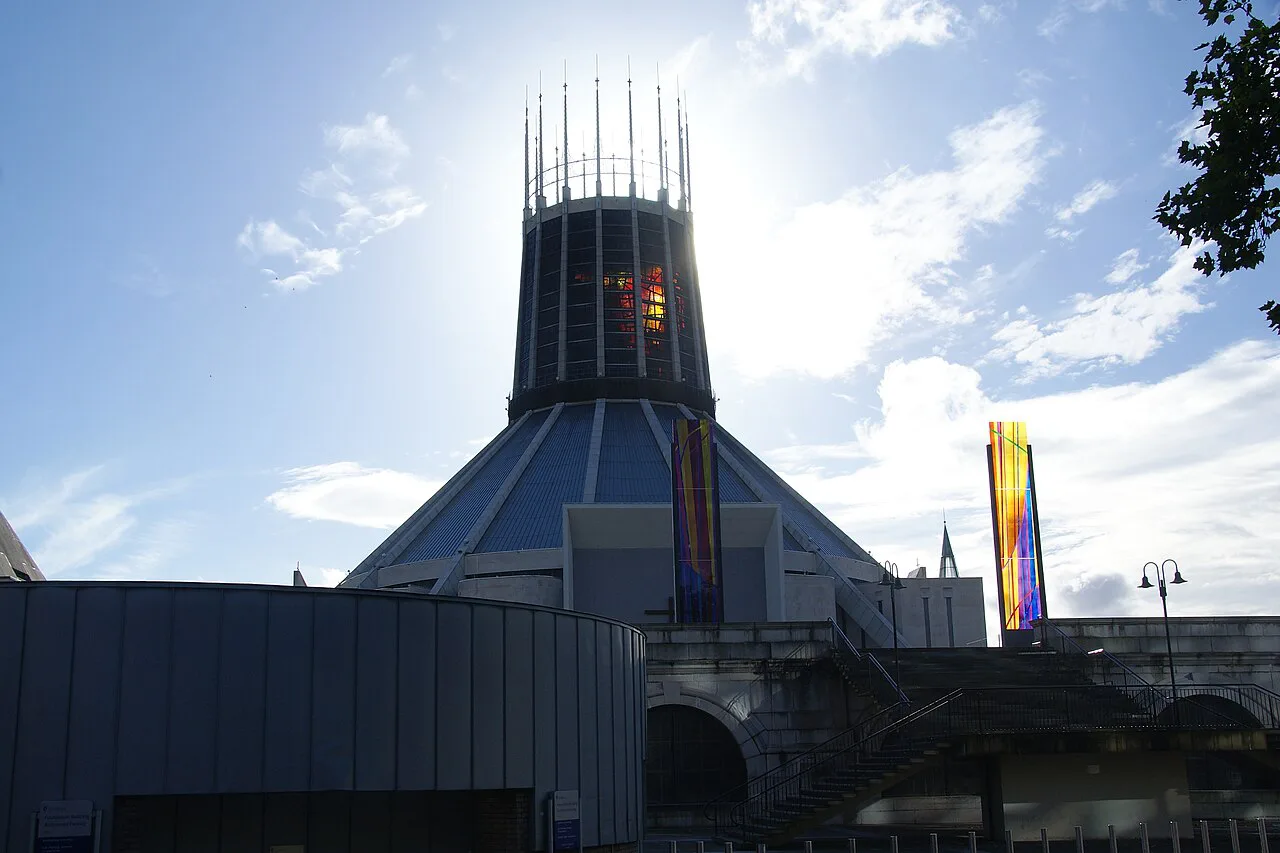
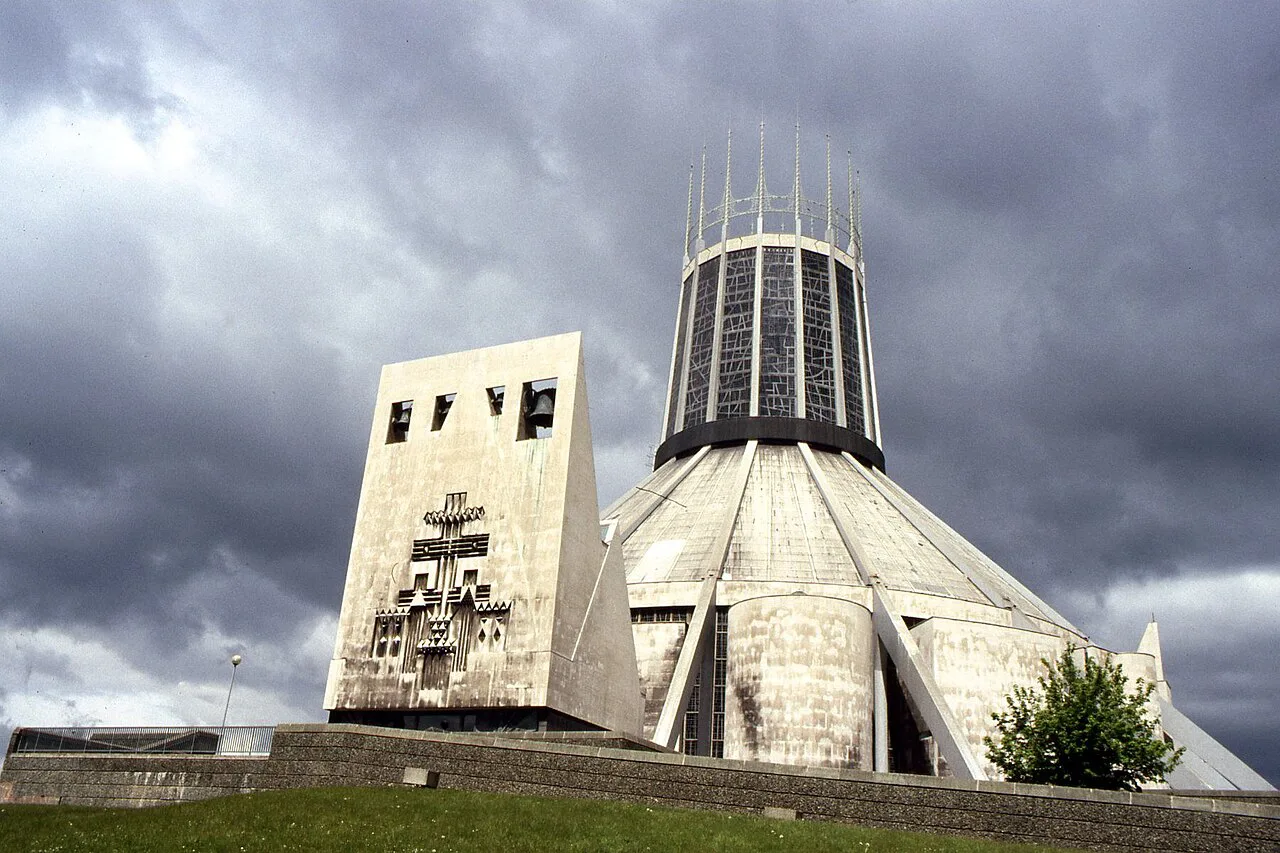
The Catholic Liverpool Metropolitan Cathedral on Mount Pleasant is a separate building with its own identity, so do not book one expecting the other. It is the more modern of the two and runs its own programme, from Chapter Mass to concerts and seasonal events; its published listings show what is on.
The National Churches Trust names St James in the City, which reopened after almost four decades of closure, and St Luke, the last bomb site in Liverpool and a testament to those who lived and died in the May Blitz of 1941, among the churches near the cathedral. Both suit a short add-on if you are already on the mount.
Practical checks before you travel
Confirm opening times, tower availability and any service closures on the cathedral's own website shortly before you go, since published times can change. If you are building a wider trip, Sefton Park Liverpool offers a green counterpoint to a morning of stone and glass, and the wider list of things to do in Liverpool helps you slot the cathedral into a sensible route.
Plan Your Visit
Liverpool Cathedral gives you Britain's largest cathedral for free, with the Tower Experience as the paid centrepiece and the chapels, stained glass and memorials as the architectural reward. Give it an hour for the free interior or a half day with the tower, and check the cathedral's own website for times before travelling.
Explore more Liverpool guides
Frequently Asked Questions
Is it free to visit Liverpool Cathedral?
Entry to the cathedral is free, and the National Churches Trust notes the cathedral is committed to keeping it that way despite receiving no government funding. The Tower Experience and the audio tour are recommended paid extras, booked through VisitLiverpool to save time on arrival; ticket prices are confirmed on the cathedral's own website.
What is included in the Tower Experience?
The Tower Experience takes you to the top of the tower for panoramic views from 500ft above sea level. It includes the Great Space Film on how the cathedral was built, shown in seven languages, and a stop in the Bell Chamber to see the world's heaviest peal of bells before the final climb to the view.
How long does a visit to Liverpool Cathedral take?
Allow about an hour for the free interior, covering the nave, the Lady Chapel, the War Memorial Chapel, stained glass and memorials. Add extra time for the Tower Experience, including the film, the Bell Chamber and the climb, and a combined visit comfortably fills half a day.
Is there parking at Liverpool Cathedral?
There is on-street parking at the cathedral and further parking within 250m, according to the National Churches Trust. A bus stop also sits within 100m, and walkers and cyclists are welcome with space to secure a bike, so arriving by public transport or on foot avoids the uphill search for a space.
What is the difference between Liverpool Cathedral and the Metropolitan Cathedral?
Liverpool Cathedral on St James Mount is the Church of England cathedral, designed by Giles Gilbert Scott and completed in 1978. The Liverpool Metropolitan Cathedral on Mount Pleasant is the separate Catholic cathedral, with its own events programme. They are different buildings in different parts of the city, so check which one you are booking or visiting.
Who designed Liverpool Cathedral?
Giles Gilbert Scott won the design competition in 1901 at the age of 22, while still working under Temple Moore. G. F. Bodley mentored him until Bodley's death in 1907, after which Scott took full control. His 1910 reworking replaced twin transept towers with the single vast central tower that defines the building today.
When is the best time to visit Liverpool Cathedral?
Late afternoon suits the tower, since the National Churches Trust rates it as one of the best places in the city to catch a Mersey sunset. If you plan to climb, book ahead for weekends and sunset slots. Opening is listed as daily from 8am to 6pm, and confirming times on the cathedral's own website before travelling is sensible.