
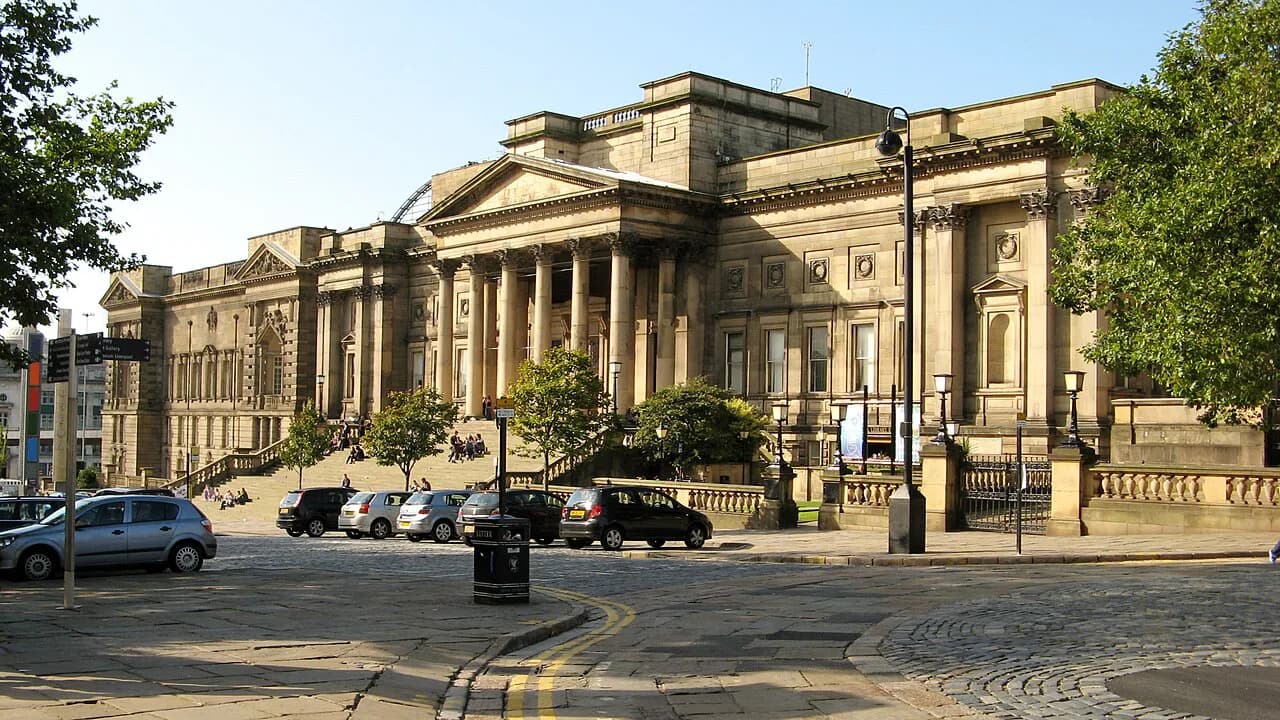
World Museum Liverpool: a visitor guide to William Brown Street

World Museum Liverpool is the oldest of the museums run by National Museums Liverpool, founded in 1853 and settled on William Brown Street since 1860. It holds collections and displays covering life sciences, earth sciences and human cultures from around the world, which makes it one of the great regional museums of Britain. Entry is free, so the decision is not whether to go but how much of the building to tackle in one trip.
The museum sits in Liverpool's cultural quarter, a short walk from Lime Street station and next door to the Central Library and Walker Art Gallery. That cluster means you can pair a couple of hours indoors with a look at the library's reading room or a gallery visit without crossing the city. This guide covers what is inside, hours, access and how to pace a visit with children.
What World Museum Liverpool is and where it sits
The museum occupies a large purpose-built site on William Brown Street, postcode L3 8EN, at the edge of the city centre. It opened in the Ropeworks district in March 1853 before moving to its present William Brown Street home in 1860, and it has expanded since into one of the strongest regional museum collections in Britain. The building is a full afternoon out rather than a single-room stop.
Its displays split broadly into three families: life sciences, earth sciences and human cultures from around the world. In practice that means natural history specimens, geology and space material alongside ethnographic collections, so a visitor with varied interests can move between galleries rather than commit to one subject. Pick two or three strands before you arrive and the visit stays manageable.
Opening hours and free admission
The museum opens daily from 10am to 5pm, and admission is free. Hours and free entry are the two facts worth fixing in your plan before you travel, because they shape whether the museum fits a morning or an afternoon slot.
Free entry puts the museum in a different category from Liverpool's paid attractions, such as the cathedral towers and the dockside experiences that charge for admission. It also means you can treat a visit as a flexible two-hour block and leave without feeling you must see everything to justify a ticket. Special exhibitions and events can carry their own arrangements, so check the museum's own listings before a trip built around a particular display. If you would rather spend part of the budget on a treat than on entry fees, plan an afternoon tea in Liverpool for later in the day.
Getting there: walking from Lime Street and the city centre
William Brown Street is a short, level walk from Liverpool Lime Street station, which puts the museum within easy reach of anyone arriving by train. Walk downhill from the station towards the cultural quarter and you reach the museum, Central Library and Walker Art Gallery in one block. Allow a few minutes for the walk and keep the postcode L3 8EN handy if you are navigating by phone.
From the waterfront and the Royal Albert Dock Liverpool, the walk up through the city centre takes considerably longer, so consider a bus or taxi if you are combining the docks with the museum in one day. The same applies if you are coming from the cathedrals at either end of Hope Street. Grouping the museum with the library and gallery is the most efficient use of a single trip.
What to see inside: world cultures, life sciences, earth sciences and space
The human cultures collections are the museum's oldest strand, built up since the Victorian period and displayed through ethnographic material from around the world. Recent programming has included an International Slavery Museum intervention on minkisi, slavery and colonialism, showing how the museum is reworking the interpretation of its world cultures collections. If you care about context as much as objects, head for these galleries first while your attention is fresh.
Life sciences and earth sciences cover the natural world and the planet's deep history, from zoological and botanical exhibits to geology. Space is part of the offer too, and the museum has hosted Astronomy Photographer of the Year, so astronomy displays are a reasonable expectation rather than an exotic extra. Treat the subject areas as a menu: choose the two you care about and let the third wait for another visit.

The Bug House and Aquarium: what families head for first
Families tend to make for the live creature displays, and the Bug House and Aquarium sit alongside exhibitions and zoological and botanical exhibits as the child-friendly core of the museum. Live animals reward a slow look rather than a quick pass, so give them a proper block of time instead of squeezing them in at the end. Going there first, before tiredness sets in, is the simplest way to keep a family visit calm.
The trade-off is that these galleries are where school-holiday crowds concentrate. If you visit during half term or the summer break, arrive close to the 10am opening so the first hour is spent with the creatures before the building fills. Outside holidays the same route works in reverse: save the quieter world cultures floors for the busiest part of the day.
Egyptology, dinosaurs and natural history: pacing the big draws
Natural history is the crowd-puller, and the museum has drawn visitors with Egypt-themed programming such as The Boy King, alongside shows on bees and their fight for survival. These displays change, so plan around the permanent strengths, natural history and world cultures, and treat temporary exhibitions as a bonus rather than the reason for the trip. The museum's own what's-on listings are the place to confirm what is running during your dates.
A sensible rhythm for a busy day is one big draw, then a quieter floor, then another big draw, rather than marching through everything in one sweep. Galleries with cases of specimens reward short bursts, and children in particular fade after about ninety minutes of looking. Breaking the visit with a café stop keeps the second half worthwhile.
How long to allow, and the busiest times to avoid
Two hours covers the highlights if you choose your strands in advance; a half day lets you see the natural history and world cultures galleries properly, plus the live creatures. A full day only makes sense if you are combining the museum with the Central Library and Walker Art Gallery next door, which together fill a comfortable day out. If you are weighing up which part of the city to base yourself in, our Liverpool Neighborhoods show how close this cultural quarter sits to the rest.
Weekday mornings outside school holidays are the calmest window, and arriving at opening time means the popular galleries are quietest in the first hour. Weekends and half terms bring family crowds, so start with the busiest gallery and work backwards against the flow. If you want a quieter counterpoint later in the day, the Walker Art Gallery and library are steps away.
Accessibility and facilities
The museum lists wheelchair access, toilets and a café among its facilities, though its access listing on Art in Liverpool shows a hearing loop only as a filterable option rather than a confirmed feature. Step-free entry and a café make a half-day visit straightforward for most visitors, including those with mobility needs. If you rely on an induction loop or other specific provision, check with World Museum before travelling.
The café is useful for breaking up a long visit, especially with children, and toilets on site remove the need to leave the building mid-afternoon. Lockers and buggy storage arrangements are worth confirming directly with the museum if you are carrying a lot of kit. For a full day in the area, the library next door offers a quiet stop between museum and gallery.

Nearby: St George's Hall, Liverpool Central Library and the Walker Art Gallery
The museum's William Brown Street setting puts it in the middle of a compact group of free and paid sights. St George's Hall, Liverpool sits at the head of the street, and the Central Library and Walker Art Gallery are within a couple of minutes on foot. Plan the cluster as one outing rather than separate trips across the city.
Further afield, the two cathedrals anchor Hope Street at either end, and the Royal Albert Dock Liverpool rewards an afternoon on its own. If you are building a longer Liverpool itinerary, the museum works well as a morning stop before a waterfront walk or a cathedral visit. These pockets sit in different parts of the city, so our Liverpool Neighborhoods will help you group them sensibly by area.
Where to check current exhibitions, closures and event tickets
Exhibitions change and some carry their own arrangements, so the museum's official pages are the place to confirm what is on during your dates, along with any booking requirements. Its what's-on listings carry dates for temporary displays, which is more reliable than memory or old guides. Check before a trip built around a specific exhibition, and treat the permanent galleries as the part of the visit that never needs booking.
Plan Your Visit
World Museum Liverpool is free, opens daily from 10am to 5pm and sits within a few minutes of Lime Street station and the Central Library. Two hours covers the highlights; a half day lets you add the live creatures and a world cultures floor without rushing.
Build the day around the William Brown Street cluster, start early in school holidays, and confirm any special exhibition before you travel. For the wider picture, the Liverpool Attractions: 8 Visitor Guides collection covers the cathedral, the docks and the rest of the city's big sights.
Frequently Asked Questions
Is World Museum Liverpool free entry?
Yes. Admission is free, so the main planning decision is how much of the building to cover in one visit rather than what it costs. Special exhibitions and events can have their own arrangements, so check the museum's own listings before a trip built around a particular display.
What are World Museum Liverpool opening times?
The museum opens daily from 10am to 5pm. Arriving at opening time is the best way to see the most popular galleries before the building fills, especially during school holidays. Confirm hours on the museum's official pages before travelling, as they can change on public holidays.
How long does it take to see World Museum Liverpool?
Allow two hours for the highlights, or a half day if you want the natural history and world cultures galleries plus the live creatures. A full day makes sense if you combine the museum with the Central Library and Walker Art Gallery next door, which are within a couple of minutes on foot.
What is there to see at World Museum Liverpool?
Displays cover life sciences, earth sciences and human cultures from around the world, with natural history specimens, geology and space material alongside ethnographic collections. The Bug House and Aquarium add live creatures, and temporary exhibitions change through the year. Pick two or three strands in advance to keep the visit manageable.
Is World Museum Liverpool good for kids?
Yes. The Bug House and Aquarium are the obvious draw for children, and natural history displays hold attention well. Go to the live creature galleries first, before tiredness sets in, and break the visit with a café stop. During school holidays, arrive close to opening to stay ahead of the crowds.
Where is World Museum Liverpool and how do I get there?
The museum is on William Brown Street, postcode L3 8EN, in Liverpool's cultural quarter. It is a short, level walk from Liverpool Lime Street station, and the Central Library and Walker Art Gallery are next door. From the waterfront, take a bus or taxi rather than walking up through the city centre.
What else is near the World Museum in Liverpool?
St George's Hall sits at the head of William Brown Street, and the Central Library and Walker Art Gallery are within a couple of minutes on foot. The two cathedrals on Hope Street and the Royal Albert Dock are further but easy to reach by bus or taxi. Group the William Brown Street sights into one outing.