
Cambuskenneth Abbey: A Visitor's Guide to Stirling's Abbey Ruins

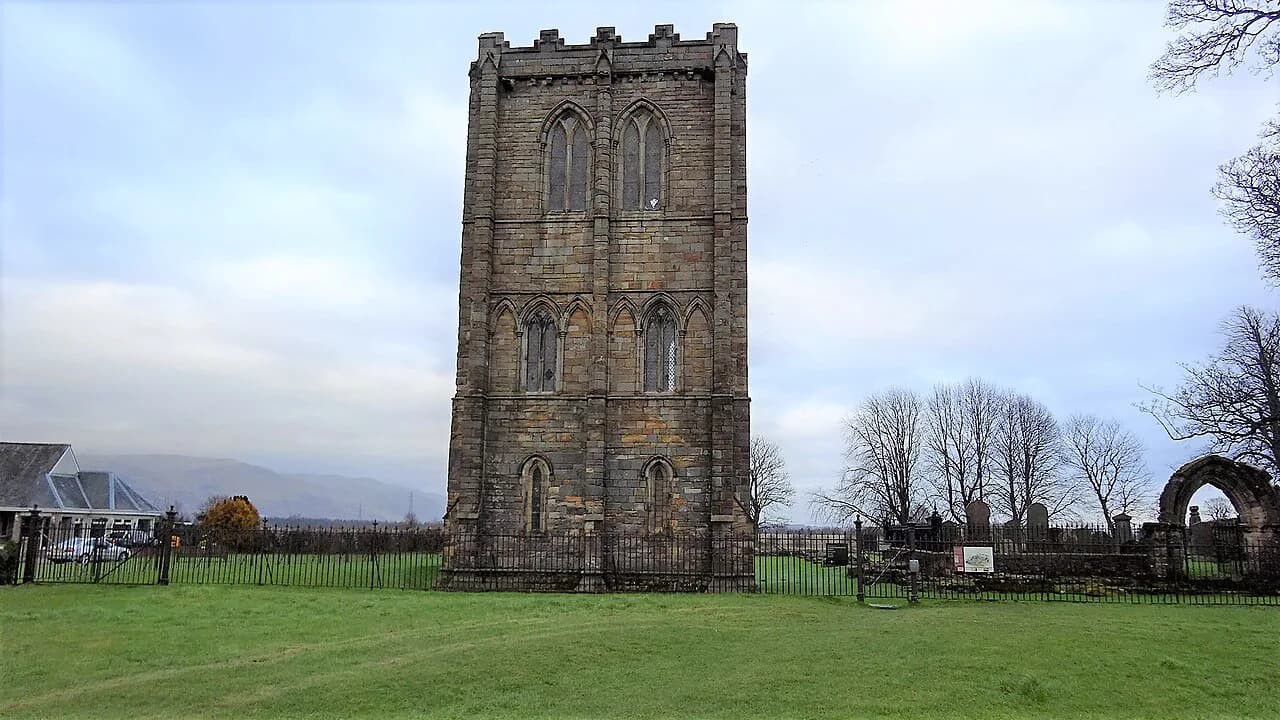
Cambuskenneth Abbey is a compact medieval ruin on the flat ground east of Stirling, and its bell tower is the reason to come. The tower has no parallel in Scotland and stands as a fine piece of 1200s architecture, with lancet windows and ornamental arcades still legible in the stone.
The site is in the care of Historic Environment Scotland, which describes it as the resting place of King James III and his wife Queen Margaret, in view of Stirling Castle. It sits one mile east of Stirling off the A907, close enough to reach on foot from the town if you have comfortable shoes.
What Cambuskenneth Abbey Is and Where It Sits
Cambuskenneth Abbey, formally the Abbey of St Mary of Cambuskenneth, was a house of Canons Regular on land enclosed by a loop of the River Forth. The official record places it one mile east of Stirling off the A907, with Stirling Castle a short distance to the west.
That geography explains the abbey's importance: it served the castle and the royal household rather than a large town. Today the setting is quiet, low-lying and riverside, a sharp contrast to the castle rock above.
History in Brief
King David I founded the abbey in about 1140 to serve Stirling Castle, which stands a short distance to the west. It became one of the more significant religious houses in medieval Scotland, closely tied to the crown rather than to a burgh.
Robert the Bruce held parliaments at the abbey in 1314 and 1326, which gives the ruins a political weight out of proportion to their size. In the 1480s the abbey became the burial place of James III and Margaret of Denmark.
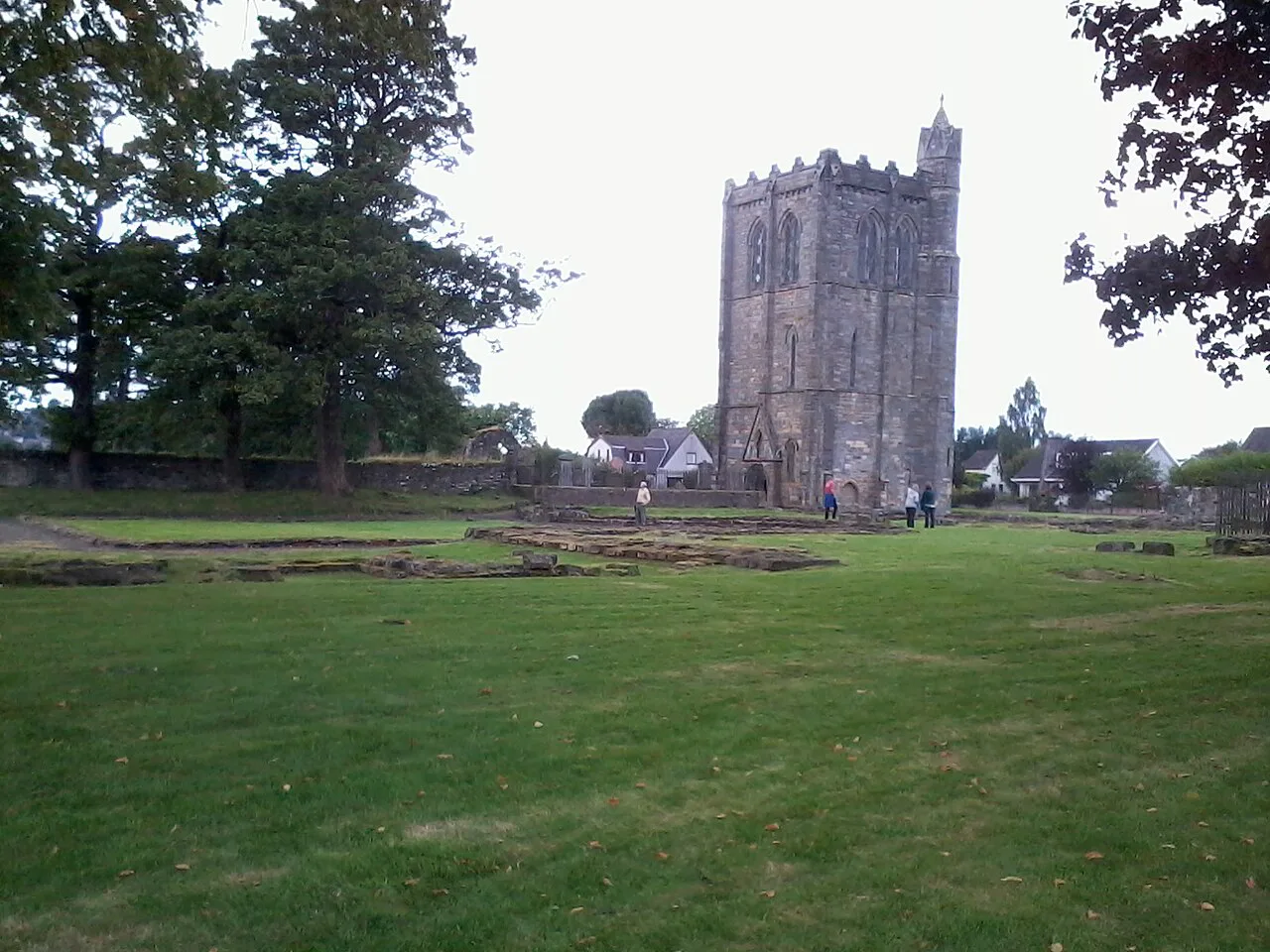
The site was suppressed at the Reformation, and what survives is essentially the bell tower, foundations and a burial ground. The abbey's history is best understood as a royal and political story rather than a monastic one.
What to See: The Bell Tower
The bell tower is the chief delight of the site and the one structure you should not rush. It is an excellent example of 1200s architecture, with good lancet windows and ornamental arcades that reward a slow walk around the base.
There are no parallels for this structure in Scotland, which is why a small ruin near Stirling draws architectural historians as well as day trippers. Look at the tower from several angles on the grass; the carved detail reads differently in morning and afternoon light.
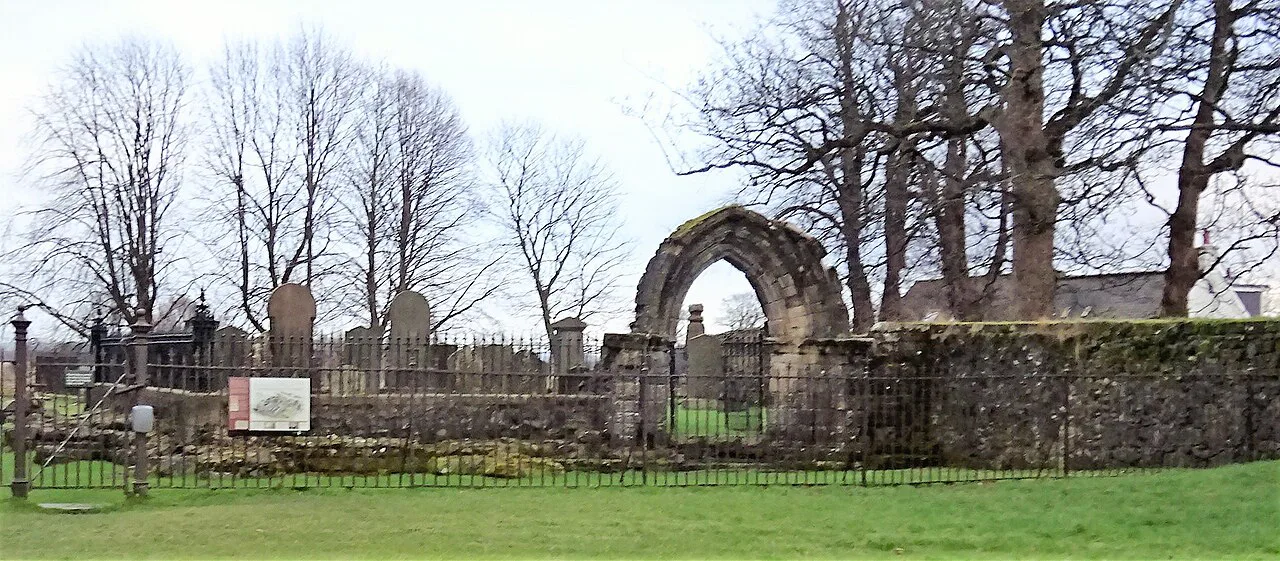
The royal grave of James III and Margaret of Denmark lies within the abbey grounds, marked and maintained as the focal point of the burial area. The surrounding churchyard holds later stones, and the flat riverside setting is pleasant for a short wander.

How Long to Allow
Allow around 30 to 45 minutes for the abbey itself: the tower, the grave and a walk around the churchyard cover a small area. If you are photographing the tower or reading the interpretation panels, an hour is ample.
The visit is outdoor and on grass and uneven ground, so wear shoes that cope with damp turf. There is no large visitor centre, so treat the abbey as a short, atmospheric stop rather than a half-day attraction.
Getting There from Stirling
The abbey is one mile east of Stirling off the A907, which makes it walkable from the town centre on a fine day. A flat riverside approach takes most people 20 to 25 minutes each way; the return leg is gentle.
By car, the approach is via the A907 and local lanes towards Cambuskenneth village; parking near the abbey is limited, so an early arrival helps. Buses along the A907 corridor serve the area, but check the current timetable for the day you travel.
If you are walking from the town, combine the abbey with the river crossing that leads towards the Wallace Monument side of Stirling. The Old Stirling Bridge is a short detour and gives the abbey a natural place in a longer riverside walk.
Opening Hours, Entry and Booking
Cambuskenneth Abbey is a Historic Environment Scotland site, and the official page carries the current opening status, access notes and any ticketing arrangements. Check that page before setting out, as the abbey is a small site and its arrangements can change with the season.
Historic Environment Scotland also sells a membership that covers entry to its ticketed sites, which is worth costing against single admissions if you plan to see several of its properties. For this abbey specifically, the current access terms are set out on the official page rather than assumed.

Nearby: Stirling Castle and the Wider Town
Stirling Castle stands a short distance west of the abbey and is the obvious pairing, giving you the royal context of the abbey's foundation and burials in a single day. It is a major ticketed attraction, so book ahead in peak season and allow at least half a day there. If the weather turns, our guide to the museums in Stirling is the natural companion for the rest of the day.
Back in the town centre, the Church of the Holy Rude and the Old Town Jail sit close together on the spine of the old burgh, and both work well as an afternoon after a morning at the abbey. The Church of the Holy Rude is a short walk from the castle esplanade.
For a wet-weather alternative, the Stirling Smith Art Gallery & Museum is a free, civilised stop with collections covering the town and its history. It sits within easy reach of the centre and pairs well with the Wallace Monument on a wider circuit. If you want to compare it with the town's other collections, our guide to the museums in Stirling covers what is free and where to go.
Plan Your Visit
Cambuskenneth Abbey is a short, rewarding stop for anyone interested in the medieval crown, Robert the Bruce's parliaments or 1200s architecture. Give it under an hour, walk out from Stirling along the river, and pair it with the castle for context.
Check the Historic Environment Scotland page for current opening and access details before you travel, then build the rest of your day around the castle and the old town. That is the most efficient way to see the abbey as part of a proper Stirling visit.
Explore more Stirling guides
Frequently Asked Questions
Who is buried at Cambuskenneth Abbey?
Historic Environment Scotland records the abbey as the burial place of King James III and his wife Queen Margaret of Denmark, whose graves date from the 1480s. The royal grave sits within the abbey grounds and is the focal point of the burial area, with later stones in the surrounding churchyard.
What is the history of Cambuskenneth Abbey?
King David I founded the abbey in about 1140 to serve Stirling Castle, and Robert the Bruce held parliaments there in 1314 and 1326. It became the burial place of James III and Margaret of Denmark in the 1480s, was suppressed at the Reformation, and today survives chiefly as its distinctive bell tower with foundations and a burial ground.
Is Cambuskenneth Abbey free to visit?
Cambuskenneth Abbey is cared for by Historic Environment Scotland, and its official page sets out the current access terms, opening status and any ticketing arrangements, including whether there is a charge or free entry. Arrangements at a small site can change with the season, so check current details before you travel.
How long does it take to visit Cambuskenneth Abbey?
Allow around 30 to 45 minutes for the bell tower, the royal grave and a walk around the churchyard, which cover a small area. Photographers and anyone reading the interpretation panels should budget an hour, and the walk out from Stirling adds roughly 20 to 25 minutes each way.
How do you get to Cambuskenneth Abbey from Stirling?
The abbey sits one mile east of Stirling off the A907, which makes it walkable from the town centre on a fine day along a flat riverside approach. By car, follow the A907 and local lanes towards Cambuskenneth village, where parking near the abbey is limited, and check the bus operator's timetable if you plan to travel that way.