
Old Stirling Bridge: A Visitor's Guide to Stirling's Medieval Crossing

Old Stirling Bridge is the handsome stone bridge that carries pedestrians across the River Forth at the northern edge of Stirling's old town. It is a medieval structure in its own right, but it is not the bridge on which William Wallace and Andrew Murray defeated the English in 1297. The confusion is understandable, and sorting the two apart is the most interesting thing you can do on a short visit.
Allow around 30 to 45 minutes on the bridge and the riverbank, longer if you walk up to the castle. Nothing here is ticketed, and the crossing works well as a first stop before the bigger sights. The Stirling Attractions hub covers everything else within walking distance.
What Old Stirling Bridge Is and Why It Matters
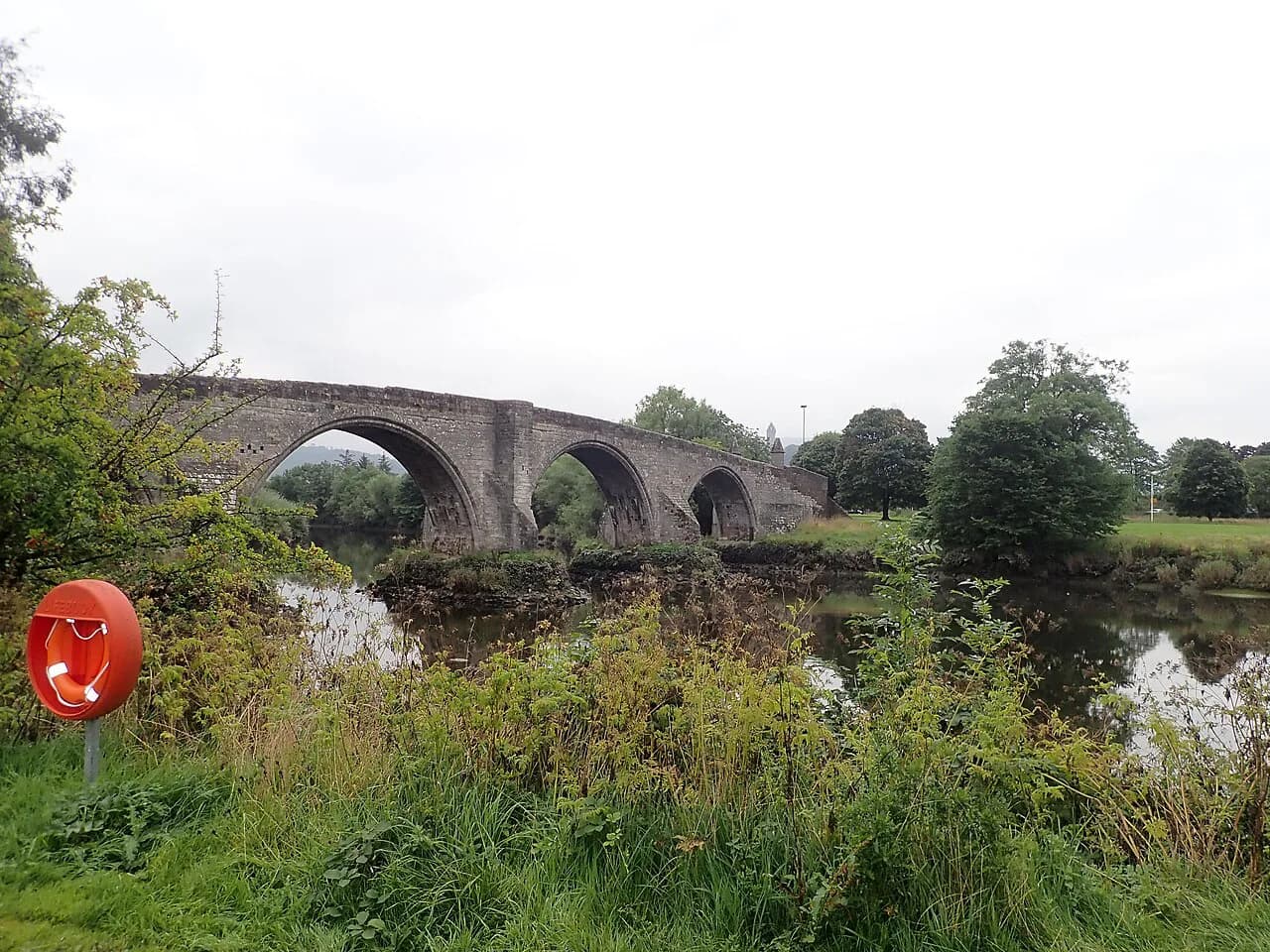
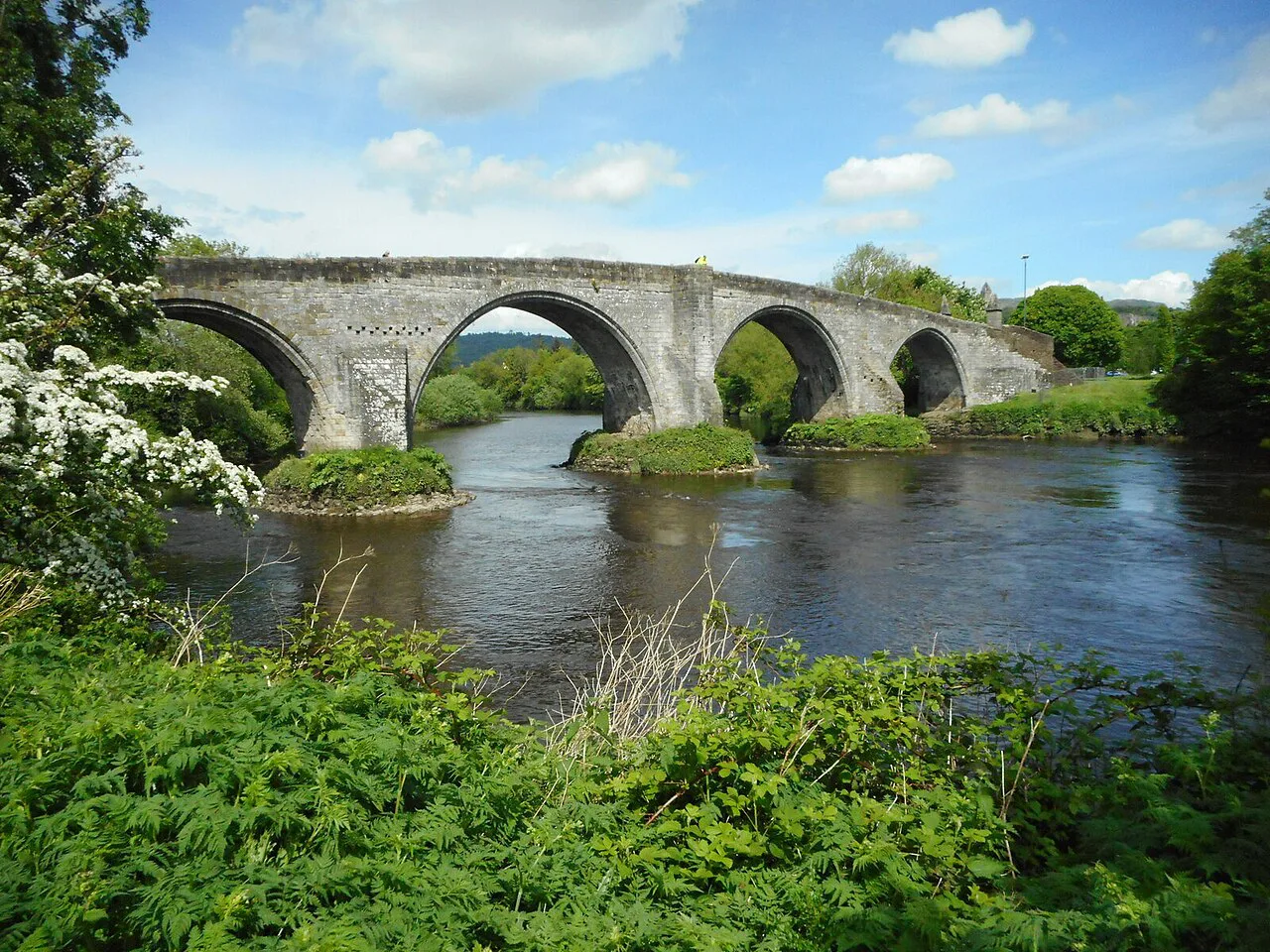
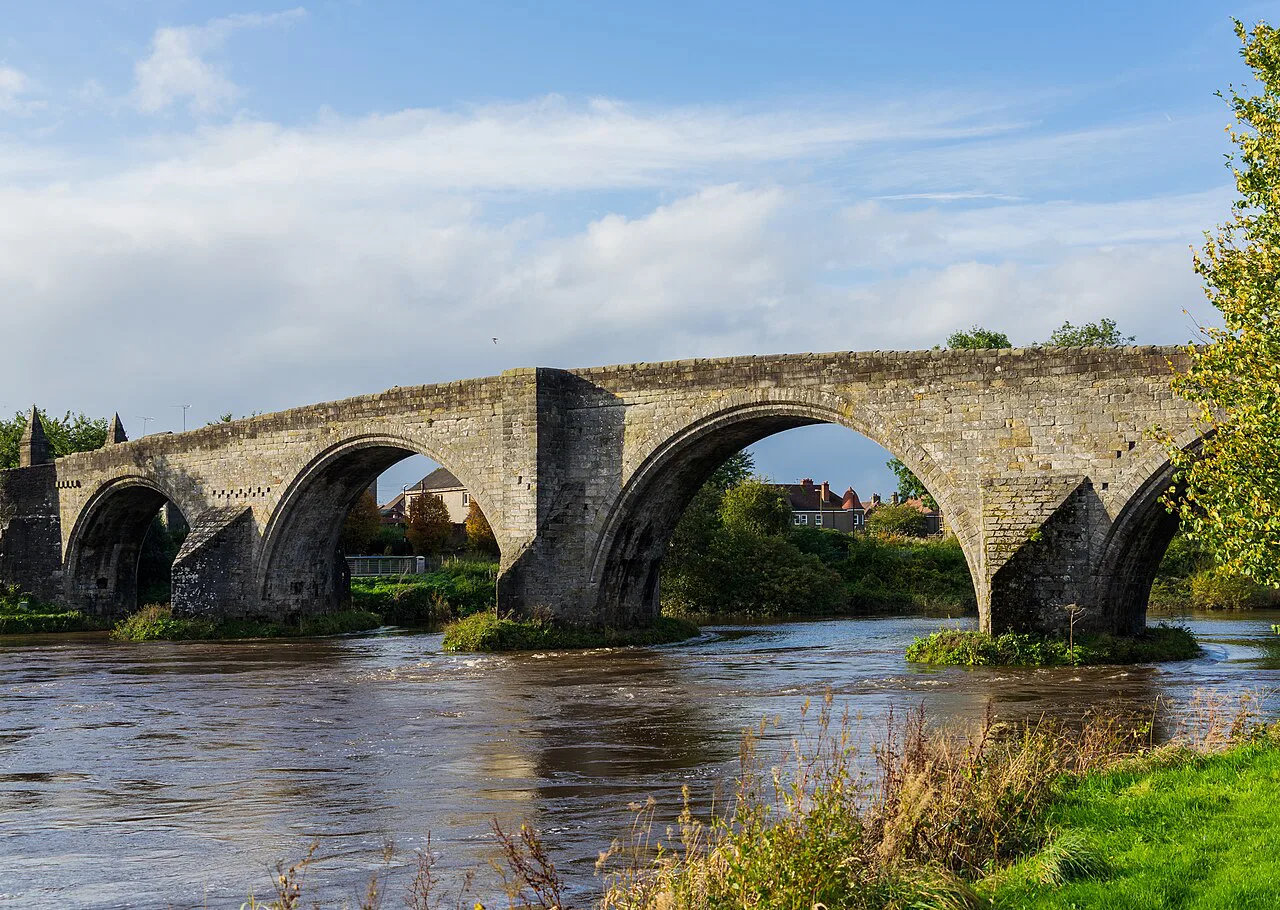
The bridge spans the River Forth just below Stirling's old town, where the river bends around the rock the castle sits on. Its four semi-circular arches and triangular cutwaters make it one of the finest surviving medieval bridges in Scotland, and it is a scheduled monument. The practical appeal for a visitor is simple: you get a proper medieval stone crossing, a river view and a direct line back to one of Scotland's most famous battles, all for the price of a short walk.
Its real value is context. Stirling sits where the Forth was historically difficult to cross, so whoever held the bridge held the road north. Standing on the bridge and looking upstream explains the 1297 campaign faster than any plaque. That geography, rather than the stonework alone, is why the site earns a place on a short break.
Where the Bridge Stands and How to Reach It
Old Stirling Bridge sits at the end of the old town, a short walk downhill from the castle esplanade via the streets around the Church of the Holy Rude and the Old Town Jail. The approach is on foot, which suits the bridge itself because it now carries pedestrians rather than vehicles.
Stirling's railway and bus stations sit on the flat ground to the south and east, roughly ten to fifteen minutes' walk from the bridge. If you are coming by train, walk up into the old town and down to the river, which brings you to the bridge with the castle behind you. The wider Stirling Attractions guide is useful for mapping the other sights onto the same walk.
The Medieval Bridge You See Today
The stone bridge is believed to date from the late 15th or early 16th century, which places it roughly two hundred years after the battle. Look for the four arches, the triangular cutwaters between them and the way the structure widens at the piers. It was built to last, in contrast to the timber crossing it replaced as the town's main route.
Walking across takes a few minutes, so the reward is in pausing. From the centre of the bridge, the river opens up in both directions, and the modern bridges of Stirling frame the view downstream. Photographers should come in low morning light if they want the arches from the bank rather than the deck.
The Battle of Stirling Bridge in 1297
In September 1297, William Wallace and Andrew Murray waited while the English army began crossing a narrow wooden bridge over the Forth. The Scots attacked before the crossing was complete, and the bridge collapsed in the retreat. Many English soldiers drowned in the river, and those stranded on the Scottish side were killed.
The battle is one of the defining Scottish victories of the Wars of Independence, and the Battlefields Trust lists it among the medieval battles it records for England and Scotland. The key point for a visitor is that the fight hinged on the bridge's narrowness, not on open ground. Two horses could cross abreast at most, which is why a large army could not deploy quickly.
The 1995 film Braveheart stages the battle in an open field, which is a cinematic invention rather than a record of the ground. Treat the film as drama and the geography in front of you as the evidence. Standing at the bridge, the reason for the Scottish advantage becomes obvious.
Finding the Real Battle Site Upstream
The wooden bridge of 1297 no longer exists, and its site was lost for centuries. In 1905 the base of the original bridge was found, and archaeological surveys in the 1990s located four of its piers roughly 65 to 75 yards upstream of the stone bridge. The piers were set on a diagonal rather than square to the river, which led surveyors to conclude the original crossing needed eight piers.
In practice, walk to the north end of the stone bridge, turn to face upstream and look along the far bank. That is the stretch of water where the wooden bridge stood and collapsed. Nothing remains above ground to mark it, so the visit is about reading the river rather than inspecting masonry.

Reading the Plaque and the Old Common Seal
A plaque at the end of the stone bridge carries a depiction of the Old Common Seal of the Burgh of Stirling, which shows the bridge with eight piers. The seal is the earliest known depiction of the bridge, and its earliest surviving use dates to 1296, a year before the battle. The plaque's wording presents the stone bridge as the battle site, which is worth knowing before you read it.
The seal itself is the more revealing object. Eight piers on the seal match the reconstruction from the 1990s surveys, which is a neat piece of historical detective work you can follow on the spot. Look at the seal image, count the arches, then look upstream.
What to See From the Bridge
The River Forth runs clear and shallow here, and the view takes in three more bridges: two modern road crossings and the stone bridge itself. Herons and gulls are common on the banks, and the riverside paths connect towards the lower town. It is a good place to sit for ten minutes rather than rush across.
Upstream, the Forth curves past Cambuskenneth Abbey, the Augustinian house founded in the 12th century and now a ruined tower and garth on the north bank. It is a separate visit, but the view from the bridge gives you the lie of the land.
How Long to Allow and What to Wear
Budget 30 minutes for the bridge, the plaque and the upstream view, or an hour if you also walk the riverbank paths. The surface is uneven stone with a camber, so flat shoes are more comfortable than heels. The crossing is exposed, and Stirling's weather does not shelter you, so a waterproof layer earns its place even on a promising morning.
If you are combining the bridge with the castle, allow two to three hours in total and do the bridge first. The climb back up to the old town is short but steep in places, with cobbles underfoot. That order also means the castle, with its exhibitions and viewpoints, comes when you still have energy.

Tickets, Opening and Access
There is no ticket office, gate or admission charge for the bridge; it is a public crossing on foot. It is a scheduled monument, so the structure is protected and maintained as a historic asset rather than run as a visitor attraction. That means no opening hours to plan around and no café or shop on site.
Accessibility is the one thing to weigh up. The deck is stone with a camber and the approaches involve slopes and cobbles, so wheelchair users and people with limited mobility may find the riverside paths easier than the bridge itself. Anyone with concerns can check the current position with Stirling Council or Historic Environment Scotland before travelling.
Nearby: Stirling Castle and the Wider Battle Landscape
Stirling Castle dominates the skyline directly above the bridge, and the walk up through the old town passes the Church of the Holy Rude, where James VI was crowned in 1567. The castle is the natural next stop and the anchor of any Stirling day.
North-east of the city, the National Wallace Monument stands on Abbey Craig and looks over the ground the Scottish army occupied before the 1297 battle. It is a separate ticket and a stiff climb, but it completes the story the bridge begins. Bannockburn House, associated with Bonnie Prince Charlie, lies south of the river for anyone following the Jacobite thread.
Back in town, the Stirling Smith Art Gallery & Museum holds collections covering the city's history and is a sensible wet-weather companion to the outdoor sights. If you want more indoor options, the museums in Stirling guide covers the rest.
Practical Tips for a Short Visit
Come on foot, start at the old town and walk down, then follow the river path for a loop before climbing back. Read the plaque after you have looked upstream, not before, so the seal and the eight piers mean something. The bridge works best as a 30-minute stop with a story attached, not as a destination in its own right.
If you only have one day in Stirling, pair the bridge with the castle in the morning and the Wallace Monument in the afternoon. If you have longer, add the Church of the Holy Rude and the Old Town Jail on the walk between them. For the full menu, the things to do in Stirling page sets out the options.
Plan Your Visit
Old Stirling Bridge rewards a short, well-informed stop rather than a long one. The stone arches are late medieval, the battle site is upstream, and the plaque is worth reading with that in mind. Give it half an hour, look both ways along the river, and you will have seen the reason Stirling mattered.
Frequently Asked Questions
Is Old Stirling Bridge the bridge where the Battle of Stirling Bridge was fought?
No. The surviving stone bridge is believed to date from the late 15th or early 16th century, around two hundred years after the 1297 battle. The wooden bridge Wallace and Murray fought over collapsed during the battle and stood roughly 65 to 75 yards upstream.
Where was the original Stirling Bridge?
Upstream of the stone bridge. The base of the original crossing was found in 1905, and surveys in the 1990s located four piers about 65 to 75 yards upstream of the bridge you see today. Stand at the north end of the stone bridge and look upstream to face the site.
When was Old Stirling Bridge built?
It is believed to date from the late 15th or early 16th century, according to its scheduled monument record. No precise build year is recorded, so treat any exact date you see elsewhere with caution.
Who won the Battle of Stirling Bridge?
The Scots, under William Wallace and Andrew Murray. They attacked while the English army was still crossing the narrow wooden bridge, which collapsed in the retreat, drowning many of the English soldiers and leaving others stranded.
Can you walk across Old Stirling Bridge?
Yes. The bridge carries pedestrians and is a public crossing with no ticket or gate. The deck is uneven stone with a camber, and the approaches include slopes and cobbles, so the riverside paths may suit people with limited mobility better.
How long does it take to visit Old Stirling Bridge?
About 30 to 45 minutes covers the crossing, the plaque and the upstream view of the original battle site. Allow an hour if you add the riverbank paths, and two to three hours if you combine it with Stirling Castle.
Is Old Stirling Bridge free to visit?
Yes. It is a public crossing on foot with no admission charge, no ticket office and no opening hours. It is a scheduled monument rather than a staffed attraction, so there are no facilities on site.
What is there to see near Old Stirling Bridge?
Stirling Castle and the Church of the Holy Rude are a short climb up through the old town, and the National Wallace Monument looks over the battle landscape from Abbey Craig. Cambuskenneth Abbey lies upstream along the Forth.