
Wallace Monument: A Visitor's Guide to Stirling's Abbey Craig Tower

The National Wallace Monument is a stone tower on Abbey Craig, the crag that rises above Stirling at Causewayhead, and it is the city's landmark memorial to Sir William Wallace. It is a single paid attraction rather than a site with grounds to wander, so the visit is built around the tower itself and the outlook from the top. Allow half a day once you add the walk up from the base.
Plan the trip around two things: getting up the crag, then getting up the tower. Neither is hard, but both mean time on your feet, and the weather on an exposed hill above the town can differ from the streets below.
Where the Wallace Monument stands
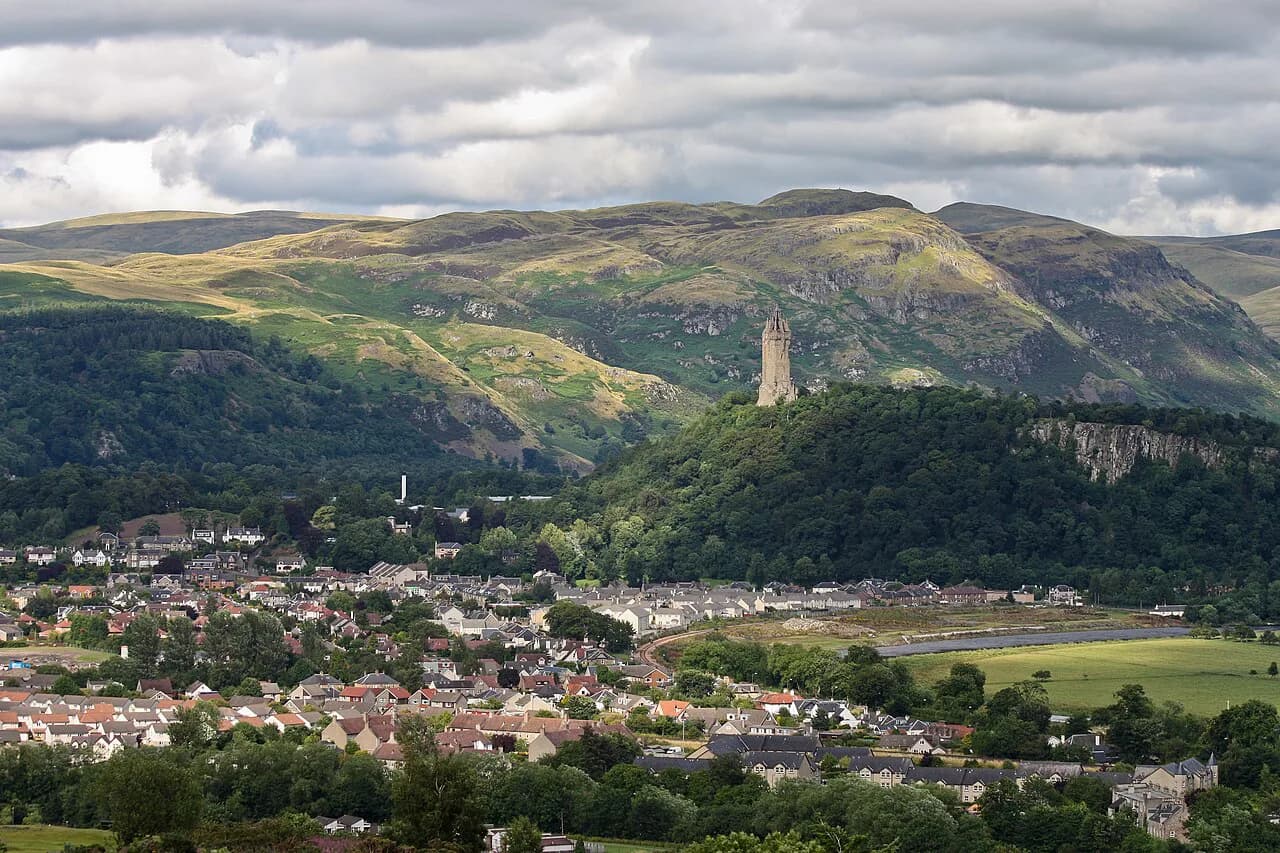
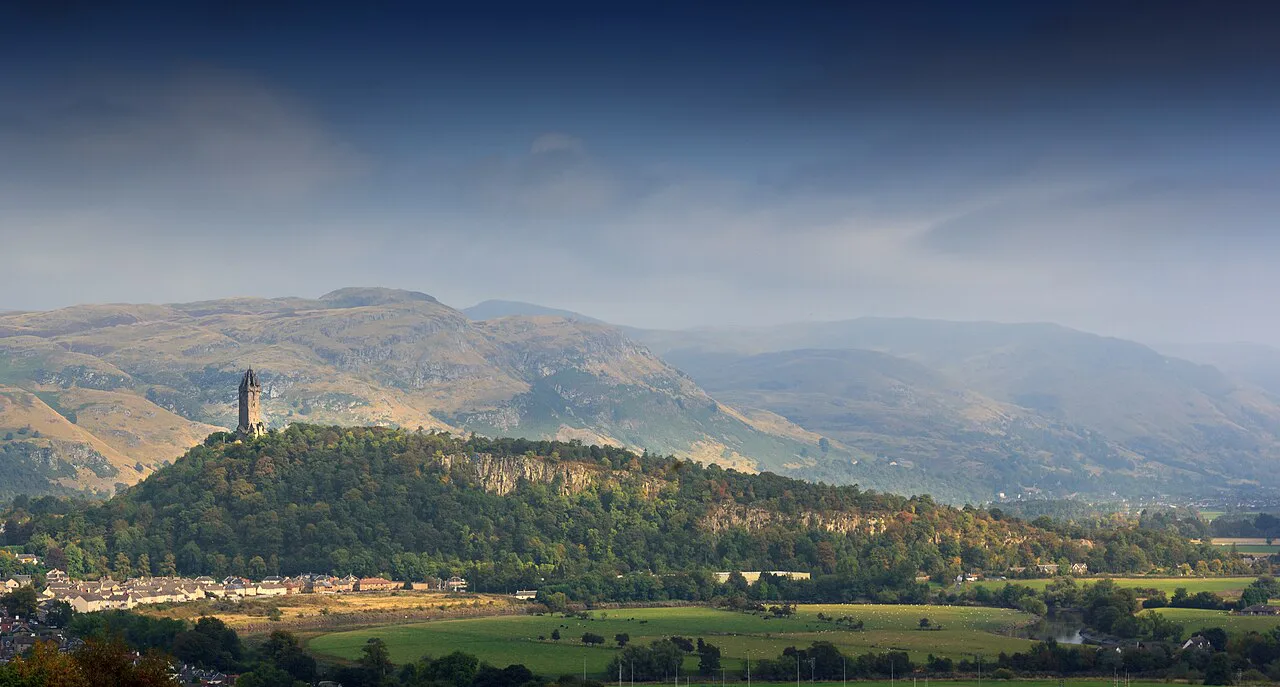
The monument sits on Abbey Craig at Causewayhead, on the north-east edge of Stirling and close to the road that leads on towards the Ochil Hills. The Wallace Monument is not in the town centre: whichever way you arrive, the last stretch is on foot, uphill, through the wooded approach to the crag.
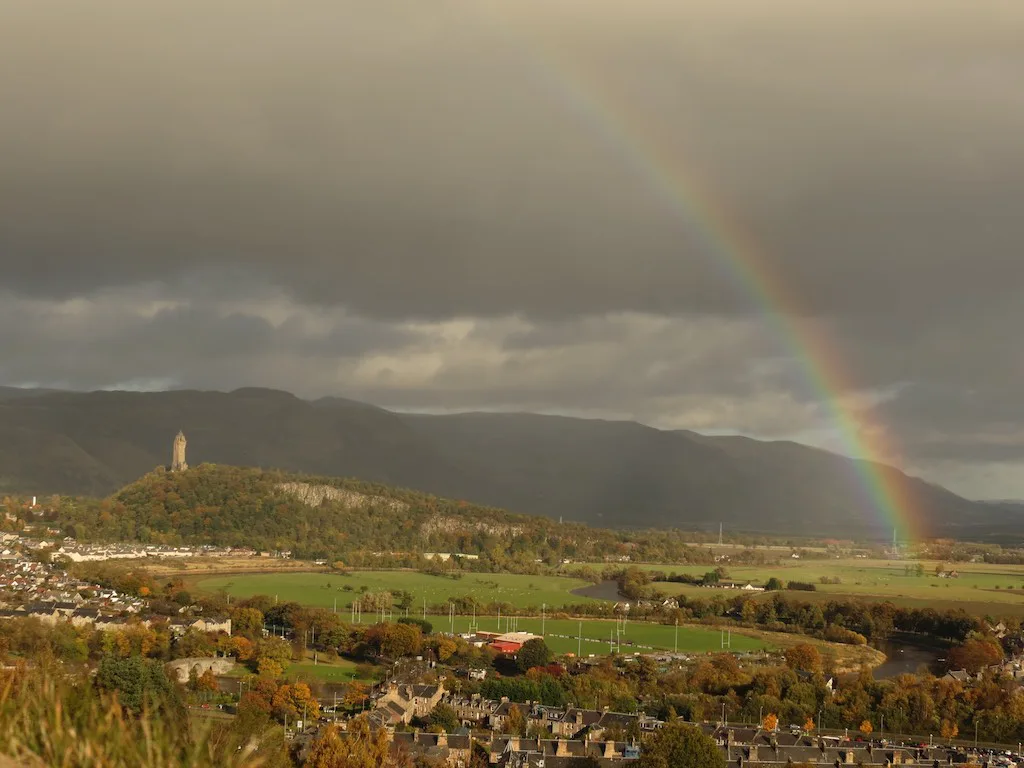
That siting is the point of the place. Abbey Craig looks straight down on the plain where the Battle of Stirling Bridge was fought, with the Old Stirling Bridge and the tidal River Forth below, so the tower works as a vantage point over the battlefield as much as a memorial. Continue past the town centre towards Causewayhead rather than stopping at the castle.
Who William Wallace was and why the tower was built
Sir William Wallace was a Scottish military leader and Guardian of Scotland who fought the English crown in the Wars of Independence around the turn of the fourteenth century. His best-known victory came at the Battle of Stirling Bridge in 1297, which is why a memorial to him belongs on this ground above Stirling.
The tower itself is a Victorian monument rather than a medieval one, raised from public subscription in the nineteenth century to honour Wallace. Inside, the displays are organised around his life and legacy, with the upper floors given over to the outlook rather than to artefacts alone.
Stravaigin runs a small-group day tour from Edinburgh and Glasgow that combines Stirling Castle with the Wallace Monument, then Doune Castle and Glengoyne Distillery, with a lunch stop at the Oak Tree Inn subject to availability. It is a driver-guided minibus day for one to sixteen people, priced on request rather than as a fixed ticket, and the tour stop at the monument keeps its own access arrangements separate.
The climb to the top
Treat the visit as an ascent in two parts: the walk from the lower ground up to the tower, then the internal climb to the viewing level. The tower is a tight, historic structure, so expect narrow stairs, one-way flow at busy moments and a wait when several groups arrive together.
The National Wallace Monument's own visitor information is the place to confirm the step count, what is on show on each floor and whether lift access is available, rather than a leaflet written years ago. If anyone in your group struggles with stairs or confined spaces, decide before you set off whether they wait at the base or stop partway.
Views from Abbey Craig
The reward is one of the best viewpoints in central Scotland: the Forth valley, the roofs of Stirling and the castle rock on the far side of the plain. Bring binoculars if you have them, because the interesting detail — the battlefield ground, the bridges, the castle's position — is small at this distance.
Allow somewhere between one and two hours for the whole thing: the walk up, the tower, time at the top and the descent. Add longer on a fine weekend, when the top gets crowded and the stairs move slowly.

Tickets, opening hours and booking ahead
The tower is a ticketed attraction, so buy through the National Wallace Monument's official site before you travel, where current prices, opening times and any seasonal closures are set out. Booking online also settles the question of whether the tower is selling slots on the day you want.
There is no useful purpose in turning up assuming entry is free: this is not one of the national collections, and the monument runs its own admission and its own calendar. Check the official site the evening before your visit if you are travelling any distance.
Getting there from Stirling
From Stirling city centre the usual approach is on foot, heading east through the town and on towards Causewayhead before climbing the signed path to the monument. The walls of Stirling Castle and the Old Town sit on the opposite side of the centre, which is worth knowing if you are linking the two in one day.
Walking Tours in Stirling runs a 1.5-hour Old Town tour from outside the Old Town Jail on St John Street, daily at 11am with a 2pm departure from May to October, advanced booking essential, from £12 per adult and £6 per child. It covers Stirling's streets, jails and history rather than the monument itself, so treat it as a separate half-day and not as transport to Abbey Craig.
If you are driving, park at the base of the crag and finish on foot, since the last stretch to the tower is a walking route. Buses along the Causewayhead road will save the town-centre leg, but they do not remove the climb.
What to pair with the Wallace Monument
Cambuskenneth Abbey lies about a mile east of Stirling off the A907, founded around 1140 by King David I to serve Stirling Castle and used by Robert the Bruce for parliaments in 1314 and 1326. It is in the care of Historic Environment Scotland, and its thirteenth-century bell tower is the reason to come; the abbey has its own opening arrangements, so check before making the walk.
On the town side, Stirling Castle and the Old Town give you a full day if you start at the monument in the morning. The Church of the Holy Rude, next to the castle, is the natural companion for anyone following Stirling's royal and Reformation history. If you want more indoor options, the museums in Stirling fill a wet afternoon. For a broader plan covering the castle, old town walks and ghost tours, see our guide to things to do in Stirling.

Practical trade-offs
The honest trade-off is between interior and outlook. Anyone who cannot manage the stairs still gets the crag, the woodland walk and the view from outside the tower, but misses the exhibition floors and the top. Those who make the climb should give themselves permission to take it slowly, because the stairwell is not somewhere to hurry.
Weather matters more than it looks on a town-centre forecast: Abbey Craig is exposed, and wind and rain arrive faster at the top than in the streets below. Wear shoes with grip for the path, carry a waterproof, and keep an alternative indoor plan for the afternoon.
Legends and ghost stories
Stirling and the surrounding countryside carry a thick layer of ghost lore, and Bannockburn House is the local example: the stories attached to it include a servant girl on the balcony, footsteps in empty passages and Bonnie Prince Charlie's presence in his former bedroom. These are legends and reported experiences, not documented fact, and they are told for atmosphere rather than as history.
Wallace himself attracts folk tales as much as historical record, and films have added their own layer to the popular image. Enjoy the stories, then treat the tower's displays and the battlefield ground below as the solid account.
Plan Your Visit
Build the Wallace Monument into a Stirling day rather than treating it as a quick stop: walk up from Causewayhead, give the tower an hour or more, and come down via the Old Town or Cambuskenneth Abbey. If the monument leaves you wanting more of the town's history, our guide to things to do in Stirling covers castle, old town walks and ghost tours. Book admission on the official National Wallace Monument site before travelling and confirm the day's opening times.
Start with our Stirling Attractions: 8 Visitor Guides if you are still deciding what else to see, then sort out things to do around the castle and old streets.
Explore more Stirling guides
Frequently Asked Questions
How many steps are there to the top of the Wallace Monument?
The exact step count and the details of the internal climb are best taken from the National Wallace Monument's own visitor information, which sets out the route to the viewing level and any access restrictions. What you can rely on is that it is a historic tower with a narrow stairwell, so allow time and skip the climb if stairs are difficult.
Who was Sir William Wallace?
Wallace was a Scottish military leader and Guardian of Scotland who resisted the English crown during the Wars of Independence. His victory at the Battle of Stirling Bridge in 1297 is the reason the monument stands on Abbey Craig above the battlefield.
When was the Wallace Monument built?
The tower is a Victorian memorial rather than a medieval structure, raised by public subscription in the nineteenth century. The National Wallace Monument's own site gives the construction dates and the history of the campaign behind it.
How long does it take to visit the Wallace Monument?
Plan on one to two hours including the walk up from the base, the exhibition floors, the view from the top and the descent. Add more time at weekends and in fine weather, when the stairs and the top get busy.
Do you need to book Wallace Monument tickets in advance?
Advance booking through the official National Wallace Monument site is the sensible move, especially in summer, because it secures your entry and confirms that day's opening arrangements. Admission is ticketed, so there is no free walk-in option.
How do you get to the Wallace Monument from Stirling city centre?
Walk east from the centre through Causewayhead and follow the signed path up Abbey Craig, or take a bus along the Causewayhead road to shorten the town leg. The final climb is on foot either way, and drivers park at the base of the crag.