History of Stratford-upon-Avon: What to See and Decide
Trace the history of Stratford-upon-Avon from its Saxon river crossing to Shakespeare's birthplace, with the streets and buildings where that story survives.
On this page
Stratford-upon-Avon started as a Saxon settlement at a crossing of the River Avon, and its name still points to that ford. The town grew into a medieval market centre, and its Tudor timber-framed streets survive alongside the houses tied to William Shakespeare. This guide follows that story chronologically and tells you which buildings to look for at each stage.
The name and the ford: straet-ford on the Avon
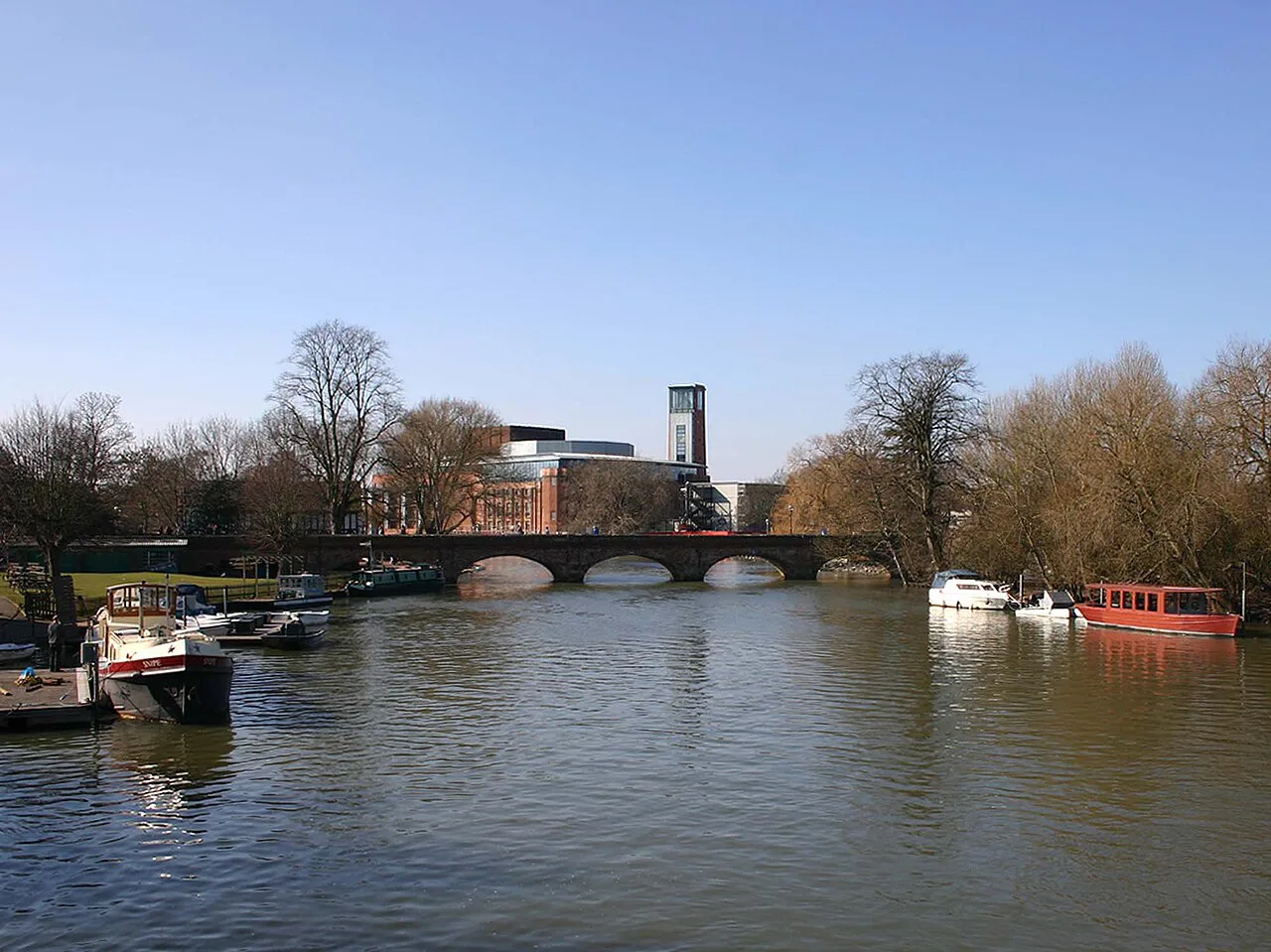
The name Stratford comes from an Old English phrase meaning a street or Roman road by a ford, and the town's origins lie in the Saxon culture of medieval England. The River Avon was crossable here, which is why a settlement formed at this point rather than elsewhere along the valley. When you walk the riverside today, the Bancroft Gardens and the theatre sit on ground that has always been defined by the water.
The Avon is not just scenery: it shaped the town's layout, its trade and its later leisure economy of boat trips and riverside walks. Stand on the bridge or the Bancroft Gardens and you are looking at the reason Stratford exists in this spot. That makes the river a sensible first stop on any history walk.
Medieval market town and Tudor streets
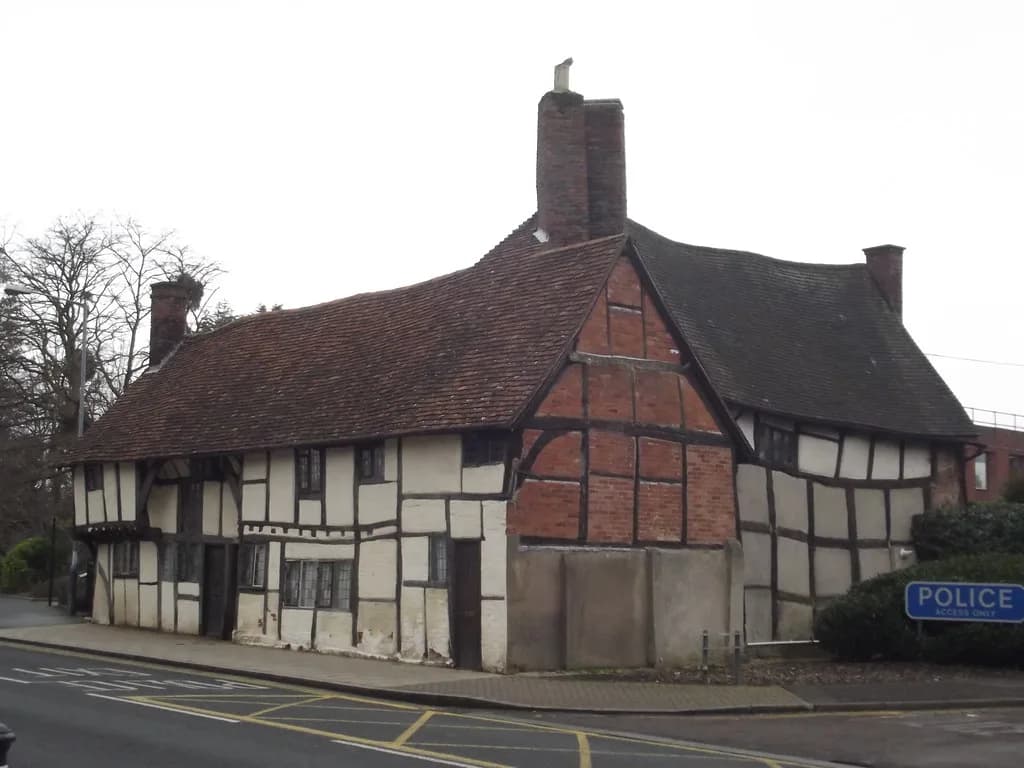
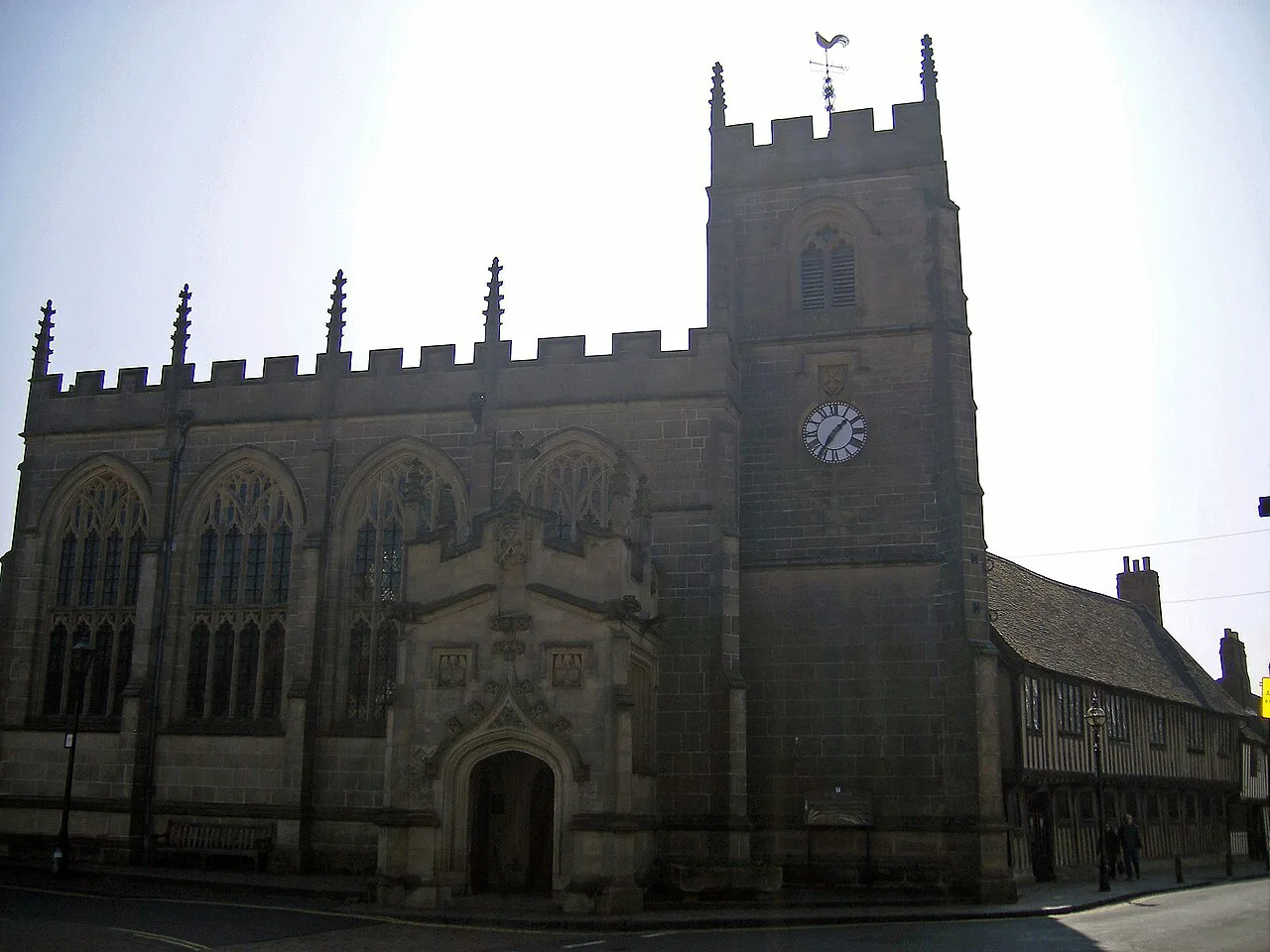
Stratford developed as a medieval market town, and its centre is still a compact grid of streets you can cover on foot. The black-and-white listed Tudor buildings are the most visible legacy, and they give the town centre its distinctive look. Henley Street, Sheep Street and the roads around the Guild Chapel reward a slow wander rather than a checklist.
Shakespeare's Schoolroom and Guildhall is one of the stops that connects the medieval town to the playwright's boyhood. It offers Tudor school lessons, dressing up, Tudor games, quill-and-ink writing and medieval wall paintings, so it works for adults and children alike. Allow time to read the interpretation rather than rushing through.
For the town's architecture as a subject in its own right, the streetscape of timber framing, jettied upper floors and later Georgian frontages is worth a dedicated look. If you want to understand how these buildings were constructed and changed, start with the overview of Stratford-upon-Avon architecture before you walk.
Shakespeare's family and Henley Street
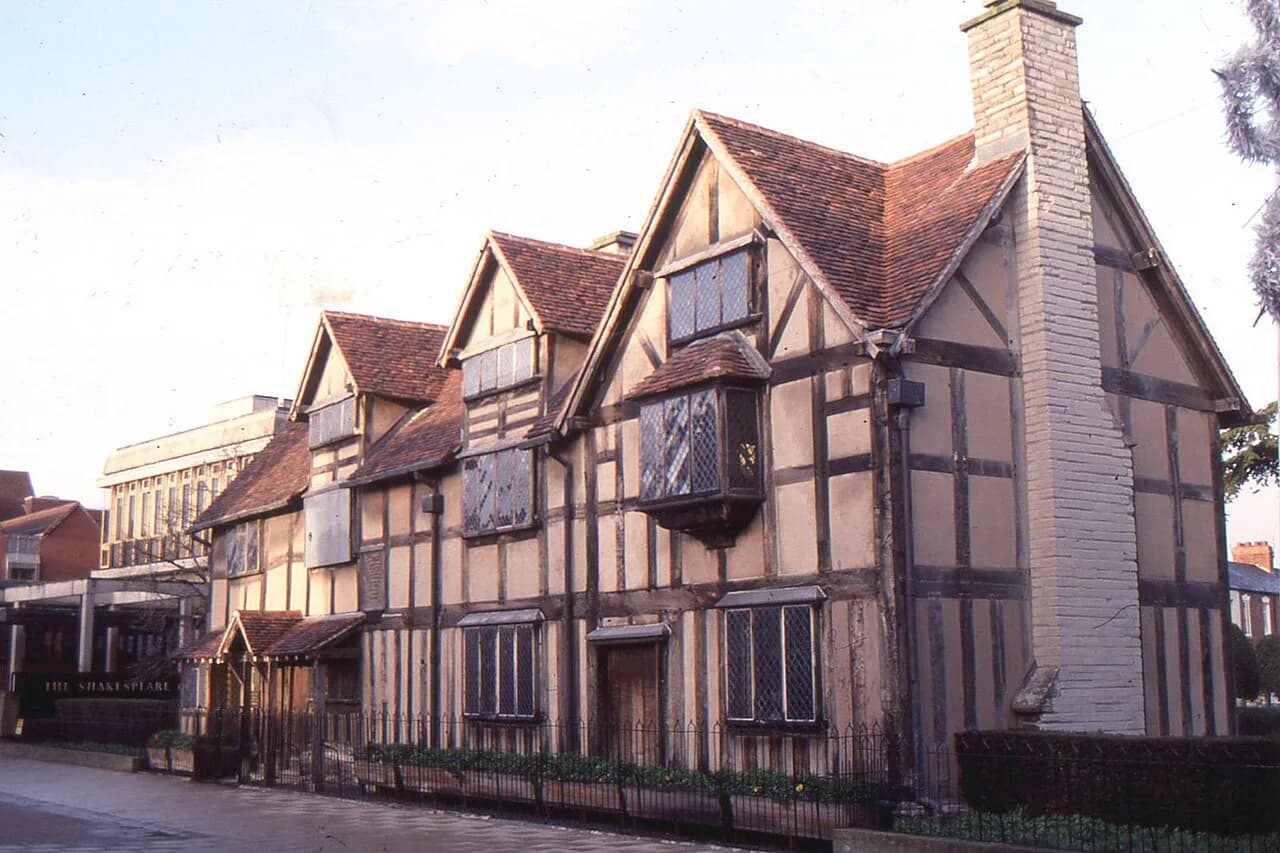
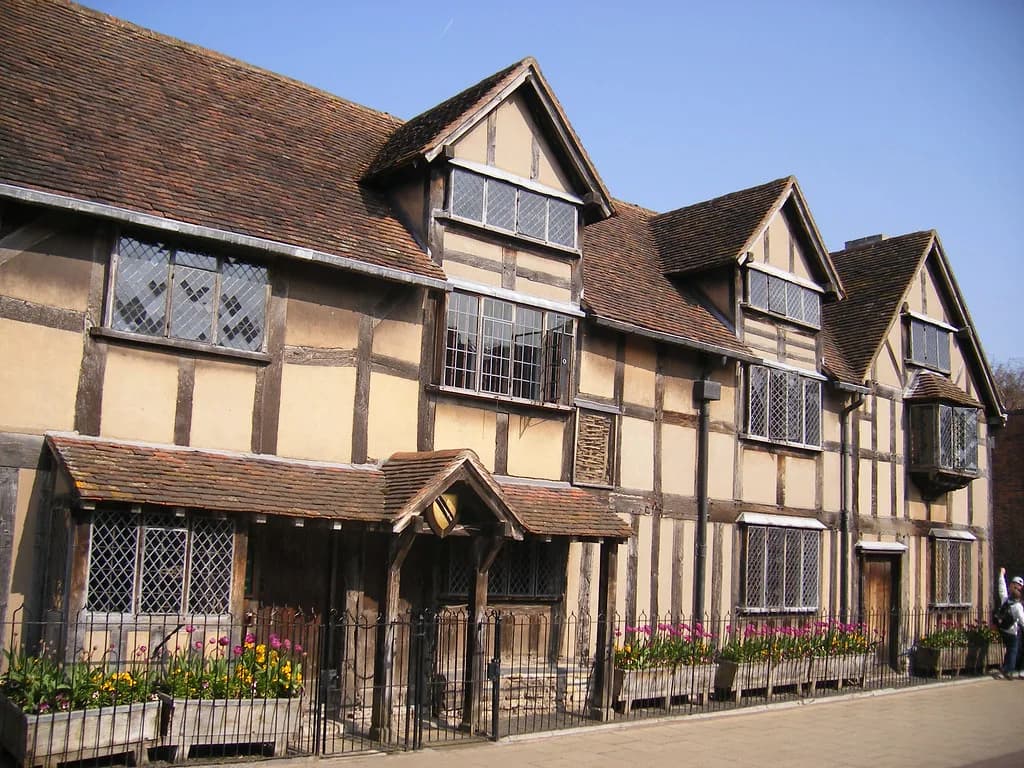
William Shakespeare was born in a house on Henley Street, the largest house in its neighbourhood. He was one of eight children and the eldest surviving child, and he inherited the family home. The building stayed in the Shakespeare family until the late 18th century, which is why so much of its fabric and story can be traced.
The Shakespeare Birthplace Trust bought the house in 1847 and restored it between 1857 and 1864, using original materials to bring it back towards its 16th-century appearance. Next door, the Shakespeare Centre holds an exhibition of his work, with manuscripts and items preserved from his career. That combination of rescued house and modern exhibition is what makes Henley Street the anchor of any Shakespeare history walk.
Five residences in and around Stratford are associated with Shakespeare and his family, so Henley Street is a starting point rather than the whole story. The Birthplace is the one most visitors prioritise, and the exhibition in the Shakespeare Centre adds context you will not get from the house alone. Buy or check tickets for the Birthplace before you set out, because it is a ticketed site.
Anne Hathaway's Cottage at Shottery and Hall's Croft
Anne Hathaway's Cottage stands at Shottery, a short stroll from the centre of Stratford, and it is the farmhouse linked to Shakespeare's wife. It is a thatched building set in rural gardens, and the story of the couple's courtship is traditionally attached to it. Treat that as legend and reputation rather than documented fact, but the building itself is real enough.
Hall's Croft was home to Shakespeare's daughter Susanna and her husband John Hall, a physician. The house is notable for the herbs and plants grown by John Hall, whose medicines drew on natural ingredients. The garden is the reason to linger here rather than treat it as a quick photo stop.
These two houses work best as a pair on foot: Shottery is a pleasant walk out of town, while Hall's Croft sits back in the centre. Sequence them so you are not doubling back, and check opening arrangements for each before you go, since they are separate ticketed sites.
New Place: the house Shakespeare lived in from 1597
Shakespeare reportedly lived at New Place from 1597, and it was here that he is said to have worked on some of his greatest plays. The house was demolished in 1759, so there is no building to walk through today. What remains is the site, marked by a sunken garden designed by the historian Ernest Law in remembrance of Shakespeare's family home.
New Place is therefore the most poignant stop on the trail: a place of loss rather than preservation. Artworks guide visitors around the space and encourage you to imagine the world the writer drew on. Go in expecting a garden and an exhibition rather than a restored interior.
It also shows how much of Stratford's history is about rescue and reconstruction rather than simple survival. The Birthplace was saved in the 19th century; New Place was lost in the 18th. Seeing both in one day makes that contrast clear.
Harvard House and the Elizabethan merchant town
Harvard House, also known as the Ancient House, is a Grade I Elizabethan townhouse on the quieter side of the town's story. It was owned and commissioned by the grandson of John Harvard, the founder of Harvard University. Inside are intricate architectural features, interiors and furnishings that show the wealth of Stratford's merchant class.
Places like Harvard House broaden the picture beyond Shakespeare: Stratford was a working market town with prosperous merchants and craftsmen. Include it if you want the social history rather than only the literary one, and pair it with a wander down the surrounding streets.
Because the Shakespeare houses dominate the marketing, it is easy to skip the merchant town completely. That would be a mistake if you are interested in how the town actually lived. A short detour to Harvard House fills that gap.
The Victorian rescue of the Birthplace
By the early 19th century the Birthplace had passed out of the Shakespeare family, and it was the Shakespeare Birthplace Trust, formed in 1847, that bought and saved it. The restoration between 1857 and 1864 used original materials to return the house towards its 16th-century appearance. That campaign is the reason the building survives for visitors today.
The Victorian rescue also set the template for how Stratford presents its heritage: house, exhibition and trust-led interpretation. Once you know that, the layout of Henley Street makes more sense. The Birthplace is not a frozen Tudor house but a 19th-century restoration of one.
If you want the wider context of the town's museums and how they are run, the guide to museums in Stratford-upon-Avon is the natural next read. It explains which sites belong to which organisation and what to expect from each.
The Royal Shakespeare Company and the theatres
All three of Stratford's playhouses belong to the Royal Shakespeare Company. The Royal Shakespeare Theatre reopened in 2010 after a multimillion-pound redevelopment of the 1986 building, with three tiers curving around the stage, an art deco aesthetic and more than 1,000 seats. The rooftop bar and restaurant overlook the River Avon and Bancroft Gardens.
The Swan seats around 450 and is the more intimate of the two main houses, with a stage that extends into the audience. The Other Place began as a temporary steel extension and won design awards before becoming a permanent arts space. Seeing a production is the best way to experience the RSC's role in the town's cultural life, but check what is on before you build a trip around it.
If you prefer visual art to theatre, the art galleries in Stratford-upon-Avon cover the commercial and public spaces worth a look between house visits. It rounds out a cultural day when the theatre is dark.
A heritage walk linking the streets, houses and river
A logical walking sequence is Henley Street for the Birthplace and Schoolroom, then Sheep Street towards Hall's Croft, out to Shottery for Anne Hathaway's Cottage, and back via New Place and Harvard House to the riverside. The whole loop is on foot and the distances are short, though Shottery adds a rural stretch. Allow a full day if you want to enter several houses.
Organised walks add context you will not get from plaques. Stratford Town Walk is described by the official attractions listing as a daily, award-winning guided walk established in 2002, and Shakespeare's Walking Tour presents the playwright's life and times in character. The Go Quest Adventures app offers a self-guided treasure hunt if you prefer to go at your own pace.
If you want a structured approach, the Stratford-upon-Avon walking tour guide sets out routes and stops in more detail. Pair it with the broader attractions overview for opening arrangements.
Practical notes: free and ticketed sites, and how long to allow
The Shakespeare family houses, including the Birthplace, Anne Hathaway's Cottage, Hall's Croft and New Place, are ticketed and run by the Shakespeare Birthplace Trust. The riverside, Bancroft Gardens and the streets themselves are free to walk. Check current prices and opening times on each site's own pages before you travel, because they change seasonally.
Half a day covers Henley Street and the town centre on foot; a full day lets you add Shottery and one or two interiors. Wear comfortable shoes, since the pavements are old and uneven, and keep a map or phone handy for the walk out to the cottage. The town is compact enough that you will rarely need transport once you are in the centre.
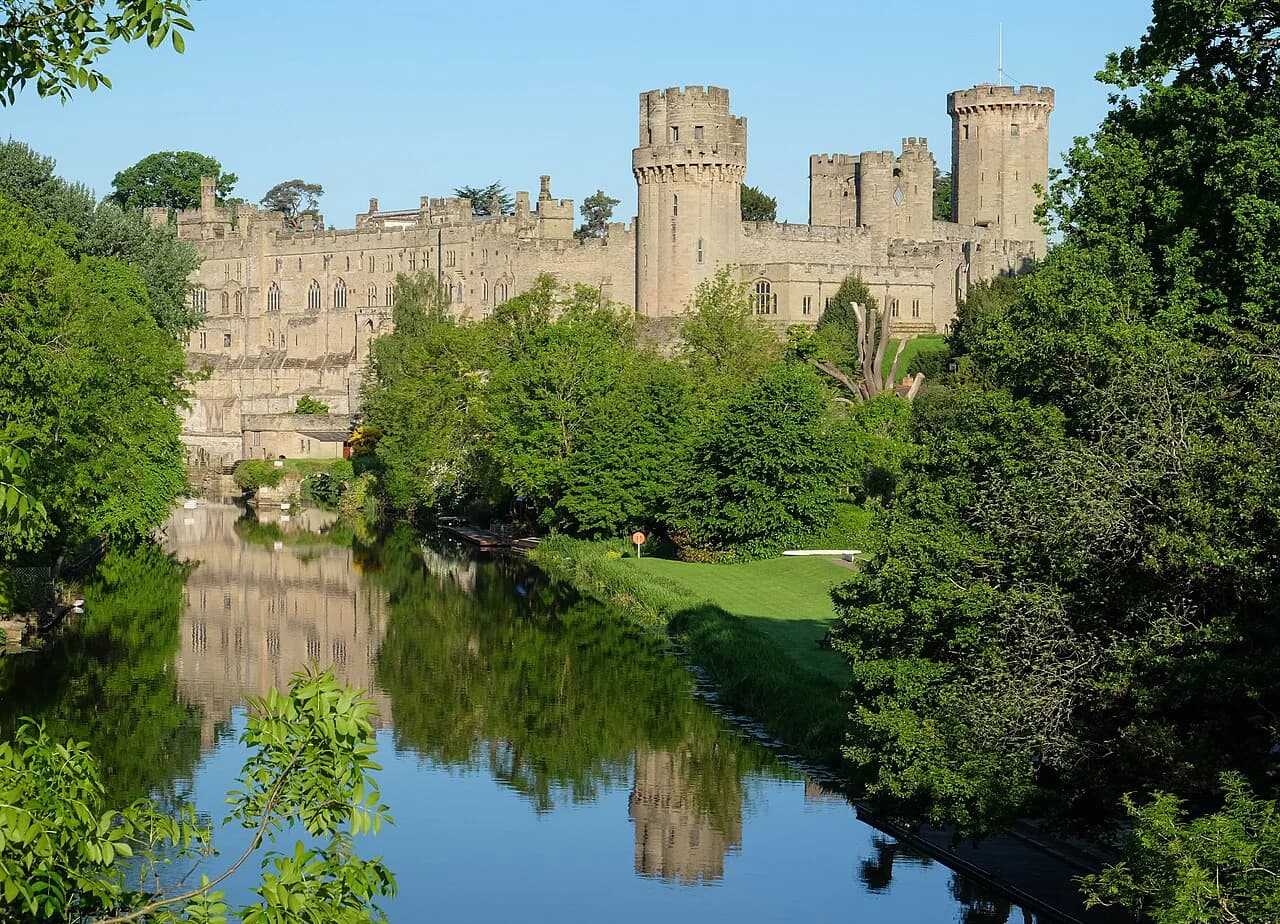
If castles are part of your trip, castles near Stratford-upon-Avon such as Warwick Castle make a sensible day out from the town. The history of Liverpool offers a useful comparison for another city's story, with its River Mersey crossing and maritime past.
Where to stay and eat around the historic core
Staying near Henley Street, Sheep Street or the riverside puts the whole history trail within walking distance. The Dirty Duck, about 100 yards from the ice cream boat by the river, is a traditional inn frequented by RSC actors and offers real ales. The Scullery is a family-run British restaurant that caters for vegan, vegetarian and gluten-free diners.
For lighter stops, The Pantry serves cakes and gelato with riverside views, and Shakees Ice Cream Boat serves traditional ice cream and coffee. The town has plenty of tea shops and pubs within the historic core, so you can break the walk without leaving the old streets. Book dinner if you are seeing a show, since pre-theatre tables fill up.
Stratford is not only a literary pilgrimage: it is a working town with a market tradition, and Wellesbourne Market, one of the UK's largest outdoor markets, is about five miles away on the A429. Check its operating days before you go, as it does not run daily.
Plan Your Visit
Stratford-upon-Avon is best understood on foot, moving from the river crossing that gave the town its name to the Tudor streets, the Shakespeare family houses and the modern theatres. Start at Henley Street, walk out to Shottery, and finish by the Avon. Book the ticketed houses in advance and check opening arrangements on the day.
If you want to go deeper, the guide to things to do in Stratford-upon-Avon covers the wider options beyond the history trail.
Explore more Stratford-upon-Avon guides
Frequently Asked Questions
Where did Shakespeare live in Stratford-upon-Avon?
Shakespeare was born in the family house on Henley Street and reportedly lived at New Place from 1597. New Place was demolished in 1759, and its site is now marked by a sunken garden designed by Ernest Law. The Birthplace survives and is run by the Shakespeare Birthplace Trust.
Why is Stratford-upon-Avon so popular?
Stratford is popular because it is the birthplace of William Shakespeare and preserves five residences associated with him and his family. It combines Tudor streets, the River Avon, the Royal Shakespeare Company theatres and a compact historic centre that is easy to explore on foot.
What is the oldest part of Stratford-upon-Avon?
The town's origins lie in a Saxon settlement at a ford on the River Avon, and the medieval street grid and Guildhall area preserve that early layout. The Tudor timber-framed buildings in the centre are the most visible historic layer, and Shakespeare's Schoolroom and Guildhall retains medieval wall paintings.
Which Shakespeare houses can you still visit?
The main sites are Shakespeare's Birthplace on Henley Street, Anne Hathaway's Cottage at Shottery, Hall's Croft, Shakespeare's New Place and Harvard House. They are ticketed and run by the Shakespeare Birthplace Trust. Check each site's own pages for current opening arrangements before you travel.
How long does the history walk take?
Allow half a day for Henley Street and the town centre on foot, or a full day if you want to add Shottery and enter one or two houses. The distances are short, but the interiors and exhibitions reward time. Wear comfortable shoes for the old pavements.
Sources
Notes for your next city break
Optional updates to our UK city guides.
You might also like

Continue reading
More guides you'll find useful