Stratford-upon-Avon Architecture: Tudor Streets to See
A walking guide to Stratford-upon-Avon architecture, from half-timbered Tudor streets to Shakespeare's Birthplace and the town's historic charter market.
On this page
Stratford-upon-Avon is a market town with more than 800 years of history, and its streets still hold buildings that Shakespeare himself would have known. The architecture most visitors come for is timber framing: exposed wooden frames with the panels between them filled in, which gives the town centre its dark-and-light striped look. You can read the best of it in half a day on foot, starting on Henley Street and ending by the river. The town's tourist board describes Stratford as a market town with more than 800 years of history where many buildings that survive today would have been familiar to Shakespeare.
What Stratford-upon-Avon's architecture is known for
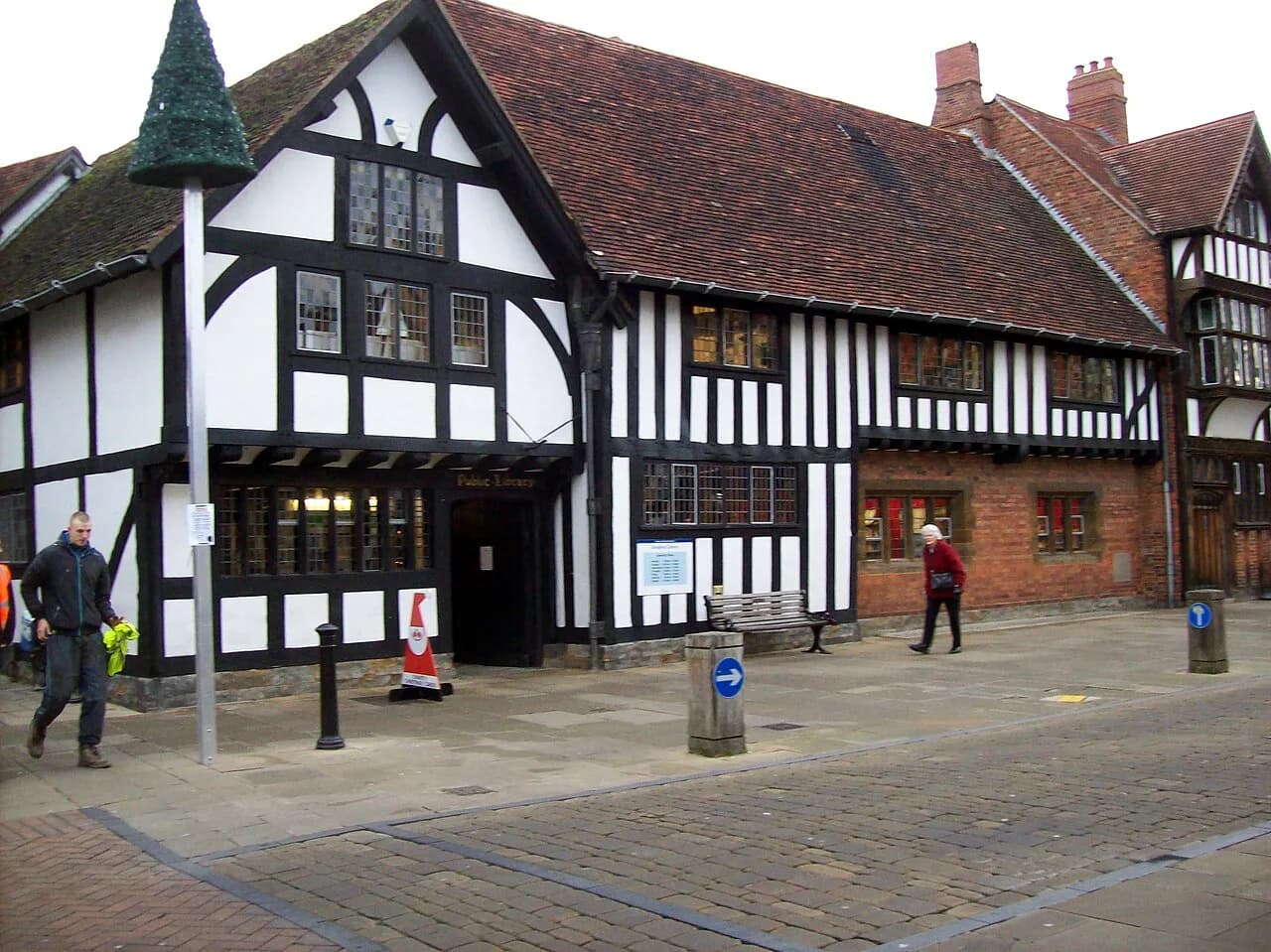
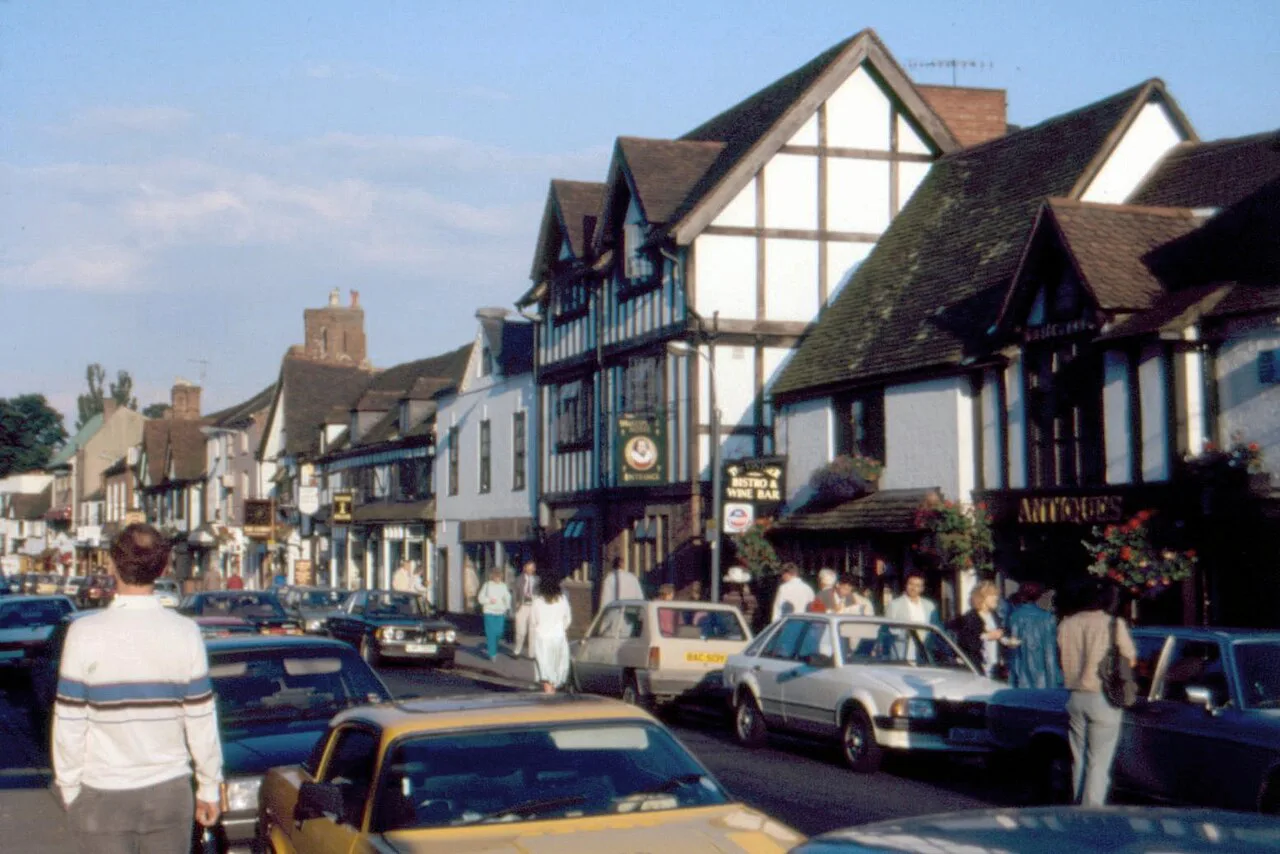
Half-timbering is the signature. In a timber-framed building the structural frame is oak, left visible on the facade, and the gaps are filled with wattle and daub, brick or plaster. Look for the close-set vertical studs, the braces set diagonally at corners and the jettied upper floors that overhang the street. The pattern of the frame tells you where the building's strength sits, which is why a row of timbered fronts reads almost like a diagram. The town's heritage is bound up with this building tradition and the streetscape it created, which is covered in more depth in this history of Stratford-upon-Avon.
Start on Henley Street: Shakespeare's Birthplace
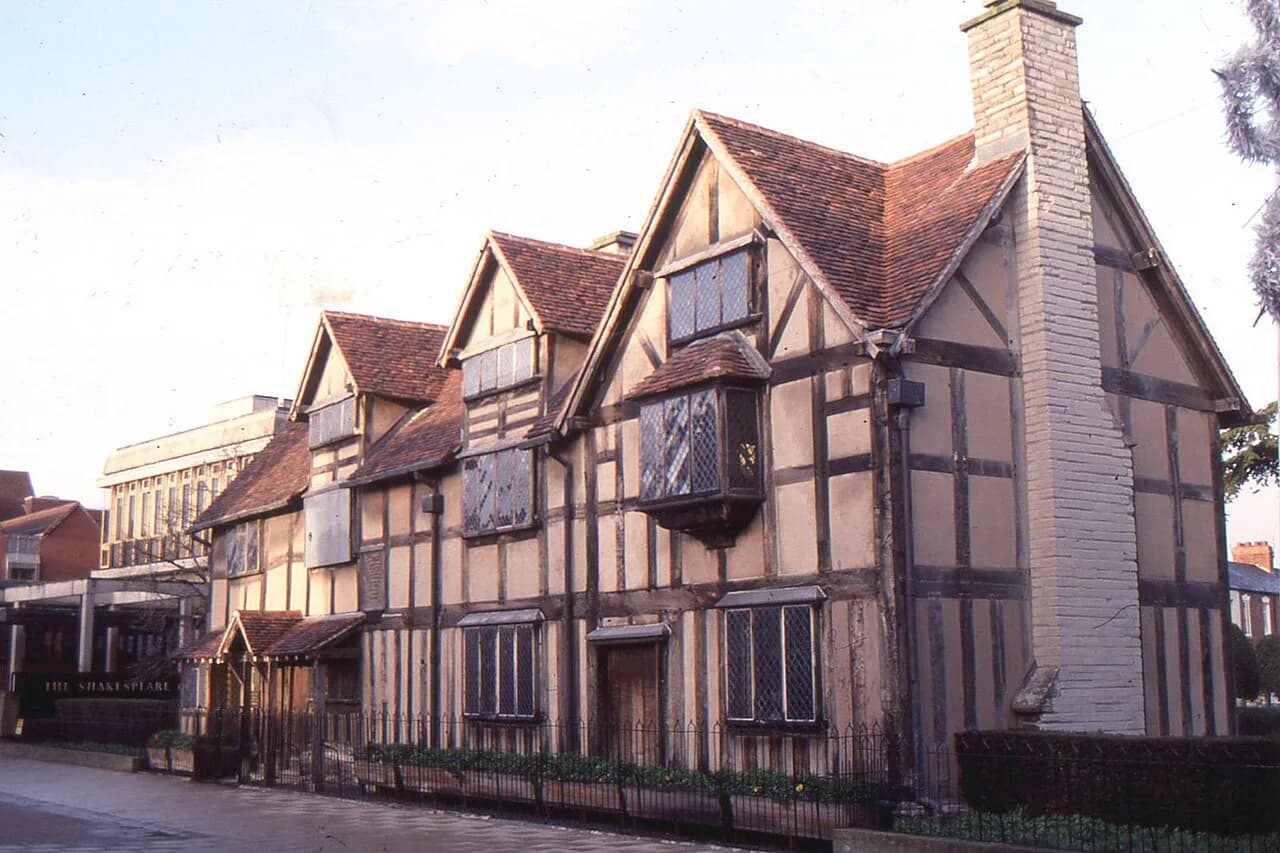
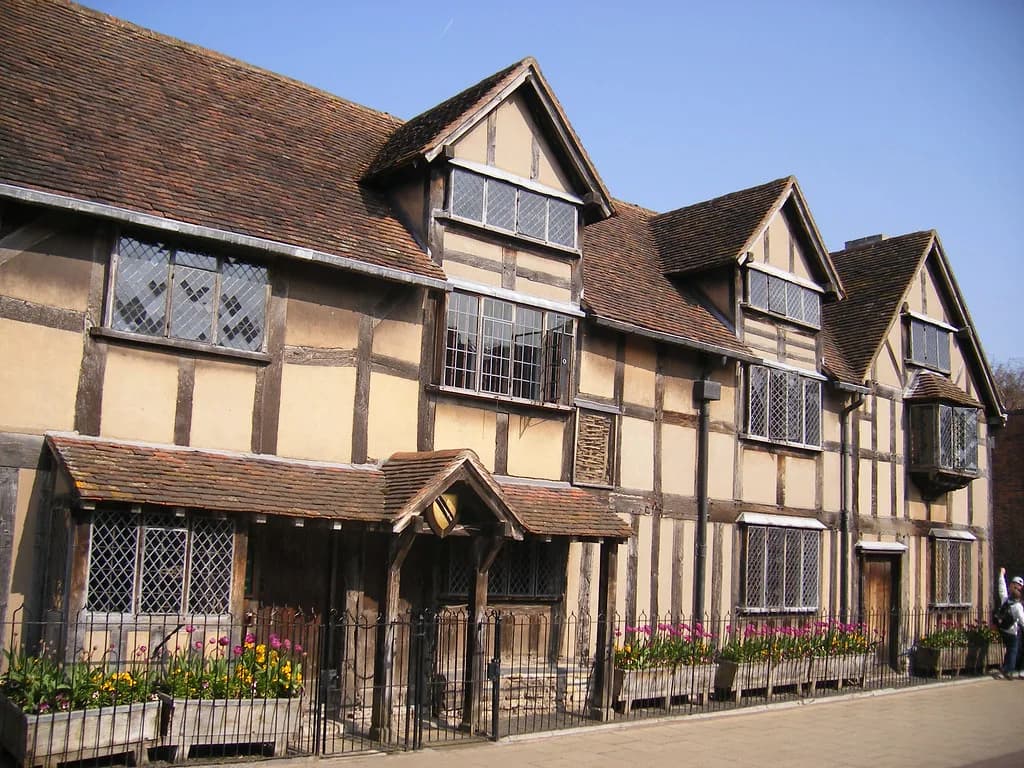
Shakespeare's Birthplace on Henley Street is the essential stop, and it is also a lesson in how a timber-framed house works. William was born there in 1564, the third of John and Mary Shakespeare's eight children, and his father ran a glovemaking business from the house. Inside, the Glover's Workshop explains John Shakespeare's trade, and the parlour's original stone floor still carries a piece of cow bone left from the years when the building was used by a butcher. The Birthplace is open daily from 10am to 5pm with last admission at 4.30pm, and pre-booking is recommended.
Allow around an hour and a half for the house and its exhibition, Becoming Shakespeare, which explores how place shaped the writer's creative spark. The Birthplace sits at the Shakespeare Centre on Henley Street, and the page linked above gives the postcode and directions. If you want to pair it with the town's other collections, this guide to museums in Stratford-upon-Avon sets out what each one covers.
Why the Birthplace survived
The house survives because people fought for it. After the death of the butcher Thomas Court's widow, the whole property went up for sale in 1846, and a public campaign backed by Charles Dickens was launched to save the building where Shakespeare was born. The Shakespeare Committee bought it at auction in 1847 for £3,000, and in 1891 an act of governance renamed the committee the Shakespeare Birthplace Trust, which has cared for the house ever since. That purchase is the reason you can walk through the rooms today rather than past a plaque.
Half-timbered streets: how to read a facade
Once you know the grammar of timber framing, Henley Street and the surrounding lanes become a self-guided tour. Look for the jetties: upper storeys that step out over the pavement, a way of gaining floor space in a crowded town centre. Notice where the oak frame has been painted black and the infill white, the treatment most people picture when they think of Tudor architecture, and compare it with buildings where the timber is left its natural colour. Repair and re-rendering have changed many facades, so read each front on its own terms: the black-and-white frontage you see may be a later reworking rather than the original scheme, and neighbouring buildings on the same street can span quite different periods.
Hall's Croft in Old Town
Walk south along the streets towards Old Town and you reach Hall's Croft, a timber-framed house built in 1613 that was once home to Shakespeare's daughter Susanna and her husband, the physician John Hall. The Grade I listed building is undergoing a significant conservation project, so treat it as an architectural stop on the walk rather than a guaranteed interior visit. The Trust plans to invite audiences to see the works in action through tours and talks, which makes it worth checking before you set out. John Hall's case notes, published in 1657, were a popular textbook for other doctors for many years, and his preference was for treatments made from plants, herbs, animal extracts, gemstones and rocks.
Shakespeare's New Place: a ten-minute walk from the Birthplace
The Birthplace's own directions put Shakespeare's New Place about ten minutes' walk away, which makes it a natural next stop after Henley Street. Anne Hathaway's Cottage, by contrast, is about ten minutes' drive from the Birthplace, so it belongs to a separate half-day rather than the town-centre circuit. Use New Place to break up the walk, then carry on into the older lanes towards the river.
If you would rather have the buildings explained as you go, a guided walk covers the same ground with context. The Stratford-upon-Avon walking tour page sets out what the guided routes include.
Rother Street and the charter market
Rother Street holds the town's market, and its history explains a lot about the shape of the centre. King Edward VI granted Stratford a charter of incorporation on 28 June 1553, giving inhabitants the right to hold a weekly Thursday market and two annual fairs. The Charter Market has traded since 1196 and now runs on Fridays and Saturdays from 09:30 to 16:30, with stalls selling street food, fruit and vegetables, artisan bread, cheese, olives, coffee, cakes and patisseries alongside clothing, jewellery, flowers and crafts. Time your walk for a market day and the street scene is at its liveliest.
Holy Trinity Church and the riverside setting
Holy Trinity Church is the building most often singled out by visitors for its age and architecture, and its setting by the water makes a natural end to a town-centre walk. Approach it through Old Town, where the streets are quieter and the houses stand back from the road, and give yourself time to look at the exterior before turning back along the river. The church sits close to the River Avon, which determined where the town grew in the first place because several routes converged at its crossing.
Guided walks and evening ghost walks
Several companies run guided walks through the town centre. Stratford Town Walk appears on the town's events listings at 11am and, on some days, 2pm, while Sinister Stratford Guided Walking Tour and the Stratford Ghost Walk run in the evening. Treat the ghost walks as storytelling rather than history: the tales are legends told for atmosphere, and the buildings they pass are the real thing. If ghostlore is the draw, this guide to ghost tours in Stratford-upon-Avon sets out what the evening routes involve.
Practical trade-offs
Timber-framed buildings are old buildings, so expect uneven floors, low beams and narrow stairs, and wear shoes you can walk in on cobbles and setts. Hall's Croft is the clearest example of a conservation project interrupting a visit, so plan it as an exterior stop unless a tour is running. Henley Street and the market area draw the biggest crowds, and market days add stalls and footfall to the narrowest parts of the centre.
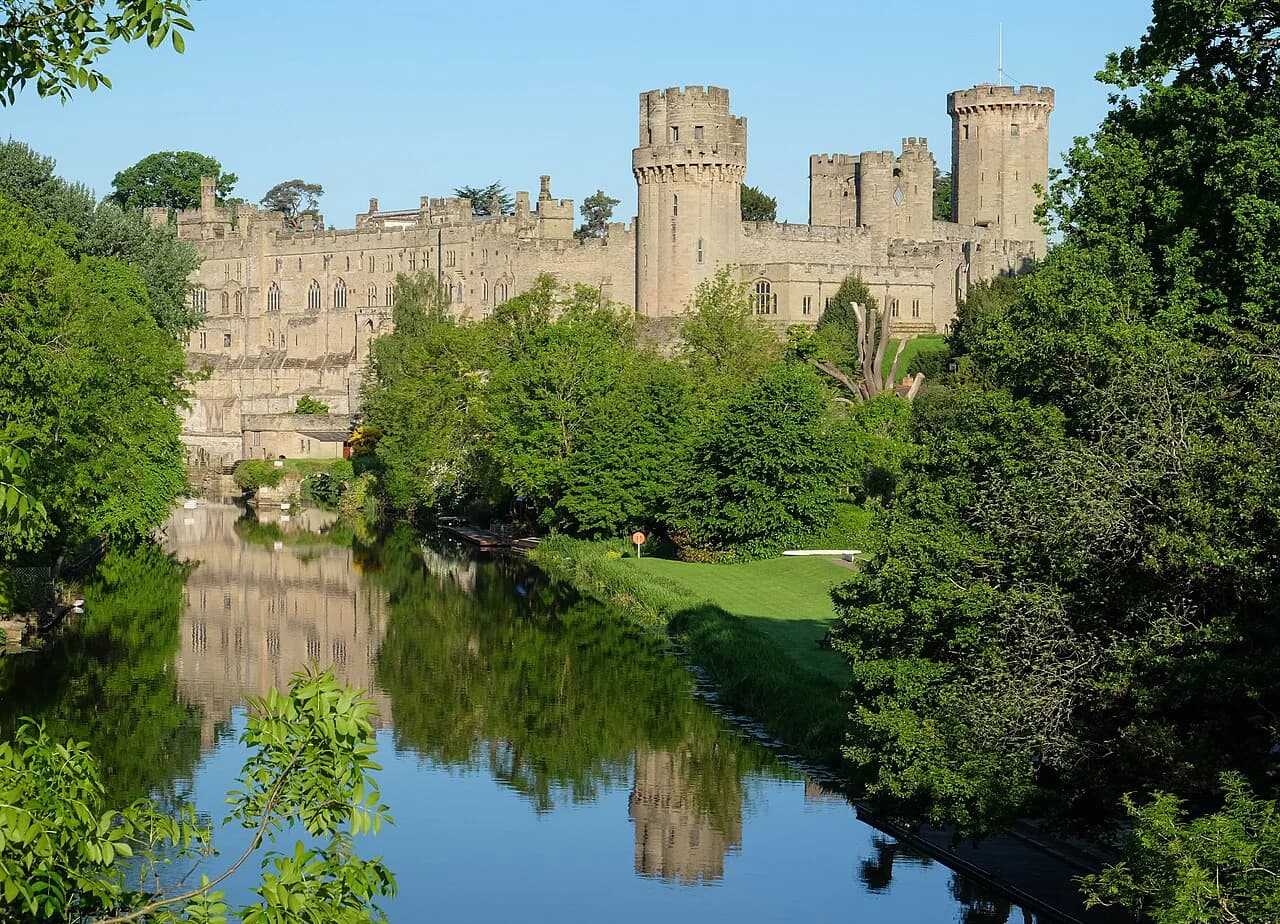
If you want to widen the trip beyond the town, the castles near Stratford-upon-Avon make a separate day out, and Birmingham architecture offers a sharp contrast to Warwickshire timber framing if you are travelling by train.
A half-day architecture walk
Start at Shakespeare's Birthplace on Henley Street when it opens, spend about an hour and a half inside, then read the timbered fronts along the surrounding lanes. Walk south to Old Town for Hall's Croft, then use the ten-minute walk to Shakespeare's New Place as your link back into the centre. Finish at Rother Street on a Friday or Saturday for the market, then head down to Holy Trinity Church and the river.
For a quieter contrast, the art galleries in Stratford-upon-Avon give you a modern interior to compare with the timbered streets outside.
Plan Your Visit
Stratford's architecture rewards a slow walk rather than a tick-list: the Birthplace for the story of survival, Henley Street and the lanes for timber framing, Hall's Croft for a conservation project in progress, and Rother Street for the market that has shaped the centre for centuries. Check published opening times and tour schedules before you travel, since conservation work and seasonal hours affect what you can go inside.
Explore more Stratford-upon-Avon guides
Frequently Asked Questions
What is so special about Stratford-upon-Avon?
It is a market town with more than 800 years of history, and many buildings that survive today would have been familiar to Shakespeare. The centre retains its timber-framed streets, the charter market still runs, and Shakespeare's Birthplace is preserved as a museum with a glover's workshop and exhibitions.
Where can you see Tudor architecture in Stratford-upon-Avon?
Henley Street and the surrounding lanes hold the strongest concentration of timber-framed fronts, including Shakespeare's Birthplace. Hall's Croft in Old Town is a timber-framed house built in 1613. Walk slowly and look for the jettied upper floors and close-set vertical studs that mark the frame.
Was Shakespeare's house demolished?
No. Shakespeare's Birthplace on Henley Street survives and is open to visitors. After the property was put up for sale in 1846, a public campaign backed by Charles Dickens led to its purchase at auction in 1847, and the Shakespeare Birthplace Trust has cared for it since 1891.
How long does it take to walk around Stratford-upon-Avon's historic centre?
A half-day covers the core comfortably: about an hour and a half at Shakespeare's Birthplace, a walk through the timbered lanes, Hall's Croft in Old Town, and the ten-minute walk to Shakespeare's New Place. Add time for the market on a Friday or Saturday and for Holy Trinity Church by the river.
Are the ghost walks in Stratford-upon-Avon historical?
They are storytelling events built around local legends, so treat the tales as atmosphere rather than fact. The buildings they pass are genuinely historic, which is why the walks work as an evening way to see the town centre after dark.
Do I need to book Shakespeare's Birthplace in advance?
Pre-booking is recommended. The published hours are 10am to 5pm daily with last admission at 4.30pm, and special events and family activities run through the year, so check the Trust's Plan Your Visit page for the day you intend to go.
Sources
Notes for your next city break
Optional updates to our UK city guides.
You might also like

Continue reading
More guides you'll find useful