
Cambridge City Centre: A Visitor's Guide to the Historic Core

Cambridge city centre is the university quarter, and you can walk the whole historic core in a day. King's College Chapel, the market square, the Fitzwilliam and the River Cam all sit within roughly twenty minutes of each other on foot, so a short break here needs no bus pass.
The centre suits anyone who wants colleges, museums and punting on a compact grid of flat streets. It is less comfortable for drivers, because the old streets are narrow and busy with bicycles. Base yourself centrally and walk, or stay outside the core and come in by bike.
What Cambridge City Centre Is Known For
The University of Cambridge dominates the centre, and its colleges, chapels and courts are woven into the shopping streets rather than fenced off from them. That gives the district a rare texture: you can cross a medieval court on the way to a coffee.
The centre is also a market town at heart. Cambridge Market Square holds tightly packed street-food stalls in the middle of town, open daily from 10am to 4pm, which makes it the easiest lunch stop if you want food cooked in front of you rather than a sit-down menu.
Beyond the university, the centre has a genuinely strong cafe and bakery culture, independent shops and a busy theatre scene. It reads as a working city that happens to contain a world-famous institution, not a museum piece.
Who the Centre Suits and Who Should Look Elsewhere
The centre is ideal for a two- or three-night break built around architecture, museums and a punt. Everything on the classic Cambridge list is within walking distance, so you spend your time looking rather than travelling.
Families with buggies and visitors who dislike crowds should plan around the market square at lunchtime and the river on sunny weekends. If you want quieter streets and a village feel, stay out towards Mill Road, Cambridge, where independent shops line a long residential road west of the centre and the pace drops.
Drivers should think hard before booking a central hotel. The core is compact and cycle-heavy, and a car mostly sits still; Chesterton, Cambridge sits across the river and gives you a calmer base if you are arriving by road.
Landmark Sights Within Walking Distance
King's College Chapel is the gothic centrepiece on King's Parade, and its fan-vaulted ceiling is the reason most people queue. It opens Monday to Friday from 9:30am to 3:15pm and Saturdays from 9:30am to 2:45pm, and it is closed on Sundays, so a Sunday city break needs a different anchor sight.
The Mathematical Bridge at Queens' College looks curved but is built from straight timbers. Tour guides like to say Isaac Newton designed it and that it once held itself up without fixings; treat both as legend, since the bridge is an eighteenth-century piece of engineering that was rebuilt with nails.
The bridge and the college are open daily from 9am to 5pm, and the walk from King's Parade takes a few minutes along Silver Street. Pair the two sights in one morning, then loop back through the market for lunch.
Museums and Galleries in the Centre
The Fitzwilliam Museum on Trumpington Street is Cambridge University's art and antiquities collection, and entry is free. It opens Tuesday to Saturday from 10am to 5pm and Sunday from noon to 5pm, and it is closed on Mondays, which catches out plenty of Monday city breaks. Give it two hours at least.
Kettle's Yard on Castle Street was the home of Jim and Helen Ede, who filled it with works by artists including Barbara Hepworth and Joan Mirò before giving the house and collection to the university. The main gallery is free, but house visits run on timed entry and are charged for visitors who are not students. Book the house slot first and fit the gallery around it.
The Polar Museum at the Scott Polar Research Institute on Lensfield Road covers Cambridge's polar exploration history and has free entry. It opens Tuesday to Saturday from 10am to 4pm and is closed Sunday and Monday, so check your days before building a route around it.

Punting from Mill Lane and Quayside
Punting stations line the River Cam, with the main departure points at Mill Lane and Quayside. Operators generally run daily from 9am to 6pm, though times vary by operator and season.
You have a straight choice. Hire a chauffeured punt with a guide and you sit back for the colleges and bridges; take the pole yourself and you get the same river for less skill and more risk of drifting into a bank. First-timers are better off guided.
The trade-off is timing. Sunny summer weekends turn the river into slow-moving traffic with colliding boats, so an early weekday morning is the calmer option. Book online ahead for guided tours in peak season rather than turning up at midday.
Where to Eat and Drink in the Centre
Fitzbillies on Trumpington Street has been baking its sticky Chelsea buns since 1920 and turns out more than 200,000 a year. It opens Monday to Friday from 8am to 6pm and weekends from 8:30am to 6pm, and it serves brunch and lunch as well as the buns.
Jack's Gelato on Bene't Street is a tiny shop with a big queue and unusual flavours. There is a second, much quieter branch five minutes away on All Saints Passage, so use that one if the Bene't Street line stretches down the pavement.
Hot Numbers on Trumpington Street is a reliable coffee and brunch stop, open daily from 7am to 6pm. The Maypole on Portugal Place near the ADC Theatre is a freehouse with Belgian beer, gin and whisky menus, and it fills with theatre crowds after shows.
For something more formal, the University Arms sits on Regent Street and is a sensible base for a special-occasion dinner or afternoon tea in Cambridge. If tea is the point of the trip, book ahead rather than hoping for a walk-in at the weekend, whether you stay in Cambridge or make the trip to compare it with afternoon tea in York.
Where to Stay in the City Centre
Central Cambridge hotels cluster around Regent Street, Downing Street and the river, which puts the colleges on your doorstep. The trade-off is price and noise; you pay for the postcode and you may hear late-night street traffic.
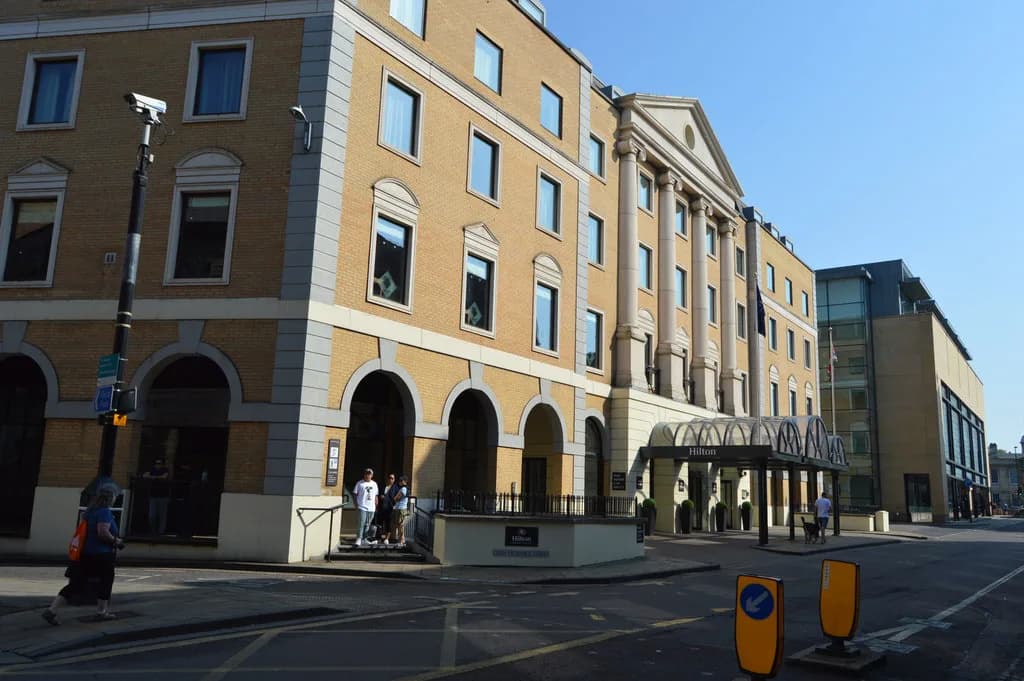
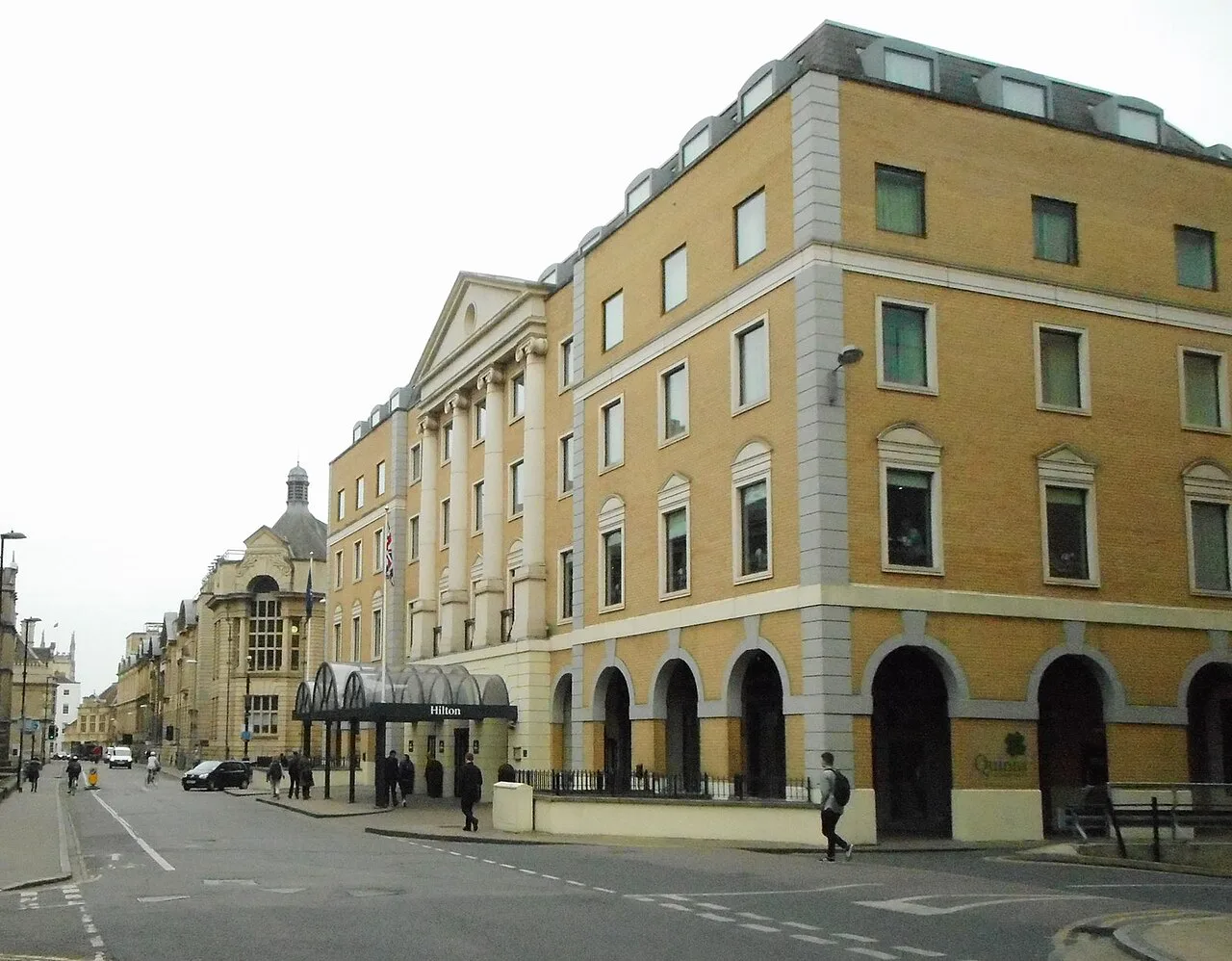
The University Arms on Regent Street and the Hilton on Downing Street are the classic central choices, both within a few minutes of Parker's Piece and the market. The Varsity Hotel and Spa on Thompsons Lane sits nearer the river, which suits anyone who wants a spa afternoon between sights.
The Graduate by Hilton on Mill Lane is the handiest address for punting, since the Mill Lane station is effectively next door. The Hobson on St Andrew's Street puts you beside the main shopping streets, and Wilde on Round Church Street is close to the ADC Theatre and the river bridge.
Getting There and Getting Around
Cambridge is a compact, flat city best navigated on foot or by bike, and there are plenty of places to hire bicycles. Cycle lanes are not always obvious, so keep an eye out for bikes appearing quietly from side streets.
Guided university walking tours run daily at various times, led by students, and advance booking is recommended. Meeting points vary by tour, so check the tour company's own page before you set out.
For the wider city, Cambridge Attractions covers the sights beyond the historic core if you have a third day to fill.

A Half-Day and Full-Day Route on Foot
Half a day: start at the market square for coffee, walk five minutes to King's College Chapel for the fan vault, then cross to Queens' College for the Mathematical Bridge. Finish with a bun at Fitzbillies on Trumpington Street.
A full day adds a museum morning. Take the Fitzwilliam first thing on a Tuesday to Saturday, then walk up to Kettle's Yard for a timed house visit, and finish with a late-afternoon punt from Mill Lane.
If you are in town on a Sunday, drop King's College Chapel and the Polar Museum from the plan and build the day around the market, the river and the free galleries instead.
Practical Trade-offs: Queues, Closed Days and Timed Entry
Closed days matter more than opening hours here. The Fitzwilliam shuts Mondays, King's College Chapel shuts Sundays and the Polar Museum shuts both Sundays and Mondays, so a Sunday-to-Tuesday trip loses several headline sights unless you reshuffle.
Timed entry governs Kettle's Yard's house and the busy punting stations. Book the house slot and any guided punt before you travel, then leave the free galleries and the market flexible for weather.
Queues build at the Bene't Street gelato shop and on sunny river weekends. The workarounds are simple: the All Saints Passage branch and a weekday morning on the water.
Plan Your Visit
Cambridge city centre rewards a slow, walkable plan rather than a checklist. Anchor each day on one paid sight, one free museum and one meal, and leave room for the river.
Check the current opening days for King's College Chapel, the Fitzwilliam, Kettle's Yard and the Polar Museum before you book, as term-time and seasonal hours shift.
Frequently Asked Questions
What is Cambridge city centre known for?
The University of Cambridge dominates the centre, with colleges such as King's College and Queens' woven into the shopping streets. It is also a market town, with daily street-food stalls in Market Square, plus free museums and a strong bakery and cafe culture.
What can you see in Cambridge city centre in a day?
A full day covers the market square, King's College Chapel, the Mathematical Bridge at Queens' College and one museum. Add an afternoon punt from Mill Lane and a Chelsea bun at Fitzbillies, and the day is full without any transport.
Which museums in Cambridge city centre are free?
The Fitzwilliam Museum and the Polar Museum at the Scott Polar Research Institute both have free entry. At Kettle's Yard the main gallery is free, but house visits run on timed entry and are charged for visitors who are not students.
Where do you go punting in Cambridge city centre?
The main departure points are Mill Lane and Quayside on the River Cam. Operators generally run daily from 9am to 6pm, with variation by operator and season, and guided tours are best booked ahead in peak season.
Where should you stay in Cambridge city centre?
Central options include the University Arms on Regent Street, the Hilton on Downing Street, the Graduate by Hilton on Mill Lane, The Hobson on St Andrew's Street, Wilde on Round Church Street and The Varsity Hotel and Spa on Thompsons Lane. Choose by which sight you want on your doorstep.
Is Cambridge city centre walkable?
Yes. The historic core is flat and compact, and the market, King's College Chapel, the Fitzwilliam and the river are all within about twenty minutes of each other on foot. Bicycles are the other practical way to get around.
What is closed on Sundays in Cambridge city centre?
King's College Chapel is closed on Sundays. The Polar Museum closes on Sundays and Mondays, and the Fitzwilliam Museum closes on Mondays.
What shops are in Cambridge city centre?
The centre mixes national chains on the main shopping streets with independents such as Heffers bookshop and the food shops around the market. Mill Road, a short walk west, has the densest cluster of vintage and independent shops.