Roman York: Remains, Ruins and Where to See Them
Roman York began as a fortress in AD 71. See the surviving remains, the museum collections and the Roman festival, with honest notes on access and time needed.
On this page
Roman York rewards a different approach from a castle or a cathedral: most of what survives is either a fragment in the open air or an object in a museum case, so plan the day around two or three stops rather than a single site. The city began as a military fortress, built in AD 71 when Roman soldiers were sent north to secure the edges of the Empire.
The Romans called the place Eboracum, and the name survives in the city's modern identity as firmly as the stonework. If you are building a wider itinerary, our guide to York Attractions covers the other big draws, and this one concentrates on the Roman layer beneath them.
What Roman York actually was
York started as a fortress rather than a town, sited where the rivers Ouse and Foss meet. The Ninth Legion, Legio IX Hispana, chose elevated ground protected by the two rivers, a standard Roman calculation of defence and supply. That military origin explains why the archaeology of York is so often about ditches, ramparts and barracks rather than temples and forums.
Over time the fortress grew into a city with a bath-house, a river frontage and a defensive circuit, and it became one of the most important Roman centres in Britain. For the visitor, the practical point is that remains are scattered: some sit in the open along the walls, some lie under later buildings, and many of the best objects ended up in the Yorkshire Museum, one of several museums in York worth planning around.
Eboracum: how the name became York
Eboracum is the Roman name for York, and it descends from an earlier Celtic name, Eburacon. The native British name has been translated as meaning the place where the yew trees grow, or the place belonging to Eburos. Roman inscriptions from the city show two spellings, Eboracum and Eburacum, so both are correct in the archaeological record.
After the Romans left around AD 400, the Anglo-Saxons adapted the name to Evorwic, and the Vikings then turned that into Jorvik. Say Jorvik aloud and the final step to York is easy to hear. The chain is a neat example of how a Roman place name can survive fifteen centuries of invasion and language change.
Remains you can see above ground
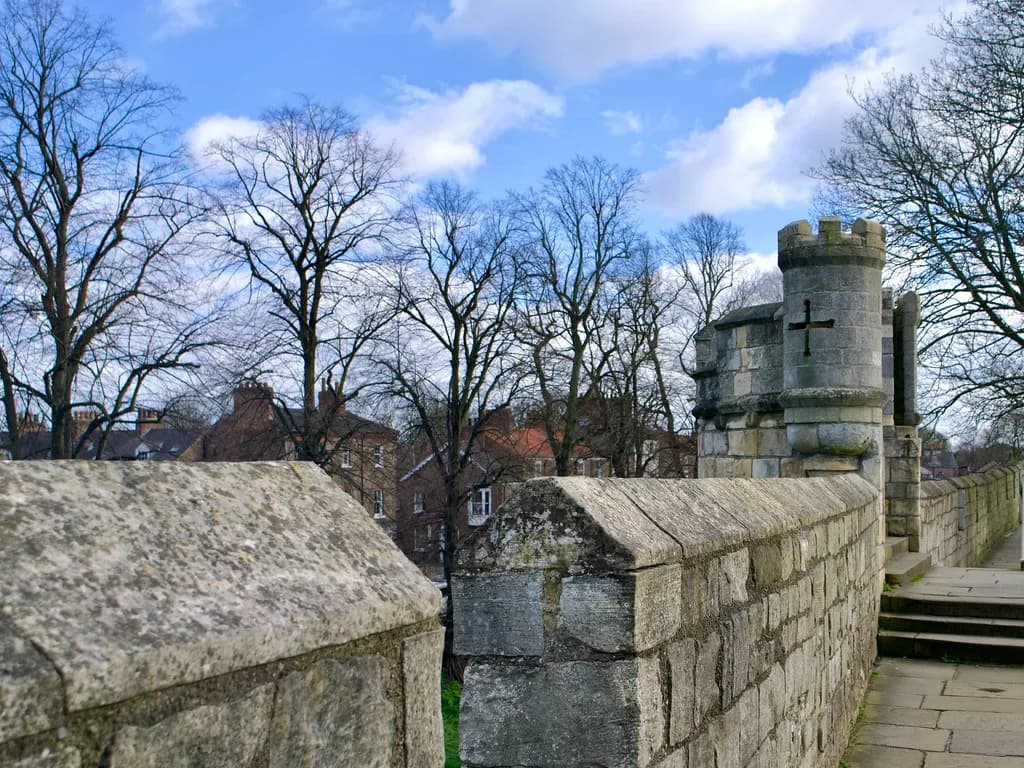
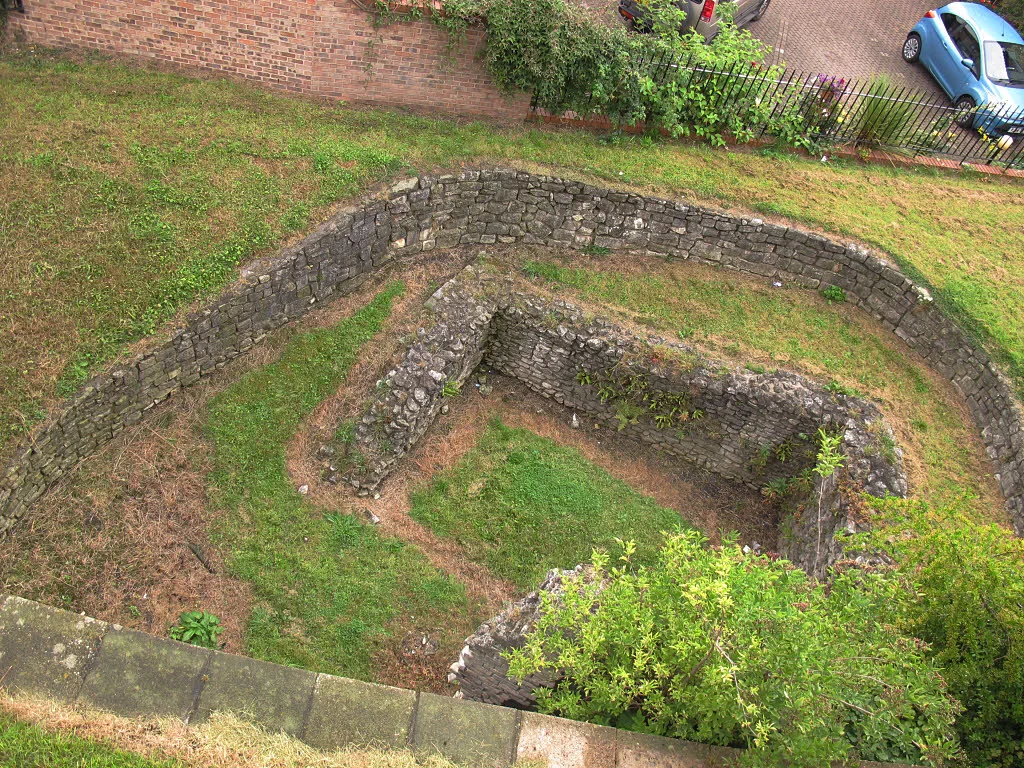
The most visible Roman survivor is the Multiangular Tower in York Museum Gardens, a polygonal corner of the late Roman defensive circuit that still stands to a decent height. It sits outdoors among the abbey ruins and planting, so you can see it without buying anything, and it pairs naturally with a walk along the city walls. Treat it as a five-minute stop with context rather than a destination in itself.
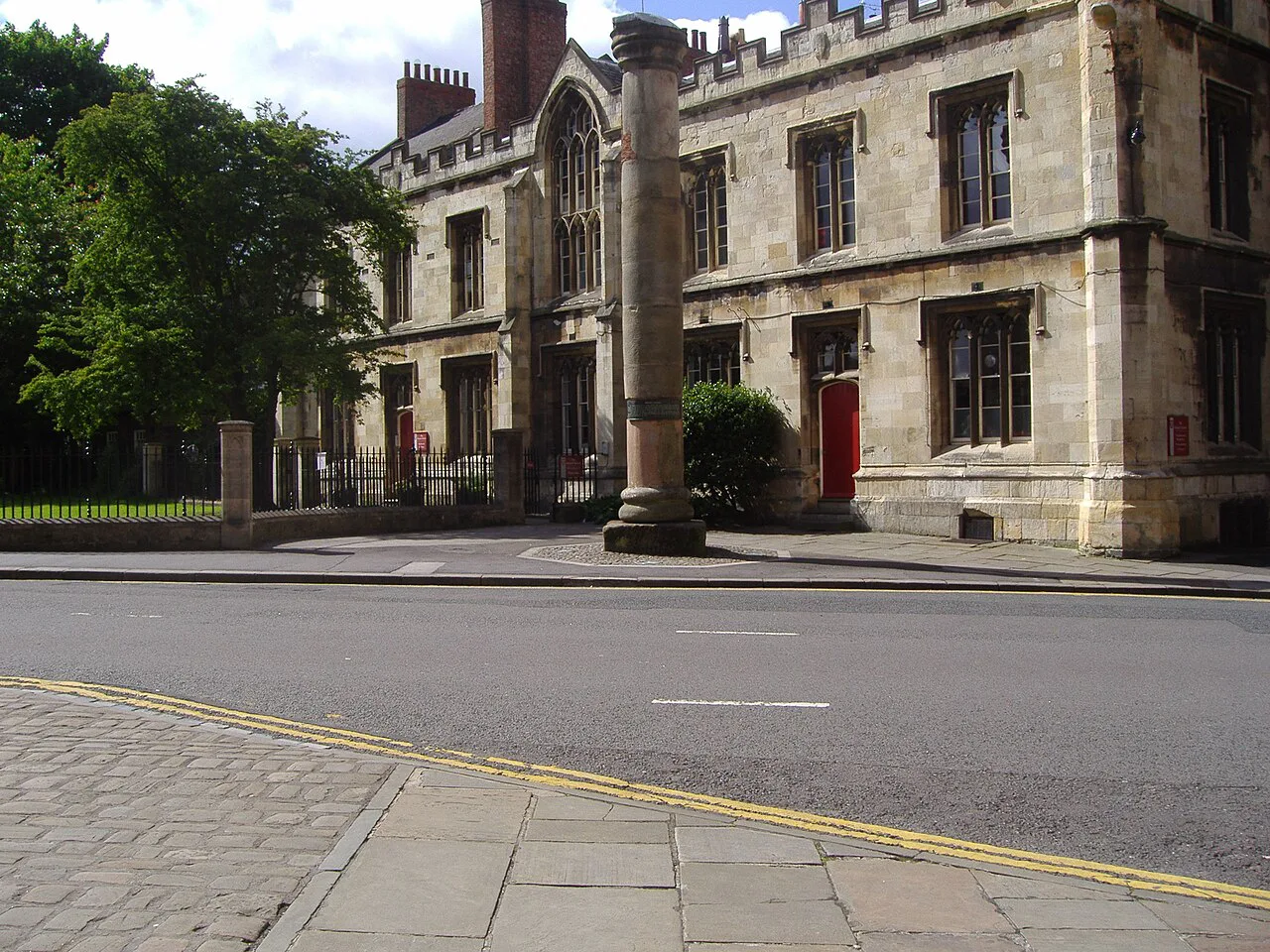
York Minster's Undercroft reveals the Roman past beneath the cathedral, and the Minster's Roman history is also brought to life at festival time by costumed interpreters. The outdoor fragments along the walls are free to look at; the Minster and the major collections involve an admission decision, so check the current arrangements with each site before you go.
York's Roman bath-house remains are another fragment worth knowing about before you set out, since they are easy to walk past without noticing. Pair them with the walls and the tower on a single loop through the centre rather than making separate trips.
The Yorkshire Museum: Roman collections indoors
The Yorkshire Museum, run by York Museums Trust, holds the city's renowned Roman collections, and visitors can walk on a real Roman mosaic. That detail alone justifies the stop: it is the closest most people will come to standing inside a Roman floor. Indoor collections also solve the weather problem, which matters in a city where a shower can arrive mid-walk.
York Museums Trust also runs York Castle Museum, York Art Gallery and York St Mary's, so it is worth deciding in advance which of its sites you want. A single Roman-focused afternoon is realistic; trying to cover the whole trust in one day is not. Current admission arrangements for each venue are published by the Trust.
DIG: archaeology on the Romans of Eboracum
DIG, run by York Archaeology, is the attraction to choose if you want the archaeological process as well as the objects. Its Romans of Eboracum material covers the fortress and the soldiers who built it, which sets up the outdoor fragments nicely.
The sensible order is DIG first, then the Yorkshire Museum, then the walls: context, objects, then the surviving stonework in the open. That sequence stops the tower and the bath-house fragments from looking like disappointing lumps of masonry.
Constantine and York's imperial connection
York's imperial link is Constantine, whose statue in the city is one of the Roman traces flagged in accounts of the city's legacy alongside the Minster's Undercroft and the Multiangular Tower. Treat the statue as a landmark to look out for rather than a site with a formal visit.
The imperial story is also a reminder that York mattered politically, not just militarily, in the Roman period. Read it as history with real gaps: the sources for Constantine's time in Britain and the imperial succession are thin and much argued over, and popular retellings often fill those gaps with legend.
The Eboracum Roman Festival, May 2026
The Eboracum Roman Festival took place from 16 to 31 May 2026, taking over York Museum Gardens and venues across the city. Its centrepiece was the Living History Encampment on Saturday 23 and Sunday 24 May, when the Gardens became a Roman camp with costumed interpreters, re-enactments, demonstrations of Roman life and Roman battle activity for children.
Curators and historians from across York ran object handling sessions and mini excavations, and partners joined in: York Archaeology hosted an archaeology zone showing Roman discoveries, York Civic Trust led guided walks, and Days Gone By interpreters brought the Minster's Roman past to life. The University of York supported city-wide Roman trail activities.
Greg Jenner spoke on 23 May and Terry Deary on 24 May at the Yorkshire Museum, with book signings, and tickets for those events were to be announced. The festival coincided with the opening of the Yorkshire Museum's exhibition Chariots, Treasure and Power: Secrets of the Melsonby Hoard, featuring a discovery from over 2,000 years ago. The Trust publishes its festival programme and ticket details on its own site.
Practical trade-offs: steps, uneven ground and time
Roman York splits cleanly into indoor and outdoor halves, and they carry different costs in effort. The walls and the Multiangular Tower mean uneven ground, steps and stretches of walking with little shelter; the Undercroft and the museum collections are indoors and step-free in the main, though historic buildings vary. Decide which half gets your freshest hours.
Allow roughly an hour to an hour and a half for the Yorkshire Museum's Roman galleries, half a day if you add DIG, and a separate short walk for the outdoor fragments. Festival weekends inflate all of that: the Living History Encampment in Museum Gardens draws crowds, so start early.
Fitting Roman York into a city break
Book ahead for anything timed: festival talks, guided walks and the Melsonby Hoard exhibition are the obvious candidates, and Yorkshire Museum event tickets are announced on the Trust's own site. The outdoor fragments need no booking. Our guide to free museums in York is the place to start if you want to balance a ticketed Roman day against lower-cost stops.
If your interests run to the paranormal, keep the storytelling separate from the archaeology: York's ghost tours are entertainment built on legend, not evidence, and should be enjoyed as such. For a broader look at Roman Britain, Roman Leeds makes a useful comparison on the same themes of fortress, road and river crossing.
Plan Your Roman Day
Build the day in three layers: DIG or the Yorkshire Museum for context and objects, the Minster's Undercroft for what lies beneath the cathedral, and the Museum Gardens and walls for the stonework in the open. That keeps the travel between stops short and gives you somewhere dry to retreat to.
The 2026 Eboracum Roman Festival has now finished, with the Living History Encampment having filled the Gardens on 23 and 24 May 2026. Watch York Museums Trust for the next festival announcement, and book talks and walks once they are listed.
Explore more York guides
Frequently Asked Questions
What was the Roman name for York?
Eboracum, sometimes spelled Eburacum on Roman inscriptions found in the city. It comes from an earlier Celtic name recorded as Eburacon, and after the Roman departure it passed through the Anglo-Saxon Evorwic and the Viking Jorvik before becoming York.
Where can I see Roman remains in York?
The most visible above-ground survivor is the Multiangular Tower in York Museum Gardens, and York Minster's Undercroft shows the Roman past beneath the cathedral. The Yorkshire Museum holds the main Roman collections, including a real Roman mosaic you can walk on.
Which Roman emperor is linked with York?
Constantine, whose statue in the city is one of the Roman traces commonly flagged alongside the Minster's Undercroft and the Multiangular Tower. The imperial politics around his period are genuinely contested by historians, so read popular retellings with care.
When is the Eboracum Roman Festival?
The 2026 festival ran from 16 to 31 May 2026 across York Museum Gardens and city venues, with the Living History Encampment on Saturday 23 and Sunday 24 May 2026. York Museums Trust announces the programme for any future edition on its own site.
What happens at the Living History Encampment?
York Museum Gardens becomes a Roman camp with costumed interpreters, re-enactments, demonstrations of Roman life, crafts and Roman battle activity for children. Curators run object handling and mini excavations, and York Civic Trust leads guided walks during the festival.
Who were the festival's guest speakers?
Historian, author and podcaster Greg Jenner appeared on 23 May 2026 and author and actor Terry Deary on 24 May 2026, both giving talks and signing books at the Yorkshire Museum. Tickets for these events were announced by the Trust.
Is the Yorkshire Museum free to enter?
The Yorkshire Museum is run by York Museums Trust, which also runs York Castle Museum, York Art Gallery and York St Mary's; admission arrangements are published on its site. Our guide to free museums in York covers the lower-cost options across the city.
How long should I allow for Roman York?
Budget about an hour and a half for the Yorkshire Museum's Roman galleries, roughly half a day if you add DIG, and a short separate walk for the Multiangular Tower and wall fragments. Festival weekends need more time because of crowds in the Gardens.
Sources
Notes for your next city break
Optional updates to our UK city guides.
You might also like
Continue reading
More guides you'll find useful