
Chester Roman Amphitheatre: A Visitor Guide to Britain's Largest Arena

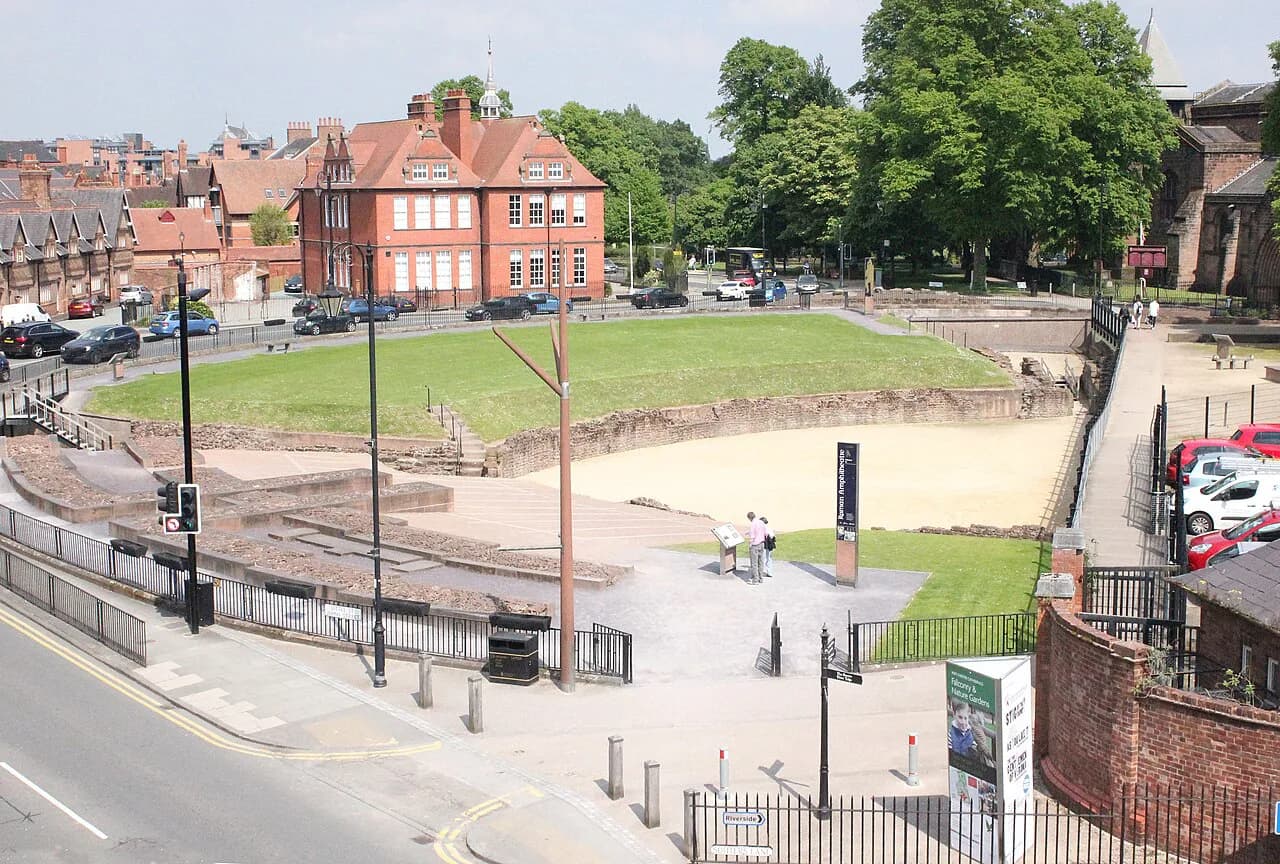
Chester Roman Amphitheatre is a free, open-air monument on Vicars Lane just beyond Newgate, a five-minute walk from Chester Cross. It is the biggest amphitheatre known anywhere in Roman Britain, and the ruins you see sit in a hollow below the city walls.
The site is not a museum and has no roof, gift shop or timed ticket. You come for a short, atmospheric look at stone foundations and seating banks, then carry on to St John's Church, the River Dee or the Roman Gardens nearby.
What the Chester Roman Amphitheatre is and why it matters
This was Chester's Roman arena, discovered in 1929 and partly excavated in the 1970s before the northern half was laid out as a public monument. Research excavations in 2004 to 2006, part funded by English Heritage and the then Chester City Council, answered questions about how the structure was built and what happened on the site before the Romans arrived.
Its importance is scale. The second amphitheatre was probably built in the later second century and was the largest and most impressive in Britain, with elaborate entrances, internal stairs and decorative pilasters on the outer wall. That makes a modest-looking set of ruins the surviving footprint of the biggest spectacles venue in the province.
Where it is: Vicars Lane beyond Newgate
The amphitheatre sits on Vicars Lane, just outside Newgate and a short walk from Chester Cross in the city centre. It lies in a dip below the city walls, close to St John's Church and the River Dee, so it works best as a stop on a circular walk rather than a standalone outing.
If you are arriving by train, Chester station is roughly three-quarters of a mile away, which is a manageable walk into the centre before you reach the site. Bring footwear that copes with uneven ground and, in wet weather, grass and mud.
How to get there on foot
Walking is the sensible way in. From the Cross, head through or past Newgate and the site opens up on your left; the whole approach from the centre takes about five minutes at an easy pace. Signage in Chester points walkers along the walls, so following the wall circuit past Newgate is the simplest route to remember.
Drivers should park in the city centre and walk, because the monument itself has no car park and Vicars Lane is narrow. Coaches and buses drop in the centre, from where the walk is short and mostly level until the final slope down to the arena.
The two amphitheatres: the AD 70s first build and its replacement
The first amphitheatre went up in the 70s AD with a stone outer wall, external stairs and timber-framed seating whose structure can be reconstructed. The second was built concentrically around the first, sealing deposits that record how spectators behaved and how the economy of spectacles worked in the earlier building.
Beneath the seating banks, excavators found evidence of prehistoric settlement, including a Mesolithic phase, a Middle Iron Age agricultural settlement and Late Iron Age cord-rig ploughing. That makes the site a layered story rather than a single Roman structure, which is worth knowing before you look at the stones.
Size and capacity: around 7,000 spectators
The enlarged arena could hold around 7,000 people, which makes it the largest amphitheatre currently known in Roman Britain. Only a fraction of that seating survives above ground, so the number matters because it tells you how far the ruins fall short of the original building.
Arena furniture recovered during excavation hints at the kinds of spectacle staged here, though the evidence points to possibilities rather than a confirmed programme of events. Treat any gladiator stories you hear as what the archaeology suggests, not as established fact.

What survives today and how to read the ruins
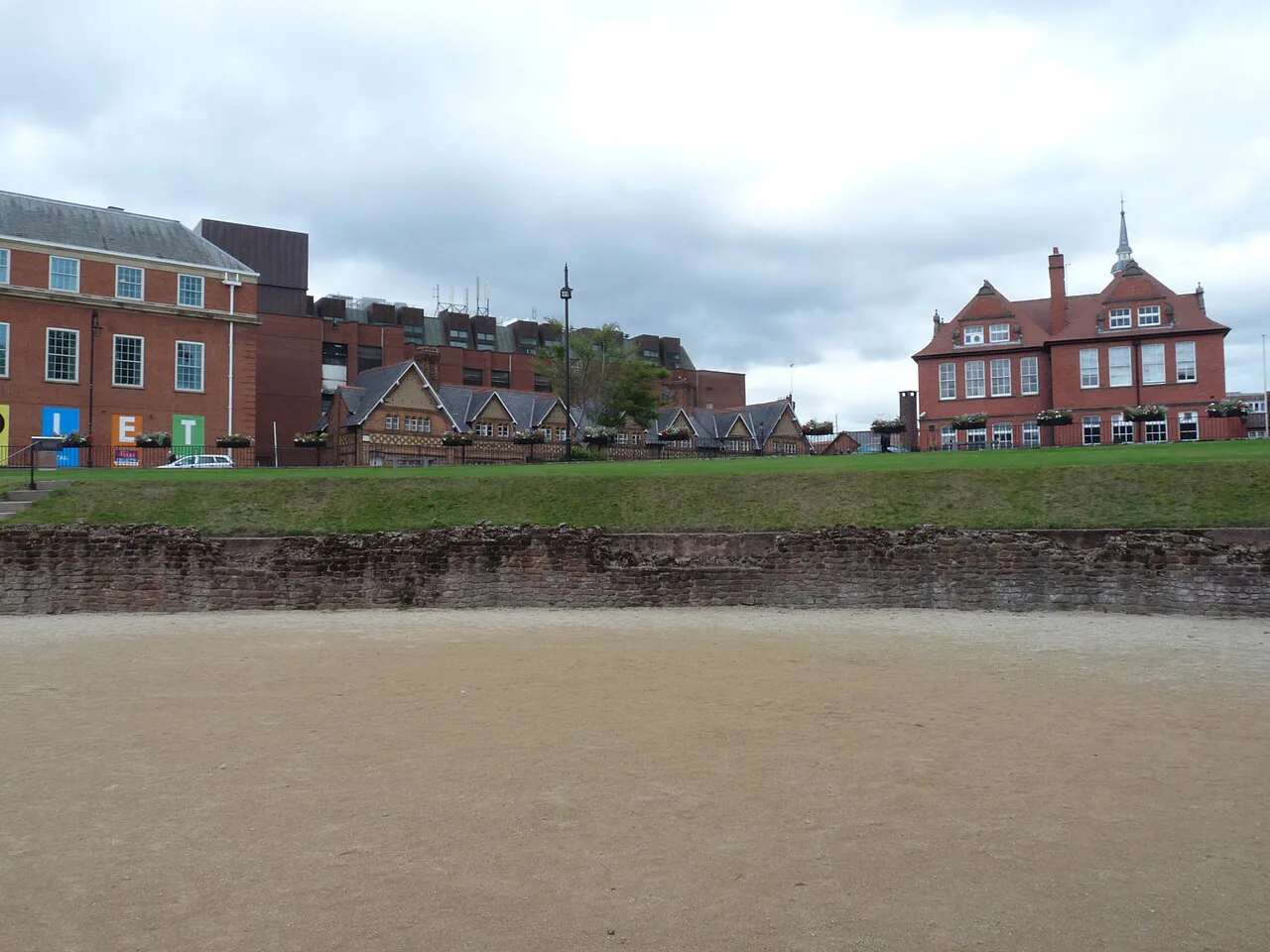
Expect low stone walls, a hollowed arena floor and grassed banks rather than standing tiered seating. The structure was heavily robbed for stone after the Roman period, but enough survives for archaeologists to propose a confident architectural reconstruction of the second amphitheatre.
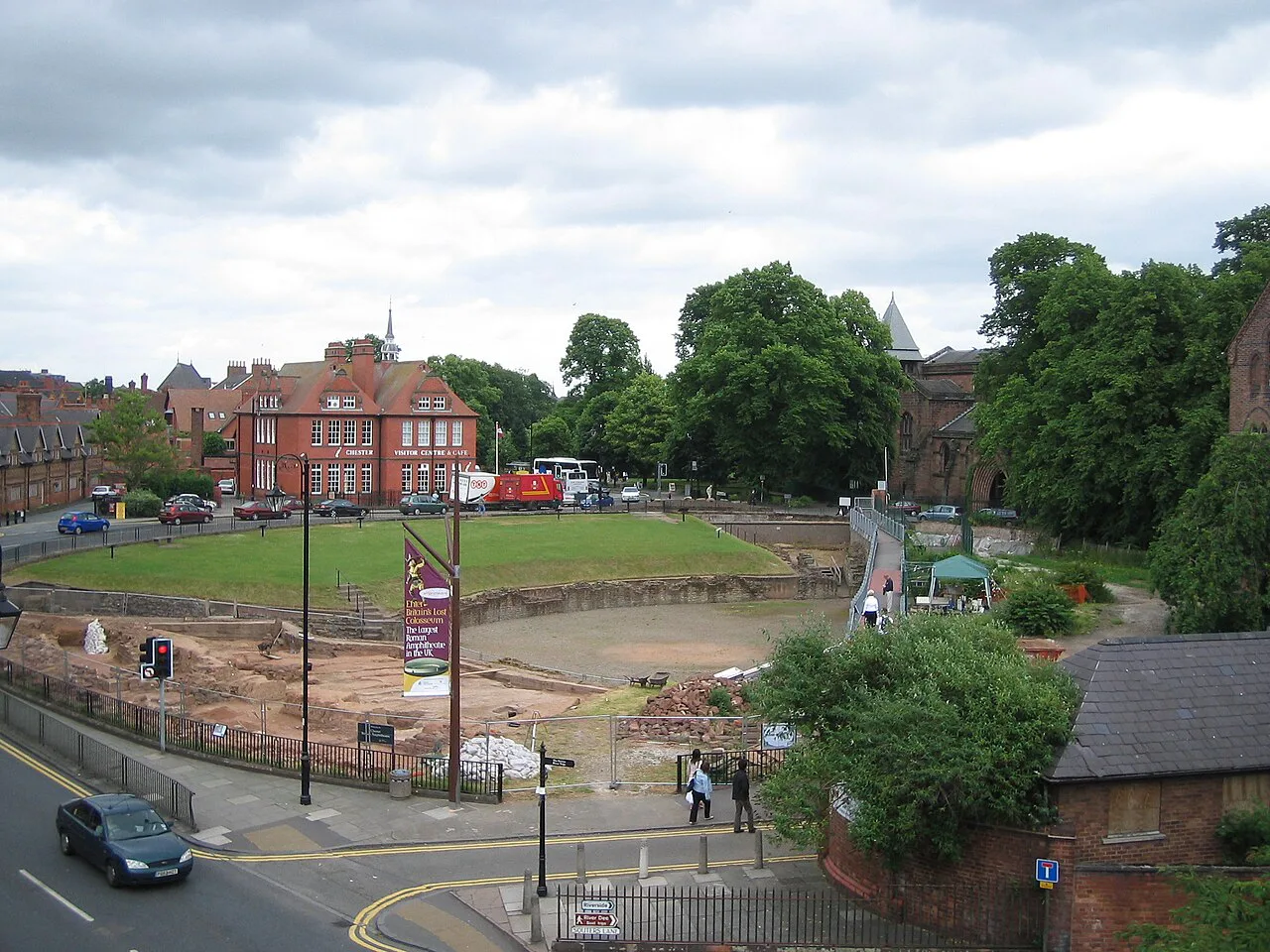
Read the ruins as a plan: the oval of the arena, the line of the outer wall and the slope where seating banks once rose. A panoramic photograph helps, and a view down from the city walls gives the clearest sense of the layout in a single glance.
Free entry and open access
Entry is free, and the site is listed as open all year at any reasonable time. When the gate is locked at other times, the monument can still be viewed from the roadside, so a visit rarely comes to nothing.
Because there is no ticket desk, there is nothing to book and no reason to plan around opening hours. The trade-off is a lack of on-site facilities: no toilets, no cafe and no staff to answer questions.
How long to allow
Give the amphitheatre itself fifteen to twenty minutes if you want to read the stonework and take photographs. Most visitors combine it with the walls and the river, turning it into a half-day loop rather than a destination in its own right.
A sensible circuit runs from the Cross along the walls, down to the amphitheatre, then past St John's Church and on to the River Dee. Allow two to three hours for the whole walk with stops, and longer if you add a cathedral visit or tea, and our guide to afternoon tea in Chester covers where to book and what it costs. If you would rather base yourself near the start of this loop, our guide to Chester Neighborhoods compares four areas within easy walking distance of the walls.

Nearby: St John's Church, the River Dee and the Roman Gardens
St John's Church stands a minute or two away and is worth a look for its Norman chancel and quiet churchyard. The Roman Gardens, a small planted walk with Roman masonry and hypocaust remains, sits between the amphitheatre and the river.
The River Dee is a short walk downhill, with riverside paths and views back to the walls and the racecourse beyond. If your timing coincides with a race meeting, the Chester Racecourse calendar is worth checking before you build the walk around it.
Practical trade-offs: an open-air monument with limited interpretation
This is a monument, not an attraction with displays. Interpretation on site is limited, so read up beforehand or bring the excavation volume's context with you if you want the two-phase build to make sense.
Weather matters more here than at indoor sights: the site is exposed and the ground can be soft after rain. Combine it with a museum or a tea stop so a wet morning does not spoil the day, and treat the ruins as one component of a wider Chester walk.
Where to check current details before you travel
English Heritage lists the amphitheatre as one of its Chester sites, and that listing is the place to confirm access arrangements before you set out. The Chester Tourist entry also carries the address and the roadside-viewing note for when the gate is locked.
Events do occasionally use the arena, and the city's what's-on listings are the way to find them rather than assuming a quiet visit. Otherwise the site needs no planning beyond decent shoes and a dry hour.
Plan Your Visit
Chester Roman Amphitheatre rewards a short, informed stop rather than a dedicated trip. Go knowing it was the largest arena in Roman Britain, look for the oval plan and the robbed wall lines, then carry on to the walls, St John's Church and the river.
Entry is free and open access, so the only real decision is when to slot it into a walking route. Pair it with a museum or a cathedral visit and you have a full, varied day in the centre of Chester. Where you sleep matters less than you might think, since all four areas in our Chester Neighborhoods guide sit within easy walking distance of the walls.
Explore more Chester guides
Frequently Asked Questions
Is the Chester Roman Amphitheatre free to visit?
Yes. Entry is free, and the site is listed as open all year at any reasonable time, with roadside views possible when the gate is locked. There is no ticket desk and nothing to book.
How big was the Chester amphitheatre?
The later, second-century arena could hold around 7,000 spectators and is the largest amphitheatre currently known in Roman Britain. Only a small part of the structure survives above ground today.
What was the Chester amphitheatre used for?
It hosted Roman spectacles. Excavated arena furniture hints at the kinds of events staged there, but the evidence supports possibilities rather than a confirmed programme, so gladiator stories should be treated as legend and inference.
How long does it take to visit?
Allow fifteen to twenty minutes at the ruins themselves. Most people combine it with the city walls and the River Dee for a two- to three-hour walk, or longer with a cathedral stop.
How do you get to the amphitheatre from Chester city centre?
Walk from Chester Cross past Newgate to Vicars Lane, which takes about five minutes. From Chester railway station the walk is roughly three-quarters of a mile into the centre before you reach the site.
Can you see the amphitheatre when it is closed?
When the gate is locked, the monument can still be viewed from the roadside. The site is an open-air monument, so there are no indoor displays or facilities to miss.