Brighton Walking Tour: Guided or Self-Guided?
Compare Brighton walking tours with Blue Badge guides against a self-guided seafront route past the pier, Sea Life and Volk's Railway, with timings.
On this page
A Brighton walking tour comes in two shapes. You can join a guided walk led by an accredited Blue Badge guide who explains the city as you go, or you can walk the seafront yourself, following a fixed order of sights from Brighton Palace Pier east or west along the promenade. The guided option gives you context and a route you do not have to plan; the self-guided option gives you control over timing and cost, and suits anyone who wants to stop for a long lunch or duck into a museum mid-walk.
Brighton is compact and largely flat along the seafront, which makes it unusually good walking territory for a British city break. The trade-offs are wind off the sea, busy summer promenades and a steep climb if you head inland to the South Downs. Pick a guided walk if you want the history tied together in one narrative, and save the self-guided route for a second day or an afternoon when you would rather not be tied to a schedule.
Guided walking tours worth booking
Several operators run guided walks in Brighton, and the official destination listing sets out what each one offers. BrightonWalks uses a Blue Badge guide for walking tours of the city past and present, including a walk built around the DS Grace novels by Peter James, plus treasure hunts and coach tours, and it takes pre-booked groups as well as individuals. Only in Brighton offers a walking tour with an accredited Blue Badge Tourist Guide who has written a book of hidden walks in the city, and groups of eight or more should arrange in advance.
Two more operators widen the choice. Brighton Revisited is a Blue Badge guide working in French, English and German, available by arrangement for walking and coach tours, which makes it the one to look at if your group mixes languages. Brighton Tours by Marc Gardiner and Discover Brighton, a series of history walks created by people who live in the city, round out the history-led options. For food rather than history, Brighton Food Tours runs a foodie walking walk that trades the pier-and-pavilion highlights for independent Brighton.
BrightonWalks lists its tickets at £10.00 to £12.00 per ticket, which gives you a working figure for a paid guided walk in the city. Treat that as that operator's listed range rather than a city-wide price: the other operators publish their own rates through their own booking channels, and a themed or private walk will price differently from a standard open tour. For comparison, the Brighton tours and excursions listed on Tripadvisor start from £4, which reflects the spread of formats from short walks to bigger experiences.
Booking ahead matters most for groups, since Only in Brighton asks groups of eight or more to arrange in advance and BrightonWalks takes pre-booked groups. Individual travellers can usually join an open walk, but a private or language-specific tour needs arranging. If you are weighing a guided walk against Brighton's indoor sights, the city's museums are the natural wet-weather substitute, and our guide to museums in Brighton sets out which ones to keep in reserve for a rainy afternoon.
What a Blue Badge guide adds
A Blue Badge is the UK's professional accreditation for tourist guides, and in Brighton it shows up as guides who lead walks, coach tours and multilingual tours. The practical difference on a walking tour is interpretation: a guide links the pier, the seafront and the streets behind it into a single story rather than leaving you to read plaques. If you are travelling with people who have different levels of interest in history, that narrative thread is usually what keeps a group together for ninety minutes.
It also buys flexibility you cannot get from a written route. Brighton Revisited, for example, is available by arrangement and works in three languages, so a family group with German or French speakers can be accommodated in one walk rather than split up. The cost is the obvious trade-off: a guided walk is a paid ticket, and the price varies by provider and format, so compare the listed rate for the walk you actually want instead of settling on one city-wide figure.
Themed and specialist walks
Brighton's guided walks split into a few clear themes, which makes choosing easier. History and hidden corners are covered by Only in Brighton, whose guide wrote a book of hidden walks, and by Discover Brighton, a series of history walks created by people who live in the city. Literary and crime fiction fans have the BrightonWalks walk based on Peter James's DS Grace novels, which ties real streets to fictional ones.
Food is the other strong theme. Brighton Food Tours runs a foodie walking tour aimed at both visitors and locals, deliberately going beyond the pier, pavilion and pebble beach into independent Brighton. That is a different proposition from a heritage walk: you cover less ground and spend more time eating, so pick it for an afternoon rather than a full sightseeing day. If your interest is darker, the city's ghost walks trade in legend and storytelling rather than verified history, and our guide to ghost tours in Brighton explains how those walks frame their tales.
Self-guided specialist options exist too. Lindle creates self-guided treasure hunts in sixteen UK cities, including one starting from India Gate at Pavilion Buildings, where you solve clues and follow a map at your own pace with no guide and no fixed start time. Black Cat Treasure Hunts runs bespoke hunts across Brighton and Hove for teams, birthdays and hen parties, plus downloadable hunts for families and tourists. These suit groups who want a game rather than a lecture.
Self-guided seafront route: the stops in order
The seafront walk has a natural order, and an audio-guided seafront route lays out the sequence clearly: Brighton Palace Pier, Sea Life Brighton, Volk's Electric Railway, Brighton Beach and the Artists' Quarter along the promenade. Following a published order saves you the planning and keeps the walking logical, so you are always heading somewhere rather than doubling back along the pebbles. Start at the pier end and work east, which puts the pier's crowds behind you and leaves the quieter stretch of beach for the middle of the walk.
The route is a promenade walk, not a hike. The seafront is level and continuous, so the main variables are wind, crowd density and how many stops you actually go into. On a blustery day the wind off the Channel is what will shorten your walk, not the distance; on a hot summer afternoon the beach stops will slow you down instead. Decide before you set off whether you are walking past the attractions or visiting them, because that single decision changes a short stroll into a half day.
Brighton Palace Pier
Brighton Palace Pier is the western anchor of the seafront route and the most recognisable landmark on it. Treat it as a stop to walk out onto and look back at the city from, then return to the promenade and continue east. It is also the reference point for the seafront cycle lane and the arches along the beach, which makes it a sensible meeting spot if your group is arriving separately.
Sea Life Brighton
Sea Life Brighton sits on the seafront between the pier and the beach, and it appears as the second stop on the published seafront route. It is an indoor attraction rather than a walking sight, which makes it the obvious shelter if the weather turns mid-walk. Check the aquarium's own site for current opening days and ticket prices before you decide to go in, since those are the details that change.
Its position on the route is what matters for planning. Because it comes early, it is best treated as an optional detour at the start rather than something you save for the end; if you walk past it and continue, you will have a long way back. If travelling with children, deciding at the start whether the aquarium is in or out avoids the mid-walk negotiation.
Volk's Electric Railway
Volk's Electric Railway is the next stop on the seafront route, and it is one of the reasons the promenade walk is more than a flat stroll. The railway runs along the seafront, so you can walk the route and still experience it, or use it to shorten the return leg if little legs are flagging. Details of when it runs and what it costs are published by the railway itself, so check before relying on it as transport.
Walking the promenade alongside the line gives you the best of both: you see the beach and the piers without committing to a timetable. Treat the railway as an option rather than a plan, and the walk stays flexible.
Brighton Beach
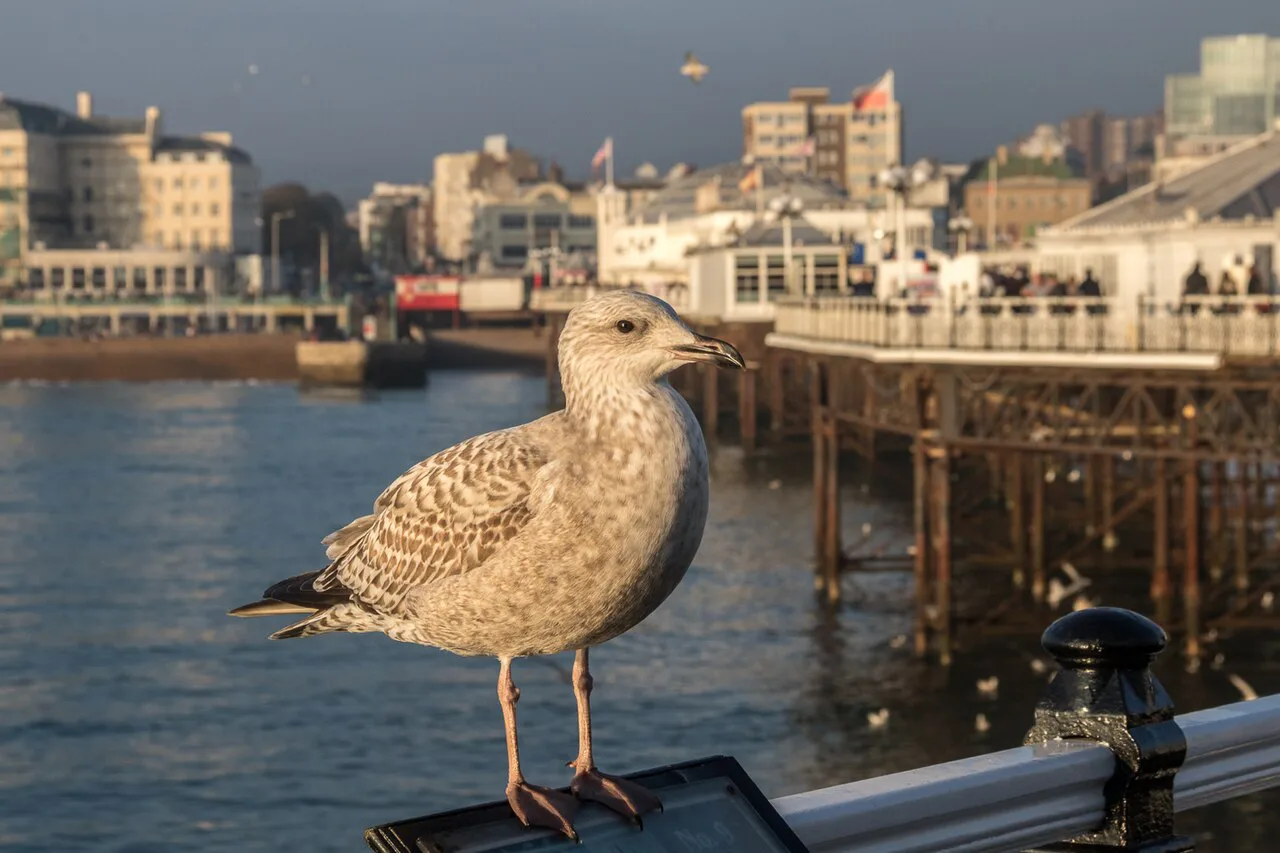
Brighton Beach is the fourth stop on the published route and the pebble beach is the reason the seafront walk works as a whole. It is a stretch to walk beside rather than a single sight, and it is where the route opens out after the built-up pier end. The beach is also where the wind is strongest, so a layer you can take off and put back on matters more here than anywhere else on the walk.
The Artists' Quarter follows on the same route, which gives the walk a natural finish beyond the pier crowds. If you have time for only part of the route, the stretch from the pier through the beach to the Artists' Quarter covers the essential Brighton seafront in one continuous line.
How long the seafront walk takes
Allow about two hours for the seafront route if you walk it steadily and stop for photographs but not for attractions. Add an hour for each indoor stop you go into, and more if you eat along the way, because the promenade has plenty of places to pause. A half day is the realistic budget if you want the pier, the beach and one attraction without rushing.
Compare that with a paid guided walk, which typically takes a set block of time and covers a defined route, so you know what you are getting in advance. The self-guided version is longer only because you control the pauses; the walking itself is shorter. If your time in Brighton is one full day, a guided walk in the morning and the seafront on foot in the afternoon is a workable split, provided you do not book both for the same hours.
Getting to the start and where to finish
The easiest approach is to start at the pier end of the promenade, which is walkable from the city centre and the Lanes, and finish east at the Artists' Quarter or at Brighton Marina. Brighton is well served by trains and buses, and the destination's travel information covers the options, so check that before fixing a meeting point. If you are arriving by train, the city centre is close enough that you can walk to the seafront rather than needing a bus.
For guided walks, the meeting point depends on the company, and BrightonWalks, Only in Brighton and Brighton Revisited each run their own arrangements. Note the meeting place when you book instead of expecting a seafront start, since a hidden-walks tour will deliberately begin somewhere less obvious. Finishing near the Lanes puts you within reach of an afternoon tea or a pub at the end of the walk.
Countryside walks from Brighton by bus
Brighton is a city with a national park on its doorstep, and the Breeze bus routes run every weekend throughout the year to Stanmer Park, Ditchling Beacon and Devil's Dyke. Some of those buses carry additional space for bicycles, and there are often discounts for people travelling by train. That makes a South Downs walk feasible without a car, which is the single most useful transport fact for a walker based in the city.
The Sussex Walks app holds over 250 routes in the county and is available for iPhone and Android, which is the practical way to carry a route into the downs without printing anything. Nearby Lewes is also easy to reach from Brighton by regular train and bus, and several trails start from the town, including three routes around Malling Hill. Those are hilly walks, so plan a pub stop in Lewes afterwards rather than a tight return train.
Devil's Dyke and Ditchling Beacon
Devil's Dyke is a short bus ride from Brighton and sits within the South Downs National Park, with six routes to try in the area, including a gentler family-friendly option. Ditchling Beacon is better known as the brutal ending to the London to Brighton Bike Ride, and it has seven routes on the app, including an epic 9.25-mile adventure that includes a pub. Both are proper hill country, so the trade-off is effort for views.
For a shorter alternative near Devil's Dyke, Saddlescombe has four suggested routes, all under four miles, though the hills still make them a decent workout. Firle Beacon offers spectacular views but many of its routes are full of ups and downs, so leave it for a day when you have had a proper breakfast. Pick by fitness and time rather than by distance alone.
Stanmer Park
Stanmer Park is the city's largest park, with extensive grounds just outside the centre and four routes on the app ranging from 1.75 to 5 miles. It holds a badger sculpture and several woods, including Pudding Bag Wood, which makes it the mildest of the countryside options and the best pick for a family walk with small children. One Garden Brighton, a free-to-enter walled garden managed by Plumpton College, sits within Stanmer Park and adds a garden stop to the walk.
Hollingbury Park and Castle is the other inside-the-city option, with two walks in the Hollingbury area reachable from the centre on foot, by bike, bus or train via Moulsecoomb. If you want green space without leaving Brighton, that is the one to know about. For built heritage instead of downland, the castles near Brighton that sit within reach of the city make a different sort of day out.
Accessibility, steps and weather
The seafront promenade is the accessible choice: it is level and continuous, and the stops on the published route follow one another without a climb. The downs are the opposite, with routes at Firle Beacon and Saddlescombe described as hilly, and Mount Caburn near Glynde a steep climb. Choose by mobility rather than by reputation, and treat the promenade as the default if anyone in your group finds steps or gradients difficult.
Weather changes the walk more than the route does. Wind on the seafront is the constant, pebbles make for slower going than paving, and rain sends you into the aquarium or a museum instead. Carry a layer, wear shoes you can walk a couple of hours in, and keep the indoor stops in your back pocket as the fallback rather than as the plan.
When to walk: seasons and crowds
Brighton's seafront is busiest in summer, when the pier and beach draw the biggest crowds and the promenade slows to a shuffle. The Breeze buses run every weekend throughout the year, so the downs are available out of season when the city is quieter and the buses are emptier. If you want the seafront without the crush, an out-of-season visit gives you the same route with fewer people and a colder wind.
Guided walks run on operator schedules rather than on a city-wide timetable, so a winter visit may have a thinner choice of dates. Book the walk for the day you want rather than the other way round, and keep the self-guided seafront route as the flexible option for whichever day stays dry.
Book ahead or turn up?
For individuals, the open guided walks and the self-guided options rarely need more than a few days' notice, but groups should book because operators set group limits and some ask for advance arrangement. Only in Brighton asks groups of eight or more to arrange in advance, and BrightonWalks takes pre-booked groups alongside individuals. Private, multilingual and bespoke hunts always need arranging, since the guide or game is built around your group.
The honest trade-off is cost against flexibility. A paid guided walk costs money but gives you a fixed route, a guide and no planning, while the seafront walk costs nothing to follow and lets you start when you like and stop when you like. If you are in Brighton for two days, do one of each: the guided walk first for context, then the self-guided route so the city makes sense on foot.
Afternoon tea to finish
Finish a walking day with tea rather than another museum, and use the city's cafes and afternoon tea listings to find somewhere near the Lanes or the seafront. The VisitBrighton food and drink section carries an afternoon tea and tea rooms category, which is the place to match a venue to your finishing point. Book ahead for a weekend tea, since the good rooms fill up fastest after a sunny promenade afternoon.
If the weather has beaten you and you would rather stay indoors, Brighton's free museums are the budget-friendly alternative to a paid attraction, and they pair well with a short walk between them. Build the day around one paid experience and one free one, and the walking becomes the thread between them rather than the whole day.
Plan Your Visit
Decide first whether you want a guide or a route. A Blue Badge-led walk buys you the story of Brighton in one sitting, with BrightonWalks listing tickets at £10.00 to £12.00 and several operators offering themed, multilingual and food versions. The self-guided seafront route buys you freedom: pier, Sea Life, Volk's Electric Railway, beach and Artists' Quarter in one line, with a couple of hours of walking and as many stops as you choose.
Then add the downs if you have a second day. The Breeze buses run every weekend to Stanmer Park, Ditchling Beacon and Devil's Dyke, which turns a city break into a walking one without a car. Keep the promenade for the day you arrive, and check the operator's own site for the meeting point and current rate before you set out.
Explore more Brighton guides
Frequently Asked Questions
Are there guided walking tours in Brighton?
Yes. Brighton has several guided walking tour operators, including BrightonWalks, Only in Brighton, Brighton Revisited, Brighton Tours by Marc Gardiner, Brighton Food Tours and Discover Brighton. Several use accredited Blue Badge guides, and Brighton Revisited also guides in French and German by arrangement. Operators set their own routes, schedules and booking rules, so book through the one whose theme suits you.
How much is a Brighton walking tour?
BrightonWalks publishes its ticket range on the official VisitBrighton walking listing, and other operators set their own rates through their own booking pages. A private, themed or foreign-language tour will price differently from a standard open walk, so check the operator's booking page for the walk you want.
What is the best self-guided walk in Brighton?
The seafront route is the strongest self-guided walk for a first visit because it strings together the pier, Sea Life Brighton, Volk's Electric Railway, Brighton Beach and the Artists' Quarter in one continuous line. It needs no booking and you can walk past any stop you do not fancy. For countryside instead of coast, Stanmer Park offers the easiest routes from the city.
How long does it take to walk Brighton seafront?
Allow about two hours to walk the seafront route steadily with photo stops but no attractions. Add roughly an hour for each indoor stop such as Sea Life Brighton, and more if you eat along the promenade. A half day is a realistic budget if you want the pier, the beach and one attraction.
Can you walk from Brighton to the South Downs?
You can reach the South Downs without a car: Breeze bus routes run every weekend throughout the year to Stanmer Park, Ditchling Beacon and Devil's Dyke, which sit in or on the edge of the South Downs National Park. Some buses have extra space for bicycles and train travellers often get discounts. Once there, expect hills rather than a gentle stroll.
Do Brighton walking tours need booking in advance?
Individuals can usually join an open guided walk with modest notice, but groups should book ahead because operators set group limits. Only in Brighton asks groups of eight or more to arrange in advance, and BrightonWalks takes pre-booked groups. Private, multilingual and bespoke treasure hunts always need arranging, since the route is built around your group.
Sources
Notes for your next city break
Optional updates to our UK city guides.
You might also like

Continue reading
More guides you'll find useful