Haunted Places in York: Ghost Stories and Where to Find Them
A guide to York's haunted places, from the Roman soldiers at Treasurer's House to Mad Alice's lane, with legends told as legends and practical visiting tips.
On this page
York's haunted reputation rests on a set of very specific addresses: a National Trust house beside the Minster, a churchyard off Goodramgate, a narrow snickelway linking Swinegate and Low Petergate, and several pubs where regulars have swapped the same tales for generations. Every story below is a legend or a reported sighting, not a verified event, and many come with a solid piece of real history attached. That combination is what makes a ghost trail here double as a history walk.
Most of the sites sit within a compact loop inside the city walls, so the walking is easy and the distances short. Some places you can simply stroll up to at any hour; others sit inside a museum, a church or a house that keeps its own visitor arrangements. This guide separates the two, groups the legends by street so you can build a route, and flags where booking ahead genuinely helps.
Treasurer's House: the Roman Soldiers in the Cellar
The best-known York ghost story belongs to the Treasurer's House, a National Trust property, and involves a plumber called Harry Martindale who was working on the basement boiler in 1953. He reported hearing a trumpet and then seeing a Roman soldier emerge from the wall, followed by a horse and a column of soldiers walking two abreast in green tunics with round shields and short swords. He could only see them from the knees up, because they were walking on a Roman road buried below the cellar floor.
The detail that keeps the tale alive is the archaeology: excavations in the basement later uncovered the remains of a Roman road exactly where the figures had walked. Sceptics once dismissed the account because Roman troops were not thought to carry round shields or wear green, until research on fourth-century garrison changes at York undercut that objection. What you can actually see today is the Roman road in the basement, which is a genuine piece of the city's past regardless of what you make of the trumpet.
Access to the basement comes with a house ticket, so this is the one stop on the trail that needs planning rather than a casual detour. The Trust publishes current opening days and admission on its own pages; check those before you build a day around it. Allow an hour if you want the upstairs rooms as well as the cellar.
York Minster and the Plague Girl in the Window
In a small house beside York Minster, legend places a girl who fell ill with the plague and was locked into a small room by her parents, who fled rather than stay with her. Passers-by have long reported seeing a child's face at the window, supposedly still waiting for them to come back. It is a story told about the outside of a building, which means you can look up at the window from the street on any walk past the Minster without buying anything.
Treat this one as atmosphere rather than a destination. Pair it with the Minster itself, where the daytime visit is the real draw: the building is the reason the surrounding streets are so busy, and evening walks past the west front are when the plague-girl tale lands best.
Yorkshire Museum and the Haunted Library
The Yorkshire Museum's old library, now the museum gift shop, carries one of the most repeated staff tales in the city. A caretaker starting an early shift on a cold September morning in 1953 heard hurried footsteps, found a figure in old-fashioned clothing muttering that he must find something, and watched him vanish when challenged. A cleaner called Mildred later reported a man walking straight through locked doors into the library, and an investigation team is said to have witnessed a book fly across the room even though no figure appeared.
The setting is real and easy to visit: the museum sits in Museum Gardens, and the gift shop occupies the former library space, so you can stand in the room where the story is set. Admission arrangements change, so check the museum's own site for current ticket and opening information rather than relying on a guidebook.
Museum Gardens and St Mary's Abbey: the Black Abbot
The Black Abbot is said to walk the Museum Gardens and the ruins of St Mary's Abbey at any hour of the day or night, paying no attention to living visitors and simply going about his business. The abbey walls themselves are the evocative part: medieval masonry standing in open grass, with the river close by.
Because the gardens are open ground rather than a ticketed interior, this is one of the simplest legends to build into a walk, and it works in daylight. Combine it with the museum and the abbey ruins for a half-day that mixes genuine medieval history with the story.
Holy Trinity, Goodramgate: the Headless Earl and the Nun
Holy Trinity on Goodramgate is linked to Thomas Percy, 7th Earl of Northumberland, executed in 1572 for his Catholic opposition to Elizabeth I; his head was displayed over Micklegate Bar for around two years before a sympathiser buried it in the churchyard here while the rest of him was laid to rest elsewhere. Legend has his headless figure staggering among the graves in search of it, and a ghostly nun is also said to haunt the churchyard.
The churchyard is the draw for a ghost walk: it sits off one of York's main shopping streets, so you can step from busy Goodramgate into quiet grass in seconds. It is a working church, so visit respectfully and outside service times.
Bedern Arch and the Ragged School Orphans
Bedern Arch, off Goodramgate, carries the darkest of the York legends, attached to the York Industrial Ragged School established in 1847. The story runs that the alcoholic schoolmaster kept the allowance paid for each child, starved them, and hid the bodies in a cupboard when the winter ground was too hard to dig. The haunting is described as a child's cold hand slipping into yours under the arch on winter nights, followed by giggles that turn to screams.
This one should be told as a legend and nothing more; it is a story about a real institution, not a documented crime. The arch itself is a short passage you can walk through in under a minute as part of a Goodramgate route, and it is free.
St Saviour's Church, St Saviourgate: the Phantom Viking
St Saviour's Church on St Saviourgate is associated with a phantom Viking warrior, said to be a victim of reprisals after the Battle of Fulford in 1066, the overlooked precursor to Hastings fought in York. The legend even includes a ghost hunter who spent a night in the church and was found dead, lodged high on a beam, apparently frightened to death.
Five minutes away, the street name Ogleforth comes from Old Norse for a ford haunted by an owl, which is a genuine linguistic trace of the Viking city rather than a ghost story. That makes this pair a neat stop for anyone interested in York's Norse period.
Lund's Court: Mad Alice and the Snickelway
Lund's Court, a narrow snickelway linking Swinegate and Low Petergate, was once known as Mad Alice Lane, and the restless spirit of Alice Smith is said to haunt it still. Versions of her story differ: one has her hanged in 1823 for insanity, another in 1825 for poisoning her husband, and there is no record of any Alice Smith being executed in York, which is exactly why the tale is best told as a legend.
The lane is a public passage, free to walk through at any time, and it takes seconds. It works well as a link between Goodramgate and Petergate stops on a route rather than as a standalone visit.
St William's College: the Guilty Brother
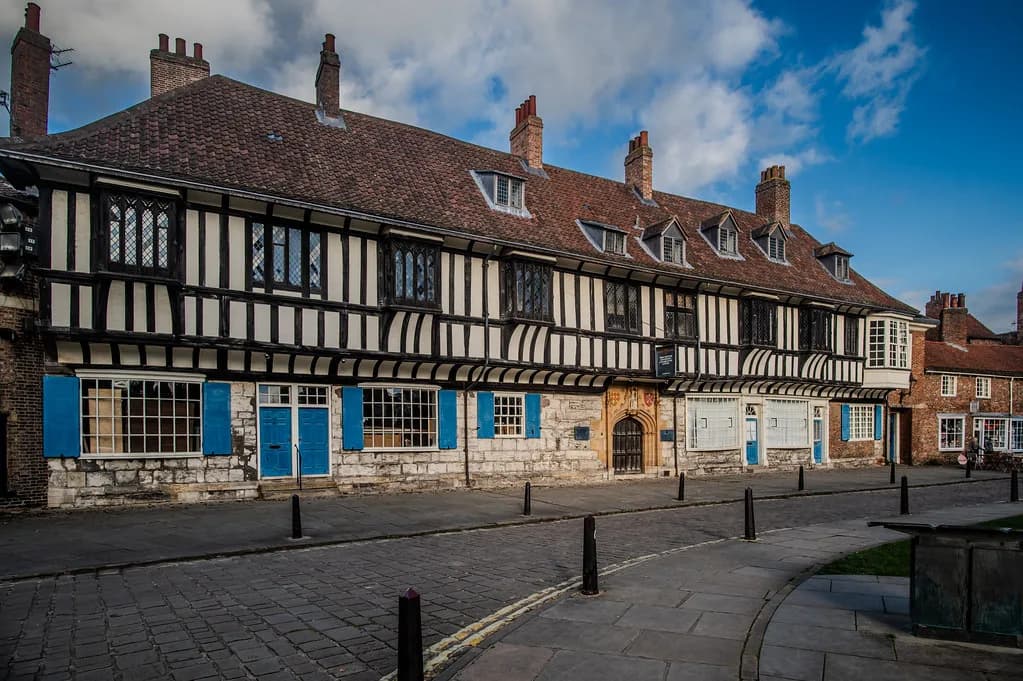
St William's College on College Street is said to hold both an external and an internal presence: an old lady on the steps who smiles pleasantly at passers-by, and a disquieted spirit pacing the upstairs corridors. The story behind the second is a sixteenth-century pair of brothers who robbed and killed a wealthy priest in Minster Yard; the younger locked himself away with his share in remorse, the elder turned him in, and the younger was hanged without naming his brother. The older man is said to have declined and died haunted by what he had done.
The college sits almost in the Minster's shadow, so it slots naturally into any walk between the Minster and Goodramgate. The steps and exterior are visible from the street; the upstairs rooms are not open simply because a ghost story says so.
York Pubs with Ghost Legends
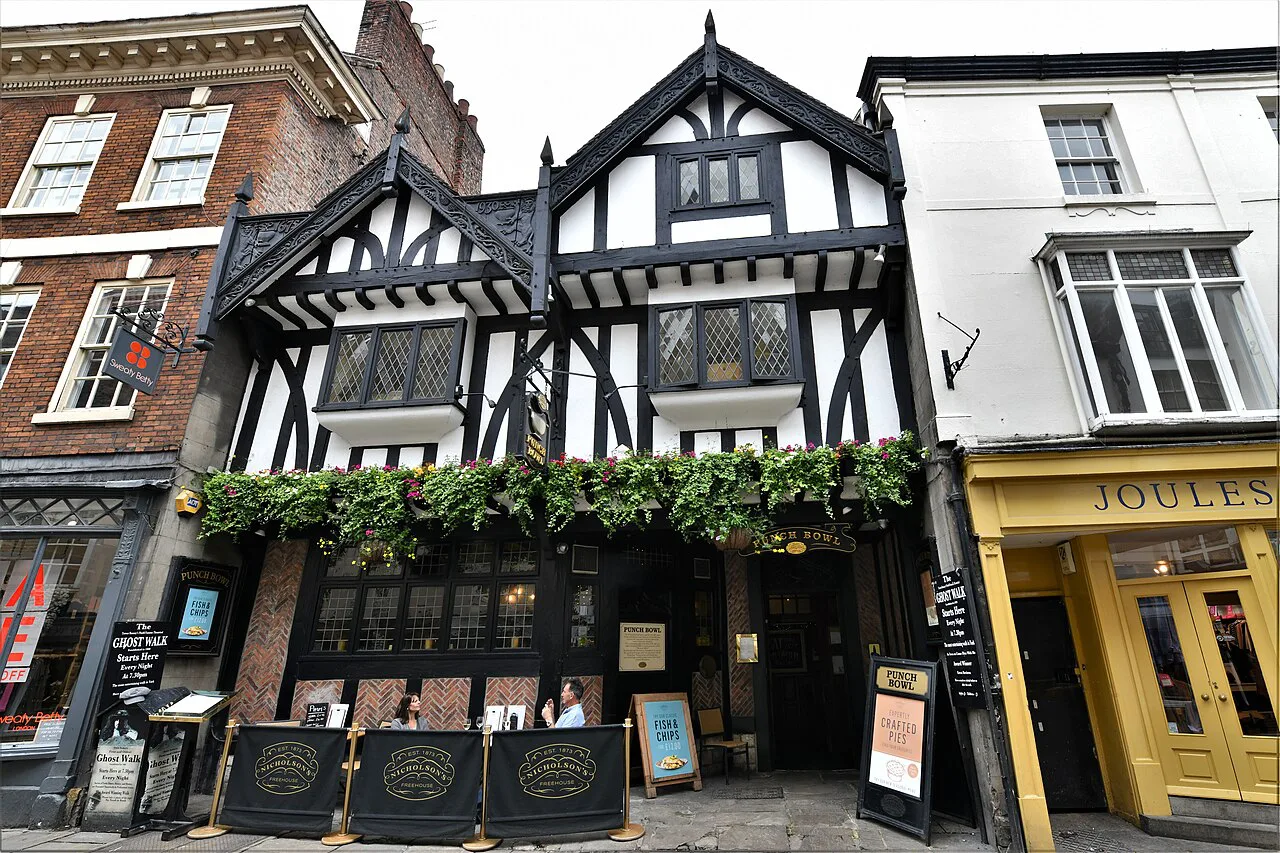
The Cock and Bottle is associated with George Villiers, 1st Duke of Buckingham, who lived from 1592 to 1628 and is said to haunt the pub built on the site of his alchemical laboratory, reportedly harassing women and sitting in a chair by the fireplace. The Snickleway Inn and La Piazza on Goodramgate share the sad tale of Marmaduke Buckle, who lived in the building between 1697 and 1715, was accused of witchcraft, and is said to have carved his dates and initials into a beam before hanging himself at eighteen; the carvings are said to survive in the attic. He is blamed for slamming doors and flicking light switches between the two buildings.
The York Arms on High Petergate is tied to a Grey Sister, a nun said to have been walled up alive after giving birth and now blamed for flying objects and overturned stools, with a particular fondness for the gents' lavatory. These are pub tales told over the bar, not verified events, and they are free to hear if you are buying a drink; opening hours vary, so check the individual pub's own listing.
Georgian Theatre Royal: the Grey Sister Behind the Dress Circle
The Georgian Theatre Royal on St Leonard's Place has a second Grey Sister legend: a nun who fell in love with a nobleman in the Middle Ages, when the site was the Old Hospital of St Leonard, and was sealed into a windowless room. Her ghost is said to favour the room behind the dress circle, and a ghostly melody is reported late at night.
The theatre is a working venue, so the story is best enjoyed in the context of a performance rather than a ghost hunt. Book through the theatre directly and check the programme on its own site.
New Walk and Tower Gardens: Duellists and Dick Turpin
New Walk, the tree-lined promenade along the Ouse from Tower Gardens, was laid out in the Georgian era as a fashionable strolling ground, and Tower Gardens, formerly part of St George's Field, was a favoured spot for duels. The legend attached to it involves a staggering figure and a blood-curdling scream, supposedly the Earl of Stafford dying early one morning after a poorly aimed pistol. Dick Turpin's spectral figure, caped and wearing a tricorn hat, is also reported in the area.
This stretch is open ground and free, and it is one of the most pleasant parts of the city for an evening walk regardless of ghosts. The riverside path also gives you a view of the walls and the Minster from a distance.
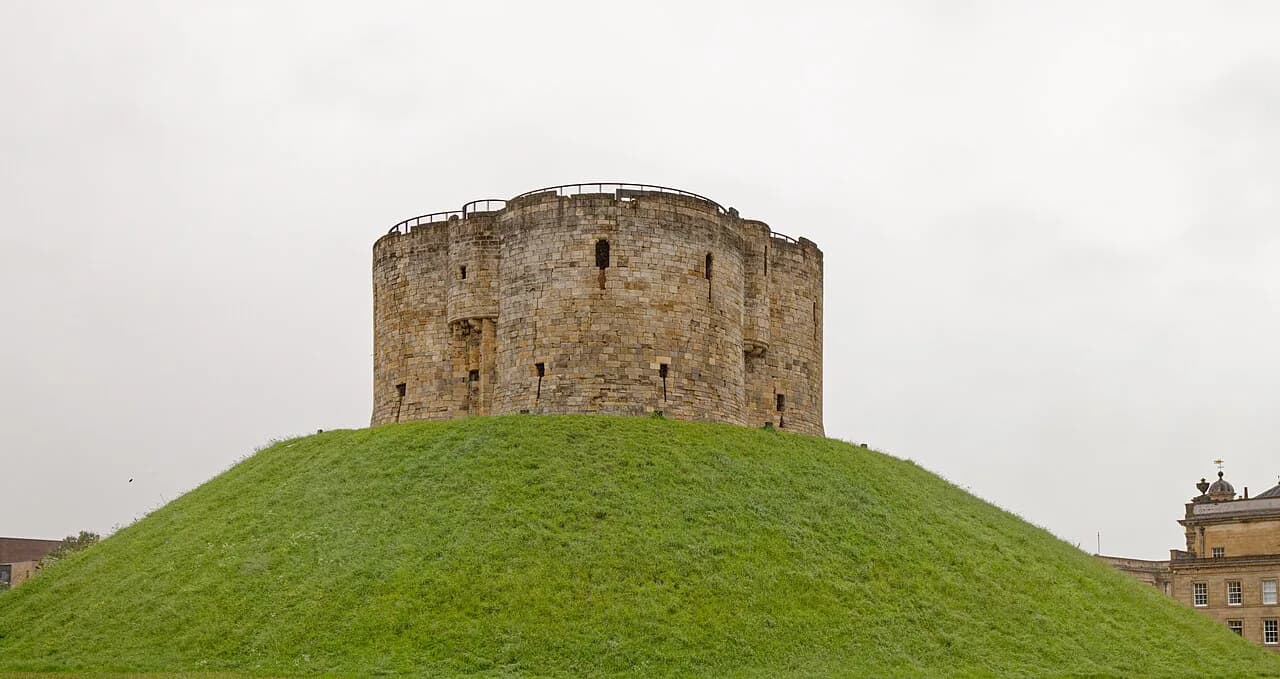
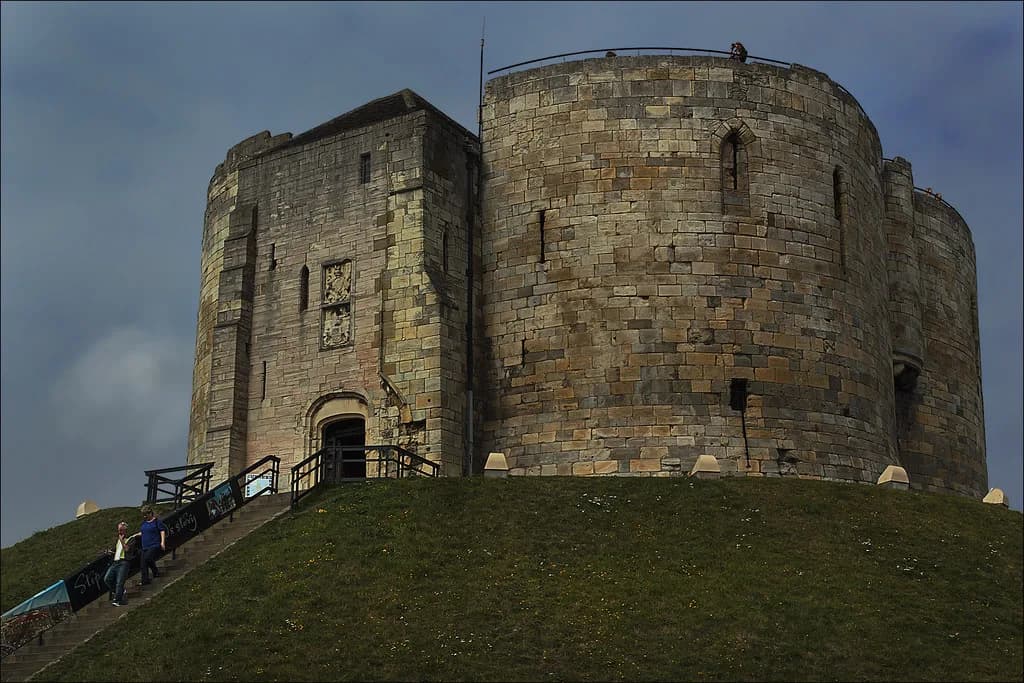
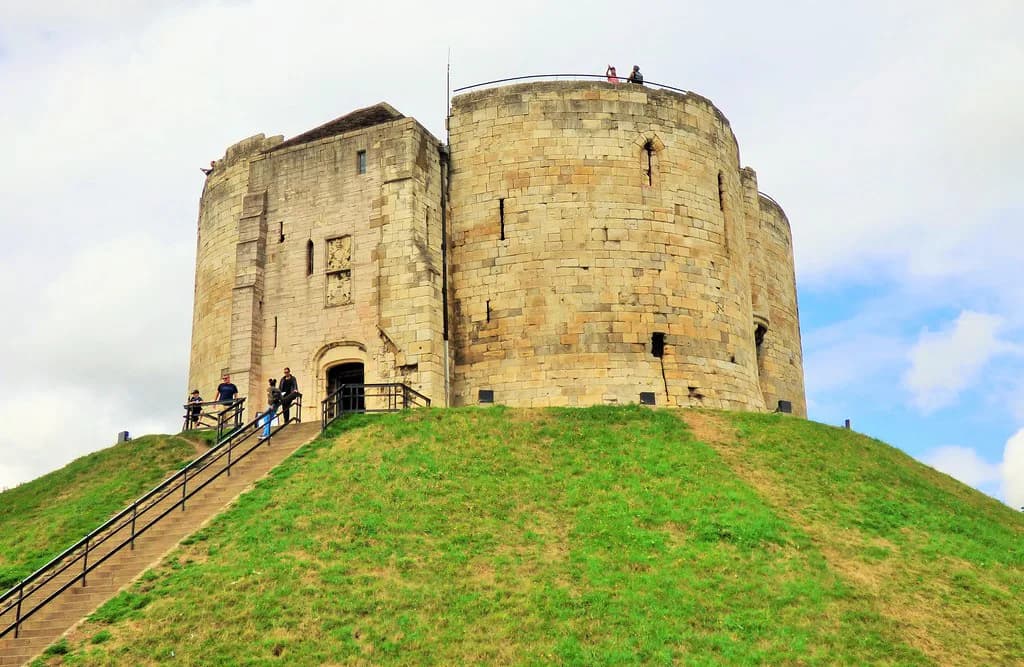
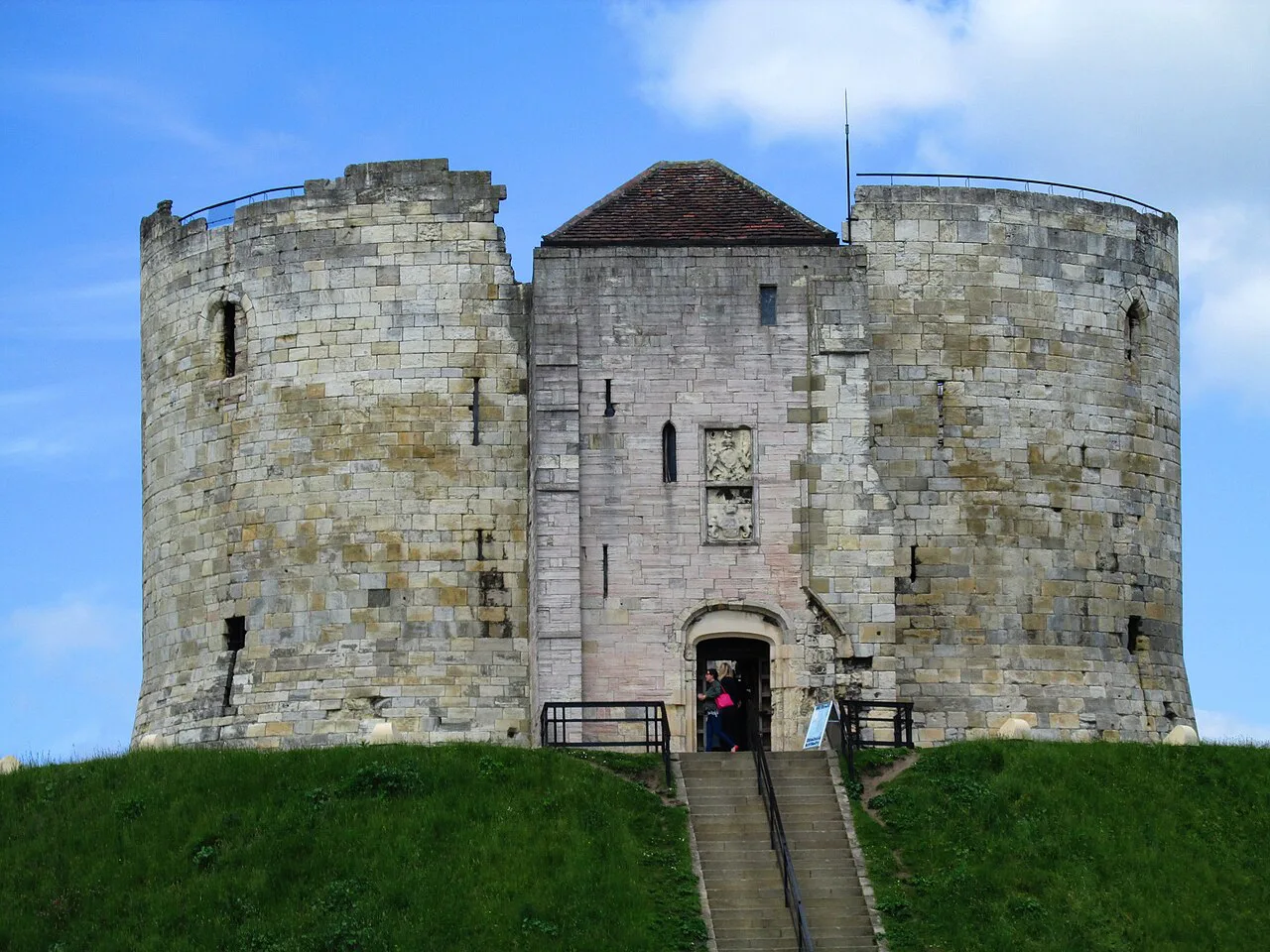
Nearby Clifford's Tower adds a genuine historic stop to the same walk, and the castle quarter is a short hop from the river. If you are building a wider itinerary around castles, our guide to castles near York covers the options beyond the city too.
Building a Ghost Route Through the City
A practical loop starts at the Minster, takes in St William's College and the plague-girl window, drops down Goodramgate for Holy Trinity, Bedern Arch and the Snickleway, cuts through Lund's Court to Swinegate, and finishes at the York Arms on High Petergate or along New Walk to Tower Gardens. Every leg is a few minutes' walk, and the whole circuit fits comfortably into an evening.
Practical Trade-offs: What Is Free and What Needs a Ticket
Churchyards, streets, the snickelway, Museum Gardens ruins and the riverside walks make the backbone of a ghost trail. The Treasurer's House needs a house ticket for the basement, and the Yorkshire Museum has its own admission arrangements; check each venue's own site before travelling for current days and prices.
The trade-off is time of day: the free outdoor sites are at their best after dark, but the interiors that carry the best stories close in the afternoon. Split the two across a single day rather than trying to do both in one evening, and allow around two hours for the outdoor circuit at an easy pace.
Booking Ahead: Ghost Walks and Evening Timing
York runs numerous ghost walks through the centre, and several are named operators with their own booking systems; our guide to ghost tours in York sets out the main options and what each covers. Evening tours fill fastest around Halloween and weekends, so book ahead if your dates are fixed.
For museum and house tickets, book directly with the venue once you have confirmed its opening days. A ghost walk is a good way to hear the legends from a guide, but the free self-guided route gives you the same buildings at your own pace.
Pairing Ghost Legends with York's Daytime History
The reason York's ghost stories work is that they attach to real fabric: a Roman road under a cellar, a medieval abbey ruin, a Georgian promenade, a Victorian school. If you want the daytime version of the same city, our guide to museums in York covers the collections that explain the Roman, Viking and medieval layers behind the legends, while free museums in York shows which collections cost nothing to enter.
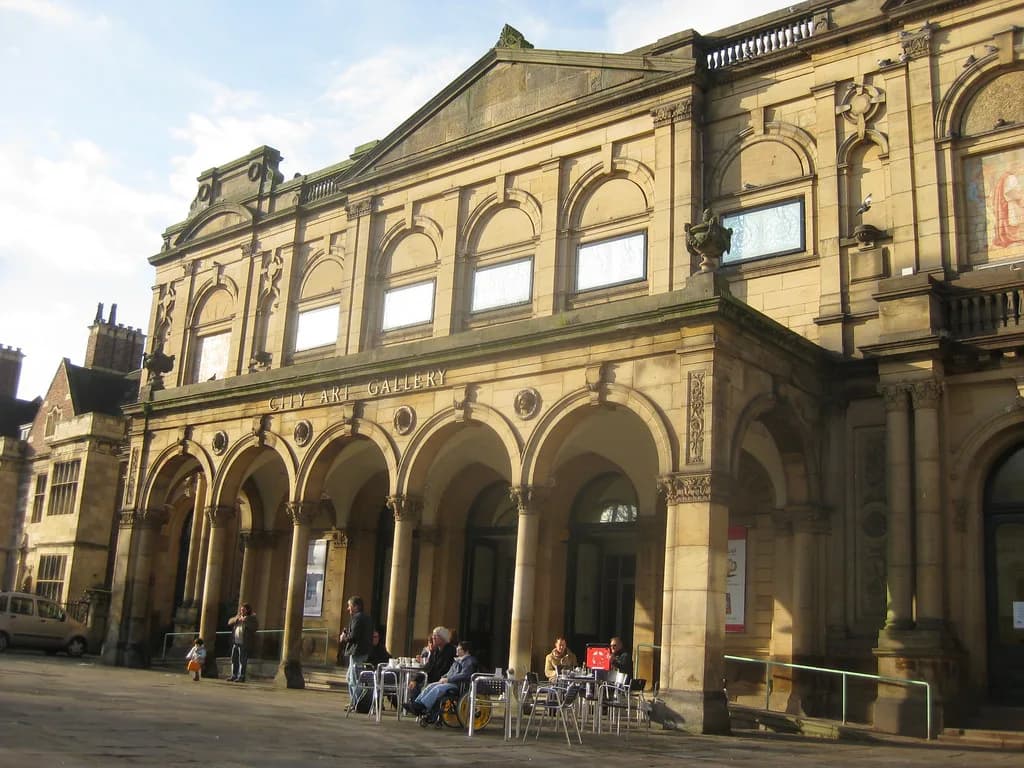
Art lovers can add York Art Gallery to the same day, which sits close to the Minster and the Museum Gardens. It rounds off a history-heavy itinerary with something quieter.
If you enjoy this kind of storytelling, our guide to haunted places in Liverpool covers another city's legends in the same style. Start with the buildings, then enjoy the ghosts.
Plan Your Ghost Walk
Pick one anchor for the evening, such as the Minster or Goodramgate, and build a short loop around the free outdoor sites so you are not racing between tickets. Book any house or museum interior for the daytime and keep the walk for after dark. Check current opening days and tour availability with each venue before you set out.
Frequently Asked Questions
What are the most famous haunted places in York?
The Treasurer's House, with its Roman soldiers in the cellar, is the best known, followed by Holy Trinity on Goodramgate, Bedern Arch, Lund's Court, St William's College and the pubs around Petergate and Goodramgate. Most sit within a short walk of the Minster, so they are easy to combine into one route.
Is the Treasurer's House in York really haunted?
The story is a legend, not a verified event. A plumber working on the basement boiler in 1953 reported seeing Roman soldiers walking on a buried road, and excavations later uncovered that road. You can see the Roman remains in the basement as part of a house visit, whatever you make of the ghost.
Can you visit the Roman road in the Treasurer's House basement?
The basement and its Roman road are part of the house, so access comes with a house ticket rather than a standalone entry. Check the property's own pages for current opening days and admission before you travel, as these change by season.
Which York pubs have ghost stories attached to them?
The Cock and Bottle has a Duke of Buckingham legend, the Snickleway Inn and La Piazza share the tale of Marmaduke Buckle, and the York Arms is linked to a Grey Sister. These are stories told by regulars and landlords rather than documented hauntings, and they are best enjoyed over a drink.
Where is Mad Alice Lane in York?
It is Lund's Court, a narrow snickelway between Swinegate and Low Petergate, once known as Mad Alice Lane. The story of Alice Smith, hanged in the 1820s according to differing versions, has no supporting record of an execution, so it is best treated as legend. The passage is free and open to walk through.
Is York Minster haunted?
The Minster itself is not the subject of a major haunting legend; the plague-girl story attaches to a small house beside it, where a child's face is said to appear at a window. You can see the building from the street without a ticket, and the tale works best on an evening walk past the Minster.
What is the story of the Black Abbot at St Mary's Abbey?
Legend has a Black Abbot walking the Museum Gardens and the abbey ruins at any hour, ignoring visitors and going about his routine. The ruins themselves are real medieval fabric, free to walk among, so the story works as a way into the abbey's history.
Are York ghost walks worth booking ahead?
If your dates are fixed, yes, especially at weekends and around Halloween. Several operators run walks from the centre, and booking direct with the company you choose is the simplest approach. Our guide to ghost tours in York compares the main options.
Sources
Notes for your next city break
Optional updates to our UK city guides.
You might also like

Continue reading
More guides you'll find useful