Medieval York: Streets, Walls and Buildings to See
See medieval York on foot: the Shambles, the city walls, York Minster, Merchant Adventurers' Hall and Clifford's Tower, with what each is and how long to allow.
On this page
Medieval York is best read as layers rather than a single street: a Roman fort below the Minster, Norman earthworks, a Gothic cathedral finished in 1472 and a wall circuit rebuilt in stone after 1212. Nearly all of it sits within the old city inside the bar walls, so you can walk between the major survivals in a day. This route starts at the Minster, loops south to Clifford's Tower and the Shambles, and finishes by the river.
Where the medieval city sits today
The medieval city is compact and roughly contained by its walls, with the Minster at the centre and the Rivers Ouse and Foss wrapping the southern and eastern edges. The Roman legionary fortress lay on the north-east bank of the Ouse, and its footprint still shapes the street pattern around the Minster. That makes orientation simple: the Minster is the fixed point, the walls mark the edge, and almost everything on this walk is within twenty minutes of the cathedral.
The layers are unusually visible. In the Minster undercroft you can see remains of Roman barracks and of the earlier Norman minster, while above ground the stone walls and the Shambles belong to the later medieval city. If you want to go deeper into the Roman period, this site has a companion guide worth reading before you arrive.
A short history: from Norman fire to Tudor recovery
William the Conqueror turned to York in 1068 and built two motte-and-bailey castles on either side of the Ouse. In 1069 a Danish fleet allied with local nobles took the city and burned both castles, and the Norman response set fires that destroyed much of York, including the Minster. William then crushed resistance in the campaign known as the Harrying of the North, and the Normans rebuilt rapidly, including the first Norman cathedral.
In 1212 York's business community pressed King John for a charter, ending control by a sheriff and putting an elected mayor at the head of the city; the wooden castles and the walls were rebuilt in stone and work began on a larger Gothic Minster. The city's cloth trade later drifted to Halifax, Wakefield and Leeds, where regulation was lighter, and the population fell. Henry VIII's dissolution of the monasteries drained ecclesiastical wealth, but his re-established Council in the North made York an administrative and judicial centre again, drawing trade back into the city.
Start at York Minster
York Minster is the largest Gothic cathedral north of the Alps, completed and consecrated in 1472 after centuries of building. Inside, look for the soaring nave, the thirteenth-century carvings in the Gothic Chapter House and the stained glass of the Great East Window. Give the cathedral at least an hour, and longer if you add the undercroft museum.
If your lungs are up to it, the tower climb runs 72 metres up and rewards you with views that let you trace the bounds of the Roman fortress and the medieval city. It is a staircase, not a lift, so treat it as the most strenuous part of the day and do it while you are fresh. The Minster sits a few minutes' walk from the Shambles and Bootham, so it makes a natural first stop before the streets get busy.
Beneath the Minster: Roman barracks and the Norman church
The undercroft holds the best single explanation of how York was built: parts of the Roman barracks, an early Christian basilica that stood on the site in the early centuries AD, and remains of the Norman minster raised after the 1069 fire. A museum in the undercroft displays relics spanning two thousand years of the city's history. It is the one ticketed element here that genuinely earns its place, because it shows how a single site was rebuilt on the same ground again and again.
Elsewhere in the city, Roman stonework survives above ground at the Multangular Tower near the museum, and remains of a bathhouse sit in the cellar of the Roman Bath pub. Pair the undercroft with those two for a compact Roman trail, or use a dedicated guide to plan a longer one.
Walking the city walls
The city walls are the most generous medieval monument in York because you walk on top of them. The circuit follows the line of the Roman fortress and the later stone defences, rebuilt after the 1212 charter, and gives elevated views across rooftops and gardens towards the Minster. There are access points and exits along the way, so you can break off wherever a staircase presents itself rather than committing to the full circuit. If you enjoy walking a city's defences, medieval Canterbury offers a similar pleasure on a smaller scale.
The trade-off is uneven ground and staircases, which makes the walls less suitable for buggies or wheels and awkward after rain. Carry the route in your head and use the wall as a link between sights rather than a separate outing: for example, join near the Minster, walk a stretch above the streets, and drop down towards the museum gardens for St Mary's Abbey. Check opening arrangements for the wall sections on the council's pages before relying on a full circuit.
Clifford's Tower and the 1190 massacre
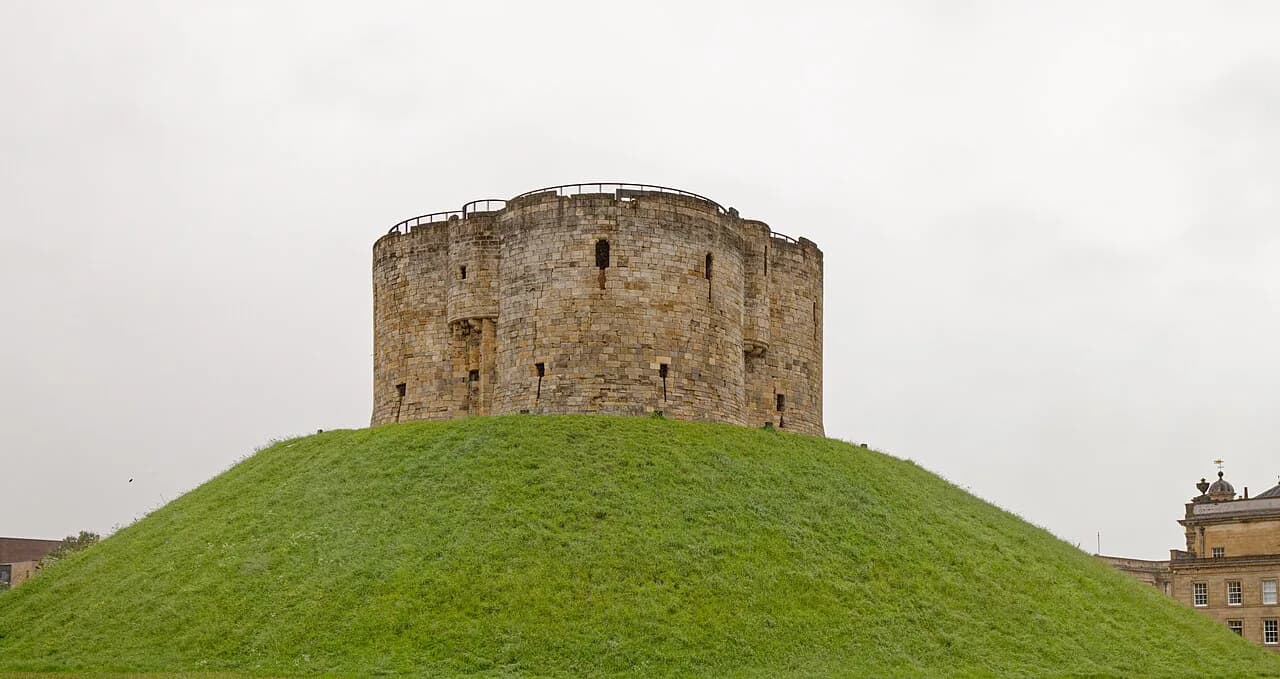
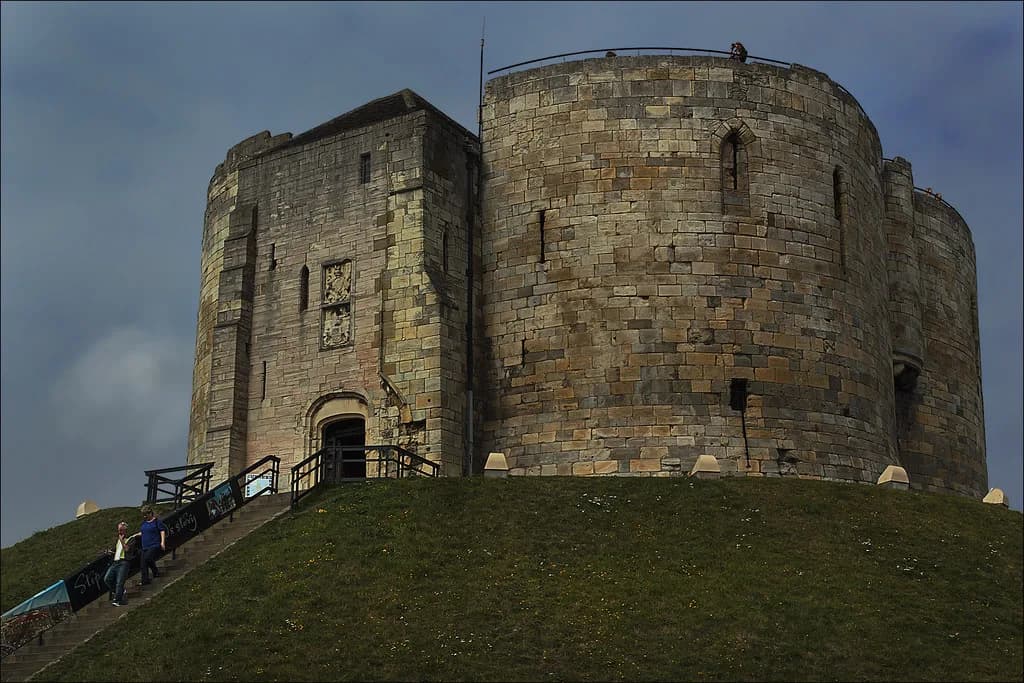
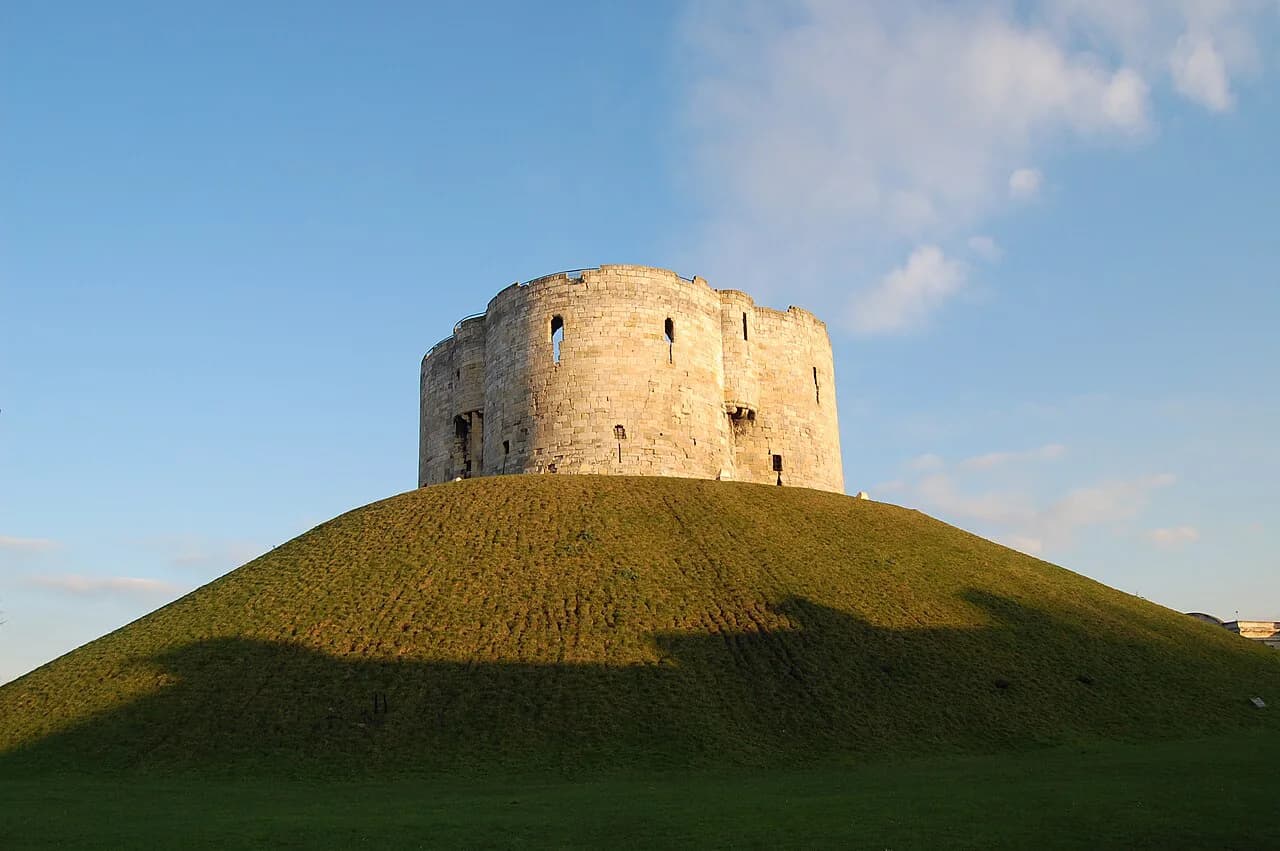
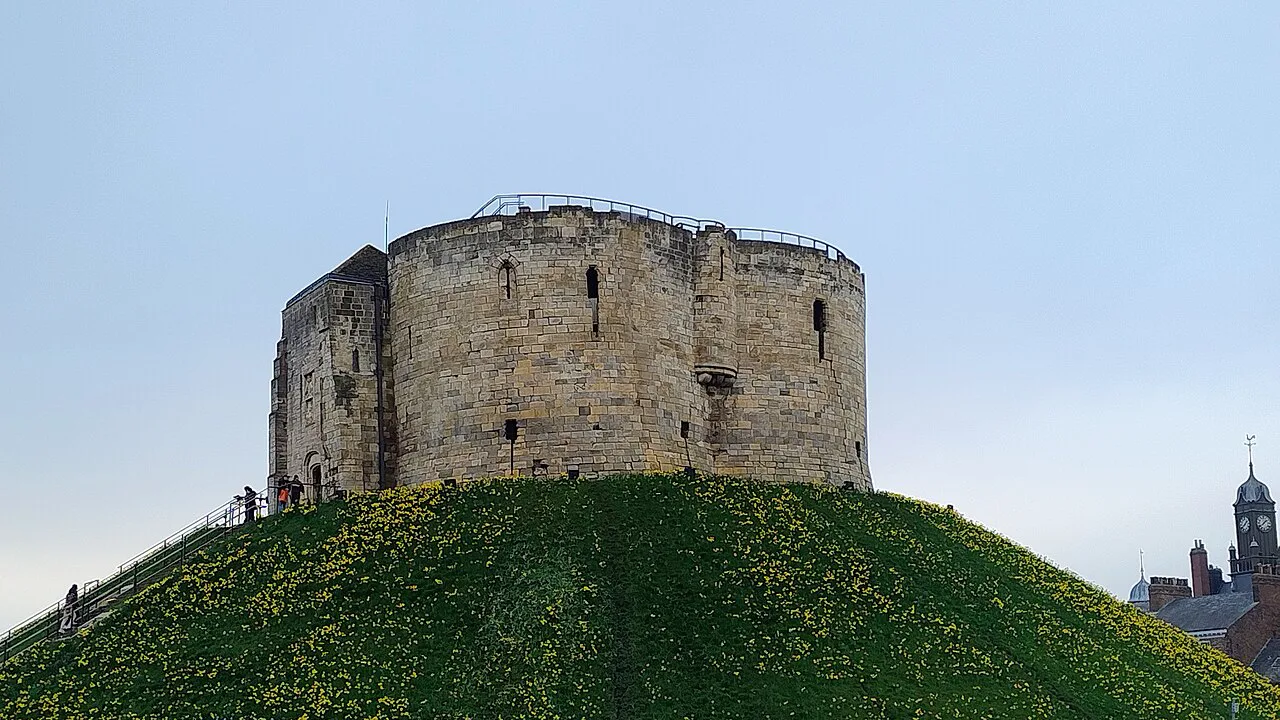
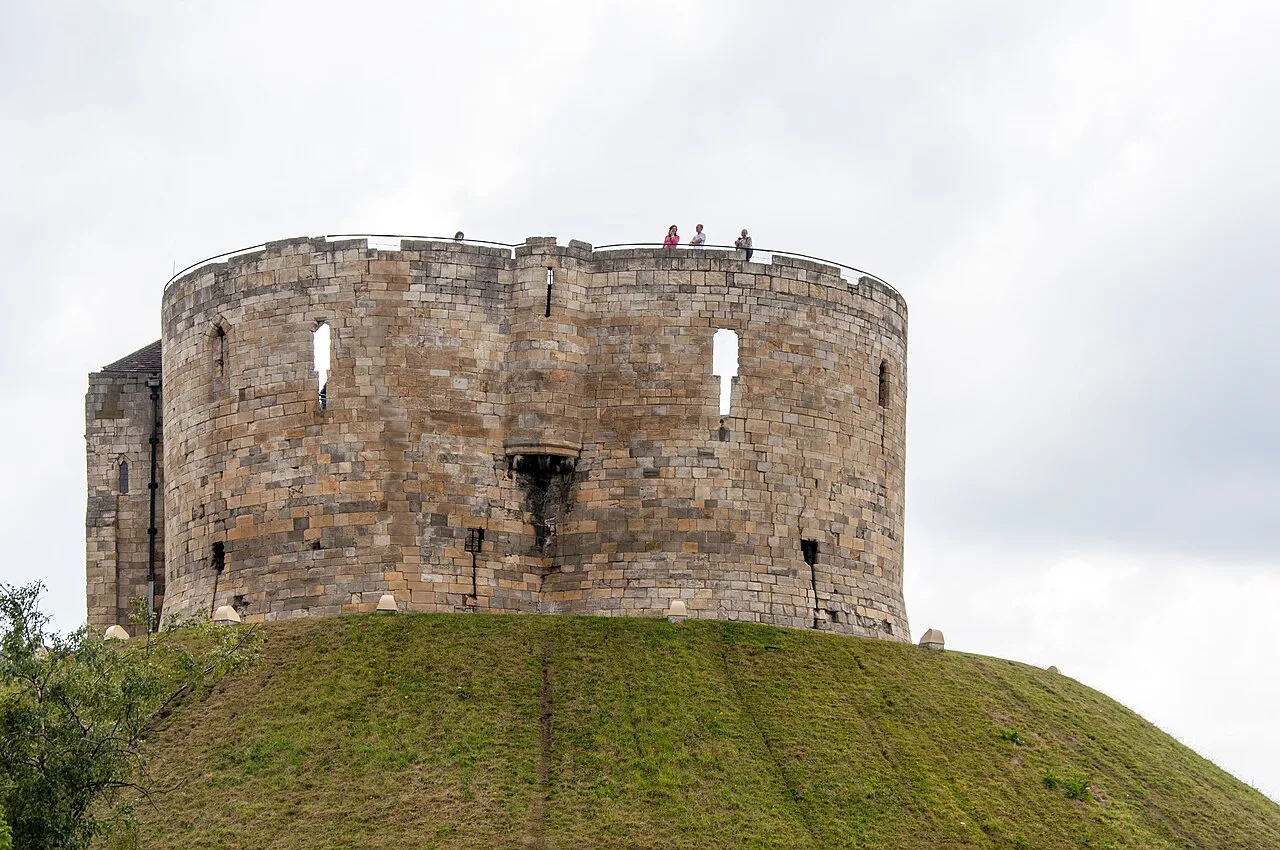
Clifford's Tower sits on a conical mound on the north-east bank of the Ouse, the site of the keep built by William's forces in 1068; the original structure burned at the end of the twelfth century and the present tower was erected around 1245. The mound is steep and the climb short but sharp. The tower is a ticketed site, unlike the streets and walls, so decide whether the interior and the views justify the stop or whether the mound alone is enough.
The most important story attached to the site is documented history, not folklore. In 1190, as antisemitic feeling swelled around the time of the Third Crusade, some 150 members of York's Jewish community took shelter in the castle; on 16 March most chose to take their own lives rather than face the mob outside, and those who did leave were murdered. The tower burned down in the same violence. Tell it plainly; it has nothing to do with the ghosts the city is marketed on.
The Shambles and surviving medieval streets
The Shambles was originally the butchers' street, and the outdoor shelves and hooks on which meat was hung can still be seen on the timber-framed shopfronts. It is a public street rather than an attraction, which means it is free and also crowded; go early in the morning for the clearest view of the buildings above the heads of the queue. Look up, because the shopfronts at eye level are largely later.
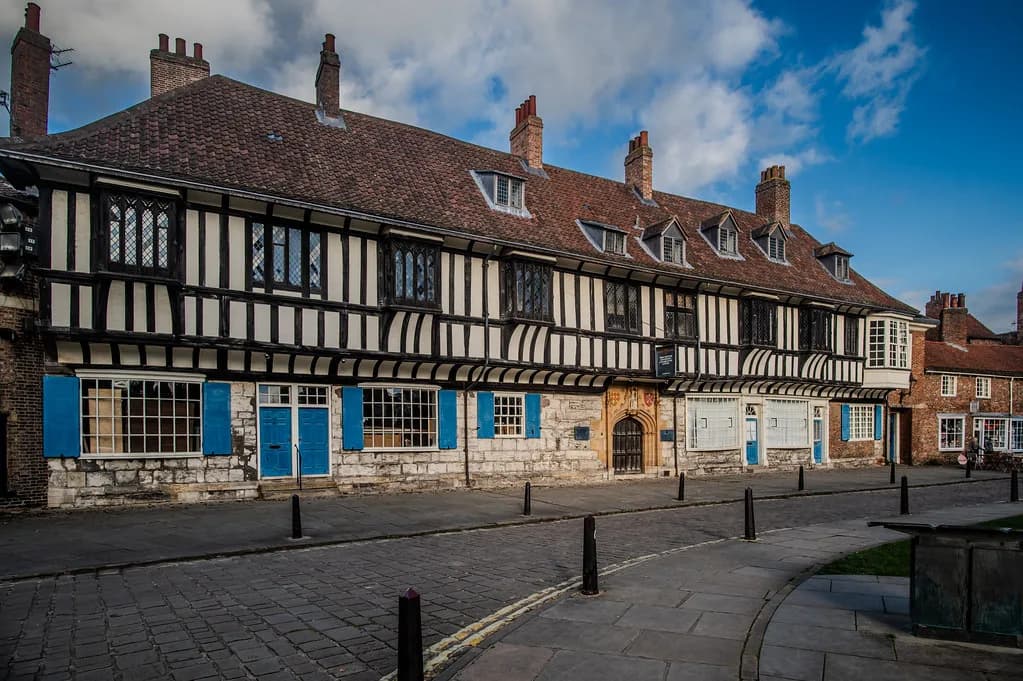
For more of the medieval city, the timber-framed Merchant Adventurers' Hall, built in the mid-14th century, is the finest surviving example of the period in York. The fifteenth-century guildhall and St William's College also survive in the centre.
Merchant Adventurers' Hall and the parish churches
The Merchant Adventurers' Hall combines a great hall and a chapel in one timber-framed complex, and it stands as evidence of the wealth that the city's guilds built before the cloth trade declined. Other medieval survivals are scattered through the parishes: within a few decades of the Norman rebuilding, as many as forty parish churches stood within York, a measure of its size. Several remain, and they are the sort of quiet stop that rewards a slow hour.
Treat the Hall as a self-contained visit with its own admission arrangements, and confirm times before setting out. Combine it with a wander along the nearby streets rather than a dash between two headline sights.
St Mary's Abbey and Museum Gardens
St Mary's Abbey was a Benedictine monastery of enormous wealth, and its ruins now stand in Museum Gardens, a short walk from the Minster and the walls. The remains give the clearest sense of the scale of monastic York before the dissolution under Henry VIII. The gardens are a good place to pause and sit on the grass between wall sections and indoor visits.
The gardens sit beside the museum quarter, where several collections are free to enter and others charge. Our guide to museums in York sets out which is which, including York Castle Museum and its social history displays. If cost matters, the free museums in York guide lists the York Museums Trust sites and other collections with no entry charge, which lets you balance a ticketed tower or undercroft against a free afternoon.
Jórvik Viking Centre and the Coppergate finds
In 1972, excavations below a site earmarked for a bank building at Coppergate uncovered a mass of Viking relics, and the large-scale dig that followed revealed the workshops and trade of Anglo-Scandinavian Jórvik. The finds showed woodworking, metalwork in copper, iron, silver and gold, and even glassmaking, with raw materials from as far as Cornwall's tin and Greenland's bone and antler. Artefacts from Afghanistan turned up too, proof of how far the city's river and sea trade reached.
The Jórvik Viking Centre now occupies the site, so it is the natural stop if you want the Viking chapter to follow the medieval one in sequence. Note that it is a reconstructed experience rather than standing ruins; the honest comparison is between the vivid recreation and the genuine stonework elsewhere on this walk. Read the wider history before you go and the displays will make far more sense.
A suggested walking order
Start at York Minster with the cathedral and, if you have the legs, the tower climb, then descend to the undercroft museum for the Roman and Norman layers. Walk south through the Shambles, continue to Clifford's Tower for the mound and the 1190 story, and cross towards Coppergate for the Viking Centre. Finish with a stretch of the city walls and the ruins of St Mary's Abbey in Museum Gardens, which leaves the museum quarter within easy reach if you want an indoor hour.
Allow a full day for that order at a relaxed pace, or two half-days if you want to linger over the Minster and the museum. The main constraints are the tower climb and the wall staircases, which together make the day more physical than a flat city walk; wear shoes that cope with worn stone. Build in a sit-down break in the middle rather than at the end.
Practical trade-offs
The streets and the market squares are public and free, while the Minster, the undercroft, Clifford's Tower, the Merchant Adventurers' Hall and the Jórvik Viking Centre all charge and all have their own arrangements. Queues are heaviest at the Minster and the Shambles in the middle of the day, so front-load the ticketed sites and leave the streets for early or late. Check each site's own page for current prices and opening times for the day you plan to visit.
The physical demands are the real deciding factor: seventy-two metres of tower stairs, steep mounds and wall staircases add up. If stairs are a problem, the Minster's ground floor, the undercroft museum and the Shambles still give you the medieval city without the climb. The 1190 story is told at Clifford's Tower, so if you skip the tower, read up on it before you go rather than leaving the site unvisited and unexplained.
Where to finish
The old centre puts afternoon tea within a short walk of the Minster and the Shambles, which makes a civilised end to a day of stone stairs and timber frames. Book ahead for the most popular rooms, since the best tables in a small centre go first, and treat it as the reward rather than a mid-afternoon interruption. For haunted pubs and ghost walk routes afterwards, our ghost tours in York guide keeps the legends clearly labelled as legends.
Plan Your Visit
Medieval York rewards a single walking day: the Minster and its undercroft first, then the Shambles, Clifford's Tower, Coppergate and the walls, with St Mary's Abbey in the gardens to close. Decide in advance which ticketed interiors you want, because the streets and walls carry the atmosphere for free. Book the Minster and any tea room ahead, and wear shoes for worn stone.
Explore more York guides
Frequently Asked Questions
What medieval buildings can you see in York?
The core is York Minster, completed in 1472, the city walls, Clifford's Tower on its Norman mound, the Shambles with its butchers' shelves and hooks, and the mid-fourteenth-century Merchant Adventurers' Hall. The ruins of St Mary's Abbey in Museum Gardens and the surviving parish churches add more layers.
How long does it take to walk York's city walls?
Allow a couple of hours for the full circuit at an easy pace, and less if you walk only a stretch between two staircases. The ground is uneven and there are steps at the access points, so the walls are better treated as a link between sights than a separate outing.
Is Clifford's Tower worth visiting?
It is worth it for the views and for the documented story of the 1190 massacre of York's Jewish community on the site. The mound climb is short and steep and the tower is ticketed, so if stairs are a problem, read about the 1190 events before your trip instead.
Why is York famous for ghosts?
York's haunted reputation rests on centuries of stories attached to its old buildings and narrow streets, and ghost walks trade on that atmosphere. Treat these as legends and folklore rather than documented fact, and keep the real history, such as the 1190 attack, separate from the ghost tales.
Do I need to book York Minster in advance?
Booking ahead is sensible for the cathedral and the tower climb, since both are the busiest stops on this route, and the undercroft museum is usually added at the same time. Check the Minster's own site for the day you plan to visit, as times and ticket arrangements change through the year.
Can you see medieval York for free?
Yes, partly: the Shambles, the city walls and the streets are public and free, and St Mary's Abbey's ruins stand in the public gardens. The Minster, the undercroft, Clifford's Tower, the Merchant Adventurers' Hall and the Jórvik Viking Centre are ticketed, so plan your budget around those interiors.
Sources
Notes for your next city break
Optional updates to our UK city guides.
You might also like

Continue reading
More guides you'll find useful