
St Augustine's Abbey, Canterbury: ruins, museum and VR

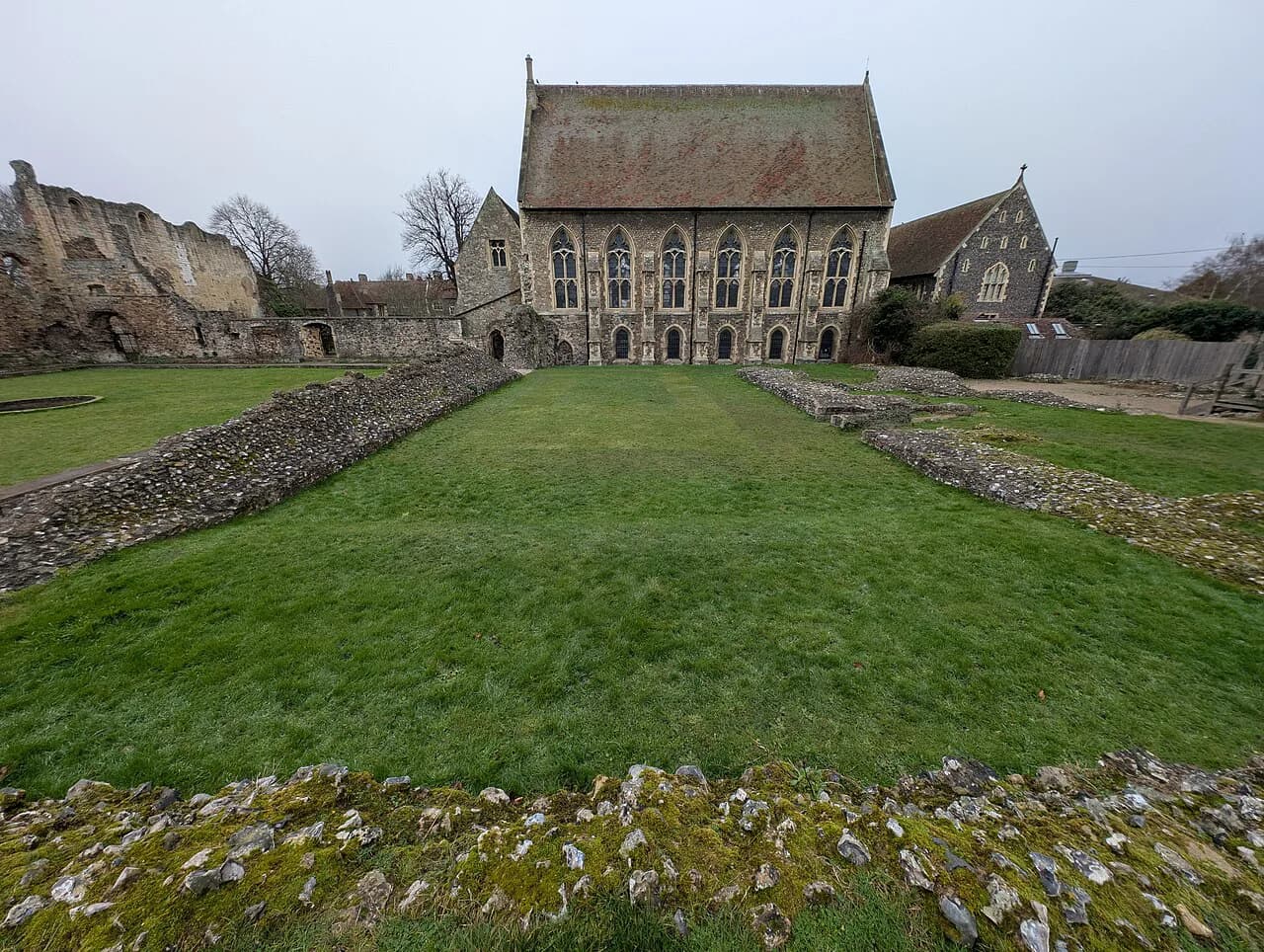
St Augustine's Abbey is a ruined Benedictine monastery on Longport, a few minutes beyond Canterbury's city walls, and it forms part of the Canterbury World Heritage Site alongside the cathedral and St Martin's Church. It is a deliberate detour rather than something you pass on the way to the cathedral, which is exactly why it stays quieter than the centre.
You come for broken walls, empty arches and a sense of scale rather than roofs and furnishings, with a museum, a free audio tour and a virtual reality reconstruction to make sense of what stood here. Allow a couple of hours if you like reading the stones; an hour covers the highlights.
Where St Augustine's Abbey sits in Canterbury
The abbey address is Longport, Canterbury, CT1 1PF, on the north-east edge of the historic centre and outside the line of the old walls. Approach from the city centre along Longport and the abbey grounds open up on your left, low and spread out rather than towered.
That position explains its reputation as a site people miss: the cathedral precinct pulls nearly all the foot traffic, and the abbey sits just far enough away that you have to decide to go. Put it on the plan as a stop in its own right, not as something to squeeze in if time allows. If you are building a short break around the city, our Canterbury Attractions sets out the other stops worth slotting around it, and our guide to things to do in Canterbury covers how the cathedral and museums fit the same day, while our museums in Canterbury guide helps if the weather pushes you indoors.
A short history of the abbey
Augustine, a missionary sent from Rome, founded the abbey shortly after AD 597, and it was originally created as a burial place for the Anglo-Saxon kings of Kent. The Visit Canterbury account presents it as marking the rebirth of Christianity in southern England, which is the frame to hold in mind as you walk the ruins.
It was a Benedictine monastery, founded in 598, and it functioned as a monastic community for centuries before passing into ruin. Ethelbert, the Kentish king baptised by Augustine, belongs to the same early story, though the abbey's own account does not name individual royal graves, so treat any specific burial claim you hear on site as story rather than record.
What survives and what to look for
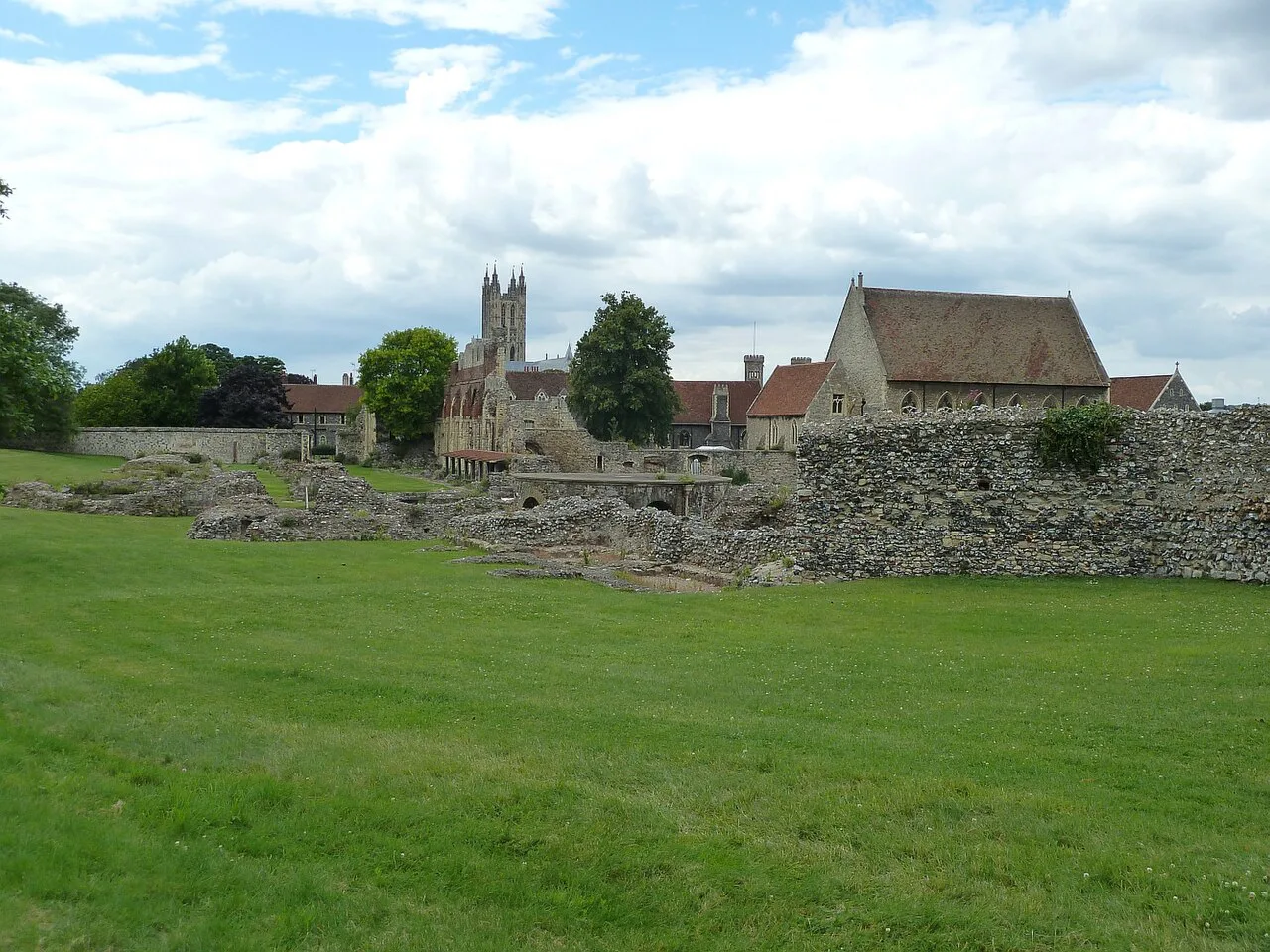
The site is ruined abbey buildings you walk among, with walls, footings and gaps that show the footprint of a large monastic complex rather than a single church. Read the ruins as a plan: where the church nave ran, where the cloister sat, how far the precinct stretched beyond the parts that still stand.
Because there is little roof and no glass, the visit depends on weather and on your appetite for interpretation boards. On a wet day the outdoor stretch is short work and the museum does more of the talking; on a bright one the ruins reward a slow circuit.
The museum, audio tour and VR experience
Entry to the abbey includes a museum and a free audio tour, and the audio is the easiest way to turn a field of stone into a working monastery. Collect it at the start rather than halfway round, so the commentary runs while you still have the whole site ahead of you.
The VR experience lets visitors walk through parts of the monastery as it would have appeared in the early 1500s, using headsets on site. There is also family interpretation, including monks' habits that can be borrowed and objects visitors can handle, which gives children something concrete to do between ruins.

How long to allow
Budget around two hours for ruins, museum and audio tour together, and nearer an hour if you skip the audio and move briskly through the museum. The site is outdoor for much of its length, so cold, wind and rain shorten a visit far more than they would inside a museum.
Families with young children often spend longer than expected because the handling objects and borrowed habits slow the walk round. If you are fitting the abbey into a single day with the cathedral, give the cathedral the larger share and treat the abbey as a half-morning.
Tickets and opening times
St Augustine's Abbey is an English Heritage site, and admission is charged; opening times and admission prices are published on the English Heritage website rather than fixed here, so check the abbey's page before you travel.
The same page carries the current position on membership, concessions and any seasonal variation, and Visit Canterbury also points readers to the website for up-to-date opening times and prices. Book or check before a long journey rather than relying on a guidebook printed a year or two ago.
Getting there from the city centre and cathedral
From the cathedral precinct the abbey is a straightforward walk northeast along the city streets and out through Longport. It is level most of the way, and the reward is a site you approach from outside the walls, as medieval pilgrims and townspeople would have done.
Walking back, the cathedral's towers give you a bearing for the centre. If you are spending the day on foot, pair the abbey with the cathedral rather than trying to reach it from the far side of town late in the afternoon. Our guide to Canterbury Cathedral covers the precinct, the shrine site of Archbishop Thomas Becket and what to expect inside.

Nearby: the rest of the World Heritage Site
St Martin's Church is the third component of the Canterbury World Heritage Site, and the abbey's own account links the three as a group. Seeing two or three of them in one trip gives you the early Christian story of Kent in sequence rather than as isolated ruins.
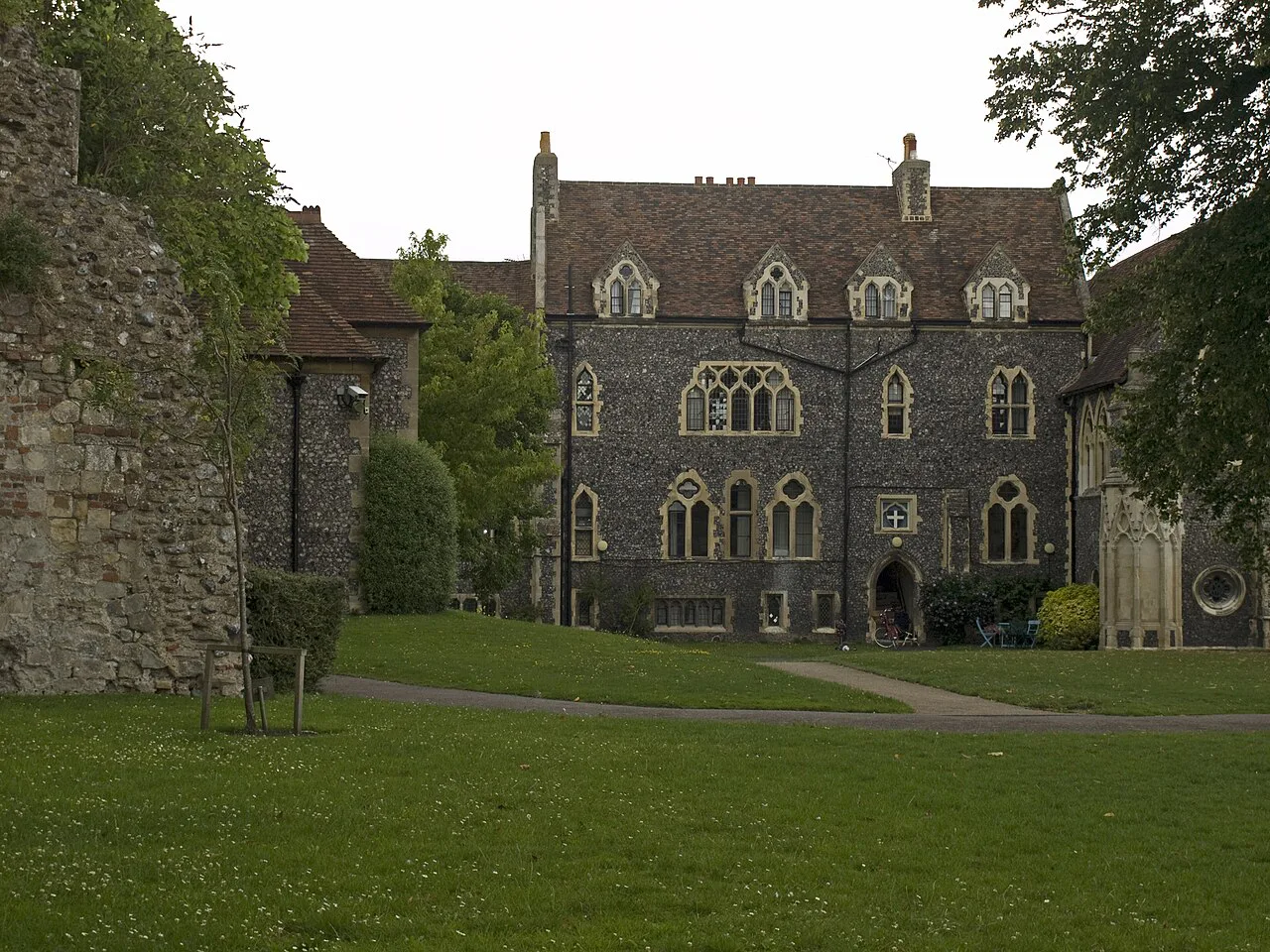
Close to the walls near the abbey stands St Paul's without the Walls Church, a small Anglican church just outside the old city boundary. It is a short add-on if you are already walking Longport, not a reason on its own to make the trip.
Practical notes for the visit
The site has a gift shop and an on-site cafe or tea shop, groups are welcome, and guide dogs, hearing dogs and registered assistance dogs are all admitted. Much of the visit is outdoors on grass, gravel and uneven stone, so wear shoes that cope with that and carry a waterproof.
If you want an indoor stop afterwards, the city centre has plenty; our guide to museums in Canterbury covers the free and paid options, including the Roman collections at the Canterbury Roman Museum on Butchery Lane and the finds from Durovernum Cantiacorum. For a wider indoor counterpart to a day spent among ruins, it is worth comparing the museum options with the things to do in Canterbury once the weather turns.
Who St Augustine's Abbey Suits
This is a site for people who like ruined abbeys and for anyone collecting the three parts of the Canterbury World Heritage Site. It is less suitable for visitors who want furnished rooms, labelled displays in every direction or a quick photo stop, since the appeal lies in reading a plan and using the audio and VR to fill the gaps.
The honest trade-off is that the abbey takes a chunk out of a day and asks you to walk beyond the centre to reach it. Go anyway if the early Christian history of Kent interests you: the quiet and the scale are the point, and the crowds are at the cathedral.
Explore more Canterbury guides
Frequently Asked Questions
How long does it take to visit St Augustine's Abbey?
Plan around two hours to combine the ruins, the museum and the free audio tour at an unhurried pace. An hour is enough if you move briskly through the museum and skip the commentary. Wind and rain slow the outdoor sections less than you might expect, but they do cut a visit short, so a wet day often means a quicker circuit of the walls.
How much does it cost to get into St Augustine's Abbey?
The abbey is run by English Heritage and charges for admission, but admission prices are set by them and vary with membership and concessions. The English Heritage page for St Augustine's Abbey carries the current charges, and the Visit Canterbury listing directs visitors there as well.
Can I see the original monastery in virtual reality at the abbey?
Yes. Headsets on site let visitors walk through parts of the monastery as it would have appeared in the early 1500s. Family interpretation adds monks' habits to borrow and objects to handle, which helps children connect the ruins with the monastic life that once filled them.