
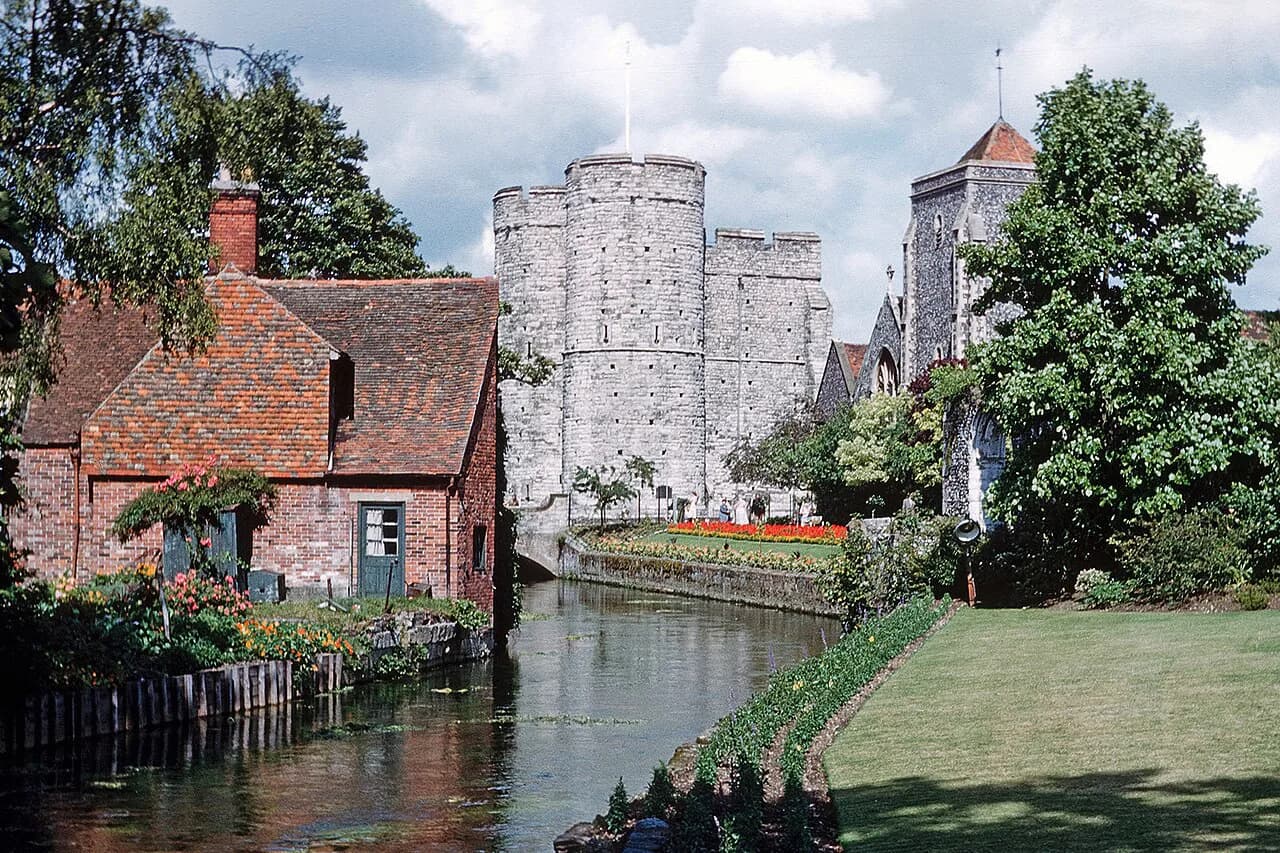
Westgate Towers, Canterbury: a visitor's guide to the medieval gateway

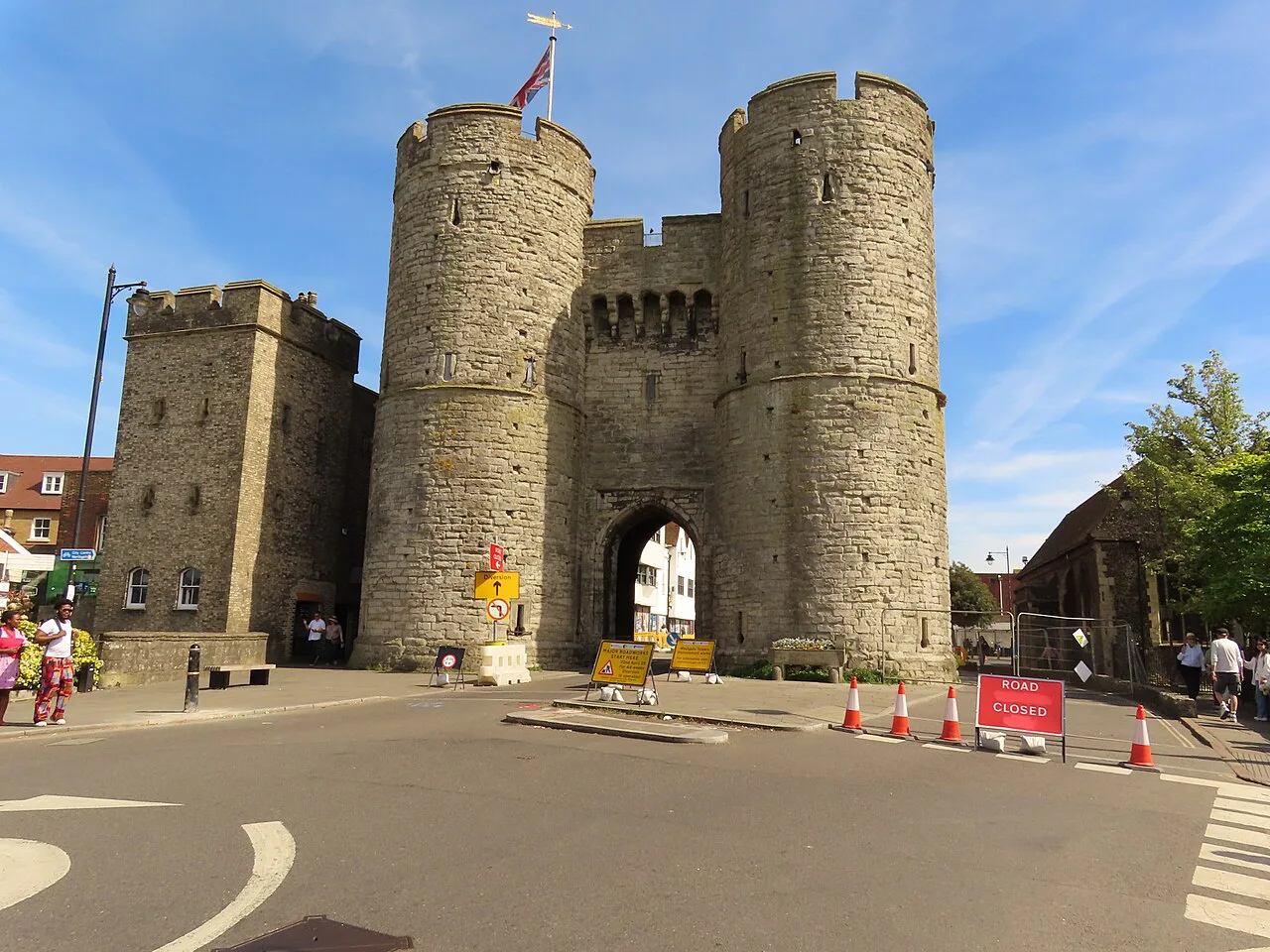
Westgate Towers is the stone gateway standing at the west end of Canterbury's High Street, where the city's walls once closed across the road. It is England's largest surviving medieval gateway, and visitors pass through its arch on the main walk from Canterbury West station into the centre.
Three things get confused here, so keep them apart: the gateway building itself, the museum and viewpoint inside it, and Westgate Gardens, the riverside park just beyond. This guide covers each in turn, with the tower stairways treated as a real decision rather than a footnote. If you are still deciding which Canterbury Attractions to build your day around, this page sits alongside the cathedral, the abbey and the Roman museum.
What Westgate Towers is and where it sits
The towers mark the western entrance to the walled medieval city, with the High Street running east from the gate towards the cathedral quarter. Visit Canterbury describes Canterbury as a walled medieval city and lists the Westgate Towers Museum and Viewpoint as England's largest surviving medieval gateway, with views of the city from the top.
Stand on the city side of the arch and you are looking down the shopping spine of Canterbury; stand on the other side and the road opens out towards Westgate Gardens and the River Stour. That makes the gate a natural orientation point early in a trip, because almost everything central lies east of it.
History in brief: Roman gate, Norman gate, medieval towers
There has been a western gate here since Roman times, and the present towers are a medieval replacement of that Roman west gate, rebuilt around 1380. A gate stood on the site at the time of the Norman conquest, so the stonework you see is the third layer of a very long story rather than a single build.
Treat the founding date as approximate. The 1380 rebuilding is the figure to hold in your head, and the surviving structure is what earned the gateway its largest-in-England billing.
What to see inside: the museum and the viewpoint
Inside the towers is the Westgate Towers Museum and Viewpoint, set within the gateway. A Visit Canterbury round-up of city highlights describes the Westgate Towers as housing a museum and an escape room, with a cocktail bar and restaurant occupying the city's former jail.
Book the museum as one element and the view as the reward at the top. The climb is the point of the viewpoint, and the gate itself is free to walk through at street level on your way into town.
Tickets, opening days and booking
Westgate Towers is operated by Canterbury Museums, and current admission prices, opening days and any seasonal closures are published there and at the city's visitor information centre in The Beaney House of Art & Knowledge on High Street. Check both before you travel, as the museum does not run every day of the year. While you are at The Beaney, it is worth knowing it is one of the museums in Canterbury covered in our separate guide to the city's collections.
If your trip hinges on going up, the museum and viewpoint keep their own timetable, separate from the arch below, which is a thoroughfare. The arch is a thoroughfare; the museum is a separate visit with its own timetable, so plan the climb around the museum's published hours rather than treating the gate as one all-day opening.

How long to allow, and the honest trade-off of the steps
Allow around an hour for the museum and the climb, plus whatever time you spend at the top. The stairways in a medieval gateway are narrow and winding, so anyone with mobility difficulties, very young children or a pushchair should plan to enjoy the exterior and the gardens instead.
The trade-off is straightforward: the view is the best reason to go in, and the stairs are the price of it. Pair the visit with a flat riverside walk afterwards rather than stacking it on top of a full cathedral morning.
Getting there from Canterbury West and Canterbury East
From Canterbury West, walk down Station Road West towards the city; the towers appear ahead of you at the end of the approach and you pass under the arch into the High Street. From Canterbury East, head up towards the castle and Castle Street, then turn right along the edge of the walls to reach the gate from the city side.
Visit Canterbury's suggested day opens with breakfast near Canterbury West at The Goods Shed or Cafe St Pierre, then walks under the Westgate Towers to the top of the High Street, which is a sensible order if you arrive by train. Canterbury is under an hour from London by train, so a day trip with the gate as your first stop works well.
Westgate Gardens next door
Westgate Gardens is the park along the River Stour immediately beyond the towers, with flower beds, lawns and the water running through it. Visit Canterbury calls it one of the most popular photo spots in the city, with ducks, swans and fish along the river, and notes that punts can be boarded there.
Punts and boat trips on the Stour operate seasonally through Canterbury Punting Co and Westgate Punts, so check availability and times with Canterbury Punting Co and Westgate Punts rather than turning up expecting a boat. The gardens themselves are a free, flat stop that suits anyone who skipped the tower stairs.

Nearby: the cathedral, the museums and the walls
Walk east along the High Street and you reach Canterbury Cathedral, the UNESCO-listed heart of the city and the site of Archbishop Thomas Becket's murder, with the cloisters that visitors often liken to a certain wizarding courtyard. The cathedral is a short stroll from the gate and deserves its own half-day rather than being squeezed in around the tower climb. If indoor collections appeal more than a climb, the museums in Canterbury make an easy contrast to this open-air gateway.
Other close options include the Canterbury Roman Museum, built over the remains of a Roman townhouse, and the free galleries, library and visitor information centre at The Beaney House of Art & Knowledge. Further out, St Augustine's Abbey and St Martin's Church complete the city's UNESCO listing alongside the cathedral. If you want to weigh these against the gate's own museum, our guide to the museums in Canterbury compares The Beaney, the Roman Museum and what to see.
For a wider shortlist of ticketed and free sights, the museums in Canterbury range from the Roman pavement under Butchery Lane to the city's art collections. Canterbury Guided Tours and CT Tours both run guided walks from the centre if you want the history narrated rather than read.
Practical niggles: traffic, crowds and ghost tours
The road layout around the towers has been reworked, with KentOnline reporting in March 2026 that major roadworks at Westgate Towers had finished after almost a year and that some drivers found the new arrangement confusing. If you are driving, follow the signed routes rather than an old mental map of the junction.
Summer afternoons bring the heaviest footfall through the arch and into the gardens, so mornings are easier for photography and for the museum. Canterbury Ghost Tour runs evening walks through the city's darker legends; treat the stories as legend and entertainment rather than history.
Plan Your Visit
Westgate Towers works best as the first ten minutes of a Canterbury day: arrive through the arch, decide on the museum and climb on the spot, then drift into Westgate Gardens for the river. Keep the gateway, the museum and the gardens separate in your planning and the day runs smoothly.
Settle the museum's opening and ticket details with Canterbury Museums and the visitor information centre in The Beaney before you travel. Afternoon tea afterwards at Tiny Tim's Tearoom or Moat Tea Rooms in the Cathedral Quarter rounds off the walk nicely.
Explore more Canterbury guides
Frequently Asked Questions
What are Westgate Towers in Canterbury?
They are the medieval gateway at the west end of Canterbury's High Street, described by Visit Canterbury as England's largest surviving medieval gateway. The building houses the Westgate Towers Museum and Viewpoint, and Westgate Gardens lies just beyond it along the River Stour.
Is Westgate Gardens free?
Westgate Gardens is a public riverside park along the River Stour, and the Visit Canterbury itinerary treats it as a stroll rather than a ticketed attraction. Punt and boat trips are run separately by Canterbury Punting Co and Westgate Punts, so check those operators for seasonal availability.
Can you go up Westgate Towers?
Yes, the gateway houses a museum and viewpoint, so there is a climb to the top. The stairways are narrow and winding, which makes the ascent unsuitable for pushchairs and difficult for anyone with limited mobility.
How long does it take to visit Westgate Towers?
Allow around an hour for the museum and the viewpoint, plus time at the top for the view. Add a further half hour or so for a flat walk through Westgate Gardens beside the river.
Where are Westgate Towers in relation to Canterbury Cathedral?
The towers sit at the west end of the High Street, and the cathedral lies east along that street in the Cathedral Quarter, a short walk away. Most visitors pass under the arch on their way into the centre from Canterbury West station.
Was there a Roman gate at Westgate?
Yes. The present towers are a medieval replacement of the Roman west gate, rebuilt around 1380, and a gate stood on the site at the time of the Norman conquest. The date is approximate rather than a precise construction record.
How do I check opening times and tickets for the museum?
Westgate Towers is run by Canterbury Museums, which publishes current opening days and admission details, and the visitor information centre in The Beaney House of Art & Knowledge on High Street can confirm them too. Check before travelling, as the museum does not open every day of the year.
Is the road layout around Westgate Towers difficult for drivers?
The junction was reworked, and KentOnline reported in March 2026 that roadworks had finished after almost a year and that some drivers found the new layout confusing. Follow the signed routes rather than relying on an old memory of the junction.