
Dane John Gardens, Canterbury: A Visitor's Guide

Dane John Gardens is a historic public park just inside Canterbury's city walls, and its main event is the mound at its heart: a steep spiral path climbs to the best free viewpoint over the city centre. The gardens sit within a few minutes of the shopping streets, so they work as a short detour or as the start of a longer walk along the walls.
The park's records stretch back to 1551, with an earthwork mound that was already there in the first century AD, and it has been through a major restoration in recent years. Expect a landscaped park with paths, memorials and a viewpoint rather than a ticketed attraction with an entrance desk.
What Dane John Gardens Is and Where to Find It
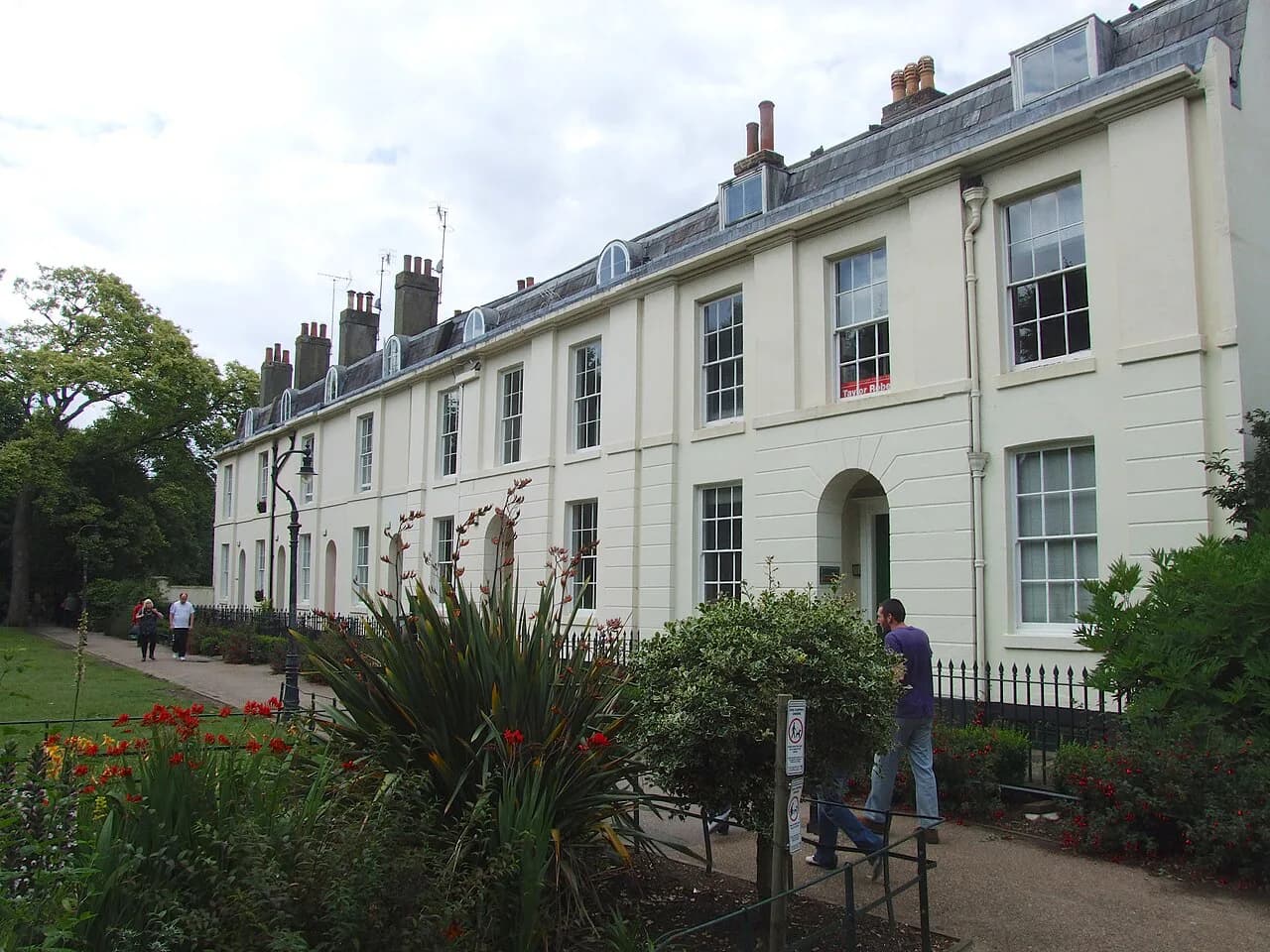
The gardens stand inside Canterbury's city walls, with the wall running along one side of the park and the main shopping centre only a few yards away. The postcode given for the site is CT1 2QX, which puts it within easy walking distance of the High Street and the cathedral quarter.
This is a city park, not a country estate: the lime avenue and the walls give it a sense of enclosure, but you will still hear traffic from the nearby road. Treat it as a green pause in a day of sightseeing rather than a half-day destination in its own right.
History in Brief: Burial Mound, Castle and the Name
The mound is older than the gardens around it. Visit Canterbury's history explains that it incorporates either a late Iron Age burial mound built by the Cantiaci tribe or a Romano-British burial mound dating after the Roman invasion of AD 43, and that several other burial mounds once stood nearby.
Because of its height, the Normans took the mound shortly after 1066 and made it the site of Canterbury's first motte-and-bailey castle, with a timber structure and defensive ditches. That fortification was quickly superseded by a stone castle built to the west from 1086 onwards, and by the late 16th century no visible trace of the Norman castle remained.
The name comes from the French word donjon, meaning castle keep, not from Danish invaders, although the antiquarian Edward Hasted proposed a Danish origin. The site was also called Dungeon Hill and dunghill, and in the medieval period it served as common land used for archery practice, plague quarantine camps in the 1640s and livestock markets granted under a charter of Charles II in 1684.
James Simmons and the Pleasure Gardens
The landscaped park you walk through today is largely the work of alderman James Simmons, who leased the land in 1790 and spent around £1,500 turning rough open ground into tree-lined walks, terraces and planting schemes. He also reshaped the mound itself, raising its height and modifying its banks and ditches, and added the spiral path that still leads to the top.
In 1803 a memorial pinnacle was erected on the summit in Simmons's honour, and it still stands at the top of the mound. The gardens had become a formal public pleasure ground by the early 19th century, with promenades and walks along the city walls.
What to See Inside the Gardens
Climb the mound first. The spiral path is steep but short, and the top gives an excellent view over the city and the surrounding walls, with the Simmons memorial pinnacle alongside you.
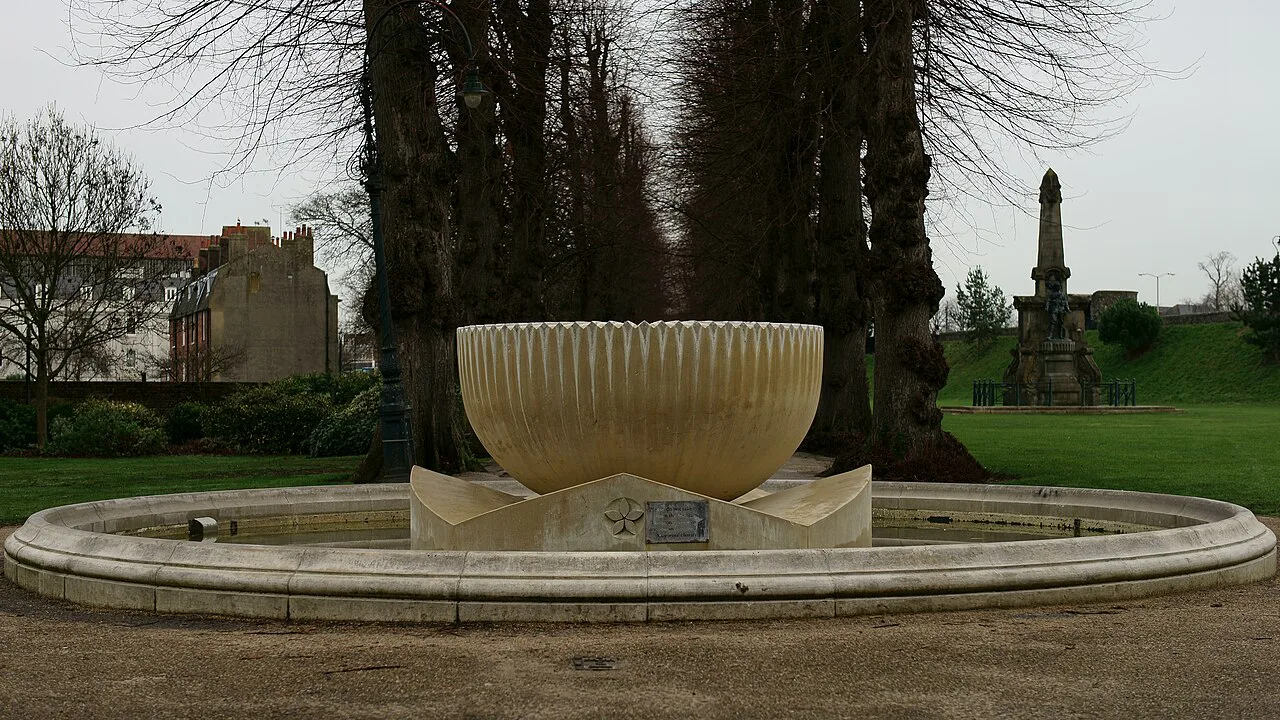
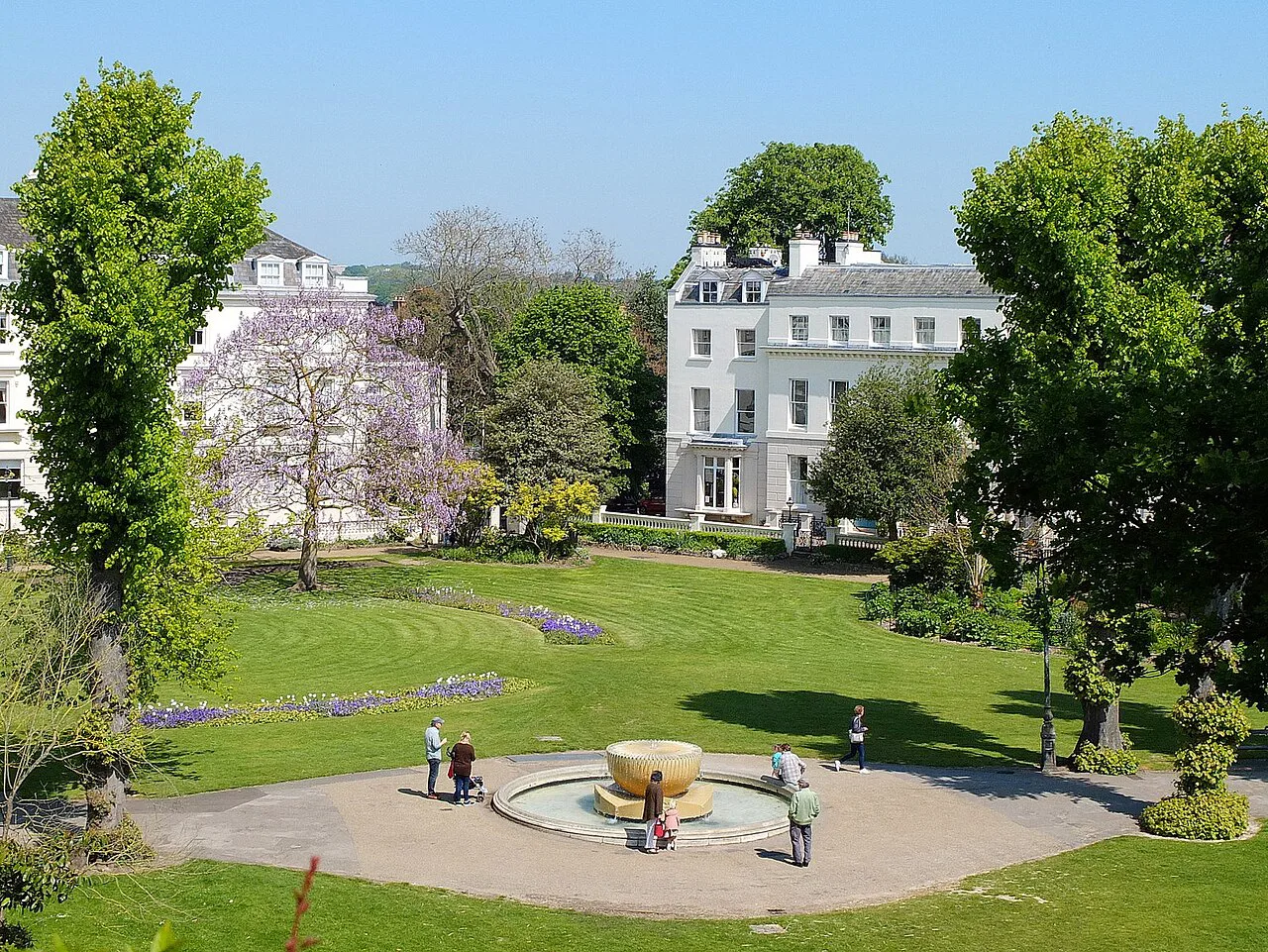
Along the main avenue, the fountain provides a focus for the shaded walk beneath the lime trees, and a bandstand acts as a venue for traditional concerts in summer. The bandstand you see is a replica installed during the 1990s restoration rather than the original cast-iron structure.
Look out for the smaller memorials as you walk: the Weekes Sundial of 1840, a Marlowe memorial sculpture, a Boer War memorial designed by W.D. Caroe and Eric Gill, and the Peace Pavement commemorating European cities damaged by war. The 1990s restoration also introduced modern artworks including Joss Smith's Font fountain and Silent Table.

The Play Area and Café After the Recent Investment
A new play area and café have been added to the gardens as part of the 2023 Levelling Up investment, funded through a £19.9m award from UK Government to Canterbury City Council for the Connected Canterbury project. The park fully reopened on Friday 1 May 2026 while finishing work continued on path resurfacing, lighting columns and a power supply cabinet.
At that point the new café building had been completed for a tenant to fit out, and was not yet ready to open. The council's update said discussions were under way with the owners of the Don Juan, who ran the previous unit, so check on the ground rather than planning your day around a café stop.
The update also noted that the fountain and lights would not work straight away because the power cabinet still needed new electrics, with temporary floodlighting in place meanwhile. Treat water features and evening lighting as details to confirm on arrival.
Walking the City Walls Alongside the Gardens
The city walls border one side of the gardens, and strolling the wall is the natural way to extend a visit. The gardens themselves have well-surfaced routes with no width-restricting features such as stiles or non-RADAR kissing gates, which makes the wall-and-park combination manageable for pushchairs and wheelchairs.
Fold the gardens into a wall walk rather than treating them as a separate stop: the walls and the lime avenue together create a sense of escape from the busy road and shopping centre a few yards away. That way you get the history and the views in a single circuit without backtracking.
Opening Times, Access and the Weekend Gate Locking
The gardens are open all hours, and the site has public toilets, disabled toilets, refreshments, a picnic area, a children's play area and a rest point. The café's own hours are a separate matter and should be checked on the day.
The council's reopening update reinstated the previous arrangement of locking the park gates overnight between 10pm and 4am on Friday and Saturday nights, so a late-evening stroll on those nights may find the gates shut. Access arrangements can change, so check current details before a late visit.
How Long to Allow and When to Visit
An hour covers the mound climb, a circuit of the avenue and a look at the memorials, and you can stretch that by adding the city walls. The gardens are a working city park, so the quietest experience comes early in the day before the shopping streets fill up.
The bandstand is described as a venue for traditional concerts throughout the summer, which means you may stumble on music rather than being able to plan around a fixed programme. Treat any performance as a bonus, not a reason to schedule your visit.

Getting There and What Is Nearby
The gardens sit inside the walls at CT1 2QX, a short walk from the city centre and the High Street rather than a separate trip out of town. Canterbury's two other headline sights, Canterbury Cathedral and St Augustine's Abbey Canterbury, are within the same compact centre and pair naturally with a park stop. If you would rather be indoors, the museums in Canterbury are equally close to hand, and our guide to things to do in Canterbury folds the park into a full day of city sightseeing.
Westgate Parks is another green space minutes from the city centre and makes a sensible second park stop if you are building a walking day. For a wet-weather alternative, the museums in Canterbury include indoor collections close to the centre, and our guide to things to do in Canterbury sets the parks and museums alongside the cathedral in one itinerary.
Practical Points: Dogs, Picnics and Step-Free Access
Dogs are allowed and dog waste bins are provided, and there is a picnic area if you want to eat outdoors. The park has surfaced paths suitable for pushchairs and wheelchairs, with no width-restricting features along those routes.
The mound path is a climb rather than a gentle stroll, so anyone in the group with limited mobility may prefer the avenue and the wall-side paths while others go up for the view. That split works well because the two circuits start from the same point.
Plan Your Visit
Dane John Gardens rewards a focused hour: climb the mound for the view, walk the lime avenue past the fountain and memorials, then follow the city walls out. It is a park with real depth of history, from a burial mound to a Norman castle to a Georgian pleasure garden, and it costs nothing to wander through.
Build it into a broader day of Canterbury sightseeing rather than making it the sole reason for the trip, and check the café and overnight gate arrangements before a late or food-focused visit.
Explore more Canterbury guides
Frequently Asked Questions
What is the history of Dane John Gardens in Canterbury?
The mound incorporates either a late Iron Age burial mound built by the Cantiaci tribe or a Romano-British burial mound dating after AD 43. The Normans used its height for Canterbury's first motte-and-bailey castle shortly after 1066, and the stone castle to the west superseded it from 1086. Alderman James Simmons leased the land in 1790 and landscaped it as a public pleasure garden, adding tree-lined walks, terraces and the spiral path up the mound.
Why is it called Dane John?
The name comes from the French word donjon, meaning castle keep, according to Visit Canterbury's history of the site. The antiquarian Edward Hasted suggested an alternative link to Danish invaders, and the site was also known as Dungeon Hill and dunghill.
Can you walk the city walls from Dane John Gardens?
Yes. The city walls border one side of the gardens, and Explore Kent suggests strolling along them and then climbing the mound for a view over the city. Combining the two makes a natural circuit rather than two separate stops.
What is there for children at Dane John Gardens?
The gardens have a children's play area, and a new play area was added as part of the 2023 Levelling Up investment. There is also a picnic area and public toilets, and the surfaced paths suit pushchairs.
When are the gates at Dane John Gardens locked?
Canterbury City Council's reopening update reinstated overnight gate locking between 10pm and 4am on Friday and Saturday nights. Check current arrangements before planning a late-evening visit.
How long does it take to walk around Dane John Gardens?
Allow about an hour for the mound climb, a circuit of the lime avenue and a look at the memorials and fountain. Add more time if you continue along the city walls.
What is near Dane John Gardens in Canterbury?
The gardens sit inside the city walls a few minutes from the High Street, with Canterbury Cathedral, St Augustine's Abbey and Westgate Parks all within the compact city centre.