
Canterbury Castle: A Visitor's Guide to the Norman Keep

Canterbury Castle is a ruined Norman keep, not a castle you walk through. The stone shell stands behind fencing near Castle Street, close to Canterbury East station, and a short look from outside is usually all the time it takes.
That makes it a five-minute stop rather than an afternoon out, but the walls carry a long story: a castle recorded before the Conquest, a stone keep with Roman brick in its fabric, a spell as the county gaol, and centuries of decay. If you are building a day around the historic core, it slots naturally between the [Canterbury Cathedral](/attractions/canterbury/canterbury-cathedral) end of town and the Westgate side.
What Canterbury Castle Is
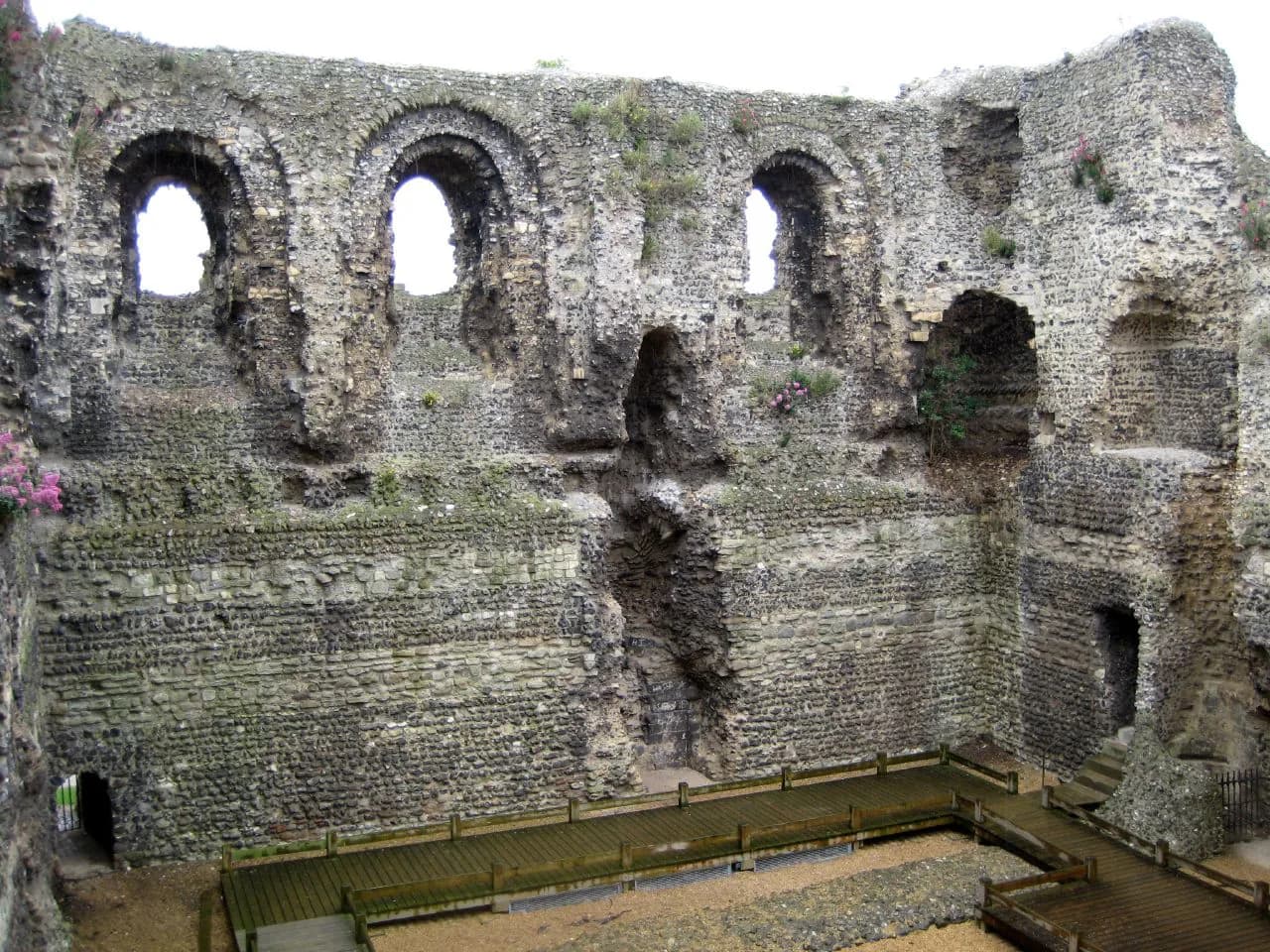
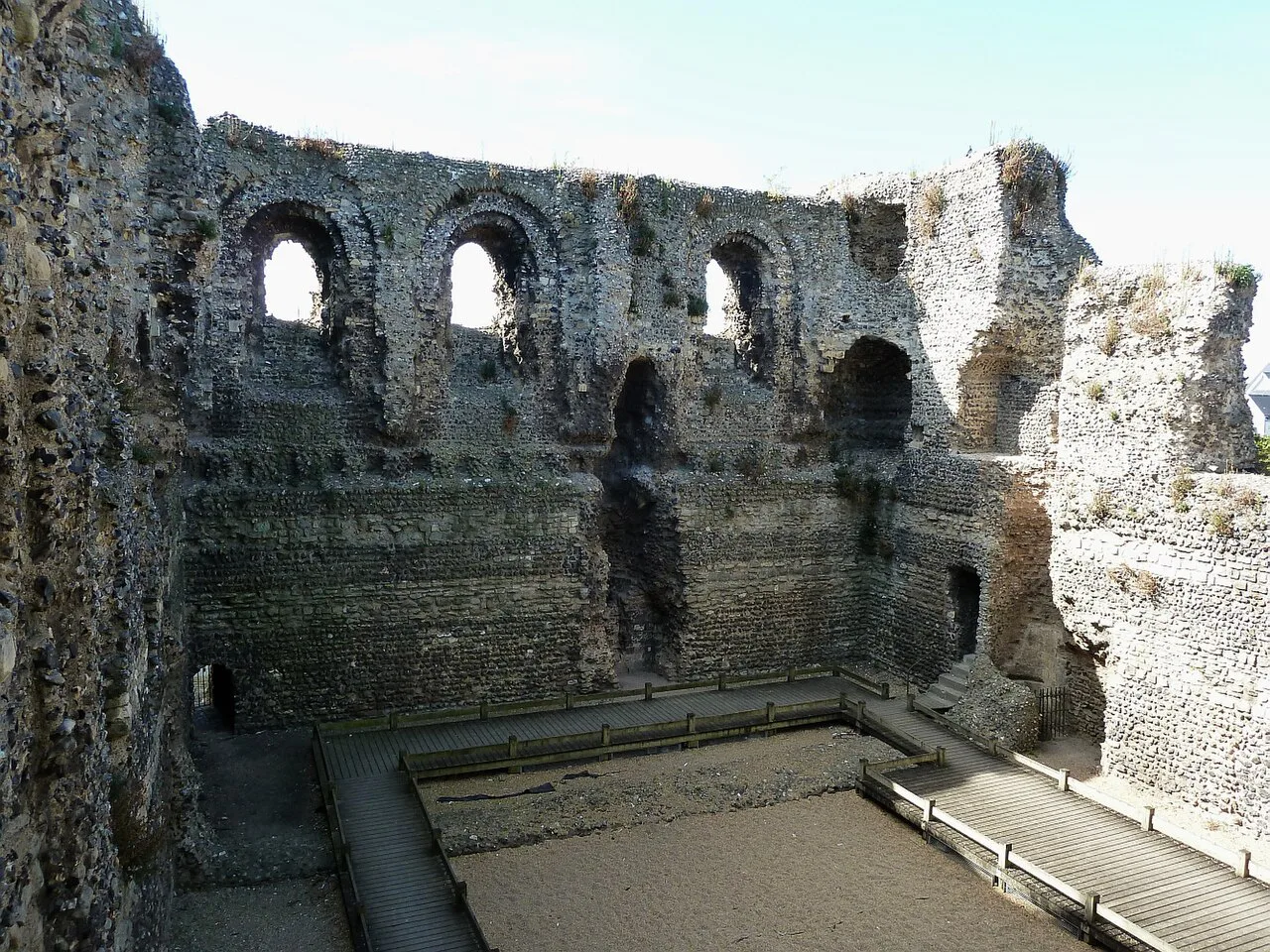
This is a single surviving building: the ruined keep of a town castle, with no roof, no furnished rooms and no visitor centre. What remains is a roofless stone shell with thick walls, broad buttresses and narrow openings, sitting in a small open area where the castle yard once stretched.
Expect a landmark to look at rather than an attraction to tour. The listing for Canterbury Castle describes the keep as closed since 2018 over falling masonry, with visitors left to walk around the grounds rather than go inside.
The site is in Canterbury, Kent, close to the city centre rather than out in the countryside. For the wider choice of museums, ruins and precincts within walking distance, see the [Canterbury Attractions](/attractions/canterbury).
Where It Stands
Canterbury Castle sits in the Castle Street area of central Canterbury, postcode CT1 2PR, within easy walking distance of the bus station and Canterbury East station. The keep is the obvious landmark in the immediate neighbourhood, and you will see the walls before you reach them.
Because it is so central, there is no need to plan a special trip. Treat it as something to pass on the way between the cathedral quarter and the western end of the city, and let the route do the work.
The Castle Before the Stone Keep
A castle stood here before the Norman Conquest. The Domesday survey records that the king held this castle through an exchange with the archbishop and the abbot of St Augustine, who received other properties in return.
The castle yard attached to the keep covered more than four acres and was enclosed by wall and ditch. Access from the city was originally over a bridge and through a castle gate, while the city's Worthgate stood on the far side towards the country.
The abbot of St Augustine's was a major landholder and neighbour of the castle, and the abbey ruins are a separate stop worth planning properly via [St Augustine's Abbey, Canterbury](/attractions/canterbury/st-augustines-abbey).
The Stone Keep and Its Walls
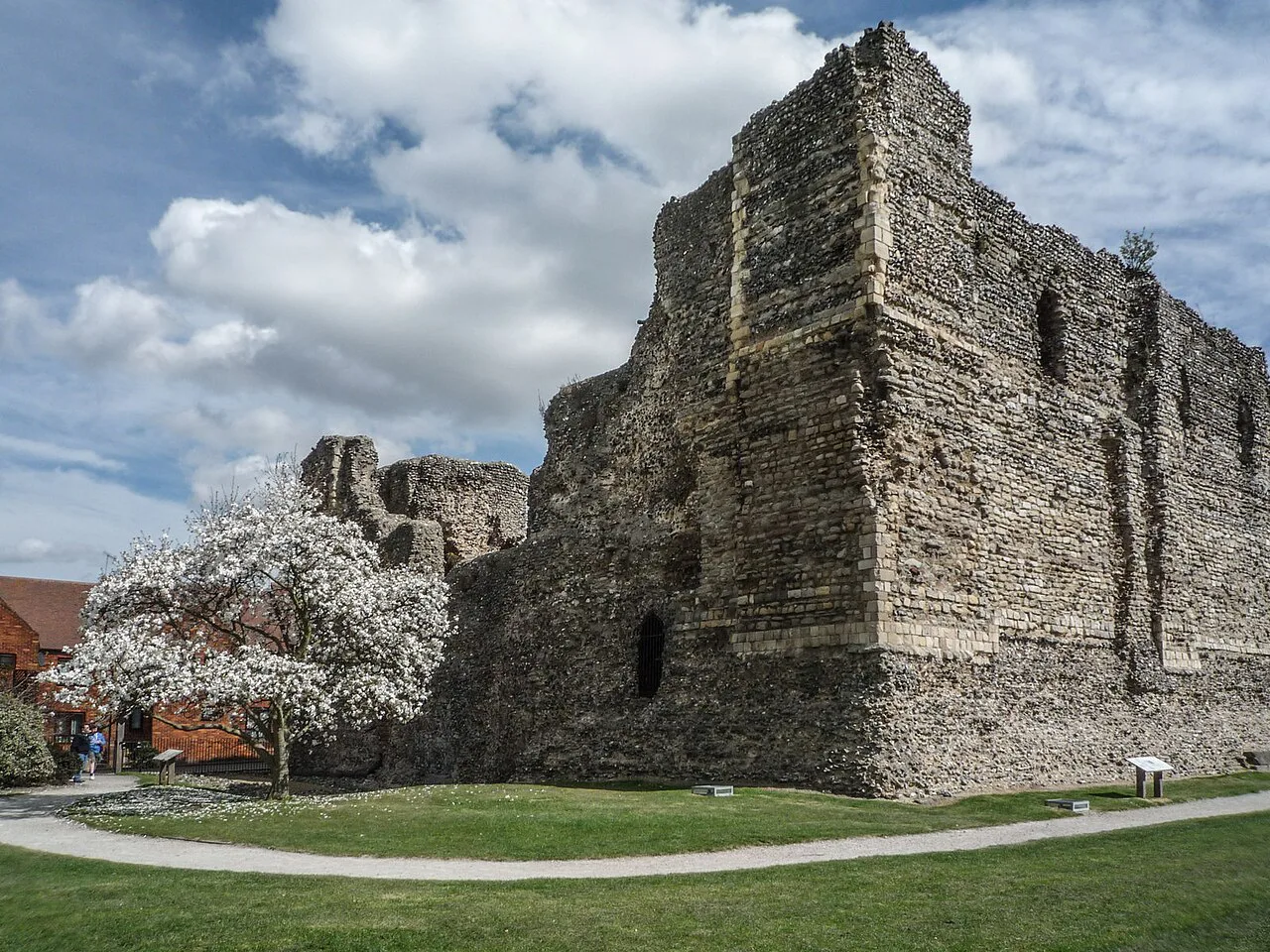
The stone keep was built into an existing castle site, and Henry II later extended the castle and its fortifications, taking in adjoining land. The walls mix rubble stone with quantities of Roman brick, a reminder that earlier masonry was reused in later building.
The keep measured roughly eighty-eight feet by eighty feet, with walls about eleven feet thick. The two long fronts each carried four buttresses and the shorter sides three, and two internal partition walls stood where Rochester Castle has one.
Inside the thickness of the wall ran a well shaft from top to bottom, with arched openings on each floor for drawing water, plus a wall gallery. A dungeon lay beneath the original entrance, and the ruined staircases meant much of the upper structure could no longer be examined closely.
The surveyor argued that the original grand entrance was on the north side, approached by steps and a drawbridge, and was later bricked up. The breaches in the east wall were read as later openings rather than original doorways.
Gaol, Assizes and Decline
The castle served as a prison from the reign of Edward II, and it was described as the principal gaol of the county. Assizes for Kent were held here in 1565, 1569 and 1577.
After the gaol moved elsewhere the castle was neglected and fell into ruin. By 1792 substantial stretches of the boundary wall were being demolished and buildings put up on the site, with the ditch largely filled in.
Control of the site passed through several private hands, including a sale to Thomas Cooper in 1797, and in 1928 the castle came under the local authority. These ownership changes explain why the setting is now so much tighter than the original four-acre yard.

What You Can See Today
From outside the fence, look for the surviving quadrangular walls, now considerably lower than their original height, with the buttresses breaking up the face and small loop windows and openings set into the masonry. Rubble stone and Roman brick are jumbled together across the surface.
Look at the north side for the blocked arch that was identified as the original entrance, and at the east face for irregular gaps that were forced through the walls after the castle lost its purpose. These details reward a few minutes of close looking rather than a quick photograph.
The floors, roof, staircases and interior galleries described in the old survey are not on view from the perimeter. What you see is essentially an outer shell, so read the walls as archaeology rather than as rooms.
Why the Keep Is Fenced Off
Falling masonry is the reason given for the closure, which means the keep itself is not a place you can step inside. Loose stone on a structure of this age is a genuine hazard, and the fencing is the practical response.
Restoration and reopening have been discussed, but no date for reopening is given, so do not build a trip around getting inside. The surrounding grounds remain the realistic option for a look at the walls.
Canterbury's city council is running wider improvement work in the city through its Levelling Up programme, so access around the centre can change while projects are under way. Check your route before setting out if the stop matters to you.
How Long to Allow
Plan on a short stop: roughly ten to twenty minutes to walk round the outside, read the walls and take a few photographs. The listing suggests one to three hours for the site, which only makes sense if you count a slow wander through the surrounding streets and gardens.
There is no indoor shelter, no café and no shop, so wet weather makes the stop much less pleasant. If it is raining hard, keep the castle for a dry spell and spend the time indoors instead at [the beaney Canterbury](/attractions/canterbury/beaney-house), which houses galleries and a library in one building.
History-minded visitors can stretch the visit by pairing it with the city's Roman layers, since the keep reuses Roman brick and stands on the site of an earlier castle. [Canterbury Roman Museum](/attractions/canterbury/canterbury-roman-museum) covers that deeper past in a proper indoor setting.
Getting There
On foot is the sensible way to arrive: the keep is a short walk from Canterbury East station and from the main bus station, and it is easy to reach from the central shopping streets. The listing puts it about five minutes from both, which makes it one of the easiest historic sites in the city to reach.
If you arrive by train at Canterbury East, come out and head towards the Castle Street area rather than into the pedestrian centre first. Staying on foot avoids city-centre parking, which is the main practical constraint for a short break in Canterbury.
Tickets and Opening Hours
The castle is closed to entry, so there is no ticket to buy for the interior and nothing inside to see. Anyone quoting a Canterbury Castle entry price for the interior is describing something other than the current situation.
Business hours for the site are listed only as to be announced, so the honest approach is to treat the ruins as something you see in passing rather than a timed visit. Confirm access locally before travelling if seeing the keep is a priority.

Practical Points
There are no toilets, café or interpretation boards to rely on, and the ground around the ruins is uneven in places. Wear shoes you can walk in and carry water if you are visiting in warm weather.
Read up before you go so the walls make sense on arrival, because the site itself explains very little. The best preparation is a short account of the keep's history and a look at the city's other Norman and medieval remains.
Families with small children should keep expectations modest: there is nothing to climb, touch or explore inside, and the fence means little ones stay outside the walls. As a brief stop on a walk, it works well enough.
Nearby: The Cathedral and Westgate
[The Precincts](/attractions/canterbury/canterbury-cathedral) around Canterbury Cathedral are a few minutes away and deserve the bulk of a day in the city. The cathedral is the reason most people come to Canterbury, and its scale and setting bear no comparison with the roofless keep.
On the western side of the centre, [Westgate Towers](/attractions/canterbury/westgate-towers) and the adjoining gardens make a natural end to the walk. The towers are the last surviving city gate, and the gardens alongside give you somewhere to sit after a morning on your feet.
For a green pause closer to the castle, [Dane John Gardens](/attractions/canterbury/dane-john-gardens) sit within the old city walls and are an easy add-on. The gardens are a good place to sit with a picnic rather than another ticketed stop.
If you want a castle you can actually enter, [Dover Castle](/attractions/dover/dover-castle) is the obvious comparison within reach of Canterbury. English Heritage looks after it, and it makes a sensible day trip rather than a city-centre detour.
Where to Check Access Before You Travel
Canterbury City Council is the right place to look for news about the site and about city-centre works that might affect your route. Its Connected Canterbury pages set out the improvement projects and their timescales.
Before you set out, confirm the current state of the fencing and the surrounding paths, since masonry closures can change without much notice. A quick check saves a wasted walk.
Is Canterbury Castle Worth the Detour?
Yes, if you are already walking through the centre and have a spare twenty minutes. The keep is a genuine piece of Norman Canterbury with Roman brick in its walls, and it is a free landmark to look at from outside; travellers who want furnished rooms and displays should put their time into the cathedral or a day trip instead.
Build the visit around the rest of the city: the cathedral precincts, the city walls and Westgate on the western edge. The castle works best as a ten-minute pause on that circuit, not as a destination in its own right.
Explore more Canterbury guides
Frequently Asked Questions
Is Canterbury Castle open to visitors?
The keep is closed to entry, with falling masonry given as the reason, and has been closed since 2018. Visitors can walk around the grounds and look at the walls from outside rather than going inside.
What is left of Canterbury Castle today?
Only the ruined shell of the keep survives, with thick walls, buttresses, loop windows and a blocked original entrance on the north side. There is no roof, no floors and no interior to explore, and the original four-acre castle yard has largely been built over.
How old is Canterbury Castle?
A castle stood here before the Norman Conquest and is recorded in Domesday, and the stone keep was added later, with Henry II extending the fortifications. The walls contain Roman brick reused from earlier buildings.
How long do you need at Canterbury Castle?
Allow ten to twenty minutes to walk around the outside and read the walls. Longer estimates only make sense if you count a wander through the surrounding streets and gardens.
How do you get to Canterbury Castle?
Walk: the keep is about five minutes from Canterbury East station and the main bus station, and a short stroll from the central shopping streets. Arriving on foot avoids city-centre parking.
Is Canterbury Castle free to visit?
No admission charge is published for viewing the keep from outside, and there is nothing inside to buy a ticket for. Check locally before travelling to confirm the current position.
What is nearby Canterbury Castle?
Canterbury Cathedral and its precincts, Westgate Towers and the adjoining gardens, Dane John Gardens and the city walls are all within walking distance. The Beaney and the Roman Museum offer indoor alternatives in wet weather.