Chester Architecture: A City Break Guide to Its Buildings
Chester architecture spans Roman walls, Tudor rows and Georgian streets. See which buildings to visit, where they stand and how to plan a day.
On this page
Chester's architecture is best read as a sequence of periods laid one over another inside a single circuit of walls. You can see Roman masonry, medieval rows, Tudor timber framing and Georgian brick within an easy morning, which is why the city rewards walkers more than checklist tickers. Start with the walls as your frame, then pick the buildings that match your interests.
This guide names the structures themselves and what to look for, from the two-level shopping streets to the Georgian rooms of a pub designed as a private house. Details such as opening hours and admission for individual sites change, so confirm them with each venue before you travel.
The City Walls as Your Frame
Chester's city walls form a continuous circuit around the historic centre, and walking them is the quickest way to understand how the city grew. You read the layers in order: Roman defences below, medieval stonework above, and Georgian townhouses pressing against the outside. Do the full loop early, before the coach parties arrive, and you will recognise the buildings worth returning to on foot.
Treat the walls as a free, self-guided orientation rather than an attraction with a turnstile. Wear shoes with grip, since the paved walkway rises and falls and some stretches run close to drops, and allow a comfortable margin if you stop for photographs at every tower.
For a broader view of what sits inside and outside the circuit, the city's museums and galleries help fill in the gaps that masonry alone cannot explain.
Roman Chester: What Survives
Roman Chester, known as Deva Victrix, was a legionary fortress, and its footprint still shapes the street pattern in the centre. The walls you walk today follow much of the Roman line, which is why the circuit feels so complete. Look for stretches of exposed stonework where later medieval builders reused the earlier foundations.
The Roman story is easier to follow with context, so pair a wall walk with a museum stop rather than relying on masonry alone. For the full chronology, including the amphitheatre and the fortress layout, a dedicated account of the period is worth reading before you arrive.
The Rows: Chester's Two-Level Streets
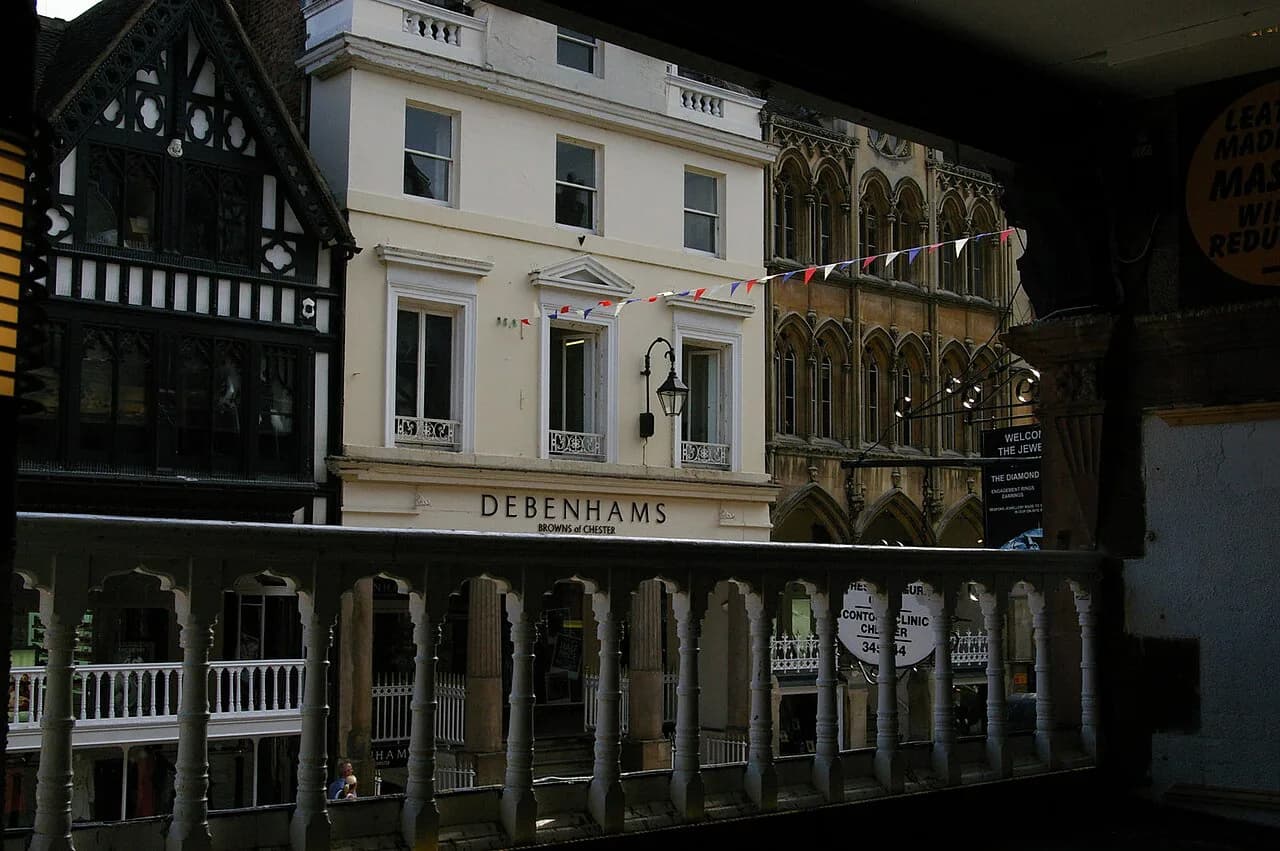
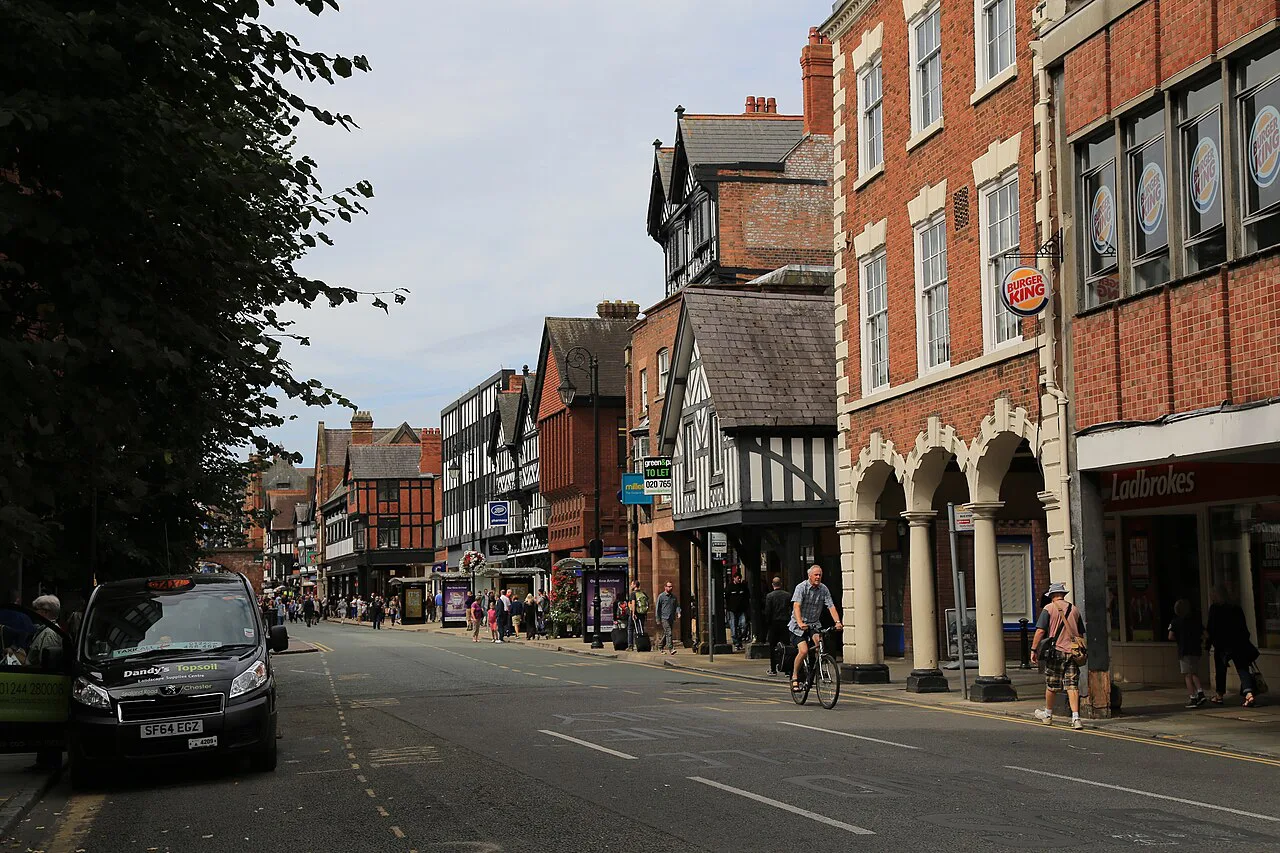
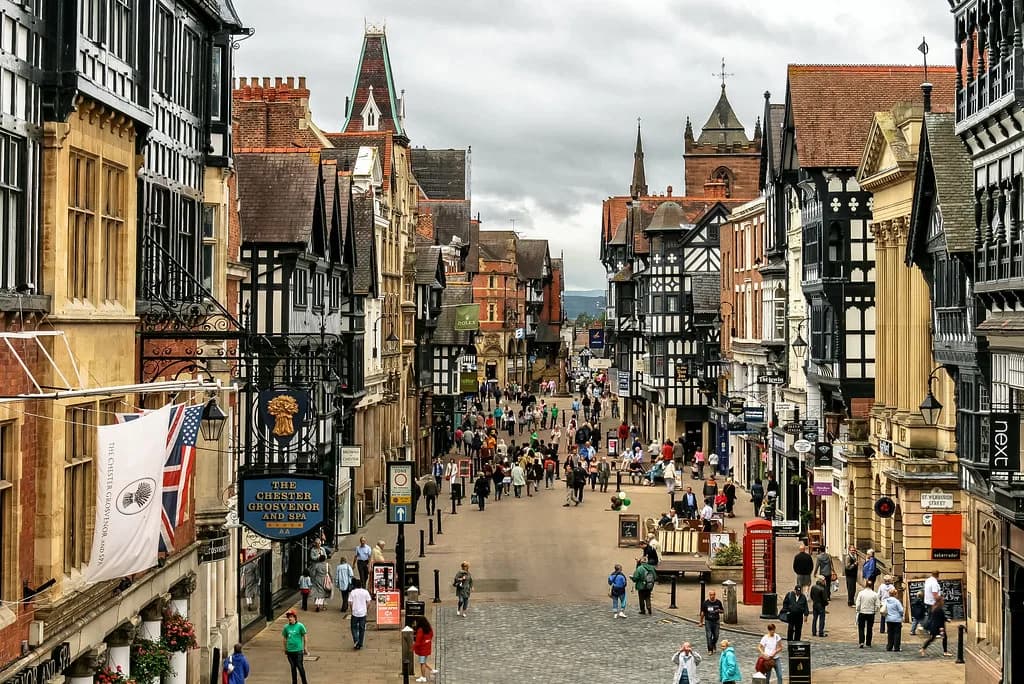
The Rows are Chester's signature piece of townscape: shopping streets with a continuous first-floor gallery running above the ground-level shops. The effect is a double-decker street where you can walk under cover at upper level and look down on the pavement below. No other English city centre feels quite like it.
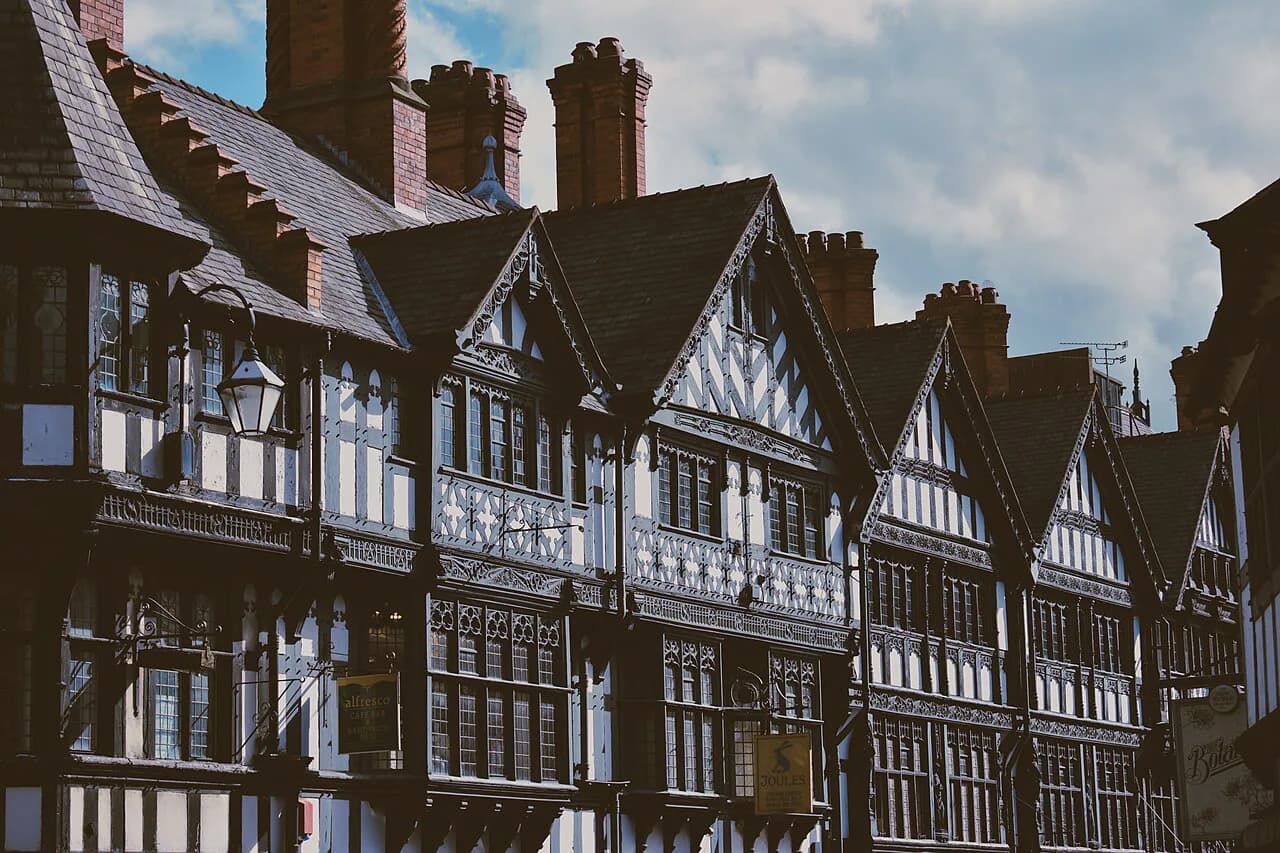
What to notice is the construction, not the shopfronts. Many of the upper galleries sit within historic timber structures, and the covered walkways give the centre its distinctive dark, enclosed character. Walk one length at ground level and then at gallery level to see how differently the same street reads.
Because the galleries are narrow and busy, they are not the easiest route with a pushchair or wheelchair at peak times. Choose the ground-level pavements instead when the centre is crowded, and save the upper galleries for quieter mornings.
Tudor and Timber-Framed Buildings
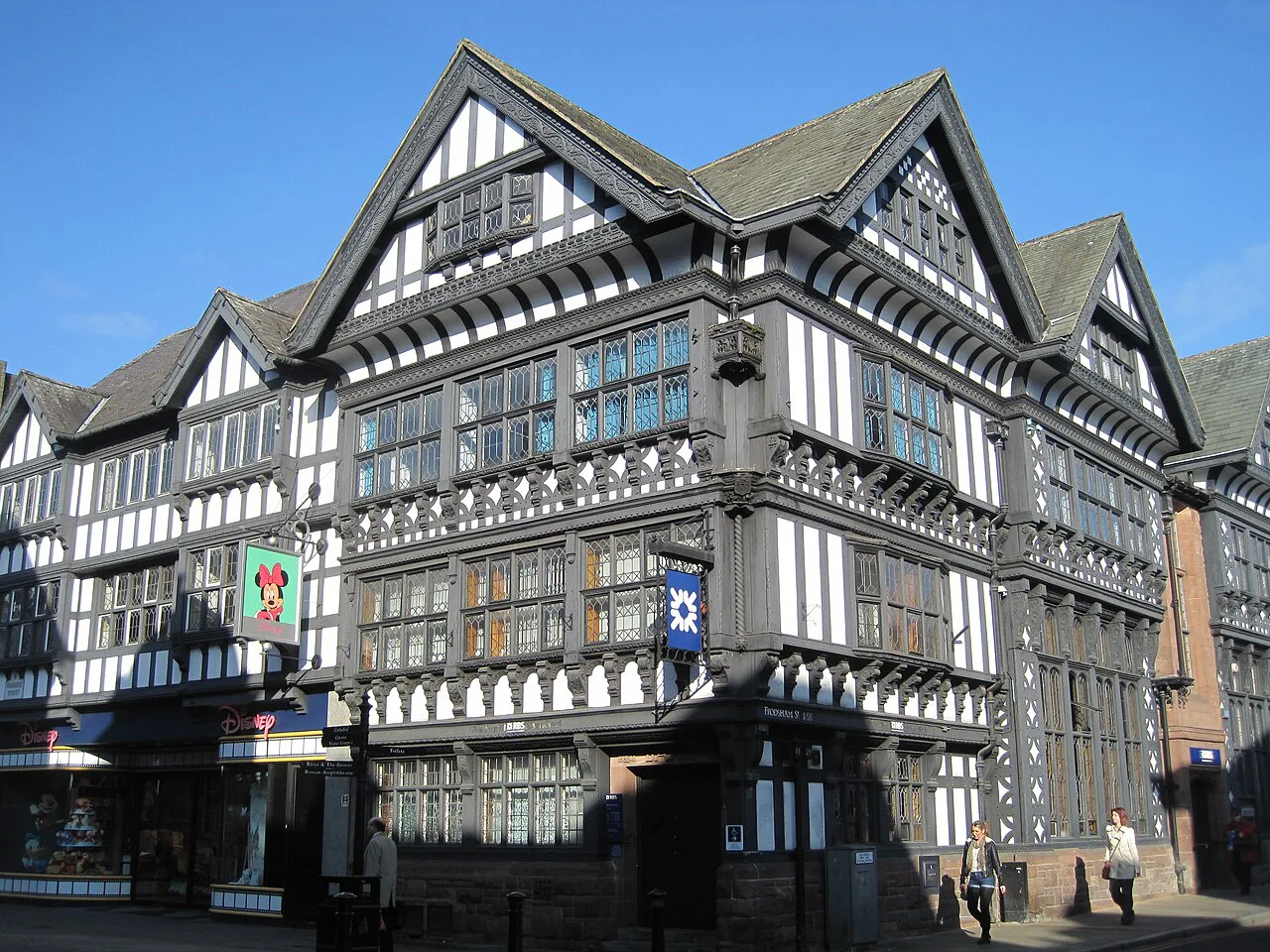
Chester has a strong seam of timber-framed buildings, and several are easy to find on a city-centre wander. The Nine Houses on Park Street is a row of black-and-white timbered almshouses that gives a clear look at the style. Tudor House and Bishop Lloyd's House are among the other named examples that appear in city listings of historic architecture.
Look up rather than at eye level: the carved brackets, jettied upper floors and decorative panels sit above modern shop signage. Chester Crown Court is another named building worth noting on a walking route. These are working buildings and streets, so appreciate them from the pavement rather than expecting interiors to be open.
If timber framing is what draws you, the medieval period is the thread to follow, and it links the Rows, the walls and the parish churches into one story.
Churches and Cathedral Architecture
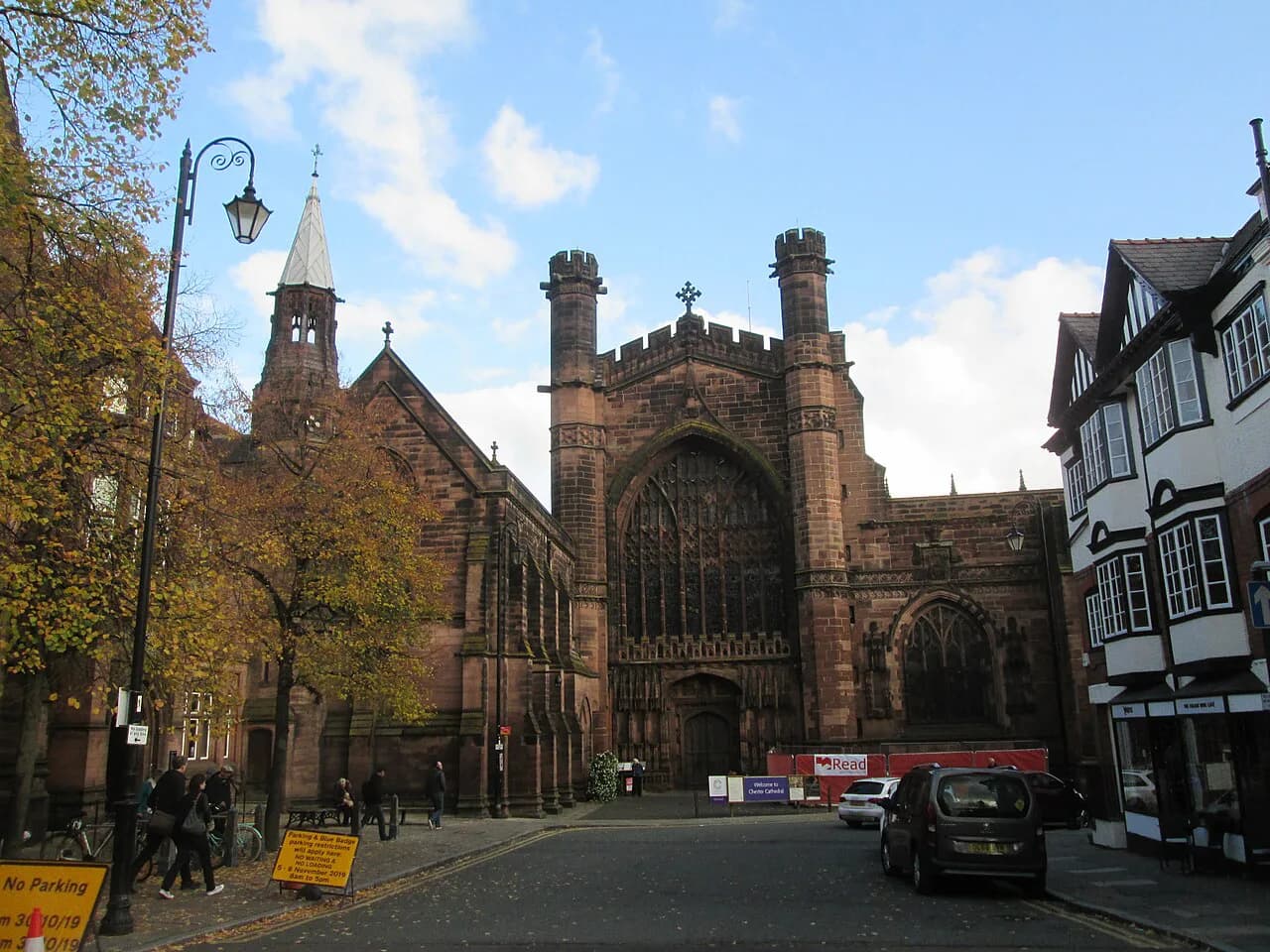
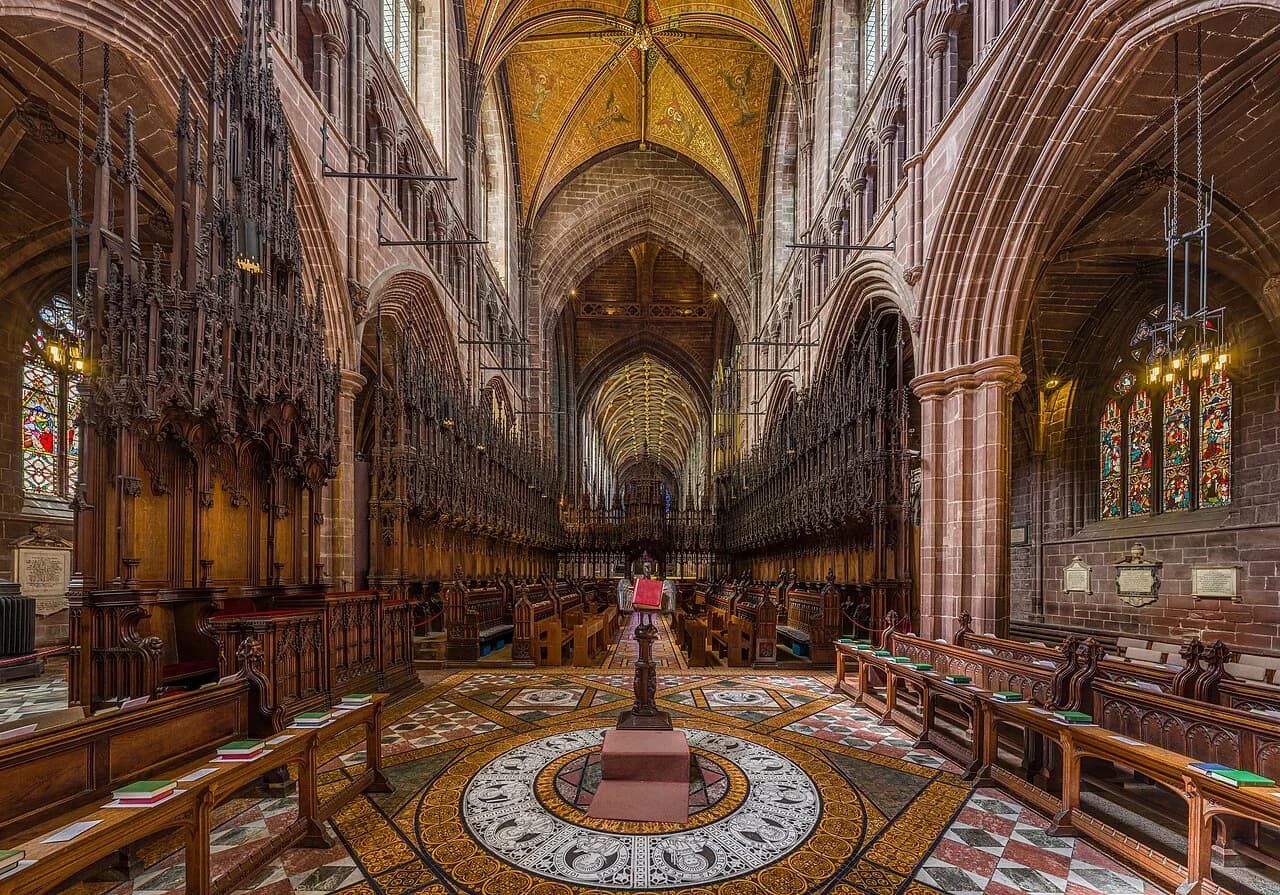
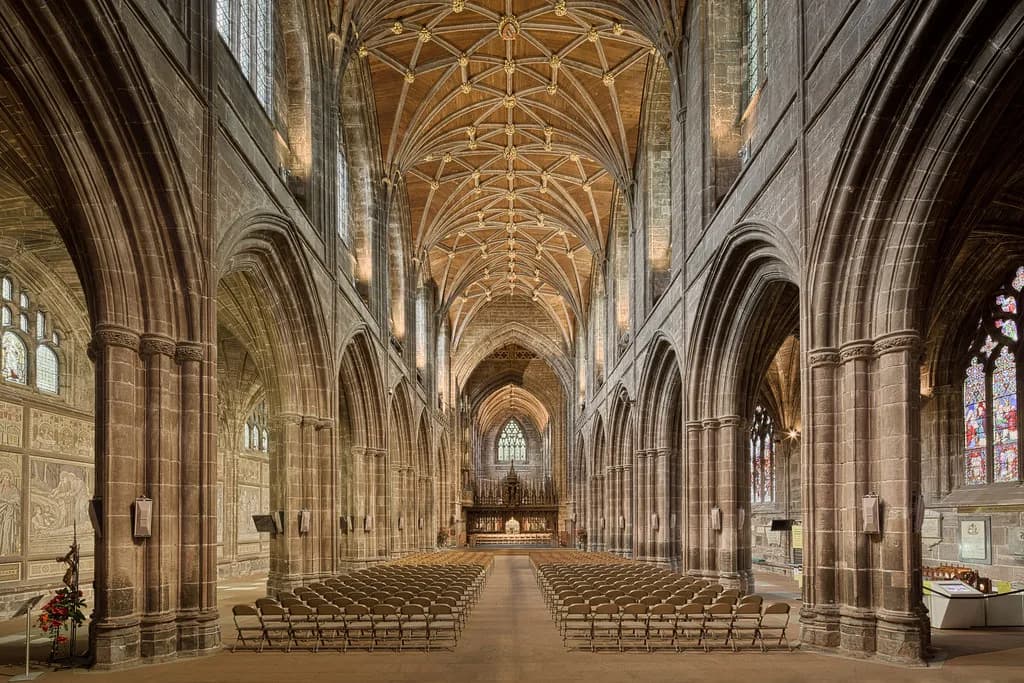
Chester Cathedral is the centrepiece of the city's ecclesiastical architecture, with a long building history that runs from medieval work into later restoration. Inside, the range of stonework rewards slow looking rather than a quick lap. Allow time to sit in the nave and study the details at close range.
Cathedrals are working places of worship, so visitor access can shift around services and seasonal patterns. Check current visitor times with Chester Cathedral before you travel rather than assuming a standard day. For the wider history that produced buildings like this, the city's longer chronology is a useful companion.
Georgian and Victorian Chester
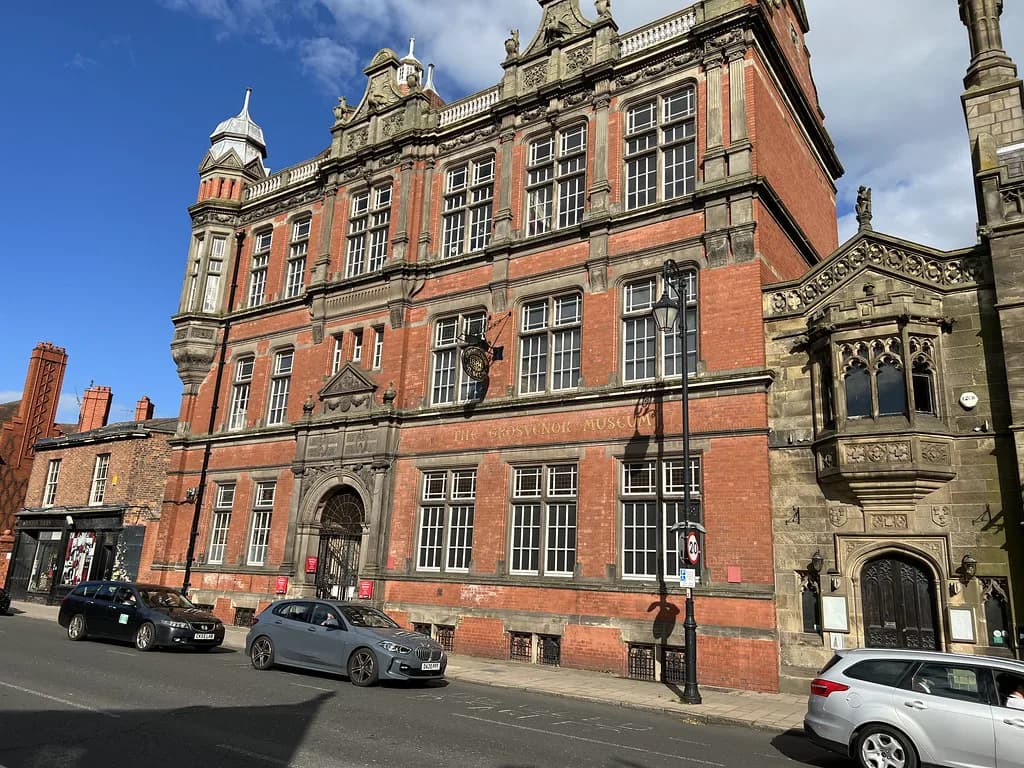
Georgian Chester is the layer most visible around the racecourse edge of the centre, where brick terraces and civic buildings replaced or fronted older plots. The Roodee, Chester's racecourse, sits just inside and alongside the walls, so the architecture and the open ground are viewed together. Victorian additions fill the gaps and give the streetscape its mix of brick, stone and stucco.
The best way to read this period is on foot, linking the commercial streets with the residential edges of the centre. A guided walk gives you the sequence and the architects' names without the guesswork.
The Architect: Thomas Harrison's House
The Architect is a pub restaurant inside the city walls overlooking the Roodee racecourse, and the building has an architectural pedigree of its own. It is named in honour of Thomas Harrison, the prolific architect who designed it as his own residence. Harrison also designed Grosvenor Bridge and much of Chester Castle, so the building works as a small footnote to a much larger Georgian career.
The interior is a story of two halves. The original Georgian building holds cosy, domestic rooms that now serve as intimate dining rooms, while a newer garden room has a large central bar, glazed doors and a dining terrace. Turn one way for period rooms and the other for a buzzier, open-plan feel.
Practical points from the pub itself: on-site parking is extremely limited and fills quickly, though there is plenty nearby, and patrons get three hours of free parking with registration recorded at the bar. Pushchairs are discouraged on busy sessions because some dining areas are tight, so say in advance if you need space.
Evening events at the pub, including its Spooky Walks, appear as listings rather than confirmed fixtures for any given visit, so check the pub's own pages for what is actually running. If ghosts are the draw, the city has a fuller tradition to explore.
Castles, Bridges and the Wider City
Chester Castle and Grosvenor Bridge extend the Georgian story beyond the shopping streets. Harrison's work links the two, which makes them a natural pair to see together with The Architect. The castle stands within the city's historic core, while the bridge carries the road over the Dee on the edge of the centre.
Castles in the wider region vary enormously in access, from ruinous fragments to staffed sites. English Heritage, the National Trust and Historic Environment Scotland run many of them, so check the owner before you set out, since membership and opening patterns differ by operator.
For a city-centre break from masonry, the city's art galleries cover the visual side of the same story.
Free Architecture and Where to Book Ahead
Much of Chester's architecture costs nothing to see because it is the city itself: the walls, the Rows, the streets of timber-framed fronts and Georgian brick. Build your day around those free elements and you can spend your budget on one or two interiors instead. National museums are typically free elsewhere in the UK, but confirm each venue's admission policy before you rely on it.
Several of the city's museums are free to enter, which makes them a sensible pairing with a walking day.
Book ahead for anything with a fixed capacity: guided walks, cathedral events and meals at popular pubs with small dining rooms. The Architect takes table bookings online, and its outside tables run on a first-come, first-served basis, so do not count on a terrace seat at peak lunch.
Practical Trade-offs for an Architecture Day
Expect steps, uneven paving and narrow passages on any walk that mixes the walls with the Rows. The gallery level is atmospheric but tight, and the wall walk is exposed in wet or windy weather. Build in a café stop halfway rather than trying to do the whole circuit and the centre in one unbroken push.
Most museums are free while castles and historic houses charge, so plan which interiors matter most and protect time for them. Guided walks compress the history into a couple of hours, which suits a first visit better than self-guided wandering on day one.
One sentence covers the rest: check each venue's current opening days and access before you travel. Local architects' practices operate across Cheshire, but public buildings and churches are the ones that welcome visitors.
If you want to see how another British city presents its architecture, a comparison helps sharpen your eye. Birmingham architecture offers that contrast, pairing heavy Victorian civic building with bold modern landmarks.
Plan Your Visit
If you have a half day, walk the walls early, drop into the Rows at gallery level, and finish among the timber-framed houses near Park Street. That route gives you Roman, medieval and Tudor layers in a few hours without depending on any single venue's opening times.
With a full day, add a cathedral interior and a stop at The Architect, where Harrison's Georgian rooms and the newer garden room show how a historic house can be adapted without erasing its past. Book a table if you want a sit-down meal, and leave the car outside the centre if you can.
Frequently Asked Questions
What architecture is Chester known for?
Chester is known for its complete circuit of city walls, the two-level shopping galleries called the Rows, a strong stock of timber-framed buildings and a Georgian layer of brick streets and civic buildings. The centre is compact, so you can see all of these on foot in a day.
Can you see Roman, Tudor and Georgian buildings in one day in Chester?
Yes. Roman stonework survives in and along the walls, timber-framed houses stand on streets such as Park Street, and Georgian buildings cluster near the racecourse edge of the centre. Plan the walls first for orientation, then pick one or two interiors to add depth.
Are Chester's Rows worth visiting?
Yes, because they are the feature that makes Chester's centre unlike any other English shopping street. Walk the same street at ground level and at gallery level to appreciate the two-tier design. The upper galleries are narrow, so visit earlier in the day if crowds are a concern.
What did Thomas Harrison design in Chester?
Thomas Harrison designed the building now occupied by The Architect as his own residence, along with Grosvenor Bridge and much of Chester Castle. Seeing the pub, the bridge and the castle together gives you a compact walk through his Georgian work.
Does Chester have Tudor buildings?
Yes. Named examples include The Nine Houses on Park Street, Tudor House and Bishop Lloyd's House. Look above the shopfronts for jettied upper floors and carved detail, and remember these are working buildings rather than visitor attractions.
How long does it take to walk Chester's walls?
The circuit is continuous and comfortably walkable, but allow extra time for photographs and for the rises and dips in the paved walkway. Most people find it fits neatly into a morning, leaving the afternoon for the Rows and an interior or two.
Sources
Notes for your next city break
Optional updates to our UK city guides.
You might also like
Continue reading
More guides you'll find useful